Introduction
Singapore data centres face a convergence of safety hazards found almost nowhere else: year-round tropical humidity averaging 84%, annual rainfall of approximately 2,300 mm concentrated in intense monsoon bursts, and one of the world’s densest regulatory environments spanning six or more agencies. These conditions demand specialized Design for Safety Professional (DfSP) expertise that goes well beyond standard temperate-climate practices. Data centers in Singapore face unique safety hazards including water intrusion and fire, compounded by high-density power installations and accelerated equipment degradation – making proactive design-phase intervention essential to protect workers, operational staff, and users of the facility environment.
This article covers Singapore-specific hazards including monsoon flooding, high humidity corrosion, electrical safety in tropical conditions, and fire suppression challenges. It targets data centre operators, facility managers, cloud service providers, safety professionals, customers, and other stakeholders responsible for resilient, reliable infrastructure in Singapore’s critical digital infrastructure sector. Topics outside this scope – such as cybersecurity architecture or IT network design – are not addressed here, though we note that Cybersecurity Act amendments in 2024 expand coverage to digital infrastructure and will shape future compliance requirements.
Singapore data centres must address unique hazards through proactive DfSP methodologies including elevated electrical systems for flood protection, enhanced corrosion-resistant materials, specialized cooling redundancy, and VESDA fire detection systems – all designed in compliance with SS 564, the SCDF Fire Code, and BCA requirements. With Singapore data centres facing S$500K+ downtime cost per hour, and with resilience expectations from customers further raising the cost of failure, the financial case for design-integrated safety is as compelling as the regulatory one.
By reading this guide, you will:
-
Understand Singapore’s unique data centre risk profile shaped by tropical climate and urban density
-
Learn to implement climate-specific mitigation strategies for flood, humidity, and fire hazards
-
Navigate regulatory compliance across multiple Singapore agencies effectively
-
Develop cost-effective, phased safety protocols aligned with current and forthcoming standards
-
Identify how emerging technologies like digital twins and IoT automation enhance data centre safety
Understanding Design for Safety in Singapore Data Center Context
A Design for Safety Professional (DfSP) is a certified practitioner registered under Singapore’s Workplace Safety and Health framework, whose core responsibility is hazard identification and elimination during the design and construction phases of built environment projects across the construction industry. In the data centre context, DfSP methodology requires coordination across architectural, electrical/MEP, structural, and fire safety disciplines – an interdisciplinary approach that protects workers during construction and operational staff throughout the facility’s lifecycle. Design for safety reduces workplace accidents significantly, and safety design must be integrated from the project outset to achieve meaningful results.
Tropical climate, urban density, and regulatory complexity create distinct safety challenges for Singapore data centres compared to facilities in temperate regions. Where a data centre in Northern Europe might leverage free cooling for months at a time, Singapore’s consistent 24–31°C ambient temperatures and humidity frequently above 80% demand continuous mechanical cooling, robust moisture management, and materials engineered for relentless corrosion exposure. Data centers consume around 7% of Singapore’s electricity, making efficiency and reliability twin priorities that DfSP professionals must balance against safety requirements while still supporting innovation in digital infrastructure.
Singapore’s Regulatory Compliance Landscape for Data Center Safety
Data centre operators must coordinate with 6+ regulatory agencies, each enforcing specific requirements that can overlap or conflict without careful pre-design coordination. The primary regulatory pillars include:
-
SCDF Fire Code (2023 edition): Requires plan approval for fire safety works including clean agent suppression, emergency egress, fire compartmentation, and detection systems. Violations carry serious consequences – S$50K+ fine for serious fire safety violations in Singapore.
-
Building and Construction Authority (BCA): Enforces safety regulations for waterproofing, foundation works, flood protection, and green building standards. The Building and Construction Authority enforces safety regulations in Singapore across all construction sectors including data centre builds.
-
Ministry of Manpower (MOM): Governs workplace safety, electrical safety, and WSH requirements under regulations that mandate thorough risk assessments for construction projects.
-
IMDA: Issues advisory guidelines for data centre resilience and security, including physical operational resilience and environmental controls. Increasingly, governments treat digital infrastructure as a strategic asset, using such guidelines and future laws to shape resilience expectations. Advisory Guidelines may precede the Digital Infrastructure Act, which is expected to establish binding governance requirements for the sector.
-
PUB: Oversees stormwater drainage requirements critical for flood-prone sites.
Singapore’s data centers must comply with SS 564 standards for operations and safety, while data centers must also meet the Personal Data Protection Act 2012 for data integrity in Singapore. The forthcoming digital infrastructure act is expected to expand accountability and governance requirements further, particularly those affecting cloud services and financial institutions relying on data centre infrastructure. Adherence to local regulations is mandatory for data center safety in Singapore – there is no discretionary path.
Tropical Climate Impact on Data Center Safety Design
Singapore’s climate creates a persistent, compounding threat to data centre safety. With average relative humidity of approximately 84% – and intermittent spikes above 90% – alongside ambient temperatures reaching 37°C during peak conditions, every electrical, structural, and mechanical system faces accelerated degradation. Key risks in Singapore data centers include power instability and overheating due to humidity.
Cooling accounts for a significant portion of energy consumption in Singapore data centres – typically 30–50% of total facility power draw. Mechanical cooling systems (CRAC units, chillers) must run continuously; free cooling and economizers are rarely viable because external humidity and temperatures remain persistently high. This creates a safety paradox: the systems designed to protect equipment are themselves significant sources of risk, including water leakage, refrigerant hazards, and single-point-of-failure exposure. Cooling system failure can lead to rapid overheating and immediate equipment failure in Singapore data centres, making redundant cooling and power systems essential to prevent downtime due to tropical heat.
The relationship between climate conditions and equipment degradation directly drives enhanced safety protocols. Polymer insulation materials degrade through hydrolysis in sustained high humidity. Copper and aluminium connectors corrode, creating resistive hot spots. Condensation forms on electrical panels during diurnal temperature swings. Each of these phenomena would be manageable in isolation, but their simultaneous, year-round presence in Singapore demands a fundamentally different design approach.
Singapore-Specific Data Center and Workplace Safety Hazards
Building on the regulatory and climate foundations above, the following sections examine the specific hazard categories unique to Singapore data centres. Effective risk management minimizes potential losses – and in an industry where a single construction misstep can lead to significant financial losses, precise hazard identification is the first step toward resilient operations.
Monsoon and Flood-Related Hazards
Singapore receives approximately 2,300 mm of annual rainfall, concentrated in two major monsoon seasons (Northeast: November–March; Southwest: June–September). Flash flooding from sudden, intense downpours can overwhelm local storm drains and inundate lower-elevation plots. Water intrusion poses significant risks to electrical and server equipment in Singapore data centres, particularly those with basement electrical infrastructure or below-grade HVAC plant rooms.
Three primary flood-related hazards affect data centres:
-
Flash flooding during monsoon season: Intense rainfall events can overwhelm drainage capacity, flooding access routes, emergency egress paths, and ground-level or basement infrastructure. This creates immediate electrical fault risk and can delay emergency services response – critical when unplanned outages cascade.
-
Water ingress through building envelope: Wall and roof penetrations for piping, cable entries, and HVAC ducts serve as ingress points. Ponding on flat roofs degrades waterproof membranes over time, allowing seepage into ceilings, risers, and ultimately into IT white space. BCA waterproofing requirements mandate specific membrane thickness and ponding test protocols, but implementation quality varies.
-
Elevated water table impact: On reclaimed or coastal land – common in Singapore – high groundwater creates hydrostatic pressure against basement envelopes. Foundation waterproofing must be robust against continuous seepage, not just intermittent rain events. All proposals for foundation and earthworks require site investigations for soil and groundwater conditions under Building Control Regulations.
Electrical Safety in High Humidity Environments
High-density electrical systems in data centres pose dangers of electrical shock and arc flash accidents even in ideal conditions. Singapore’s persistent humidity amplifies every electrical risk vector:
-
Accelerated insulation degradation: Polymer insulation materials undergo hydrolysis when exposed to sustained humidity above 80%. Loss of dielectric strength increases the probability of arc faults, creating both electrocution risk to personnel and ignition risk to surrounding materials. Standards normally assume temperate climates – Singapore DfSP practitioners must specify materials engineered for continuous tropical exposure.
-
Condensation on electrical panels: When cooling ducts deliver cold air adjacent to warmer zones, temperature differentials cause water droplets to form internally on panels, busbars, and terminal connections. These moisture films enable partial discharge and tracking, which can escalate to full arc flash events. Singapore’s electrical grid is highly reliable but short outages can disrupt digital infrastructure, and moisture-induced faults within the facility compound this vulnerability.
-
Corrosion of connections: Elevated RH causes oxidation of copper, silver plating, and aluminium components, forming resistive layers that generate heat under load. These hot spots are invisible without thermal imaging and can progress to failures with minimal warning. Managing risks from lithium-ion batteries is crucial due to thermal runaway potential – and corroded connections in battery systems present compounding risks.
Fire Safety Challenges in Tropical Data Centers
Fire hazards arise from high-density power installations in Singapore data centres, but tropical conditions introduce complications that temperate-climate fire protection standards do not fully address:
-
Clean agent suppression effectiveness: Some clean agents (FM-200, Novec, inert gases) have discharge performance specifications calibrated for standard temperature and humidity ranges. In Singapore’s high ambient heat and humidity, pressure and vapor properties may deviate from design assumptions, potentially affecting agent concentration and hold times.
-
Combustible contaminant accumulation: Tropical vegetation, monsoon-season particulates, and ongoing construction activity in Singapore’s dense urban environment generate dust and organic debris that infiltrate data centre spaces. These contaminants coat cable trays, accumulate in containment ducts, and can serve as fuel in the presence of an ignition source. Advanced fire suppression systems designed for electronics are necessary for data centres, but they must be supported by rigorous housekeeping protocols.
-
Evacuation during monsoon conditions: Heavy rainfall reduces visibility, creates wet and slippery surfaces, and can flood egress routes. Emergency services access may be delayed during severe weather events, extending the critical response window when every minute matters. Proactive safety measures require designing multiple independent escape routes with stair pressurization and weather-rated emergency lighting.
Mitigation Strategies, Best Practices, and Implementation
With Singapore’s unique hazard profile clearly defined, systematic mitigation approaches must be aligned with both regulatory requirements and operational realities. Singapore’s construction projects require thorough risk assessments, and the data centre sector is no exception. The strategies below represent current best practices drawn from SS 697:2023, SCDF Fire Code requirements, BCA guidelines, and operational experience across Singapore’s data centre industry.
Flood-Resistant Design Protocols
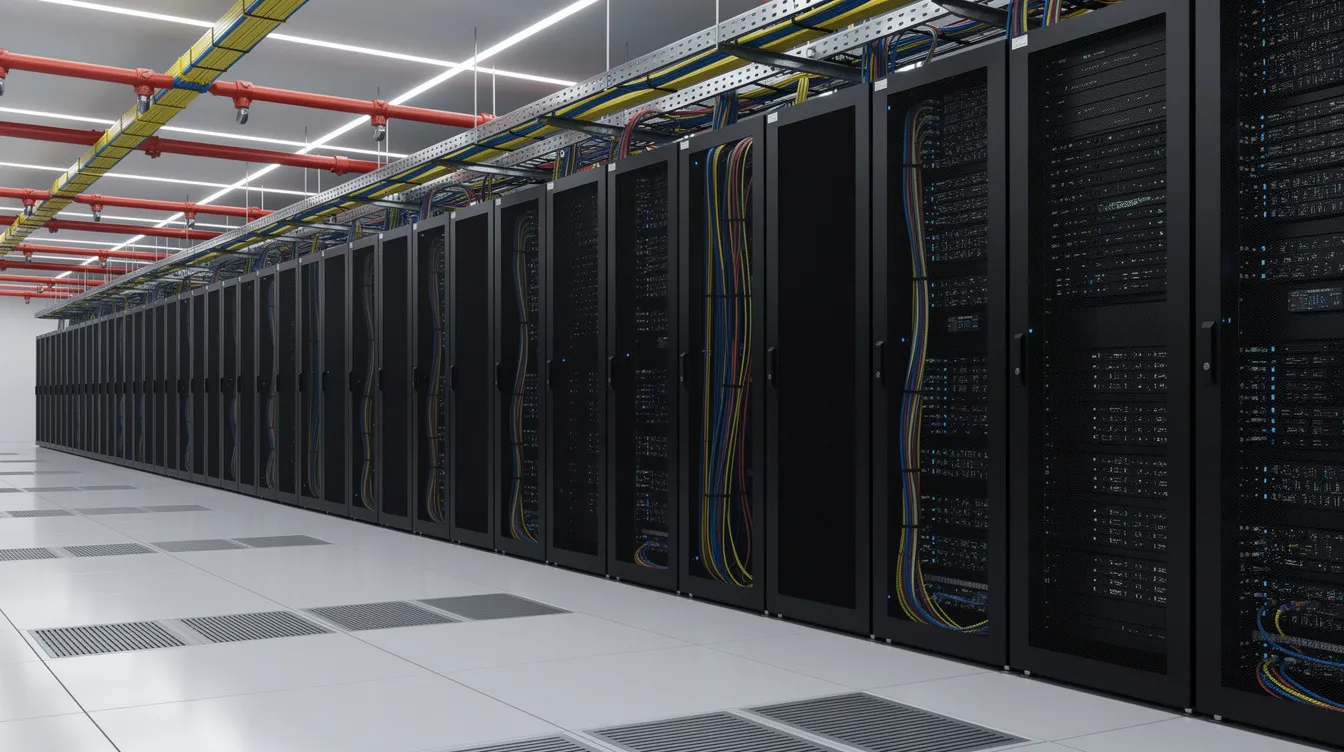
Implementing flood protection in Singapore’s urban environment requires site-specific analysis and multi-layered defenses. Raising sensitive data center equipment off the floor can help protect against flooding, but a comprehensive approach goes much further:
-
Elevate critical infrastructure above historical flood levels: Place switchgear, UPS systems, generators, and control panels at minimum 1–1.5 m above the 100-year flood level, incorporating climate change projections for sea level rise and precipitation intensity. Basement designs must include flood-proof doors and raised thresholds.
-
Install automated water detection and drainage redundancy: Deploy sensors at floor slab level, cable trays, service entries, and sump pits to identify ingress early. Design drainage systems sized for 1:50 or 1:100-year storm events with backup pumping systems powered by independent electrical sources.
-
Specify waterproof envelope and material selection: Use durable waterproof membranes rated for UV and salt-spray exposure on coastal sites. Ensure all cable entries are sealed, and specify emergency lighting rated to appropriate IP standards for splash or submersion conditions. BCA waterproofing requirements mandate CONQUAS-assessed ponding tests and membrane thickness standards.
-
Implement geographic redundancy: Geographic redundancy helps maintain service during site-specific incidents for data centres. For critical cloud services and financial institutions, distributing workloads across physically separated facilities provides operational resilience that no single-site mitigation can match.
Enhanced Electrical Safety Measures
The comparison below illustrates the gap between standard specifications and what Singapore’s tropical conditions demand:
|
System Component |
Standard Specification |
Singapore Enhancement |
|---|---|---|
|
Cable Insulation |
600V THWN rating |
1000V XLPE with tropical UV resistance per SS 299:2021 |
|
Panel Enclosures |
IP54 protection |
IP66 with active dehumidification |
|
Grounding Systems |
Standard copper earth |
Corrosion-resistant bronze with chemical enhancement |
|
Terminal Plating |
Standard copper/silver |
Nickel or tin plating with anti-corrosion compounds |
|
Monitoring |
Periodic manual inspection |
IoT automation with continuous environmental monitoring |
When specifying enhanced vs. standard systems, facility criticality and location are the determining factors. A Tier IV facility serving financial institutions and banking operations in Jurong will require the full Singapore enhancement range, while a lower-density facility in an elevated inland location may selectively apply enhancements based on site-specific risk assessments.
Implementing continuous monitoring systems for environmental conditions is critical in data centres, supporting continuous improvement through monitoring and adjustment of temperature, humidity, and airflow conditions. Automated alerts improve compliance with safety standards by flagging humidity spikes, temperature anomalies, and condensation conditions before they create electrical faults. Robust cooling redundancy and AI thermal mapping are necessary for managing high-heat conditions and preventing the cascade from cooling failure to equipment failure to unplanned outages.
Fire Suppression System Optimization
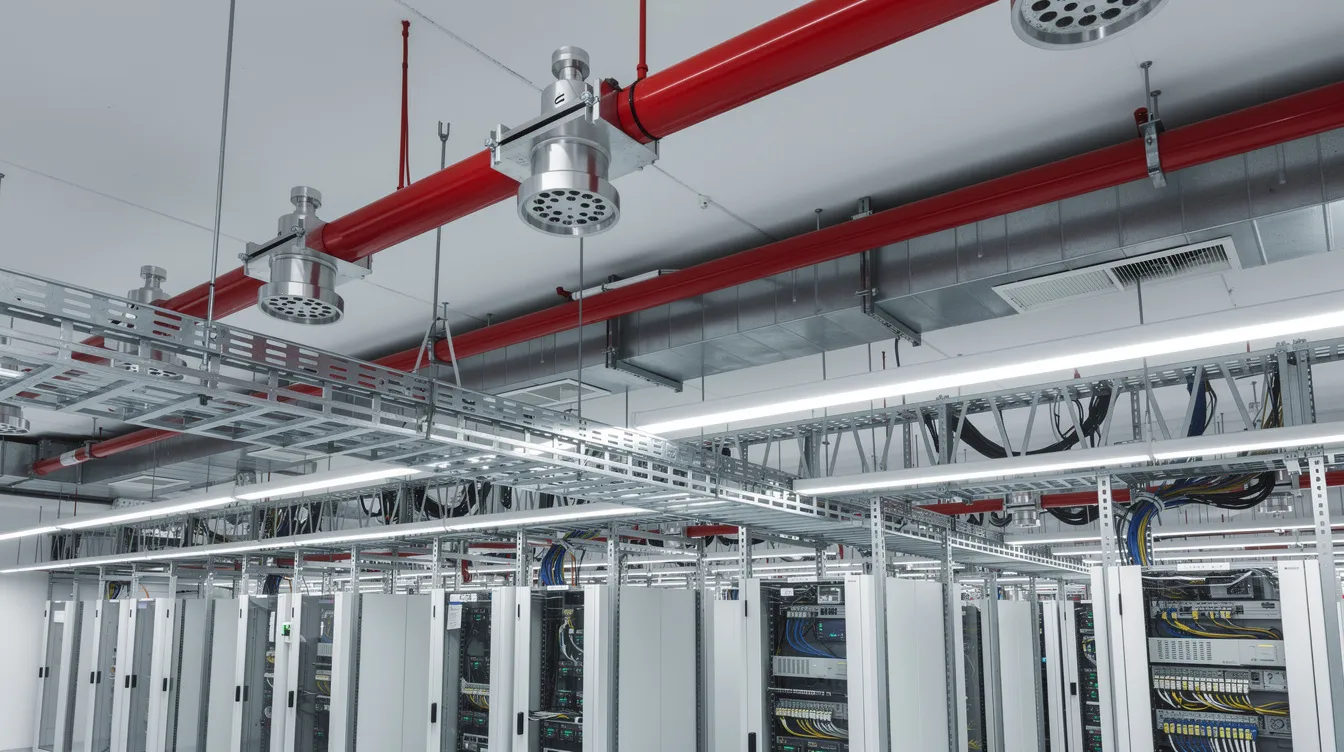
Fire suppression in Singapore data centres requires three integrated strategies:
-
Detection calibration for tropical conditions: Implement VESDA (Very Early Smoke Detection Apparatus) air sampling detection with sensitivity calibrated for Singapore’s ambient particulate levels and humidity range. Traditional smoke detectors may suffer reduced sensitivity or false alarms in high RH environments – aspirating systems provide the earliest reliable detection.
-
Agent discharge compensation: Clean-agent systems must be pressure-compensated for Singapore’s temperature and humidity variations. Piping and discharge nozzles must be sealed against moisture ingress; agent storage containers must be protected from heat exposure. Verify that systems can deliver required flow and concentration across the full range of expected ambient conditions.
-
Compartmentation and fire resistance: Wall and floor construction must meet SS 299 fire resistance ratings. Cable trays require fire stopping; fuel sources (generators, diesel, transformer oils) must be separated in dedicated fire zones per SCDF Fire Code compartmentation requirements. Emergency escape routes require SCDF plan approval and must include stair pressurization and humidity-rated emergency lighting.
Common Implementation Challenges and Solutions
The complexity of implementing DfSP in Singapore’s constrained urban data centre environment creates predictable challenges. Proactive safety measures can significantly reduce construction costs – but only when obstacles are anticipated and addressed systematically.
Multi-Agency Approval Coordination
Because data centres cross jurisdictions of BCA, SCDF, MOM, PUB, and IMDA, conflicting specifications and sequential approval bottlenecks are common. The solution is to establish early inter-agency coordination meetings (IACC) during the design phase, bringing all stakeholders to the table before detailed design commitments are made. Engaging a certified DfSP consultant familiar with Singapore’s agency requirements streamlines the approval process and reduces rework cycles. Stakeholder engagement reduces workplace accidents significantly, as demonstrated by projects like the Singapore Sports Hub, which showcased effective stakeholder collaboration and used design for safety methodology to manage complexity across multiple disciplines.
Cost Management for Enhanced Safety Systems
Many enhanced safety features – IP66 enclosures, corrosion-resistant materials, waterproof membranes, redundant drainage – carry higher upfront costs. Phase implementation of safety upgrades over 2–3 years to spread capital expenditure while maintaining immediate compliance with mandatory requirements. Leverage BCA Green Mark incentives and available grants for energy-efficient safety systems to offset upgrade costs. Singapore’s Tropical Data Centre Standard (SS 697:2023) supports higher operating temperatures to save energy, and organizations that align safety upgrades with sustainability targets can access green financing. For instance, hyperscale projects are securing multi-billion dollar green loans, where compliance with safety and environmental standards is a financing condition.
Proactive safety measures can lower costs and ensure compliance simultaneously – effective design for safety enhances construction efficiency by eliminating rework, reducing insurance premiums, and avoiding the regulatory penalties that accompany non-compliance.
Tropical Climate Equipment Sourcing
Not all vendor equipment is tropical-modified, and lead times for corrosion-resistant, high-IP-rated components can be extended. Partner with suppliers offering tropical-rated equipment with local service support to ensure rapid replacement and maintenance. Establish inventory of critical safety components – particularly those with long procurement cycles – to reduce lead times during monsoon season when shipping disruptions occur.
Digital tools support incident response and recovery management, while digital twin technology enhances safety protocols in construction by enabling virtual testing of flood scenarios, cooling failures, and fire events before they occur in the physical facility. Real-time monitoring reduces risks in construction projects and operational data centres alike, allowing teams to identify emerging hazards and manage them before they escalate.
Conclusion and Next Steps
Singapore data centres operate in a uniquely challenging environment where tropical climate conditions, dense regulatory requirements, and critical infrastructure dependencies converge. Effective DfSP expertise is not optional – it is the foundation for facilities that can serve cloud service providers, financial institutions, customers, and the wider digital economy with the reliability and resilience they expect. Ultimately, the ability to identify, mitigate, and manage Singapore-specific hazards through design-phase intervention protects both people and operations throughout the facility lifecycle.
Immediate actionable steps:
-
Conduct a climate-specific risk assessment covering flood exposure, humidity impact on electrical systems, and fire suppression adequacy under tropical conditions
-
Engage a certified DfSP consultant with demonstrated data centre experience to plan and coordinate safety integration from project outset
-
Coordinate with Singapore regulatory agencies through early IACC pre-submission meetings to align BCA, SCDF, MOM, and IMDA requirements, especially as governments tighten resilience expectations for digital infrastructure
-
Develop a phased implementation timeline that prioritizes highest-risk systems while managing costs and maintaining compliance
-
Deploy IoT-based continuous monitoring for environmental conditions, electrical system health, and fire detection sensitivity
Related topics worth exploring include bizSAFE certification requirements for data centre operations, ISO 45001 implementation for occupational health and safety management, and WSH risk management regulations that establish the compliance baseline for facility managers overseeing new data centers and existing operations alike.
Additional Resources
-
SS 697:2023 Tropical Data Centre Standard: Environmental envelopes, risk-based thresholds, and operational adaptation guidelines for data centres in tropical climates
-
SS 564: Singapore Standard for data centre environmental controls, operations, and safety compliance
-
SCDF Fire Code: Requirements for clean agent systems, fire compartmentation, emergency escape planning, and detection standards for data centre occupancies
-
SS 535:2007: Code of Practice for mains failure standby generating systems covering performance, layout safety, and maintenance schedules
-
BCA Green Mark certification: Pathways for sustainable data centre safety systems, including incentives applicable to energy-efficient safety upgrades
-
MOM WSH guidelines: Electrical safety and workplace safety requirements for high-humidity industrial environments including data centres
-
IMDA Advisory Guidelines: Best practices for data centre resilience, security, and environmental controls