
1. Introduction: The Quality Imperative in Singapore’s Built Environment
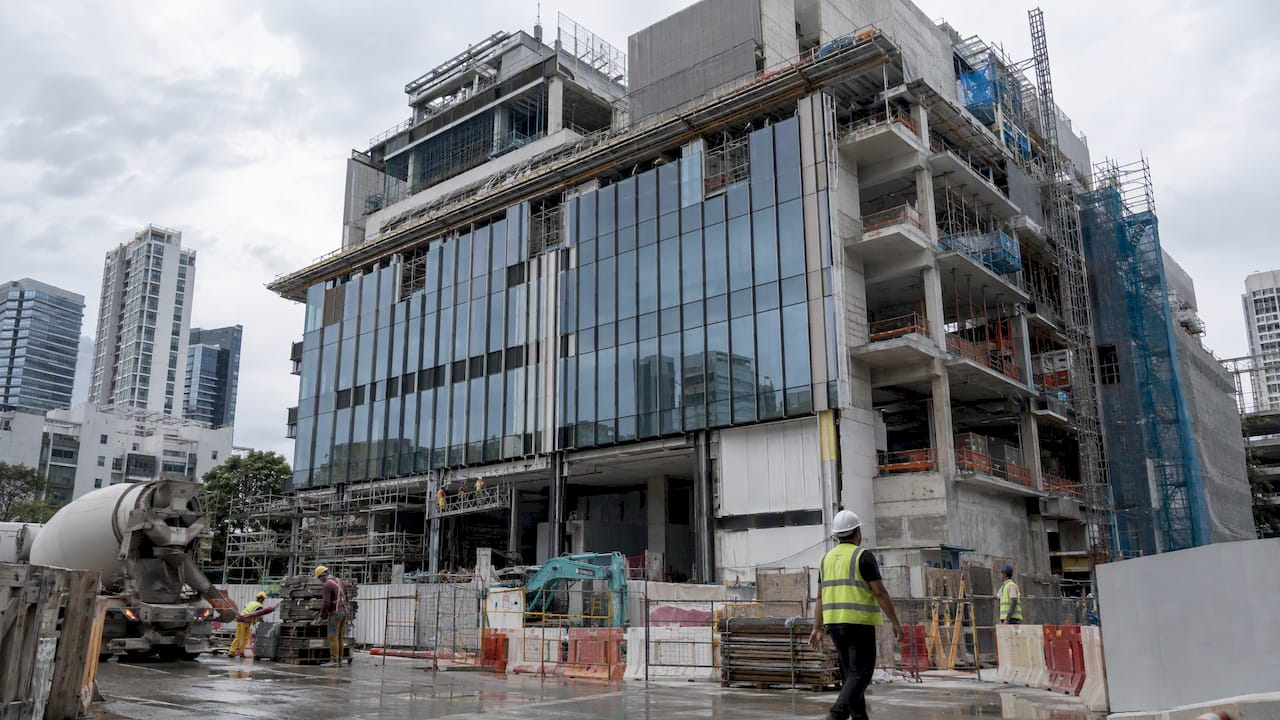
In the high-density, high-stakes landscape of Singapore’s real estate market, construction quality is not merely a technical requirement; it is the currency of trust.
For over three decades, the Construction Quality Assessment System (ConQUAS), administered by the Building and Construction Authority (BCA), has served as the de facto national yardstick for workmanship quality.1
However, the landscape is shifting. With the introduction of the ConQUAS 2025 framework, the industry is witnessing a paradigm shift from purely aesthetic assessment to a rigorous evaluation of “liveability and functionality”.2
For developers and main contractors, the stakes have never been higher.
The introduction of the 3-Tier Banding System and the Score Moderation Framework means that a project’s reputation—and the builder’s eligibility for future public tenders—hinges on a granular understanding of quality standards.2
A “Band 1” rating, indicating a very low incidence of major defects, is no longer just an accolade; it is a critical differentiator in a market where discerning homeowners and sophisticated investors demand perfection.3
This report serves as an exhaustive, expert-level guide for developers, project managers, and quality assurance (QA) professionals.
We will dissect the ConQUAS ecosystem from the ground up—starting with the structural foundation, moving through the intricate nervous system of Mechanical & Electrical (M&E) works, and finishing with the architectural details that define the user experience.
We will explore the nuances of the 2025 assessment criteria, the physics of defect prevention, and the strategic integration of digital technologies to secure a top-tier ranking.
1.1 The Evolution of ConQUAS: From 1989 to 2025
Since its inception in 1989, ConQUAS has evolved in lockstep with Singapore’s construction technology.
The early iterations focused heavily on structural integrity and basic finishing.
The launch of ConQUAS 21 in 1998 introduced a customer-oriented approach, refining scoring to better reflect end-user expectations.4
This historical trajectory is critical to understanding the current mindset of the regulator: a relentless move towards objective, functional performance metrics rather than subjective aesthetic judgments.
The ConQUAS 2025 (Private Residential) framework represents the most significant overhaul to date.
It was co-developed with input from developers, consultants, and builders, and crucially, it incorporates feedback from homeowners and data on defects reported during the Defect Liability Period (DLP).2
This “closed-loop” feedback mechanism ensures that the assessment captures the issues that matter most to occupants—primarily water seepage, functional failures, and safety hazards.
The 2025 framework introduces several key enhancements that fundamentally alter the compliance landscape:
- Calibration of Performance: A new scoring methodology that uses pre-requisites on critical functional tests to differentiate performance bands. This removes the ability to mask poor functional performance with superior cosmetic finishes.
- Higher Standards for Watertightness: The passing rate for window watertightness tests has been tightened, reflecting the high impact of facade leakage in Singapore’s tropical climate.2 The allowable non-compliance rate has been reduced, forcing builders to adopt more robust installation methodologies.
- Emphasis on Functional Tests: A revised weightage system that prioritizes functional tests (e.g., wet area ponding, window sprays) over purely visual architectural checks.2
- Streamlined Assessment: A reduction in checks for minor aesthetic issues (e.g., floor tonality) that have insignificant impact on liveability, allowing inspectors to focus on major defects.2
1.2 The Business Case for Quality:
The implications of ConQUAS scores extend far beyond the technical realm into the financial and legal domains.
Banding, Liability, and Market Positioning
The Banding System classifies projects into Bands 1 through 6, a publicly available metric that has become a proxy for developer reliability. Bands 1 and 2 are reserved for firms with consistent high performance over the past six years, such as City Developments Limited (CDL) and Woh Hup, who have historically achieved “Quality Champion” status and leverage this in their marketing and brand positioning.5
This banding is not static; it aggregates performance over a six-year rolling period, smoothing out anomalies and presenting a clearer picture of consistency to the market.7
Conversely, a project falling into Band 6, or one with high incidences of major defects, triggers the 3-Tier ConQUAS Scheme.
This scheme is punitive by design. While Tier 1 represents the standard sampling rate of 25%, Tier 3 imposes a 100% inspection rate along with intensive BCA supervision.8
The financial impact of this cannot be overstated. A 100% inspection regime quadruples the inspection man-hours, significantly elongates the timeline for obtaining the Temporary Occupation Permit (TOP), and delays revenue recognition for the developer.
In an industry where holding costs are substantial, the “cost of poor quality” becomes a direct hit to the bottom line.
Furthermore, the Score Moderation Framework allows BCA to retroactively adjust scores based on valid adverse feedback received from homeowners during the DLP.2
This creates a “long tail” of liability; a project cannot simply “pass” inspection and move on. It must perform in the real world.
If a developer achieves a high initial score but faces a deluge of valid complaints about water seepage or tile popping within the warranty period, their score—and consequently their band—can be downgraded.
This mechanism aligns the builder’s incentives with the homeowner’s long-term satisfaction.
1.3 Strategic Integration of Quality Mark (QM)
Complementing ConQUAS is the Quality Mark (QM) scheme, a voluntary certification that assesses every single unit in a development, rather than a sample.10
While ConQUAS provides a project-level score, QM provides unit-level assurance.
Achieving a QM “Star” rating (average unit score ≥ 92 points) or “Excellent” rating is increasingly becoming a requisite for luxury developments where buyers are intolerant of even minor defects.11
The synergy between QM and ConQUAS is potent: the rigor required to achieve QM certification invariably lifts the overall ConQUAS score, and significantly, QM achievements contribute bonus points to the ConQUAS project score, creating a virtuous cycle of quality improvement.12
2. The Structural Backbone: Precision from the Ground Up
The structural integrity of a building is the non-negotiable prerequisite for all subsequent quality.
In ConQUAS, Structural Works account for a significant portion of the overall assessment, particularly in the early stages of construction.
While end-users rarely see the structure, defects here propagate outward, causing cracks in walls, misalignment of facades, and waterproofing failures.
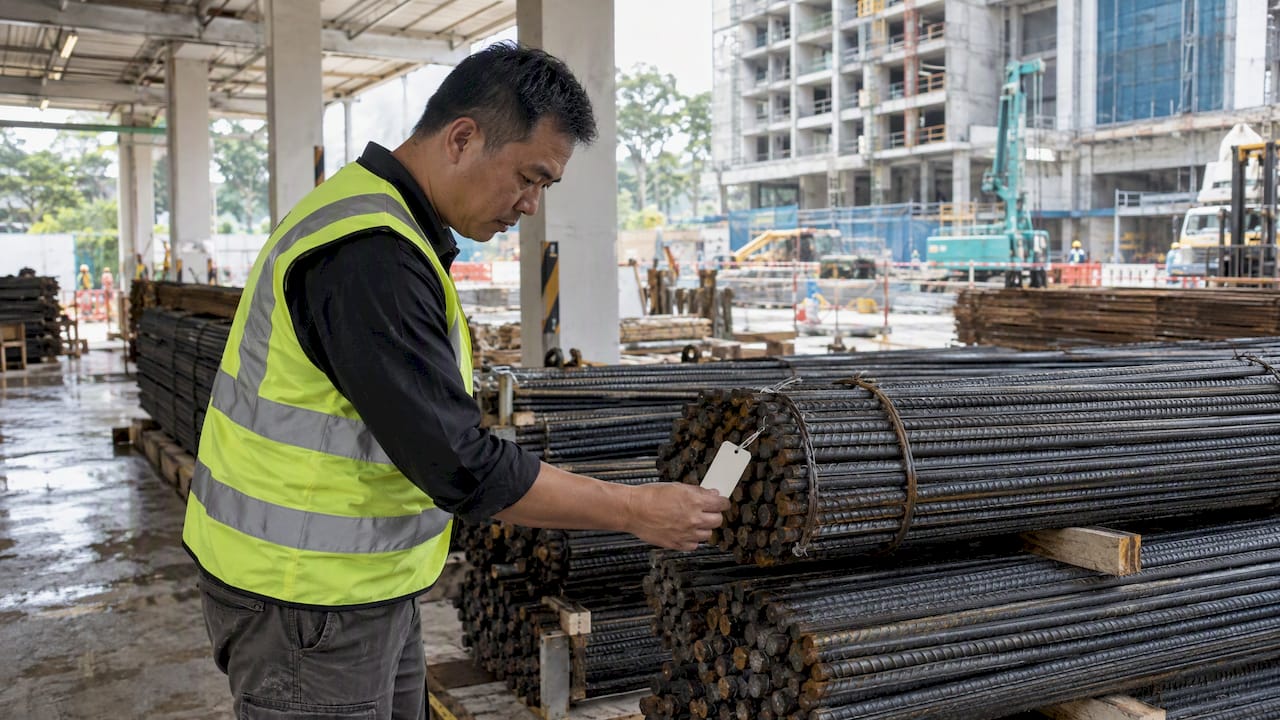
The structural assessment is comprehensive, covering reinforced concrete, structural steel, and pre-stressed concrete works.
2.1 Concrete Quality and Standards: The Material Foundation
Concrete quality in Singapore is governed by strict adherence to standards such as SS 289 (Specification for Concrete) and CP 65 (Code of Practice for Structural Use of Concrete).
The ConQUAS assessment for reinforced concrete structures focuses on two primary dimensions: Material Quality and Workmanship.12
This dual focus ensures that the structure is not only geometrically accurate but also chemically and physically durable.
2.1.1 Material Quality Assessment Protocols
The assessment of material quality involves rigorous testing of concrete samples to ensure they meet the design mix specifications. Key parameters include:
- Compressive Strength: Assessed via cube tests at 7 and 28 days to verify the concrete reaches its target strength (e.g., Grade 40, Grade 60).
- Durability and Composition: Checks for cement content, water-cement ratio, and the use of approved admixtures. The water-cement ratio is particularly critical; excess water may improve workability but significantly increases the risk of shrinkage cracks and reduces strength.13
- Non-Destructive Testing (NDT): ConQUAS mandates the use of Ultrasonic Pulse Velocity (UPV) tests for concrete uniformity and Electro-Covermeter tests for concrete cover.12 The emphasis on concrete cover—the distance between the outer surface of the concrete and the reinforcement bar—is critical for preventing carbonation and corrosion. In Singapore’s humid, coastal environment, insufficient cover is a primary cause of spalling concrete, a latent defect that plagues older estates.
2.1.2 Workmanship and Tolerances: The Geometry of Quality
Workmanship is assessed through visual inspection and measurement of cast elements. The tolerances for structural elements are exceedingly tight, reflecting the need for precision to facilitate modern construction methods like Prefabricated Prefinished Volumetric Construction (PPVC).
- Verticality (Plumb):
- ConQUAS Standard: The tolerance for column verticality is ±H/600 or 5mm, whichever is lower.12 This means a standard 3-meter column can deviate by no more than 5mm.
- PPVC Standard: Tighter tolerance of ±2mm is often required for module alignment.15
- Implication: A deviation of just 5mm in a structural column can compound over 30 storeys to create a significant lean, affecting lift shaft alignment and facade installation. This “tolerance stacking” is a critical risk factor that must be managed through precise surveying and formwork quality control.
- Levelness and Surface Evenness:
- Maximum deviation of level at each end of a beam: ±10mm.12
- Slab surface evenness: ±10mm deviation within the element.12
- Rectification: High spots in slabs must be ground down, while low spots often require self-levelling screed, adding cost and time. Achieving the “First Time Right” standard in casting is essential for maintaining the project schedule.
2.2 Steel Reinforcement Quality: The Internal Skeleton
The “skeleton” of the building, steel reinforcement (rebar), is inspected before concrete pouring to ensure it can withstand tensile forces. Critical checks include:
- Main Member/Partial Assembly: Cross-sectional tolerances must meet structural steel specifications.16
- Connections and Laps: Bolting must show a minimum of one thread exposed (ConQUAS) or three threads (PPVC) to ensure full engagement.15 Proper lap lengths for rebar are essential for load transfer.
- Welding: 10% weightage in structural assessment is dedicated to steel welding tests, ensuring joint integrity.12 Visual inspection checks for weld size, throat thickness, and absence of defects like porosity or undercut.
2.3 The PPVC Revolution and Tolerance Control
The industry-wide shift towards Design for Manufacturing and Assembly (DfMA), specifically PPVC, has fundamentally altered structural quality control.2
In PPVC, entire rooms or dwelling units are manufactured in factories and assembled on-site.
This “Shift Left” strategy moves quality control upstream, from the chaotic environment of the construction site to the controlled environment of the factory.
- Factory vs. Site: For PPVC projects, ConQUAS inspections for installation methods (e.g., waterproofing, tiling) are conducted in the factory.1 This allows for easier rectification of defects before the module is lifted into place.
- Tolerance Stacking: The primary challenge in PPVC is tolerance stacking. If the on-site foundation or transfer beam is out of level by 5mm, and the first module is out of square by 3mm, the gap at the 10th storey could be significant, creating misalignment that compromises waterproofing and aesthetics.
- Assessment Strategy: Developers must enforce tighter-than-standard tolerances in their contracts with precasters. The document 15 highlights that while ConQUAS allows ±3mm verticality for 1m, PPVC guidelines often demand ±1mm to ensure modules fit together like Lego bricks without forcing joints. This precision requires the use of high-quality steel moulds and automated manufacturing processes.
2.4 Preventing Structural Cracks
Cracks in structural concrete are not just unsightly; they can indicate stress failure or durability issues.
The Building and Construction Authority identifies several causes for concrete cracks that developers must mitigate:
- Thermal Variation: Differential cooling of large concrete pours (e.g., transfer beams) can cause thermal cracking. Mitigation involves using low-heat cement and proper curing blankets.
- Drying Shrinkage: As concrete cures, it loses moisture and shrinks. If this shrinkage is restrained, cracks form. The use of shrinkage-reducing admixtures and proper curing regimes (keeping concrete moist for 7 days) is essential.13
- Chemical Reaction: Alkali-Silica Reaction (ASR) can cause expansive cracking from within. Using non-reactive aggregates is a standard preventive measure in Singapore.
3. M&E Works: The Nervous System of the Building
Mechanical and Electrical (M&E) works are the invisible enablers of liveability.
A failure here—a leaking pipe, a tripped breaker, a noisy air-conditioner—is an immediate functional defect that severely impacts the homeowner’s quality of life.
ConQUAS 2025 places a renewed emphasis on M&E, particularly regarding water services and sanitary plumbing, which are frequent sources of homeowner complaints.
The assessment covers installation quality, material standards, and functional performance.
3.1 Sanitary Plumbing and Drainage: The Gradient Rule
One of the most critical aspects of M&E quality is the proper installation of sanitary pipes.
The Code of Practice on Sewerage and Sanitary Works (COPSSW) and SS 213 govern these installations, setting out strict requirements for pipe gradients, materials, and testing.
- Gradient Requirements: To prevent stagnation and chokage, discharge pipes must be laid to a specific gradient. Gravity is the engine of the sanitary system.
- Standard: According to PUB requirements and best practices referenced in ConQUAS, pipes < 75mm typically require a steeper gradient (e.g., 1:50), while larger pipes (≥100mm) may allow 1:60 to 1:90 depending on flow velocity.17
- ConQUAS Check: Inspectors verify that inclined pipes are laid to proper gradients using spirit levels.19 A backfall (negative gradient) is considered a major defect because it guarantees eventual blockage and potential overflow, leading to severe water damage.
- Material Standards (SS 213): The use of unplasticized polyvinyl chloride (uPVC) pipes must comply with SS 213:2022. This standard specifies dimensions, tolerances, and physical properties, ensuring the pipes are durable and chemically resistant to sewage. It also includes fire performance requirements, ensuring that plumbing penetrations do not compromise the building’s fire compartments.20
- Leakage Testing: All joints must be tested for leakage. ConQUAS mandates that there be “no leakage at joints”.19
- Best Practice: Implementing a hydrostatic test (filling the pipe with water) for drain-lines before concealment is crucial. For sanitary stacks, an air pressure test is often used to detect hairline cracks in fittings which might leak sewer gases.
3.2 Electrical and ACMV Standards
- Electrical Conduits: Concealed conduits must be installed with sufficient cover to prevent plaster cracks. ConQUAS requires that conduits be aligned horizontally or vertically—never diagonally—to allow future owners to predict wire paths and avoid drilling into live cables.19
- Assessment: Inspectors check for neatness in wiring, proper termination at distribution boards (DB), and correct labeling of circuits.
- Air-Conditioning & Mechanical Ventilation (ACMV):
- Ductwork: Must be airtight to prevent condensation (sweating) and energy loss. Poor insulation is a common cause of mold growth on ceilings due to condensation dripping.
- Drainage: The AC drain pipe must have a proper fall to the floor trap. A common defect is the “kinked” flexible hose or insufficient gradient, leading to the dreaded “leaking air-con” unit.
- Functionality: Performance tests verify that the Fan Coil Unit (FCU) does not leak and that air flow meets design specifications.12
3.3 BIM and Clash Detection
Modern M&E quality relies heavily on Building Information Modelling (BIM).
By modelling pipes, ducts, and cable trays in 3D, developers can perform clash detection before construction begins.
- Insight: A clash detected on-site often leads to ad-hoc rerouting, which compromises pipe gradients or aesthetic headroom. A clash resolved in BIM is a zero-cost quality improvement.
- ConQUAS Advantage: Projects that utilize BIM for M&E coordination typically score higher on “Alignment & Evenness” and “Functionality” because the installation follows a conflict-free, pre-planned route.
4. Architectural Works: The Visible Canvas
This component comprises 40% of the ConQUAS score 2 and is what the homeowner interacts with daily.
The 2025 framework assesses internal finishes across six elements: Floors, Internal Walls, Ceilings, Doors, Windows, and Components.10
The shift is away from subjective aesthetics (e.g., slight tonal variation in stone) towards objective defects that affect usage and safety.
4.1 Flooring: The Art of Flatness and Adhesion
Flooring defects are among the most contentious issues during handover.
The assessment focuses on three attributes: Evenness, Lippage, and Hollowness.
4.1.1 Evenness and Levelness
- Standard: The surface must be level to within 3mm per 1.2m.7 This standard applies to all floor finishes, including tiles, timber, and vinyl.
- Measurement: Inspectors use a 1.2m straight edge and a wedge gauge. Any gap exceeding 3mm results in a “fail.”
- Rectification: For timber floors, sanding can correct minor unevenness. For tiled floors, the substrate screed must be perfectly level before tiling. Self-levelling compounds are recommended for high-end finishes to ensure a perfectly flat base.
4.1.2 Lippage (Tiling Alignment)
- Definition: Lippage is the vertical displacement between two adjacent tiles. It creates a tripping hazard and an unsightly shadow line.
- Standard: The difference must be ≤ 0.5mm.7 This is an incredibly tight tolerance, stricter than many international standards (which often allow 1mm).
- Prevention: Using tile levelling systems (clips and wedges) is virtually mandatory to achieve this standard. These systems mechanically force adjacent tiles to the same level while the adhesive sets, preventing “slumping” during cure.
4.1.3 Hollowness (Adhesion)
- The Tapping Test: Inspectors tap every tile with a rod. A hollow sound indicates debonding between the tile and the screed.7
- Root Causes:
- Insufficient Adhesive: The “spot bonding” method (applying blobs of adhesive) is prohibited. BCA Good Industry Practices recommend full trowelling (buttering both the tile back and the floor, also known as back-buttering) to ensure 100% coverage.22
- Open Time Exceeded: If the adhesive is left exposed too long before the tile is placed, a “skin” forms, preventing adhesion. This is common in hot, windy conditions.
- Standard: No hollow sound allowed.7 A single hollow tile constitutes a defect and must be replaced.
4.2 Internal Walls: Plaster and Paint
- Verticality: Walls must be plumb to within 3mm per 1.2m.7 Deviations are most noticeable at door frames and corners.
- Cracks: Hairline cracks are common due to shrinkage. However, ConQUAS has zero tolerance for visible cracks from a distance of 1.5m.21
- Prevention: Using fiberglass mesh at the joints between reinforced concrete (columns/beams) and brick/block walls is essential. This mesh dissipates stress and prevents interface cracks caused by differential thermal movement.
- Painting Standards: Good Industry Practices 23 emphasize proper surface preparation. The moisture content of the plastered wall must be below 6% (using a moisture meter) before painting begins. Painting on damp walls leads to blistering, peeling, and efflorescence (white powdery deposits). A standardized paint system (Sealer + 2 Topcoats) is required.
4.3 Windows: The Critical Watertightness Barrier
Windows are the primary defense against Singapore’s tropical storms.
The Window Watertightness Test (WTT) is a functional test with high weightage and represents a “kill point” for the assessment.
- Test Protocol:
- Pressure: A static wind pressure of 240 Pa is applied to the window using a specialized chamber.2 This simulates the wind pressure of a severe storm.
- Water Intensity: Water is sprayed at a rate of 300mm/hr (approx. 1 liter/min/m of joint).12 This intensity exceeds typical rainfall to stress-test the seals.
- Duration: The test lasts for 10 minutes.
- Passing Criteria: No sign of leakage (uncontrolled water) on the indoor face.12 Even a single drop constitutes a failure.
- 2025 Enhancement: The allowable non-compliance rate has been tightened to 10% (down from 15%).2 This means if more than 1 in 10 tested windows fail, the project suffers a significant score penalty.
- Design for Watertightness:
- Sub-frame system: Using a sub-frame allows the wet trade (masonry) to be completed before the high-precision window frame is installed, reducing damage and improving joint sealing.
- Drainage Slots: These must be designed to handle the water volume and kept clear of construction debris.
- Gaskets: High-quality EPDM gaskets are preferred over simple sealant beads for long-term durability and elasticity.
4.4 Doors and Components
- Functionality: Doors must operate smoothly without binding. The gap between the door leaf and the floor finish should be consistent (usually 5-10mm) to allow for air circulation (if AC is used) while maintaining privacy.
- Alignment: Cabinetry and wardrobes are checked for alignment of drawers and doors. Soft-closing mechanisms are tested for functionality.
- Damage: Surfaces must be free of scratches, dents, and chips. The “Six Pillars of Internal Finishes” guide inspectors to check for surface polish and alignment.9
5. Waterproofing: The “Zero Tolerance” Zone
Waterproofing failure is the single most damaging defect in terms of property value and homeowner trust.
Water seepage leads to mold, damaged furniture, and structural corrosion.
The ConQUAS 2025 framework treats wet area integrity as a fundamental prerequisite, moving from a sampling approach to a near-total verification regime.
5.1 Internal Wet Areas (Bathrooms/Toilets)
- The 100% Rule: Unlike other architectural finishes which are sampled, 100% of wet areas (bathrooms and toilets) must undergo water ponding tests.11 This means every single toilet in a condominium is flooded.
- Test Procedure:
- The area is flooded with water to a depth of min. 25mm.
- The water is left for 24 hours.7
- Inspectors check the soffit (ceiling) of the unit below and the surrounding walls for any dampness or leakage.
- Good Industry Practice (GIP) for Internal Wet Areas 24:
- Upturn: The waterproofing membrane must be upturned at least 300mm at walls (and higher, typically 1500mm-1800mm, at shower areas) to create a “tanking” effect.
- Pipe Penetrations: The interface between the PVC pipe and the concrete slab is the most common failure point. Using puddle flanges or swellable waterstops at these penetrations is critical. The membrane must be dressed down into the pipe to ensure continuity.
- Surface Preparation: The substrate must be clean, dry, and sound. Any sharp protrusions must be ground off to prevent puncturing the membrane.25
- SCI Accreditation: Points are awarded if the waterproofing contractor is accredited by the Singapore Concrete Institute (SCI), incentivizing the use of certified specialists.8
5.2 External Waterproofing (Roofs and Balconies)
- Falls and Drainage: Flat roofs must have sufficient fall (gradient) to prevent ponding. ConQUAS inspectors look for standing water, which accelerates membrane degradation. A gradient of 1:100 is typically recommended for concrete roofs.
- Membrane Protection: Roof membranes must be protected by a screed or insulation layer to prevent UV degradation and mechanical damage from foot traffic or maintenance activities.
- Detailing: Special attention must be paid to upturns at parapet walls and flashings. The GIP guide recommends a 45-degree fillet at corners to prevent stress on the membrane.25
6. The 3-Tier Banding System: Strategy and Survival
The introduction of the 3-Tier Banding System is a game-changer for developer strategy.
It essentially categorizes developers based on risk, directly impacting their operational costs and project timelines.
6.1 The Tiers Explained
The tiering determines the sampling intensity for the ConQUAS assessment.
| Tier | Condition | Sampling Rate | Operational Impact |
| Tier 1 | Standard projects with good track record (Band 1/2). | 25% of units. | Standard inspection cost and timeline. Business as usual. |
| Tier 2a | Developers/Builders with no recent track record OR minor lapse (Band 4/5). | 50% of units. | Increased inspection time; slower TOP. Higher manpower requirement for BCA coordination. |
| Tier 2b | Significant lapses (Band 6) or major defects (>5% units affected). | 100% of units. | Rigorous checks on every unit; potential project delays; significant cost increase. |
| Tier 3 | Recurring major defects or failure to rectify after Tier 2b intervention. | 100% + Oversight. | Severe cost penalty; intensive BCA supervision; reputational damage. |
2
6.2 Strategic Implication: The “Death Spiral” of Tier 3
Falling into Tier 3 is a strategic disaster. It requires 100% inspection of every single unit.
- Cost: The developer bears the cost of the additional BCA man-hours and the extended tenure of the main contractor on site.
- Time: Inspecting 100% of a 500-unit condo takes 4x longer than inspecting 25%. This delays the TOP, delaying revenue recognition and potentially triggering late delivery penalties (Liquidated Damages) to buyers.
- Reputation: Tier 3 status is a red flag to investors and partners. It signals a loss of control over the construction process.
Strategy: The only viable strategy is to invest heavily in QA/QC during construction to ensure the project lands in Tier 1.
“Saving” money on QA staff is a false economy if it triggers a Tier 2 or 3 escalation. Developers should conduct internal “mock ConQUAS” assessments using the Tier 2b (100%) sampling rate to ensure they are over-prepared for the actual BCA assessment.
7. Scoring Maximum Points: Bonus Schemes and Innovation
Achieving a Band 1 score (>95 points) requires maximizing every available point, including bonus categories.
These bonuses reward productivity, sustainability, and workforce capability.
7.1 Productivity and Buildability (PPVC/MET)
ConQUAS incentivizes the use of productive technologies that reduce reliance on on-site manpower and improve quality consistency.
- PPVC: Projects with >65% PPVC coverage can earn up to 2.0 bonus points.8 The logic is that factory-produced modules have higher quality finishes than in-situ works.
- Mass Engineered Timber (MET): Using MET for floors/walls earns 1.0 bonus point. MET offers superior precision and finish quality compared to concrete.
- Productive Materials: Use of vinyl flooring, engineered wood, or drywall partitions earns 0.3 points each (max 1.0).8
- Why? These materials are factory-finished and require dry installation, reducing on-site wet works (screeding, plastering) and the associated variability of workmanship.
7.2 Certified Personnel
Employing certified staff demonstrates a commitment to quality culture and ensures that the site team understands ConQUAS standards.
- Certified CONQUAS Supervisor: 0.15 points per personnel.
- Certified QM Manager: 0.60 points per personnel.
- Max Bonus: 1.05 points (capped at 1.0).8
- Action: Developers should sponsor their Resident Technical Officers (RTOs) and Site Managers to attend SCAL/BCA certification courses. This is a low-cost, high-return investment for securing bonus points.26
7.3 Quality Mark (QM) Integration
The Quality Mark (QM) scheme is a voluntary opt-in that certifications individual units.
- Synergy: A project committed to QM essentially undergoes 100% inspection voluntarily. This rigor almost guarantees a high ConQUAS score because the team is disciplined to a higher standard.
- Bonus: A QM “Star” rating (average unit score > 92) earns 1.5 bonus points for the project ConQUAS score.12 A “Merit” rating earns 0.5 points.
7.4 Green Mark and Sustainability
While Green Mark is a separate scheme, there is cross-pollination. ConQUAS performance contributes to the Green Mark score under the “Construction Quality” section.
Conversely, Green Mark Gold/Platinum projects often have better integrated design processes (e.g., BIM) which aid ConQUAS performance.
The Price Quality Method (PQM) for public tenders also considers both Green Mark and ConQUAS scores, making holistic performance essential for contractors bidding for government work.27
8. Defect Management in the Digital Age
The future of ConQUAS is digital. BCA’s “Smart Inspection” initiatives are transforming how defects are detected, managed, and rectified.
8.1 Virtual Inspection and AI
- Virtual TOP: BCA is piloting virtual inspections using 360-degree cameras and LiDAR scanning.28 This allows inspectors to “walk” the site remotely, improving efficiency and creating a permanent digital record of the site condition at handover.
- AI Defect Detection: Drones equipped with high-resolution cameras and AI algorithms are now used for facade inspections. These systems can detect hairline cracks, staining, and debonding tiles that are invisible to the naked eye from the ground.29 This technology is becoming standard for tall buildings where scaffold access is dangerous and costly.
- Digital Defect Management Systems (DMS): Leading builders use cloud-based platforms (e.g., Hubble, Novade) to track defects in real-time.
- Workflow: A sub-con snaps a photo of a defect -> The system geotags it on the floor plan -> The task is assigned -> Rectification is photographed -> Closed. This digital audit trail is crucial for proving “reasonable measures” in case of liability claims.
8.2 Common Defects and Rectification
Even with the best systems, defects occur. The key is effective rectification.
| Defect | Identification | Root Cause | Rectification Method |
| Hollow Tiles | Tapping Rod | Insufficient adhesive coverage; open time exceeded. | Inject epoxy resin (if minor) or Replace tile (full trowel method). |
| Lippage | Wedge Gauge | Uneven screed; lack of levelling clips. | Grinding (limited for ceramic, viable for stone) or Re-tiling. |
| Water Seepage | Moisture Meter | Waterproofing membrane damage; pipe joint failure. | PU Injection (temporary fix) or Re-application of membrane (permanent solution). |
| Window Leak | Spray Test | Gasket failure; blocked drainage slot; frame joint gap. | Clear drainage; replace gasket; re-seal perimeter with high-quality silicone. |
9
9. Conclusion: The Path to Band 1
Acing the ConQUAS assessment in 2025 is not about “studying for the test”; it is about engineering a quality culture from the foundation up.
The shift towards functional testing and the rigorous 3-Tier system penalizes those who cut corners and rewards those who invest in process, technology, and training.
The Roadmap to Success:
- Adopt “Shift Left”: Use PPVC and factory finishes to minimize on-site variables and leverage the controlled environment for quality assurance.
- Master the Water: Treat waterproofing and window installation as the project’s critical path. Implement 100% internal testing before BCA inspectors arrive.
- Digitalize QA: Use BIM for clash detection to prevent M&E issues and AI-driven DMS for real-time defect tracking.
- Certify the Team: Ensure site supervisors are ConQUAS/QM certified to grab those crucial bonus points and drive on-site standards.
- Engage Early: Don’t wait for the TOP inspection. Conduct progressive “mock” ConQUAS assessments throughout the build cycle to identify systemic issues early.
For the Singaporean developer, a ConQUAS Band 1 score is more than a number. It is the ultimate seal of approval—a promise of value kept, a liability minimized, and a reputation secured for the next generation of the built environment.
In a market where quality is the primary differentiator, mastering ConQUAS is the definitive competitive advantage.
Works cited
- CONQUAS | Building and Construction Authority (BCA), accessed December 18, 2025, https://www1.bca.gov.sg/buildsg/quality/conquas
- BCA Construction Quality Assessment System – Singapore, accessed December 18, 2025, https://www1.bca.gov.sg/docs/default-source/docs-corp-buildsg/quality/conquas-(private-residential)-manual.pdf
- CONQUAS banding system – Lentor Collection, accessed December 18, 2025, https://lentorcollection.sg/conquas-banding-system/
- Construction Quality Assessment System CONQUAS® INTRODUCTION, accessed December 18, 2025, https://www.nas.gov.sg/archivesonline/data/pdfdoc/20130523003/factsheet_-_conquas.pdf
- PRESS RELEASE Report, accessed December 18, 2025, https://www.nas.gov.sg/archivesonline/data/pdfdoc/20130523003.htm
- PRESS RELEASE Report, accessed December 18, 2025, https://www.nas.gov.sg/archivesonline/data/pdfdoc/20150519003.htm
- ConQUAS 2025 Advantage: Property Value, Trust, and Construction Quality, accessed December 18, 2025, https://mosaicsafety.com.sg/conquas-2025-advantage-property-value-trust-and-construction-quality/
- BCA Construction Quality Assessment System CONQUAS® 2022, accessed December 18, 2025, https://www1.bca.gov.sg/docs/default-source/docs-corp-buildsg/quality/conquas/conquas-2022.pdf?sfvrsn=2789c9b0_0
- Singapore’s Construction Quality Assessment System (ConQUAS), accessed December 18, 2025, https://mosaicsafety.com.sg/singapore-construction-quality-assessment-system-conquas/
- Quality Mark – Building and Construction Authority – BCA, accessed December 18, 2025, https://www1.bca.gov.sg/buildsg/quality/quality-mark
- Guide on Quality Mark Scheme Application & Pre-Assessment – BCA, accessed December 18, 2025, https://www1.bca.gov.sg/docs/default-source/docs-corp-buildsg/quality/guide-on-quality-mark-scheme-(22-may-2025).pdf?sfvrsn=e6b75882_0
- conquas – Singapore – BCA, accessed December 18, 2025, https://www1.bca.gov.sg/docs/default-source/docs-corp-buildsg/quality/conquas9.pdf
- How to prevent cracks in concrete – Waterproofing Contractor, accessed December 18, 2025, https://waterproofing.com.sg/how-to-prevent-cracks-in-concrete/
- THE BCA CONSTRUCTION QUALITY ASSESSMENT SYSTEM, accessed December 18, 2025, https://www1.bca.gov.sg/docs/default-source/docs-corp-buildsg/quality/conquas8.pdf?sfvrsn=279ebe6a_2
- PPVC Tolerance (BCA) | PDF | Technology & Engineering – Scribd, accessed December 18, 2025, https://www.scribd.com/document/429769948/PPVC-Tolerance-BCA
- CONQUAS 8th Edition Manual PDF – Precast Concrete – Scribd, accessed December 18, 2025, https://www.scribd.com/document/384556680/CONQUAS-8th-Edition-Manual-pdf
- CPUB070104 | PDF | Sanitary Sewer | Hydraulic Engineering – Scribd, accessed December 18, 2025, https://www.scribd.com/document/932031603/CPUB070104
- CODE OF PRACTICE SEWERAGE AND SANITARY WORKS (2nd EDITION – JAN 2019) (INCLUDED AMENDMENTS UNDER ADDENDUM NO.1 – MAR 2021) – PUB, Singapore’s National Water Agency, accessed December 18, 2025, https://www.pub.gov.sg/-/media/PUB/PDF/Compliance/Used-Water/GreaseTrap/COPSSW2nded2019.pdf
- BCA Construction Quality Assessment System CONQUAS® 2022, accessed December 18, 2025, https://www1.bca.gov.sg/docs/default-source/docs-corp-buildsg/quality/conquas/conquas-2022-r2.pdf?sfvrsn=89d1e201_0
- Singapore Standard SS 213 | PDF – Scribd, accessed December 18, 2025, https://www.scribd.com/document/833222656/Singapore-Standard-SS-213
- 5.0 INSTALLATION – BCA, accessed December 18, 2025, https://www.bca.gov.sg/Publications/EnhancementSeries/others/tile5.pdf
- Ceramic Tiling – BCA, accessed December 18, 2025, https://www.bca.gov.sg/Publications/EnhancementSeries/others/tile2.pdf
- Good Industry Practices – Painting – BCA Academy, accessed December 18, 2025, https://www.bcaa.edu.sg/what-we-offer/courses/online-courses/Details/good-industry-practices—painting
- Waterproofing for Internal Wet Areas, accessed December 18, 2025, https://www.bcaa.edu.sg/docs/librariesprovider2/pse-courses/gip—waterproofing-(internal-wet-areas)/guide-book—waterproofing-for-internal-wet-areas-pdf_safe.pdf?sfvrsn=4982f580_1
- Good Industry Practices – Waterproofing for Internal Wet Areas BCA Academy, accessed December 18, 2025, https://www.bcaa.edu.sg/docs/librariesprovider2/pse-courses/gip—waterproofing-(internal-wet-areas)/lesson-2.pdf?sfvrsn=8fd4491d_1
- Certified Quality Mark / CONQUAS Supervisor And Manager Scheme – The Singapore Contractors Association Limited, accessed December 18, 2025, https://www.scal.com.sg/accreditation/certified-quality-mark-conquas-supervisor-and-manager-scheme
- CONQUAS for Public Projects | Building and Construction Authority (BCA), accessed December 18, 2025, https://www1.bca.gov.sg/buildsg/quality/conquas-for-public-projects
- Virtual Inspection | Building and Construction Authority (BCA), accessed December 18, 2025, https://www1.bca.gov.sg/regulatory-info/smart-inspection/virtual-inspection
- Enhancing Safety across the Built Environment | BCA Annual Report 2022/2023, accessed December 18, 2025, https://www1.bca.gov.sg/annual-report-2023/enhancing-safety-across-the-built-environment
Waterproofing For Internal Wet Area | PDF – Scribd, accessed December 18, 2025, https://www.scribd.com/document/561188475/3-Waterproofing-for-Internal-Wet-Area