
Part 1: The Legal Mandate: Understanding Your Obligations Under the WSH (DfS) Regulations
The landscape of construction safety in Singapore has undergone a profound and deliberate transformation. This evolution marks a strategic move away from a reactive, site-centric approach to a proactive, design-led philosophy.
At the heart of this change are the Workplace Safety and Health (Design for Safety) Regulations, a legal framework that redefines accountability and places the onus of safety squarely at the project’s inception.
For developers, designers, and project managers, understanding these regulations is not merely a matter of compliance; it is a fundamental aspect of professional responsibility and risk management.
This section establishes the legal foundation, clarifies the specific triggers for mandatory action, dissects the key provisions of the law, and outlines the severe consequences of non-compliance.
1.1 Introduction: Shifting from Reactive Safety to Proactive Design
Historically, the construction industry operated under a model where the responsibility for workplace safety and health was predominantly placed downstream, upon the contractors executing the work on-site.1
Developers and designers would conceptualize and detail a project, leaving the complex and often hazardous task of managing risks to the builders.
This created a systemic flaw: the individuals and entities with the greatest ability to eliminate or mitigate hazards at the source—the designers—were disconnected from the legal and practical responsibility for doing so.
The result was a reactive safety culture, where risks inherent in a design were managed as they materialized, rather than being engineered out from the beginning.
The tangible cost of this disconnect is well-documented. Multiple studies have demonstrated a direct and alarming correlation between design decisions and workplace accidents.
It is estimated that design-related issues contribute to approximately one-third of all workplace fatalities and a similar proportion of serious, non-fatal injuries in the construction sector.1
Some analyses suggest this figure could be even higher, with design modifications having the potential to prevent between 42% and 60% of fatal accidents.2
This body of evidence led to an inescapable conclusion: to achieve a meaningful improvement in construction safety, the focus had to shift upstream.
This imperative is the philosophical and legal underpinning of the Design for Safety (DfS) framework.
DfS is formally defined as the process of identifying and reducing safety and health risks through good design during the conceptual and planning phases of a project.4
This approach aligns perfectly with the core principle of Singapore’s overarching Workplace Safety and Health (WSH) Act, which prioritizes the reduction of risk at its source.6
The journey from concept to legal mandate was a gradual and consultative one. The Ministry of Manpower (MOM) and the WSH Council first introduced the concept through voluntary “Guidelines on Design for Safety of Buildings and Structures” in 2008.7
However, recognizing that voluntary adoption was insufficient to drive industry-wide change, the government moved towards legislation.
This culminated in the gazetting of the WSH (Design for Safety) Regulations 2015, which came into full legal effect on 1 August 2016 for all projects where a designer was appointed after that date.7
This legislation represents more than just a new set of rules; it is a codified re-engineering of legal liability within the construction industry.
By imposing explicit, non-delegable duties on developers and designers, the law moves the point of accountability from the consequences of risk (an accident on a construction site) to the creation of risk (a decision made in an architect’s or engineer’s office).
The traditional model, which burdened the contractor with managing risks they did not create, was legally and logically inefficient. The DfS Regulations correct this by establishing a clear legal duty for the originators of a design to ensure it is inherently safe to build, maintain, and demolish.
The mandatory appointment of a Design for Safety Professional (DFSP) on qualifying projects is the primary mechanism for ensuring this new, upstream liability is professionally managed, rigorously documented, and legally discharged.
1.2 The Critical Threshold: When is a DFSP Appointment Legally Required?
For project developers and their teams, the central and most pressing question is: at what point does the appointment of a DFSP transition from a best practice to a non-negotiable legal requirement?
The WSH (DfS) Regulations 2015 provide a clear and specific set of criteria that trigger this mandate.
The regulations are legally binding for any construction project that meets all three of the following conditions 7:
- Nature of the Project: The project must be undertaken by a developer in the course of the developer’s business.
- Contract Value: The contract sum for the construction work must be S$10 million or more. This value includes the Goods and Services Tax (GST).11
- Statutory Definition: The project must involve “development” as defined under section 3(1) of the Planning Act (Cap. 232).
It is imperative to understand that these criteria are cumulative. A project with a contract value of S15million that is not undertaken as part of a business.
(e.g.,a private individual building a personal residence) would not fall under the mandatory provisions. Similarly,a commercial project valued at S8 million would not trigger the requirement.
A crucial and often overlooked provision relates to subsequent works on existing buildings. For any modification or “Alterations and Addition” (A&A) work carried out on a building or structure that already has an existing DfS Register, the WSH (DfS) Regulations apply to the new work, regardless of its contract sum, provided the work is classified as “development” under the Planning Act.10
This ensures that the principles of DfS are maintained throughout the entire lifecycle of a structure, preventing the introduction of new, unassessed risks during renovations or upgrades.
While the primary duty to ensure compliance rests with the developer, the regulations explicitly allow for the delegation of specific procedural duties.
Under Regulation 8, a developer may delegate the responsibilities for convening DfS review meetings and maintaining the DfS Register to a person they reasonably believe is competent to perform those duties—this competent person is the Design for Safety Professional (DFSP).12
Although the S$10 million threshold is the legal line for mandatory DFSP appointment, the WSH Council strongly encourages the application of DfS principles to all construction projects, irrespective of their size or value.10
The underlying goal is to cultivate a pervasive culture of prevention, where designing for safety becomes an intrinsic part of every project, not merely a compliance exercise for large ones.
| Criteria for Mandatory DFSP Appointment | Requirement |
| Business Undertaking | The project must be undertaken by a developer in the course of their business. |
| Contract Value | The contract sum for the construction work must be S$10 million or greater. |
| Planning Act Development | The project must fall under the definition of “development” in the Planning Act. |
| Special Condition (Modifications) | For projects with an existing DfS Register, the Regulations apply to any new “development” work, irrespective of the new contract value. |
1.3 A Legal Dissection of the WSH (Design for Safety) Regulations 2015
To fully grasp the operational requirements of the DfS framework, it is essential to look beyond the appointment threshold and dissect the substantive provisions of the regulations.
The legislation is meticulously structured to create a collaborative, documented, and auditable process for managing design-related risks.
Key Definitions and Scope
The regulations begin by establishing precise definitions for critical terms, which form the legal basis for all subsequent duties.11
- Developer: The person who undertakes a project.
- Designer: The person who prepares a design plan, which includes drawings, BIM models, specifications, and calculations.
- Design Risk: Anything present or absent in a design that increases the likelihood of bodily injury to an affected person.
- Residual Design Risk: A foreseeable design risk that is not reasonably practicable to eliminate.
- Affected Person: This definition is deliberately broad, encompassing any individual who carries out construction work, for whom the structure is a workplace (including maintenance and cleaning staff), or who carries out the demolition of the structure. This establishes the lifecycle scope of DfS, obligating designers to consider safety far beyond the construction phase.11
Duties of the Developer (Part 2 of the Regulations)
The primary legal burden is placed on the developer, who is responsible for initiating and overseeing the entire DfS process.
- Regulation 4: Imposes a general duty on the developer to take reasonably practicable measures to ensure the structure is designed for the safety and health of all affected persons.
- Regulation 5: Requires the developer to ensure that any designers or contractors they appoint are competent and have allocated adequate time and resources to perform their duties under the regulations.
- Regulation 6: Mandates the developer to convene design-for-safety review meetings at appropriate intervals to identify and address design risks.
- Regulation 7: Obligates the developer to establish and maintain a design-for-safety register, a critical document that records all identified risks and mitigation measures.
- Regulation 8: Provides the legal mechanism for the developer to delegate the duties under Regulations 6 and 7 to a competent DFSP.11
Duties of the Designer and Contractor (Part 3 of the Regulations)
The regulations also impose specific duties on the other key stakeholders.
- Regulation 9: The designer has a direct legal duty to prepare a design plan that, as far as reasonably practicable, eliminates all foreseeable design risks. Where risks cannot be eliminated, they must be reduced, and the designer must inform the developer of these residual risks.13
- Regulation 10: The contractor is required to identify any foreseeable design risks that become apparent during their work and must inform the developer or main contractor of these risks. This creates a crucial feedback mechanism from the construction phase back to the design and management team.4
The structure of these regulations is deliberately designed to create a mandatory, auditable paper trail of risk management. The combination of the DfS review meetings (Regulation 6) and the DfS Register (Regulation 7) forces a documented, collaborative process.
This is a significant departure from past practices where safety discussions might have been informal or unrecorded, leading to ambiguity over responsibility in the event of an incident.1 The DFSP’s core function is to professionally manage this documentation process on behalf of the developer.4
The DfS Register is not merely an administrative file; it is a primary legal document. In the event of an investigation by MOM, this register serves as the definitive evidence of whether the developer and designer have fulfilled their statutory duties.
A poorly maintained or incomplete register is a direct and prosecutable indicator of non-compliance. Therefore, the regulations are as much about enforcing a rigorous process and creating evidence as they are about achieving specific safety outcomes.
1.4 The High Cost of Non-Compliance: A Review of Penalties Under the WSH Act
The WSH (DfS) Regulations are not a standalone piece of legislation; they are subsidiary legislation enacted under the authority of the main WSH Act.15
Consequently, any breach of the DfS Regulations is considered an offence under the WSH Act and is subject to its formidable penalty framework.
Developers, company directors, managers, and designers who underestimate the seriousness of these obligations do so at their own significant legal and financial peril.
General Penalties
The WSH Act prescribes severe penalties for offences where no specific penalty is provided, which would include breaches of the DfS Regulations. These penalties differentiate between corporate bodies and individuals, ensuring both organisational and personal accountability.16
- For a corporate body, such as a development firm or a design consultancy, a first conviction carries a maximum fine of S$500,000. For a repeat offender, this maximum fine doubles to S$1 million.16
- For an individual, which can include company directors, project managers, or the designers themselves, a first conviction carries a maximum fine of S$200,000 and/or a maximum imprisonment term of 2 years. For a repeat offender, the maximum fine increases to S$400,000, with the same potential for a 2-year prison sentence.16
Specific Orders and Ancillary Consequences
Beyond these general penalties, MOM has the authority to issue specific orders that can have a crippling effect on a project.
- Remedial Order: Failure to comply with a Remedial Order can result in a fine of up to S50,000,plusanadditionalS5,000 for each day the offence continues.16
- Stop Work Order: Non-compliance with a Stop Work Order is treated with extreme severity, attracting a maximum fine of S$500,000, plus an additional S$20,000 for each day of continued offence, and a potential imprisonment of up to 12 months.16 A Stop Work Order can halt a multi-million dollar project indefinitely, leading to catastrophic financial losses from delays, contractual penalties, and idle resources.
The consequences of non-compliance extend far beyond the courtroom. A conviction or major incident can cause severe and lasting reputational damage, impacting a company’s ability to win future tenders and attract talent.18
It also opens the door to potential civil lawsuits from injured parties. The message from the legislature and regulators is unequivocal: the cost of proactive compliance with the DfS Regulations is insignificant compared to the potentially ruinous cost of failure.
| Offender Type | First Conviction Penalty | Repeat Offender Penalty |
| Individual | Max S$200,000 fine and/or 2 years imprisonment | Max S$400,000 fine and/or 2 years imprisonment |
| Corporate Body | Max S$500,000 fine | Max S$1 million fine |
Part 2: The Design for Safety Professional (DFSP): Profile of a Critical Expert
The WSH (DfS) Regulations create the legal requirement for a structured safety review process on large-scale projects.
The Design for Safety Professional (DFSP) is the individual entrusted with facilitating and documenting this process.
Understanding the DFSP’s role, qualifications, and specific mandate is crucial for developers seeking to appoint the right expert and for the project team that will collaborate with them.
The DFSP is not a traditional safety officer but a high-level strategic partner whose expertise is pivotal to the successful implementation of the DfS framework.
2.1 Defining the DFSP: More Than a Safety Officer, A Strategic Design Partner
The role of the DFSP is fundamentally different from that of a Workplace Safety and Health Officer (WSH Officer) or a site-based safety coordinator.
A DFSP is a certified professional whose primary function is to ensure that safety and health considerations are seamlessly embedded into the very fabric of a project’s design, long before any construction begins.19
Their focus is exclusively upstream, on the identification and mitigation of design risks. This is in stark contrast to the WSH Officer, whose responsibilities are downstream, focusing on the management of occupational hazards and safe work procedures on the active construction site.
The DFSP’s role has evolved over time, reflecting a growing sophistication in the understanding of design-led safety.
The position was previously known as the “Project Safety and Health Coordinator” (PSHC) and later the “DfS Coordinator” before being formalized as the Design for Safety Professional.8
This change in title signifies a shift from a purely coordinative function to a professional, advisory role.
Crucially, the DFSP is not responsible for, nor directly involved in, the day-to-day safety management at the construction site.
The legal framework is explicit that the DFSP does not take over the safety and health responsibilities of the designers or the contractors.21
Instead, the DFSP acts as a specialized facilitator and expert guide, bridging the often-siloed worlds of design, construction, and safety.
They are the central node in the DfS communication network, ensuring that insights from all stakeholders are captured, debated, and resolved within the design process.
By integrating the DFSP as a strategic partner from the project’s inception, developers can move from a reactive hazard control model to a proactive risk elimination model, an approach that has been shown to reduce accident rates by a remarkable 40-60%.19
2.2 Credentials and Competencies: The Stringent Requirements for a DFSP
The effectiveness of the DfS process hinges on the credibility and competence of the DFSP. To ensure this, the regulatory framework sets a very high bar for qualification.
A DFSP must be a senior, experienced professional with a deep understanding of both design and construction. This is a deliberate policy choice to ensure they can command the respect of their peers—the senior architects and engineers whose designs they are tasked with reviewing.
There are two primary pathways to becoming a certified DFSP in Singapore:
- The Professional Registration Route: The most direct route requires the candidate to be a registered Professional Engineer (PE) with the Professional Engineers Board (PEB) or a registered Architect with the Board of Architects (BOA). Furthermore, they must hold a valid practicing certificate issued by their respective board.19 This ensures that the DFSP is a practicing, accredited professional at the top of their field.
- The Experience-Based Route: An alternative route is available for highly experienced practitioners who may not be registered PEs or Architects. This route requires a candidate to have a minimum of 10 years of relevant experience in the construction industry. This experience must include at least 5 years in a design capacity (including contributions to designs and writing specifications) and supervision of construction works. The candidate must also possess a construction-related degree that is recognized by the PEB, BOA, or the Singapore Institute of Surveyors and Valuers.21
Regardless of the entry route, all aspiring DFSPs must successfully complete a mandatory, MOM-accredited Design for Safety Professional Course.
These courses are conducted by approved training providers such as the Singapore Institute of Architects (SIA) and the Association of Consulting Engineers Singapore (ACES).19
The curriculum is intensive and assumes that participants already possess a high level of prerequisite knowledge, including a thorough understanding of building design and construction operations, legal and statutory requirements (such as the WSH Act, WSH (Risk Management) Regulations, and WSH (Construction) Regulations), and strong communication and facilitation skills.9
This stringent qualification process is critical to the integrity of the DfS system. The DFSP’s role often involves challenging design assumptions and proposing alternatives to senior professionals.
If the DFSP lacked the requisite technical background and professional standing, their input could be easily dismissed, reducing the DfS review to a superficial, check-the-box exercise.
By mandating that the DFSP be a peer of the design team, the regulations ensure that the safety review is a substantive, technically robust, and collaborative process, making it far more effective at identifying and eliminating risks at the source.
2.3 The DFSP’s Mandate: A Detailed Breakdown of Duties and Responsibilities
When a developer appoints a DFSP, they are delegating the specific duties laid out in Regulations 6 and 7 of the WSH (DfS) Regulations.
The DFSP’s mandate, therefore, is to execute these duties professionally and diligently on the developer’s behalf. This involves a range of specific tasks and responsibilities that span the entire pre-construction phase of a project.
The core duties of a DFSP can be broken down into three main areas:
- Facilitating DfS Review Meetings: This is perhaps the most visible part of the DFSP’s role. They are responsible for convening, chairing, and documenting the DfS review meetings.4 These meetings bring together all relevant stakeholders—including the developer’s representatives, architects, structural engineers, M&E engineers, and, where possible, the main contractor—to systematically review the design for foreseeable safety and health risks. This process is often structured using the “GUIDE” framework, which involves distinct reviews at key project milestones:
- GUIDE-1: Concept Design Review
- GUIDE-2: Detailed Design, Maintenance, and Repair Review
- GUIDE-3: Pre-Construction Review 6
The DFSP’s role is to guide the discussion, ensure all potential risks are considered, and facilitate a consensus on how to apply the Hierarchy of Controls (Eliminate, Substitute, Engineer, Administrative, PPE) to mitigate each identified risk.19
- Maintaining the DfS Register: The DFSP is the custodian of the DfS Register, the central legal document of the DfS process.4 They are responsible for meticulously recording the outcomes of the review meetings. This includes documenting every foreseeable risk identified, the assessment of that risk, the mitigation measures agreed upon, and any “residual risks” that could not be eliminated and must be communicated to the contractor and future building owner.10 The register must be kept up-to-date throughout the design process.
- Coordinating Information Flow and Reporting: The DFSP acts as the central conduit for all DfS-related information.9 A critical part of their mandate is to report back to the developer who appointed them. As soon as reasonably practicable after each review meeting, the DFSP must provide the developer with a report detailing the risks identified and the mitigation strategies. Similarly, after any update to the DfS Register, the DFSP must provide the developer with a fresh copy of the document.4 This ensures the developer remains fully informed and can exercise their ultimate oversight responsibility. This information flow continues until the project is completed and the final DfS Register is handed over to the building owner.
To execute these duties effectively, modern DFSPs increasingly leverage advanced technology. This includes conducting comprehensive Design Risk Assessments (DRA) 19 and using tools like 4D Building Information Modeling (BIM) to simulate construction sequences and identify time-based hazards like crane collisions.
Virtual Reality (VR) is also used for constructability reviews, allowing stakeholders to “walk through” a virtual model to spot practical safety issues that might be missed on 2D drawings.19
Part 3: The Collaborative Safety Ecosystem: Roles and Responsibilities of All Stakeholders
While the DFSP is a critical facilitator, the success of the Design for Safety framework does not rest on one person’s shoulders. The WSH (DfS) Regulations establish a collaborative ecosystem where every key stakeholder has distinct, legally defined responsibilities.
From the developer who initiates the project to the owner who manages the completed asset, each party plays an indispensable role in the lifecycle of safety.
A failure by any one party to fulfill their duties can undermine the entire process, creating risks and exposing all stakeholders to legal liability.
3.1 The Developer’s Duty: The Onus of Initiation and Oversight
The WSH (DfS) Regulations unequivocally place the primary and ultimate responsibility for compliance on the developer.7
The developer is the prime mover in the DfS process, and their commitment sets the tone for the entire project.
The developer’s duties begin at the earliest stage of procurement. They are legally obligated to appoint designers and contractors whom they have taken steps to ensure are competent to perform their roles under the regulations.
This includes allocating sufficient time and appropriate resources for these parties to carry out their DfS-related tasks properly.4 It is the developer’s responsibility to ensure that the project timeline and budget do not compromise the integrity of the safety design process.
When a project meets the S$10 million threshold, it is the developer’s decision to appoint a DFSP to manage the procedural duties of facilitating meetings and maintaining the register.8
However, this delegation does not absolve the developer of their accountability. The DFSP acts on the developer’s behalf, and the developer must maintain active oversight.
This includes receiving, reviewing, and acting upon the information provided by the DFSP, such as the minutes from review meetings and updated copies of the DfS Register.12
Ultimately, if the DfS process fails, it is the developer who will be held accountable by the authorities.
3.2 The Designer’s Responsibility: Engineering Safety into the Blueprint
The designer—be it the architect, structural engineer, or mechanical and electrical (M&E) engineer—is at the very heart of the DfS process.
They are no longer passive consultants providing a design for others to build safely; they are active participants with a direct legal duty to engineer safety into the project’s blueprint.
Under Regulation 9 of the WSH (DfS) Regulations, the designer must, “as far as reasonably practicable,” prepare a design plan that eliminates all foreseeable design risks.4
This is a powerful legal obligation. It requires designers to proactively consider how their decisions will affect the safety of every person who interacts with the structure throughout its entire lifecycle—from the construction workers erecting a facade, to the cleaners maintaining the windows, to the demolition crew at the end of its life.6
Where risks cannot be completely eliminated, the designer must reduce them and must prioritize the implementation of collective protective measures (e.g., designing permanent guardrails, parapets, or walkways) over individual protective measures (e.g., relying on a worker to use a safety harness and anchor point).4
This principle recognizes that engineered, passive safety solutions are inherently more reliable than those that depend on individual human behavior.
Finally, the designer is responsible for ensuring that all relevant information about the design, including any residual risks and necessary safe work procedures for construction and maintenance, is clearly communicated to other stakeholders.4
3.3 The Contractor’s Role: Translating Safe Design into Safe Construction
The contractor is the crucial link between the theoretical safety conceived in the design office and the practical safety executed on the construction site.
They are not merely passive recipients of the design plans. The DfS framework requires them to be active and vigilant participants in the safety process.
Under Regulation 10, the contractor has a legal duty to review the design and the construction plans and inform the developer of any foreseeable safety or health risks they identify.4
This creates an essential feedback loop. The contractor, with their practical, on-the-ground expertise, may spot hazards related to construction sequencing or temporary works that were not fully apparent during the design phase.
Their input allows for adjustments to be made before these risks can lead to an incident.
Furthermore, the contractor retains their full responsibility under the broader WSH Act and its subsidiary legislation, such as the WSH (Risk Management) Regulations and WSH (Construction) Regulations.
They must conduct their own comprehensive risk assessments for all construction activities and implement safe work procedures to manage site-specific hazards.4
They are also responsible for ensuring that all persons they engage, including subcontractors, are competent and are provided with all the necessary safety information flowing from the DfS Register to enable them to carry out their work safely.4
3.4 The Owner’s Enduring Obligation: Managing the DfS Register Post-Construction
The DfS process does not end when the Temporary Occupation Permit (TOP) is issued. The safety considerations embedded in the design have a lifelong relevance, and the regulations ensure that this safety intelligence is preserved and utilized for the entire lifespan of the building.
Upon the completion of the project, the final DfS Register is formally handed over from the developer to the building owner.4
This is not a mere formality; it is the transfer of an important legal responsibility. The owner is now the custodian of the register and has a legal duty to maintain it and, crucially, to use it.
They must communicate the information contained within—particularly the details of residual design risks and prescribed safe maintenance procedures—to any person who carries out future works on the structure, including facility management teams, renovation contractors, and maintenance technicians.4
This obligation is perpetual. If the building is sold, the owner has a duty to hand over the DfS Register to the new owner, ensuring that the chain of safety information remains unbroken for decades to come.4
This lifecycle approach is a hallmark of the DfS philosophy, recognizing that a building must not only be safe to construct but also safe to occupy, operate, and maintain.
| DfS Activity | Developer | Designer | DFSP | Contractor | Owner/Operator |
| Initiate DfS Process & Appoint Team | A (Accountable) | C (Consulted) | I (Informed) | I (Informed) | I (Informed) |
| Appoint DFSP (for projects ≥ S$10M) | A (Accountable) | I (Informed) | R (Responsible to be appointed) | I (Informed) | I (Informed) |
| Prepare Inherently Safe Design Plan | A (Accountable) | R (Responsible) | C (Consulted) | C (Consulted) | I (Informed) |
| Facilitate DfS Review Meetings | A (Accountable) | C (Consulted) | R (Responsible) | C (Consulted) | I (Informed) |
| Establish & Maintain DfS Register | A (Accountable) | C (Consulted) | R (Responsible) | C (Consulted) | I (Informed) |
| Identify Construction-Phase Design Risks | A (Accountable) | C (Consulted) | I (Informed) | R (Responsible) | I (Informed) |
| Manage Residual Risks Post-Construction | I (Informed) | I (Informed) | I (Informed) | I (Informed) | A (Accountable) / R (Responsible) |
Legend: A – Accountable, R – Responsible, C – Consulted, I – Informed
Part 4: DfS in Practice: From Theory to Tangible Outcomes
The true measure of the Design for Safety framework lies not in the elegance of its legal structure but in its real-world application. When embraced proactively, DfS transforms from a regulatory requirement into a powerful tool for innovation and risk reduction.
By examining landmark projects and practical examples from across Singapore’s built environment, it becomes clear how theoretical principles translate into tangible safety outcomes, protecting workers and the public alike.
4.1 Landmark Case Study: Lessons from the Marina One Project
The Marina One development stands as a flagship example of successful DfS implementation on a mega-project in Singapore.29
This complex mixed-use development, featuring two 34-storey residential towers, two 30-storey office towers, and a vast central biodiversity garden known as the “Green Heart,” presented a multitude of significant safety challenges.
These included deep basement excavations in a dense urban site, extensive high-rise construction, the installation of heavy prefabricated components, and the creation of unique architectural features like indoor waterfalls and multi-level gardens.29
What set the Marina One project apart was its proactive and comprehensive adoption of DfS principles.
The project team, led by the developer M+S, embraced DfS as a core project value from the earliest design stages in 2012-2013, long before the regulations became mandatory in 2016.29 This early commitment was a critical success factor, allowing safety considerations to influence fundamental design decisions rather than being retrofitted as an afterthought.
The practical application of DfS at Marina One was extensive and innovative:
- Designing for Safe Access and Maintenance: Recognizing the lifecycle risks, the design incorporated numerous features for safe maintenance. For the complex façade and the lush Green Heart, permanent anchor points and guardrails were embedded into the structure to facilitate safe installation and future upkeep.29 For the 13-metre high indoor waterfall, the team designed hidden access ladders and maintenance platforms within the feature’s structure, ensuring safe access for technicians without compromising the aesthetic intent.29
- Enhancing Buildability through Prefabrication: To minimize high-risk on-site activities, the project maximized the use of prefabrication and modularization. Large, complex structural components were manufactured off-site in a controlled factory environment and then assembled on-site. This significantly reduced the amount of time workers had to spend on tasks at height, one of the leading causes of construction fatalities.29
- Collaborative Risk Resolution: The project fostered a culture of deep collaboration. Regular DfS workshops brought together all stakeholders—architects, engineers, safety consultants, contractors, and even the future facility management team. This allowed for a holistic review of risks. For example, input from the facility managers led to design changes like installing permanent lifelines on the roof for safer cleaning of skylights and providing elevator access to plant rooms to avoid the hazardous hoisting of heavy equipment for future replacements.29
- Prioritizing Safety in Material Selection: In some cases, the team made design choices that prioritized safety over minor cost savings. A key example was the decision to use tempered laminated glass for the building’s façade. While slightly more expensive than standard glass, laminated glass remains intact if it cracks, drastically reducing the risk of shards falling from height and injuring people below.29
The Marina One project demonstrates that DfS, when implemented with strong leadership and genuine collaboration, is not a barrier to architectural ambition but an enabler of it. It proves that complex, iconic structures can be built without sacrificing the health and safety of the people who build, maintain, and use them.
4.2 Applied DfS: Practical Solutions for Common Construction Hazards
Beyond mega-projects, the principles of DfS are applied daily across Singapore to solve common construction and maintenance hazards. These practical examples illustrate how a “safety-by-design” mindset can lead to simple, effective, and often elegant solutions.
- Façade Installation: A common high-risk activity is the installation of façade panels on high-rise buildings. Instead of relying solely on external scaffolding or mast climbers, a DfS approach involves designing the building envelope and connection points in a way that allows panels to be installed safely from the inside of the building. This simple change in design philosophy can eliminate a significant portion of the risks associated with working at height.20
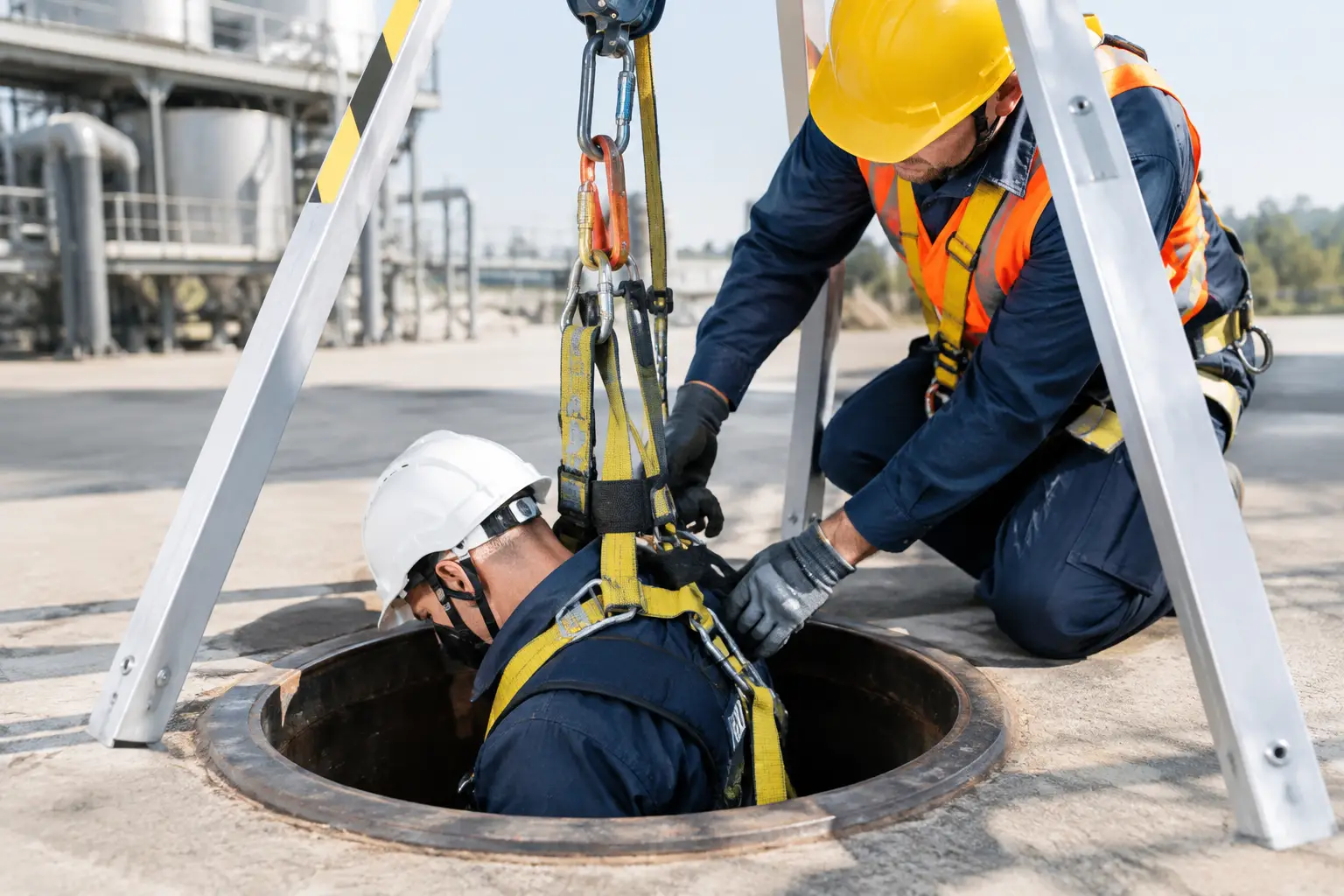
- Confined Space Safety: Maintenance work in confined spaces like stormwater detention tanks poses a severe risk of asphyxiation. A DfS solution involves designing the tank with multiple, easily accessible entry and exit hatches and incorporating provisions for a forced ventilation system. This ensures a consistent supply of fresh air during maintenance, designing out the atmospheric hazard at its source.20
- Managing Workplace Traffic: In a multi-storey carpark, a design initially placed an electrical distribution box directly adjacent to an active traffic lane. This would have exposed maintenance workers to the risk of being struck by vehicles. The DfS review identified this hazard, and the simple solution was to relocate the distribution box to a safer location away from the traffic flow, completely eliminating the risk.28
- Safe Maintenance of Green Features: For a building with a 10-metre high external green wall, the DfS process addressed the challenge of safe long-term maintenance. Instead of requiring rope access or complex scaffolding, the designer created a system of rotatable panels that could be accessed and maintained from a permanent, protected walkway inside the building.28
- Protecting the Public: During a façade installation project on busy Orchard Road, the project team identified the risk of falling materials or tools to pedestrians below. The DfS solution was to work with authorities to implement a temporary but complete rerouting of the pedestrian walkway, moving it safely outside the work zone. This proactive measure protected the public from a significant potential hazard.20
These examples are often linked to the broader concept of Design for Manufacturing and Assembly (DfMA), which includes technologies like Prefabricated Prefinished Volumetric Construction (PPVC).
DfMA inherently enhances safety by shifting a large portion of construction activity from the unpredictable and hazardous site environment to the controlled and systematic conditions of a factory, a core principle of designing out risk.30
4.3 The Technology Nexus: Leveraging BIM, VR, and Simulation for Enhanced Safety
The practice of Design for Safety is being continually enhanced by the integration of modern digital technologies.
These tools are transforming the DfS process from a static, experience-based review of 2D drawings into a dynamic, data-driven, and predictive risk management system.
- Building Information Modeling (BIM): BIM is at the forefront of this technological shift. By creating a detailed 3D digital model of the entire project, teams can visualize complex interfaces and identify potential hazards with far greater clarity than on traditional blueprints. The power of BIM is magnified when the fourth dimension, time, is added to create a 4D BIM model. This allows the team to simulate the entire construction sequence from start to finish. By doing so, they can identify “emergent” hazards that only appear at specific phases of construction, such as the risk of a crane’s swing path colliding with a newly erected part of the structure, or the temporary creation of an unplanned confined space during a particular construction stage.19
- Virtual Reality (VR): VR technology takes this visualization a step further by allowing stakeholders to immerse themselves in the digital model. A contractor can conduct a VR constructability review, “walking” through the virtual site to assess the feasibility and safety of the proposed design. A maintenance technician can virtually stand inside a proposed M&E plant room to determine if there is genuinely enough clearance to safely remove and replace a heavy filter—a level of practical, first-person insight that is impossible to gain from a 2D drawing.19
- Digital Game-Based Learning and Simulation: At the cutting edge, academic institutions like the National University of Singapore (NUS) are developing sophisticated simulation tools. Software like “SafeSim Design” uses a game-based learning environment to train architects and engineers to better identify, evaluate, and mitigate design risks. This allows professionals to make mistakes and learn from them in a safe virtual world, honing their DfS skills before applying them to real-world projects.31
This integration of technology fundamentally elevates the DfS process. It enhances the predictive power of the review team, allowing them to foresee and solve complex, time-and-space-dependent problems that would have been difficult, if not impossible, to identify using traditional methods.
This leads to a more robust and effective elimination of risk at the source, fulfilling the ultimate goal of the DfS framework.
Part 5: Strategic Implementation and Best Practices
Successfully navigating the WSH (DfS) Regulations requires more than just a theoretical understanding of the law; it demands strategic implementation, a proactive mindset, and a clear process for appointing and working with a DFSP.
Addressing common industry challenges and misconceptions head-on is key to transforming DfS from a perceived burden into a value-adding component of project delivery.
5.1 Navigating Challenges and Debunking Common DfS Misconceptions
Despite its proven benefits, the implementation of DfS can face resistance due to persistent misconceptions and practical challenges. Addressing these is crucial for fostering wider and more effective adoption.
- Misconception 1: DfS is just more paperwork and red tape.
- Reality: This is perhaps the most common and damaging misconception. While the DfS process is document-intensive, its purpose is to drive substantive change, not to generate paper. When implemented correctly, DfS is a genuinely value-added process that saves significant costs in the long run by preventing serious accidents, avoiding costly project stoppages, eliminating the need for expensive rework, and reducing long-term maintenance hazards. Industry leaders in Singapore emphasize that DfS is a life-saving, cost-saving proactive approach, not just another administrative hurdle.1
- Misconception 2: DfS regulations only apply to projects with a contract value over S$10 million.
- Reality: While the mandatory appointment of a DFSP is triggered at the S$10 million threshold, the principles of Design for Safety are considered a universal best practice by the WSH Council. Every project, regardless of its size, can benefit from designing out risks at the source. A simple renovation can be made significantly safer by considering maintenance access or material handling during the design phase. The intent of the framework is to instill a prevention mindset across the entire industry.10
- Misconception 3: Construction safety is solely the contractor’s responsibility.
- Reality: This outdated view is precisely what the WSH (DfS) Regulations were designed to eliminate. The law is unequivocal in placing specific, legally enforceable duties on developers and designers. DfS establishes that safety is a shared responsibility that begins on the drawing board, not at the construction site gate. All parties in the project lifecycle have a role to play.13
- Challenge: Unclear Scope and Confusion Over Responsibilities.
- Solution: One of the early deficiencies noted in DfS implementation was confusion over the specific roles and responsibilities of each stakeholder.1 The solution lies in clear communication and definition from the project’s outset. The developer should ensure that the letter of appointment for the DFSP has a clear scope of work. Furthermore, utilizing tools like the stakeholder responsibility matrix (as detailed in Part 3) during the project kick-off meeting can provide immediate clarity for the entire team.
- Challenge: Resistance Due to Perceived Costs or Delays.
- Solution: The argument that DfS adds cost and time is typically short-sighted. As the Marina One case study demonstrates, a small upfront investment in safer design can prevent catastrophic downstream costs associated with a serious accident, which can include multi-million dollar fines, project-halting Stop Work Orders, civil liability, and irreparable reputational damage.13 Proactive safety design is an investment, not just an expense.
5.2 A Developer’s Step-by-Step Guide to the DFSP Appointment Process
For a developer undertaking a project that meets the mandatory criteria, the appointment of a DFSP is a critical first step.
Following a structured process ensures that this is done correctly and effectively.
- Project Assessment: The first step is to conduct a formal assessment to determine if the project falls under the mandatory provisions of the WSH (DfS) Regulations. Confirm that the project is undertaken in the course of business, the contract sum is S$10 million or more, and it constitutes “development” under the Planning Act.10
- Identify and Vet Candidates: Source and identify potential DFSP candidates. Verify that they meet the stringent qualification requirements: they must be a registered PE or Architect with a practicing certificate, or meet the 10-year experience criteria, and must have successfully completed the mandatory MOM-accredited DFSP course.21 It is also prudent to assess their specific experience and ensure it is relevant to the type and complexity of the proposed project.6
- Formal Appointment and Delegation of Duties: Once a suitable candidate is selected, the developer must issue a formal letter of appointment. This letter should clearly state that the developer is, in accordance with Regulation 8 of the WSH (DfS) Regulations, delegating the duties under Regulations 6 (convening DfS review meetings) and 7 (maintaining the DfS Register) to the appointed DFSP. This is a formal legal act of delegation.12
- Provision of Information: The developer is legally obligated to provide the newly appointed DFSP with all necessary project information to enable them to perform their duties. This includes access to all design plans, drawings, BIM models, project schedules, and other relevant documentation.12
- Project Kick-Off and DfS Briefing: The DFSP should convene an initial DfS kick-off meeting or briefing for all key project stakeholders. This is a critical step to ensure that everyone, from the design team to the project managers, is aligned on the DfS process, their individual roles and responsibilities, and the project’s overall safety objectives from day one.23
- Maintain Ongoing Oversight: While the procedural duties have been delegated, the developer’s accountability remains. The developer must establish a clear channel for receiving and reviewing the regular updates from the DFSP, including meeting minutes and the latest version of the DfS Register. This allows the developer to maintain effective oversight and ensure the DfS process is being implemented diligently and correctly throughout the project’s design phase.12
5.3 Conclusion: The Enduring Value of DfS in Shaping a Safer Singapore
The WSH (Design for Safety) Regulations and the mandatory appointment of a Design for Safety Professional on large-scale projects represent a paradigm shift in Singapore’s approach to construction safety.
This framework is driven by a national imperative to move beyond mere compliance and to fundamentally address the root causes of workplace accidents by eliminating risks at the design source.7
The appointment of a competent and empowered DFSP is the linchpin of this system. They are the expert facilitators who ensure that the collaborative process of risk identification, mitigation, and documentation is carried out with the rigor and professionalism that the law demands.
However, the ultimate success of DfS relies on the active participation and unwavering commitment of all stakeholders.
It requires developers to champion safety from the boardroom, designers to embrace their role as creators of inherently safe environments, contractors to provide invaluable practical feedback, and owners to carry the torch of safety throughout the building’s operational life.4
Beyond the avoidance of severe legal and financial penalties, the proactive implementation of DfS delivers profound and lasting value. I
t leads to demonstrably fewer accidents and injuries, which protects the industry’s most valuable asset: its people. It reduces the risk of costly project delays and rework, enhancing productivity and commercial viability.
It results in buildings that are safer and more cost-effective to maintain over the long term, and it enhances the corporate reputation of all firms involved.13
Ultimately, embracing the DfS framework is not just about fulfilling a legal obligation. It is a strategic investment in quality, sustainability, and human life.
It is a commitment to building a lasting culture of prevention and a direct contribution to Singapore’s vision of creating a safer, smarter, and more resilient built environment for all.
Works cited
- Design for safety – Singapore – Redas, accessed September 8, 2025, https://www.redas.com/assets/files/good%20practice%20guide/DfS%20Good%20%20Practice%20Guide%20(Final)_%207%20Sept%2019.pdf
- View of Implementation of Design for Safety (DfS) in Construction in Developing Countries: A Study of Designers in Malaysia – UTS ePress, accessed September 8, 2025, https://epress.lib.uts.edu.au/journals/index.php/AJCEB/article/view/8105/7966
- Mandatory design requirements for construction safety in the United Kingdom and Singapore – IIS Windows Server, accessed September 8, 2025, https://app7.legco.gov.hk/rpdb/en/uploads/2025/IN/IN07_2025_20250225_en.pdf
- About Design for Safety, accessed September 8, 2025, https://www.tal.sg/wshc/topics/design-for-safety/about-design-for-safety
- How Design for Safety (DfS) Works – QES Consultancy, accessed September 8, 2025, https://qesafety.com/how-design-for-safety-dfs-works/
- Guidelines on Design for Safety in Buildings and Structures, accessed September 8, 2025, https://designforconstructionsafety.org/wp-content/uploads/2018/05/dfs-in-buildings-and-structures-guidelines-nov-08-singapore.pdf
- OSHD-2015-07-13 13 July 2015 See Distribution List Dear Sir/Madam GAZETTE OF THE WORKPLACE SAFETY AND HEALTH (DESIGN F, accessed September 8, 2025, https://www.corenet.gov.sg/media/1170526/wsh-circular-on-dfs-for-corenet-circulation-13-july-2015-_signed.pdf
- Professional Development Workshop – Design for Safety (DfS), accessed September 8, 2025, https://cde.nus.edu.sg/chbe/graduate/executive-training/professional-development-workshops/design-for-safety-dfs-a-lifetime-approach-for-ddc-developer-designer-contractor/
- SIA: Design for Safety for Professionals (DfSP) Course (9th run) – Singapore Institute of Architects, accessed September 8, 2025, https://store.sia.org.sg/tc-events/14579
- Workplace Safety and Health Guidelines – Prevention through Design, accessed September 8, 2025, https://designforconstructionsafety.org/wp-content/uploads/2018/05/wsh_guidelines_design_for_safety1.pdf
- Workplace Safety and Health (Design for Safety) Regulations 2015 – Singapore Statutes Online, accessed September 8, 2025, https://sso.agc.gov.sg/SL/WSHA2006-S428-2015
- Workplace Safety and Health (Design for Safety) Regulations 2015 …, accessed September 8, 2025, https://sso.agc.gov.sg/SL/WSHA2006-S428-2015?DocDate=20150710&ProvIds=pr8-&ViewType=Advance&Any=5+Factories+Safety+Training+Courses+Order&WiAl=1
- Common Misconceptions about DfS in Singapore – MOSAIC Eco-construction Solutions Pte Ltd, accessed September 8, 2025, https://mosaicsafety.com.sg/common-misconceptions-about-dfs-in-singapore/
- WSH Act: responsibilities of stakeholders – Ministry of Manpower, accessed September 8, 2025, https://www.mom.gov.sg/workplace-safety-and-health/workplace-safety-and-health-act/responsibilities-of-stakeholders
- Legislation for workplace safety and health – Ministry of Manpower, accessed September 8, 2025, https://www.mom.gov.sg/legislation/workplace-safety-and-health
- WSH Act: liabilities and penalties – Ministry of Manpower, accessed September 8, 2025, https://www.mom.gov.sg/workplace-safety-and-health/workplace-safety-and-health-act/liabilities-and-penalties
- Workplace Safety and Health Singapore, accessed September 8, 2025, https://www.assuresafety.com.sg/workplace-safety-and-health/
- The Legal Implications of Non-Compliance with Safety Regulations in Singapore – QES Consultancy, accessed September 8, 2025, https://qesafety.com/the-legal-implications-of-non-compliance-with-safety-regulations-in-singapore/
- The Comprehensive Guide to Design for Safety Professionals …, accessed September 8, 2025, https://mosaicsafety.com.sg/design-for-safety-professionals/
- Comprehensive Guide of Design for Safety Professional (DfSP) in …, accessed September 8, 2025, https://mosaicsafety.com.sg/your-one-stop-comprehensive-guide-for-design-for-safety-dfs-in-singapore-and-risk-management-facilitator-rmf/
- To: ACES Members / RE & RTO / CIJC Members / BOA Members ACES DESIGN FOR SAFETY PROFESSIONALS (DfSP) COURSE 2019, accessed September 8, 2025, https://www.corenet.gov.sg/media/2187053/dfsp_2019.pdf
- 1 Day Design for Safety (DfS Guideline 2022) Training course 2 run – Aces, accessed September 8, 2025, http://aces.org.sg/wp-content/pdf/2024/080_2024-IES%20Ac080_2024-ademy_1_Day_DfS(DfS_Guideline_2022)_2nd_run_Jun24.pdf
- Design for Safety Professional – DP Consultants, accessed September 8, 2025, https://www.dpc.com.sg/expertise/DesignforSafetyProfessional/
- Perform Design for Safety Professional Duties – SkillsFuture for Business, accessed September 8, 2025, https://skillsfuture.gobusiness.gov.sg/course-directory/courses/TGS-2022011848
- DESIGN FOR SAFETY FOR PROFESSIONALS (DfSP) COURSE (8th run) – Singapore Institute of Architects, accessed September 8, 2025, https://store.sia.org.sg/wp-content/uploads/2019/01/DfSP-Flyer-8th-run.pdf
- Design for Safety Professional (DfSP) Course – Singapore Institute of Architects, accessed September 8, 2025, https://sia.org.sg/design-for-safety-professional-dfsp-course/
- The High Commission of India, Singapore (hereafter refered as HCI) is, accessed September 8, 2025, https://hcisingapore.gov.in/pdf/notice/DfSPNIT_270120222.pdf
- Workplace Safety and Health Guidelines – Design for Safety, accessed September 8, 2025, https://www.tal.sg/wshc/-/media/tal/wshc/resources/publications/wsh-guidelines/files/dfs.ashx
- Spotlight on Successful DfS Case Study: Marina One, accessed September 8, 2025, https://mosaicsafety.com.sg/spotlight-on-successful-dfs-case-study-marina-one/
- Developing the DfMA ecosystem in Singapore’s construction industry – InK@SMU.edu.sg, accessed September 8, 2025, https://ink.library.smu.edu.sg/cases_coll_all/381/
- SafeSim Design: – Answering the need for greater Design for Safety (DfS) competency in Singapore – College of Design and Engineering, accessed September 8, 2025, https://cde.nus.edu.sg/dbe/wp-content/uploads/sites/26/2022/01/SafeSim-Design-Answering-the-need-for-greater-Design-for-Safety-DfS-competency-in-Singapore.pdf
Safety in Construction in Singapore: Policies, Assessment and Further Development, accessed September 8, 2025, https://www.irbnet.de/daten/iconda/CIB_DC24469.pdf