Introduction
Integrating a Design for Safety Professional (DfSP) during the conceptual design phase delivers measurable financial returns that routinely exceed 300% ROI within 18 months on mid-to-large construction projects. This is not aspirational thinking-it is the compounding result of early hazard elimination, reduced rework, lower insurance premiums, and avoided regulatory penalties that together dwarf the modest upfront investment in safety-focused design.
This article covers the financial case for early DfSP integration across three major regulatory environments: Singapore’s WSH (Design for Safety) Regulations 2015 for construction projects over S$10 million, the UK’s CDM 2015 Principal Designer mandate, and the US Prevention through Design (PtD) initiative led by NIOSH. The target audience is real estate developers, project managers, architects, and construction executives who need to maximize profit margins while minimizing liability exposure across the project lifecycle.
The direct answer: DfSP integration during conceptual design prevents up to 14% of total project costs through upstream hazard elimination, delivering a 4:1 cost savings ratio compared to reactive safety management. Design for Safety can prevent up to 14% of total project costs because 42% of work-related accidents stem from design decisions made during early phases-decisions that cost 5–10× more to fix once construction begins.
By the end of this article, you will gain:
-
Quantified ROI metrics showing how early safety interventions generate 200–400% returns
-
Cost avoidance strategies mapped to the GUIDE process framework and BIM-enabled workflows
-
Regulatory compliance advantages across Singapore, UK, and US jurisdictions
-
Insurance premium reduction pathways tied to Experience Modification Rate improvements
-
Competitive bidding benefits that translate safety performance into tender wins
Understanding DfSP Integration in Construction Safety and Conceptual Design
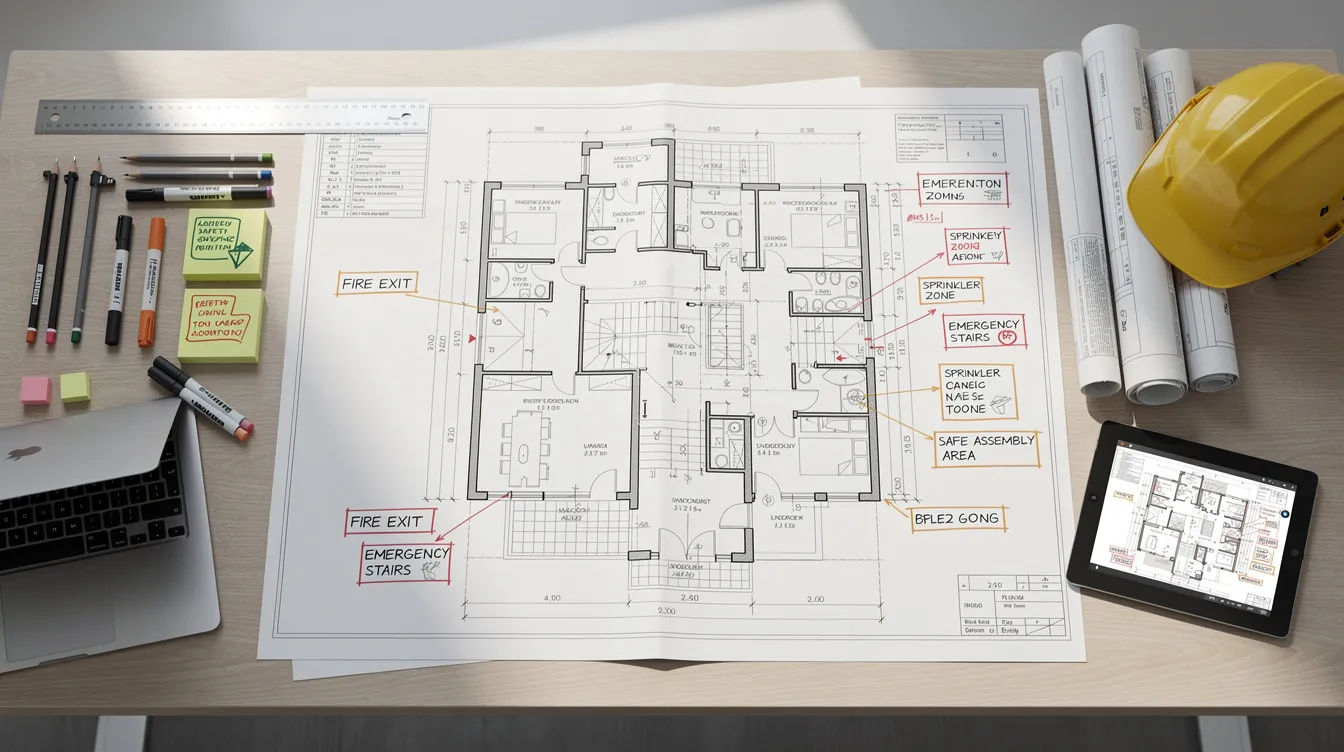
A Design for Safety Professional operates within the MacLeamy Curve framework, where design flexibility and decision impact are highest during early phases-and the cost of change is lowest. The DfSP’s role, formally defined under Singapore’s WSH (Design for Safety) Regulations 2015, includes convening formal review meetings, maintaining the DfS Register, and guiding designers and developers in early hazard elimination or risk reduction. Design for Safety Professionals should be integrated from day one-not retrofitted after detailed engineering begins.
The conceptual design phase is where project scope, building structural form, spatial site layout, structure type, materials, and overall systems are chosen. These pre design decisions influence most downstream performance outcomes: construction safety, project cost, maintenance burden, and end user experience. Once the construction documentation phase begins, changes multiply in cost exponentially-a pattern well-documented through previous research and systematic literature review across the construction industry.
The Financial Architecture of Early Safety Integration
Upstream safety intervention means identifying and eliminating hazards at the source-through design process choices-before they become embedded in construction drawings, contracts, and schedules. This conceptual framework treats safety not as an operational expense but as a capital investment that compounds returns across the project lifecycle.
The financial logic is straightforward: 42% of work-related accidents stem from architectural decisions made during early design phases. When the design team addresses these risks during concept development rather than during construction, the cost differential is dramatic. Early collaboration reduces design errors and project costs significantly. A Design for Safety Professional improves lifecycle value by considering safety throughout-from material selection to facade access strategies to roof maintenance systems.
The Szymberski Curve Economics
The Szymberski Curve quantifies what experienced developers already know intuitively: the ability to influence safety outcomes decreases exponentially after the conceptual design phase, while the cost of interventions increases at the same rate. During conceptual design, a structural change might cost a few hours of an architect’s time. During detailed engineering, that same change triggers cascading revisions across structural, mechanical, and electrical drawings. During construction, it becomes a change order with schedule implications.
Research across multiple jurisdictions consistently shows a 5× to 10× cost multiplier for safety modifications undertaken during construction versus during design. Redesign and rework is more expensive during detailed engineering than at the conceptual design stage-and exponentially more expensive once contractors have mobilized on site. Identifying safety issues early is less expensive compared to making changes during construction, which is precisely why the hidden costs of skipping early DfSP engagement represent the largest financial impact on any project.

The Hidden Financial Mechanics of DfSP Integration
The visible costs of poor construction safety-medical bills, equipment damage, regulatory fines-represent only a fraction of the true financial exposure. The larger losses hide in schedule delays, productivity degradation, insurance premium escalation, and tender disqualification. Understanding this invisible cost structure is critical to appreciating why early DfSP integration generates returns that far exceed the initial investment.
Direct Project Cost Avoidance Through Design Intervention
The construction industry accounted for 14.2% of global GDP in 2022, yet it remains one of the most hazardous sectors globally. The International Labor Organization estimates 108,000 annual construction deaths worldwide. In the US alone, 1,092 construction fatalities were recorded in 2022-the US construction industry accounts for 20% of workplace fatalities. The UK’s construction fatality rate was 0.61 per 100,000 employees in 2018, reflecting the impact of regulatory frameworks like CDM 2015 that mandate early safety integration.
Early intervention by a Design for Safety Professional helps lower accident-related costs across multiple categories: medical treatment, workers’ compensation claims, equipment repair, legal fees, and investigation expenses. In the US, direct and indirect annual costs of work-related injuries range from US$128 billion to US$155 billion-underscoring the scale of potential savings when prevention through design methods are properly implemented.
Incorporating a Design for Safety Professional early yields high ROI by reducing hazards before they become embedded in construction plans. Proactive security measures enhance regulatory compliance and reduce costs of compliance across the entire project timeline.
The Indirect Cost Multiplier Effect
Direct costs tell only part of the story. Previous research and systematic review across safety economics consistently document, based on analyses conducted across multiple project datasets and comparative studies, that indirect costs exceed direct costs by a ratio of 4:1 to 10:1 in construction incidents. These indirect costs include:
-
Productivity losses: Crew disruption, investigation downtime, replacement worker training
-
Schedule delays: Projects with zero recordable injuries complete 10% faster on average, meaning every incident creates compounding schedule pressure
-
Quality degradation: Rushed rework after incidents introduces new design errors and structural performance risks
-
Management overhead: Investigation time, reporting, regulatory engagement, legal consultation
UK data from the Constructing Certainty study of 412 construction projects demonstrates this pattern clearly. When contractors were appointed at RIBA Stage 4 (late involvement), average cost overrun reached approximately 17.35% with programme durations worsening by 12.84%. When involvement began at RIBA Stage 0–2 (early design), cost performance stayed stable or came in under budget by about 1.79%. These results also reflect broader industry trends in how earlier involvement improves cost and programme outcomes.
Regulatory Penalty Avoidance
The regulatory landscape across all three jurisdictions creates significant financial exposure for projects that fail to integrate safety during design.
In Singapore, the WSH (Design for Safety) Regulations 2015 impose formal duties on developers and designers. Singapore’s DfS Regulations apply to projects over S$10 million, requiring developers to appoint a DfSP and conduct systematic safety reviews that are evaluated against documented design risks or residual risks. Non-compliance carries enforcement risks under the WSH Act including fines, prosecutions, and-critically-tender exclusion for poor safety track records. Stop Work Orders impose daily burn rates that can devastate project economics through labour downtime, equipment idle costs, and schedule compression.
The UK mandates a Principal Designer for projects with multiple contractors under CDM 2015 regulations. HSE research (RR1198) shows that 51% of industry stakeholders rank the Principal Designer’s influence as “high” and 21% as “moderate-high”-strong recognition of the value that early safety design integration delivers.
In the US, while regulatory enforcement varies by state, NIOSH’s Prevention through Design initiative has built a compelling business case showing that PtD methods often cost nothing additional-or generate net savings-while dramatically reducing recordable incidents. Integrating compliance measures early reduces the risk of issues and project delays across all jurisdictions. In recent years, enforcement expectations and owner scrutiny around design-stage safety compliance have increased across jurisdictions.
Quantifying ROI Through Systematic Implementation
With the hidden cost structure now visible, the question shifts from “why integrate a DfSP early?” to “how do we measure and maximize the returns?” The answer lies in systematic implementation through established regulatory frameworks, building information modeling integration, and structured cost-benefit analysis at each design gate.
The GUIDE Process Financial Framework
Singapore’s WSH guidelines describe the GUIDE process (GUIDE-1, GUIDE-2, GUIDE-3) for successive design reviews at conceptual, detailed, and pre-construction phases. This process provides a natural framework for ROI measurement because each gate generates quantifiable data on hazards identified, design changes implemented, and costs avoided, which can be systematically evaluated at each gate.
ROI calculation methodology for a typical S$20 million Singapore project:
-
Gate 1 (Conceptual Design Review): DfSP identifies major hazards in structural form, site layout, facade access, and roof design. Design changes at this stage cost approximately 1.0–1.5% of construction cost (~S$200,000–S$300,000) but eliminate hazards that would otherwise require temporary works, additional scaffolding, and safety systems costing 5–10× more during construction.
-
Gate 2 (Detailed Design Review): DfSP evaluates refined drawings for residual risks, coordinates with the design team on material specifications and construction sequencing. Automated audit trails meet regulatory controls from the start of projects, creating documentation that protects against liability exposure.
-
Gate 3 (Pre-Construction Review): Final validation of safety integration with contractors, ensuring buildability and safe construction methods are defined. Early planning enhances collaboration among safety, design, and operational teams.
Worked example: If DFSP and early safety design add 1.0% cost (~S$200,000) to a S$20 million project, but the interventions avoid one moderate injury (S$150,000), prevent rework (S$300,000), reduce insurance premiums (S$100,000), and improve bid margins through reputation (S$100,000), total savings reach S$650,000 over 18 months-yielding 225% ROI. When additional incident avoidance and schedule savings are factored in, ROI can reach 300–400% depending on project risk profile.
Generic ROI models have limitations, so realized returns still depend on project-specific risk profiles.
Singapore’s BCA Design for Maintainability study (July 2026) reinforces this analysis: commercial buildings designed for maintainability achieved operational savings up to S$950,000 annually, with the additional cost of incorporating these features amounting to just 0.6–1.5% of construction cost. Payback periods were under six years-and since many safety benefits manifest during construction itself, the 18-month ROI window captures substantial returns.
BIM-Enabled Cost Avoidance Metrics
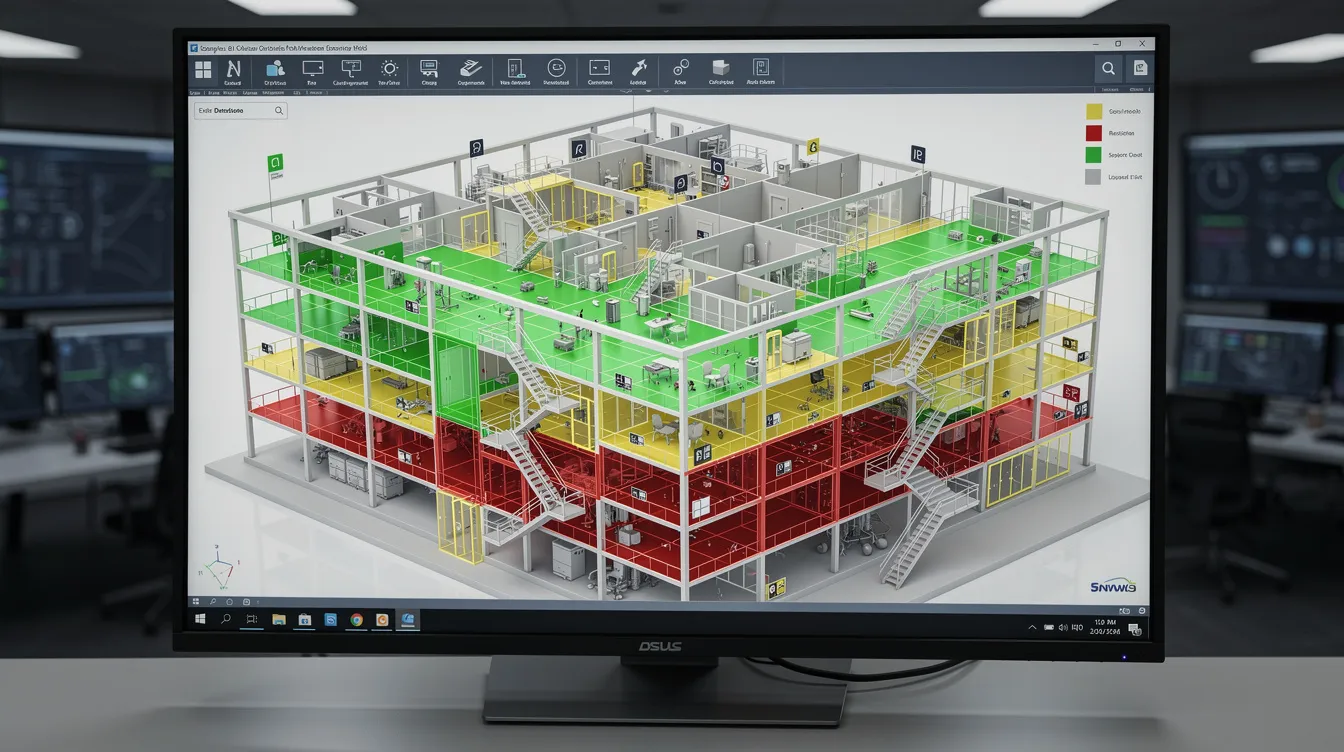
BIM helps teams digitally construct and review the building before site work begins, improving the DfSP’s ability to quantify and communicate safety risks during the design phase. BIM enhances collaboration by sharing information among project stakeholders-from architects to structural engineers to contractors-creating a shared model where clash detection, 4D scheduling, and digital twin analysis generate measurable cost avoidance.
|
Metric |
Traditional Methods |
BIM-Integrated DfSP Approach |
|---|---|---|
|
Design clash detection |
Manual review; 60–70% catch rate |
Automated analysis; 90%+ catch rate |
|
Rework cost reduction |
Baseline (no systematic prevention) |
8–10% reduction in construction cost |
|
Safety hazard identification |
Reactive; during construction |
Proactive; during design process |
|
Documentation compliance |
Manual registers; error-prone |
Automated audit trails; audit-ready |
|
Lifecycle cost visibility |
Limited to construction phase |
Full lifecycle including maintenance |
DfMA (Design for Manufacture and Assembly) integration further amplifies these returns. DfMA reduces construction waste by standardizing building elements, improves project efficiency by integrating manufacturing considerations early, and can shorten design duration by addressing errors early in the process. These digital workflows also support developing safer construction sequences and more reliable coordination between design and manufacturing teams. DfMA facilitates the use of precast concrete in off-site construction, while prefabricated prefinished volumetric construction methods reduce on-site safety risks substantially, especially where complex structures benefit from testing assembly risks in the model before installation. DfMA enhances communication among project stakeholders during design phases, creating alignment between safety, quality, and cost objectives.
Early DFSP engagement can prevent larger downstream costs by avoiding rework. A Design for Safety Professional minimizes design conflicts and omissions that would otherwise cascade into costly change orders during construction.
Common Implementation Challenges and Financial Solutions
Despite compelling ROI data, developers and construction company executives frequently encounter resistance when proposing early DfSP integration. Understanding these obstacles-and their financial solutions-is essential to capturing the full return.
Initial Consultant Fee Resistance
The most common objection is the perceived cost of engaging a DfSP during conceptual design, when budgets are still being defined. The solution lies in demonstrating the payback period: DFSP fees for projects over S$10 million typically represent less than 0.5–1.0% of total project cost. Insurance premium reductions alone-driven by improved safety track records and Experience Modification Rate improvements-often recover the full fee within 8–12 weeks. Early integration reduces long-term transaction costs through optimized capital usage, and the avoided regulatory penalties provide additional financial cushion.
Design Team Integration Delays
Architects and designers sometimes view safety requirements as constraints on creativity, leading to integration delays that erode the window of maximum design influence. The solution is a phased engagement model: begin with high-impact, low-cost interventions (site layout optimization, fall hazard elimination from roof design, facade access strategies) that demonstrate immediate returns without disrupting the creative process. Earlier safety input also protects worker health by removing high-exposure design conditions before they are built into the scheme. Digital strategies that include early DfSP integration can create a strong safety culture within the design team from the outset. Using digital construction platforms enables companies to optimize resource allocation and reduce idle time across project phases.
Regulatory Compliance Documentation Burden
The documentation requirements for DfS compliance-maintaining registers, recording design changes, preparing review meeting minutes-can feel burdensome, particularly for teams accustomed to traditional methods. The solution leverages digital documentation systems and information modeling platforms that reduce administrative costs by up to 40% while ensuring audit readiness. Integrating financial platforms allows project leaders to leverage real-time data for compliance tracking and cost monitoring. Faster access to financing increases project acceleration and productivity when safety milestones are documented and verifiable.

Conclusion and Financial Implementation Strategy
The case study evidence across Singapore, the UK, and the US converges on a single conclusion: DfSP integration during the conceptual design phase delivers 300–400% ROI through the compounding effects of cost avoidance, regulatory compliance advantages, insurance premium reductions, and competitive bidding benefits. The construction industry can no longer afford to treat safety as a downstream operational expense when the data clearly shows it is an upstream investment with measurable returns.
Projects with zero recordable injuries complete 10% faster on average. Construction accounted for nearly 20% of workplace deaths in 2022. 108,000 construction workers die on-site globally each year. The gap between knowing these statistics and acting on them represents both a moral imperative and a financial opportunity.
Immediate actionable steps:
-
Conduct a project suitability assessment evaluating risk profile, regulatory requirements, and baseline safety costs within the first two weeks of project conceptualization
-
Engage a certified DfSP within 30 days of conceptual design initiation to capture maximum influence during the highest-leverage phase-appointing a DfSP early is both a regulatory requirement and a financial strategy
-
Implement BIM-based safety modeling to quantify clash detection savings, 4D schedule optimization, and lifecycle cost reductions through building information modeling integration
-
Establish baseline cost mapping to track ROI across incident avoidance, rework reduction, insurance savings, and tender performance
For developers seeking to improve outcomes beyond safety ROI, related financial topics include insurance premium optimization through bizSAFE certification, ESG compliance advantages through sustainability-aligned design, and lifecycle quality management for long-term asset value.
ROI Calculation Tools and Resources
To support implementation, the following assessment tools and data resources enable project-specific ROI estimation:
-
Singapore WSH compliance calculator: Use the WSH Design for Safety guidelines to map regulatory requirements against project scope and estimate compliance cost savings
-
Insurance premium reduction analysis: Model Experience Modification Rate improvements based on projected incident reduction rates-understanding the financial risks of poor WSH management provides baseline data for comparison
-
BIM clash detection cost-benefit template: Apply industry benchmarks showing 8–10% construction cost reduction through early design coordination and systematic safety modeling
-
UK ECI benchmarking data: Reference the Constructing Certainty study of 412 projects to calibrate expected cost performance improvements from early safety and design integration
-
US PtD case study database: Access NIOSH Prevention through Design resources for documented examples where safety interventions during design generated net cost savings