Protecting Your People and Your Profits: The Tangible ROI of bizSAFE Certification
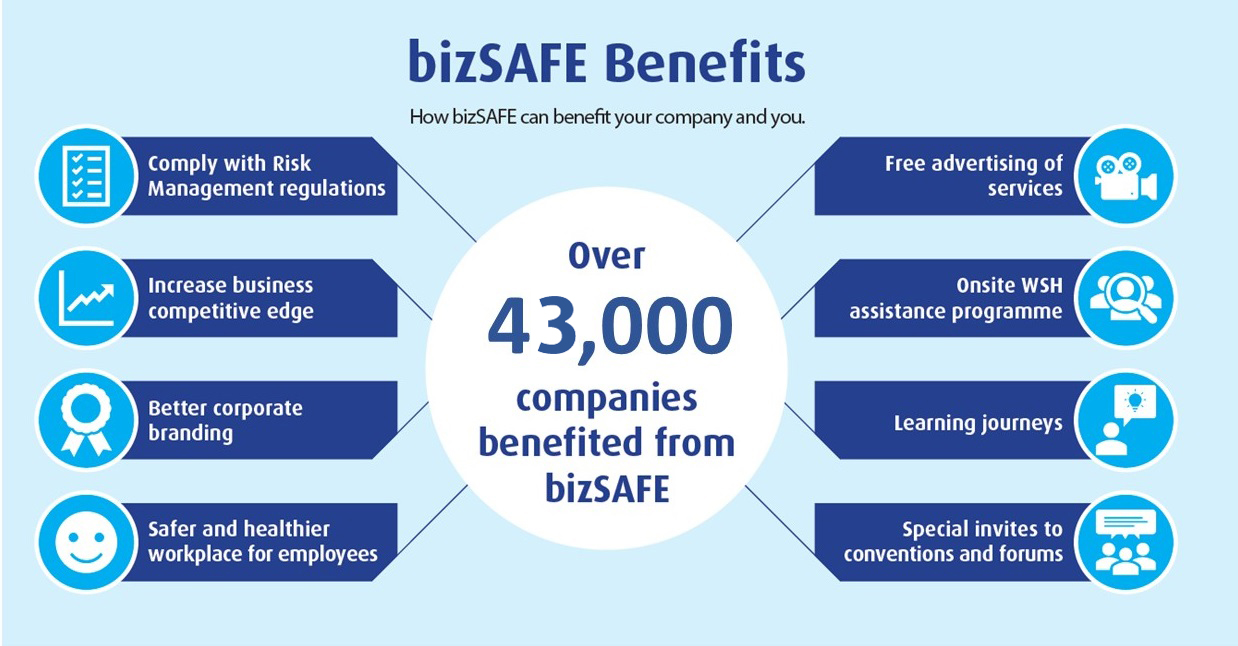
Executive Summary: The Strategic Intersection of Safety and Solvency
In the high-stakes commercial environment of Singapore, the traditional binary that pits “protecting people” against “protecting profits” has been rendered obsolete by a sophisticated regulatory and economic ecosystem.
For decades, safety protocols were viewed by many enterprises, particularly Small and Medium Enterprises (SMEs), as a cost center—a necessary bureaucratic burden of checklists, helmets, and compliance officers that drained resources from the bottom line.
However, a rigorous analysis of the current market dynamics, underpinned by the Workplace Safety and Health (WSH) Council’s bizSAFE framework.
Reveals a fundamental inversion of this logic: workplace safety has evolved from a compliance hurdle into a primary driver of economic viability and competitive advantage.
The bizSAFE programme, a five-step capability-building framework administered by the WSH Council under the Ministry of Manpower (MOM), serves as the national standard for this transition.1
While the moral and legal imperative remains the elimination of death and injury, the secondary and tertiary financial effects of certification—ranging from eligibility for multi-million dollar government tenders to significant reductions in insurance premiums—create a compelling, quantifiable Return on Investment (ROI).2
The economic stakes are macroeconomic in scale. Research commissioned by the Workplace Safety and Health Institute indicates that work-related injuries and ill health cost Singapore an estimated S$10.45 billion annually, equivalent to approximately 3.2% of the nation’s GDP.[3, 4]
For individual businesses, the cost of ignorance is equally steep, with employers bearing approximately S$2.31 billion of this burden annually through medical costs, productivity losses, and insurance hikes.3
Conversely, the rewards for compliance are substantial. Certification unlocks access to the “green lanes” of procurement, where safety records are weighted heavily in tender evaluations under the Price-Quality Method (PQM).5
This report offers an exhaustive analysis of the bizSAFE ecosystem for 2025 and beyond. It transcends the basic mechanics of certification to explore the financial mathematics of safety.
By examining the direct correlation between bizSAFE levels and commercial eligibility, the hidden “iceberg” costs of non-compliance.
The operational efficiencies gained through safe process re-engineering, and the emerging focus on mental well-being and AI-driven safety technologies, this document serves as a strategic roadmap for Singaporean enterprises.
It argues that in the modern Singaporean economy, safety is not merely an operational requirement; it is a commercial license to operate.
Part 1: The Strategic Landscape of WSH in Singapore
To fully appreciate the ROI of bizSAFE, one must first understand the unique regulatory and economic pressure cooker that is the Singaporean workplace safety landscape.
The evolution of WSH in Singapore has not been random; it is a deliberate component of the nation’s economic strategy, transitioning from a labor-intensive industrial base to a high-value, knowledge-driven economy where human capital is the scarcest resource.
1.1 The Evolution of the Regulatory Framework
The cornerstone of Singapore’s safety architecture is the Workplace Safety and Health Act (WSH Act), which replaced the older Factories Act.
This legislative shift marked a move from prescriptive, rule-based safety (telling companies exactly what to do) to performance-based safety (telling companies they are responsible for the outcome).
This shift places the onus of “Risk Management” squarely on the shoulders of company stakeholders, from the Board of Directors down to the supervisor on the ground.
Under this regime, liability is personal. Company directors can face custodial sentences and heavy fines if a fatality occurs due to systemic negligence.
This legal reality transforms WSH from a “safety officer’s problem” to a “boardroom problem”.6
The bizSAFE programme was introduced as the structured pathway to help companies navigate this liability, providing a step-by-step mechanism to build the capabilities required by the Act.
1.2 The Macroeconomic Cost of Injury
The financial argument for safety begins with the staggering cost of failure.
The Workplace Safety and Health Institute’s finding that poor safety costs Singapore 3.2% of its GDP is a critical data point.4
This figure is not merely abstract; it represents a leakage of productivity that a resource-scarce nation cannot afford.
For the business community, the S$2.31 billion borne by employers annually is a direct tax on profitability.
These costs are often misunderstood. Most business owners count the direct costs—medical bills and WICA (Work Injury Compensation Act) payouts.
However, these are merely the “tip of the iceberg.”
1.3 The Iceberg Theory of Accident Costs
The financial impact of a workplace incident follows the “Iceberg Theory,” a concept widely cited in safety economics and supported by local data.
The visible costs are dwarfed by the hidden costs that lurk beneath the surface of the P&L statement.
1.3.1 Direct Costs (The Visible Tip)
Direct costs are those that involve an immediate transfer of cash or a defined liability.
- Medical Expenses: Employers are liable for medical expenses up to S$45,000 per employee per accident.7
- Compensation Payouts: Under WICA, lump sum payments for permanent incapacity or death can reach up to S$289,000.7 While insurance covers some of this, the premiums for the subsequent years will invariably rise to recover these payouts.
- Legal Penalties: Fines imposed by MOM for breaches of the WSH Act can range from S$2,000 for administrative lapses to over S$500,000 for fatal negligence.7
1.3.2 Indirect Costs (The Submerged Bulk)
Indirect costs are often uninsurable and absorbed by the operational budget, effectively eroding profit margins.
- Lost Productivity: Globally, 103 million workdays were lost in a single year due to injuries.8 In the Singapore context, where labor is tight, the loss of a skilled worker is devastating.
- Replacement & Retraining: Replacing a skilled worker is estimated to cost upwards of S$22,000 when factoring in recruitment fees, work pass processing, and the learning curve of the new hire.7
- Investigation Time: A serious accident triggers a Stop Work Order (SWO) and an investigation. Management time diverted to dealing with MOM officers, lawyers, and insurers is time taken away from business development.
- Reputational Damage: In a connected economy, news of a fatality spreads instantly. This leads to “reputational disqualification,” where clients quietly drop the contractor to protect their own brand image.7
1.4 The “Vision Zero” Economy
Singapore has embraced the global “Vision Zero” movement, which operates on the philosophical premise that all injuries are preventable.
This is not just a slogan; it is policy. The WSH 2028 strategy aims to reduce the fatal injury rate to below 1.0 per 100,000 workers, a standard held by only the safest European nations.9
In 2023, Singapore achieved a fatal injury rate of 0.99, meeting this gold standard.9 However, this success is fragile.
A spike in construction and marine sector fatalities in 2024 serves as a reminder that vigilance cannot wane.10
The government’s response has been to tighten the screws: increasing the weightage of safety in tender evaluations and disqualifying unsafe firms.
In this “Vision Zero” economy, a bizSAFE certificate is the baseline credential proving a company is aligned with national interests.
Part 2: The bizSAFE Architecture: From Compliance to Excellence
The bizSAFE programme is structured to guide companies through a maturity curve.
It begins with leadership mindset (Level 1) and culminates in a globally recognized management system (STAR). Understanding the nuance of each level is critical for maximizing ROI.
2.1 bizSAFE Level 1: The Leadership Anchor
Objective: To secure the unequivocal commitment of top management.
Requirement: The CEO or a registered Board Director must attend a half-day “Top Executive WSH Programme” (TEWP).6
Strategic Intent: Safety culture fails without “tone from the top.” The TEWP is not a technical safety course; it is a liability workshop. It educates directors on their personal legal exposure under the WSH Act.
In Singapore, the “corporate veil” can be pierced in safety cases; directors can be jailed.
Operational Impact: The CEO drafts and signs the WSH Policy.
This document is the “constitution” of the company’s safety law. It must be communicated to every employee.
Validity: 6 months (non-renewable). This short validity is a deliberate design feature to force momentum; companies must progress to Level 2 quickly.6
2.2 bizSAFE Level 2: Capability Building
Objective: To develop in-house competence in Risk Management (RM).
Requirement: The organisation must appoint a Risk Management (RM) Champion to attend the 2-day WSQ course “Develop a Risk Management Implementation Plan”.12
Curriculum Detail: The course is rigorous. It teaches the RM Champion how to facilitate a Risk Assessment (RA). Key concepts include:
- Hazard Identification: Learning to see the invisible risks (e.g., noise, stress, ergonomics).
- Risk Evaluation: Using a matrix to quantify risk (Severity x Likelihood).
- Hierarchy of Control: The methodology of fixing problems. The course emphasizes that “Personal Protective Equipment” (PPE) is the least effective control, while “Elimination” (removing the hazard entirely) is the most effective.13
Strategic Insight: The RM Champion is effectively an internal process auditor. By analyzing work steps to find hazards, they often find inefficiencies. A process that is dangerous is often also slow and wasteful.
Validity: 6 months (non-renewable).11
2.3 bizSAFE Level 3: Implementation and Audit (The Tipping Point)
Objective: To demonstrate a fully functioning Risk Management System.
Requirement: The company must implement the RM plan developed in Level 2 and pass a rigorous audit conducted by an independent, MOM-approved WSH Auditor from an SAC-accredited Auditing Organisation (AO).6
The “Golden Ticket”: Level 3 is the most critical commercial milestone for SMEs.
It is the minimum entry requirement for most government tenders and contracts with large private developers.15
Without Level 3, a company is effectively locked out of the primary economy.
Validity: 3 years. This is the first renewable level, signifying a sustainable system.14
2.4 bizSAFE Level 4: Systemic Management
Objective: To implement a comprehensive WSH Management System (WSHMS).
Requirement: The company must select a WSHMS Programme Lead to attend the 4-day WSQ “Develop a Workplace Safety and Health Management System (WSHMS) Implementation Plan” course.6
Strategic Shift: Unlike Level 3, which focuses on specific activity-based risks (e.g., “how to use a ladder safely”), Level 4 focuses on systemic management.
It covers Management Reviews, Incident Investigation protocols, Emergency Preparedness, and Internal Audit structures.
It shifts the organization from “fixing hazards” to “managing a system”.12
Validity: 3 years.6
2.5 bizSAFE STAR: Global Excellence
Objective: To achieve alignment with international standards.
Requirement: The company must obtain SS651 (Singapore Standard) or ISO 45001 (International Standard) certification issued by a Singapore Accreditation Council (SAC) accredited body.12
The Global Passport: ISO 45001 is globally recognized. For Singaporean companies looking to export services or operate regionally (e.g., in Malaysia or Vietnam), bizSAFE STAR via ISO 45001 is the gold standard.
It signals to international partners that the company operates at a First World level of compliance.18
Validity: Tied to the validity of the external ISO/SS certification (usually 3 years).12
Part 3: The Economics of Risk – Financial ROI and Cost Avoidance
While the operational benefits of safety are clear, the financial ROI is where the business case for bizSAFE becomes undeniable.
This ROI is derived primarily from cost avoidance and the optimization of insurance expenditures.
3.1 The Mechanism of Premium Reduction
Insurance premiums for Work Injury Compensation (WICA) and Public Liability are determined by risk profiling. Actuaries utilize a “risk loading” factor.
A company with no proven safety system is a “blind risk,” attracting a higher premium loading.
A company with bizSAFE Level 3 has proven to an external auditor that it has identified hazards and implemented controls, making it a “managed risk”.16
The logic is simple: Lower probability of claim = Lower premium.
Furthermore, the bizSAFE status acts as a signal of quality management. Insurers know that a bizSAFE certified company has a trained RM Champion and a committed CEO, which correlates with better general housekeeping and fewer property damage claims.2
3.2 Insurer-Specific Benefits and “bizSAFE Partners”
The WSH Council has cultivated an ecosystem of “bizSAFE Partners”—large organizations, including insurers, that incentivize safety.
- Liberty Insurance: As a bizSAFE Partner, Liberty offers the “Workplace Protect” product. They explicitly work with clients to enhance safety management, offering capacity up to S$30 million. Their underwriting philosophy integrates the client’s safety maturity, meaning bizSAFE status directly influences the terms of coverage.19
- QBE Insurance: QBE offers specialized packages for SMEs, such as Foreign Worker Medical Insurance and Group Medical plans. Their underwriting takes into account the reduced risk profile of bizSAFE enterprises. They also provide guidance on “return-to-work” processes, aligning with the new mental well-being guidelines.20
- AIG Singapore: AIG’s “Specialty Contractors and Renovators Scheme” offers enhanced benefits, including coverage for social activities and overseas trips, for companies that manage risk effectively. They recognize that a company that manages safety well is also likely to manage other risks (like project timelines) well.22
3.3 WICA and the Cost of Incidents
The Work Injury Compensation Act (WICA) allows employees to claim for injuries without proving employer fault. This makes claiming easy and payouts frequent.
- Medical Limits: Up to S$45,000 per accident.7
- Lost Wages: Full pay for 60 days and 2/3 pay for the subsequent 60 days of hospitalization.19
- Permanent Incapacity: Payouts vary based on age and severity but are substantial.
For a non-bizSAFE company, a single major accident can spike WICA premiums by 20-50% for the next three years. This “loading” can amount to tens of thousands of dollars—far more than the cost of bizSAFE consultancy and auditing. bizSAFE certification helps prevent the accident that causes the spike, preserving the No Claim Discount (NCD).16
Part 4: Revenue Enablement – The Tender and Procurement Ecosystem
If cost avoidance is the shield, revenue generation is the sword. bizSAFE certification is the key that unlocks the most lucrative revenue streams in the Singapore economy.
4.1 Unlocking Government Procurement (GeBIZ)
The Singapore Government is the largest buyer of goods and services. Government procurement is governed by strict principles of transparency and value.
- Price-Quality Method (PQM): Tenders are rarely awarded solely on the lowest price. The PQM evaluation framework assigns weightage to “Quality,” which explicitly includes a company’s safety track record. A valid bizSAFE Level 3 (or higher) certificate is often a mandatory “gate” criterion—without it, the bid is disqualified immediately, regardless of price.5
- Safety Disqualification (SDQ): As of April 2024, the government introduced the Safety Disqualification framework. Firms with poor WSH performance or fatal accidents are temporarily disqualified from participating in public tenders. A robust bizSAFE system is the primary defense against the lapses that lead to SDQ.16
4.2 The BCA Contractors Registration System (CRS)
For the construction and engineering sectors, the Building and Construction Authority (BCA) manages the CRS, which determines the size of tenders a company can bid for.
- The Link to Financial Grades: To register for higher financial grades (L1 to L6), companies must meet specific track record and safety requirements. For example, to upgrade from L1 (tendering limit S$650,000) to L5 (tendering limit S$16 million) in Mechanical & Electrical workheads, possessing bizSAFE Level 3 or ISO 45001 is often a prerequisite.24
- The Revenue Multiplier: The ROI here is exponential. An investment of ~S$3,000 to achieve bizSAFE Level 3 allows a company to bid for projects worth S$10 million instead of being capped at S$650,000. There is no other investment in the construction sector that yields such a high leverage on revenue potential.24
4.3 The Private Sector “bizSAFE Partner” Effect
Large multinational corporations (MNCs) and main contractors (e.g., Gammon, Lendlease, Woh Hup) are designated “bizSAFE Partners”.25
As part of their own bizSAFE STAR obligations, they are required to “mentor” their supply chain.
- Mandatory Pre-qualification: These main contractors enforce a “Level 3 or out” policy. If an SME wishes to supply cleaning services, security, scaffolding, or sub-contracting work to a bizSAFE Partner, they must hold at least bizSAFE Level 3.26
- Vicarious Liability: Main contractors enforce this because they can be held liable for accidents caused by their sub-contractors. Engaging bizSAFE-certified vendors is a form of legal risk transfer.
- Market Access: Consequently, non-certified SMEs are effectively locked out of the supply chains of the market leaders, relegated to smaller, lower-margin jobs with less reputable paymasters.
Part 5: Operational ROI – Innovation, Productivity, and Human Capital
The “hidden” ROI of bizSAFE lies in operational efficiency.
The process of Risk Assessment (RA) requires a company to examine every work process under a microscope.
This scrutiny often reveals bottlenecks and inefficiencies that, when solved, improve both safety and speed.
5.1 Case Study: Gammon Construction
Gammon Pte Ltd, a Tier 1 contractor, exemplifies the operational ROI of safety.
They integrated safety directly into their digital transformation strategy.
- Digital G & 3D Repo: Gammon partnered with 3D Repo to use 4D Building Information Modelling (BIM). This tool allows them to visualize the construction sequence before physical work begins. They use it to identify safety hazards (e.g., a crane clash or a fall risk), but the same process identifies logistical clashes and constructability issues.
- The Result: By solving these problems virtually, they avoid costly rework and delays on site. The safety tool became a productivity engine.27
- 5G Robotics: Gammon also deployed 5G-connected robots for site scanning. This removed human workers from hazardous environments (safety benefit) but also resulted in a 30% to 40% improvement in site scanning productivity (operational benefit).28
5.2 Case Study: Expand Construction
Expand Construction, a recipient of the 2024 WSH Innovation Award, faced a challenge in moving materials across difficult, uneven terrain.
- The Problem: Manual handling was a severe safety hazard (ergonomics, trips, falls) and was slow and labor-intensive.
- The Innovation: They developed a “Dynamic Glider System,” a mechanical transport solution tailored to the terrain.
- The ROI: This system mitigated the ergonomic hazards (Safety) but significantly improved the speed of material transport (Productivity). It allowed them to maintain a “Happy, Safe, and Engaged Workforce,” reducing turnover.29
5.3 Mental Well-being as a Productivity Lever
In 2025, the scope of bizSAFE has officially expanded to include mental well-being. This is not just “soft” HR; it is hard economics.
- The Insight: A mentally fatigued or stressed worker makes bad decisions, leading to accidents and quality defects.
- New Guidelines: The WSH Council’s “Handbook on Supporting Employees’ Mental Health” (2025) encourages employers to manage psychosocial risks. This includes establishing “after-hours communication policies” (right to disconnect) and structured “return-to-work” programmes for staff recovering from mental health issues.31
- The Payoff: Companies that adopt these Total WSH practices report higher retention. In Singapore’s tight labor market, retaining a skilled employee is far cheaper than recruiting a new one. A mentally healthy workforce is a productive workforce.33
Part 6: The Audit Mechanism – Navigating Compliance and Avoiding Failure
The gateway to realizing this ROI is the bizSAFE Level 3 or STAR audit. However, this is where many companies stumble.
The audit is a rigorous stress test of the system, not a rubber-stamping exercise.
6.1 The 2025 Audit Landscape
The audit criteria have evolved significantly in recent years.
- Speed Limiters (2026 Mandate): A critical upcoming change is the mandatory installation of speed limiters in lorries. From 1 January 2026, RM audits will include verification checks on speed limiters. Companies without them will face immediate non-conformance.17 Smart companies are retrofitting now to avoid the bottleneck.
- Mental Well-being Integration: Auditors now specifically check if the Risk Assessment includes “psychosocial hazards” like workplace bullying, harassment, or excessive workload. A Risk Assessment that only lists physical hazards (cuts, falls) is now considered incomplete.34
- Terrorism (SGSecure): It is mandatory to include terror threat risks in the RA. This includes emergency response plans for security incidents. Many SMEs fail because they assume “terrorism” is not a workplace risk.34
6.2 Common Audit Pitfalls
Analysis of audit data reveals recurring reasons for failure 34:
- The “Paper-Practice” Gap: This is the most common failure. A company produces a perfect RA document stating that “workers must use double-lanyard harnesses,” but the auditor walks the site and sees workers using single lanyards. The audit is a reality check, not a document review.
- Lack of “Bottom-Up” Input: RAs signed only by management. Auditors are trained to interview workers on the ground. If a worker cannot explain the risks of their job, the system is deemed non-functional, regardless of the paperwork.
- Stagnant RAs: RAs must be reviewed every 3 years or after any incident. Presenting an RA dated 2021 in a 2025 audit is a major non-conformance.
- Unqualified Auditors: Companies sometimes engage cheap consultants who claim to be auditors. Only MOM-approved WSH Auditors from SAC-accredited Auditing Organisations (AOs) can certify Level 3 and STAR. Using a non-accredited auditor renders the entire process void.36
6.3 Consultancy and Cost
Most SMEs engage a consultant to prepare for the audit.
- Cost: Fees for bizSAFE Level 3 consultancy typically range from S$1,200 to S$1,600 for standard packages.37 This usually includes training the RM Champion, helping draft the RA, and preparing for the audit interview.
- Timeline: It is recommended to start the renewal or application process 2 to 3 months before the desired certification date. This allows time to fix any non-conformances raised during the audit.39
Part 7: Future Horizons – WSH 2028 and Beyond
To maintain the ROI of bizSAFE, companies must look ahead.
The definition of “safety” is expanding, driven by technology and changing social expectations.
7.1 Technology Integration: AI and Video Analytics
The future of WSH is digital. The “clipboards and checklists” era is ending.
- Video Analytics: Providers like Invigilo and Ailytics (supported by IMDA) use AI to monitor CCTV feeds. These systems can detect safety breaches in real-time—such as a worker not wearing a helmet or standing in a “no-go” zone—and alert supervisors instantly.40
- The Benefit: This moves safety from “lagging indicators” (counting accidents after they happen) to “leading indicators” (counting near-misses and fixing them).
- Government Support: The Productivity Solutions Grant (PSG) and other schemes support the adoption of these technologies. Adopting them helps companies score points in the “Technology” pillar of WSH awards and tender evaluations.42
7.2 The Shift to “Total WSH”
The boundary between “work” and “health” is blurring.
The WSH Council is pushing for “Total WSH,” which treats the worker as a whole person.
- Health Screening: Integrating health screening (for diabetes, high blood pressure) into workplace safety. A worker who faints from low blood sugar while operating a crane is a safety risk.
- Mental Health: As noted, this is now a core component. The future will see more rigorous enforcement of “psychological safety” alongside physical safety.33
7.3 The Global Standard: ISO 45001
For ambitious Singaporean companies, the trajectory is clear: bizSAFE is the stepping stone; ISO 45001 is the destination.
- The Convergence: Singapore Standard SS ISO 45001 aligns perfectly with bizSAFE STAR.
- Efficiency: Instead of maintaining two systems, companies should aim for ISO 45001 certification. This automatically qualifies them for bizSAFE STAR, while simultaneously opening doors to international markets where bizSAFE (a local brand) is unknown but ISO is king.44
Conclusion: The ROI Formula
The Return on Investment for bizSAFE certification can be summarized by the following formula:
$$ ROI = \frac{(Revenue_{Tenders} + Savings_{Insurance} + Gains_{Productivity}) – (Cost_{Certification} + Cost_{Implementation})}{Cost_{Certification}} $$
The Investment (Costs):
- Consultancy & Training: ~S$2,000 – S$5,000 (Level 3).
- Audit Fees: ~S$500 – S$1,500 every 3 years.
- Internal Man-hours: Time spent by the RM Champion and staff (variable, but significant).
The Returns:
- Revenue: Access to contracts worth millions (e.g., BCA L5 grading allows tenders up to S$16m).
- Savings: Potential 10-20% reduction in insurance premiums; preservation of NCD; avoidance of S$500,000+ fines.
- Productivity: 30%+ gains through efficient process re-engineering (e.g., Gammon/Expand cases).
Final Verdict:
For Singaporean enterprises in 2025, bizSAFE certification is not a regulatory burden; it is a strategic asset.
It protects the company’s most valuable asset—its people—while simultaneously fortifying its balance sheet against liability and opening doors to the most lucrative revenue streams in the market.
In an economy that punishes risk and rewards resilience, bizSAFE is the baseline for survival and the launchpad for growth.
Appendix: Technical Implementation Guide
Table A: bizSAFE Certification Levels and Requirements Matrix
| Level | Focus | Key Personnel Requirement | Course Duration | Validity | Renewal? |
| Level 1 | Top Management Commitment | CEO / Board Director | 0.5 Day (TEWP) | 6 Months | No |
| Level 2 | Risk Management Planning | RM Champion | 2 Days (WSQ) | 6 Months | No |
| Level 3 | RM Implementation & Audit | RM Champion + All Staff | N/A (Audit) | 3 Years | Yes |
| Level 4 | WSH Management System | WSHMS Programme Lead | 4 Days (WSQ) | 3 Years | Yes |
| STAR | International Excellence | WSHMS Lead | ISO 45001 / SS651 | 3 Years | Yes |
6
Table B: Critical Audit Checklist Items (bizSAFE Level 3)
| Audit Item ID | Criteria Description | Common Failure Point |
| 1.1 Policy | Policy signed by current CEO and communicated? | Policy outdated or signed by ex-CEO. Workers cannot explain it. |
| 2.1 Competency | Is the RA Team Leader competent (Level 2 trained)? | Certificate expired or Team Leader left company. |
| 3.1 Risk Register | Does it cover Routine AND Non-Routine activities? | Ignoring maintenance, cleaning, or ad-hoc tasks in the RA. |
| 3.11 Terrorism | Does the RA cover terror attacks (SGSecure)? | Total omission of SGSecure elements (mandatory). |
| 4.6 SWP | Are Safe Work Procedures (SWP) available for high-risk tasks? | SWPs exist but are not displayed or accessible to workers. |
| 5.1 Health | Does the RA consider health/mental well-being? | Omission of noise, chemical, or psychosocial hazards. |
| New (2026) | Are speed limiters installed in lorries? | Absence of limiters or tampering. |
17
Table C: Comparison of ISO 45001 vs. bizSAFE
| Feature | bizSAFE (Level 3/STAR) | ISO 45001 |
| Scope | National (Singapore) | International (Global) |
| Target Audience | SMEs, Local Contractors | MNCs, Exporters, Large Enterprises |
| Focus | Risk Management Regulations (MOM) | Management System Framework (PDCA) |
| Cost | Lower | Higher (Requires accredited certification body) |
| Tender Value | Accepted for most local government tenders | Accepted globally; satisfies all local tenders |
18
Works cited
- What is bizSAFE? – Ministry of Manpower, accessed November 22, 2025, https://www.mom.gov.sg/faq/educational-resources/what-is-bizsafe
- bizSAFE Certification Singapore 2025 Guide for SMEs, accessed November 22, 2025, https://mosaicsafety.com.sg/bizsafe-certification-singapore-2025-guide-for-smes/
- Workplace injuries, ill health ‘cost billions’ – TODAY, accessed November 22, 2025, https://www.todayonline.com/singapore/workplace-injuries-ill-health-cost-billions
- Economic Cost of Work-related Injuries and Ill-health in Singapore – ResearchGate, accessed November 22, 2025, https://www.researchgate.net/publication/259220728_Economic_Cost_of_Work-related_Injuries_and_Ill-health_in_Singapore
- Guide to Singapore Procurement – GeBIZ, accessed November 22, 2025, https://www.gebiz.gov.sg/singapore-government-procurement-regime.html
- What is bizSAFE? A Comprehensive Guide for Singapore Businesses (Levels 1-Star), accessed November 22, 2025, https://mosaicsafety.com.sg/what-is-bizsafe-a-comprehensive-guide-for-singapore-businesses-levels-1-star/
- The Bottom Line of Safety: A Definitive Business Case on the Financial and Reputational Risks of Poor WSH Management in Singapore – MOSAIC Eco-construction Solutions Pte Ltd, accessed November 22, 2025, https://mosaicsafety.com.sg/safety-business-case-on-the-financial-and-reputational-risks-of-poor-wsh-management-in-singapore/
- The real cost of workplace injuries – WBAB, accessed November 22, 2025, https://www.wbab.com/news/real-cost-workplace-injuries/BXOBIOLN2NODTCFEQDZPHGJG6M/
- Speech by SMS Zaqy at Workplace Safety and Health Awards 2024 – Ministry of Manpower, accessed November 22, 2025, https://www.mom.gov.sg/newsroom/speeches/2024/0731-speech-by-sms-zaqy-at-workplace-safety-and-health-awards-2024
- Workplace fatalities increase in 2024, despite major injuries hitting an all-time low, accessed November 22, 2025, https://www.ausbe.org.sg/news/Workplace-Safety-Report-2024-workplace-fatalities-increase-major-injuries-hit-an-all-time-low/
- The Ultimate 2025 Guide: Achieving bizSAFE Level 1 & 2 in Singapore Step-by-Step, accessed November 22, 2025, https://mosaicsafety.com.sg/the-ultimate-2025-guide-achieving-bizsafe-level-1-2-in-singapore-step-by-step/
- What is bizSAFE: Certifications, Processes, Benefits and Requirements – SCAL Academy, accessed November 22, 2025, https://scal-academy.com.sg/courses/course_detail/What-is-bizSAFE-Certifications-Processes-Benefits-and-Requirements
- Develop a Risk Management Implementation Plan (SF) (TGS-2012500979) – Singapore National Employers Federation, accessed November 22, 2025, https://www.snef.org.sg/training/safety-and-health/Develop-a-Risk-Management-Implementation-Plan-BizSafe-Level-2.pdf
- bizSAFE Level 3 Risk Management Audit Checklist, accessed November 22, 2025, https://www.tal.sg/wshc/resources/publications/checklists-and-articles/bizsafe-level-3-risk-management-audit-checklist
- Benefits of bizSAFE certification – Dynamic Safety, accessed November 22, 2025, https://www.dynamicsafety.com.sg/index.php/blog/viewdetails/benefits-of-bizsafe-certification
- The bizSAFE Advantage: How to Unlock Tender Eligibility and Secure Government Contracts in Singapore – MOSAIC Eco-construction Solutions Pte Ltd, accessed November 22, 2025, https://mosaicsafety.com.sg/the-bizsafe-advantage-how-to-unlock-tender-eligibility-and-secure-government-contracts-in-singapore/
- About bizSAFE, accessed November 22, 2025, https://www.tal.sg/wshc/programmes/bizsafe/about-bizsafe
- Comparing Safety Standards: bizSAFE vs. ISO 45001, accessed November 22, 2025, https://sageshield.com/comparing-safety-standards-bizsafe-vs-iso-45001/
- Workplace Protect – Liberty Specialty Markets Singapore, accessed November 22, 2025, https://www.libertyspecialtymarkets.com.sg/product/workplace-protect
- Business Insurance | QBE Singapore, accessed November 22, 2025, https://www.qbe.com/sg/business-insurance
- QBE Foreign Worker Medical Insurance, accessed November 22, 2025, https://www.qbe.com/media/qbe/asia/singapore/files/business-insurance/group-medical/2023/qbe_fwmi_brochure_011223-3.pdf
- Specialty Contractors and Renovators Scheme (SCARs) – aig.sg, accessed November 22, 2025, https://www.aig.sg/content/dam/aig/apac/singapore/documents/forms/aig_sg-specialty_contractors_and_renovators_scheme_brochure_and_proposal_form.pdf
- Government Procurement Guide for Suppliers – Singapore – GeBIZ, accessed November 22, 2025, https://www.gebiz.gov.sg/docs/supplier_guide_detailed.pdf
- SPECIFIC REGISTRATION REQUIREMENTS FOR MECHANICAL & ELECTRICAL WORKHEAD (ME) – go.gov.sg, accessed November 22, 2025, https://file.go.gov.sg/bca-crs-srr-me.pdf
- Workplace Safety and Health Performance (Gold) Awards Asiabuild Construction Pte Ltd, accessed November 22, 2025, https://www.tal.sg/wshc/-/media/tal/wshc/awards-and-competitions/files/wsh-awards-2024-awards-recipients.ashx
- bizSAFE Partner, accessed November 22, 2025, https://www.tal.sg/wshc/programmes/bizsafe/bizsafe-partner
- Gammon Construction Announces Strategic Partnership with 3D …, accessed November 22, 2025, https://www.gammonconstruction.com/en/articles.php?news_id=111
- Construction | GSMA 5G Business Accelerator Hub, accessed November 22, 2025, https://www.gsma.com/5ghub/construction/
- WSH Innovation Awards 2024 – Expand Construction – YouTube, accessed November 22, 2025, https://www.youtube.com/watch?v=jFsl9kyC9WE
- Expand WSH Award, accessed November 22, 2025, https://www.expandgroup.com.sg/news-media/wsh-awards-2024
- Handbook on Supporting Employees Mental Health, accessed November 22, 2025, https://www.tal.sg/wshc/resources/publications/guides-and-handbooks/handbook-on-supporting-employees-mental-health
- Tripartite advisory on mental health and well-being at workplaces – Ministry of Manpower, accessed November 22, 2025, https://www.mom.gov.sg/employment-practices/tripartism-in-singapore/tripartite-guidelines-and-advisories/tripartite-advisory-on-mental-well-being-at-workplaces
- Guide to Total Workplace Safety and Health, accessed November 22, 2025, https://li.eversafe.com.sg/HTIM/1.%20Guide%20to%20Total%20WSH.pdf
- BizSafe Star Singapore (2025): The Ultimate Guide to Certification, Audit, and Benefits, accessed November 22, 2025, https://mosaicsafety.com.sg/bizsafe-star-singapore-guide-2025/
- Top 5 Mistakes Companies Make When Applying for bizSAFE Certification, accessed November 22, 2025, https://qesafety.com/top-5-mistakes-companies-make-when-applying-for-bizsafe-certification/
- Common Mistakes Companies Make When Applying for bizSAFE Level 3 – And How to Avoid Them – QES Consultancy, accessed November 22, 2025, https://qesafety.com/common-mistakes-companies-make-when-applying-for-bizsafe-level-3-and-how-to-avoid-them/
- BIZSAFE Consultancy – Singapore Safety Training Centre, accessed November 22, 2025, https://www.ssafetytraining.com/bizsafe-consultancy.html
- bizSAFE 3 Consultancy Package, accessed November 22, 2025, https://itc.com.sg/buy-online/39-bizsafe-3-consultancy-package.html
- bizSAFE Level 3 Audit & Renewal – CCIS Singapore Pte Ltd, accessed November 22, 2025, https://www.ccis.com.sg/auditing/bizsafe-level-3/
- Enhancing safety and efficiency AI in construction – IMDA, accessed November 22, 2025, https://www.imda.gov.sg/resources/blog/blog-articles/2024/02/enhancing-safety-and-efficiency-ai-in-construction
- The Future of AI Video Analytics for Workplace Safety: Trends and Predictions, accessed November 22, 2025, https://www.invigilo.ai/post/the-future-of-ai-video-analytics-for-workplace-safety-trends-and-predictions
- WSH Technology – Ministry of Manpower, accessed November 22, 2025, https://www.mom.gov.sg/workplace-safety-and-health/wsh-technology
- How to build a safe, supportive, and mentally healthy workplace: WSH Council’s new handbook | Human Resources Online, accessed November 22, 2025, https://www.humanresourcesonline.net/how-to-build-a-safe-supportive-and-mentally-healthy-workplace-wsh-council-s-new-handbook
- 5 things to know about the new SS ISO 45001 – Enterprise Singapore, accessed November 22, 2025, https://www.enterprisesg.gov.sg/resources/blog/5-things-to-know-about-the-new-ss-iso-45001
- bizSAFE Vs ISO 45001 Which Safety Standard Suits You Best – Wong Fong Academy, accessed November 22, 2025, https://www.wfa.edu.sg/blog/bizSAFE-Vs-ISO-45001-Which-Safety-Standard-Suits-You-Best
- bizSAFE Audit Criteria / Checklist – Learners Hub, accessed November 22, 2025, https://learnershub.com/resources/bizsafe-resources/bizsafe-audit-criteria
- Risk Management audit checklist, accessed November 22, 2025, https://www.tal.sg/wshc/-/media/tal/wshc/programmes/files/risk-mgt-audit-checklist-20220301.ashx
- bizSAFE Level 3 Risk Management Audit Checklist (Revision 2020) – Learners Hub, accessed November 22, 2025, https://www.learnershub.com/images/Resources/RM-Audit-Checklist-WEF-1-Jan-2021–V2-21-Dec-2020.pdf
ISO 45001 Certification in Singapore: Guide to Implementation and Compliance, accessed November 22, 2025, https://mosaicsafety.com.sg/iso-45001-certification-in-singapore/