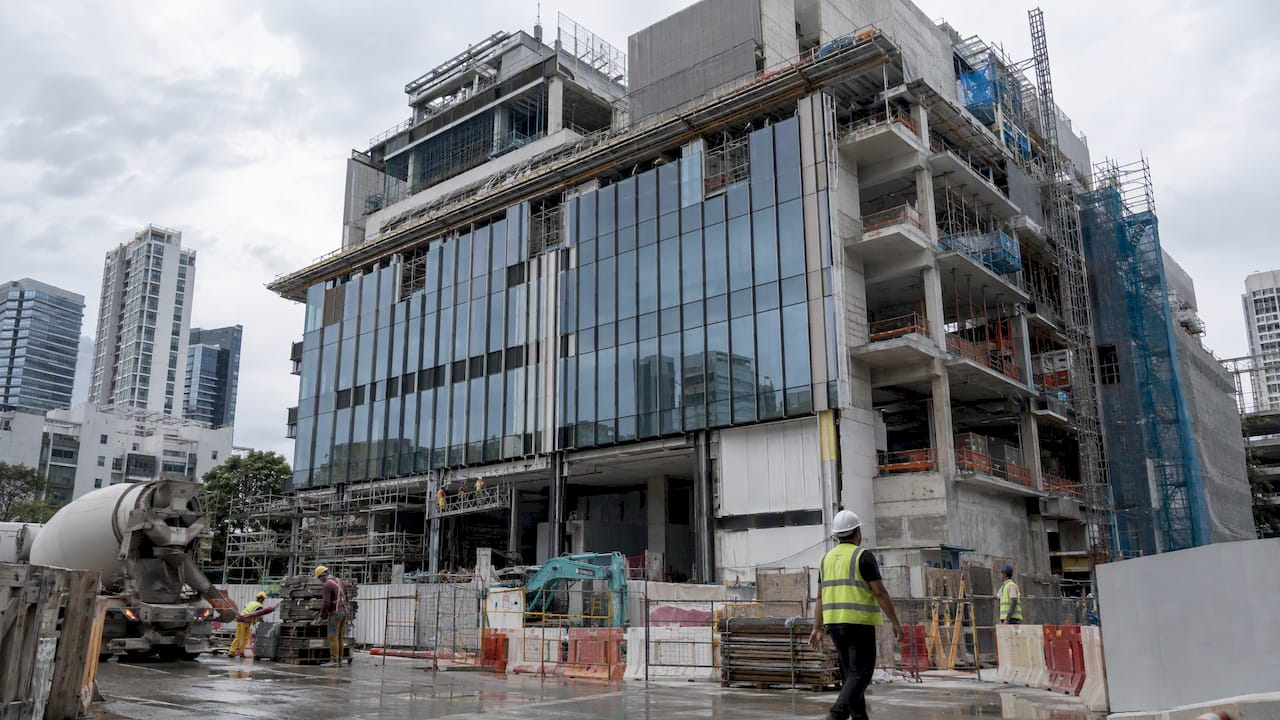
This report posits a central thesis: High construction quality, quantified by a superior ConQUAS score (specifically Band 1 status), is no longer merely a hygiene factor but a primary driver of Return on Investment (ROI) for developers, contractors, and homeowners alike.
The data suggests that the “ConQUAS Advantage” is quantifiable, tangible, and critical for survival in the modern built environment economy.
1.1 The Historical Trajectory: From Basic Workmanship to Liveability
To understand the current economic weight of a ConQUAS score, one must first appreciate its evolutionary trajectory.
The system was the world’s first national system for assessing construction workmanship, setting a precedent that would later be emulated by Malaysia’s QLASSIC and Hong Kong’s PASS.1
- 1989 – Inception: The initial framework focused heavily on basic structural integrity and fundamental workmanship standards. The goal was to establish a baseline in a rapidly developing nation where construction volume often threatened to outpace quality control.1
- 1998 – ConQUAS 21: This major revision introduced a more customer-oriented approach, refining scoring to be more comprehensive and reflective of end-user concerns. It marked the beginning of the shift from “building safety” to “building quality”.3
- 2022/2023 – The Banding Era: In a move towards radical transparency, the BCA introduced a banding system (Band 1 to Band 6) to classify developers and builders based on their track record over the past six years. This move effectively gamified quality, turning a technical score into a public badge of reputation.4
- 2025 – The Functional Shift: The ConQUAS (Private Residential) 2025 framework represents the latest and most significant pivot. It moves beyond checking for cosmetic defects (like uneven floor tiles) to prioritizing “major defects” that impact liveability and functionality, such as water seepage and window watertightness. This shift aligns the assessment metric directly with the long-term asset value and maintenance costs of the property.6
1.2 The Three Pillars of the Business Case
The analysis in this report reveals that the ROI of ConQUAS manifests through three distinct financial channels, which will be dissected in the subsequent sections:
- Revenue Maximization (The Upside): Empirical evidence from the National University of Singapore (NUS) and market data suggests a “quality premium” in property pricing. High-scoring projects command significantly higher resale values and rental yields, driven by brand trust and reduced risk perception among buyers.7
- Cost Mitigation (The Downside Protection): The cost of rework in the construction sector remains a multi-billion dollar drain, estimated at 5-9% of total project costs.9 Achieving ConQUAS Band 1 status correlates with a drastic reduction in major defects, effectively plugging the financial leaks associated with the Defects Liability Period (DLP) and potential litigation.4
- Strategic Asset Value (The Moat): In an era of “flight to quality,” a developer’s ConQUAS track record serves as a defensive moat. It sustains sales velocity during market cooling measures and secures preferential status in public sector tendering via the Price Quality Method (PQM), effectively effectively monetizing reputation.10
2. The Technical Anatomy of Assessment: Breaking Down the Score
To fully appreciate the business implications of ConQUAS, one must understand its mechanics.
The score is not an arbitrary number but a weighted aggregate of three distinct components: Structural Works, Architectural Works, and Mechanical & Electrical (M&E) Works.
The rigour of this assessment provides the “currency” for the system’s economic value.
2.1 Component 1: Structural Works (40% – 50% Weightage)
The structural integrity of a building is non-negotiable, and ConQUAS reflects this by assigning it a substantial weightage, typically ranging from 40% to 50% depending on the project category.1
Unlike architectural checks which occur post-completion, structural assessment is continuous throughout the construction process.
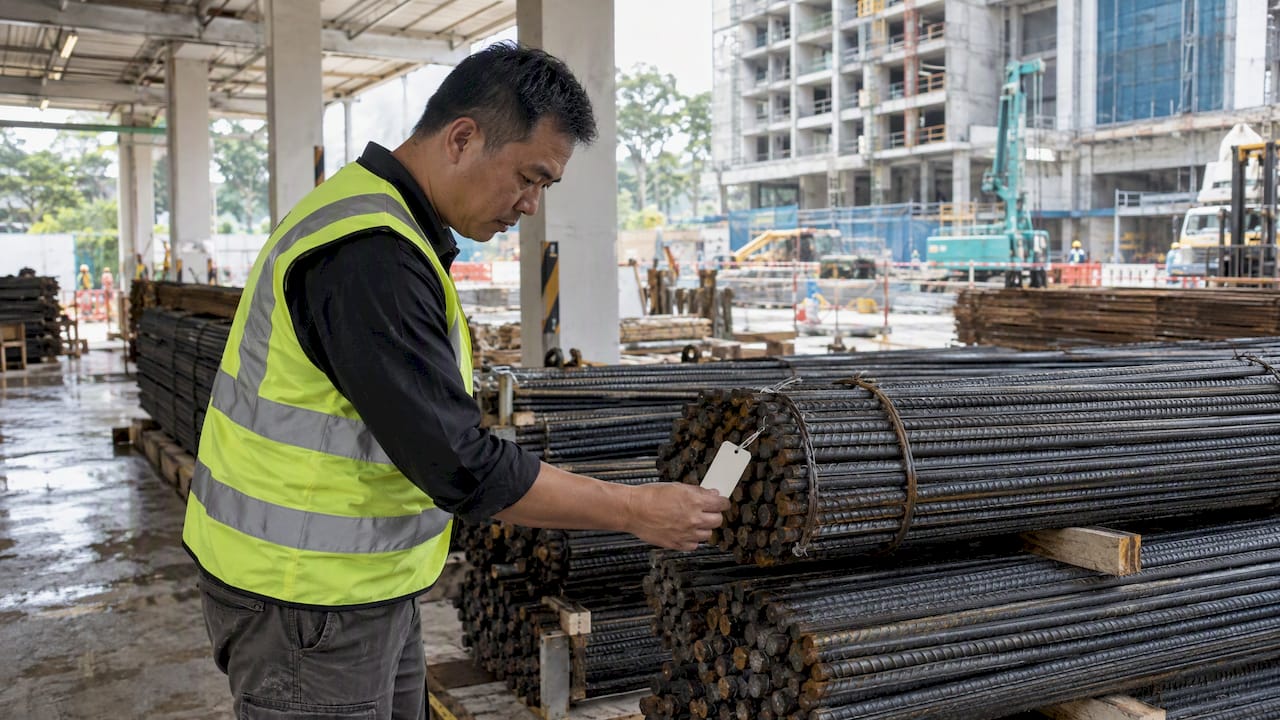
- Reinforced Concrete Structure: This sub-component assesses the quality of formwork, steel reinforcement, and the finished concrete. It ensures that the “bones” of the building are sound.12
- Non-Destructive Testing (NDT): The framework mandates rigorous testing, including Ultrasonic Pulse Velocity (UPV) tests for concrete uniformity and Electro-Covermeter tests for concrete cover. These tests account for significant points (e.g., 35% weightage within the sub-component for concrete uniformity).12
- Steel Reinforcement & Welding: Quality checks extend to the tensile strength of the steel and the integrity of welded joints, ensuring the building can withstand load stresses over decades.12
Business Insight: Structural defects are the most expensive to rectify. A failure here—such as a crack in a transfer beam—can lead to catastrophic financial liability and irreparable reputational damage.
A high Structural score is the primary indicator of asset longevity and safety, directly influencing insurance premiums and long-term valuation.
2.2 Component 2: Architectural Works (40% – 60% Weightage)
While structural works provide safety, architectural works drive customer satisfaction. This component assesses the visible finishes—floors, walls, ceilings, doors, and windows—that a homeowner interacts with daily.
- The 2025 Shift to Functionality: Under the ConQUAS 2025 framework, the assessment has been streamlined. Minor aesthetic defects like floor tonality or removable stains have been de-emphasized. Instead, the focus has shifted entirely to major defects that impact functionality and liveability.6
- External Finishes: This includes the assessment of external walls, roofs, and increasingly, suspended swimming pools. Given the prevalence of “infinity pools” in modern condos, checks for water leakage in these structures have become critical.13
- Sampling Strategy: ConQUAS uses a robust sampling method to ensure the score is representative. It does not just check a “show unit” but samples widely across the development, preventing developers from “gaming” the system by polishing only a few units.2
Business Insight: While “cosmetic” defects generate complaints, they are relatively cheap to fix. Functional architectural defects, however, are costly.
By aligning the score with “major defects,” the 2025 framework makes the ConQUAS score a more accurate proxy for future maintenance costs and DLP claims.
2.3 Component 3: M&E Works (10% – 20% Weightage)
Often the “silent” component, Mechanical & Electrical works are the nervous system of the building.
- Performance Testing: This includes the critical “Wet Area Water-Tightness Test” and “Window Water-Tightness Test”.2 These tests simulate heavy rain and usage to ensure the building envelope is secure.
- Higher Standards for 2025: The passing standard for window water-tightness has been tightened in the 2025 framework. The allowable non-compliance rate has been reduced to 10% (down from 15%), signaling a zero-tolerance approach to leaks.6
- Basic Fittings: Checks on the installation quality of electrical switches, air-conditioning units, and sanitary wares are also conducted.2
Business Insight: Water leakage is the number one cause of property damage disputes and insurance claims in Singapore residential real estate.14
By weighting these water-tightness tests heavily, ConQUAS directly measures the property’s resilience against Singapore’s tropical climate.
A high M&E score correlates directly with lower facility management costs and higher tenant retention.
3. The Revenue Equation: The “Quality Premium” in Real Estate Valuation
The most direct and compelling argument for investing in high ConQUAS scores is the ability to command a higher price.
While location, tenure, and floor level remain the dominant drivers of property value, empirical research and market data confirm that construction quality acts as a significant multiplier on capital appreciation.
3.1 The NUS Study: Quantifying the Premium
A landmark study by the National University of Singapore (NUS) provides the statistical bedrock for the “Quality Premium” theory.
The researchers examined over 100,000 sales transactions of apartment units in 205 residential developments completed between 1998 and 2010.7
- The Core Finding: The study found strong, statistically significant evidence that selling prices and appreciation rates are positively correlated with the construction quality of new homes. The “quality premium” is present in both the primary (developer sales) and secondary (resale) markets.7
- The 3% Uplift: Specifically, the research indicated that a one-standard-deviation improvement in ConQUAS scores could increase the selling price of an average home by nearly 3%.10
- Monetizing the Premium: In the context of Singapore’s high property prices, where mass-market condominiums often exceed S$1.5 million to S$2 million, a 3% premium translates to an additional S$45,000 to S$60,000 per unit. For a developer with a 500-unit project, this “Quality Premium” represents a potential revenue uplift of S$22.5 million to S$30 million. This figure represents pure profit that flows directly to the bottom line, far outstripping the incremental cost of implementing the quality controls necessary to achieve the score.10
3.2 Brand Equity as a Defensive Moat
In a cooling property market, reputation becomes the primary differentiator. When market sentiment dampens due to macroeconomic factors or cooling measures, buyers become more risk-averse. In this environment, a developer’s track record becomes a defensive moat.
- The “Flight to Quality”: Developers like City Developments Limited (CDL) and Woh Hup have leveraged their consistent “Band 1” status to maintain sales momentum even when broader market demand softens.10
- Marketing Weaponry: Marketing materials for developments like Amber Park and Clavon explicitly highlight the developer’s track record of quality excellence.10 This strategy appeals to the psychology of the prudent buyer. By signaling their Band 1 status, these developers effectively reduce the buyer’s perceived risk of delay or defect, facilitating faster sales velocity.
- The Heuristic Effect: For the average homebuyer, assessing the technical specifications of a building is impossible. The “ConQUAS Band 1” badge serves as a powerful heuristic—a mental shortcut that says “this is a safe buy”.10 This is analogous to the “Intel Inside” branding in computing; it is a component ingredient that assures the quality of the whole system.
3.3 The “Certified Pre-Owned” Effect in Resale
The value of a high ConQUAS score extends well beyond the initial launch. In the secondary market, a project with a high certified ConQUAS score (and potentially a Quality Mark) acts as a verified asset.
- Risk Reduction for Second Owners: Buyers in the secondary market are often wary of “hidden” defects that may have plagued a development since its launch. A high historical ConQUAS score assures the secondary buyer that the “bones” of the house are good, reducing the perceived risk of inheriting a “lemon”.10
- Capital Preservation: Properties with higher construction quality depreciate slower physically. They require less capital expenditure (CapEx) for major repairs (e.g., re-roofing, re-waterproofing) in their 10th or 15th year. This lower total cost of ownership supports higher resale valuations, creating a virtuous cycle of value preservation.7
3.4 Impact on Rental Yields
The quality premium also permeates the rental market. In Singapore’s competitive rental landscape, where tenants are increasingly discerning, the functional reliability of a unit is paramount.
- Tenant Retention: A unit plagued by air-conditioning leaks, mold, or peeling paint—all indicators of poor architectural and M&E quality—will suffer from higher tenant turnover. High ConQUAS scores correlate with better M&E installation, leading to fewer maintenance disruptions.2
- Operating Expense (OpEx) Reduction: For a landlord, every call-out for plumbing or electrical repair eats into the net rental yield. A “tight” building with high-quality finishes minimizes these ad-hoc expenses, effectively increasing the net yield even if the gross rental remains competitive.10
4. The Cost of Non-Quality: Plugging the Leaks
While the revenue upside of a high ConQUAS score is compelling, the cost-saving argument is perhaps even more immediate and quantifiable.
The “Cost of Non-Quality” (CONQ) refers to the capital wasted on doing things wrong: rework, repairs, and rectification. In the construction industry, this is often the difference between profit and loss.
4.1 The Hidden Tax of Rework
Rework is a “relentless phantom” in construction, haunting projects and bloating budgets. It occurs when errors in design or execution require completed work to be redone.
- The 5-9% Drain: Studies specifically analyzing the construction sector estimate that direct rework costs account for 5% to 9% of total project costs.9 For a residential project with a construction value of S$100 million, this equates to **S$5 million to S$9 million** lost to inefficiency—literally money left on the table.
- The Multiplier Effect: These direct costs are just the tip of the iceberg. Indirect costs—such as schedule delays, administrative overhead, extended equipment rentals, and loss of reputation—can bloat the total cost of rework to as much as 20% of total project costs.17
- Productivity Impact: Rework is a productivity killer. It disrupts the critical path of the project, causing up to 300% productivity losses in the affected trades as momentum is lost and teams are redeployed to fix mistakes rather than advance the build.18
A high ConQUAS score is essentially a metric of “getting it right the first time.” Projects that aim for Band 1 status invest in better process controls, skilled labor, and supervision.
The data suggests that the savings from avoiding rework often significantly offset the initial investment required to achieve higher quality standards.
4.2 The Defects Liability Period (DLP) Trap
The 12-month Defects Liability Period (DLP) is a statutory obligation in Singapore where developers must rectify defects reported by homeowners.
This period represents a major financial risk and a logistical nightmare for developers who deliver poor quality.
- Band 1 vs. Band 6: The difference in defect rates between bands is stark. BCA data reveals that Band 1 projects have an average of only 0.6 major defects per 1,000 dwelling units.4 In contrast, Band 6 projects suffer from “higher incidences” of major defects, leading to a flood of complaints.
- The Cost of Rectification: Fixing a defect after occupation is exponentially more expensive than fixing it during construction.
- The 10x Rule: A common industry rule of thumb states that a defect costing $100 to fix during construction costs $1,000 to fix during the DLP.
- Waterproofing Example: A bathroom leak detected during the ConQUAS “Wet Area Water-Tightness Test” might cost S$200 to patch (materials + labor). The same leak detected post-occupation, after expensive tiles, vanity cabinets, and downstairs ceilings are installed, can cost S$1,000 to S$5,000 to rectify. This involves hacking, re-tiling, re-waterproofing, and painting the unit below, not to mention the cost of managing an irate homeowner.19
- The “Death Spiral” of Tier 3: Under the ConQUAS framework, projects with recurring major defects face a “3-Tier” sampling regime. If a project falls into Tier 3, it requires 100% inspection of all units plus intense BCA oversight.21 This causes severe project delays, massive cost penalties, and can derail the developer’s ability to recognize revenue, creating a “death spiral” for profitability.
4.3 Legal Liability and Litigation Avoidance
The legal landscape for construction defects in Singapore is unforgiving.
High-profile cases have clarified the extensive liabilities of developers, architects, and main contractors.
- The Seaview and Tiong Aik Precedents: Cases like Seaview and MCST No 3222 v Tiong Aik Construction have shaped the liability framework. While the Tiong Aik ruling limited the ability of Management Corporations (MCSTs) to sue in tort for pure economic loss, it reaffirmed that developers remain contractually liable to original purchasers.22
- Cost of Cure: In the recent case of Terrenus Energy SL2 Pte Ltd v Attika Interior + MEP Pte Ltd, the Singapore High Court (Appellate Division) clarified that damages for defects can be assessed based on the “cost of cure” (rectification costs), even if the rectification has not yet been performed, provided it is a reasonable course of action.23 This opens the door for substantial claims.
- ConQUAS as a Legal Shield: A high ConQUAS score acts as contemporaneous evidence of quality control. In a liability dispute, a Band 1 score demonstrates that the developer exercised due diligence and built to a recognized national standard. While not a complete immunity shield, it is a powerful piece of evidence that can mitigate damages and defend against claims of negligence.1
5. The Developer’s Advantage: Incentives, Tenders, and Brand Velocity
Beyond direct project economics, a high ConQUAS score unlocks systemic advantages within the Singaporean construction ecosystem, particularly for those engaging in public sector works or seeking to build a premium brand.
5.1 The Price Quality Method (PQM): Winning Public Tenders
For builders, the ConQUAS score is a gatekeeper to the lucrative public sector market.
The Singapore government employs the Price Quality Method (PQM) for all public sector construction tenders with a value of S$3 million and above.25
- The Mechanism: Tenders are not awarded solely to the lowest bidder. Instead, the evaluation is based on a combined score of Price and Quality.
- The Weightage: Quality attributes can account for a significant portion (typically 20% to 40%) of the total evaluation score.26 A builder’s ConQUAS track record is a key component of this Quality score.
- The Competitive Edge: This system allows a high-quality builder (Band 1) to bid higher than a competitor with a poor track record and still win the tender. The “Quality Premium” in their score compensates for their higher Price. This effectively allows high-quality builders to protect their margins while securing stable government contracts.11
- Bonus Scheme for Construction Quality (BSCQ): Although recently evolved, historically schemes like BSCQ provided direct financial incentives (bonuses) for exceeding ConQUAS targets, further reinforcing the link between quality and profitability.28
5.2 Marketing Velocity: Selling “Peace of Mind”
In the private residential sector, “Band 1” status is a powerful marketing tool that accelerates sales velocity.
- Differentiation in a Crowded Market: In a market saturated with “luxury” condos that all promise similar amenities (pools, gyms, smart home features), “Construction Quality” is a distinct and hard-to-fake differentiator. It speaks directly to the prudence of the buyer.
- Case Studies in Excellence:
- Woh Hup: As a consistent Band 1 builder, Woh Hup’s involvement in a project is often used as a selling point by developers. Their portfolio, including iconic projects like Jewel Changi Airport and Reflections at Keppel Bay, reinforces the association between their brand and structural excellence.15
- Kingsford Development: After facing significant challenges and regulatory hurdles with previous projects like Kingsford Waterbay, Kingsford Development made a concerted effort to improve. Their achievement of ConQUAS Band 1 for their subsequent mega-project, Normanton Park, was heavily publicized. This turnaround was critical in rebuilding buyer trust and driving the project’s sales success.31
- Sales Velocity and IRR: Projects with high ConQUAS scores tend to see faster uptake. Buyers are increasingly educated and use the BCA Quality Housing Portal to check developer track records.32 Faster sales velocity reduces the developer’s holding costs and financing interest, thereby improving the project’s Internal Rate of Return (IRR).
5.3 The Green Mark Synergy
Sustainability and Quality are increasingly converging. The BCA Green Mark scheme, often pursued alongside ConQUAS, creates a “double premium” for developers.
- Valuation Impact: Green Mark Platinum buildings enjoy lower operating costs due to energy and water savings. This increases the Net Operating Income (NOI) of commercial assets, which in turn boosts their capital value.33
- Green Financing: Financial institutions are increasingly offering “Green Loans” with preferential interest rates to developers of high-performing buildings. A high ConQUAS score complements the Governance (G) aspect of ESG (Environmental, Social, and Governance) criteria, making the project more attractive to green financiers and investors.35
6. Global Benchmarking: Singapore’s Gold Standard
To fully appreciate the ROI of ConQUAS, it is instructive to compare it with international counterparts.
Singapore’s model is unique in its government-led, rigorous nature, which contrasts with the insurance-led or voluntary systems found elsewhere.
6.1 Singapore vs. UK (NHBC)
The UK’s National House Building Council (NHBC) is the primary standard-setter, but it is fundamentally an insurance-led model.
- Focus: The NHBC system focuses on “is it insurable?” Its primary goal is to mitigate risk for the 10-year warranty provider.1
- Outcome: It operates largely on a Pass/Fail basis for warranty cover.
- Contrast: ConQUAS is an excellence-led model. By scoring projects from 0-100 and banding them, it creates a competitive “race to the top” among builders. ConQUAS drives continuous improvement, whereas NHBC ensures a minimum baseline.
6.2 Singapore vs. Malaysia (QLASSIC)
Malaysia’s Quality Assessment System in Construction (QLASSIC) was modeled directly after ConQUAS.1
- Similarity: It uses a similar sampling and scoring methodology.
- Difference: The key difference lies in the ecosystem. QLASSIC lacks the direct, forceful link to public sector tendering incentives (like Singapore’s PQM) and the rigid regulatory teeth of the BCA. As a result, while effective, it has not driven the same level of industry-wide transformation as ConQUAS.1
6.3 Singapore vs. Hong Kong (PASS)
Hong Kong’s Performance Assessment Scoring System (PASS) is used primarily by the Housing Authority for public housing.1
- Focus: It is highly effective for public housing quality control but has less penetration and brand recognition in the private luxury developer market compared to ConQUAS.
The Singapore Advantage: For international developers (like Samsung C&T), a high ConQUAS score is a transferable global credential.
Samsung C&T explicitly cites its Singapore ConQUAS performance to win projects in other jurisdictions, leveraging the “Singapore Standard” as a globally recognized mark of quality assurance.38
7. Future Outlook: The Smart Inspection Revolution and 2025 ITM
The “Business Case for Quality” is not static; it is evolving rapidly with technology.
The Built Environment Industry Transformation Map (ITM) 2025 envisions a shift towards Smart Inspections, which will further enhance the ROI of quality.
7.1 Tech-Enabled Quality Control
The future of ConQUAS assessment is digital.
- AI & Computer Vision: The use of AI to detect cracks and surface defects is becoming part of the ecosystem. This removes human subjectivity and increases inspection speed.1
- Drone Inspections: Drones are increasingly used for façade inspections, allowing for 100% coverage of external walls—something previously impossible with scaffolding alone.1
- Predictive Quality: Future iterations may use data analytics to predict defect risks based on design and material choices, allowing developers to intervene before construction begins, shifting from “Quality Control” (detecting defects) to “Quality Assurance” (preventing defects).
7.2 The “Flight to Quality” Trend (2025-2026)
Market forecasts for 2025 and 2026 predict a continued “flight to quality” in the Singapore property market.39
As economic uncertainty persists and supply of prime assets remains tight, buyers and tenants will gravitate towards “safe haven” assets—properties with proven quality, sustainability, and resilience.
In this environment, the ConQUAS score will serve as the primary metric of asset safety and value retention.
8. Conclusions and Recommendations
The data is unequivocal: The business case for quality in Singapore’s built environment is robust, measurable, and compelling.
A high ConQUAS score is not merely an administrative trophy to be displayed in a lobby; it is a financial engine that drives revenue, protects margins, and secures future growth.
8.1 Key Takeaways
- Revenue Uplift: A high ConQUAS score can drive a ~3% price premium in resale value, equating to millions in additional Gross Development Value (GDV) for a project.
- Cost Avoidance: Band 1 status acts as an effective insurance policy against the 5-9% cost of rework and the exponential costs of post-occupation defect rectification during the DLP.
- Strategic Access: It is the key to unlocking lucrative public sector tenders via the PQM framework and accessing green financing options.
- Brand Resilience: It provides a defensive moat during market downturns, maintaining sales velocity when competitors stall.
8.2 Strategic Recommendations for Stakeholders
- For Developers:
- Adopt “Design for Quality”: Integrate ConQUAS requirements into the design phase. Choose materials and detailing (e.g., pre-fabricated bathroom units) that are known to pass functional tests easily.
- Market the Badge: Do not hide the score in the fine print. Plaster the “Band 1” logo on hoardings, brochures, and digital ads. It is a trust signal that converts hesitant buyers.
- Target Band 1: The gap between Band 1 and Band 2 is narrowing, but the gap between Band 1/2 and Band 3-6 is a chasm. Band 3+ is a “danger zone” of scrutiny, cost, and reputational risk.
- For Contractors:
- Invest in Process: The cost of a robust QA/QC team is a fraction of the cost of rework. View quality control not as overhead, but as profit protection.
- Leverage PQM: Use your high ConQUAS score to bid smarter. You do not always need to be the cheapest if you are the best.
- For Investors and Homebuyers:
- Check the Portal: Use the BCA Quality Housing Portal as a primary due diligence tool before signing an Option to Purchase (OTP).
- Value the “Bones”: Look beyond the marble lobby and fancy appliances. A high Structural and M&E ConQUAS score is the best predictor of low maintenance fees and high resale value 10 years down the line.
In the final analysis, the ROI of a high ConQUAS score is tangible. It is measured in higher prices, lower costs, and faster sales. In the high-stakes, high-density world of Singapore real estate, quality is the ultimate currency.
Works cited
- Singapore’s Construction Quality Assessment System (ConQUAS), accessed December 24, 2025, https://mosaicsafety.com.sg/singapore-construction-quality-assessment-system-conquas/
- CONQUAS | Building and Construction Authority (BCA), accessed December 24, 2025, https://www1.bca.gov.sg/buildsg/quality/conquas
- Sui Pheng Low · Joy Ong Critical Success Factors for Buildings, accessed December 24, 2025, https://ndl.ethernet.edu.et/bitstream/123456789/66261/1/279.pdf
- BCA launches new banding system for construction quality assessment – Singapore Property News – EdgeProp, accessed December 24, 2025, https://www.edgeprop.sg/property-news/bca-launches-new-banding-system-construction-quality-assessment
- New Construction Quality Banding to help Homebuyers make Informed Choices, accessed December 24, 2025, https://www1.bca.gov.sg/about-us/news-and-publications/media-releases/2023/05/25/new-construction-quality-banding-to-help-homebuyers-make-informed-choices
- BCA Construction Quality Assessment System, accessed December 24, 2025, https://www1.bca.gov.sg/docs/default-source/docs-corp-buildsg/quality/conquas-(private-residential)-manual.pdf
- The impact of construction quality on house prices | Request PDF – ResearchGate, accessed December 24, 2025, https://www.researchgate.net/publication/269724600_The_impact_of_construction_quality_on_house_prices
- The impact of construction quality on house prices – IDEAS/RePEc, accessed December 24, 2025, https://ideas.repec.org/a/eee/jhouse/v26y2014icp126-138.html
- Cost of Rework in Construction: Causes, Data & Prevention (2025) – PlanRadar, accessed December 24, 2025, https://www.planradar.com/us/cost-of-rework-construction/
- ConQUAS 2025 Advantage: Property Value, Trust, and Construction, accessed December 24, 2025, https://mosaicsafety.com.sg/conquas-2025-advantage-property-value-trust-and-construction-quality/
- Price Quality Method (PQM) Framework | Building and Construction Authority (BCA), accessed December 24, 2025, https://www1.bca.gov.sg/procurement/tender-stage/price-quality-method-pqm-framework
- conquas – Singapore – BCA, accessed December 24, 2025, https://www1.bca.gov.sg/docs/default-source/docs-corp-buildsg/quality/conquas9.pdf
- BCA Construction Quality Assessment System CONQUAS® 2022, accessed December 24, 2025, https://www1.bca.gov.sg/docs/default-source/docs-corp-buildsg/quality/conquas/conquas-2022.pdf?sfvrsn=2789c9b0_0
- accessed December 24, 2025, https://www.homejourney.sg/blog/water-damage-emergency-cost-guide-singapore-prices-2025-homejourney#:~:text=Typical%20Water%20Damage%20Emergency%20Costs%20in%20Singapore%20(2025)&text=Concealed%20pipe%20leak%20(in%20wall,and%20extent%20of%20damage%5B2%5D
- Woh Hup | Building with Integrity. Backed by nine decades of experience, accessed December 24, 2025, https://www.wohhup.com/
- Measuring the impact of rework on construction cost performance – ScholarBank@NUS, accessed December 24, 2025, https://scholarbank.nus.edu.sg/entities/publication/345891be-1c4c-4c8a-9806-75709ae2a2c2
- 100+ Construction Industry Statistics – Autodesk, accessed December 24, 2025, https://www.autodesk.com/blogs/construction/construction-industry-statistics/
- The Cost of Rework in Construction & Strategies to Avoid It – Dusty Robotics, accessed December 24, 2025, https://www.dustyrobotics.com/articles/cost-of-rework-in-construction
- Water Damage Emergency Cost Guide 2025 (Singapore) | Homejourney, accessed December 24, 2025, https://www.homejourney.sg/blog/water-damage-emergency-cost-guide-singapore-prices-2025-homejourney
- Cost of Water Leakage Repair In Singapore – SWC Construction, accessed December 24, 2025, https://swcconstruction.com.sg/blogs/cost-of-water-leakage-repair-in-singapore/
- ConQUAS: Singapore Construction Quality Gold Standard, accessed December 24, 2025, https://mosaicsafety.com.sg/conquas-singapore-construction-quality-gold-standard/
- Negligence liability for construction defects: Illusory protection? – Society of Construction Law (Singapore), accessed December 24, 2025, https://www.scl.org.sg/public-resources/articles-menu/667-negligence-liability-for-construction-defects-illusory-protection
- Damages for Defective Construction – Court Determines When to Award Cost of Cure, accessed December 24, 2025, https://www.rajahtannasia.com/viewpoints/damages-for-defective-construction-court-determines-when-to-award-cost-of-cure/
- Nailing down defects: Recovery of the cost of cure even if no repairs will be done, accessed December 24, 2025, https://www.hsfkramer.com/notes/construction/2025-posts/Nailing-Down-Defects–Recovery-of-the-Cost-of-Cure-even-if-no-repairs-will-be-done
- Written answer by Ministry of National Development on whether BCA can consider revising the requirement for foreign projects in its scoring method, accessed December 24, 2025, https://www.mnd.gov.sg/newsroom/speeches/view/written-answer-by-ministry-of-national-development-on-whether-bca-can-consider-revising-the-requirement-for-foreign-projects-in-its-scoring-method
- PRICE QUALITY METHOD (PQM) – Building and Construction Authority (BCA), accessed December 24, 2025, https://www1.bca.gov.sg/docs/default-source/docs-corp-procurement/pqm-framework_with-effect-from-1-oct-2022.pdf?sfvrsn=b20af2e8_0
- PRICE QUALITY METHOD – Building and Construction Authority (BCA), accessed December 24, 2025, https://www1.bca.gov.sg/docs/default-source/docs-corp-procurement/pqm_framework.pdf?sfvrsn=bf44a2a5_6
- CONQUAS for Public Projects | Building and Construction Authority (BCA), accessed December 24, 2025, https://www1.bca.gov.sg/buildsg/quality/conquas-for-public-projects
- BCA/CPQ/QCD/C20240715 Construction Productivity & Quality Group 15 Jul 2024 See Distribution List Dear Sir/Mad – Redas, accessed December 24, 2025, https://redas.com/wp-content/uploads/2025/10/BCA-Circular-Cessation-of-BSCQ.pdf
- BCA Award 2024: Quality Excellence Award – Woh Hup, accessed December 24, 2025, https://www.wohhup.com/bca-award-2024-quality-excellence-award/
- Developer – 61009684 – Former Keppel Golf Course Singapore (New Launch 2026) – Telok Blangah Residences, accessed December 24, 2025, https://www.telokblangah-residences.com/developer/
- Conquas Score – Meyer Blue, accessed December 24, 2025, https://meyerbyuol.sg/conquas-score/
- 2.-GAIA-brochure.pdf – Amerald Land, accessed December 24, 2025, https://ameraldland.sg/wp-content/uploads/2016/08/2.-GAIA-brochure.pdf
- BCA-NUS PROJECT ON VALUATION OF GREEN COMMERCIAL PROPERTIES, accessed December 24, 2025, https://www1.bca.gov.sg/docs/default-source/docs-corp-buildsg/sustainability/green_building_valuation_report.pdf
- Sustainable Green Building and the Future of Real Estate – ESGpedia, accessed December 24, 2025, https://esgpedia.io/industry-insights/sustainable-real-estate-green-building-industry-insights/
- New Build 10 Year Warranty Providers – J3 Advisory, accessed December 24, 2025, https://j3advisory.co.uk/new-build-10-year-warranty-providers-a-comparison/
- Role of Quality Inspection in Construction Management – Hubble.Build, accessed December 24, 2025, https://hubble.build/newsroom/quality-inspection-construction-management
- Samsung C&T receives highest rating in Singapore’s CONQUAS, accessed December 24, 2025, https://news.samsungcnt.com/en/features/engineering-construction/2020-08-samsung-ct-receives-highest-rating-singapores-conquas/
- Singapore Office Market Insights | Newmark, accessed December 24, 2025, https://www.nmrk.com/insights/market-report/singapore-office-market-insights
Singapore Market Outlook 2026 | Real Estate Trends & Investment Insights | SG, accessed December 24, 2025, https://www.cushmanwakefield.com/en/singapore/insights/singapore-market-outlook