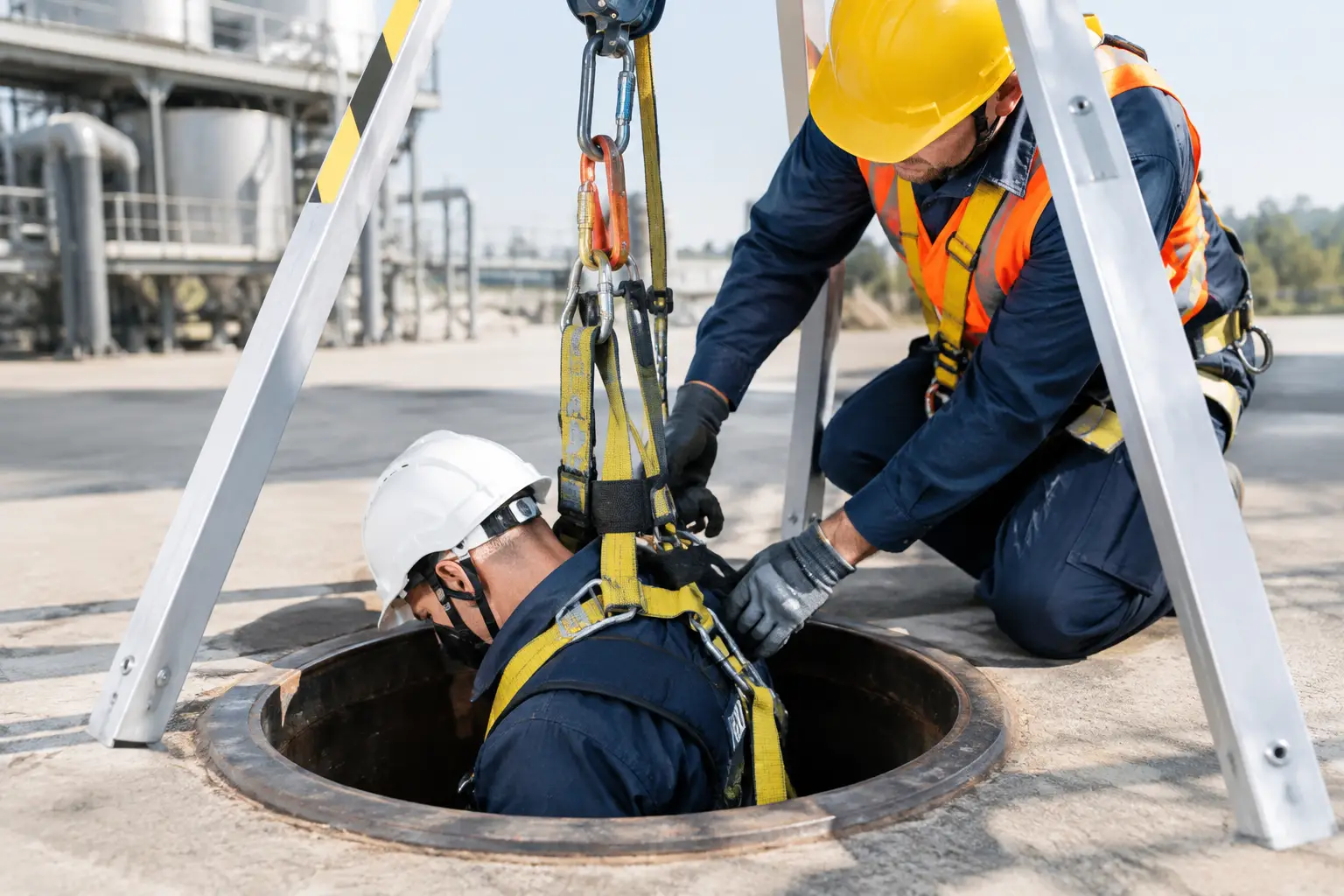

A legal register in construction is a controlled, project- or company-specific document that identifies, summarizes, and tracks every law, regulation, code, permit, and statutory obligation applicable to that construction operation. If your project does not have one, assign an owner today and begin compiling applicable instruments before the next site inspection.
Pro Tip: Before reading further, check whether a current legal register exists for your active project. If it does not, the section on building and maintaining one below is your immediate priority.
Table of Contents
- What does a legal register in construction actually cover?
- Why U.S. construction projects cannot afford to skip this step
- What fields belong in every legal register entry?
- How to build and maintain a legal register that stays current
- How the legal register integrates with ISO 45001 and OSHA audits
- Two sample U.S. construction register entries you can adapt today
- Common mistakes that undermine a legal register’s value
- Key Takeaways
- Why the legal register is the most underused tool on U.S. construction sites
- Com’s QES services accelerate register compliance for construction teams
- Useful sources and templates for construction legal registers
What does a legal register in construction actually cover?
The term “legal register” is sometimes used interchangeably with “compliance register,” but the distinction matters in practice. A compliance register tracks whether obligations are being met; a legal register is the foundational document that identifies what those obligations are in the first place. As Libryo explains, applicability is determined by three variables: the project’s location, the activities conducted on site, and the size and structure of the contracting organization.
U.S. construction projects draw obligations from multiple, overlapping legal sources. DLA Piper’s construction law framework identifies common law, federal and state statutes, and regulatory/administrative law as the three primary sources, each operating simultaneously depending on project type and jurisdiction. A federal highway project carries different obligations than a private commercial build, even on adjacent parcels.
A well-scoped register captures instruments across all applicable tiers:
- Federal statutes and OSHA standards (applicable OSHA construction standards)
- State occupational safety and health plans (where a state operates an OSHA-approved plan)
- Environmental regulations (EPA, state environmental agencies, stormwater permits)
- Local zoning ordinances, building codes, and municipal permits
- Agency guidance documents and enforcement policies
- Contractual obligations with legal effect (owner-mandated safety programs, insurance requirements)
- Professional licensing and contractor registration requirements
The register’s scope should be revisited whenever the project’s activities change, a new subcontractor is mobilized, or the project crosses into an additional jurisdiction.
Why U.S. construction projects cannot afford to skip this step
A legal register reduces regulatory risk and creates documented proof of due diligence, which is precisely what OSHA compliance officers and state inspectors look for during site visits and post-incident investigations. OSHA’s construction industry resources frame construction as a high-hazard sector and provide targeted guidance organized around the industry’s most lethal hazard categories: falls, struck-by events, electrocution, and caught-in/between incidents.
Consider a concrete scenario. A project team excavates for a foundation in an urban area and generates significant concrete dust. If the register contains no entry for OSHA’s respirable crystalline silica standard (OSHA standard on respirable crystalline silica), the site has no assigned owner for that obligation, no documented engineering controls, and no exposure monitoring records. An OSHA inspection triggered by a worker complaint can result in a willful citation, a stop-work order, and penalties that dwarf the cost of a well-maintained compliance document.

Croneri’s analysis of legal registers confirms that a well-maintained register prevents missed obligations and substantially reduces the time spent locating applicable law when a new requirement emerges or an incident occurs. The governance argument extends beyond ISO certification: Lexology’s assessment makes clear that a register improves internal accountability and audit readiness regardless of whether the organization pursues a formal management system standard.
The practical benefits for construction teams include:
- Faster response to OSHA inspections and state agency audits
- Documented evidence of proactive compliance during incident investigations
- Reduced exposure to willful or repeat citations, which carry significantly higher penalties
- Clear assignment of accountability to named roles rather than general “the company”
What fields belong in every legal register entry?
The minimum schema for a construction legal register entry must support two functions simultaneously: day-to-day site management and audit-ready evidence. ComplianceISO’s guidance on legal compliance registers identifies the core fields that ISO auditors expect to find populated and current.
| Field | Purpose | Example |
|---|---|---|
| Legal citation | Identifies the specific instrument | OSHA fall protection regulations |
| Plain-language summary | Translates legal text into site-usable terms | Fall protection required at specific height threshold for fall protection on construction sites |
| Applicability | Jurisdiction, activity, and threshold | All general industry construction; federal jurisdiction |
| Owner | Named role responsible for compliance | Site Safety Manager |
| Required controls / actions | What the site must do | Install guardrails, personal fall arrest systems, or covers |
| Evidence / status | Proof that controls are in place | Inspection logs, training records, equipment certifications |
| Next review date | Scheduled reassessment | Quarterly or upon scope change |
| Version / revision date | Document control | Rev. 3, March 2026 |
Optional fields that strengthen audit performance include: links to the full regulatory text, the relevant regulator’s contact information, penalty ranges for non-compliance, cross-references to the project risk register, and associated permit numbers. Linking a register entry to a specific permit number, for example, makes it immediately traceable during an inspection and eliminates the scramble to locate supporting documentation under pressure.
How to build and maintain a legal register that stays current
A legal register that is created once and filed away is not a compliance tool; it is a liability. The following process creates a living document that tracks the project lifecycle.
- Identify applicable instruments. Begin with federal OSHA 29 CFR 1926 subparts relevant to planned activities, then layer state plan requirements, EPA permits, and local building codes. Use the project’s scope of work as the filter.
- Summarize applicability. Translate each regulation into a one- or two-sentence site summary that a foreman can act on. Retain the citation so the full text is traceable.
- Assign named owners. Every entry must have a specific role (not “the company”) responsible for monitoring and evidencing compliance. Unowned entries are the most common audit failure point.
- Store in a controlled document system. The register must be version-controlled, with a change log and access restricted to prevent unauthorized edits. A shared drive with version history or a dedicated EHS platform both satisfy this requirement.
- Monitor for regulatory updates. Subscribe to OSHA’s e-notification service and your state plan agency’s update feeds. Federal Register alerts for 29 CFR 1926 amendments are available at no cost.
- Link controls to evidence. Each entry’s “status” field should reference a specific document: a training record, an inspection log, a permit number. A status of “compliant” with no evidence link is not audit-ready.
ComplianceISO recommends periodic quarterly reviews for organizations operating under ISO management systems and regular monthly reviews for high-risk industries when automated monitoring is not in place. For active construction sites, regular monthly reviews are required.
Review triggers that should prompt an immediate out-of-cycle update:
- A new subcontractor mobilizes with activities not previously scoped
- A regulatory amendment is published affecting a current entry
- An incident or near-miss occurs that implicates a specific obligation
- The project scope changes (new excavation, confined space entry, demolition added)
Pro Tip: Subscribe to your state OSHA plan’s email update list and set a Google Alert for “29 CFR 1926 amendment” to receive regulatory changes before they affect your site.
How the legal register integrates with ISO 45001 and OSHA audits
ISO’s management system standards, specifically ISO 45001 (occupational health and safety) and ISO 14001 (environmental management), both require organizations to identify and maintain awareness of applicable legal and other requirements. Clause 6.1.3 of ISO 45001 explicitly addresses this obligation, and auditors routinely request the legal register as primary evidence during certification and surveillance audits.
A legal register is not merely a compliance checklist. It is the documented proof that an organization has systematically identified its obligations, assigned accountability, and established controls — the exact evidence an ISO auditor or OSHA compliance officer needs to confirm that a safety management system is operating as designed, not just documented.
During an OSHA inspection or a third-party audit, the register serves three distinct functions. First, it demonstrates that the organization has proactively identified applicable standards, which supports a good-faith defense. Second, it provides a traceable link between a legal obligation and the control measure implemented on site. Third, it shows a review history, proving the document is maintained rather than static.
An audit-ready register should satisfy the following checklist:
- Every entry has a named owner with a current review date
- Evidence fields reference specific, retrievable documents
- The version history shows at least one update in the past review cycle
- Entries cover all active site activities, not just the original project scope
- The document is stored in a controlled system accessible to auditors on request
For teams pursuing ISO 45001 certification, the ISO certification checklist provides a structured framework for aligning register evidence with auditor expectations.
Two sample U.S. construction register entries you can adapt today
The following entries demonstrate the minimum viable schema using actual OSHA citations. Teams should adapt the “summary” and “controls” fields to reflect site-specific conditions.
| Field | Entry 1: Fall Protection | Entry 2: Respirable Crystalline Silica |
|---|---|---|
| Legal citation | OSHA fall protection regulations | OSHA standard on respirable crystalline silica |
| Summary | Employers must provide fall protection for workers at heights of specific height threshold for fall protection on construction sites or more, using guardrails, safety nets, or personal fall arrest systems. | Employers must limit worker exposure to respirable crystalline silica and implement engineering controls, exposure assessments, and medical surveillance where required. |
| Applicability | All construction activities; federal OSHA jurisdiction | Concrete cutting, grinding, drilling, and demolition activities generating silica dust |
| Owner | Site Safety Manager | EHS Compliance Officer |
| Controls | Guardrail systems installed at all open-sided floors; PFAS inspected weekly; training records current | Wet methods or local exhaust ventilation in use; exposure monitoring conducted; respirators provided where controls insufficient |
| Evidence / status | Weekly inspection logs; toolbox talk records | Air monitoring results; medical surveillance records; equipment maintenance logs |
| Next review date | Monthly | Monthly |
When condensing regulatory text into a site summary, retain the numeric threshold (specific height threshold for fall protection on construction sites, the action level of 25 µg/m³ for silica) and the specific control hierarchy. Removing those specifics produces a summary that cannot be acted upon. Com’s QES consultants provide pre-built templates with citation-accurate summaries for the most common OSHA 29 CFR 1926 subparts, which project teams can adapt to site conditions without starting from a blank document.
Pro Tip: When writing a plain-language summary, test it against this question: “Could a foreman read this and know exactly what to do?” If the answer is no, the summary is too abstract to be useful.
Common mistakes that undermine a legal register’s value
The most frequent failure mode is treating the register as a one-time deliverable rather than a living compliance instrument. A static PDF created at project mobilization and never updated is worse than no register at all; it creates a false sense of compliance while obligations accumulate untracked.
Additional pitfalls that safety managers encounter regularly:
- Missing local ordinances. Municipal noise ordinances, stormwater management requirements, and local fire codes rarely appear in federal or state databases but carry real enforcement consequences. Local permit conditions must be captured as register entries.
- No assigned owner. An entry with “N/A” or a department name in the owner field will not be actioned. Every obligation needs a specific, named role.
- No link to evidence. A status of “compliant” without a referenced document is an assertion, not proof. Auditors treat unsupported status fields as non-conformances.
- Subcontractor scope gaps. When a new subcontractor introduces activities not in the original scope (confined space entry, crane operations, hazardous material handling), the register must be updated before work begins.
Best practices that distinguish audit-ready registers from paper exercises:
- Assign a register owner at project mobilization, not after the first audit finding.
- Conduct a construction compliance management review whenever the project scope changes.
- Map every register entry to a corresponding control in the risk register, creating a traceable compliance chain.
- Use commercial contractor licensing requirements checklists to capture state licensing obligations that are frequently omitted from federal-only reviews.
- Never maintain the register as a single PDF copy. Version-controlled storage with a change log is the minimum acceptable standard.
Pro Tip: Run a “subcontractor gap check” every time a new trade is mobilized: list their planned activities, cross-reference against current register entries, and add any missing obligations before their first day on site.
Key Takeaways
A legal register is the foundational compliance document every construction project needs: assign an owner, populate the minimum fields, and schedule regular monthly reviews to keep it audit-ready.
| Point | Details |
|---|---|
| Core definition | A legal register is a controlled list of all laws, regulations, permits, and obligations applicable to a specific construction operation. |
| Minimum required fields | Every entry must capture the legal citation, plain-language summary, applicability, named owner, controls, evidence, and next review date. |
| Review frequency | High-risk construction sites require regular monthly reviews. ISO-aligned organizations should review at minimum quarterly. |
| Audit integration | ISO 45001 Clause 6.1.3 and OSHA inspections both treat the register as primary evidence of systematic compliance management. |
| Com’s role | Com provides pre-built QES templates, compliance consulting, and outsourced EHS manpower to build and maintain audit-ready registers. |
Why the legal register is the most underused tool on U.S. construction sites
The governance argument for a legal register is straightforward, yet the majority of construction sites encountered during compliance assessments either lack one entirely or maintain a version so outdated it references superseded regulations. The gap is not a knowledge problem; it is an ownership problem. When no specific role is accountable for the register’s currency, it degrades predictably.
What practitioners often underestimate is the register’s value during incident response, not just audits. When a worker injury triggers an OSHA investigation, the first question is whether the employer knew the applicable standard and had controls in place. A current, evidence-linked register answers that question immediately and shifts the conversation from willful non-compliance to good-faith effort. That distinction carries significant weight in citation classification and penalty determination.
The risk mitigation strategies that construction firms invest in at the design stage are only as effective as the compliance infrastructure that tracks their legal basis. A register that maps each control to its regulatory source creates an auditable chain of accountability that no informal system can replicate.
Com’s QES services accelerate register compliance for construction teams
Construction teams that need a legal register built, reviewed, or brought current before an audit have a direct route through Com’s QES consultancy services. Com provides pre-built, citation-accurate register templates for the most common OSHA 29 CFR 1926 obligations, conducts gap assessments against current federal and state requirements, and offers outsourced EHS manpower to maintain the register across the full project lifecycle. The practical advantage is speed: a project team that would spend weeks compiling and verifying applicable instruments can have a structured, audit-ready register in place within days, with named owners assigned and evidence fields populated.

For project teams approaching an ISO 45001 certification audit or an OSHA inspection, Com’s compliance consulting team conducts a full register gap check, maps obligations to existing site controls, and provides the documentation package auditors expect. Contact Com to schedule a compliance assessment and establish a register that holds up under scrutiny.
Useful sources and templates for construction legal registers
The following resources provide authoritative legal text, audit guidance, and practical templates for U.S. construction compliance registers.
| Resource | What it provides | Best used for |
|---|---|---|
| OSHA Construction Industry | Full text of 29 CFR 1926 subparts, hazard guidance, compliance assistance | Identifying and citing federal construction obligations |
| ISO.org | ISO 45001 and ISO 14001 standard summaries and clause guidance | Aligning register structure with management system requirements |
| Libryo: What is a Legal Register? | Definition and scope-setting methodology | Understanding how to tailor register scope to location and activities |
| ComplianceISO Register Guide | Template fields, review frequency guidance | Building the register schema and setting review schedules |
| Lexology: Beyond ISO Certification | Governance and accountability arguments | Justifying register investment to project leadership |
| DLA Piper: U.S. Construction Law | Sources of U.S. construction law by project type | Scoping the register across common law, statutes, and regulations |
| Croneri: Legal Registers Explained | Practical benefits and time-saving rationale | Communicating register value to operations and finance stakeholders |
Additional practical resources:
- Construction Industry | Occupational Safety and Health Administration
- iso.org
- Legal registers explained
- What is a Legal Register?
- Why a legal register is essential for businesses – beyond ISO certification
- What Is a Legal Compliance Register? 2026 Guide + Template | ComplianceISO
- General construction law in United States – DLA Piper REALWORLD