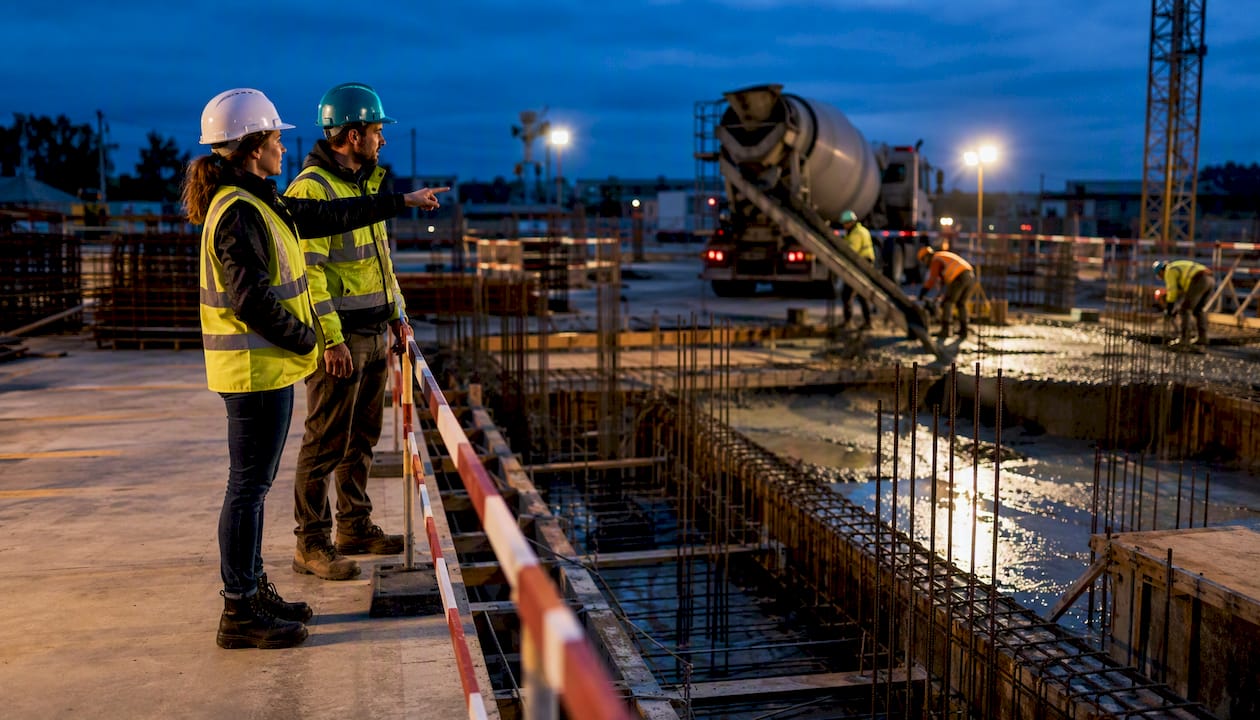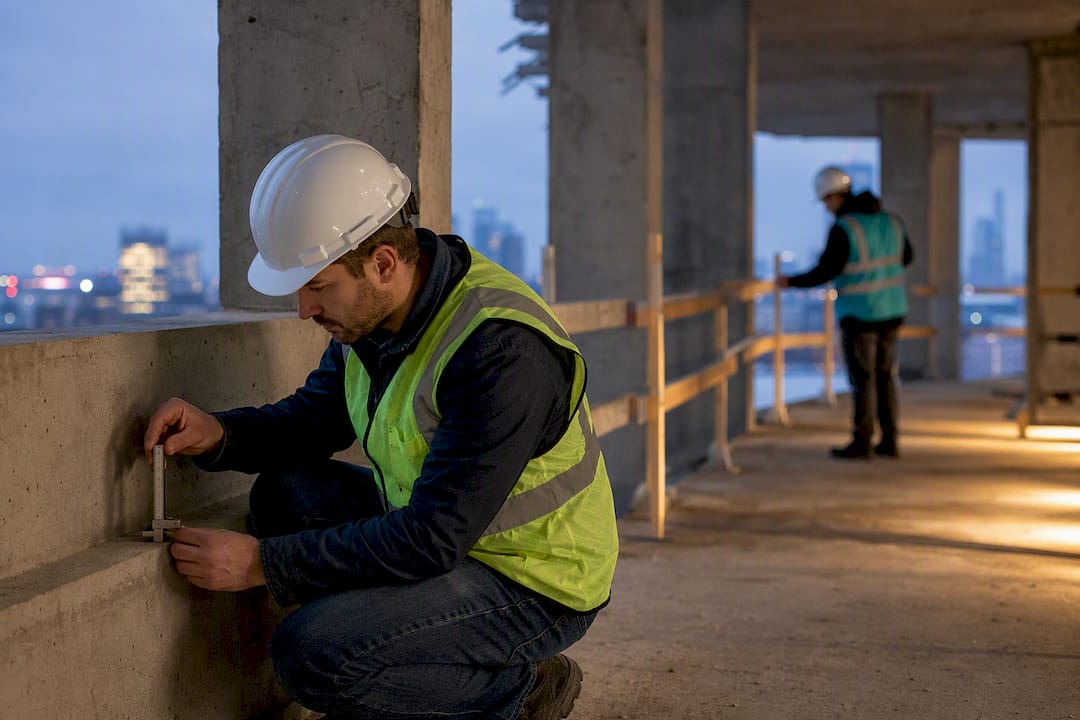
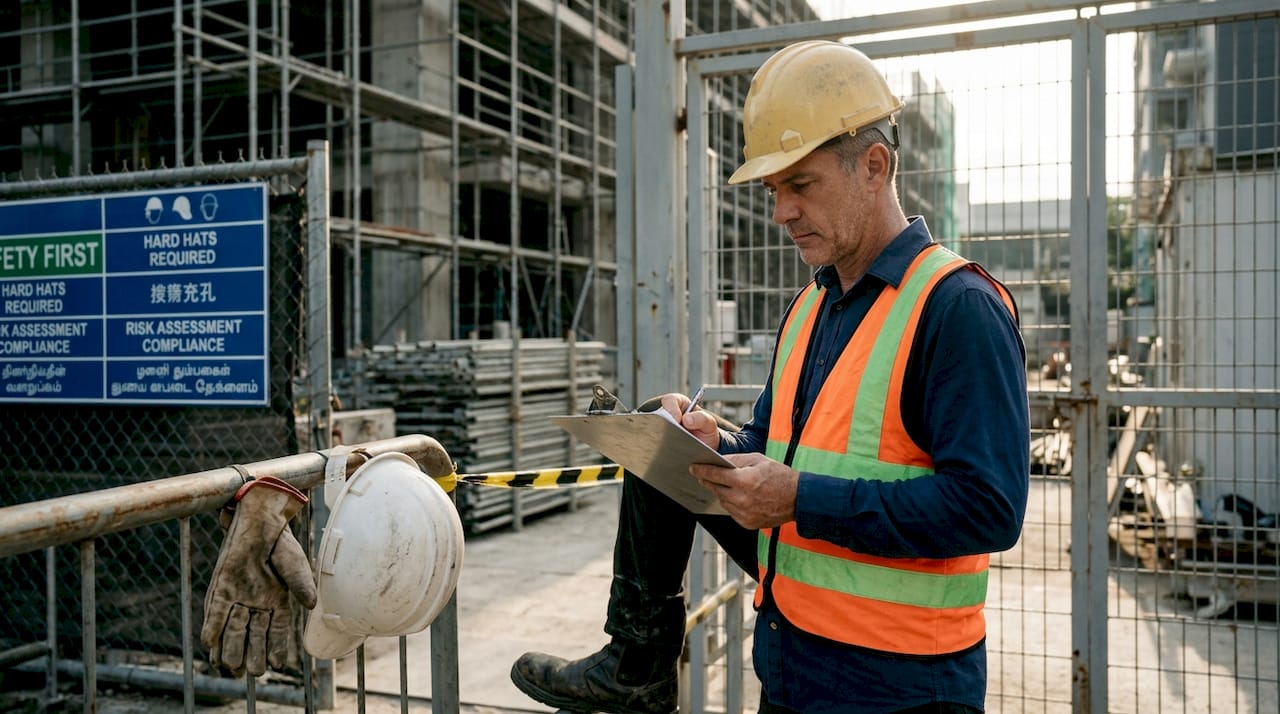
Singapore’s construction sector recorded a fatal and major injury rate of 26.3 per 100,000 workers in 2025, down from 31.0 in 2024, a meaningful reduction that reflects stronger Workplace Safety and Health (WSH) ownership across the industry. Yet improved statistics do not signal a time for complacency. Falls from height, slip-trip-fall incidents, and excavation collapses continue to claim lives and generate costly enforcement actions each year. This guide delivers actionable, compliance-ready safety tips for construction company owners and safety managers who need to protect workers while satisfying Singapore’s exacting regulatory framework.
Table of Contents
- Understand key regulations and compliance essentials
- Prioritize fall prevention and work at height protocols
- Enforce proper use of PPE and good housekeeping
- Manage excavation risks and ensure competent supervision
- Leverage technology and audits for continuous improvement
- Expert perspective: the uncomfortable truth about construction site safety in Singapore
- Get help optimizing your site safety and compliance
- Frequently asked questions
Key Takeaways
| Point | Details |
|---|---|
| Regulatory compliance first | Understand and apply Singapore’s core WSH construction safety regulations before implementing site protocols. |
| Fall prevention saves lives | Falls from height remain the leading cause of construction fatalities, making rigorously enforced controls essential. |
| PPE and housekeeping | Proper use of PPE and regular site housekeeping are required and reduce preventable injuries dramatically. |
| Audits and technology boost safety | Routine audits and adoption of WSH tech like electronic PTW, drones, and analytics improve compliance and risk detection. |
| SME focus critical | Small projects and SMEs are most vulnerable; prioritizing basic controls and staff engagement ensures lasting safety. |
Understand key regulations and compliance essentials
Every robust safety program begins with a precise understanding of the statutory framework that governs work on Singapore construction sites. The Ministry of Manpower (MOM) enforces several interlocking pieces of legislation, and gaps in compliance at any level expose principal contractors and developers to prosecution, stop-work orders, and reputational damage.
The core regulatory instruments are:
- Workplace Safety and Health Act (WSHA): The principal statute imposing duties on occupiers, employers, principals, and self-employed persons to eliminate or mitigate workplace risks so far as reasonably practicable.
- WSH (Construction) Regulations: Sector-specific rules governing scaffolding, formwork, lifting operations, cranes, and general site safety systems.
- WSH (Work at Heights) Regulations: Mandates a site-specific Fall Prevention Plan (FPP), a Permit-to-Work (PTW) for any task at a height exceeding 3 meters, documented risk assessments, appointment of qualified safety personnel, and verified worker training.
Common compliance gaps observed across Singapore sites include: failure to update risk assessments after scope changes, incomplete PTW records, unqualified workers performing elevated tasks, and the absence of a designated Safety Officer on sites that meet the statutory workforce threshold. Reviewing Singapore construction safety standards will help your team map current practices against regulatory benchmarks.
Pro Tip: Schedule a formal internal compliance audit at least once per quarter, separate from any government inspection cycle. Treat audit findings as a corrective action register with assigned owners and deadlines, not merely a checklist exercise. Firms that embed WSH management systems into day-to-day operations consistently outperform those that treat safety as a periodic administrative event.
Prioritize fall prevention and work at height protocols
Falls from height remain the single gravest hazard on Singapore construction sites. The construction sector recorded 20 fatal injuries in 2024 at a rate of 3.7 per 100,000 workers, with falls from height accounting for a disproportionate share of those fatalities. That statistic demands that fall prevention receives priority resource allocation above nearly every other safety initiative on site.
The regulatory baseline for work at height includes:
- Site-specific Fall Prevention Plan developed before elevated work commences
- PTW system activated for any task above 3 meters
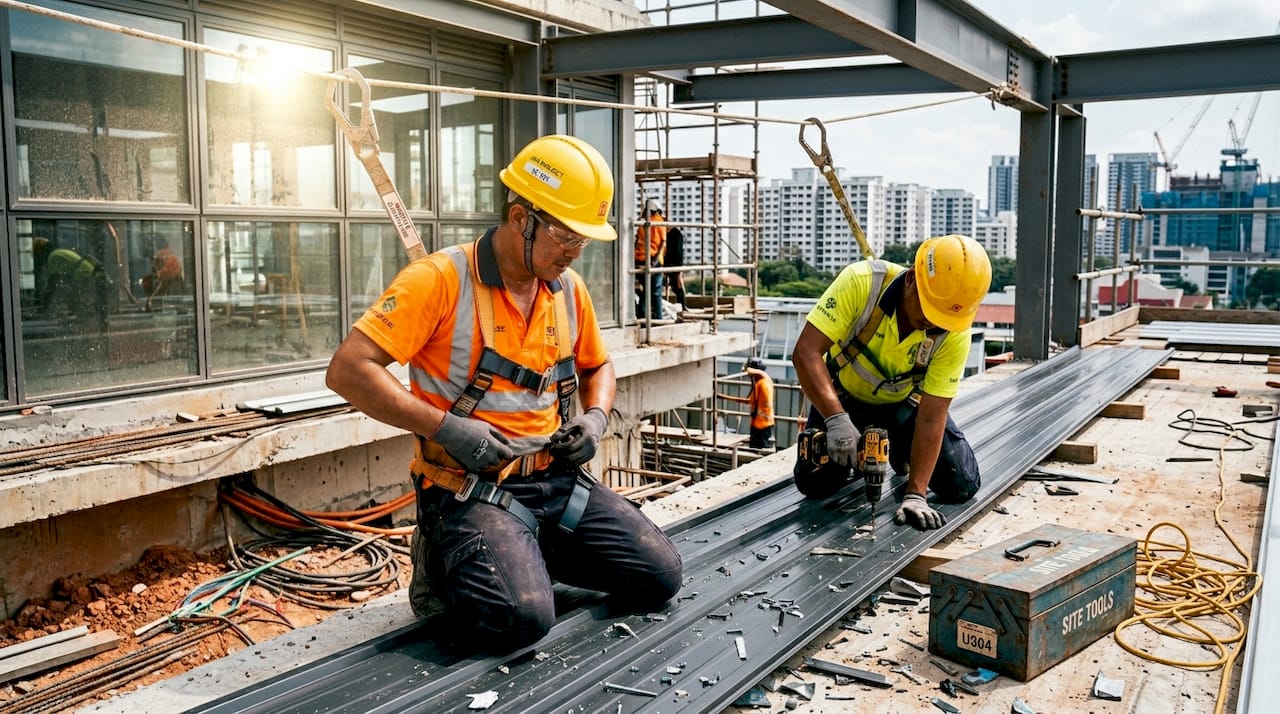
- 100% tie-off with harnesses secured to rated anchor points throughout the task duration
- Installed guardrails and barricades on all open edges and fragile surfaces
- Mandatory WSQ Perform Work-at-Heights training completed and documented for every worker assigned to elevated tasks
Translating these requirements into daily site operations requires a structured protocol. The following numbered checklist provides a practical sequence for fall prevention management:
- Conduct a pre-task height risk assessment using your site-specific risk assessment guide to identify all elevated work zones and associated hazard pathways.
- Issue and document the PTW before any worker ascends above 3 meters, ensuring the responsible supervisor signs and retains the permit.
- Inspect all fall arrest equipment including harnesses, lanyards, and anchor systems before each shift for damage, certification status, and correct sizing.
- Verify guardrail installation on all open edges, roof openings, stairwells, and fragile surface perimeters before work begins.
- Brief workers on the rescue plan so that every team member understands the emergency response procedure if a fall arrest is activated.
- Review and close the PTW at the completion of elevated work, recording any observations for the site safety register.
Integrating design for safety in Singapore at the planning stage further reduces fall risk by eliminating hazardous elevated tasks through smarter structural sequencing and prefabrication, rather than relying solely on administrative controls during construction.
Enforce proper use of PPE and good housekeeping
Personal protective equipment (PPE) and site housekeeping are foundational controls that too often receive less rigorous management than complex technical systems. Both are inexpensive relative to their protective value, and both are consistently cited in MOM enforcement actions when they are absent or defective.
Mandatory PPE on Singapore construction sites includes:
- Hard hats compliant with SS 98 or equivalent standards, replaced after any impact event regardless of visible damage
- Safety boots with steel toecaps and puncture-resistant midsoles
- High-visibility vests for all workers in zones with plant and vehicle movement
- Safety harnesses and lanyards for any elevated work task above the regulatory threshold
- Respiratory protection, eye protection, and hearing protection determined by the specific task risk assessment
Good housekeeping is not merely an aesthetic concern. Cluttered access routes, pooled water, unsecured materials, and inadequate waste segregation are among the leading contributors to slip, trip, and fall (STF) incidents, which rank as one of the most frequent injury categories in the Singapore construction sector.
Common STF causes identified during site audits include:
- Unsecured electrical cables crossing pedestrian routes
- Building materials stored in access corridors or on stairwells
- Water accumulation at penetrations or slab edges without drainage management
- Inadequate lighting in substructure and below-grade work areas
- Loose formwork offcuts and protruding reinforcement bars at ground level
Ensuring surface preparation for safety is consistently maintained across all working platforms significantly reduces STF exposure. Similarly, fastening tips for secure sites remind site teams that improperly secured materials become projectile or trip hazards that disciplined fastening practices prevent.
Industry reminder: The Workplace Safety and Health Council continues to urge that STF incidents from poor housekeeping remain preventable. A site where housekeeping is treated as a shared daily responsibility, rather than assigned exclusively to general workers, sees measurably fewer preventable injuries across all crew levels.
Pro Tip: Conduct a brief, unannounced visual housekeeping audit at the start of each shift. Assign a rotating “housekeeping champion” at the foreman level to conduct a 10-minute walkthrough before work commences. Document findings with photos in your safety management systems guide, and close all findings before the work zone is activated. Pairing this with a structured workplace risk assessment ensures housekeeping deficiencies are captured formally rather than informally addressed and forgotten.
Manage excavation risks and ensure competent supervision
Excavation work represents one of the highest-consequence hazard categories in Singapore construction, particularly for smaller sites undertaking alteration and addition (A&A) works, drainage, and utility installation. Cave-in events are invariably fatal, yet risk assessment rigor for excavation is frequently weaker on smaller projects than on major civil works.
Excavation safety in Singapore requires formal risk assessments addressing cave-in potential, proximity to underground utilities, groundwater conditions, and surcharge loads from adjacent plant. The selection of ground support methodology follows a defined hazard control hierarchy:
| Method | Application | Key Consideration |
|---|---|---|
| Battering/sloping | Shallow excavations in stable ground | Requires adequate setback space |
| Benching | Cohesive soils at moderate depth | Prohibited in loose or granular material |
| Shoring (timber or steel) | Confined or deeper excavations | Must be designed to loadings |
| Proprietary trench boxes | Utility trenches and pipeline works | Inspect before each deployment |
A competent supervisor must be present whenever workers are within or adjacent to an excavation. For deep or geotechnically complex works, a Professional Engineer (PE) must approve the earth retaining system design before excavation commences. Refer to the full risk assessment process to structure your pre-excavation documentation correctly.
Required supervision roles for excavation works include:
- Appointed Safety Supervisor monitoring excavation stability throughout the shift
- Competent Person for excavation verifying ground conditions and support adequacy daily
- PE-endorsed design holder accessible on site for deep or complex works
- Utilities coordinator confirming service marking and clearance before any mechanical digging
Utility strikes from inadequate survey and marking practices remain a significant excavation risk in Singapore’s densely serviced urban environment. Treat every dig as a potential utility encounter until confirmed otherwise.
Leverage technology and audits for continuous improvement
Singapore’s WSH authority actively promotes technology adoption as a force multiplier for safety management, particularly for contractors who cannot sustain large safety teams across multiple projects simultaneously.
Recommended WSH technologies span a broad spectrum of application:
| Technology | Primary Application | Available Funding |
|---|---|---|
| Electronic PTW systems | Replacing paper-based permits with real-time digital controls | PSG, BETC grants |
| AI video analytics | Automated detection of PPE violations and unsafe behaviors | PSG grant eligible |
| Vehicular safety technology | Proximity alerts and blind-spot monitoring for heavy plant | MOM-endorsed solutions |
| Drones and robotics | Remote inspection of elevated or confined structures | BETC grant support |
| IoT sensors | Real-time monitoring of gas, noise, vibration, and structural movement | Integration with site dashboards |
| Exosuits (exoskeletons) | Ergonomic support for manual material handling tasks | Pilot programs available |
How do these technologies compare to traditional enforcement approaches for SME contractors?
| Factor | Traditional controls | Technology-augmented approach |
|---|---|---|
| Consistency | Supervisor-dependent, variable shift to shift | Continuous, automated monitoring regardless of shift |
| Evidence documentation | Paper records, prone to loss | Digital audit trail, tamper-evident |
| Response speed | Manual observation and intervention | Real-time alert and escalation |
| Upfront cost | Low | Moderate to high, offset by grants |
| Scalability | Difficult across multiple sites | Cloud-based platforms scale readily |
Pro Tip: Before purchasing any WSH technology solution, check eligibility under the Productivity Solutions Grant (PSG) or Built Environment Technology Challenge (BETC). Many electronic PTW and video analytics platforms qualify for co-funding that can reduce net cost by up to 50%. Pairing technology with the deeper safety intelligence available from WSH tech in Singapore ensures your investment is aligned with MOM-recognized solutions rather than unverified proprietary systems.
Regular audits remain the connective tissue binding technology, policy, and human behavior into a coherent safety system. Neither technology alone nor policy documents substitute for a structured audit that reveals gaps between intended and actual site practice.
Expert perspective: the uncomfortable truth about construction site safety in Singapore
The data tells an encouraging story at the aggregate level. Fatal injury rates have declined substantially since Singapore introduced the Design for Safety (DfS) legislative framework, moving from approximately 5.5 fatalities per 100,000 workers in 2014 to considerably lower figures today. That trajectory is real and meaningful. But aggregate statistics obscure a more uncomfortable reality that safety managers in smaller firms need to confront directly.
Small-scale construction, including A&A and renovation works, accounts for more than 60% of injuries in Singapore’s construction sector. Most of these injuries arise not from complex technical failures but from failures in the most basic controls: workers without hard hats, sites without guardrails, access routes blocked by materials, and excavations without competent supervision. The technology debate, while valid for larger contractors, risks distracting smaller operators from the foundational discipline that prevents the majority of preventable incidents.
The Design for Safety Professionals framework offers a structural answer to this challenge by embedding hazard elimination at the design stage rather than managing residual risk on site. But DfS only reaches its potential when field-level execution is equally rigorous. A sophisticated risk register does not prevent a fatal fall if the foreman allows a worker to skip the harness tie-off because the task “will only take five minutes.”
The most durable safety cultures in Singapore construction share a common trait: senior leadership that treats site safety walkthroughs as non-delegable, not as activities reserved for MOM inspection periods. BizSAFE certification provides a credible structure for SMEs to demonstrate and sustain safety management maturity, but the certification process must translate into operational habit rather than folder compliance. Technology amplifies a strong safety culture. It cannot substitute for one.
Get help optimizing your site safety and compliance
Staying ahead of Singapore’s evolving WSH regulatory requirements demands more than periodic internal reviews. Structured, expert-led compliance audits and specialist risk management services provide the independent assurance that your safety systems are genuinely effective, not merely administratively complete.

MOSAIC Ecoconstruction Solutions supports construction companies and developers across Singapore with compliance-focused safety audits, BizSAFE program management, and specialist design for safety services that integrate hazard elimination at the earliest project phases. Whether your organization needs a structured plan for preparing for a safety audit, gap analysis against WSHA requirements, or full WSH management system implementation, our team of qualified Safety Officers, Safety Auditors, and DfS Professionals delivers targeted, practical solutions. Protect your workers, reduce enforcement risk, and build a safety culture that sustains compliance between inspection cycles.
Frequently asked questions
What are the most common causes of injuries on Singapore construction sites?
Falls from height and slips, trips, and falls due to poor housekeeping are the most frequent causes, with the construction sector recording 20 fatalities in 2024 and STF incidents remaining persistently linked to housekeeping deficiencies across all construction categories.
Which safety technologies are recommended for Singapore construction sites?
Electronic PTW, AI video analytics, vehicular safety technology, drones, IoT sensors, and exosuits are all MOM-recognized solutions, with government co-funding available through the PSG and BETC grant programs to reduce adoption costs for eligible contractors.
How are excavation works regulated for safety in Singapore?
All excavation works must undergo formal risk assessments covering cave-in and utility strike hazards, employ ground support methods appropriate to soil conditions, and maintain competent supervision throughout; deep or geotechnically complex excavations additionally require a Professional Engineer-endorsed design before work commences.
What training is mandatory for work at height in Singapore?
Workers must complete the WSQ Perform Work-at-Heights course before performing elevated tasks, and principal contractors must develop and maintain a site-specific Fall Prevention Plan alongside a functioning PTW system for all work above 3 meters.