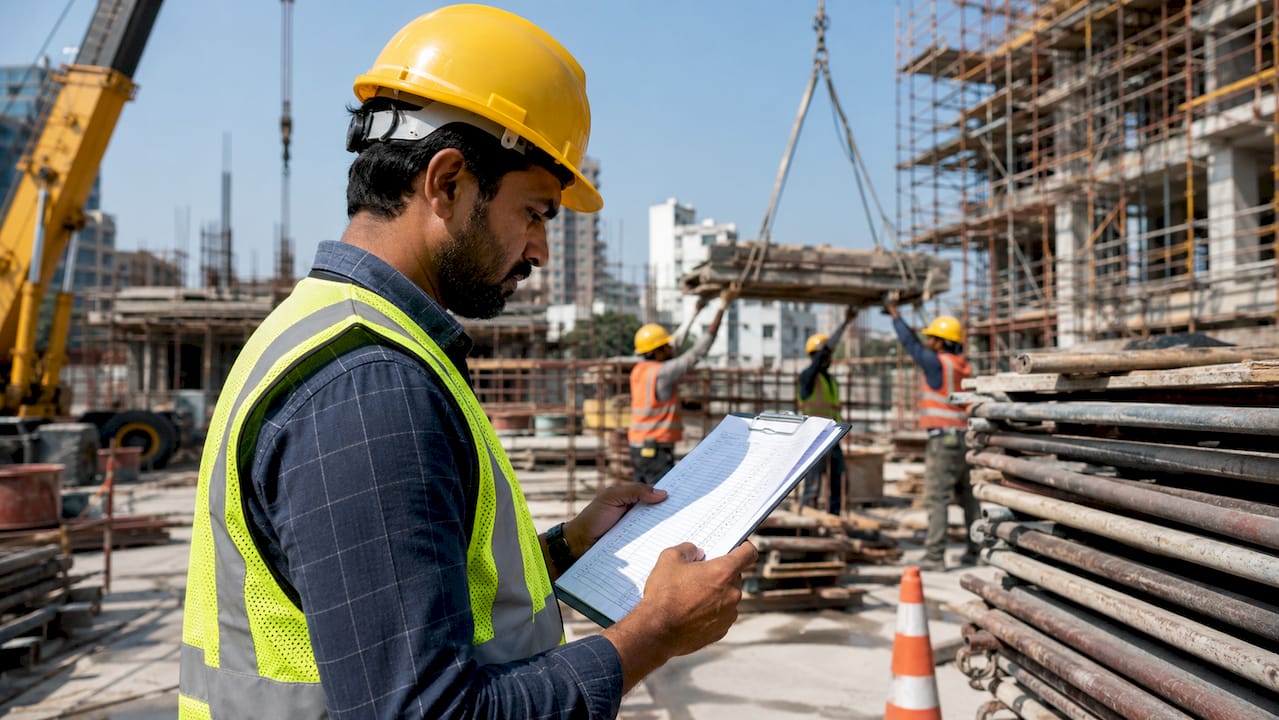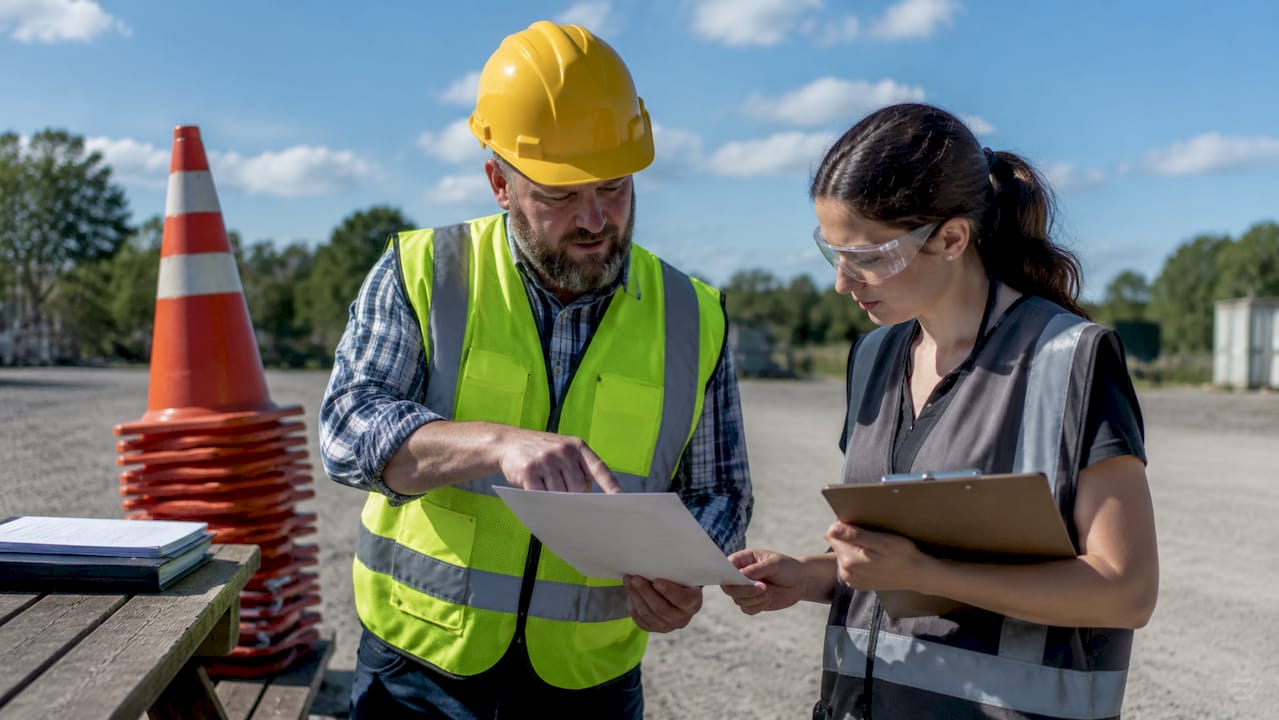
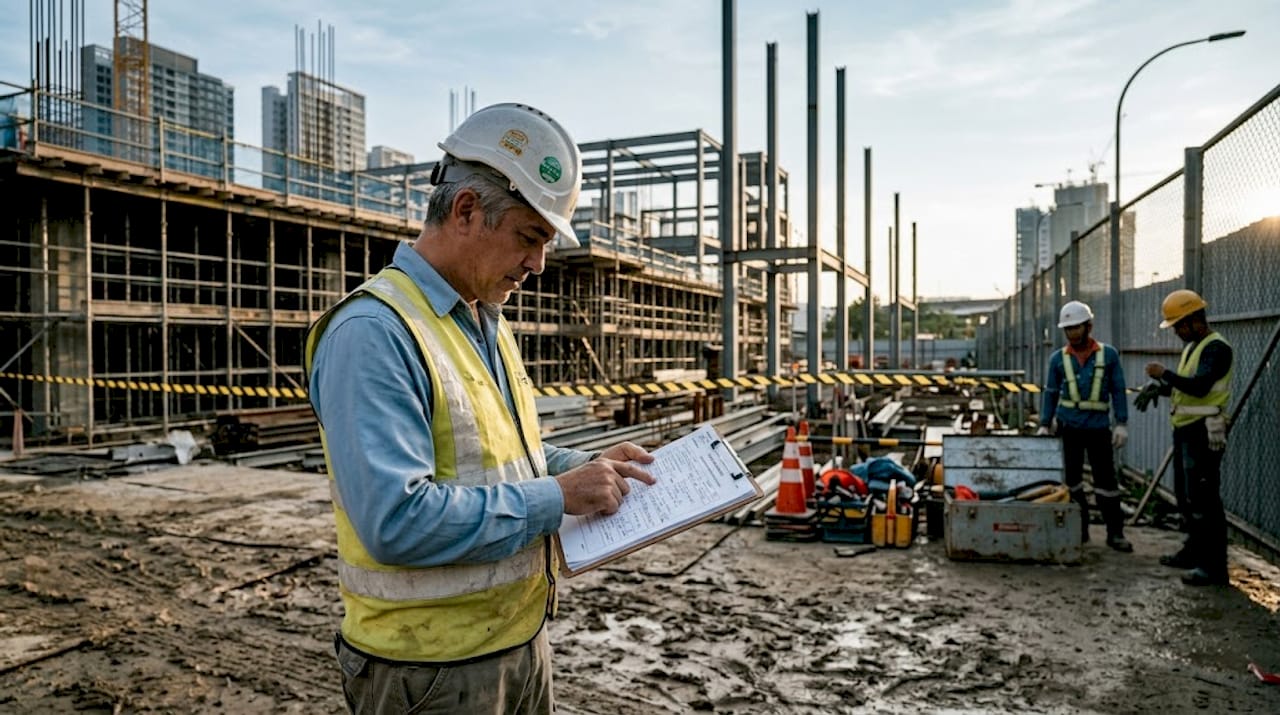
Singapore’s construction fatal and major injury rate fell to 26.3 per 100,000 workers in 2025, down from 31.0 in 2024, a measurable improvement that reflects years of intensified regulatory enforcement and industry-wide safety investment. Yet that figure still represents hundreds of preventable incidents annually, and the persistent gap between Singapore’s overall workplace fatality rate and its construction sector average signals that risk management practices remain inconsistent across project sites. The root cause, more often than not, is not a lack of regulation but a fundamental misunderstanding of what workplace risk assessment actually requires, and what it can prevent.
Table of Contents
- What is workplace risk assessment in construction?
- Why risk assessments matter: Legal and practical reasons
- How to conduct a workplace risk assessment: Step-by-step
- Common pitfalls and how to overcome them
- Our perspective: Why real safety means going beyond the checklist
- Enhance your site’s safety outcomes with expert support
- Frequently asked questions
Key Takeaways
| Point | Details |
|---|---|
| Critical safety tool | Risk assessment is essential for safeguarding workers and ensuring compliance on Singapore construction sites. |
| Legal and financial impact | Skipping or poorly executing risk assessments can result in accidents, fines, and insurance issues. |
| Proactive approach pays | Upstream planning, real-time monitoring, and teamwork drive the most effective results. |
| Continuous improvement | Regularly updating risk assessments and empowering staff create safer, more resilient worksites. |
What is workplace risk assessment in construction?
A workplace risk assessment (RA) is a systematic, documented process through which a competent person identifies hazards present in a work environment, evaluates the likelihood and severity of potential harm, and prescribes control measures to eliminate or reduce that risk to an acceptable level. In the construction context, this process extends across every phase of a project, from site preparation and foundation works through to structural erection, fit-out, and final handover.
The scope of a construction RA is considerably broader than what many project teams assume. It must account for:
- Activities: Every trade activity, including excavation, lifting operations, scaffolding erection, hot works, and confined space entry.
- Locations: Both fixed work zones and dynamic areas where conditions shift as the project progresses.
- Roles and personnel: Workers, supervisors, subcontractors, visitors, and any person who may be affected by the work.
- Temporal factors: Time-of-day risks, weather-dependent hazards, and shift-change vulnerabilities.
Under Singapore’s Workplace Safety and Health (WSH) Act, all employers and principal contractors are legally obligated to conduct and document risk assessments before work commences on any construction activity. The WSH (Risk Management) Regulations 2006 specify that assessments must be performed by a competent RA team, reviewed at least once every three years or when there are significant changes, and communicated to all affected workers. Robust workplace safety and health systems integrate RA as a living document rather than a static filing exercise.
The critical distinction between a compliant RA and a genuinely effective one lies in specificity and ownership. Generic, template-driven assessments that fail to reflect actual site conditions are a recognized liability. Frequent root causes of construction accidents in Singapore include inadequate risk assessment and poor supervision, a finding that underscores how paper compliance diverges sharply from operational safety. For sites where conditions evolve rapidly, a dynamic risk assessment approach, which enables real-time re-evaluation as hazards change, is increasingly recognized as best practice.
Pro Tip: Deploy digital monitoring platforms that integrate sensor data, worker location tracking, and near-miss reporting into your RA workflow. Real-time visibility into site conditions allows supervisors to update risk controls before incidents occur, rather than after.
Why risk assessments matter: Legal and practical reasons
The imperative for rigorous risk assessment operates on two distinct but interconnected planes: statutory compliance and operational risk management. Treating these as separate concerns is itself a strategic error, because regulatory non-compliance and site incidents are frequently two manifestations of the same underlying failure.
The legal framework is unambiguous. Under the WSH Act and its subsidiary legislation, principal contractors who fail to conduct, document, or communicate risk assessments face prosecution, stop-work orders, and substantial financial penalties. Beyond direct regulatory action, regulatory non-compliance with RA or Safe Work Procedures (SWP) and Method of Statements (MOS) is regularly cited as a contributing cause in injury investigations, exposing organizations to civil liability and reputational damage that can affect tender eligibility for years.
Insurance and contractual exposure represent an equally significant concern. Most construction insurance policies contain explicit clauses requiring documented risk assessments for covered activities. An incident occurring in the absence of a current, site-specific RA can void coverage entirely, transferring the full cost of medical treatment, compensation, and legal defense to the contractor. Many developer contracts now mandate RA documentation as a condition precedent to site access, making compliance a commercial as well as legal obligation.
The following table illustrates the comparative consequences of rigorous versus inadequate RA practice:
| Factor | Rigorous RA practice | Inadequate RA practice |
|---|---|---|
| Regulatory standing | Full WSH Act compliance | Prosecution risk, stop-work orders |
| Insurance coverage | Claims honored under policy | Potential policy voidance |
| Incident frequency | Statistically lower injury rates | Higher likelihood of major injuries |
| Project continuity | Minimal disruption | Delays, investigations, cost overruns |
| Workforce trust | Higher morale and retention | Elevated turnover, low engagement |
Reviewing Singapore construction safety standards in detail reveals that an enforceable RA must include the hazard description, the risk rating (likelihood multiplied by severity), the control measures applied at each level of the hierarchy of controls, the responsible person for each control, and the residual risk rating post-control. Assessments that omit any of these elements are considered incomplete and may not withstand regulatory scrutiny.
For a structured approach to meeting these requirements, the WSH compliance guide provides detailed frameworks aligned with MOM’s current enforcement priorities. Construction teams can also benchmark their practices against industrial safety best practices from adjacent sectors to identify transferable control methodologies, particularly for surface preparation and abrasive blasting operations that share hazard profiles with construction finishing works.
“The difference between a risk assessment that protects workers and one that merely protects organizations from fines is the degree to which it reflects the actual, current conditions on the ground, not the conditions that existed when the template was first created.”
How to conduct a workplace risk assessment: Step-by-step
A construction RA conducted to the standard required by Singapore’s regulatory framework follows a structured five-stage methodology. Each stage builds on the previous, and the integrity of the final assessment depends on the rigor applied at every step.
-
Identify hazards: Walk the site systematically with a multi-disciplinary team that includes supervisors, trade workers, and a qualified safety officer. Catalog every potential source of harm, including physical hazards (falls from height, struck-by incidents, electrocution), chemical hazards (silica dust, solvents, cement dermatitis), biological hazards, and ergonomic risks. Do not rely solely on generic checklists. Site-specific conditions, including adjacent land use, soil type, underground services, and temporary works configurations, must be reflected in the hazard inventory.
-
Evaluate risk: For each identified hazard, assign a likelihood rating (the probability of the hazard causing harm given existing conditions) and a severity rating (the potential consequence, from minor injury to fatality). The product of these two values generates a risk priority number that guides the urgency and extent of control measures required.
-
Implement control measures: Apply controls in strict adherence to the hierarchy of controls: elimination, substitution, engineering controls, administrative controls, and personal protective equipment (PPE) in descending order of effectiveness. The 5-step risk assessment framework operationalizes this hierarchy for construction-specific hazard types, providing practical control options at each tier.
-
Document and communicate: Record the completed assessment in a format that satisfies WSH Act requirements, assign ownership of each control measure to a named responsible person, and brief all affected workers in a language and format they can understand. Toolbox talks, visual hazard boards, and multilingual briefings are all recognized communication tools.
-
Monitor and review: Establish a schedule for periodic review and define the trigger conditions that mandate an immediate reassessment, including changes in scope, method, personnel, equipment, or site conditions. Near-miss events must also trigger a formal review.
The following comparison table illustrates the operational differences between paper-based and technology-enabled RA approaches:
| Dimension | Paper-based RA | Technology-enabled RA |
|---|---|---|
| Update speed | Days to weeks | Real-time or same-day |
| Accessibility | Physical file, site office | Mobile, cloud-based access |
| Worker input | Formal meetings only | Continuous digital reporting |
| Audit trail | Manual, error-prone | Automated, timestamped |
| Integration with DfS | Limited | Fully integrated upstream |
Upstream design risk management is a particularly powerful lever that is underutilized on many Singapore construction projects. Design for Safety (DfS) reduces reliance on on-site controls and PPE by eliminating hazards at the design stage before they are built into the project, fundamentally shifting the risk profile of the work rather than simply managing residual hazards.
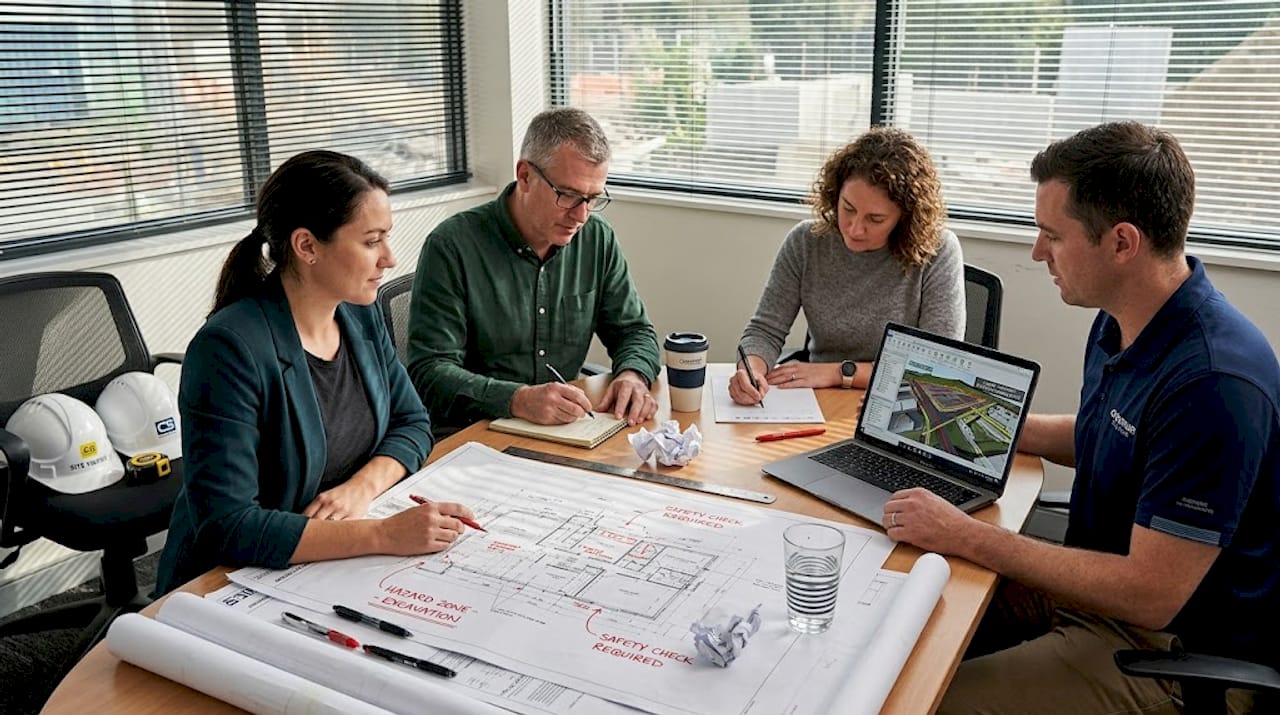
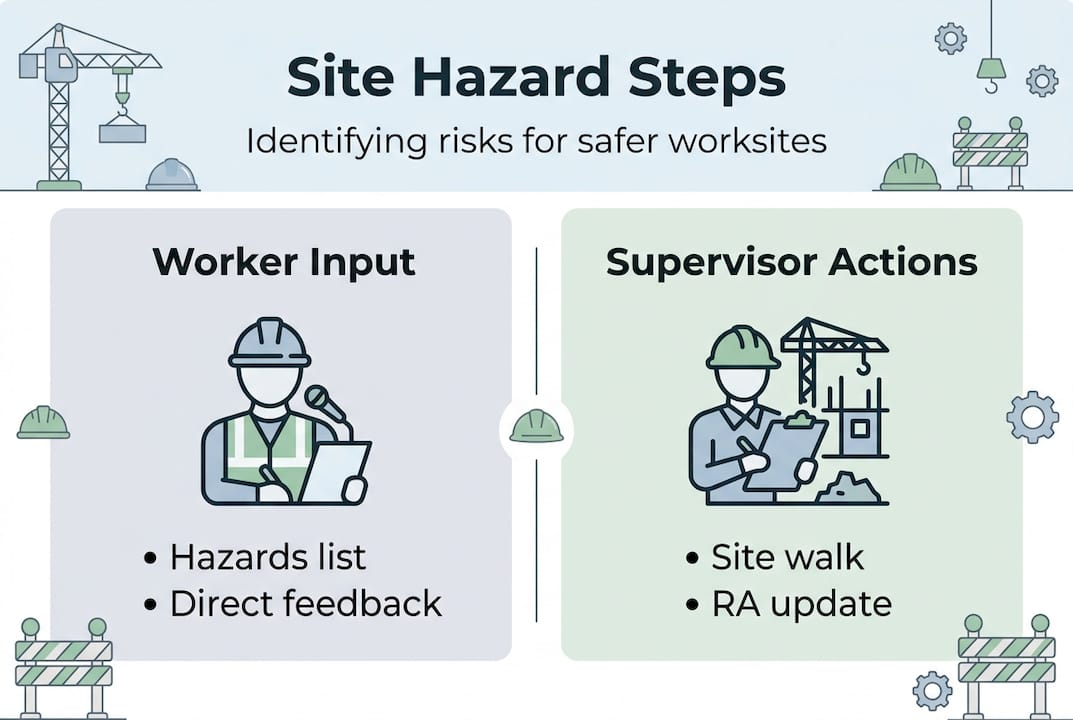
Pro Tip: Involve trade workers directly in the hazard identification stage. Supervisors and safety officers see the site from a management perspective, but workers who perform the tasks daily identify hazards that never appear in desk-based assessments. Their input is not optional. It is operationally essential.
Common pitfalls and how to overcome them
Even organizations that invest in formal RA processes frequently encounter implementation failures that erode the protective value of their assessments. Understanding these failure modes is as important as understanding the methodology itself.
Treating RA as a tick-box exercise remains the most pervasive problem in Singapore’s construction sector. Assessments are completed to satisfy pre-qualification requirements or MOM inspections, then filed and forgotten. The hazard controls documented in the RA are never translated into actual site practice, and supervisors lack the authority or incentive to enforce them. Inadequate RA and supervision remain frequent causes of major injuries in construction, a finding that points directly to this implementation gap.
Failure to update assessments for dynamic site conditions is the second major pitfall. A construction site at foundation stage presents an entirely different hazard profile from the same site at structural steel erection or facade installation. Assessments that are not revised to reflect these transitions leave workers exposed to hazards that the documented controls were never designed to address. The top construction hazards in Singapore, including falls from height, crane and lifting incidents, and excavation collapses, are all strongly associated with sites where RA currency has lapsed.
Lack of supervisor buy-in is a systemic issue that no amount of documentation can resolve. When front-line supervisors view risk assessment as an administrative burden imposed by safety officers, they will not enforce controls, will not report near misses, and will not halt unsafe work. Addressing this requires structured supervisor accountability, where RA compliance forms part of performance appraisal and where supervisors are empowered, not just instructed, to make safety decisions.
The following pitfalls and their recommended countermeasures are worth highlighting:
- Generic, non-site-specific assessments: Mandate site walk-throughs for every new activity phase.
- Controls not communicated to workers: Require signed toolbox talk records for every RA briefing.
- No near-miss reporting culture: Implement anonymous digital reporting channels and act visibly on every report.
- RA not reviewed after incidents: Establish a mandatory 24-hour RA review protocol following any incident or near miss.
- Subcontractor RA not integrated: Require all subcontractors to submit activity-specific RAs for principal contractor review before work begins.
Singapore’s overall workplace fatality rate stands at approximately 1.0 to 1.2 per 100,000 workers, but the construction sector’s rate remains significantly higher, a disparity that reflects the structural complexity of construction hazard management rather than any inherent impossibility of improvement. Engaging Design for Safety professionals at the project planning stage can materially reduce the hazard inventory that on-site RA teams must manage.
Pro Tip: Institutionalize a stop-work authority culture. Every worker, regardless of seniority or trade, must have the explicit, protected right to halt work when they observe an unsafe condition. Near misses are early warnings. Organizations that treat them as learning events rather than inconveniences consistently outperform those that do not.
Our perspective: Why real safety means going beyond the checklist
From our experience working across Singapore’s construction sector, the organizations that achieve the most durable safety outcomes share one characteristic: they treat risk assessment as an operational discipline rather than a compliance artifact. The falling injury rates documented in Singapore’s WSH statistics are real and meaningful, but they are the product of proactive engagement, not passive documentation.
The checklist is a starting point. What elevates it to genuine protection is the organizational culture that surrounds it. Digital RA tools, real-time monitoring, and integrated risk management in Singapore frameworks all amplify the value of a well-constructed assessment, but only when supervisors are accountable and workers are empowered. The most sophisticated RA platform in the world cannot substitute for a supervisor who stops work when conditions deteriorate, or a worker who reports a near miss without fear of reprisal. True safety performance is achieved when every member of the project team, from the project director to the newest trade worker, understands that their individual actions are the final line of defense.
Enhance your site’s safety outcomes with expert support
Translating the principles in this guide into consistent, audit-ready practice requires more than internal effort alone, particularly when project complexity, subcontractor diversity, and regulatory scrutiny are all escalating simultaneously.

MOSAIC Ecoconstruction Solutions provides safety audits, compliance frameworks, and specialist manpower support specifically calibrated for Singapore’s construction sector. Whether your immediate priority is preparing for a safety audit, strengthening your documentation through structured safety audit checklists and systems, or addressing resourcing gaps through outsourcing safety manpower, MOSAIC’s consultants bring the regulatory depth and site-level experience to drive measurable, sustained improvement across your project portfolio.
Frequently asked questions
What is the legal requirement for workplace risk assessment in construction in Singapore?
Under the WSH Act, risk assessments are mandatory for all construction worksites in Singapore before work begins and must be regularly reviewed, with documented controls communicated to all affected workers.
How often should a risk assessment be reviewed?
Workplace risk assessments should be reviewed at least annually or whenever significant changes occur on site, including changes in scope, method, personnel, or equipment.
What are the main causes of construction site incidents in Singapore?
The main causes are inadequate risk assessment, poor supervision, and failure to implement documented safe work procedures, all of which are addressable through rigorous RA practice.
What is the difference between a risk assessment and a method statement?
A risk assessment identifies and evaluates hazards and prescribes control measures, while a method statement is a sequential, step-by-step document that describes exactly how a specific task will be carried out safely using those controls.
Recommended
- Risk assessment process: mastering construction safety in Singapore
- The Ultimate Guide to Risk Assessment in Singapore: Mastering WSH Compliance to Protect Your People and Your Business – MOSAIC Eco-construction Solutions Pte Ltd
- Essential Guide: Singapore Construction Safety Standards
- Dynamic Risk Assessment in Singapore: A WSH Framework for High-Paced Industries – MOSAIC Eco-construction Solutions Pte Ltd