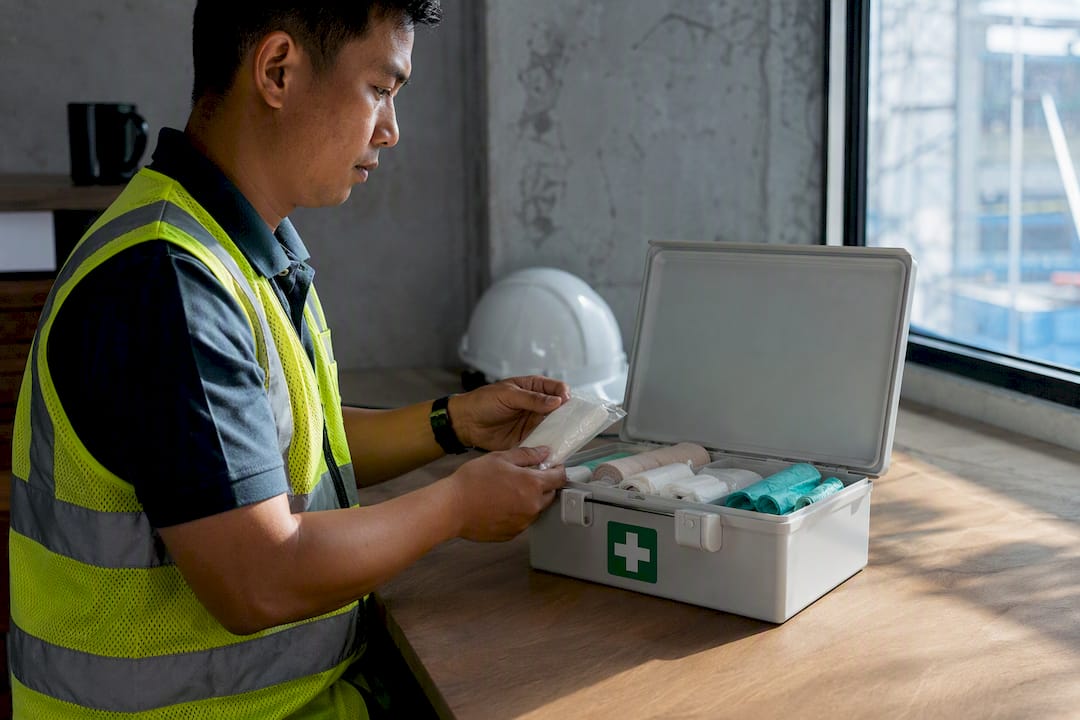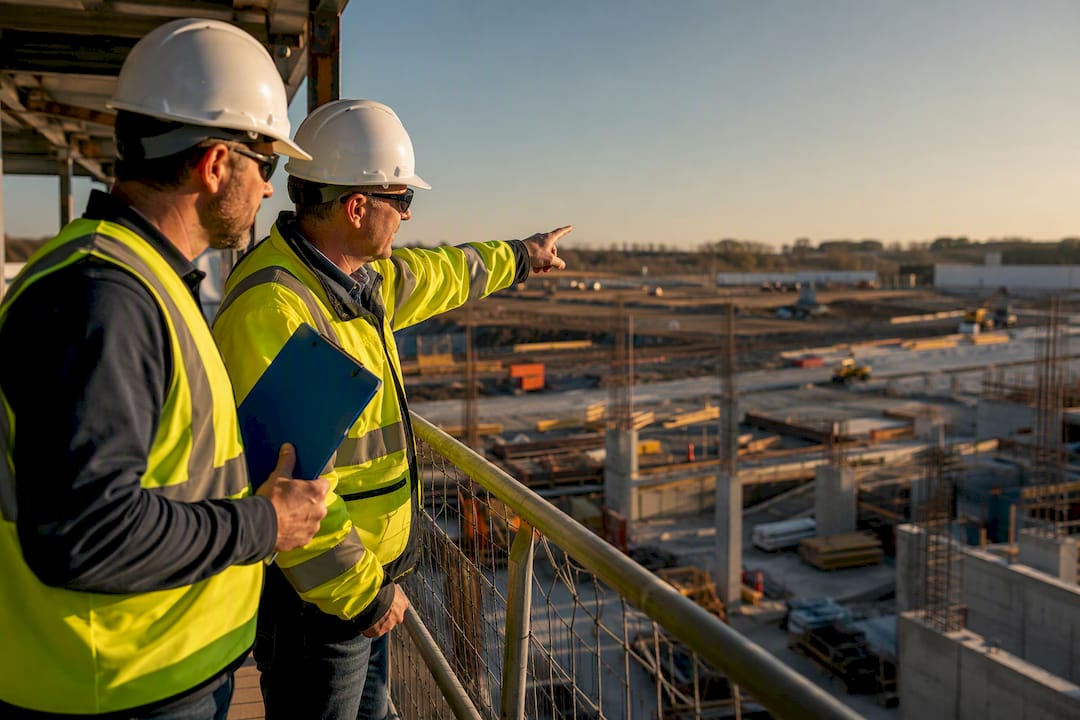
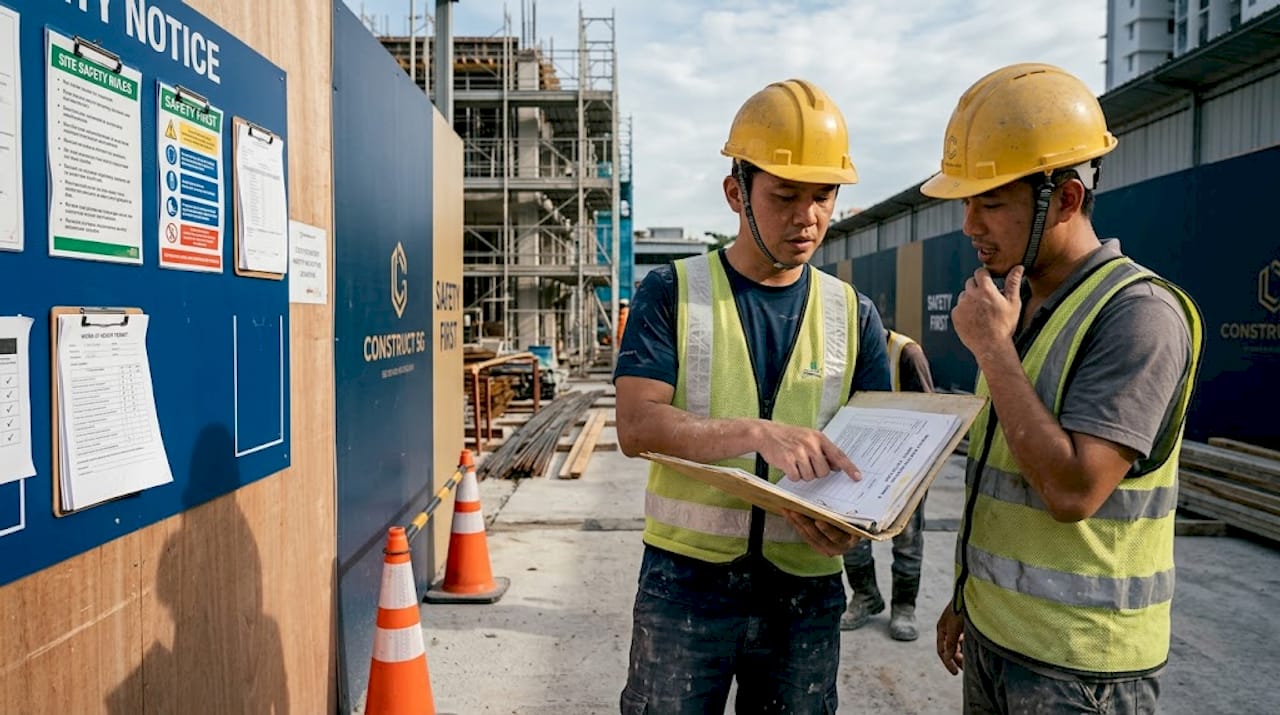
Singapore’s construction sector recorded a fatal and major injury rate of 31.0 per 100,000 workers in 2024, representing 166 cases across the industry. Small-scale works account for over 60% of those incidents, and root cause analyses consistently point to inadequate risk assessment (RA) and poor supervision as the primary drivers. For construction project managers and safety officers operating under Singapore’s stringent Workplace Safety and Health (WSH) framework, mastering the RA process is not optional. It is the foundational mechanism that separates compliant, incident-free sites from those facing enforcement action, project delays, and preventable harm.
Table of Contents
- Why risk assessment matters in Singapore construction
- Core steps in the risk assessment process
- Tools, materials, and requirements for risk assessment
- Common mistakes and how to avoid them
- A fresh perspective: what most guides miss about risk assessment
- Take your risk assessment further with specialized support
- Frequently asked questions
Key Takeaways
| Point | Details |
|---|---|
| Statistical impact | Injury rates in Singapore construction fall when robust risk assessment is enforced. |
| Stepwise process | Effective risk assessment requires hazard identification, risk evaluation, control implementation, communication, and ongoing review. |
| Site-specific focus | Adapting risk assessment to unique project hazards prevents most incidents—especially on small sites. |
| Tools and buy-in | Checklists, digital tools, and clear communication empower teams to own the process. |
| Avoiding mistakes | Common pitfalls—including vague assessments and poor supervision—are preventable with targeted methods. |
Why risk assessment matters in Singapore construction
Risk assessment sits at the legislative core of Singapore’s WSH Act and its associated regulations. Under the WSH (Risk Management) Regulations 2006, every employer conducting construction activities must identify foreseeable hazards, evaluate associated risks, and implement appropriate control measures before work commences. Non-compliance carries penalties including fines and stop-work orders, both of which carry significant financial and reputational consequences for contractors and developers.
The practical stakes are equally serious. The 2024 WSH national statistics confirm a fatal and major injury rate of 31.0 per 100,000 workers, with the figure improving slightly to 26.3 in early 2025. While the trend is moving in the right direction, the absolute number of incidents remains unacceptably high, particularly given that the majority occur on smaller construction projects where formal RA processes are either absent or poorly executed.
Understanding the full spectrum of workplace hazards present on a construction site is the first prerequisite for effective risk assessment. These hazards span falls from height, struck-by incidents, electrical contact, confined space entry, and chemical exposure, each requiring a tailored assessment rather than a generic checklist.
The consequences of inadequate RA extend beyond injury statistics:
- Legal liability: Failure to document and implement RA exposes companies to WSH Act prosecution and civil claims.
- Insurance implications: Insurers increasingly scrutinize RA documentation during claims assessments, with inadequate records leading to disputed or denied payouts.
- Project efficiency losses: Incidents trigger mandatory investigations, stop-work orders, and remediation periods that erode project timelines and budgets.
- Workforce morale: Workers on sites with visible, communicated safety controls demonstrate higher productivity and lower turnover.
“Effective risk assessment is not a compliance checkbox. It is the operational architecture that determines whether a site’s safety controls are proportionate to its actual hazard profile.”
Implementing a WSH management system that integrates RA into every phase of construction activity is the standard expected of progressive contractors. Referencing industrial safety practices from comparable sectors further illustrates how systematic hazard control frameworks reduce incident frequency across high-risk work environments.
Core steps in the risk assessment process
Understanding the importance of RA, let’s move to the proven steps for effective risk assessment execution. The process is structured, sequential, and requires disciplined documentation at each stage.
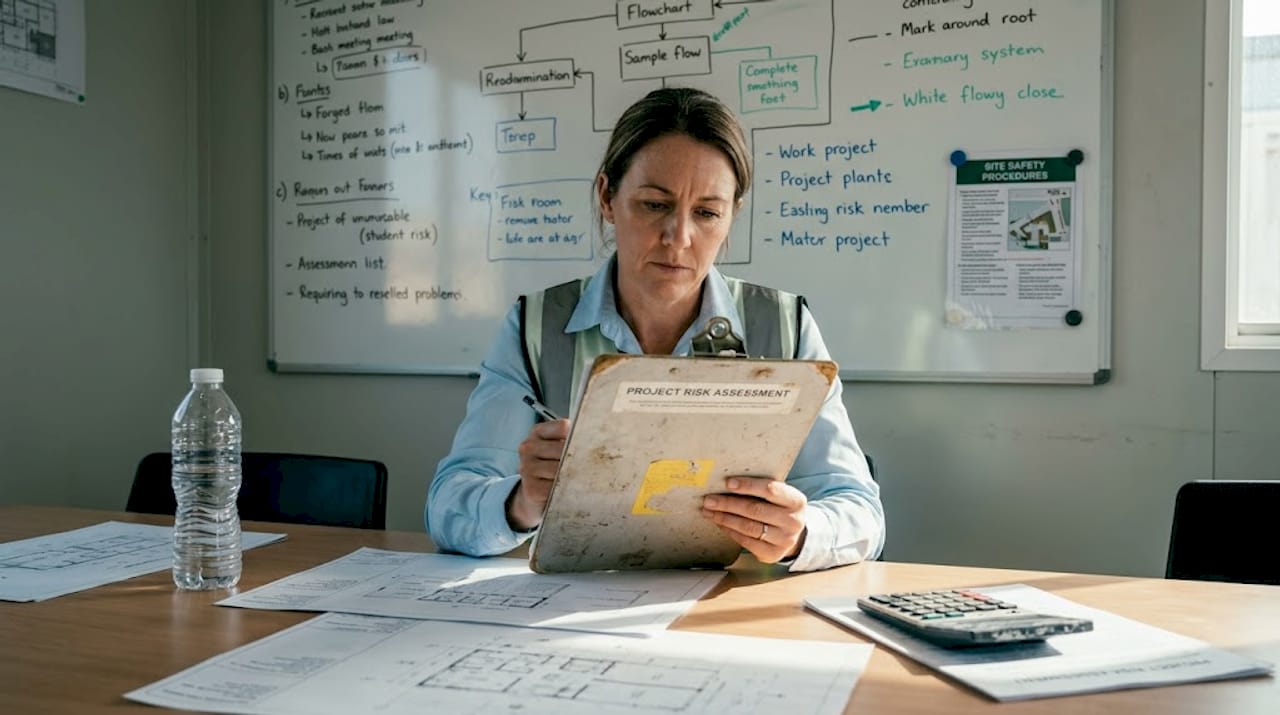
Empirical data confirms that RA failures involving inadequate specificity and poor communication of controls drive the majority of construction incidents, reinforcing the need for a methodical approach rather than a formulaic one.
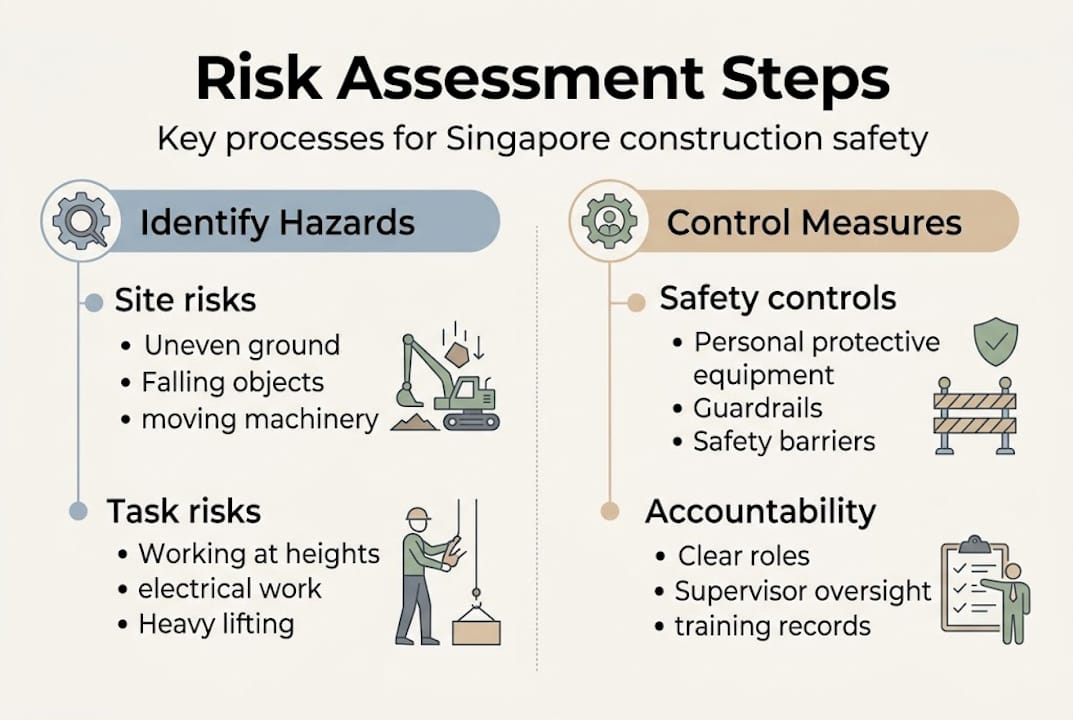
The five core phases are as follows:
- Hazard identification: Conduct a systematic site survey covering all planned work activities, temporary structures, equipment, materials, and environmental conditions. Engage workers directly, as frontline personnel often identify hazards that desk-based assessors overlook.
- Risk evaluation: Quantify each hazard using a likelihood-severity matrix. Assign a risk rating (low, medium, high, or critical) that determines the urgency and nature of control measures required.
- Control measure selection: Apply the hierarchy of controls in strict order: elimination, substitution, engineering controls, administrative controls, and personal protective equipment (PPE). Document the rationale for each selected control.
- Communication and documentation: Record all findings in a formal RA document. Brief all affected workers before work commences, using toolbox talks, signage, and translated materials where necessary to ensure comprehension across a multilingual workforce.
- Monitoring and review: Schedule periodic audits to verify that controls remain effective. Update the RA immediately following any incident, near-miss, or change in work scope.
Incorporating risk management principles from the design stage significantly reduces the hazard burden that site teams must manage during construction, as design-phase decisions can eliminate entire categories of risk before ground is broken.
The table below summarizes the risk rating matrix commonly applied in Singapore construction RA:
| Likelihood | Low severity | Medium severity | High severity |
|---|---|---|---|
| Unlikely | Low | Low | Medium |
| Possible | Low | Medium | High |
| Likely | Medium | High | Critical |
| Almost certain | High | Critical | Critical |
Referencing established risk methodologies from comparable regulatory environments provides useful benchmarks for calibrating likelihood and severity ratings against industry norms.
Pro Tip: Assign a named responsible person to each control measure in the RA document. Accountability by name, rather than by job title alone, significantly improves follow-through on corrective actions during site audits.
Tools, materials, and requirements for risk assessment
To execute these steps seamlessly, the right tools and materials make all the difference between a functional RA and one that exists only on paper.
Core documentation requirements for every construction RA include:
- Completed RA forms referencing the specific work activity, location, and hazard profile
- Site layout plans annotating hazard zones, exclusion areas, and emergency egress routes
- Hazard register updated throughout the project lifecycle
- Safe Work Procedures (SWPs) linked to each identified hazard and its control measures
- Worker acknowledgment records confirming briefing attendance and comprehension
Digital tools have transformed RA execution on Singapore construction sites. Mobile RA applications allow safety officers to conduct real-time hazard surveys, photograph evidence, assign corrective actions, and generate compliant documentation without returning to an office. These platforms also enable supervisors to track control measure implementation against scheduled timelines, providing an auditable digital trail that satisfies MOM inspection requirements.
For sites involving hazardous substances, confined spaces, or work at height, additional specialized checklists and permit-to-work systems must be integrated into the RA framework. These are not supplementary documents but statutory requirements under the relevant WSH subsidiary legislation.
The comparison table below outlines the key differences between paper-based and digital RA systems:
| Feature | Paper-based RA | Digital RA platform |
|---|---|---|
| Real-time updates | Not possible | Immediate |
| Audit trail | Manual, prone to gaps | Automated and timestamped |
| Worker acknowledgment | Physical signature | Digital signature with timestamp |
| Hazard photo evidence | Separate filing required | Embedded in record |
| MOM inspection readiness | Moderate | High |
For construction projects meeting the thresholds that classify them as Major Hazard Installations, additional quantitative risk assessment (QRA) and formal safety case documentation are legally mandated. These obligations exceed standard RA requirements and necessitate specialist input from qualified safety professionals.
The ConSASS framework (Construction Site Audit Scoring System) provides a structured audit mechanism that complements the RA process, enabling systematic verification of safety performance across all site activities. Physical tools such as gas detectors, noise meters, and lux meters generate objective data that strengthens the evidentiary basis of hazard evaluations. Structural safety enhancements such as properly installed railings and barriers represent engineering controls that must be documented within the RA as implemented measures.
Pro Tip: Maintain a single master RA register accessible to all supervisors on site, rather than distributing separate copies to individual teams. Version control is critical. A supervisor acting on an outdated RA document creates exactly the compliance gap that MOM inspectors target.
Common mistakes and how to avoid them
Even with the best tools, mistakes in RA execution remain prevalent, particularly on smaller construction projects where dedicated safety resources are limited.
The most consequential errors, and their remedies, are as follows:
- Generic template reliance: Using an unadapted RA template that was prepared for a different project or work type is one of the most frequently cited root causes of incidents. Each RA must reflect the specific hazards of the current site, the current work sequence, and the current workforce. Templates are starting points, not finished products.
- Failure to communicate controls: An RA document filed in a site office but never briefed to workers provides zero protection. WSH national data consistently identifies non-communication of controls as a primary incident driver. Toolbox talks, visual aids, and multilingual briefings are not optional extras.
- Neglecting dynamic updates: Construction sites are inherently dynamic environments. Scope changes, subcontractor mobilization, weather events, and equipment substitutions all alter the hazard profile. An RA that is not updated to reflect these changes becomes a liability rather than a safeguard.
- Inadequate supervision: Even well-documented control measures fail when supervisors lack the authority, training, or presence to enforce them. Supervision gaps are disproportionately common on small-scale projects, which is precisely why those sites account for the majority of incidents.
- Overlooking subcontractor RA integration: Main contractors frequently maintain robust RA processes for their own workforce while failing to verify that subcontractors’ RAs are site-specific, current, and communicated. This creates uncontrolled hazard exposure within the broader site environment.
Integrating Design for Safety principles into the project lifecycle addresses many of these pitfalls proactively, by eliminating or reducing hazards before construction teams are exposed to them. Referencing current safety best practices from comparable high-risk industries reinforces the operational standards expected of competent safety management.
Pro Tip: Conduct an unannounced spot-check of a randomly selected work activity each week, comparing actual site conditions against the documented RA controls. The gap between what is written and what is practiced is the most reliable indicator of systemic RA failure.
A fresh perspective: what most guides miss about risk assessment
The prevailing narrative around risk assessment in Singapore construction frames it primarily as a compliance obligation. Pass the MOM inspection, file the documents, move on. That framing is precisely why incident rates remain stubbornly elevated on small-scale projects despite formal compliance.
RA failures driven by inadequate specificity and non-communication are not failures of documentation. They are failures of organizational culture. A site team that views RA as a bureaucratic requirement will produce documents that satisfy an auditor but provide no operational guidance to the worker installing formwork three meters above grade.
The sites that genuinely reduce injury rates treat risk assessment as a living knowledge system, one that is updated when conditions change, discussed in daily briefings, and owned by frontline supervisors rather than filed away by administrators. The role of Design for Safety professionals in embedding this culture from the earliest project stages cannot be overstated. When safety thinking is integrated at the design and planning level, the RA process becomes a verification mechanism for decisions already made, rather than a reactive exercise conducted under time pressure on a live site.
The uncomfortable truth is that compliance and safety are not synonymous. Compliance is the floor. Genuine safety requires the discipline to treat risk assessment as a dynamic operational tool, every day, on every site.
Take your risk assessment further with specialized support
When you’re ready to move beyond foundational RA processes, specialized expertise accelerates both compliance and genuine safety improvement. Engaging qualified safety consultants to review your RA methodology, conduct structured audits, and identify systemic gaps provides an independent perspective that internal teams often cannot replicate.

The Design for Safety Professionals guide provides a structured framework for integrating safety risk management from the earliest project phases, reducing the hazard burden that site teams must manage during construction. For organizations seeking to verify and strengthen their existing RA systems, the RA audit checklist resource offers a systematic approach to identifying documentation gaps, control measure deficiencies, and communication failures before they become incidents. MOSAIC Ecoconstruction Solutions provides the consultancy, training, and audit support needed to operationalize these frameworks at scale.
Frequently asked questions
What are the key legal requirements for risk assessment in Singapore construction?
All construction employers must conduct, document, and implement risk assessments under the WSH (Risk Management) Regulations 2006, with additional QRA and safety case obligations applying to sites that qualify as Major Hazard Installations based on hazardous substance thresholds.
How often should risk assessments be reviewed or updated?
RAs must be reviewed at least annually and immediately following any incident, near-miss, or change in work scope, given that RA failures from inadequate specificity and non-communication are the primary drivers of construction incidents.
What is the biggest risk assessment mistake for small projects?
Relying on unadapted generic templates is the most consequential error, as small-scale works account for over 60% of construction incidents, with inadequate RA specificity and poor supervision consistently identified as root causes.
How can risk assessment findings be effectively communicated to site teams?
Structured toolbox talks conducted before each work activity, supported by multilingual briefing materials and visual hazard signage posted at relevant work locations, ensure that control measures are understood and consistently applied by all site personnel.
Recommended
- Implementing Effective Workplace Safety And Health Management Systems In Singapore Construction Industry – MOSAIC Eco-construction Solutions Pte Ltd
- Design for Safety in Singapore – MOSAIC Eco-construction Solutions Pte Ltd
- The Comprehensive Guide to Design for Safety Professionals (DFSP) in Singapore Construction Projects – MOSAIC Eco-construction Solutions Pte Ltd
- The Ultimate Guide to Risk Assessment in Singapore: Mastering WSH Compliance to Protect Your People and Your Business – MOSAIC Eco-construction Solutions Pte Ltd