
Introduction
BizSAFE Level 3 certification is a crucial operational milestone for logistics companies and third party storage (3PL) providers operating in Singapore. With the Transportation & Storage sector recording a fatal and major injury rate of 23.8 per 100,000 workers in 2025-up sharply from 18.4 in 2024-structured risk management is no longer optional. It is the baseline expectation from regulators, clients, and insurers alike.
This article covers the full scope of why 3PL companies need BizSAFE Level 3: from warehouse hazards and transportation risks to multinational enterprise audit demands, government tender requirements, and the practical certification process. The target audience includes logistics managers, 3PL operators, warehouse facility owners, and supply chain decision makers who need to understand both the regulatory landscape and the business case for achieving bizsafe certification.
BizSAFE Level 3 is essential for 3PL companies because it requires a comprehensive risk assessment implementation across all workplace activities, satisfies corporate and government audit prerequisites, and provides documented proof of regulatory compliance under Singapore’s WSH (Risk Management) Regulations.
By the end of this article, you will understand:
-
Why the logistics sector faces elevated workplace hazards that demand formal risk management
-
How BizSAFE Level 3 directly supports client audit preparation and government tender qualification
-
The specific certification process and costs involved for 3PL operations
-
Common implementation challenges and proven solutions for multi-site logistics companies
-
How certification delivers measurable returns through reduced insurance costs, improved workplace safety, and better corporate branding
Understanding BizSAFE Level 3 for Logistics Operations
BizSAFE is a five-level workplace safety certification programme launched in 2007 by the Ministry of Manpower (MOM) and administered by the Workplace Safety and Health Council. The bizsafe programme is designed to encourage companies across all industries to build robust safety and health management capabilities. BizSAFE Level 3 specifically recognises that a company has conducted risk assessments for every work activity and process in its workplace, and that its risk management implementation plan has been verified through an external audit.
For logistics and 3PL operations-spanning warehousing, storage, order fulfilment, loading/unloading, and transportation-hazards are multifaceted and persistent. Achieving BizSAFE Level 3 requires a fully implemented risk management system that addresses all of these operational domains. Obtaining BizSAFE Level 3 demonstrates commitment to safety and regulatory compliance, sending a clear signal to clients, government agencies, and employees that the company takes workplace safety and health seriously.
Core Risk Management Requirements
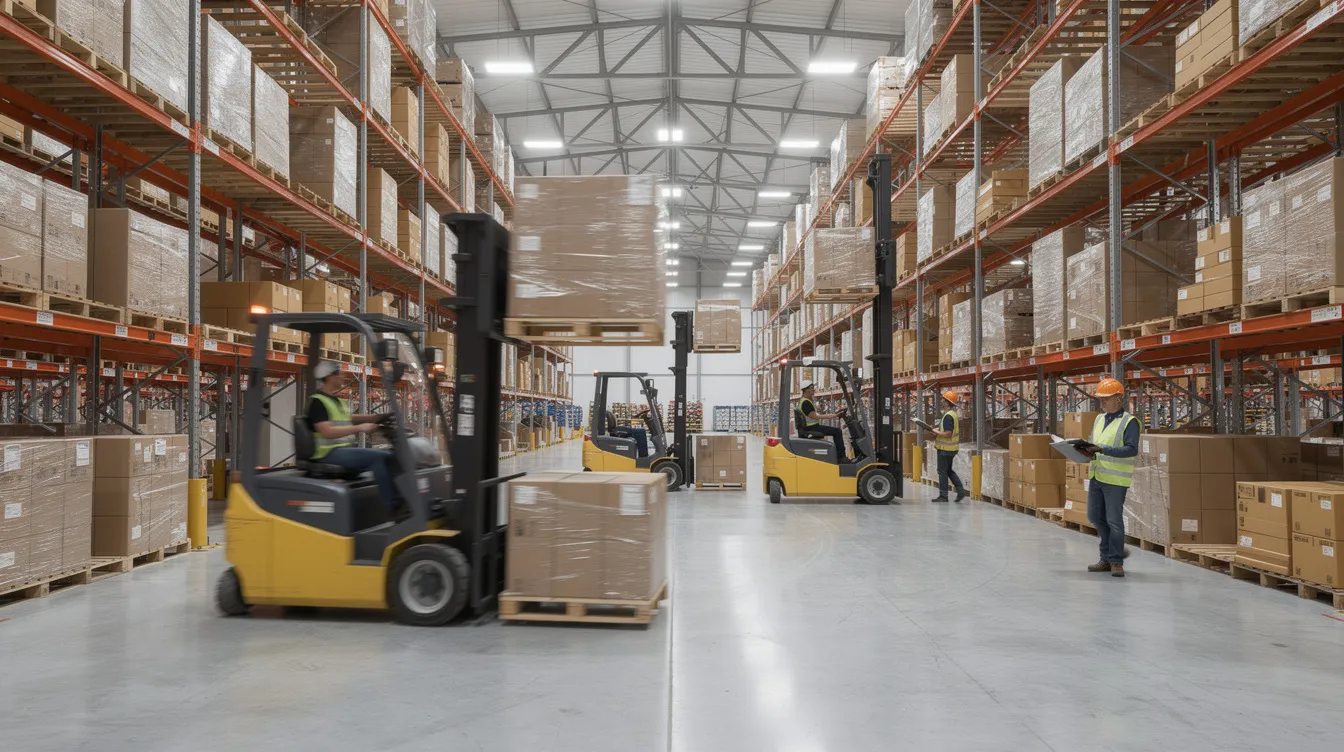
At its core, BizSAFE Level 3 requires a comprehensive risk assessment implementation covering all warehouse and logistics activities. This means every process-from inbound receiving and pallet storage to order picking, dispatch, and vehicle loading-must have documented hazard identification, risk evaluation, and control measures in place.
For logistics companies, documentation requirements are particularly detailed. Forklift operations need assessed risks for collisions, tip-overs, and pedestrian interactions. Heavy lifting procedures must address musculoskeletal hazards. Chemical storage areas require segregation protocols, spill response plans, and appropriate PPE specifications. A Risk Management Audit Report is required for BizSAFE Level 3, and this report must demonstrate that all identified hazards have been systematically evaluated and controlled. Companies must engage a registered auditing organisation-an approved auditing body registered with MOM-to conduct the risk management implementation audit and produce the formal report.
Regulatory Compliance Framework
Singapore’s WSH (Risk Management) Regulations establish clear legal obligations for all employers, including 3PL service providers. Companies must conduct risk assessments under WSH regulations, identify hazards, evaluate risks, implement control measures, maintain records, and review assessments periodically or whenever workplace processes change.
The Code of Practice on WSH Risk Management (RMCP), most recently revised in 2021, provides detailed guidance on hazard identification, risk evaluation, risk prioritisation, and control implementation-including expanded scope covering disease outbreak risk and psychological wellbeing. For logistics facilities, the RMCP demands that risk assessments be reviewed at least every three years, or immediately when layouts change, new equipment is introduced, or incidents occur. Companies must conduct risk assessments every 3 years to remain compliant, and this cycle aligns directly with the BizSAFE Level 3 certification validity period, as bizSAFE Level 3 certification is valid for three years.
Understanding these regulatory requirements is the first step-but the real urgency becomes clear when examining the specific hazards that make logistics one of Singapore’s higher risk sectors.
Critical Logistics Hazards Requiring BizSAFE Level 3 Management
The Transportation & Storage sector consistently ranks among the higher risk sectors in Singapore’s national workplace safety statistics. The program helps improve workplace safety and health standards by requiring companies to systematically identify and control hazards that would otherwise cause serious harm. Structured risk reduction leads to fewer workplace injuries and lower operational disruptions-a critical consideration for 3PL operations where downtime directly impacts supply chain reliability.
Warehouse and Storage Risks
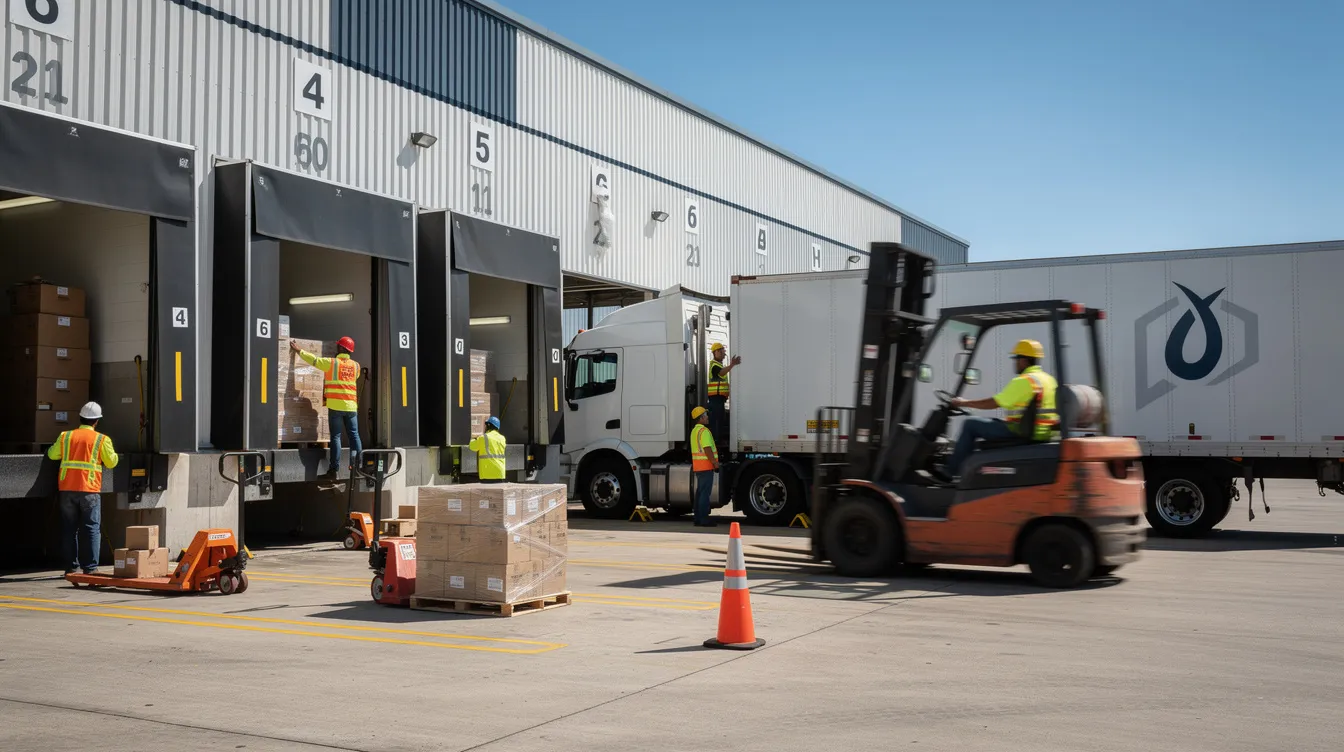
Material handling equipment presents some of the most significant workplace hazards in 3PL facilities. Forklifts, pallet jacks, and conveyor systems create risks including collisions, tip-overs, and falling loads. MOM statistics confirm that “struck by falling object” and “struck by moving object” remain leading injury categories in the sector.
Storage at height introduces additional risks: pallet racking collapse, items falling during stacking or unstacking, and work-at-height exposures for workers accessing elevated storage levels. Risk assessments must establish load limits, guardrail requirements, and safe work procedures for every racking configuration.
For 3PL companies handling diverse client goods, chemical storage adds another layer of complexity. Hazardous materials require segregation protocols compliant with SS 586 (Hazards Communication), fire safety codes, and spill response procedures. Emergency evacuation plans must account for chemical exposure scenarios. Without documented risk assessments covering these activities, companies face both regulatory penalties and catastrophic incident exposure.
Transportation and Loading Dock Safety
Loading and unloading operations at dock levellers represent high-risk interaction zones between trucks and warehouse floors. Hazards include slips, trips, and falls, crush injuries from shifting loads, and pinch points between vehicle tailgates and dock equipment. MOM’s guidelines on “Safe Loading on Vehicles” emphasise the importance of coordination between drivers and warehouse staff-a coordination that must be documented through safe work procedures under the risk management plan.
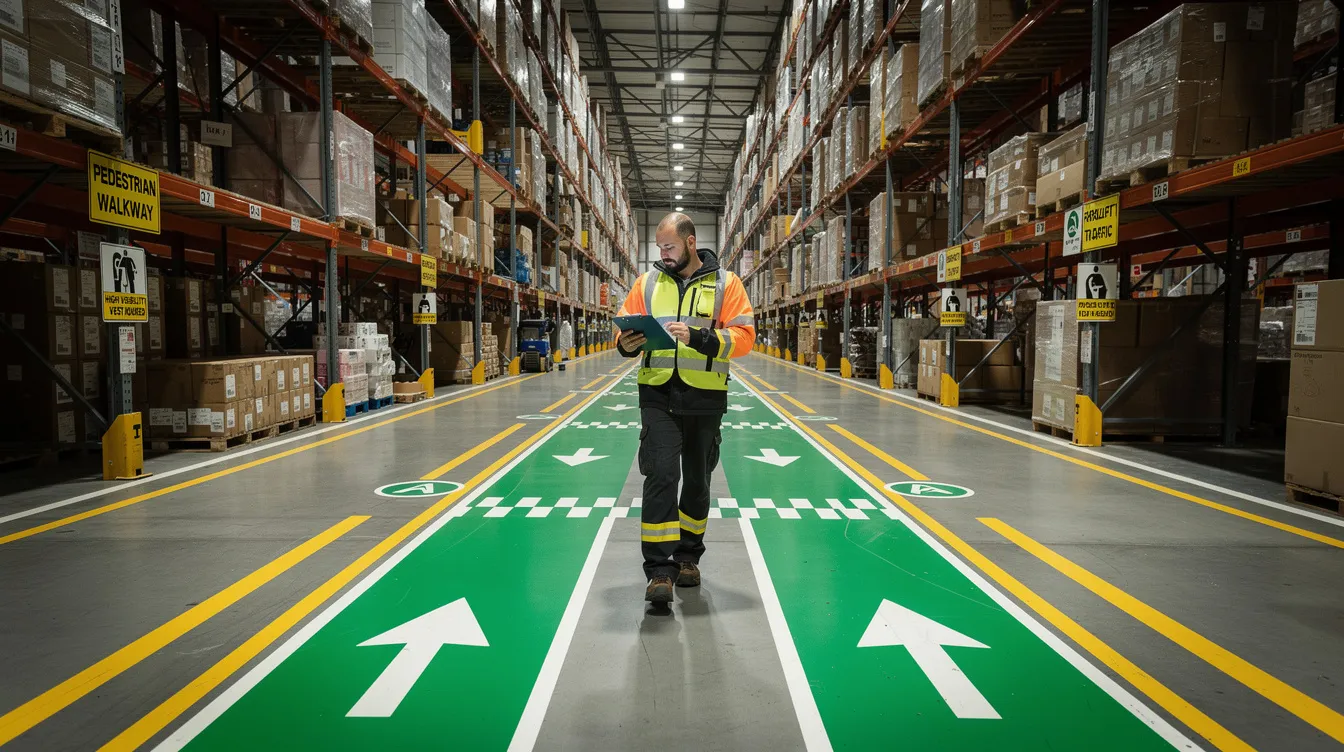
Traffic management within logistics facilities demands clear demarcation between forklift routes, truck movements, automated guided vehicles (AGVs), and pedestrian walkways. Under the risk management implementation audit, auditors verify that traffic flow documentation exists, that signage and barriers are adequate, and that monitoring systems are functioning.
Technology and Automation Risks
Modern 3PL operations increasingly use automated storage and retrieval systems, conveyor networks, and robotic picking solutions. While these improve efficiency, they introduce hazards during both operation and maintenance: entanglement, pinch points, unexpected activation, and electrical risks.
Lockout/tagout procedures for maintenance and equipment servicing are essential safety measures that must be formally documented and trained. Under BizSAFE Level 3, risk assessments must cover non-routine tasks such as breakdowns and preventive maintenance. Critically, whenever a facility changes layout, introduces automated systems, or modifies storage methods, risk assessments must be reviewed and updated. The RMCP explicitly requires reassessment when workplace processes or facilities change-meaning logistics companies that constantly adapt to client needs must update risk assessments on an ongoing basis.
Client Audit Requirements and Multinational Enterprise Expectations
Beyond regulatory compliance, bizsafe certification functions as a commercial requirement for 3PL companies competing for major contracts. BizSAFE Level 3 serves as a prerequisite for vendor pre-qualification by agencies and corporations, making it the gateway to the most valuable logistics partnerships in Singapore.
Corporate Supply Chain Auditing Standards
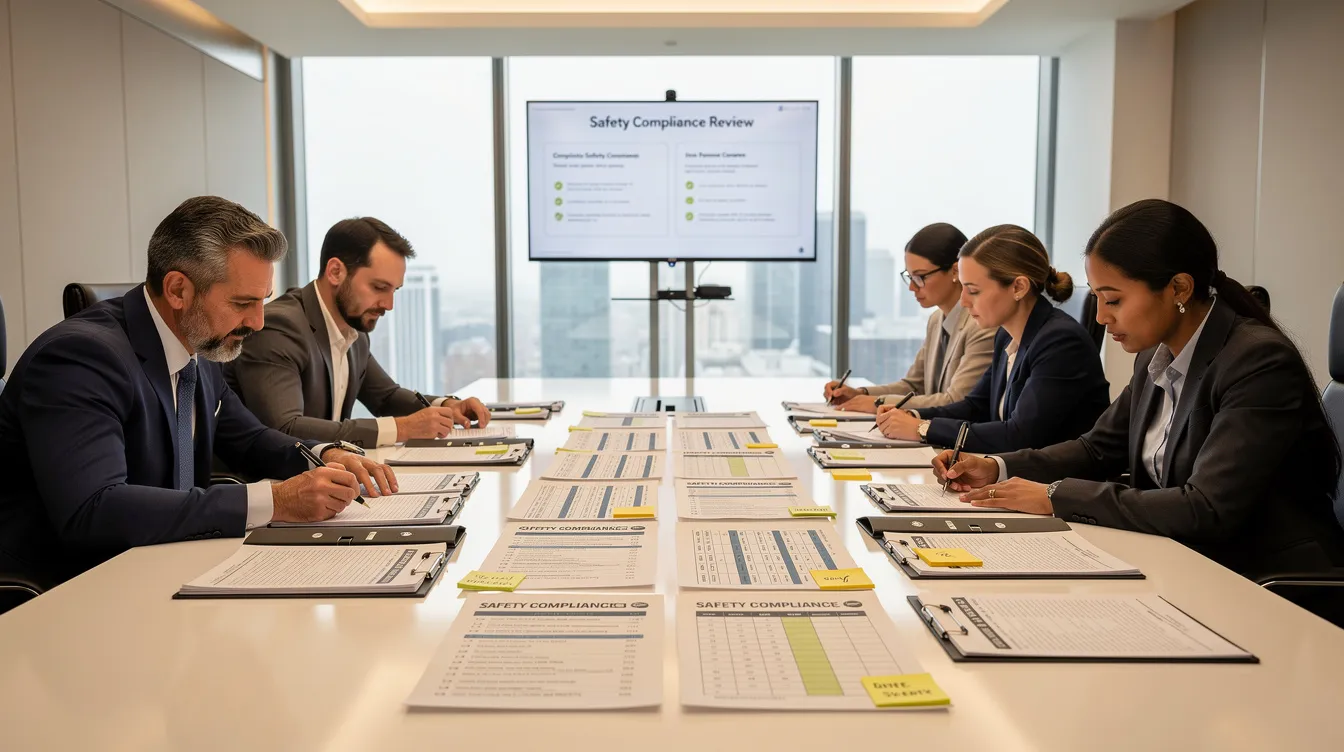
Multinational enterprises routinely require their supply chain partners-including 3PL providers-to demonstrate formal safety and health management systems. Vendor qualification audits examine risk assessment documentation, control measures implementation, training records, incident review processes, and external audit reports.
Companies with bizSAFE Level 3 enjoy enhanced credibility with clients and customers because the certification proves that a MOM-registered auditing organisation has independently verified compliance with Singapore’s risk management regulations. Without this bizsafe certificate, 3PL providers may fail vendor qualification audits entirely, losing access to high-value contracts regardless of their operational capabilities. BizSAFE certification enhances company reputation and branding, providing tangible evidence of safety commitment that procurement teams can verify.
Government Tender Requirements
Many government tenders require at least bizSAFE Level 3 certification-this is not a soft preference but a hard qualification threshold. BizSAFE Level 3 is required for many government tenders, and a lapse in certification results in disqualification from tenders. For 3PL companies that serve government agencies or bid on public sector logistics contracts, maintaining current bizsafe status is essential for revenue continuity.
BizSAFE Level 3 is beneficial for accessing government contracts and tender opportunities, and higher certification levels-such as BizSAFE Level 4 or BizSAFE Star-often yield additional scoring bonuses. Government projects increasingly evaluate safety credentials as part of the assessment criteria, giving bizsafe certified companies a measurable business competitive edge. BizSAFE certification increases business opportunities for contractors who can demonstrate verified safety management capabilities.
Implementation Procedure for 3PL Companies
Obtaining bizSAFE Level 3 typically takes 4 to 8 weeks when approached systematically. Here is the certification process for logistics companies:
-
Conduct comprehensive workplace risk assessments covering all logistics operations and storage activities. Map every workflow-inbound receiving, storage, order-picking, loading, dispatch, transport, and maintenance-and identify hazards in each. Create a risk register evaluating likelihood and severity for every identified hazard. BizSAFE Level 1 requires a CEO or board director to attend a half day workshop on workplace safety and health as a prerequisite, so ensure your senior management and top management have completed the earlier bizsafe levels. BizSAFE Levels 1 and 2 certificates are valid for six months, so timing matters. A risk management champion should be appointed at Level 2, where management attends the relevant risk management course to build internal competency.
-
Develop safe work procedures and emergency response plans specific to warehouse and transportation hazards. For each identified risk, define control measures following the hierarchy of control: elimination, substitution, engineering controls, administrative controls, and PPE. Cover docking operations, stacking procedures, chemical handling, fire response, and evacuation protocols. This forms your risk management implementation plan.
-
Implement risk control measures including equipment maintenance schedules, staff training programmes, and safety monitoring systems. Ensure supervisors and workers receive relevant training-forklift operation, work-at-height, hazardous goods handling, lockout/tagout-and maintain training records. A safe and healthy environment requires both procedural controls and competent personnel.
-
Prepare documentation and undergo the risk management implementation audit by an approved auditing organisation. The auditor produces a risk management audit report containing checklists, interview records, and verification of implemented controls. The application for bizSAFE certification takes 10 working days after submission. MOM may conduct sample verification inspections to check audit quality. The Risk Management Audit Report is valid for 3 years, after which companies must undergo a recertification audit for renewal. Renewal applications should be submitted two months before expiry to avoid certification lapses.
Companies can apply for higher bizSAFE levels directly if qualified, and those aiming to achieve bizsafe star status can plan their bizsafe journey accordingly. Compliance with bizSAFE Level 3 supports continual safety improvement within organizations, creating a foundation for progression toward a comprehensive WSH management system or ISO 45001 certification.
Cost-Benefit Analysis for Logistics Companies
|
Factor |
Without BizSAFE Level 3 |
With BizSAFE Level 3 |
|---|---|---|
|
Government tender eligibility |
Disqualified from many tenders |
Qualified; scoring advantages |
|
MNC client audits |
High failure risk; lost contracts |
Audit-ready with documented evidence |
|
Insurance premiums |
Standard or elevated rates |
BizSAFE-certified companies enjoy reduced insurance premiums |
|
Incident costs |
Higher frequency of disruptions, fines, legal liability |
Structured risk reduction leads to fewer workplace injuries |
|
Corporate reputation |
Unverified safety claims |
Enhanced credibility; better corporate branding |
|
Employee retention |
Higher turnover due to unsafe conditions |
BizSAFE certification helps create a safer workplace for employees |
The costs involved in certification-risk management course fees, audit preparation, auditing organisation engagement, documentation development-are typically recovered within the first major contract win or through cumulative insurance cost reductions. For logistics companies managing high-value goods and high-risk operations, the return on investment is substantial.
Common Challenges and Solutions for Logistics Companies
Fast-paced logistics environments present unique obstacles when implementing and maintaining BizSAFE Level 3. Understanding these challenges in advance helps 3PL companies plan realistic implementation timelines and allocate appropriate resources.
Multi-Site Operations Coordination
Many 3PL companies operate across multiple warehouse locations with varying layouts, equipment, and client requirements. Standardising risk management procedures across sites demands corporate safety policies, common templates, centralised audit schedules, and consistent oversight. Best practice involves establishing a central safety team that develops standardised risk assessment frameworks while allowing site-specific adaptations. Regular internal audits across all locations ensure consistent audit readiness and help identify corrective actions before external auditors arrive.
Staff Training and Compliance
The logistics sector faces chronically high employee turnover, which complicates maintaining safety competency and documentation requirements. When trained workers leave, institutional safety knowledge walks out with them. Solutions include digital learning platforms for rapid onboarding, structured mentoring programmes, competency tracking systems, and frequent refresher training cycles. The executive WSH programme and top executive WSH programme for senior management provide hands on guidance for building safety leadership that sustains a safer and healthier workplace despite personnel changes. Safety leadership from top management is essential-company safety culture ultimately depends on visible commitment from senior management.
Technology Integration Challenges
Balancing automation efficiency with safety requirements is an ongoing challenge for modern 3PL facilities. Every technology upgrade-new conveyor systems, robotic pickers, automated storage-potentially introduces new workplace hazards that invalidate existing risk assessments. The solution lies in building technology change management into the risk management plan: trigger automatic reassessment whenever equipment or layouts change, maintain pre-approved safe work procedure templates for common technology categories, and engage facilities management teams early in upgrade planning. WSH technology solutions like IoT sensors, video analytics for PPE compliance, and wearables for fall detection can actually enhance audit evidence and improve real-time risk monitoring.
Conclusion and Next Steps
BizSAFE Level 3 certification is not a bureaucratic exercise-it is the operational foundation that enables logistics and 3PL companies to manage critical workplace hazards, satisfy multinational enterprise client audits, win government contracts, and reduce the financial burden of workplace incidents. With the Transportation & Storage sector’s fatal and major injury rate at 23.8 per 100,000 workers in 2025, and Singapore’s national workplace safety framework demanding ever-higher standards, the case for certification is unambiguous.
Take these immediate steps to begin your company’s bizsafe journey:
-
Conduct an initial risk assessment gap analysis across all logistics operations and warehouse sites to identify where documented controls are strong versus weak or missing
-
Identify a MOM-registered auditing organisation experienced in logistics and warehousing operations that can provide WSH auditing services tailored to your sector
-
Engage a workplace safety consultant to provide hands on guidance through the certification process, develop your risk management implementation plan, and prepare your teams for audit readiness
For companies that have already achieved BizSAFE Level 3, the natural progression is toward BizSAFE Level 4, which requires implementing a full health management system (WSH Management System), and ultimately to BizSAFE Star, which involves third-party audit by a body under the Singapore Accreditation Council’s mutual recognition arrangement. Integration with ISO 45001 further strengthens credentials for international clients and supports participation in the BizSAFE Marketplace where bizsafe certified companies connect with main contractors and procurement teams.
Additional Resources
-
MOM Workplace Safety and Health Risk Management Guidelines – official guidance on regulatory requirements for risk assessments and the risk management regulations framework
-
WSHC BizSAFE Application Portal – application details, approved auditing organisation directory, and certification programme information from the Health Council
-
WSH National Statistics Report 2025 – current sector injury data for Transportation & Storage and Singapore’s national workplace safety benchmarks
-
Comprehensive guide to workplace risk assessments – detailed methodology for logistics-specific hazard identification and risk evaluation
-
WSH Risk Management Regulations 2026 updates – latest regulatory changes affecting how companies conduct and update risk assessments