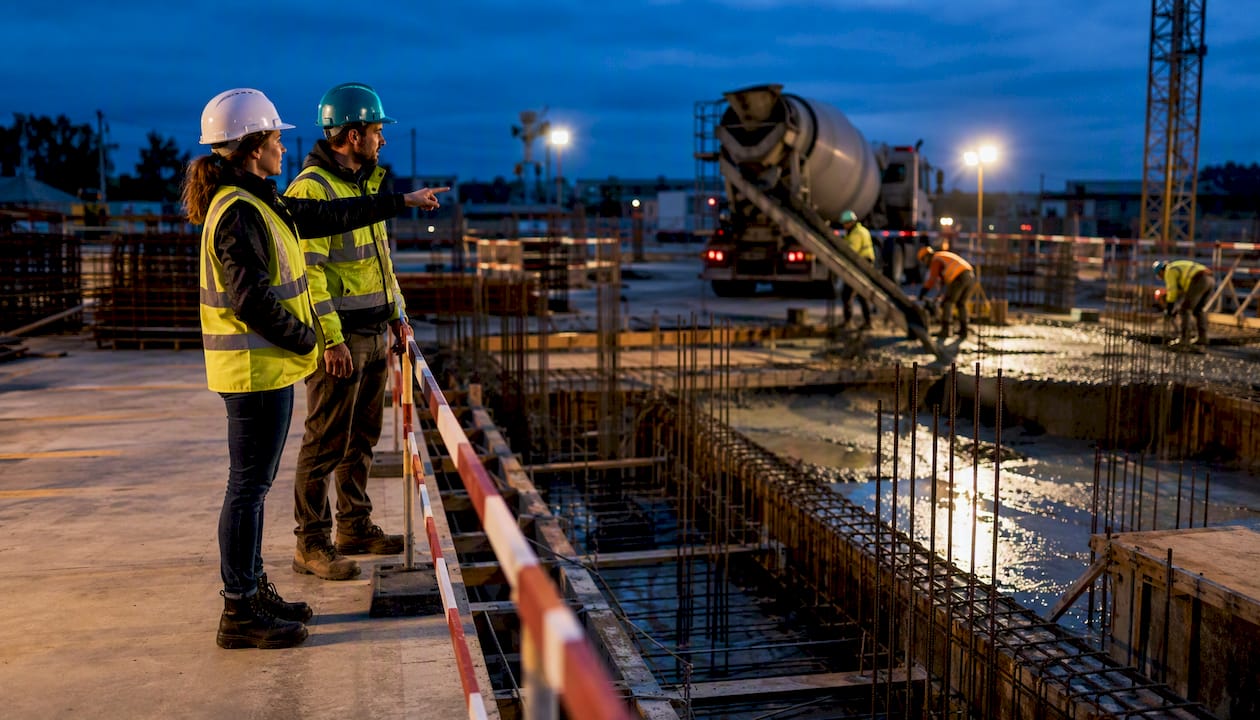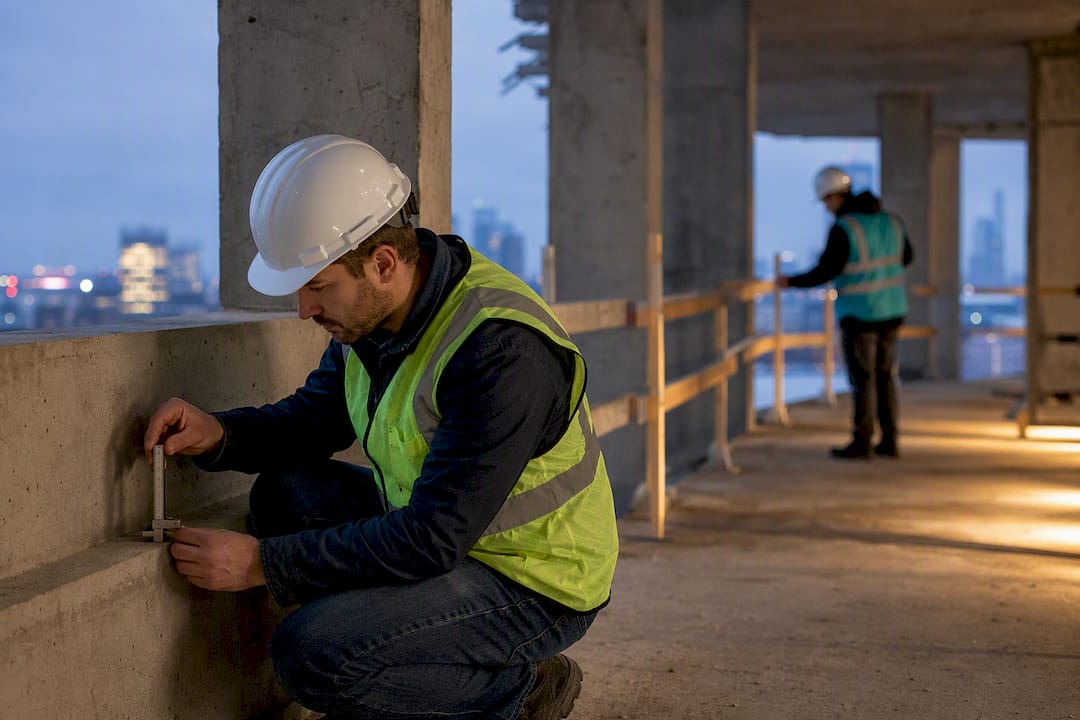

A missed hazard rarely looks serious until the incident report is on someone’s desk. On a construction site, in a fabrication yard, or inside an active industrial facility, small gaps in planning can quickly turn into injuries, delays, enforcement action, and avoidable cost. That is why a guide to workplace risk assessments matters most when work is moving fast, multiple trades are involved, and site conditions change day by day.
For business owners, project managers, and EHS leaders, risk assessment is not paperwork for its own sake. It is a working control process that helps teams identify what can go wrong, judge how serious the exposure is, and put practical safeguards in place before work starts. When done properly, it supports compliance, improves supervision, and gives management a clearer view of where operations are exposed.
What a workplace risk assessment is really for
A workplace risk assessment is a structured review of work activities, hazards, existing controls, and additional measures needed to reduce risk to an acceptable level. In regulated environments, that process supports legal compliance. In operational terms, it does something just as important – it gives supervisors and workers a shared understanding of how the job will be done safely.
That distinction matters. Many organizations have assessment forms on file, but the document does not always reflect actual site conditions, plant layout, contractor interfaces, or work sequencing. A risk assessment only adds value when it is specific to the task, current, and usable by the people carrying out the work.
For construction and industrial companies, risk assessments also support tender requirements, client audits, certification readiness, and internal governance. They are often reviewed alongside method statements, permit systems, inspection records, and training evidence. Weak assessments can signal wider management gaps. Strong ones show control, competence, and planning discipline.
A practical guide to workplace risk assessments
The most effective approach is simple, disciplined, and tied to real operations. Start by defining the scope clearly. That means identifying the activity, location, equipment, people involved, interfaces with other contractors, and the stage of work. A generic assessment for “construction activities” or “maintenance works” is usually too broad to manage actual exposure.
Once the scope is clear, identify hazards in a way that reflects how work is really performed. That includes obvious physical hazards such as work at height, moving machinery, lifting operations, electrical exposure, traffic movement, hot work, and confined spaces. It should also include environmental and health-related risks such as dust, noise, fumes, chemical handling, heat stress, poor housekeeping, and fatigue. In some settings, ergonomic strain, public interface, and simultaneous operations create just as much risk as heavy equipment.
The quality of hazard identification often depends on who is involved. Managers may understand planning constraints, but supervisors and workers usually know where shortcuts happen, where access is difficult, and which controls fail under schedule pressure. A useful assessment is rarely produced in isolation at a desk. Site observation and consultation improve accuracy.
Evaluating risk without oversimplifying it
After hazards are identified, the next step is evaluating risk. Most companies use a likelihood-and-severity matrix, and that can work well if people apply it consistently. The point is not to produce a colorful chart. The point is to decide whether current controls are adequate and where further action is necessary.
This is where judgment matters. The same hazard can produce different risk levels depending on duration, exposure frequency, number of workers affected, environmental conditions, competence of the team, and proximity to other ongoing work. A short, controlled lift in a segregated area is not the same as repeated lifting near pedestrian traffic during peak site activity.
Risk ratings should reflect current conditions, not ideal ones. If a control depends on close supervision but the supervisor is shared across multiple zones, that control may be weaker than it appears on paper. If workers need specialized training but subcontractor turnover is high, residual risk may remain elevated even with a written procedure in place.
Choosing controls that work on site
The next part of any guide to workplace risk assessments is control selection. The best controls reduce exposure at the source, rather than relying only on people to remember instructions. In practice, that means giving priority to elimination, substitution, engineering measures, physical segregation, and system controls before falling back on warnings and personal protective equipment alone.
On a construction project, for example, edge protection, access platforms, equipment guards, lockout systems, lifting plans, and traffic barriers generally provide stronger protection than toolbox reminders by themselves. PPE remains necessary, but it should not be the first or only answer to a significant hazard.
There is also a business reality here. The strongest control is not always the fastest or cheapest to implement, and project teams often have to weigh cost, lead time, and operational disruption. That does not mean lowering standards. It means selecting measures that are both effective and workable, then planning them early enough that safety is not treated as an afterthought.
Common failures in workplace risk assessments
Most poor risk assessments fail in familiar ways. They are copied from previous jobs, written in language workers do not use, disconnected from work methods, or left unchanged after conditions shift. Sometimes the hazard list is long, but the controls are vague, such as “be careful,” “follow procedure,” or “use PPE.” Those statements do not tell a crew what good control looks like in practice.
Another common issue is treating the assessment as a one-time task. In dynamic work environments, risks change with design revisions, delivery schedules, weather, plant movement, staffing changes, and client constraints. An assessment that was suitable at mobilization may no longer reflect reality two weeks later.
Documentation can also become a weakness if it is too complex. Overly technical wording may satisfy an internal template but fail the practical test on site. Workers and supervisors need controls that are specific, readable, and relevant to the sequence of work.
When should a risk assessment be reviewed?
Review timing should be tied to change, not just calendar intervals. A review is necessary when new equipment is introduced, the work method changes, an incident or near miss occurs, personnel change significantly, or site conditions create new exposure. Review is also good practice before high-risk phases begin, especially if multiple contractors will be working in close proximity.
For companies managing several projects at once, periodic management review helps identify patterns. If similar hazards are recurring across sites, the issue may not be isolated to one team. It may point to weaknesses in planning, training, procurement, supervision, or contractor control.
That broader view is where mature safety systems outperform basic compliance programs. They do not just record risk. They use risk data to improve decisions.
Making assessments useful for audits, clients, and operations
A well-prepared risk assessment supports more than site safety. It strengthens audit readiness, demonstrates due diligence to clients, and provides evidence that management has considered foreseeable hazards. For organizations pursuing certification, prequalification, or structured safety programs, that consistency becomes especially important.
Still, audit-ready does not always mean operationally effective. Some companies build attractive documentation packs that satisfy review requirements but are not used in the field. Others keep leaner documents that are highly practical but inconsistent in format and approval control. The better approach is to combine both strengths – clear documentation, proper authorization, and site-level usability.
That often requires coordination between EHS personnel, project teams, and leadership. Approvals should be timely. Revisions should be controlled. Supervisors should understand what has changed. Briefings should focus on actual hazards for that shift or task, not generic statements lifted from the original assessment.
For many firms, external support is useful when internal resources are stretched or when a higher level of regulatory and industry alignment is needed. An experienced safety partner can help standardize methodology, improve task-specific documentation, and close gaps before inspections, client reviews, or certification audits. That is especially valuable in construction and industrial settings where risk profiles are complex and documentation quality directly affects compliance confidence.
Building a stronger risk assessment culture
Risk assessments improve when they are treated as part of planning, not an administrative step after the fact. The strongest organizations build assessment into pre-start meetings, procurement decisions, temporary works planning, contractor coordination, and supervisory routines. Over time, that creates something more useful than a completed form. It creates a management habit of asking the right questions before exposure increases.
That culture does not come from templates alone. It comes from leadership attention, competent review, field verification, and a willingness to revise controls when they are not working. MOSAIC Ecoconstruction Solutions supports this kind of practical implementation because documented compliance only has value when it stands up to real operating conditions.
A good risk assessment will never remove all uncertainty from a job, but it does give your team a more reliable basis for action. When work is high-risk, deadlines are tight, and oversight matters, that kind of clarity is not optional. It is one of the few controls that protects people and performance at the same time.