The True Cost of a Stop Work Order (SWO) in Singapore
Introduction to Stop Work Orders
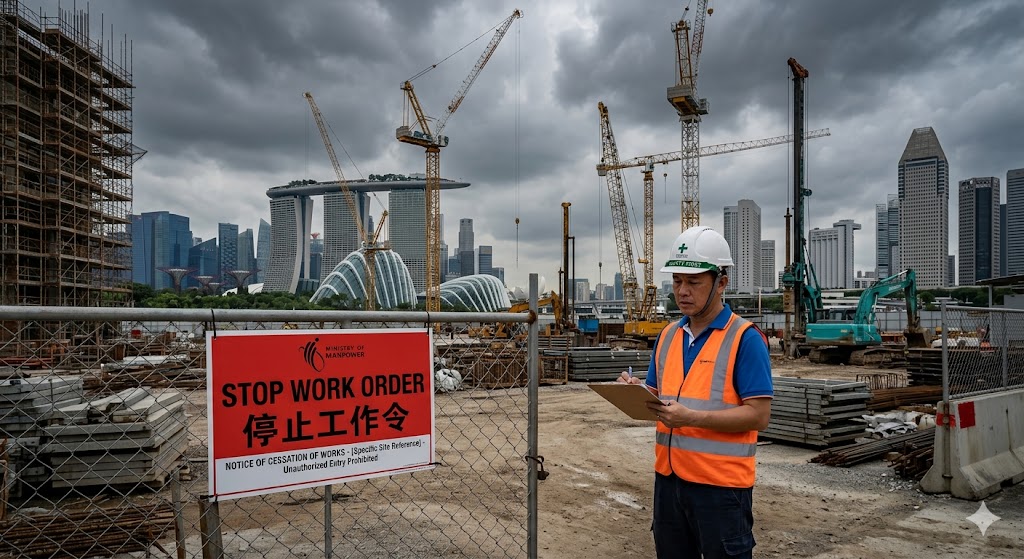
The true cost of a Stop Work Order is severe. A Stop Work Order (SWO) ruins financial stability. It extends far beyond simple operational delays. An SWO is a strict legal directive.1 The Ministry of Manpower (MOM) issues this critical order.1 It is enforced under the Workplace Safety and Health Act.1
This directive requires companies to immediately cease work activities.1 It can also halt specific high-risk operations.1 MOM issues an SWO when unsafe conditions emerge.1 These conditions must pose imminent danger to workers.1
Recently, MOM has increased its enforcement significantly.1 Authorities utilize spot checks to catch safety violations.1 Furthermore, they deploy advanced surveillance technologies.1 AI video analytics help identify dangerous workplace behaviors.1
A rise in serious workplace accidents prompted these actions.1 Consequently, the construction and manufacturing sectors face extreme scrutiny.1 Stricter issuance of SWOs aligns with Singapore’s SAFE measures.1 SAFE stands for Safety Accountability, Focus and Empowerment.2
When an SWO is issued, all activities halt immediately.1 This abruptly disrupts entire project operations.1 Therefore, the employer must rectify all safety lapses promptly.1 Next, they must formally notify MOM of the corrections.1 Finally, they must request an official re-inspection.1
MOM will only lift the SWO under strict conditions.1 Corrective actions must be properly and fully implemented.1 The workplace must be proven entirely safe.1 Operations can only resume after this verification.1
The Legal Framework of Workplace Safety
The Workplace Safety and Health (WSH) Act is fundamental.3 This Act cultivates good safety habits and practices.4 It applies to everyone from top management to workers.4 The WSH Act demands reasonably practicable safety steps.4
The government reformed occupational safety standards in 2005.4 These reforms require personal responsibility for safety outcomes.4 A major goal was reducing workplace deaths significantly.4 The target was dropping fatalities from 4.9 to 2.5.4 This metric applies per 100,000 workers.4
The framework emphasizes reducing risk directly at the source.4 Furthermore, it demands greater industry ownership of safety.4 The focus shifted away from mere prescriptive compliance.4 Employers must develop safe work procedures suited to their situations.4
MOM strictly enforces this progressive legal framework.5 In the first half of 2025, enforcement was rigorous.5 MOM carried out over 3,000 safety inspections.5 They uncovered nearly 7,000 safety breaches.5
Consequently, offending firms were fined more than $1.5 million.5 Additionally, 28 Stop Work Orders were issued.5 Despite breaches, overall progress in safety has occurred.5 The annualised workplace fatal injury rate fell to 0.92.5 This is a drop from 1.0 in 2024.5 The major injury rate also dropped to 15.5.5
Grounds for Issuing a Stop Work Order
Understanding what triggers an SWO is absolutely vital.6 MOM does not issue these orders without serious cause. Specific violations force the authorities to act immediately.
An SWO may be issued on several strict grounds.1 Firstly, a serious lapse in safety protocols occurs.1 Secondly, accidents or near-misses happen onsite.1 These incidents indicate highly unsafe systems of work.1
Thirdly, unsafe work practices are directly observed by inspectors.1 Working at height without fall protection is a prime example.1 Fourthly, a company completely fails to comply with regulations.1 Total non-compliance with WSH rules guarantees an SWO.1
Furthermore, systemic safety failures often trigger an SWO.6 A workplace fatality usually prompts an immediate SWO.6 Serious injuries lead to thorough investigations and subsequent orders.6 Grossly inadequate Safety Management Systems invite severe enforcement.6
Finally, ignoring previous enforcement actions triggers an SWO.6 Warnings and composition fines must be taken seriously.6 Failure to improve after warnings shows systemic negligence.6
| Grounds for SWO Issuance | Description | Reference |
| Fatal Accidents | Workplace fatality revealing systemic safety failures. | 6 |
| Imminent Danger | Conditions where serious injury or death could occur. | 6 |
| Unsafe Practices | Observed hazards like missing fall protection or barricades. | 1 |
| Regulatory Failure | Total non-compliance with existing WSH safety regulations. | 1 |
| Ignored Warnings | Failure to improve after previous fines or formal warnings. | 6 |
Specific Hazards Triggering Stop Work Orders
Certain specific hazards frequently result in Stop Work Orders. Falling objects pose a massive risk on construction sites.7 These incidents are a highly preventable cause of death.7
MOM imposes SWOs where falling object protections are deficient.7 Furthermore, they prosecute companies if fatalities result.7 Fines for failing to prevent falling objects reach $200,000.7 This applies to a first offence alone.7 Repeat offenders face even higher monetary penalties.7
Lift maintenance is another heavily regulated hazard zone.8 Ensuring the safety of lift technicians is paramount.8 Lift owners must provide a safe maintenance environment.8 Contractors must possess the necessary expertise to work safely.8
Employers must conduct specific risk assessments for lift works.8 They must implement necessary safe work procedures.8 Communication protocols between workers on lift cars are mandatory.8
Additionally, major alteration works on lifts require formal notification.9 Owners must notify the Commissioner of Buildings in writing.9 Emergency procedures for hoist malfunctions must be implemented.9 Failure in these specific areas readily triggers an SWO.1
The Minimum Duration and Lifting Process
An SWO is not a brief, temporary inconvenience. Its consequences cascade across the entire business structure.6 The duration of an SWO is deliberately punitive.
Previously, Stop Work Orders lasted a minimum of two weeks.10 However, MOM announced stiffer penalties for lacking safety standards.10 Now, Stop Work Orders last at least three weeks.10 This minimum duration guarantees significant operational disruption.
During this time, contractors must suspend all productive work.11 However, they must comply with original project deadlines.11 When the order lifts, workers face extreme pressure.11 This pressure often causes further safety mistakes.11
Lifting the order requires extensive effort and proven compliance. Companies must completely overhaul their safety systems immediately. New conditions for lifting Stop Work Orders are rigorous.10 Compulsory refresher training is mandatory for all workers.10 This training must target all identified areas of weakness.10
Additionally, external validation is strictly required by MOM. A re-evaluation of the site’s safety system is needed.10 Approved external auditors must conduct this independent evaluation.10 External safety audits cost significant money and consume time.6 Only after passing this audit will MOM lift it.1
Direct Financial Penalties and Statutory Fines
The direct financial impact of an SWO is staggering. Statutory fines drain company cash reserves incredibly rapidly. Since June 2024, MOM has increased maximum fines significantly.12 This targets breaches causing death or serious bodily injury.12
Maximum fines for these severe breaches increased to $50,000.13 This penalty applies to a single charge or offence.6 However, general penalties under the WSH Act are higher.14
Corporate bodies face a maximum fine of $500,000.14 This massive fine applies to their first safety conviction.14 Repeat corporate offenders face an unbelievable $1 million fine.14 If previous offences caused death, subsequent fines are doubled.14
Ignoring the Stop Work Order itself is a catastrophic mistake. Not complying with an SWO carries extreme statutory penalties.14 The maximum fine for ignoring an SWO is $500,000.14 Furthermore, an additional daily fine of $20,000 applies.14 This continues for each day the offence persists.14 Corporate leaders also face imprisonment of up to 12 months.14
Not complying with a Remedial Order is also severely punished. The maximum fine is $50,000 for this offence.14 An additional fine of $5,000 applies for each day.14 Imprisonment of up to 12 months is also possible.14
| Offence Type | Maximum Fine | Additional Daily Fine | Max Imprisonment |
| First Corporate Conviction | $500,000 | N.A. | N.A. |
| Repeat Corporate Offender | $1,000,000 | N.A. | N.A. |
| Not Complying with SWO | $500,000 | $20,000 | 12 months |
| Not Complying with Remedial Order | $50,000 | $5,000 | 12 months |
Court Prosecutions and Legal Repercussions
For serious or repeat offences, MOM prosecutes in court.15 Court-imposed penalties are significantly higher than composition fines.15 Section 12 outlines the duty of the employer strictly.15 Fines reach up to $200,000 for a first offence.15 They hit $500,000 for repeat Section 12 offences.15
Section 15 outlines the duty of the site occupier.15 Fines reach up to $200,000 for these specific breaches.15 Imprisonment up to 12 months is also a possibility.15 Section 20 outlines the duty of manufacturers and suppliers.15 Breaching this section incurs a fine up to $200,000.15
Causing death by negligence carries the heaviest legal burden.15 The fine reaches up to $500,000 for this crime.15 Imprisonment up to 2 years is also actively enforced.15 Therefore, the legal fees alone during prosecution are astronomical.
The Crushing Burden of Idle Labor Costs
Operational downtime generates massive, unavoidable financial expenses daily. A Stop Work Order halts all productive labor immediately. However, the financial obligations to the workforce do not pause.6
Idle workforce costs are a significant financial burden.6 Workers who cannot work still need to be paid.6 Their basic salaries must be maintained during the stoppage.11 They must also be housed and fed properly.6
For companies with large foreign workforces, this is devastating.6 The financial burden simply scales with the worker headcount. Accommodation costs in Singapore are particularly high currently.
Median monthly dormitory rental rates have increased sharply recently.16 They rose from $280 to $420 per bed.16 Some employers spend over $600 per worker per month.16 This makes maintaining an idle workforce incredibly expensive.
Foreign Worker Quotas and Levies
Furthermore, government levies continue to accrue daily without fail.17 The basic monthly levy for construction workers is high.18 It ranges from $300 to $700 per individual worker.18 Higher-skilled workers incur slightly lower monthly levy costs.16
The levy for off-site construction workers is exactly $370.16 This applies to a basic-skilled foreign worker.16 It is $250 for a higher-skilled worker.16 Some construction companies must also pay a levy bond.16
The levy bond is $600 for a higher-skilled worker.16 It reaches $2,000 for a completely unskilled worker.16 Consequently, paying levies for an idle workforce drains cash.17
Companies in the services industry face similar strict quotas.16 If they hit up to 10% of their quota, costs rise.16 The levy is $450 for basic-skilled service workers.16 It jumps to $800 if they hit 60% quota.16
They can use the Market-Based Recognition Framework safely.16 This lowers the levy if the salary exceeds $1,600.16 However, during an SWO, these strategies offer little relief. These hidden costs materially affect the total employment cost.17
Supply Chain Disruptions and Material Wastes
Supply chain disruptions add further financial pain during SWOs. Construction relies on precisely timed deliveries of volatile materials. Ready-mix concrete deliveries must be halted abruptly.
Consequently, concrete suppliers often charge severe delay fees.19 They may also charge massive contract cancellation fees.19 The seller is not liable for failure to deliver.19 Delays do not constitute a breach of contract.19
The buyer must collect goods promptly without any delays.19 If an SWO hits, the buyer cannot receive goods. Therefore, the concrete cures and becomes completely useless waste. The contractor must pay for the ruined materials anyway.
Equipment rentals continue unabated despite the site closure. Contractors pay heavy daily rates for idle machinery. Cranes, excavators, and scaffolding sit entirely unused. This capital inefficiency destroys project profitability very quickly.
Project Delays and Liquidated Damages
Project delays are the most feared consequence of an SWO. Construction projects operate on strict, time-sensitive contractual schedules.6 Any disruption pushes the final completion date backward.1
For time-sensitive projects, delays trigger massive contractual penalties.6 These penalties are widely known as liquidated damages.6 Liquidated damages can amount to thousands of dollars daily.6
The Public Sector Standard Conditions of Contract governs projects.20 This is commonly known as the PSSCOC framework.20 Under PSSCOC, contractors usually request an extension of time.20 They have 21 days to file this extension request.20
However, an SWO is caused by the contractor’s negligence.21 Therefore, the delay is entirely attributable to the contractor.22 Consequently, extensions of time are rarely granted for SWOs.22
The contractor becomes fully liable to pay liquidated damages.22 They also incur substantial additional project overhead costs.22 This severely erodes the profit margin for the project.22 Financial performance and financial condition are adversely affected.22
Insolvency Risks and Subcontractor Bankruptcies
Stop Work Orders trigger complex contractual disputes and financial distress. Extended downtime heavily impacts project cash flows negatively.23 Smaller subcontractors are particularly vulnerable to sudden cash shortages.24
Without progress payments, subcontractors face immediate insolvency risks.23 Construction contracts generally contain specific ‘ipso facto’ clauses.25 These clauses allow termination if a party becomes insolvent.25
Singapore’s insolvency laws provide some temporary relief mechanisms.25 The law restricts the operation of ipso facto provisions.25 This gives insolvent companies breathing space to reorganize.25 Section 440 of the Insolvency, Restructuring and Dissolution Act applies.26
However, protection under Section 440 is actually quite limited.26 A contractor undergoing restructuring is already struggling financially.26 They often fail to meet construction milestones and timelines.26
The developer can still use performance defaults to terminate.26 Stoppage of works on site is a clear default.26 Therefore, the main contractor remains highly susceptible to termination.26 The employer terminates based on delay, not just insolvency.26 Thus, an SWO can easily push a subcontractor into bankruptcy.
The Intersection of Adjudication and SOPA
Adjudication helps employers and contractors resolve disputes quickly.23 It keeps cash flowing on complex construction projects.23 However, insolvency makes enforcing adjudication decisions incredibly tricky.23
The Building and Construction Industry Security of Payment Act applies.24 This is widely known in the industry as SOPA.24 The SOPA regime ensures subcontractors receive their progress payments.24
However, SOPA does not prioritize survival at all costs.24 If a main contractor is insolvent, problems multiply rapidly.24 Prohibiting direct payments during judicial management is highly dangerous.24
There is a heightened risk that subcontractors will stop work.24 This is detrimental to all parties involved in construction.24 The respondent loses revenue they could have generated.24 They also incur further liquidated damages from project delays.24 An SWO accelerates this catastrophic financial downward spiral.
The Demerit Point System (DPS) Explained
MOM utilizes the Demerit Point System to track compliance.27 The DPS tracks and penalizes companies in high-risk sectors.27 It focuses heavily on the construction and manufacturing industries.27
The DPS enhances overall Workplace Safety and Health standards.27 It shifts enforcement from post-incident punishment to continuous accountability.2 Every serious WSH offence carries a specific point value.27
Points are predictably and automatically issued following enforcement actions.2 A simple composition fine results in 1 demerit point.28 A partial Stop Work Order triggers 5 demerit points.28 A full Stop Work Order results in 10 demerit points.28
Prosecution for accidents causing major injuries yields 25 points.28 Prosecution for accidents causing multiple deaths yields 50 points.28 Crucially, each demerit point remains valid for 18 months.28
Furthermore, points are calculated cumulatively by the company’s UEN.2 Demerit points from all worksites are added together.28 A company cannot isolate risks to a single project site.2 A failure at one site ruins the corporate WSH record.2
This interconnected environment creates a severe “no-escape” regulatory reality.2 Every minor lapse contributes to the overall risk profile.2
| Incident Severity | Type of Incident | Demerit Points Issued |
| Potential Harm | Composition fine | 1 |
| Potential Harm | Partial Stop Work Order (SWO) | 5 |
| Potential Harm | Full Stop Work Order (SWO) | 10 |
| Harm | Prosecution for major injury or 1 death | 25 |
| Severe Harm | Prosecution for multiple deaths | 50 |
Commercial Restrictions and Foreign Labor Debarment
Accumulating demerit points leads to catastrophic commercial restrictions instantly. The critical threshold is exactly 25 demerit points.2 Reaching 25 points triggers immediate and significant business penalties.2
Companies are subsequently debarred from employing migrant workers.28 MOM instantly rejects applications for new work passes.28 The duration of this debarment depends on total accumulated points.28
If a company has 25 to 49 points, debarment lasts 3 months.28 From 50 to 74 points, the ban lasts 6 months.28 Accumulating 75 to 99 points brings a 1-year ban.28 Having 100 to 124 points results in a 2-year ban.28
The absolute worst phase occurs at 125 points and above.28 The company cannot hire new workers for 2 years.28 More devastatingly, they cannot renew existing workers either.28 This effectively suffocates the company’s ability to operate.28
| Phase | Accumulated Demerit Points | New Workers Allowed? | Existing Renewals? | Debarment Duration |
| 1 | 25 to 49 | No | Yes | 3 months |
| 2 | 50 to 74 | No | Yes | 6 months |
| 3 | 75 to 99 | No | Yes | 1 year |
| 4 | 100 to 124 | No | Yes | 2 years |
| 5 | 125 and above | No | No | 2 years |
Ancillary Demerit Systems in Singapore
It is worth noting Singapore uses demerits across multiple sectors. The Driver Improvement Points System penalizes traffic offences heavily.29 Demerit points are meted out to valid driving licence holders.29
Construction companies with heavy vehicle fleets must manage this.29 Heavy vehicles include tractors, buses, and large construction trailers.29 Drivers can face fines, imprisonment, and licence disqualification.29 Losing drivers compounds the labor shortages caused by SWOs.
Employment agencies also face a strict demerit points system.30 Agencies on surveillance face severe administrative requirements.30 Demerit points remain live for a fixed 12-month period.30 This shows Singapore’s holistic approach to regulatory compliance enforcement.
Public Sector Tender Disqualification
Poor safety records severely limit future revenue generation directly. Companies are disqualified from lucrative public sector tenders.31 MOM standardized the Safety Disqualification criteria for public projects.31
This applies to construction projects valued at $3 million.32 Accumulating 25 demerit points triggers immediate tender disqualification.33 The disqualification duration matches the demerit point phases.33
For 25 to 49 points, companies are disqualified for 3 months.33 This period spans from tender closing to tender award.33 For 50 to 74 points, the disqualification lasts 6 months.33 This is an existential threat for government-dependent firms.6
Furthermore, tender evaluation criteria now strictly emphasize overall safety. Public construction projects have a minimum safety weightage.34 This weightage is set at a minimum of 5 percent.34 Therefore, 5 percent of the bid evaluation relates to safety.34 A poor safety record makes winning bids mathematically impossible.34
The Business Under Surveillance (BUS) Programme
The Business Under Surveillance (BUS) programme is highly punitive.35 It targets poor-performing companies requiring intense regulatory oversight.35
Companies enter BUS if they experience fatal workplace accidents.35 Receiving Stop Work Orders also flags a company for BUS.35 Accumulating too many demerit points guarantees a BUS assessment.35 MOM reviews the company’s entire risk management system thoroughly.35
If systemic lapses are found, formal BUS entry occurs.35 In 2025, exactly 13 companies entered the BUS programme.36 Entering BUS carries severe commercial restrictions immediately upon entry.37 Companies are instantly debarred from employing new foreign workers.31
Their crucial bizSAFE status is immediately suspended by authorities.37 They are disqualified from public sector tenders entirely.31 Furthermore, companies are publicly listed on the MOM website.35 This public shaming destroys corporate reputation instantly and permanently.38 Clients and developers avoid companies listed on the BUS registry.6
The Rigorous Process of Exiting the BUS Programme
Exiting the BUS programme is exceptionally rigorous and demanding.37 Companies cannot simply wait for a penalty timer to expire. They must prove that all systemic failures are rectified.37
During surveillance, companies must develop a comprehensive action plan.35 They must commit to this sustainable safety plan fully.35 Management reports their progress regularly to the OSHD.35 OSHD conducts frequent, unannounced inspections to verify progress.35
To exit, a robust Safety and Health Management System is required.37 This new SHMS must be validated through rigorous external auditing.37 A Risk Management Implementation Audit is strictly mandatory.37 Approved WSH Auditors must conduct this specific external audit.39
The company must demonstrate significant, measurable improvements in safety.35 Management must build a stronger WSH culture internally.35 Only after receiving an Exit Notification letter can operations resume.39 Reinstating bizSAFE status follows this grueling, expensive exit process.39
Escalating Work Injury Compensation Insurance Premiums
Stop Work Orders directly impact ongoing insurance overheads heavily. The Work Injury Compensation Act mandates employee insurance coverage.40 WICA protects employees suffering work-related injuries or diseases.40
Recently, compensation limits under WICA increased significantly.40 Death compensation limits increased by approximately 19 percent.40 The new maximum limit is $269,000 for tragic fatalities.40 Permanent incapacity limits increased to $346,000 to cover care.40 Medical expenses coverage also increased by 17 percent.41
Furthermore, platform workers joined WICA from January 1, 2025.41 The scheme also extended to non-manual employees.42 Paid medical leave expanded to include employees on light duties.42
These increases directly impact Work Injury Compensation Insurance premiums.43 Employers face upward trending renewal premiums across the board.43 However, safety breaches make this premium increase much steeper.
WICA policies are issued by designated insurers.44 Policy data and past claims are fully shared with MOM.44 Information transparency means insurers know your safety record precisely.44
A Stop Work Order signals a high-risk operational environment. Insurers price this severe risk into their policy renewals.42 Employers with poor safety records face significantly higher premiums.44 In some severe cases, obtaining project insurance becomes nearly impossible.6
WSH Statistics: Understanding Common Occupational Diseases
Safety lapses also lead to long-term occupational diseases (OD). MOM closely tracks these diseases alongside acute workplace accidents. In 2025, specific trends in occupational diseases emerged clearly.45
The leading OD was Noise-induced Hearing Loss (NIHL).45 There were exactly 550 cases of NIHL reported.45 This highlights the danger of loud construction and manufacturing environments. Medical surveillance programs monitored 117,218 workers from 2,841 workplaces.36 Notably, 76% of these workplaces had dangerous static noise levels.36 These levels were greater than 85dBA, requiring urgent mitigation.36
The second leading OD was Work-related Musculoskeletal Disorders (WRMSD).45 There were 317 reported cases of WRMSD in 2025.45 This includes severe back injury cases due to ergonomic risks.45 Poor ergonomic practices eventually lead to costly WICA claims.
Dangerous Occurrences (DO) are also closely monitored by MOM.36 There were 23 cases of DO reported in 2025.36 Ten cases involved the collapse or failure of critical structures.36 Thirteen cases involved severe workplace fires and sudden explosions.36 These incidents easily trigger an immediate Stop Work Order.
The Reputational Damage of a Stop Work Order
The reputational damage of an SWO is profound and lasting.6 In Singapore, Stop Work Orders are entirely public information.6 Developers, clients, and partners check these records diligently.6 No developer wants their project delayed by unsafe contractors.6
This reputational taint ruins future business development efforts completely. The national SAFE measures emphasize strong accountability at all levels.2 WSH is no longer just a site-level operational matter.2 It is now a critical boardroom and corporate governance issue.2
Corporate Governance and C-Suite Accountability
Chief Executives must personally account for major safety lapses.2 They can no longer delegate WSH failures to lower managers.2 Following a serious incident, mandatory targeted training is strictly enforced.
Chief executives must attend a half-day in-person safety programme.34 This occurs if serious lapses exist after fatal incidents.34 Being publicly summoned damages executive credibility immensely and permanently.
External stakeholders view this as a major governance failure. Consequently, company valuation and investor trust can plummet rapidly. The C-Suite must shift WSH from compliance to strategic resilience.2
Case Study: The Clementi NorthArc Landslide
Real-world incidents highlight the severe impact of Stop Work Orders. Examining these cases reveals common patterns of safety failures.
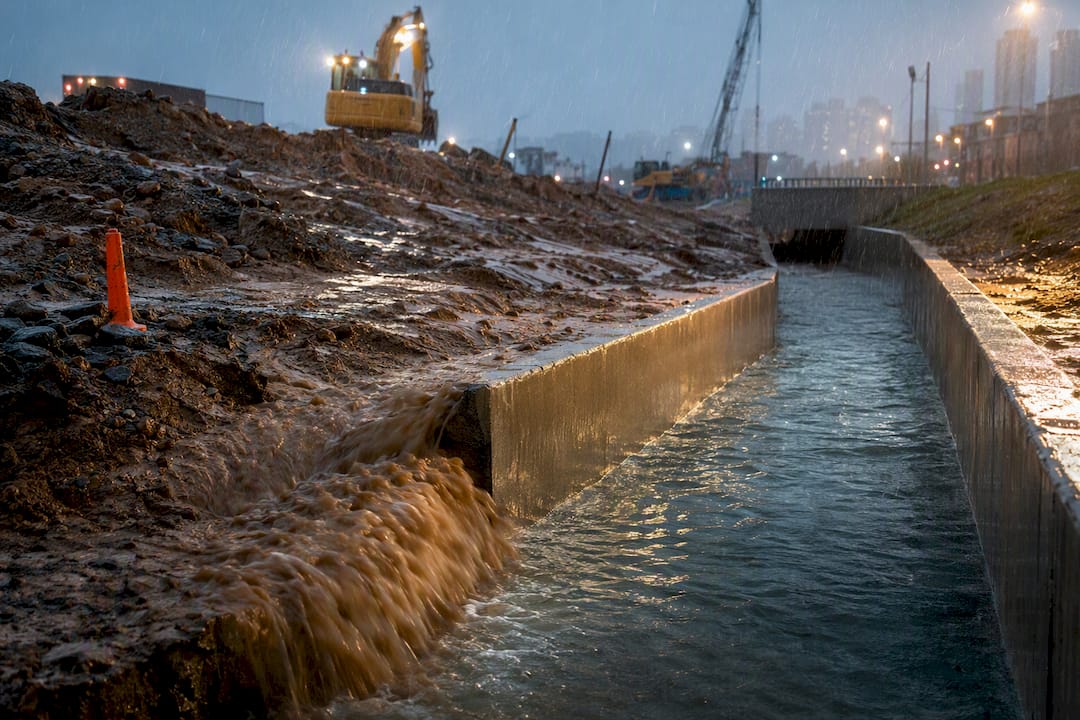
A massive landslide occurred at the Clementi NorthArc site.46 Soil movement caused damage to the Ulu Pandan Park Connector.46 The Building and Construction Authority issued an immediate SWO.46
Soil spilled directly into the nearby Ulu Pandan Canal.47 The builder had to carry out extensive slope stabilisation measures.47 They installed monitoring instruments to track further soil movement.47 A thin layer of concrete was applied to stabilise slopes.48
A water channel was created to mitigate upstream flood risks.48 Recovery and construction efforts took several months to complete.48 The damage caused by the landslide was deemed fairly extensive.49 This resulted in significant unforeseen costs for the main contractor.
Landslides are a known risk during heavy, prolonged rainfall.50 Agencies carry out regular inspections on high-risk slopes.50 However, changes to slope profiles during construction exacerbate risks.50 The Clementi incident proves that environmental hazards trigger strict SWOs.
Case Study: The Gilstead Condominium Worksite
MOM conducted a surprise inspection at the 35 Gilstead worksite.51 Numerous severe safety breaches were uncovered during this inspection.51 Several staircases completely lacked protective handrails for workers.51
Lift shafts lacked barricades, presenting extreme fall hazards.51 Edges of the five-storey building did not have guard rails.51 Construction materials were strewn around, creating severe tripping risks.51
Furthermore, nails and starter bars protruded dangerously from formworks.51 Starter bars must be covered to prevent impalement accidents.51 MOM immediately issued a Stop Work Order to the contractor.51 Basic control measures were entirely absent at this specific site.51
The authorities noted a general lack of safety ownership.51 Basic control measures were not in place whatsoever.51 Consequently, MOM stepped up inspection activities by 50 percent.51 This targeted higher-risk industries like construction and manufacturing directly.51
Case Study: Synergy-Biz, ZH Builders, and CHC Construction
Synergy-Biz faced severe enforcement after a MOM premises inspection.52 Multiple unsafe conditions were discovered across their daily operations.52 Consequently, they received an immediate Stop Work Order directive.52 They were also issued a composition fine of $6,000.52
ZH Builders faced prosecution for contravening the Building Control Act.53 They carried out unauthorised building works without approved plans.53 The company pleaded guilty to the charges in open court.53 The judge imposed a heavy fine of $70,000 on ZH Builders.53 The developer, 457 Balestier, was also fined $90,000.53
CHC Construction was fined $13,000 for carrying out unauthorized works.54 They carried out street works without formal government approval.54 Furthermore, they severely damaged 28 trees in Yio Chu Kang.54 This included 25 rain trees and three angsana trees.54 These trees had been specifically marked for environmental retention.54 These fines highlight the broad scope of regulatory enforcement.
Mitigation Strategies: Achieving bizSAFE STAR
Understanding triggers is the first step to avoiding SWOs.6 Companies must proactively invest in robust safety compliance structures.2 Prevention is vastly cheaper than paying SWO-related financial penalties.
Adopting structured WSH programs is a critical defensive strategy.2 The WSH Council’s bizSAFE program is highly recommended.2 Achieving the highest level, bizSAFE STAR, offers immense business advantages.2
This requires aligning with stringent ISO 45001 safety standards.2 Companies must obtain SS506 Certification from accredited official bodies.2 A Risk Management Implementation Audit Report is also strictly mandatory.2 Many public sector tenders mandate this certification as a prerequisite.2
To reach bizSAFE STAR, companies progress through foundational levels.2 Level 1 requires top management to attend a commitment workshop.2 Level 2 requires appointing a Risk Management Champion.2 Level 3 mandates risk assessments for every work activity.2 Level 4 requires a WSH Management System Programme Lead.2
Engaging a consultancy organization helps achieve these certifications smoothly.2 Consultants conduct comprehensive WSH audits and detailed gap analyses.2 They develop safety policies aligned with industry best practices.2 This structured approach insulates the company against unexpected safety failures.
Mitigation Strategies: Video Surveillance Systems (VSS)
Modern safety technologies act as vital insurance against penalties.2 MOM recently mandated Video Surveillance Systems for specific sites.2 As of June 1, 2024, VSS installation is legally compulsory.13
This applies to construction projects valued at $5 million upwards.13 Cameras must monitor locations where high-risk work activities occur.13 VSS helps detect unsafe behaviors before accidents actually happen.
Artificial intelligence video analytics can automate this surveillance process.1 These tools prevent costly SWOs by enabling immediate hazard intervention.1 They provide an undeniable digital paper trail of compliance.2 This documented evidence helps dispute unfair penalties or insurance claims.
Other technologies include Electronic Permit-to-Work systems.2 Vehicular Safety Technology also minimizes risks of tragic site accidents.2 Adopting these tools modernizes safety management effectively and efficiently.
Mitigation Strategies: ConSASS and Design for Safety
The Construction Safety Audit Scoring System is highly effective.2 This system is widely known in the industry as ConSASS.2 ConSASS provides an independent assessment of worksite safety systems.2
It profiles the maturity level of specific safety components.2 ConSASS helps management allocate resources to elevate safety standards.2 It pinpoints specific organizational strengths and critical systemic weaknesses accurately.2
The ConSASS framework evaluates construction safety practices holistically.2 Regular audits ensure the active safety management system functions properly.2 This continuous improvement loop prevents complacency from setting in.
Engaging Design for Safety (DfS) Professionals is another vital step.2 DfS professionals reduce risks during the early design phase.2 They identify hazards before construction even begins on site.2
They develop specific risk assessments for key construction activities.2 This seamless integration ensures safety considerations are prioritized early.2 They conduct independent design reviews to identify structural design flaws.2 DfS leverages innovative technologies to deliver safe design solutions.2
Conclusion
The true cost of a Stop Work Order in Singapore is monumental. An SWO is never merely a temporary pause in operations. It is a catastrophic event that damages every business facet.
Direct fines can reach up to $500,000 for corporate bodies.14 Daily non-compliance fines add $20,000 to this heavy burden.14 Idle labor costs, dormitory rents, and worker levies drain cash.16 Project delays inevitably trigger massive liquidated damages from frustrated developers.6
Furthermore, the Demerit Point System tracks these failures aggressively.28 Accumulating 25 points leads to immediate foreign labor debarment.28 Public tender disqualification locks companies out of lucrative government contracts.33 Entering the Business Under Surveillance programme destroys corporate reputation entirely.35
Therefore, preventing an SWO must be a primary corporate objective. The C-Suite must treat workplace safety as a strategic priority.2 Investing in bizSAFE STAR certification builds robust internal safety cultures.2 Deploying mandatory Video Surveillance Systems mitigates high-risk operational behaviors.13
Ultimately, strict compliance with the WSH Act saves massive capital. Safety is not just a regulatory hurdle in Singapore. It is the fundamental bedrock of sustainable and profitable commercial success. Ignoring it guarantees severe financial penalties and terminal reputational ruin.
Works cited
- Stop Work Orders (SWOs) | Meaning & Definition | viAct AI, accessed June 1, 2026, https://www.viact.ai/glossary/stop-work-orders-%28swos%29
- Beyond Fines: A C-Suite Guide to Singapore’s WSH Demerit Point …, accessed June 1, 2026, https://mosaicsafety.com.sg/singapores-wsh-demerit-point-system/
- Workplace Safety and Health Act 2006 – Singapore Statutes Online, accessed June 1, 2026, https://sso.agc.gov.sg/Act/WSHA2006?ProvIds=pr21-&ViewType=Advance&Any=5+Factories+Safety+Training+Courses+Order&WiAl=1
- Workplace Safety and Health Act – American Crane School, accessed June 1, 2026, https://americancraneschool.com/wp-content/uploads/2025/05/Singapore_Crane_Regulations_Guide-To-Workplace-Safety-And-Health-Act.pdf
- MOM uncovers nearly 7,000 safety breaches in the first half of 2025 – NTUC, accessed June 1, 2026, https://www.ntuc.org.sg/uportal/news/MOM-uncovers-nearly-7000-safety-breaches-in-the-first-half-of-2025/
- Nine Singapore Construction Sites Shut Down After Worker Deaths — What Triggers a Stop-Work Order and How to Avoid One – Sage Shield Safety Consultants, accessed June 1, 2026, https://sageshield.com/stop-work-order-singapore-construction-fatalities-case-study/
- Falling Objects on Singapore Construction Sites: A Preventable Cause of Death, accessed June 1, 2026, https://sageshield.com/falling-objects-construction-singapore-case-study/
- Circular: Safety of Workers during Repair or Maintenance of Lifts – MOM, accessed June 1, 2026, https://www.mom.gov.sg/-/media/mom/documents/safety-health/circulars/2021/circular-20210407-joint-circular-bca-on-safety-of-workers-during-repair-or-maintenance-of-lifts.pdf
- Circular: Safe Use of Lifts Undergoing Major Alteration or Replacement Works as Workplace Hoists/Lifts – MOM, accessed June 1, 2026, https://www.mom.gov.sg/-/media/mom/documents/safety-health/circulars/2020/circular-20200302-safe-use-of-lifts.pdf
- Stiffer penalties by MOM to enforce workplace safety – The Straits Times, accessed June 1, 2026, https://www.straitstimes.com/singapore/stiffer-penalties-by-mom-to-enforce-workplace-safety
- Unsafe Workplaces – Migrant Death Map, accessed June 1, 2026, https://www.migrantdeathmap.sg/unsafe-workplaces
- Action against errant companies – MOM, accessed June 1, 2026, https://www.mom.gov.sg/workplace-safety-and-health/safe-measures/action-against-errant-companies
- New WSH Measures from 1 June 2024: Increase in Maximum Fines, Mandatory Video Surveillance Systems for Relevant Construction Projects | Rajah & Tann Asia, accessed June 1, 2026, https://www.rajahtannasia.com/viewpoints/new-wsh-measures-from-1-june-2024-increase-in-maximum-fines-mandatory-video-surveillance-systems-for-relevant-construction-projects/
- WSH Act: liabilities and penalties – MOM, accessed June 1, 2026, https://www.mom.gov.sg/workplace-safety-and-health/workplace-safety-and-health-act/liabilities-and-penalties
- Workplace Safety Fines in Singapore: MOM Penalties and How to Avoid Them, accessed June 1, 2026, https://sageshield.com/workplace-safety-fines-mom-singapore/
- How Much Do Foreign Workers Really Earn In Singapore, And Why Companies Rarely Just Pay This Cost, accessed June 1, 2026, https://dollarsandsense.sg/business/how-much-foreign-workers-earn-in-singapore/
- The “Hidden” Costs of Hiring Foreign Workers in 2026: Levies, Insurance, and Housing, accessed June 1, 2026, https://singaporeemploymentagency.com/hidden-costs-hiring-foreign-workers-singapore-2026/
- Foreign Worker Quota in Singapore | Apr 11, 2025 – Kelick, accessed June 1, 2026, https://www.kelick.io/post/foreign-worker-quota-in-singapore
- Terms & Conditions – Concrete Canvas, accessed June 1, 2026, https://www.concretecanvas.com/us/terms-and-conditions/
- construction-cost-handbook-singapore-2019_001.pdf – Arcadis, accessed June 1, 2026, https://www.arcadis.com/contentassets/934a2cbf81254a22b8d893e40f92c781/construction-cost-handbook-singapore-2019_001.pdf?rev=f1d856bf3565449eb51f1b43b4df82e7
- [2023] SGHC(A) 2 – eLitigation, accessed June 1, 2026, https://www.elitigation.sg/gdviewer/s/2023_SGHCA_2
- Branching Out to New Horizons – Keong Hong Holdings Limited, accessed June 1, 2026, https://www.keonghong.com/misc/prospectus.pdf
- Adjudication and insolvency: interface of two statutory regimes affecting the construction industry | BCLP, accessed June 1, 2026, https://www.bclplaw.com/en-US/events-insights-news/adjudication-and-insolvency-interface-of-two-statutory-regimes-affecting-the-construction-industry.html
- Report on the Building and Construction Industry Security of Payment Act and Corporate Insolvency and Restructuring – Singapore Academy of Law, accessed June 1, 2026, https://sal.org.sg/wp-content/uploads/2025/03/2020-Report-on-the-Building-and-Construction-Industry-SOPA-.-final.pdf
- Impact of insolvency reform on the construction industry | White & Case LLP, accessed June 1, 2026, https://www.whitecase.com/insight-our-thinking/impact-insolvency-reform-construction-industry
- IPSO FACTO CLAUSES IN CONSTRUCTION CONTRACTS – An Analysis of Section 440 of the Insolvency, Restructuring and Dissolution Act 2018 [2024] SAL Prac 17 – AP Journals Online, accessed June 1, 2026, https://journalsonline.academypublishing.org.sg/Journals/SAL-Practitioner/Construction-and-Infrastructure/ctl/eFirstSALPDFJournalView/mid/591/ArticleId/1968/Citation/JournalsOnlinePDF
- Demerit Point System (DPS) | Meaning & Definition | viAct AI, accessed June 1, 2026, https://www.viact.ai/glossary/demerit-point-system-%28dps%29
- Demerit point system for construction and manufacturing sectors – MOM, accessed June 1, 2026, https://www.mom.gov.sg/workplace-safety-and-health/monitoring-and-surveillance/demerit-point-system
- Penalties for Traffic Offences – Singapore Police Force, accessed June 1, 2026, https://www.police.gov.sg/knowledge-hub/traffic/traffic-matters/penalties-for-traffic-offences
- Demerit points system for employment agencies – MOM, accessed June 1, 2026, https://www.mom.gov.sg/employment-agencies/demerit-points-system
- Companies with unsafe work conditions may be barred from hiring new foreign workers: MOM | The Straits Times, accessed June 1, 2026, https://www.straitstimes.com/singapore/companies-with-unsafe-work-conditions-may-be-barred-from-hiring-new-foreign-workers-mom
- Exit from Heightened Safety Period and New Measures for Sustainable WSH Outcomes, accessed June 1, 2026, https://www.mom.gov.sg/newsroom/press-releases/2023/0523-exit-from-heightened-safety-period-and-new-measures-for-sustainable-wsh-outcomes
- Safety disqualification criteria for public sector construction and construction-related projects, accessed June 1, 2026, https://www.mom.gov.sg/workplace-safety-and-health/monitoring-and-surveillance/safety-disqualification-criteria-for-public-sector-construction-and-construction-related-projects
- New workplace measures, including demerit points for manufacturers, after major injuries rise in heightened safety period: MOM – CNA, accessed June 1, 2026, https://www.channelnewsasia.com/singapore/new-workplace-safety-measures-deaths-fall-major-injuries-rise-5586276
- Business Under Surveillance programme – MOM, accessed June 1, 2026, https://www.mom.gov.sg/workplace-safety-and-health/monitoring-and-surveillance/business-under-surveillance-programme
- Singapore workplaces rank among the safest globally: 2025 WSH statistics, accessed June 1, 2026, https://www.humanresourcesonline.net/singapore-workplaces-rank-among-the-safest-globally-2025-wsh-statistics
- BizSafe Star Singapore (2025): The Ultimate Guide to Certification, Audit, and Benefits, accessed June 1, 2026, https://mosaicsafety.com.sg/bizsafe-star-singapore-guide-2025/
- List of Companies under Business Under Surveillance (BUS) Programme – MOM, accessed June 1, 2026, https://www.mom.gov.sg/-/media/mom/documents/safety-health/reports-stats/list-of-companies-under-bus.pdf
- bizSAFE Frequently Asked Questions, accessed June 1, 2026, https://www.tal.sg/wshc/programmes/bizsafe/frequently-asked-questions
- 0802 Higher Compensation Limits Under the Work Injury Compensation Act – MOM, accessed June 1, 2026, https://www.mom.gov.sg/newsroom/press-releases/2024/0802-higher-compensation-limits-under-the-work-injury-compensation-act
- WICA Changes Nov 2025: Higher Compensation Limits – Mavenside Consulting, accessed June 1, 2026, https://www.mavenside.co/blog/wica-changes-november-2025-raise-cover-update-incident-playbook
- Singapore expands work injury insurance protections – Mercer, accessed June 1, 2026, https://www.mercer.com/insights/law-and-policy/singapore-expands-work-injury-insurance-protections/
- Changes to Work Injury Compensation Act | Howden SG, accessed June 1, 2026, https://www.howdengroup.com/sg-en/insight/changes-work-injury-compensation-act
- Policy Wordings – WICA – Liberty International Insurance, accessed June 1, 2026, https://www.libertyinternational.com/get-document/cf852c55-e91c-444a-b543-10b285a52a09
- Workplace Safety and Health Report 2025 – Singapore – MOM, accessed June 1, 2026, https://www.mom.gov.sg/-/media/mom/documents/safety-health/reports-stats/wsh-national-statistics/wsh-national-stats-2025.pdf
- BCA issues stop-work order on Clementi BTO site after landslide – YouTube, accessed June 1, 2026, https://www.youtube.com/watch?v=qQ8GrYUo1Kc
- BCA issues stop-work order on Clementi BTO site after landslide – The Straits Times, accessed June 1, 2026, https://www.straitstimes.com/singapore/bca-issues-stop-work-order-for-clementi-northarc-bto-site-after-landslide
- Recovery works may take a few months – National Centre for Infectious Diseases, accessed June 1, 2026, https://www.ncid.sg/News-Events/News/Documents/(ST%20050922)%20Focus%20shifts%20to%20preparing%20for%20future%20disease%20outbreaks,%20with%20current%20ones%20under%20control.pdf
- Damage caused by Clementi BTO landslide ‘quite extensive’ but unlikely to delay key collection: MP : r/singapore – Reddit, accessed June 1, 2026, https://www.reddit.com/r/singapore/comments/x3uvew/damage_caused_by_clementi_bto_landslide_quite/
- Written Answer by Ministry of National Development on landslides reported and review of stability of land close to deforestation sites, accessed June 1, 2026, https://www.mnd.gov.sg/newsroom/speeches/view/written-answer-by-ministry-of-national-development-on-landslides-reported-and-review-of-stability-of-land-close-to-deforestation-sites
- Contractor of Novena condo ordered to stop work over safety breaches; MOM stepping up inspections | The Straits Times, accessed June 1, 2026, https://www.straitstimes.com/singapore/35-gilstead-contractor-ordered-to-stop-work-over-safety-breaches-mom-stepping-up-inspections
- Construction firm Synergy-Biz hit with fine, stop-work order for safety lapses – CNA, accessed June 1, 2026, https://www.channelnewsasia.com/singapore/synergy-biz-construction-stop-work-order-fine-mom-2968471
- [2025] SGHC 227 – :: eLitigation ::, accessed June 1, 2026, https://www.elitigation.sg/gd/s/2025_SGHC_227
Construction firm fined $13,000 for unauthorised work in Yio Chu Kang Road, damaging 28 trees | The Straits Times, accessed June 1, 2026, https://www.straitstimes.com/singapore/courts-crime/construction-firm-fined-13000-for-unauthorised-work-in-yio-chu-kang-road-damaging-28-trees