
A contractor can have experienced crews, sound equipment, and a demanding project schedule, yet still lose control of safety performance when critical EHS records are missing, outdated, or disconnected from the work. The top EHS documents every contractor needs are not paperwork for paperwork’s sake. They are the operating controls that show hazards were identified, workers were prepared, and corrective action was managed before an incident or inspection exposes a gap.
For construction and industrial contractors, documentation must work at the point of work. A generic plan stored in an office file may satisfy a bid requirement, but it will not help a supervisor manage a crane lift, a confined-space entry, or a changing excavation condition. The strongest document systems connect project obligations, actual field risks, competent supervision, and verifiable records.
Start with a project-specific EHS management plan
The EHS management plan is the document that organizes the entire project safety approach. It should define responsibilities for project leadership, supervisors, safety personnel, subcontractors, and workers. It should also identify applicable legal requirements, client rules, emergency arrangements, reporting channels, inspection routines, and the process for managing nonconformities.
A useful plan is tailored to the contract scope and site conditions. For example, a contractor performing interior fit-out work needs controls for work at height, electrical isolation, access, housekeeping, and interface risks with other trades. A civil contractor may need much deeper controls for traffic management, excavation, lifting, temporary works, and public protection.
The trade-off is clear: an overly short plan can omit essential controls, while a lengthy template that is never used creates false confidence. Keep the plan detailed enough to guide the project team, then support it with focused procedures and field records.
Risk assessments and task-level safe work procedures
Risk assessment is the foundation of an effective EHS system. It identifies foreseeable hazards, evaluates the level of risk, and establishes controls using the hierarchy of controls. Elimination, substitution, engineering measures, administrative controls, and personal protective equipment should be considered in that order rather than treating PPE as the default answer.
For contractors, a broad project risk register is necessary but insufficient on its own. High-risk or changing activities should have task-level risk assessments and safe work procedures that crews can understand and supervisors can enforce. These documents should address the sequence of work, equipment used, required permits, competency requirements, exclusion zones, emergency actions, and hold points.
Typical activities requiring documented assessment and procedures include:
- Work at height, including scaffolds, mobile elevated work platforms, and roof work
- Lifting operations involving cranes, hoists, rigging, and suspended loads
- Excavation, trenching, and work near underground or overhead utilities
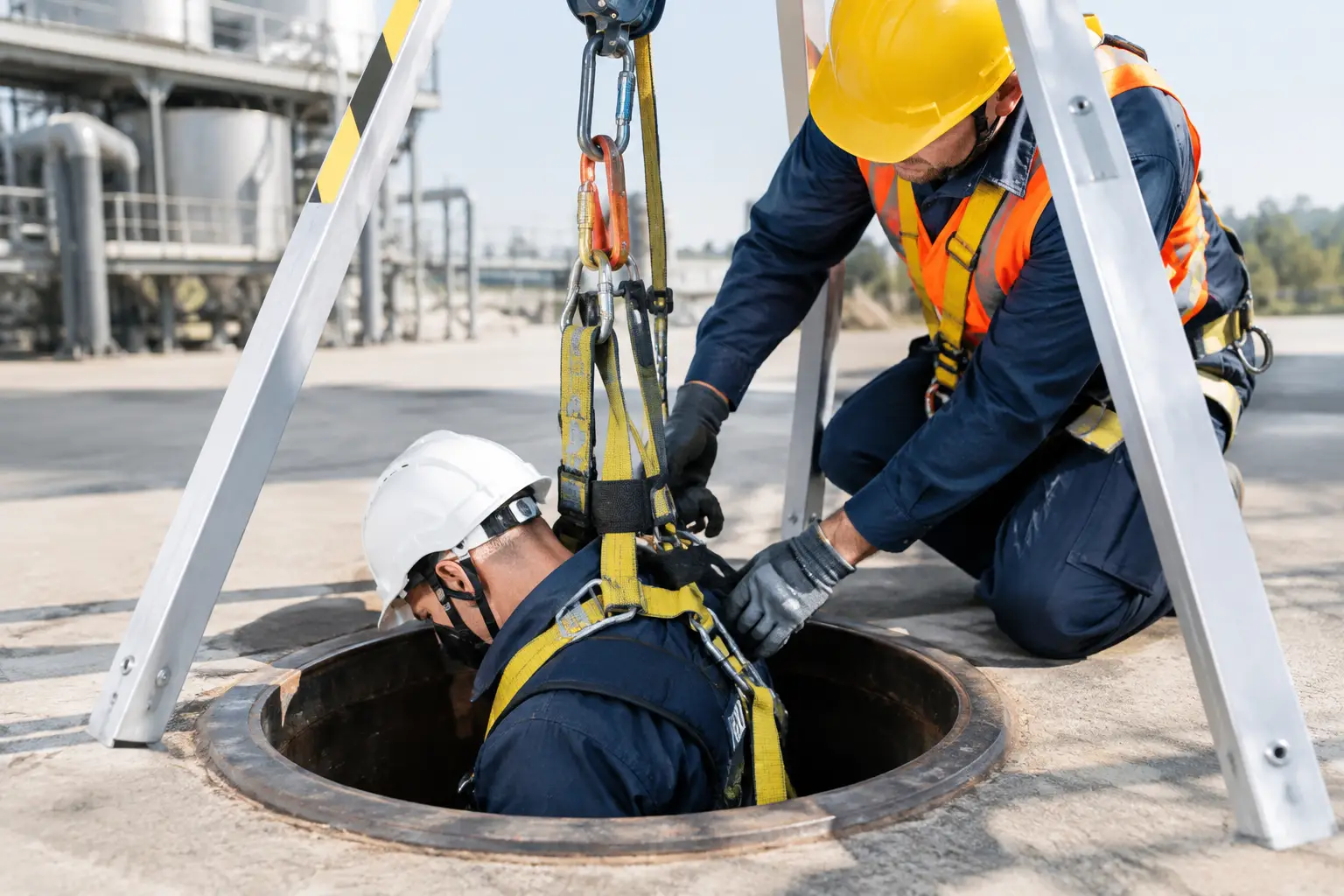
- Confined-space entry, hot work, energized electrical work, and chemical handling
Review assessments when the scope, work method, equipment, workforce, weather exposure, or site interface changes. A signature alone does not prove workers understand the control measures. Supervisors should discuss the assessment during pre-task briefings and confirm that the stated controls are present in the field.
The top EHS documents every contractor needs for worker readiness
Competence must be documented before work starts, especially where a client, regulator, or general contractor requires evidence of training and authorization. A training and competency matrix gives management a clear view of who is qualified for each role and when refresher training is due. It should cover general site orientation as well as role-specific qualifications such as equipment operation, first aid, rigging, confined-space entry, or competent-person duties.
Maintain individual training records, licenses, certificates, and attendance sheets in a controlled format. Expired credentials are a common audit finding because a company may have trained its workforce well but failed to manage renewal dates.
Daily or shift-based toolbox talks are equally important. They translate the formal safety system into current site conditions. Records should state the topic, the work area or crew involved, key hazards discussed, questions raised, and attendance. Repeating a generic topic every week may be easy to administer, but it will not demonstrate that the team addressed the hazards actually present that day.
Permits, plans, and records for high-risk work
Some work cannot be safely managed with a general procedure alone. It needs a permit-to-work system that verifies conditions immediately before work begins and defines when the authorization ends. Depending on the activity, this may include hot-work permits, confined-space permits, electrical isolation or lockout records, excavation permits, or work-at-height permits.
Permits should not become a signature exercise. The issuer and work supervisor need to verify site conditions, isolation measures, atmospheric testing where required, fire protection, rescue arrangements, and communication with affected parties. If a shift changes or the work condition changes materially, the permit must be reviewed or reissued according to the project procedure.
Contractors also need supporting technical documents. Lift plans should identify the load, crane capacity, ground condition, rigging method, travel path, exclusion zone, and responsible personnel. Emergency response plans should address credible events such as falls from height, fire, spill response, medical emergencies, rescues, and severe weather. For higher-risk projects, drill records demonstrate whether the plan can be implemented under real conditions.
Inspection, maintenance, and corrective-action records
EHS documentation must show that controls remain effective after they are introduced. This is where inspection checklists, equipment registers, maintenance logs, and corrective-action trackers become essential.
Routine site inspections should cover work areas, access routes, housekeeping, signage, PPE use, tools, machinery, temporary electrical systems, and the status of previous findings. The checklist format matters less than the follow-through. Each finding needs a clear description, risk priority, responsible person, due date, and verified closeout. Closing an item without evidence or field verification can leave the same hazard in place.
Equipment records should identify inspection frequency and acceptance status. Items such as lifting gear, fall-protection equipment, portable electrical tools, fire extinguishers, and mobile plant may have different inspection requirements. A complete register helps prevent uninspected or defective equipment from reaching the work area.
Near-miss, incident, and environmental event reports are also critical learning records. They should capture facts, immediate actions, root causes, and preventive measures. Avoid reports that place responsibility only on a worker’s behavior when planning failures, inadequate supervision, schedule pressure, equipment condition, or unclear work methods contributed to the event.
Subcontractor and environmental control documents
A principal contractor remains exposed when subcontractor EHS controls are weak. Prequalification records, subcontractor induction records, scope-specific risk assessments, insurance and credential checks, and performance evaluations establish a more defensible control process. The level of review should reflect the risk of the subcontracted work. A specialist demolition or electrical contractor warrants greater scrutiny than a low-risk delivery service.
Environmental documentation should receive the same practical attention as safety records. Depending on the project, contractors may need spill prevention procedures, waste management plans, hazardous-material inventories, waste transfer records, dust and noise controls, and inspection logs for erosion or stormwater measures. Environmental noncompliance can delay work, damage client relationships, and create liabilities that extend beyond the project closeout date.
Control documents, not just files
The most effective EHS document system has clear ownership. Assign who prepares each document, who reviews it, who approves it, where the current version is stored, and how field teams access it. Revision control is especially important when work methods change. An obsolete procedure at the workface can be more dangerous than no procedure because it appears authoritative.
Audit readiness should be a result of disciplined operations, not a last-minute document collection exercise. Project managers can test their system by selecting one active high-risk activity and asking simple questions: Is the current assessment available? Are the workers trained? Is the permit valid? Have the controls been inspected? Can the team show evidence that previous findings were closed?
MOSAIC Ecoconstruction Solutions supports contractors in building practical EHS documentation that aligns compliance requirements with field execution. The objective is not to produce a larger binder. It is to give project teams clear, usable controls that stand up to client reviews, audits, and the realities of active work sites.
A well-managed document set gives supervisors a reliable way to stop unsafe work, correct gaps early, and demonstrate that the company has taken reasonable, organized steps to protect people and the environment. Start with the activities that carry the greatest consequence, make the records usable at the point of work, and let consistent follow-through become part of how the project is run.