Introduction
A 12-man renovation subcontractor in Toa Payoh loses five working days and faces a S$15,000 penalty after MOM issues a Stop-Work Order for unsecured scaffolding – a cost that wipes out the margin on the entire project. This scenario plays out repeatedly across Singapore’s high-risk sectors, and it is almost always preventable. StartSAFE Singapore, the WSH Council’s free safety program for SMEs not yet on the bizSAFE ladder, exists precisely to help micro-SMEs in high-risk sectors kickstart WSH without breaking the bank.
This article is written for SME owners, directors, and supervisors running very small firms – typically under 50 headcount – in construction, logistics and transport, light manufacturing, and related trades. If your company has no formal safety systems in place and you are unsure where to begin, this guide maps out exactly how to use government-assisted WSH programmes, simple internal actions, and selective grants to build a basic risk management foundation at minimal cost.
The short answer: StartSAFE provides free onsite consultancy where a WSH Council-appointed consultant walks your site, identifies hazards, and gives you a prioritised action list – at zero cost. Combined with heavily subsidised training, low-cost internal controls, and grants like the Productivity Solutions Grant, micro-SMEs can build a functional WSH system without significant capital expenditure.
By the end of this article, you will:
-
Understand what StartSAFE is, how it works, and whether your company qualifies in 2024–2026
-
Follow a step-by-step roadmap from zero to a basic WSH system using free and low-cost support
-
Know which MOM, WSH Council, and Enterprise Singapore schemes can reduce your safety costs
-
Get sector-specific tips for construction, logistics, and light manufacturing micro-SMEs
-
Recognise when engaging a consultancy like MOSAIC Ecoconstruction Solutions makes sense to stretch limited budgets further
Understanding StartSAFE and Singapore’s WSH Support for Micro-SMEs
Before you can implement good WSH practices, you need to understand what support is available and how the pieces fit together. StartSAFE is a doorstep assistance programme run under the WSH Council, designed specifically for small and medium enterprises, including small and medium-sized firms, that have not yet entered the bizSAFE framework. For SME owners with no formal safety background, grasping this ecosystem is the essential first step toward compliance, competitive advantage, and – most importantly – keeping workers safe while beginning to build their WSH capabilities.
What Is StartSAFE Singapore and Who Is It For?
StartSAFE is a free safety program in Singapore where a WSH Council-appointed consultant visits your workplace, conducts a hands-on hazard hunt, and delivers practical recommendations you can act on immediately. Originally rolled out in October 2016, the programme remains active and highly relevant through 2024–2026 for companies that have never held any bizSAFE certification.
Key features of the programme:
-
Free first visit for eligible non-bizSAFE SMEs, typically lasting around four hours including a site walk and debrief session
-
Covers a wide range of workplaces: warehouses, workshops, small construction sites, depots, fabrication shops, and transport yards
-
Requires top management presence during the visit, along with basic documents such as an organisation chart and a draft WSH policy
-
Prioritises high-risk sectors – construction subcontractors, haulage operators, small fabrication and metalworking shops are exactly the audience StartSAFE was built for
Micro-SMEs often operate in high-risk industries like construction or manufacturing, and these are the firms that benefit most. The programme is open to companies with group employment of 200 or fewer, or group annual turnover of S$100 million or less.
There are two exclusions: companies currently under Business Under Surveillance (BUS) – meaning MOM has flagged them for poor safety performance – and companies under active legal prosecution for WSH offences are not eligible.
How StartSAFE Fits into the Wider WSH Ecosystem (bizSAFE, Total WSH, Grants)
StartSAFE is not a standalone programme – it is the entry ramp into a broader WSH journey. Think of it as a structured progression:
-
StartSAFE serves as an introductory diagnostic and coaching step – identifying your most pressing hazards and giving you a clear roadmap for what to fix first
-
bizSAFE Levels 1–3 provide a structured path to formal recognition of your risk management capabilities, with Level 3 often being the minimum requirement for government contracts and large customer tenders
-
Higher levels (Level 4, bizSAFE STAR) and programmes like Total WSH integrate occupational health and wellbeing, eventually aligning with international standards like ISO 45001
What makes this ecosystem accessible for budget-conscious companies is the financial support layered across it. Enterprise Singapore’s Productivity Solutions Grant (PSG) can co-fund WSH technology for SMEs – digital checklists, e-Permit-to-Work systems, fleet safety management tools – at up to 50% subsidy. SkillsFuture subsidies slash the cost of RM Champion and supervisory safety courses. And from Budget 2026, the new EDGE scheme is streamlining multiple grant programmes to make access even simpler.
The common thread is that StartSAFE is designed to be low or no cost, acting as a bridge for cost-sensitive micro-enterprises to enter the formal WSH framework. Once owners understand this ecosystem, the next question becomes how to use it tactically without overspending.
Why High-Risk Micro-SMEs Need a Different Approach to Workplace Safety and WSH
A “high-risk micro-SME” in Singapore terms typically means:
-
Construction subcontractors with 5–30 workers on short-term projects – scaffolding, renovation, M&E installation
-
Logistics firms with a small fleet of trucks or vans and few dedicated supervisors
-
Light manufacturing or fabrication shops in industrial estates running basic machinery – welding rigs, lathes, cutting equipment
These companies share constraints that make conventional WSH approaches impractical. There is usually no in-house WSH officer or safety coordinator; workplace safety responsibilities fall on the director or a site supervisor already stretched thin. Margins are tight in 2024–2026 due to labour and material cost pressures, leaving little appetite for expensive consultancy fees. And daily operations are complicated by client demands – e-PTW requirements, site access protocols, tender pre-qualifications – all layered on top of the actual work.
In 2022, Singapore recorded 46 workplace deaths, mostly in SMEs. Most workplace fatalities in Singapore occur in SMEs, especially in high-risk sectors. Singapore’s workplace fatality rate was 0.99 per 100,000 workers in 2023 – a number that underscores the real human cost when accidents happen in small operations with limited safety systems.
These realities make government-assisted programmes like StartSAFE particularly powerful. For a micro-SME, StartSAFE functions as a “first safety officer” at almost zero cost – providing the hands-on guidance that owners need but cannot afford to hire full-time. The next section zooms in on exactly how StartSAFE visits work and how to extract maximum value from them.
Inside a StartSAFE Journey: What Micro-SMEs Can Expect
Understanding the StartSAFE visit structure helps owners plan schedules, brief staff, and prepare documents so that the free support delivers maximum impact. Many SMEs go in unprepared and leave value on the table. This section demystifies the process so you do not.
The First StartSAFE Visit: Zero-Cost Hazard Hunt
The first visit follows a practical, no-nonsense structure:
-
Kick-off discussion – The consultant meets the owner or director and reviews current operations, workforce composition, and any past incidents or near miss events
-
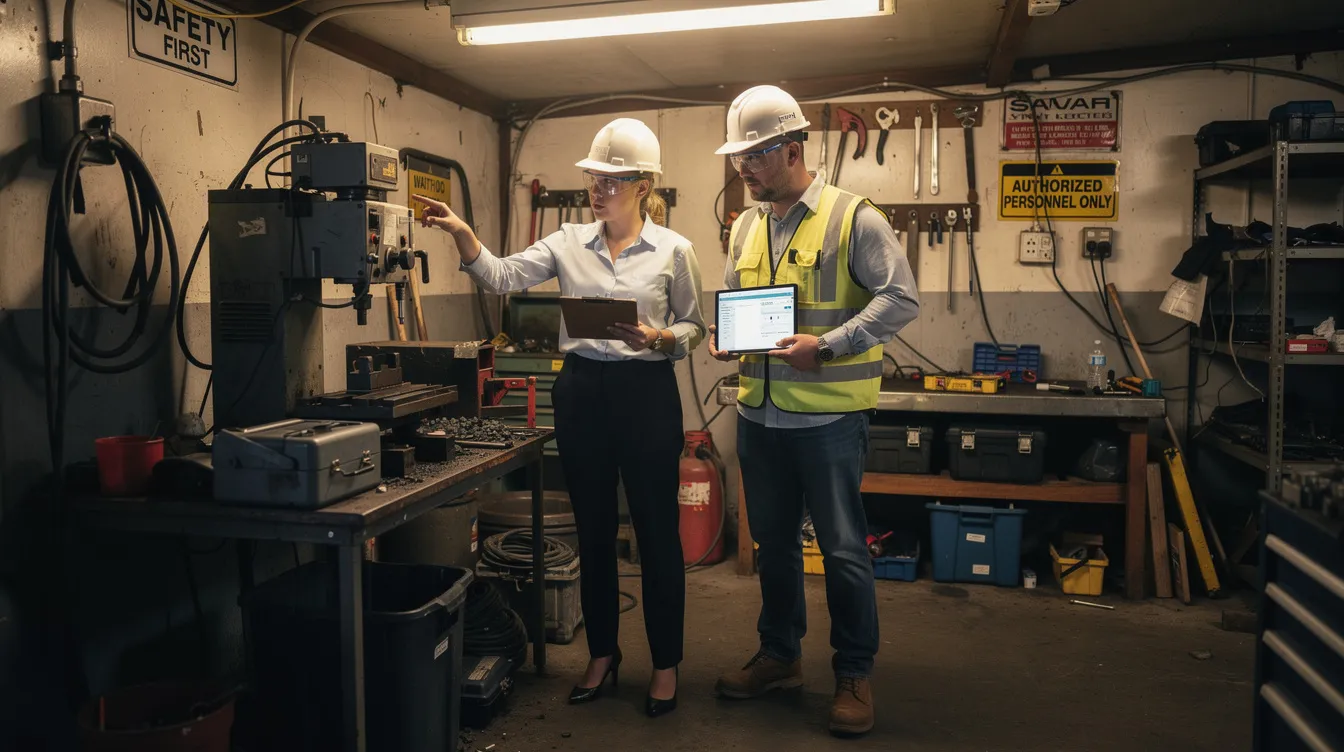
Site walkthrough – A thorough site walk covering the most common hazards: work at height, forklifts and vehicle movements, housekeeping, machine guards, electrical wiring, manual handling, and chemical storage
-
On-the-spot feedback – The consultant provides verbal recommendations and, where possible, helps implement quick fixes immediately – repositioning a fire extinguisher, labelling a chemical container, tagging a damaged ladder
The WSH Council’s StartSAFE program has rectified 5,445 hazards since 2016. StartSAFE helped rectify 5,445 hazards, preventing 3,267 potential incidents. And 99.4% of SME owners found StartSAFE visits useful for hazard identification – a near-universal endorsement from companies that have been through the process.
Expected outputs from the first visit include:
-
A simple list of identified hazards and risk control recommendations
-
Prioritised corrective actions distinguishing “fix now at no cost” from “plan and budget for”
-
Verbal guidance on how to establish clear communication channels for reporting hazards going forward
Since its launch, approximately 4,000 SMEs have participated in StartSAFE, with around 800 progressing to bizSAFE Level 3 or above. In 2022, visit frequency reached approximately 120 per month, up from about 49 per month in earlier contract periods – a sign of growing demand and awareness.

The Optional Second Visit: Training Your Risk Management Champion
The second visit shifts focus from diagnosis to capability building. It typically involves coaching a nominated staff member – your RM Champion – in practical risk management skills tailored to your operations.
Typical content covered during the second visit:
-
Hands-on risk assessment for key tasks specific to your sector – lifting operations, working on scaffolds, container stuffing, machine operation
-
Drafting safe work procedures and toolbox briefing checklists scaled to micro-SME operations – not 50-page manuals, but concise, usable documents
-
Guidance on compiling an RM implementation plan that aligns with bizSAFE Level 2 requirements, setting your company up for formal certification
This second visit creates a direct bridge to the bizSAFE programme. bizSAFE is a five-step programme for SMEs, and the RM Champion training from the second visit maps closely to what is needed for Level 2 recognition. Many main contractors and government agencies require at least bizSAFE Level 3 for tender qualification, so this early preparation pays dividends quickly.
Establishing a basic risk register during this phase helps identify and control significant hazards systematically. Even a simple spreadsheet listing your top activities, associated risks, existing controls, and planned improvements constitutes a functional risk register.
What StartSAFE Does Not Cover (And Where MOSAIC Steps In)
StartSAFE is introductory by design. Understanding its boundaries prevents frustration and helps you plan next steps realistically:
-
It does not act as a permanent WSH officer or assume the legal duties of the employer and occupier
-
It does not produce full WSH Management System documentation for complex projects
-
It is not a pathway to ISO 45001 certification on its own – that requires a much more comprehensive implementation effort
This is where a consultancy like MOSAIC Ecoconstruction Solutions adds value. MOSAIC can translate StartSAFE recommendations into a simple but robust WSH management system tailored for micro-enterprises. Specific ways MOSAIC supports small firms include:
-
Converting the hazard list from your StartSAFE visit into documented risk assessments and safe work procedures
-
Providing part-time or project-based safety personnel for high-risk phases – site setup, shutdown works, hot works, confined space entries
-
Supporting bizSAFE progression from Level 2 through to Level 3 certification and beyond, without overwhelming your cash flow
With the foundation and boundaries clear, the next section provides a minimal-cost roadmap that micro-SMEs can follow from day one.
Kickstarting WSH on a Shoestring: A Practical Roadmap to Implement Good WSH Practices for Micro-SMEs
This step-by-step plan links StartSAFE, internal actions, and low-cost external help into a clear roadmap. Each step is designed for companies with very limited staff and budget – typically under 50 employees – where every dollar and hour must count.
Step 1: Secure Leadership Commitment and a Simple WSH Policy
A short written WSH policy, signed by the director, is the first no-cost foundation for any safety system. StartSAFE consultants will ask for one during the visit, and having it ready signals that management takes WSH matters seriously.
Your one-page WSH policy should reference:
-
Compliance with the WSH Act (which requires systematic risk management for all employers)
-
Commitment to protect all workers, including subcontractors
-
A pledge toward continuous improvement in workplace safety and health
Display the policy visibly at your worksite, warehouse, or depot. Communicate it during toolbox meetings. This simple act starts building trust with workers that safety is not just lip service. Employers can utilise free templates for risk assessments and safety documentation – MOSAIC provides sample WSH policy templates tailored for construction, logistics, and manufacturing as part of initial advisory sessions.
Step 2: Nominate an RM Champion, Not a Full-Time Safety Officer
Most micro-SMEs cannot afford a dedicated WSH officer. Instead, appoint an internal RM Champion – your senior foreman, transport supervisor, or workshop lead – to take ownership of safety coordination.
Your RM Champion:
-
Acts as the main contact for StartSAFE consultants during visits
-
Coordinates risk assessments and daily safety meetings
-
Keeps basic records using simple tools – Excel checklists, WhatsApp groups for near miss reporting, or free mobile apps
For upskilling, the bizSAFE Level 2 RM course (e.g., “Develop a Risk Management Implementation Plan”) costs approximately S$385 before subsidy. After SkillsFuture funding, the out-of-pocket cost to your company drops significantly. Government and industry bodies often offer free safety training resources as well, including the WSH Council’s e-learning modules. Having peer-led safety initiatives boosts employee involvement in safety management and builds accountability across the team.
Step 3: Focus Risk Assessment on the 5–10 Highest-Risk Activities
Micro-SMEs can successfully implement safety improvements by prioritising serious hazards first. Avoid the trap of trying to assess every single task on day one. Instead, focus your risk assessment on 5–10 critical activities:
-
Construction: work at height, lifting operations, hot works, excavation, confined spaces
-
Logistics: loading and unloading, reversing vehicles, warehouse stacking, pallet handling, driver fatigue
-
Manufacturing: machine operations, manual handling, cutting and welding, chemical use, heat stress from hot processes
Use a standard risk matrix and simple assessment forms. StartSAFE consultants and MOSAIC can help create sector-specific templates. Practicing regular hazard inspections can identify risks before incidents occur. Starting small lowers cost and effort while significantly cutting actual WSH risks across your operations.
Step 4: Implement No-Cost or Low-Cost Controls First
Implementing simple low-cost engineering controls is crucial for workplace safety – and many of the highest-impact improvements cost almost nothing:
-
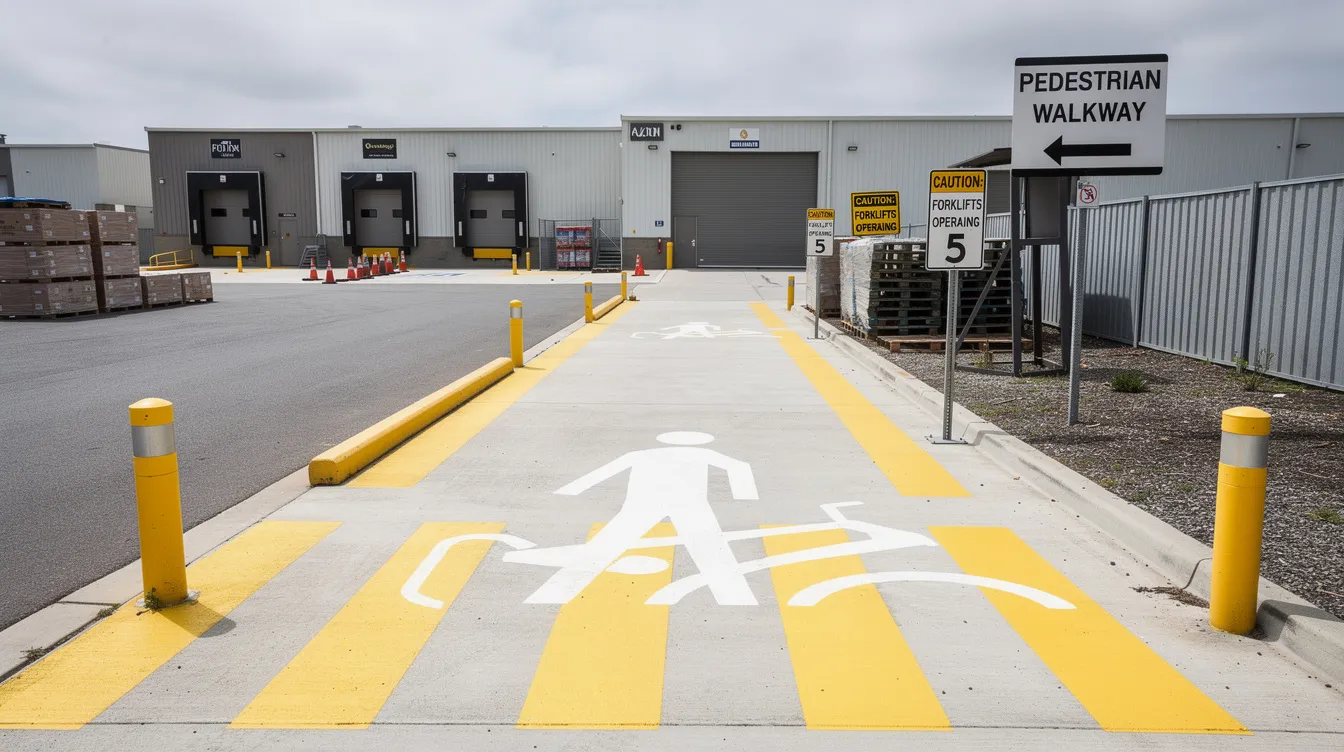
Clear marking of pedestrian and vehicle routes in yards using paint and traffic cones
-
Standardised ladder inspection tags and simple “do not use” tagging for damaged equipment
-
Housekeeping routines and storage rules to prevent slips, trips, and falling objects
-
Verbal and visual reminders for PPE use, seatbelts in forklifts, and reversing alarm compliance
-
Routine maintenance checks – essential to prevent workplace accidents and catch unsafe conditions before they cause harm
These are often the same quick wins that StartSAFE consultants identify during the site walk. Daily safety meetings can reinforce risk awareness among workers and keep the focus on prevention. Implementing these controls gives your company an immediate safety boost before investing in technology or external services.
Step 5: Use Grants and Shared Services to Stretch Your Budget
Enhancing workplace safety and health can be affordable for micro-SMEs when you leverage available schemes strategically:
-
Productivity Solutions Grant (PSG): Covers up to 50% of the cost for pre-approved WSH digital tools – e-checklists, incident reporting apps, e-Permit-to-Work systems, fleet safety management solutions. For Built Environment firms, the PSG provides up to S$50,000 for digital solutions and up to S$300,000 for advanced equipment over five years (valid from 1 April 2026 to 31 March 2031)
-
SkillsFuture subsidies: Slash costs for RM Champion courses and supervisor-level safety training. Participating in subsidised safety programmes can reduce compliance costs substantially
-
Shared resources: Pool with main contractors or trade associations to share part-time safety officers or group training sessions – particularly practical for construction subcontractors on shared sites
Critical rule: Ensure any WSH technology vendor is on the PSG pre-approved list before you sign a contract. Retrospective applications are typically rejected. MOSAIC can help plan a “grants-first” adoption roadmap so you avoid buying unnecessary or duplicative systems and maximise subsidy coverage.
Low-cost behavioural changes and utilising national frameworks can improve safety well before any technology investment. The next section puts concrete numbers to these strategies.
Making the Numbers Work: Cost–Benefit View for Micro-SMEs
Workplace safety is a cash-flow and risk issue, not just a compliance box. For SME owners operating on thin margins, this section helps justify the time and modest spend – to yourself, your partners, and your clients.
Comparing “Do Nothing” vs “StartSAFE + Basic WSH”
Consider two scenarios side by side:
|
Criterion |
Scenario A: No Structured WSH |
Scenario B: StartSAFE + Basic WSH |
|---|---|---|
|
Upfront cost |
S$0 |
S$0–S$2,000 (training, minor controls) |
|
Typical annual WIC insurance |
Higher premiums, limited negotiation leverage |
Lower premiums over time; bizSAFE certification can lower insurance premiums for SMEs |
|
Lost-time days (per incident) |
5–15 days per moderate incident |
Significantly fewer incidents; less downtime |
|
Tender qualification |
Excluded from contracts requiring bizSAFE Level 3 |
Eligible; competitive advantage in bidding |
|
Client perception |
Risky vendor; may lose repeat business |
Trusted supplier; building trust through visible safety commitment |
The cost of a single moderate workplace accident in 2025 – medical leave, Work Injury Compensation, investigation downtime – can easily reach S$10,000–S$30,000. That exceeds several years’ worth of basic WSH investments. A proactive safety culture reduces operational disruptions and insurance costs, making the business case straightforward because even one serious safety failure is usually far more expensive than putting basic WSH measures in place.
Hidden Savings: Insurance, Tender Wins, and Reduced Downtime
Beyond avoiding fines and penalties, structured WSH delivers revenue-positive outcomes:
-
Insurance: Better WSH records and bizSAFE certification influence WIC insurance premiums over time. Insurers view certified companies as lower-risk, translating to measurable savings
-
Tender wins: Main contractors and government agencies increasingly require at least bizSAFE Level 3 in 2024–2026 tender cycles. The WSH Advocate Programme has already helped close to 2,900 SMEs uplift their credentials through supply-chain pressure. Without certification, you are locked out of lucrative contracts. bizSAFE Level 3 is often required for government contracts, making it a direct enabler of revenue and sustainable growth
-
Reduced downtime: Fewer incidents mean fewer project stoppages, less rework, and less manpower disruption. The programme enhances corporate branding and client trust – your brand reputation improves with every safe project delivered
Track basic indicators – near miss counts, minor injuries, downtime hours – to see improvement after StartSAFE and basic WSH implementation. Even a simple monthly tally creates a compelling story for customers and insurers.
When to Engage External Help (Without Blowing the Budget)
There are clear trigger points for bringing in professional support:
-
Frequent WSH observations or non-conformities flagged by clients during their audits
-
Upcoming tenders requiring documented WSHMS or higher bizSAFE levels
-
Your internal RM Champion feeling overwhelmed maintaining paperwork alongside daily operations
MOSAIC Ecoconstruction Solutions structures its micro-SME support specifically to avoid budget shock:
-
Fixed-fee starter packages to convert StartSAFE findings into a functional WSH system
-
Part-time safety support for critical high-risk phases – lifting operations, shutdown jobs, hot works
-
Grant-aligned advisory on technology and training selection, keeping costs predictable and aligned with PSG and SkillsFuture subsidies
The focus is on high impact interventions at each stage, not all-or-nothing consulting engagements.
Common Challenges for Micro-SMEs (and How to Overcome Them)
SME owners juggle sales, operations, HR, and compliance simultaneously. These are the most common barriers to WSH implementation – and the practical fixes that work.
“We Don’t Have Time for Paperwork”
This is the most frequent objection, and the solution is radical simplicity:
-
Use ultra-simple, one-page checklists and daily pre-start brief forms – not 20-page inspection reports
-
Leverage free or low-cost mobile checklist apps instead of bulky binders
-
Set a strict limit of 10–15 minutes per day for WSH documentation, focusing only on high-risk tasks
-
Training sessions should be short and focused on specific hazards to maximise effectiveness
Creating a culture of safety through staff involvement leads to better outcomes. When workers help fill in the checklists, it becomes part of daily operations rather than an additional burden.
“My Workers Are Not Interested in Safety”
Worker buy-in is a management problem, not a worker problem:
-
Run short, visual toolbox talks of 5–10 minutes tied to real incidents in Singapore – MOM WSH alerts provide ready-made case studies
-
Use simple incentives for safe behaviour – recognition in front of peers, small vouchers, choice of shift assignments
-
Involve workers directly in StartSAFE walkthroughs so they see hazards and solutions firsthand, reducing unsafe acts through awareness rather than enforcement
“Safety Tech and Consultants Are Too Expensive for Us”
This perception usually comes from not knowing what is available. Research and field data also show that safety technology can improve productivity, which strengthens the case for starting small before looking at bigger systems:
-
The core of StartSAFE is free – fully subsidised by the government
-
Affordable starting tools include WhatsApp groups for incident reporting and Google Sheets for risk registers – these cost nothing and work
-
The Productivity Solutions Grant can co-fund safety technology for SMEs, covering up to 50% of pre-approved solutions
-
MOSAIC structures micro-SME packages to be phased and grant-aligned, spreading cost over time so there is no single large outlay
“We Don’t Know Where to Start With WSH Law”
Many SMEs are unaware of specific regulatory requirements under the WSH (Risk Management) Regulations. A proactive approach:
-
Use MOM and WSH Council sector-specific guides tailored to construction, logistics, and manufacturing SMEs
-
Ask the StartSAFE consultant to highlight the top 5 legal obligations most relevant to your business – they do this routinely
-
Engage MOSAIC for a short compliance gap assessment translated into a simple action list with clear timelines
Note that the Code of Practice on WSH Risk Management was revised in 2021 to include infectious disease, mental health, and terrorism threats. Auditors now check for these elements during bizSAFE Level 3 audits, so your risk assessments need to reflect this broader scope.
Despite these challenges, the first steps are simple, structured, and low-cost. The key is starting – and StartSAFE gives you exactly that push.
Conclusion and Next Steps
Micro-SMEs in high-risk sectors do not need large budgets to build a safer workplace. StartSAFE provides the catalyst – a free, practical, onsite assessment that identifies your most pressing hazards and gives you a prioritised action list. Combined with subsidised training, low-cost controls, and targeted grants, you can implement good WSH practices that protect your workers, improve your competitive positioning, and support sustainable growth – all without breaking the bank.
Waiting until a serious incident, MOM inspection, or tender rejection forces your hand is the most expensive strategy of all. A strong emphasis on prevention, starting with the simplest steps, delivers better outcomes at a fraction of the cost of reactive compliance.
Your immediate next steps:
-
Check your eligibility and register for StartSAFE through the official WSH Council channels – slots can fill up, so register early
-
Draft and sign a simple WSH policy and appoint an RM Champion before the first visit – this maximises the value of your free consultation
-
After the first StartSAFE visit, act on 3 no-cost controls immediately and schedule SkillsFuture-subsidised training for your RM Champion
-
Contact MOSAIC Ecoconstruction Solutions for a short, fixed-fee session to convert StartSAFE recommendations into a workable micro-SME WSH roadmap tailored to your sector
Related topics to explore next:
Additional Resources for Micro-SMEs in High-Risk Sectors
This section curates genuinely useful tools and references available as of 2024–2026 for Singapore micro-enterprises. Bookmark the ones relevant to your sector.
MOM & WSH Council Resources:
-
StartSAFE programme page and registration instructions via the WSH Council website
-
Sectoral WSH guidelines for construction, logistics/transport, and manufacturing – available as free downloads from MOM’s WSH resources
-
Published case studies and the ASEAN good practices report documenting StartSAFE outcomes – approximately 7,200 incidents prevented and 17% of participating SMEs continuing to bizSAFE
Training & Capability Programmes:
-
bizSAFE Level 1 and Level 2 courses suitable for directors and RM Champions
-
Subsidised supervisory and worker-level safety courses for high-risk work – check SkillsFuture course catalogue for WSQ modules
Grants & Financial Support:
-
Productivity Solutions Grant (PSG) – pre-approved WSH software, e-PTW systems, fleet safety management tools
-
SkillsFuture funding for risk management and safety courses
-
Budget 2026 EDGE scheme – unified grant stream combining PSG, MRA, and EDG for broader transformation projects
MOSAIC Ecoconstruction Solutions Tools:
-
Downloadable micro-SME WSH starter checklist and sample one-page WSH policy template
-
Basic risk assessment template for construction, logistics, and manufacturing
-
Complimentary briefing call on StartSAFE and bizSAFE planning – contact MOSAIC to schedule