
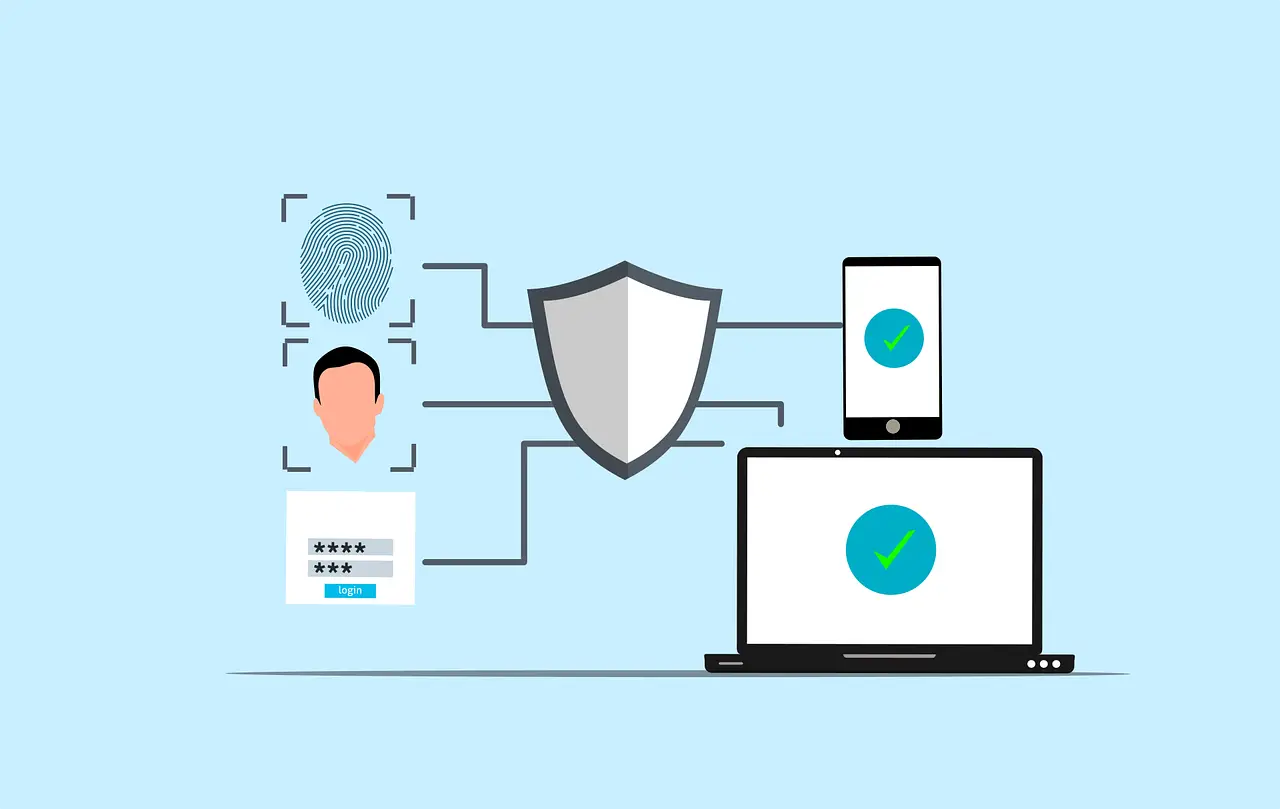
Beyond the Firewall: Why the Cyber Trust Mark is Singapore’s New Standard for Digital Credibility
SEO Title: Beyond the Firewall: Why the Cyber Trust Mark is Singapore’s New Standard for Digital Credibility
Focus Keyphrase: Singapore Cyber Trust Mark
Meta Description: An exhaustive analysis of Singapore’s Cyber Trust Mark (SS 712:2025). Discover how this risk-based certification revolutionizes digital trust, zero-trust architecture, and enterprise cybersecurity compliance.
Tags: Cybersecurity, Singapore Cyber Trust Mark, Zero Trust, SS 712:2025, Digital Trust, Enterprise Risk Management, AI Governance, Cloud Security.
Sentiment: Positive, Authoritative, Urgent.
Power Words: Revolutionizes, Unprecedented, Exhaustive, Dominating, Blueprint, Catastrophic, Critical.
The Paradigm Shift in Digital Credibility
The global digital economy has reached a critical inflection point where rapid technological adoption systematically outpaces the evolution of traditional cybersecurity paradigms.
In highly digitalized jurisdictions such as Singapore, the digital economy has matured into the primary engine of national prosperity, contributing S$128.1 billion, or 18.6% of the national GDP in 2024—a significant escalation from 13% in 2017.1
Consequently, the concept of digital trust has transitioned from a theoretical compliance metric into a foundational prerequisite for sustainable economic growth and cross-border innovation.1
As enterprises relentlessly scale their operations across multi-cloud infrastructures, deploy agentic artificial intelligence (AI), and integrate interconnected operational technology (OT), the conventional methodologies of securing a localized network perimeter have been rendered obsolete.2
In response to this shifting operational reality, the Cyber Security Agency of Singapore (CSA) has spearheaded the development of the Cyber Trust Mark (CTM). Recently re-published and expanded under the Singapore Standardisation Programme as SS 712:2025, the CTM represents a fundamental reimagining of enterprise cybersecurity validation.4
Unlike rigid, monolithic compliance checklists that force organizations into uniform defensive postures, the CTM adopts a tiered, risk-based approach.5
It aligns an organization’s cybersecurity preparedness directly with its unique operational risk profile, ensuring that security investments are proportionate, strategic, and resilient.5
This exhaustive report dissects the architectural framework, historical origins, economic implications, comparative global standing, and strategic necessity of the Singapore Cyber Trust Mark, illuminating why it has become the definitive standard for digital credibility in 2026.
The Escalating Threat Architecture and Historical Context
To comprehend the strategic necessity of the Cyber Trust Mark, it is imperative to analyze the volatile threat environment that catalyzed its creation.
The Singapore Cyber Landscape 2024/2025 report reveals an unprecedented intensification of malicious cyber activities, reflecting both targeted local vulnerabilities and systemic global trends.7
The statistical indicators of this threat escalation illustrate a deteriorating baseline of implicit trust. In 2024, Singapore recorded 159 major ransomware incidents, marking a 21% increase from the previous year.7
Concurrently, phishing attacks surged by 49%, totaling over 6,100 reported cases, with the banking and financial services sectors remaining the most aggressively spoofed and targeted industries.7
Notably, the sophistication of these attacks has evolved dramatically.
Threat actors are increasingly utilizing “triple extortion” tactics, which involve stealing sensitive corporate data, encrypting localized systems to halt operations, and threatening the public release of confidential information to maximize financial and reputational leverage over victims.9
The weaponization of artificial intelligence is also accelerating threat velocity.
Approximately 12% of reported phishing emails in 2024 contained AI-generated content, demonstrating a nascent but rapidly maturing adversarial exploitation of generative technologies to bypass traditional email gateways.7
Furthermore, the proliferation of outdated, unpatched systems has led to a 67% increase in infected infrastructure, compromising approximately 117,300 systems primarily through botnet and drone activity.7
Distributed Denial-of-Service (DDoS) attacks have also reached unprecedented volumes and sophistication, positioning Singapore as the seventh most attacked nation globally in late 2024, and troublingly, the third-largest source of global DDoS attack traffic.8
These sophisticated threat vectors target the foundational elements of national security and economic stability.
A historical review of major cyber incidents in Singapore illustrates a clear trajectory indicating that threat actors are systematically hunting for the weakest links in enterprise supply chains.
The foundational crisis occurred in 2018 with the SingHealth data breach, where sophisticated actors stole the patient records of 1.5 million individuals, fundamentally altering the national conversation on data protection.10
This was followed by the Singtel third-party system failure in 2021, the OCBC phishing scams of late 2021 and early 2022 that exploited the human element, and the Meiji Seika ransomware attack in 2022 which highlighted the vulnerability of the manufacturing sector.10
More recently, the landscape has seen targeted attacks on legal and financial precedents, such as the Marina Bay Sands data breach in October 2023, the Shook Lin & Bok law firm ransomware attack in April 2024, and the highly disruptive DBS and Bank of China vendor breach in April 2025.10
In mid-2025, David Koh, Commissioner of Cybersecurity and Chief Executive of CSA, confirmed that government agencies were actively containing an Advanced Persistent Threat (APT) known as UNC3886, which was specifically targeting critical operational technology infrastructure.13
The reality underscores the fragility of global connectivity and highlights how vulnerabilities in the digital supply chain can trigger cascading failures.7
The mandate for enterprises has permanently shifted from merely defending their own perimeters to ensuring the verifiable resilience of their entire interconnected vendor ecosystem.
The Obsolescence of Perimeter Defense and the Rise of Zero Trust
The historical reliance on perimeter security—often conceptualized as a “castle-and-moat” architecture—was predicated on the flawed assumption that external entities were inherently untrustworthy, while internal network traffic and users were implicitly safe.3
This model is fundamentally incompatible with the modern enterprise environment. Rapid digital transformation, the ubiquitous adoption of Software-as-a-Service (SaaS) applications, expansive public cloud infrastructure, and the normalization of hybrid remote work have dissolved the traditional network boundary into irrelevance.3
Relying on perimeter defenses creates a highly fragile security posture characterized by implicit trust.
When a single set of compromised credentials allows a threat actor or malicious insider to bypass a gateway firewall, the lack of internal network segmentation allows for uninhibited lateral movement, resulting in catastrophic data exfiltration.3
Traditional defense mechanisms lack the necessary visibility to monitor cloud-to-cloud traffic, evaluate the behavioral posture of unmanaged partner devices, or secure Application Programming Interfaces (APIs) connecting disparate microservices.3
The cost of this implicit trust includes over-privileged user accounts, severe VPN bottlenecks that frustrate employee productivity, and a complete inability to prove compliance controls during a breach.3
This systemic architectural failure necessitates the immediate adoption of Zero Trust principles. Zero Trust is a strategic security framework that replaces implicit trust with continuous verification and least-privilege access.3
A Zero Trust architecture mandates that every access request—regardless of its origin inside or outside the corporate network—must be authenticated, authorized, and continuously validated against dynamic contextual data points such as user identity, device posture, geographic location, and behavioral anomalies.3
The Singapore Cyber Trust Mark, particularly at its advanced certification tiers, actively operationalizes these modern security requirements.
By assessing organizations on their ability to implement identity and access management (IAM), continuous behavioral monitoring, micro-segmentation, and granular data-level protections, the CTM forces enterprises to transition away from obsolete perimeter models toward adaptive, data-centric resilience frameworks.3
The goal is to minimize the blast radius of any potential breach, ensuring that a compromised endpoint does not equate to a compromised enterprise.3
The Evolution of Singapore’s National Cybersecurity Strategy
The introduction and subsequent refinement of the Cyber Trust Mark is not an isolated regulatory event; it is the culmination of a decade-long strategic evolution by the Singaporean government to build a trusted digital hub.
The original Singapore Cybersecurity Strategy, launched in 2016, focused heavily on securing Critical Information Infrastructure (CII)—such as water, power, and telecommunications—and establishing baseline defensive capabilities across government agencies.19
However, as the digital operating context changed drastically, marked by the proliferation of the Internet of Things (IoT) and the rapid, forced digitalization triggered by the global COVID-19 pandemic, a strategic pivot was required.22
The updated Singapore Cybersecurity Strategy 2021 recognized that cybersecurity could no longer be solely the purview of the government or isolated IT departments; it required an ecosystem-wide, risk-management mindset.20
Strategy 2021 broadened the scope of protection beyond CII to include the wider enterprise ecosystem, emphasizing that a secure digital environment is a shared national responsibility.20
The strategy was built upon three foundational pillars: building resilient infrastructure, enabling a safer cyberspace, and enhancing international cyber cooperation.21
This strategic evolution culminated in the SG Cyber Safe Programme, an initiative designed to simplify cybersecurity adoption for enterprises.5
Acknowledging that organizations possess vastly different resource constraints, technical capabilities, and risk profiles, the CSA bifurcated its certification pathways.
The Cyber Essentials mark was introduced to help Small and Medium Enterprises (SMEs) establish fundamental cyber hygiene to defend against common, unsophisticated attacks.25
Concurrently, the Cyber Trust Mark was developed for larger organizations or highly digitalized SMEs with extensive digital footprints, mandating a mature, risk-driven approach to security governance.6
The government’s commitment to this ecosystem is consistently reinforced at the highest legislative levels.
During the Committee of Supply 2026 debates, Minister for Digital Development and Information, Josephine Teo, outlined Singapore’s capability advantage strategy, emphasizing the integration of AI alongside enhanced cybersecurity for critical infrastructure.27
She equated cybersecurity to fundamental physical safety, stating that just as no respectable carmaker would compromise on brakes or seat belts, no company in the digital economy should skimp on cybersecurity.29
This sentiment underscores that the Cyber Trust Mark is viewed not as a mere compliance exercise, but as a core pillar of national economic strategy.
Deconstructing the Cyber Trust Mark (SS 712:2025) Architecture
The structural brilliance of the Cyber Trust Mark lies in its tiered, domain-centric architecture. Re-published as Singapore Standard 712 (SS 712:2025) to replace the earlier 2022 framework, the standard is not a prescriptive, one-size-fits-all checklist, but a scalable maturity model.4
It requires organizations to conduct a rigorous self-assessment, mapping specific threat scenarios against their operational realities to determine an appropriate target certification tier based on inherent and residual risks.5
The Five Preparedness Tiers
The certification is delineated into five distinct Cybersecurity Preparedness Tiers, allowing organizations to progress structurally as their digital maturity and risk exposure evolve.33
| Tier | Domain Count | Target Organizational Profile & Strategic Focus |
| Supporter | 10 Domains | Designed for organizations initiating their cybersecurity journey. Focuses on baseline awareness, fundamental IT governance, and basic protection mechanisms. Leadership begins to formalize security commitments without requiring complex technical architectures. |
| Practitioner | 13 Domains | Requires the implementation of structured risk management and formalized incident response frameworks. Organizations must demonstrate a move from ad-hoc protections to procedural security management and regular vulnerability assessments. |
| Promoter | 16 Domains | A critical equilibrium point. Provides a robust accountability framework addressing severe risks without demanding top-tier threat intelligence. Introduces stricter third-party vendor requirements, data protection protocols, and mandatory multi-factor authentication (MFA). |
| Performer | 19 Domains | Targeted at highly digitalized enterprises. Mandates continuous behavioral monitoring, automated threat detection, and comprehensive identity governance. Requires proactive defensive measures rather than purely reactive incident responses. |
| Advocate | 22 Domains | The apex of the CTM framework. Demands complete Zero Trust architecture integration, advanced cryptographic controls, predictive threat hunting, and seamless alignment with global standards. Organizations at this tier operate at international levels of cybersecurity excellence. |
Table 1: The Cyber Trust Mark Preparedness Tiers and Organizational Alignment.5
The Evolution from 2022 to 2025 Standards
The transition from the TR 106:2022 standard to SS 712:2025 introduced vital updates to protection measures, directly factoring in key changes in the technological landscape and shifting work arrangements.36
Critical enhancements in the 2025 standard include the elevation of Multi-Factor Authentication (MFA) from a mere recommendation to a strict requirement, acknowledging that credential compromise is the most common entry point for threat actors.36
Furthermore, the protection of Bring Your Own Device (BYOD) endpoints was explicitly incorporated, moving from the Performer tier down to the Promoter tier to address the realities of hybrid work.36
Recognizing the catastrophic impact of supply chain breaches, third-party vendor cybersecurity requirements were also shifted to earlier tiers, ensuring earlier ecosystem accountability.36
System logging, previously a recommendation, is now a strict requirement across applicable tiers to facilitate accurate incident detection, forensic analysis, and rapid recovery.36
The standard also integrated comprehensive requirements for a Secure Software Development Life Cycle (SDLC), ensuring that internally developed applications are secure by design.36
The 22 Core Domains of the Advocate Tier
For an enterprise to achieve the Advocate tier, it must demonstrate mastery across 22 specific domains, which are broadly categorized into five critical functions that mirror global resilience frameworks 30:
- Governance and Leadership: This foundational category assesses board-level oversight, strategic policy formulation, and the cultivation of a security-first corporate culture. It demands that cybersecurity is quantified and managed as a core business risk, rather than delegated as an isolated IT sub-function.32
- Identification and Risk Management: Organizations are mandated to maintain comprehensive, dynamic asset inventories covering hardware, software, network topographies, and data flows. It requires rigorous, documented risk assessment methodologies aligned with business objectives, alongside deep supply chain security audits.39
- Protection (Technical Controls): This involves the physical and logical deployment of granular access controls, mandatory MFA, data encryption at rest and in transit, and protective technologies such as advanced firewalls and endpoint protection platforms (EPP).36
- Detection: Enterprises must possess continuous monitoring capabilities, typically utilizing Security Information and Event Management (SIEM) systems. This includes anomaly detection, rapid security event analysis, and robust intrusion detection systems (IDS) capable of identifying lateral movement within the network.39
- Response and Recovery: The framework demands the establishment of thoroughly tested incident response plans. Organizations must prove they have precise communication protocols for internal stakeholders and external regulators during a breach, alongside resilient, isolated backup systems designed specifically to counteract modern triple-extortion ransomware tactics.30
Expanding the Frontier: Integrating Cloud, AI, and OT Security
A defining and globally unique characteristic of the SS 712:2025 standard is its explicit expansion beyond classical IT cybersecurity to encompass comprehensive domains for Cloud security, Artificial Intelligence (AI) security, and Operational Technology (OT) security.4
This expansion acknowledges that enterprise digital transformation creates entirely new attack surfaces and vectors that traditional IT frameworks fail to secure.25
Securing the Multi-Cloud Ecosystem
As enterprises rapidly migrate core operations to multi-cloud, hybrid, and serverless architectures, the “shared responsibility model” inherent in cloud computing frequently leads to catastrophic misconfigurations and data exposure.3
The updated CTM framework integrates Cloud Security Posture Management (CSPM) and zero-trust cloud-to-cloud verification requirements to systematically close these architectural gaps.3
Organizations must demonstrate that they maintain comprehensive visibility over their cloud workloads and possess automated mechanisms to detect deviations from secure baseline configurations.30
Governing Artificial Intelligence Deployments
The integration of Large Language Models (LLMs) and agentic AI systems into business workflows introduces novel, highly complex vulnerabilities.
These include prompt injection attacks, training data poisoning, model inversion, and unauthorized LLM manipulation.25
The 2025 standard mandates AI-specific threat models and protective controls, aligning seamlessly with the broader national AI strategy.30
In 2026, AI is no longer viewed merely as a productivity tool, but as national infrastructure.43
The Singapore government, through the Infocomm Media Development Authority (IMDA) and the Monetary Authority of Singapore (MAS), has established robust guardrails, including the Model AI Governance Framework (MGF) for Agentic AI.42
Furthermore, the Digital Trust Centre (DTC) at Nanyang Technological University has been designated as the national AI Safety Institute (AISI), driving research into trust technologies and global AI safety science.46
By formally certifying AI security protocols under the CTM, the framework ensures that enterprises can deploy powerful AI innovations safely, transparently, and in full compliance with national governance standards.30
Safeguarding Operational Technology (OT)
For industries reliant on physical systems—such as advanced manufacturing, logistics, utilities, and critical infrastructure—the convergence of IT and OT presents severe safety and operational risks.30
Classical IT cybersecurity prioritizes Confidentiality, Integrity, and Availability (the CIA triad). However, OT security fundamentally shifts this paradigm, requiring organizations to prioritize physical Safety and continuous Availability above data confidentiality.30
The CTM’s OT security pillar mandates distinct network micro-segmentation, preventing threat actors from pivoting from a compromised corporate email account into life-critical industrial control systems (ICS) or Programmable Logic Controllers (PLCs).9
It also requires stringent secure remote access protocols for third-party maintenance vendors operating within OT environments.30
Comparative Analysis: Global Frameworks and Local Synergies
To fully contextualize the Cyber Trust Mark’s strategic value proposition, it must be rigorously evaluated against other dominant global and local compliance frameworks.
The strategic overlap, cross-mapping capabilities, and distinct differentiators highlight why the CTM is uniquely suited for organizations operating in or navigating through the Asian market.
| Framework | Origin & Governing Body | Core Philosophy & Focus Area | Implementation Rigor & Tiering | Audit & Certification Mechanics |
| Singapore Cyber Trust Mark (SS 712:2025) | Cyber Security Agency of Singapore (CSA) | Risk-based resilience across Classical IT, Cloud, AI, and OT. Tailored to specific enterprise digital footprints. | 5 Tiers (10 to 22 Domains). Highly scalable maturity model allowing progressive organizational enhancement. | Mandatory independent audit by CSA-approved Certification Bodies. Valid for 3 years with annual surveillance audits. |
| ISO/IEC 27001:2022 | International Organization for Standardization | Global standard for establishing a centralized Information Security Management System (ISMS). | Single-level certification without tiers. Highly rigorous, demanding extensive policy documentation and continuous improvement. | Formal third-party audit and certification. High barrier to entry regarding time and capital expenditure. |
| SOC 2 (Type I & II) | American Institute of Certified Public Accountants (AICPA) | Service Organization Control focusing on five Trust Services Criteria (Security, Availability, Processing Integrity, Confidentiality, Privacy). | Flexible control selection based on service provided. Type II focuses heavily on proving historical operational effectiveness over a specified audit window. | Attestation report rather than a formal certificate. Requires CPA firm auditing. Heavy focus on cloud SaaS providers. |
| NIST CSF 2.0 | U.S. National Institute of Standards and Technology | Flexible risk management guidelines originally for critical infrastructure, now used generally across enterprises. | Six core functions (Govern, Identify, Protect, Detect, Respond, Recover) mapped across Implementation Tiers. | Voluntary framework. No formal certification process; relies entirely on self-assessment or internal validation. |
| UK Cyber Essentials | UK National Cyber Security Centre (NCSC) | Baseline cyber hygiene focusing on five technical controls to defend against common, unsophisticated external attacks. | Two levels: Basic (Self-assessment) and Plus (Independent technical audit). Not a comprehensive ISMS. | External verification required. Highly specific to the UK market and mandatory for specific government procurement contracts. |
| US Cyber Trust Mark | U.S. Federal Communications Commission (FCC) | Voluntary consumer labeling program specifically for wireless Internet of Things (IoT) connected devices. | Focuses strictly on product-level technical controls (e.g., secure defaults, cryptography, software update support). | Product testing by accredited CyberLABs. Does not evaluate enterprise-wide organizational security or governance. |
Table 2: Comprehensive Comparative Analysis of Global Cybersecurity Frameworks.33
CTM vs. ISO/IEC 27001
While ISO/IEC 27001 is the undisputed global gold standard for information security management, it is frequently criticized for its bureaucratic weight, extensive documentation requirements, and steep implementation curve.54
The standard’s single-level structure dictates that an organization either meets all ISMS requirements comprehensively or fails certification entirely.33
Conversely, the Cyber Trust Mark’s tiered structure allows organizations to incrementally build their security posture, securing progressive victories that maintain executive buy-in.33
Notably, the CSA provides comprehensive cross-mapping documentation demonstrating that the CTM “Advocate” tier aligns extensively with ISO/IEC 27001:2022 requirements.33
Consequently, achieving the CTM serves as a pragmatic, localized stepping-stone toward full international ISO certification, or vice versa, creating massive strategic synergy for multinational enterprises.33
The U.S. vs. Singapore Cyber Trust Mark Confusion
A common point of global confusion within the cybersecurity sector is the nominal similarity between Singapore’s Cyber Trust Mark and the U.S. Cyber Trust Mark introduced by the Federal Communications Commission (FCC).59
The distinction between the two is absolute. The U.S. program is a voluntary labeling scheme strictly designed for consumer IoT devices (such as smart home appliances, connected locks, and voice assistants).59
It functions similarly to an “ENERGY STAR” rating, validating basic device security based on NIST IR 8425 baselines (e.g., ensuring no hardcoded passwords exist and that software update mechanisms are present).47
In stark contrast, the Singapore Cyber Trust Mark evaluates the holistic, enterprise-wide cybersecurity governance, operational processes, incident response capabilities, and architectural defenses of entire corporate entities.34
Synergy with the Data Protection Trustmark (DPTM)
Within the Singaporean ecosystem, the Cyber Trust Mark operates in tandem with the Data Protection Trustmark (DPTM), administered by the Infocomm Media Development Authority (IMDA).61
While the CTM focuses heavily on the technical and governance aspects of defending against cyber threats, the DPTM is specifically engineered to demonstrate accountable data protection practices aligned with the Personal Data Protection Act (PDPA).61
For enterprises handling vast amounts of Personally Identifiable Information (PII), achieving both the CTM and the DPTM provides an unassailable dual-layer of verified digital credibility, satisfying both security and privacy mandates.1
The Economics of Certification: Investment, Subsidies, and ROI
Implementing a comprehensive, risk-based cybersecurity framework requires strategic capital allocation.
However, the financial ecosystem surrounding the Cyber Trust Mark in Singapore is meticulously designed to mitigate cost barriers while delivering highly quantifiable, long-term returns on investment.
Auditing Costs and Implementation Investments
The cost of engaging an independent, CSA-appointed Certification Body (such as SGS, BSI, or TUV SUD) varies significantly based on an organization’s size—measured by the quantity of endpoints—and the complexity of its operational scope.31
| Quantity of Endpoints | Base Certification Fee (Advocate Tier) | Add-on: Cloud Security | Add-on: AI Security | Add-on: OT Security |
| 1 – 10 | S$5,600 | + S$1,500 | + S$1,500 | + S$1,500 |
| 11 – 20 | S$6,400 | + S$1,500 | + S$1,500 | + S$1,500 |
| 21 – 50 | S$8,800 | + S$1,500 | + S$1,500 | + S$1,500 |
| 51 – 100 | S$10,800 | + S$1,500 | + S$1,500 | + S$1,500 |
Table 3: Estimated Certification Assessment Fees for Cyber Trust (SS 712:2025) across organizational sizes.64
Note: Costs reflect assessment fees charged by certification bodies and exclude internal implementation costs.
Beyond the external audit fees, enterprises must factor in internal remediation costs. Consultancy fees for initial gap assessments, technical implementations (procuring MFA identity providers, SIEM licenses, end-to-end encryption systems), and mandatory staff security awareness training can require an internal investment ranging from S55,000 depending on existing maturity.39
Government Funding and Subsidies
To accelerate national adoption and protect the supply chain, the CSA provides substantial funding support for eligible SMEs and Non-Profit Organizations (NPOs) incorporated in Singapore.4
These subsidies, applicable until February 2028, are deducted directly from the fees charged by the certification bodies. The funding can cover up to S225 per specific digital technology pillar (Cloud, AI, OT), significantly lowering the barrier to entry for smaller, highly digitalized firms.4
Furthermore, broader government initiatives, such as the Productivity Solutions Grant (PSG) and the Corporate Income Tax (CIT) rebates outlined in Budget 2026, provide additional liquidity for enterprises to upgrade their technical infrastructures.66
Quantifiable Returns on Investment
Despite the initial capital expenditure and operational friction required to achieve certification, the return on investment for CTM is highly lucrative, transforming security from a cost center into a business enabler.
- Cyber Insurance Premium Optimization: The global cyber insurance market has become prohibitively expensive due to the astronomical rise in ransomware payouts. However, organizations holding the Cyber Trust Mark are officially eligible for discounted premium rates from major underwriters, including Blackpanda, QBE Insurance, Protos Labs, and Delta Underwriting.4 The rigorous independent audit serves as verified actuarial proof of lower systemic risk, directly reducing ongoing operational overhead.38
- Government Procurement Mandates: The most significant economic driver for certification is imminent regulatory pressure. The Monetary Authority of Singapore (MAS) and the CSA have publicly stated they are assessing the implementation of the Cyber Trust Mark (or Cyber Essentials for smaller vendors) as a mandatory prerequisite for organizations seeking to bid on government contracts or attain specific operational licenses involving access to sensitive data.26 Minister Josephine Teo affirmed that this strategy aims to elevate national supply chain resilience, effectively locking uncertified vendors out of highly lucrative public sector pipelines and large-scale national projects.69
- Enterprise Supply Chain Preference: Multi-national corporations and heavily regulated entities increasingly apply the CTM as an operational filter during their procurement cycles. An enterprise holding an Advocate or Performer tier certificate can often bypass lengthy, redundant third-party vendor risk assessment questionnaires.70 This accelerates B2B sales cycles, validates credibility instantly, and allows certified firms to win enterprise deals over uncertified competitors.70
The Implementation Roadmap and Audit Survival Guide
Achieving the Cyber Trust Mark is a complex, multi-faceted organizational transformation that requires methodical execution.
Enterprises must approach the certification not merely as an IT project, but as a strategic business initiative driven by executive leadership.
The Phased Certification Roadmap
- Preparation and Scoping: The organization must first clearly delineate the scope of the certification. This involves defining which business units, networks, applications, and technology pillars (Classical, Cloud, AI, OT) will be assessed.30
- Self-Assessment and Gap Analysis: Utilizing the CSA’s official Cybersecurity Certification Framework (CCF) toolkit, organizations map their current controls against the requisite statements of their target tier.4 This critical phase identifies vulnerabilities in access control, backup policies, secure SDLC processes, and incident response readiness.37 Engaging a certified consultant for an objective gap analysis is often highly beneficial at this stage.37
- Remediation and Technical Implementation: This is the most resource-intensive phase where actual architectural transformation occurs. Organizations must systematically close identified gaps by deploying continuous monitoring tools, enforcing MFA across all internal and external access points, updating patching protocols, encrypting sensitive data, and formalizing vendor risk management procedures.37
- Internal Documentation and Mock Auditing: External assessors demand empirical evidence, not assumptions. Enterprises must meticulously document network architectures, access privilege matrices, risk registers, and change management logs.37 Conducting mock internal audits or penetration testing is highly recommended to validate that defenses operate effectively under pressure.37
- Formal Audit by Certification Bodies: Organizations engage a CSA-appointed Certification Body.4 The audit involves a comprehensive two-stage process: an extensive off-site documentation review to ensure policy alignment, followed by rigorous on-site verification of technical controls, system configurations, and staff security awareness.38
- Continuous Maintenance and Recertification: The Cyber Trust Mark is valid for three years but mandates annual surveillance audits to ensure compliance drift does not occur as the organization evolves.30 Organizations must treat security as a continuous lifecycle, addressing new vulnerabilities (e.g., zero-days) as they emerge.37
Mitigating Assessment Pitfalls
Organizations frequently stumble during the certification process due to predictable, avoidable operational failures:
- Lack of Leadership Buy-In: Treating cybersecurity strictly as an IT function guarantees failure at the higher CTM tiers. The Governance domain explicitly requires board-level oversight, documented executive strategy, and dedicated budgetary allocation.39
- Third-Party and Supply Chain Blind Spots: Enterprises often rigorously secure their internal networks but fail to audit their external vendors. The CTM strictly evaluates how an organization manages third-party software risks, vendor remote access privileges, and the security posture of their supply chain.37
- Inadequate Incident Response Preparedness: Simply possessing endpoint security software is insufficient; organizations must prove they have formalized, tested protocols for containing breaches, minimizing downtime, and legally communicating with stakeholders and regulators during a crisis.37
- The Human Element: Unpatched software and sophisticated phishing campaigns exploit human error. Failing to provide documented, continuous security awareness training tailored to different roles violates core CTM requirements and leaves the organization vulnerable to social engineering.37
Sector-Specific Transformation and Adoption Case Studies
The adoption of the Cyber Trust Mark is accelerating rapidly across diverse industries, proving its operational viability and strategic value far beyond traditional technology-centric sectors.
Healthcare: The healthcare ecosystem is uniquely vulnerable to cyberattacks, as threat actors target life-critical systems and vast repositories of highly sensitive patient data.9
Adhering to the CTM ensures rigorous compliance with the Personal Data Protection Act (PDPA) and builds essential patient trust.74
In 2024, Foundation Healthcare Holdings (FHH) became the first multi-specialty healthcare group to achieve the Advocate tier.74
This milestone established a new operational benchmark for the medical industry, proving their capacity to implement zero-trust access controls that prevent attackers from pivoting from an initial foothold into life-critical diagnostic systems.9
Financial Services and Fintech: For established financial institutions and agile fintech startups, regulatory scrutiny is intense.
Fintechs like Finbots.AI utilize the CTM to definitively demonstrate to massive regional banks that their underlying data architecture and AI models are secure.70
This transforms the certification into a powerful tool for B2B credibility, aligning seamlessly with the MAS Technology Risk Management (TRM) guidelines and streamlining regulatory reporting.32
Leisure, Tourism, and Logistics: The certification is proving crucial for sectors handling high volumes of consumer transactions.
The Mount Faber Leisure Group (MFLG), operator of the Singapore Cable Car and various attractions, achieved the Promoter tier certification to bolster its cyber resilience against advanced threats targeting its booking and operational systems.75
Similarly, logistics technology firms like Ascent Solutions use the mark to assure clients that tracking and supply chain data remain uncompromised.70
SMEs and Non-Regulated Sectors: Perhaps the most telling indicator of the CTM’s success is its widespread adoption by non-regulated entities.
Organizations such as I.D. Planning (an interior design firm) and The Soup Spoon (a local food services brand) have voluntarily invested the capital to achieve certification.70
This cross-sector participation underscores a fundamental market shift: digital trust is no longer automatically assumed by consumers or business partners; it must be empirically demonstrated through standardized certification.70
2026: The Convergence of Digital Trust and B2B SEO Strategy
As the digital economy advances through 2026, the concept of verifiable digital trust has permeated every facet of corporate strategy.
This evolution has fundamentally altered how enterprise cybersecurity firms, consultants, and tech vendors market their services, build brand visibility, and capture market share.1
In an era dominated by Generative AI answer engines and zero-click search environments, the intersection of cybersecurity expertise and advanced Search Engine Optimization (SEO) has become a critical battleground for market dominance.77
The Evolution of the Cybersecurity SEO Landscape
Cybersecurity marketing in 2026 has matured far beyond traditional keyword stuffing, superficial blog posts, and generic listicles.
Executive security decision-makers—such as Chief Information Security Officers (CISOs), SOC leaders, and enterprise procurement officers—search for highly specific, authoritative solutions during high-stakes operational crises or rigorous compliance audits.76
Consequently, search engines and AI Overviews (AIO) increasingly prioritize deep content clusters, technical accuracy, and proven, actionable frameworks over generic advice.77
To capture high-intent B2B traffic, cybersecurity vendors and consultants must optimize for semantic search, Natural Language Processing (NLP), and Large Language Model Optimization (LLMO).79
This requires targeting sophisticated, bottom-of-the-funnel (BOF) keywords.80
For example, targeting high-volume, generic terms like “Cybersecurity” (which garners 823,000 monthly searches but carries intense competition and low specific intent) yields minimal conversion rates.41
Conversely, strategically aligning content with specific operational pain points yields massive ROI. Utilizing SEO power keywords and phrases such as Cloud Security Posture Management (CSPM), Zero Trust Endpoint Security, Automated Threat Response, and Privileged Access Management (PAM) draws highly qualified enterprise buyers who are actively seeking solutions to implement Cyber Trust Mark requirements.41
Content Architecture for Verifiable Credibility
To rank successfully and maintain visibility in 2026, cybersecurity content must embody the principles of Experience, Expertise, Authoritativeness, and Trustworthiness (EEAT).79
The most effective SEO formats in the cybersecurity space are exhaustive, handbook-style guides that anticipate secondary and tertiary reader questions.78
Length is a distinct advantage; B2B cybersecurity pieces exceeding 1,400 words that provide comprehensive coverage perform significantly better in capturing organic share.78
Content must include highly contextual visual assets such as compliance timelines, step-by-step implementation roadmaps, evidence-mapping diagrams, and risk heatmaps.78
An exhaustive report detailing the “Singapore Cyber Trust Mark SS 712:2025,” for instance, functions as a foundational pillar asset.
By incorporating detailed comparative markdown tables (e.g., CTM vs. ISO 27001 vs. SOC 2) and addressing specific user intents—such as funding mechanisms, Advocate tier requirements, and audit pitfalls—a single piece of high-quality content can capture zero-click summary boxes while driving sustained, compounding organic traffic.77
Furthermore, integrating technical SEO elements, ensuring flawless mobile performance (a necessity in mobile-first Singapore), and securing authoritative backlinks through strategic digital PR solidify a brand’s dominance in both local and global search results.81
In the highly competitive B2B sector, if a vendor’s solutions or compliance guides are invisible during a critical search query, that vendor is entirely excluded from the lucrative procurement conversation.76
Conclusion: The Blueprint for a Resilient Digital Future
The Cyber Security Agency of Singapore has engineered a masterpiece of regulatory foresight with the establishment and evolution of the Cyber Trust Mark (SS 712:2025).
By definitively shifting the national cybersecurity dialogue away from static, perimeter-based compliance checklists toward a fluid, risk-centric maturity model, the CTM directly addresses the harsh realities of a digitally saturated, highly volatile global economy.
The framework’s deliberate expansion to include specialized security domains for Cloud architecture, Agentic AI, and Operational Technology proves that the standard is not a stagnant policy document, but a living, adaptable architecture designed to secure the bleeding edge of enterprise innovation.
It aligns seamlessly with broader national initiatives, including the integration of AI as national infrastructure and the push for total digital supply chain resilience.
For organizations operating within, or connected to, Singapore’s vibrant digital ecosystem, achieving the Cyber Trust Mark is no longer an optional accolade or a simple marketing differentiator.
It is a critical operational imperative, a looming prerequisite for government and enterprise procurement, and the ultimate empirical proof of digital credibility in a world where verifiable trust has become the most valuable economic currency.
By moving beyond the firewall and embracing the rigorous, zero-trust principles embedded within the CTM, enterprises not only secure their own data but actively contribute to the resilience of the global digital supply chain.
Works cited
- Navigating Tech Complexity: How Organisations Build Confidence in Digital Transformation – IMDA, accessed March 29, 2026, https://www.imda.gov.sg/resources/blog/blog-articles/2026/02/navigating-tech-complexity
- Modern Cybersecurity Strategies: Why Traditional Solutions Fall Short – Adnovum, accessed March 29, 2026, https://www.adnovum.com/blog/modern-cybersecurity-strategies-why-traditional-solutions-fall-short
- Zero Trust vs. Perimeter Security: Why the Old Model is Dead – Cyber Advisors Blog, accessed March 29, 2026, https://blog.cyberadvisors.com/zero-trust-vs.-perimeter-security-why-the-old-model-is-dead
- Certification for the Cyber Trust mark – Cyber Security Agency of Singapore (CSA), accessed March 29, 2026, https://www.csa.gov.sg/our-programmes/support-for-enterprises/sg-cyber-safe-programme/cybersecurity-certification-for-organisations/cyber-trust/certification-for-the-cyber-trust-mark/
- CSA to Raise Cybersecurity Standards for Critical Information Infrastructure Owners | Cyber Security Agency of Singapore, accessed March 29, 2026, https://www.csa.gov.sg/news-events/press-releases/csa-to-raise-cybersecurity-standards-for-critical-information-infrastructure-owners/
- Cyber Trust – Cyber Security Agency of Singapore (CSA), accessed March 29, 2026, https://www.csa.gov.sg/our-programmes/support-for-enterprises/sg-cyber-safe-programme/cybersecurity-certification-for-organisations/cyber-trust/
- Singapore: Cyber Security Agency publishes Singapore Cyber Landscape 2024/25 report, accessed March 29, 2026, https://connectontech.bakermckenzie.com/singapore-cyber-security-agency-publishes-singapore-cyber-landscape-2024-25-report/
- CSA’s Singapore Cyber Landscape 2024/2025 Report – Clyde & Co, accessed March 29, 2026, https://www.clydeco.com/en/insights/2025/09/csa-s-singapore-cyber-landscape-2024-2025-report
- Securing Singapore’s Health Ecosystem with Zero Trust – Booz Allen, accessed March 29, 2026, https://www.boozallen.com/insights/cyber/securing-singapores-health-ecosystem-with-zero-trust.html
- Singapore’s Evolving Cybersecurity Landscape: Lessons from 8 Major Cyber Attacks, accessed March 29, 2026, https://www.netmarks.com.sg/post/biggest-cyber-attacks-in-singapore
- Top 9 Major Cyber Attacks in Singapore 2024 – Skills Development Academy, accessed March 29, 2026, https://www.sda.edu.sg/blog/top-major-cyber-attacks-in-singapore/
- Timeline of attack on SingHealth’s IT systems and other notable cyber breaches in Singapore – TODAY, accessed March 29, 2026, https://www.todayonline.com/singapore/timeline-stolen-singhealth-patient-records-and-other-notable-cyber-attacks-singapore
- Welcome Remarks by Mr David Koh, Chief Executive of CSA at the Operational Technology Cybersecurity Expert Panel Forum | Cyber Security Agency of Singapore, accessed March 29, 2026, https://www.csa.gov.sg/news-events/speeches/welcome-remarks-by-mr-david-koh–commissioner-of-cybersecurity-and-chief-executive-of-csa-at-operational-technology-cybersecurity-expert-panel-forum/
- Traditional perimeter-based network defense is obsolete—transform to a Zero Trust model, accessed March 29, 2026, https://www.microsoft.com/en-us/security/blog/2019/10/23/perimeter-based-network-defense-transform-zero-trust-model/
- Why Perimeter Security Is No Longer Enough – Cyolo, accessed March 29, 2026, https://cyolo.io/blog/why-perimeter-security-is-no-longer-enough
- Why Traditional Defenses Are No Longer Enough to Protect Your Data – Randtronics, accessed March 29, 2026, https://randtronics.com/why-traditional-defenses-are-no-longer-enough-to-protect-your-data-2/
- Zero Trust | Cybersecurity and Infrastructure Security Agency CISA, accessed March 29, 2026, https://www.cisa.gov/topics/cybersecurity-best-practices/zero-trust
- DoD Zero Trust Strategy, accessed March 29, 2026, https://dodcio.defense.gov/Portals/0/Documents/Library/DoD-ZTStrategy.pdf
- The Singapore Cybersecurity Strategy 2021, accessed March 29, 2026, https://www.csa.gov.sg/resources/publications/the-singapore-cybersecurity-strategy-2021/
- The Singapore Cybersecurity Strategy 2021 – CCDCOE, accessed March 29, 2026, https://ccdcoe.org/uploads/2018/10/Singapore_Cybersecurity_Strategy_2021.pdf
- SINGAPORE CYBER LANDSCAPE 2021, accessed March 29, 2026, https://isomer-user-content.by.gov.sg/36/b871ed00-bc0d-4e55-8caa-1d045aefb95c/Singapore-Cyber-Landscape-2021.pdf
- Guardians Of The Cyber Galaxy: Singapore’s Evolving Cybersecurity Strategy – MAJU, accessed March 29, 2026, https://www.maju.sg/post/guardians-of-the-cyber-galaxy-singapore-s-evolving-cybersecurity-strategy
- Cybersecurity 2026 – Singapore | Global Practice Guides – Chambers and Partners, accessed March 29, 2026, https://practiceguides.chambers.com/practice-guides/cybersecurity-2026/singapore/trends-and-developments
- Singapore’s Cybersecurity Strategy: Understanding CSA’s Masterplan – ResGuard Solutions, accessed March 29, 2026, https://resguard-solutions.com/blog/en/singapore-csa-cybersecurity-masterplan/
- CSA’s Cyber Essentials and Cyber Trust Marks expanded to Include Cloud Security, Artificial Intelligence and Operational Technology | Cyber Security Agency of Singapore, accessed March 29, 2026, https://www.csa.gov.sg/news-events/press-releases/csa-s-cyber-essentials-and-cyber-trust-marks-expanded-to-include-cloud-security–artificial-intelligence-and-operational-technology/
- Singapore: Vendors may need to obtain cybersecurity certifications before they can be licensed or bid for certain government contracts – Global Compliance News, accessed March 29, 2026, https://www.globalcompliancenews.com/2025/06/05/https-insightplus-bakermckenzie-com-bm-technology-media-telecommunications_1-singapore-vendors-may-need-to-obtain-cybersecurity-certifications-before-they-can-be-licensed-or-bid-for-certain-governme/
- Speech by Minister Josephine Teo at the Committee of Supply Debate 2024, accessed March 29, 2026, https://www.mddi.gov.sg/newsroom/minister-committee-of-supply-debate-2024/
- Speeches | Cyber Security Agency of Singapore, accessed March 29, 2026, https://www.csa.gov.sg/news-events/speeches/
- OPENING SPEECH BY MRS JOSEPHINE TEO, MINISTER FOR COMMUNICATIONS AND INFORMATION & MINISTER-IN-CHARGE OF SMART NATION AND, accessed March 29, 2026, https://isomer-user-content.by.gov.sg/38/e5f71f8b-b066-4de5-ac76-2e26e4b21699/files-Speeches%202022-minister%20delivered%20transcript%20nice%20speech.pdf
- Cyber Trust mark, accessed March 29, 2026, https://isomer-user-content.by.gov.sg/36/2cff8d23-0f79-4477-9629-377d3bccbcaf/cyber-trust-v202504.pdf
- CSA SG Cyber Safe – Cyber Trust Mark – BSI, accessed March 29, 2026, https://www.bsigroup.com/siteassets/pdf/en/insights-and-media/insights/brochures/bsi-csa-sg-cyber-safe-cyber-trust-mark-faq.pdf
- Cyber Trust mark, accessed March 29, 2026, https://isomer-user-content.by.gov.sg/36/f214a94d-1ca2-497a-997f-27f1e254116a/Cyber-Trust-V202208.pdf
- Cyber Trust Mark vs ISO 27001 Singapore Enterprise Guide – Advance IT, accessed March 29, 2026, https://www.advanceit.sg/blog/cyber-trust-mark-vs-iso-27001-navigating-cybersecurity-certifications-for-enterprises-smb
- Cyber Trust Mark Singapore: Frequently Asked Questions (FAQs) – Advance IT, accessed March 29, 2026, https://www.advanceit.sg/blog/cyber-trust-mark-singapore-frequently-asked-questions
- Consultation Paper on the Licensing Framework for Cybersecurity Service Providers, accessed March 29, 2026, https://www.reach.gov.sg/latest-happenings/public-consultation-pages/2025/consultation-paper-on-the-licensing-framework-for-cybersecurity-service-providers/
- SS 712:2025 – Singapore Standards, accessed March 29, 2026, https://www.singaporestandardseshop.sg/Product/GetPdf?fileName=250428091350SS%20712-2025%20Preview.pdf&pdtid=1d70d241-6739-43d0-aac9-d766dd492229
- Step-by-Step Guide to Achieving the Cyber Trust Mark in 2025 (With Checklist), accessed March 29, 2026, https://www.advanceit.sg/blog/step-by-step-guide-to-achieving-the-cyber-trust-mark-in-2025-with-checklist
- Cyber Trust Mark | SGS Singapore, accessed March 29, 2026, https://www.sgs.com/en-sg/services/cyber-trust-mark
- Cyber Trust Mark Singapore — Certification Guide for Businesses – Sage Shield Safety Consultants, accessed March 29, 2026, https://sageshield.com/cyber-trust-certification-singapore/
- Understanding the Cyber Trust Mark Requirements in Singapore …, accessed March 29, 2026, https://www.advanceit.sg/blog/understanding-the-cyber-trust-mark-requirements-in-singapore
- Top Cybersecurity Keywords for SEO Growth, accessed March 29, 2026, https://gracker.ai/cybersecurity-marketing-library/cybersecurity-keywords-2025
- Singapore Launches New Model AI Governance Framework for Agentic AI – IMDA, accessed March 29, 2026, https://www.imda.gov.sg/resources/press-releases-factsheets-and-speeches/press-releases/2026/new-model-ai-governance-framework-for-agentic-ai
- AI as National Infrastructure in Southeast Asia: What Singapore’s Budget 2026 Signals for the Region – PS Engage, accessed March 29, 2026, https://ps-engage.com/ai-as-national-infrastructure-in-southeast-asia-what-singapores-budget-2026-signals-for-the-region/
- Singapore’s Approach to AI Governance – PDPC, accessed March 29, 2026, https://www.pdpc.gov.sg/help-and-resources/2020/01/model-ai-governance-framework
- Singapore’s Digital & AI Governance: A Pro-Innovation, Framework-Driven Model, accessed March 29, 2026, https://blogs.duanemorris.com/duanemorrisandselvam/2026/03/03/singapores-digital-ai-governance-a-pro-innovation-framework-driven-model/
- Governing AI: Singapore’s Dynamic Approach – AI, accessed March 29, 2026, https://knowledge.csc.gov.sg/governing-ai-singapore-s-dynamic-approach/
- How the FCC Cyber Trust Mark Helps to Protect the Smart Home – Intertek, accessed March 29, 2026, https://www.intertek.com/blog/2025/09-09-fcc-cyber-trust-mark/
- Cyber Essentials vs. ISO 27001: 4 main differences | Vanta, accessed March 29, 2026, https://www.vanta.com/collection/cyber-essentials/cyber-essentials-and-iso-27001
- Cyber Essentials vs ISO 27001 – What Are The Differences? – British Assessment Bureau, accessed March 29, 2026, https://amtivo.com/uk/standards/cyber-essentials/insights/cyber-essentials-vs-iso-27001/
- Everything You Need To Know About the U.S. Cyber Trust Mark – IS Partners, LLC, accessed March 29, 2026, https://www.ispartnersllc.com/blog/u-s-cyber-trust-mark/
- ISO 27001 vs NIST vs SOC 2 vs Cyber Essentials Explained, accessed March 29, 2026, https://www.prestigecyberguard.co.uk/blog/iso-27001-nist-soc-2-or-cyber-essentials
- Cyber Essentials vs SOC 2 – Compare Compliance Frameworks – ISMS Directory, accessed March 29, 2026, https://ismsdirectory.com/de/compare/framework/cyber-essentials-vs-soc-2
- NIST CSF vs. ISO 27001 vs. SOC 2: Which Cybersecurity Framework Fits Your Organization? – SecurityScorecard, accessed March 29, 2026, https://securityscorecard.com/resources/learning-center/nist-csf-vs-iso-27001-vs-soc-2-which-cybersecurity-framework-fits-your-organization/
- ISO 27001 Vs. SOC 2 & NIST: A Framework Comparison | Xantrion, accessed March 29, 2026, https://www.xantrion.com/article/iso-27001-vs-soc-2-nist-a-framework-comparison
- NIST, ISO 27001 & SOC 2 Comparison Guide 2025 for Data Security – Jun Cyber, accessed March 29, 2026, https://juncyber.com/cybersecurity-framework-comparison/
- What is the biggest difference between Cyber Essentials and ISO 27001 and what resources can I use to understand and build a roadmap for 27001 compliance? : r/sysadmin – Reddit, accessed March 29, 2026, https://www.reddit.com/r/sysadmin/comments/1lzlkvf/what_is_the_biggest_difference_between_cyber/
- Cross-mapping between Cyber Trust (2025) and ISO/IEC 27001:2022, accessed March 29, 2026, https://isomer-user-content.by.gov.sg/36/a0fde033-5d72-4e41-af84-2bc54777bedf/Cross-mapping-Cyber-Trust-2025-ISO27k-V202504.pdf
- ISO 27001 vs Cyber Trust Mark: Which Certification Does Your Singapore Business Need?, accessed March 29, 2026, https://sageshield.com/iso-27001-vs-cyber-trust-mark-singapore/
- U.S. Cyber Trust Mark | Federal Communications Commission, accessed March 29, 2026, https://www.fcc.gov/CyberTrustMark
- US Cyber Trust Mark: Navigating Security Guidelines – TrustInSoft, accessed March 29, 2026, https://www.trust-in-soft.com/resources/blogs/us-cyber-trust-mark-navigating-security-guidelines
- Data Protection Trustmark Certification – ISO Audits | ISOCert | Singapore, accessed March 29, 2026, https://www.isocert.sg/single-post/2018/07/26/data-protection-trustmark-certification
- Data Protection Trustmark (DPTM) Certification – IMDA, accessed March 29, 2026, https://www.imda.gov.sg/how-we-can-help/data-protection-trustmark-certification
- Event Recap | Data Privacy Panel Discussion: DPTM vs CBPR – Privasec Global, accessed March 29, 2026, https://privasec.com/blog/event-recap-data-privacy-panel-discussion-dptm-vs-cbpr/
- CSA Cyber Trust mark Certification | TÜV SÜD PSB, accessed March 29, 2026, https://www.tuvsud.com/en-sg/services/cyber-security/csa-cyber-trust-mark
- Cyber Essentials Mark | SGS Singapore, accessed March 29, 2026, https://www.sgs.com/en-sg/services/cyber-essentials-mark
- A Beginner’s Guide to Cyber Trustmark Certification-Advance IT, accessed March 29, 2026, https://www.advanceit.sg/blog/a-beginners-guide-to-cyber-trustmark-certification
- Singapore’s next growth chapter: What international businesses should know from Budget 2026, accessed March 29, 2026, https://www.edb.gov.sg/en/business-insights/insights/singapores-next-growth-chapter-what-international-businesses-should-know-from-budget-2026.html
- Singapore: Vendors may need to obtain cybersecurity certifications before they can be licensed or bid for certain government contracts – Connect On Tech, accessed March 29, 2026, https://connectontech.bakermckenzie.com/singapore-vendors-may-need-to-obtain-cybersecurity-certifications-before-they-can-be-licensed-or-bid-for-certain-government-contracts/
- Singapore considers cybersecurity requirements for vendors with access to sensitive government data – The Business Times, accessed March 29, 2026, https://www.businesstimes.com.sg/singapore/economy-policy/singapore-considers-cybersecurity-requirements-vendors-access-sensitive-government-data
- SMEs in Singapore are adopting the Cyber Trust Mark and it signals business credibility, accessed March 29, 2026, https://cybotsai.com/smes-in-singapore-are-adopting-the-cyber-trust-mark-and-it-signals-business-credibility/
- Cyber Trust Mark Checklist: A Comprehensive Guide for Singaporean Enterprises, accessed March 29, 2026, https://www.advanceit.sg/blog/cyber-trust-mark-checklist-a-comprehensive-guide-for-singaporean-enterprises
- Unlocking the Power of the Cyber Trust Mark: Your Guide to Digital Business Credibility, accessed March 29, 2026, https://sageshield.com/unlocking-the-power-of-the-cyber-trust-mark-your-guide-to-digital-business-credibility/
- Be Cyber Smart: Avoid Six Common Pitfalls in Your Cybersecurity Strategy – ANSI, accessed March 29, 2026, https://www.ansi.org/impact-of-standards/standards-behind-the-headlines/3-27-2023-be-cyber-smart-avoid-six-common-pitfalls-in-your-cybersecurity-strategy
- Achieving Cyber Trust Mark Certification: A Guide for Singapore Healthcare Providers, accessed March 29, 2026, https://www.advanceit.sg/blog/achieving-cyber-trust-mark-certification-a-guide-for-singapore-healthcare-providers
- Featured Case Study: Mount Faber Leisure Group Cyber Safe Certification with Privasec, accessed March 29, 2026, https://privasec.com/blog/featured-case-study-mflg-cyber-safe-cyber-trustmark-certification-with-privasec/
- SEO Best Practices for Cybersecurity Companies – Bluetext, accessed March 29, 2026, https://bluetext.com/blog/seo-best-practices-for-cybersecurity-companies/
- SEO Strategy in 2026: Insights from a Singapore SEO Agency – DMB, accessed March 29, 2026, https://dmb.sg/blog/seo-strategy-in-2026/
- Top 10 Cybersecurity SEO Strategies for 2026 – Digi-tx: Not Your Usual B2B Digital Marketing Agency, accessed March 29, 2026, https://digi-tx.com/cybersecurity-marketing/top-10-cybersecurity-seo-strategies-2026/
- 20 SEO Acronyms You Must Know In 2026 – Logic Design, accessed March 29, 2026, https://www.logicdesign.co.uk/seo/20-seo-acronyms-you-must-know-in-2026/
- How to write blogs for cybersecurity companies in 2026, accessed March 29, 2026, https://www.contentvisit.com/article/how-to-write-blogs-for-cybersecurity-companies-in-2026/
SEO Singapore: The Ultimate Guide to Dominating Search in 2026 – WE Interactive, accessed March 29, 2026, https://we-interactive.com/seo-singapore-the-ultimate-guide-to-dominating-search-in-2026/