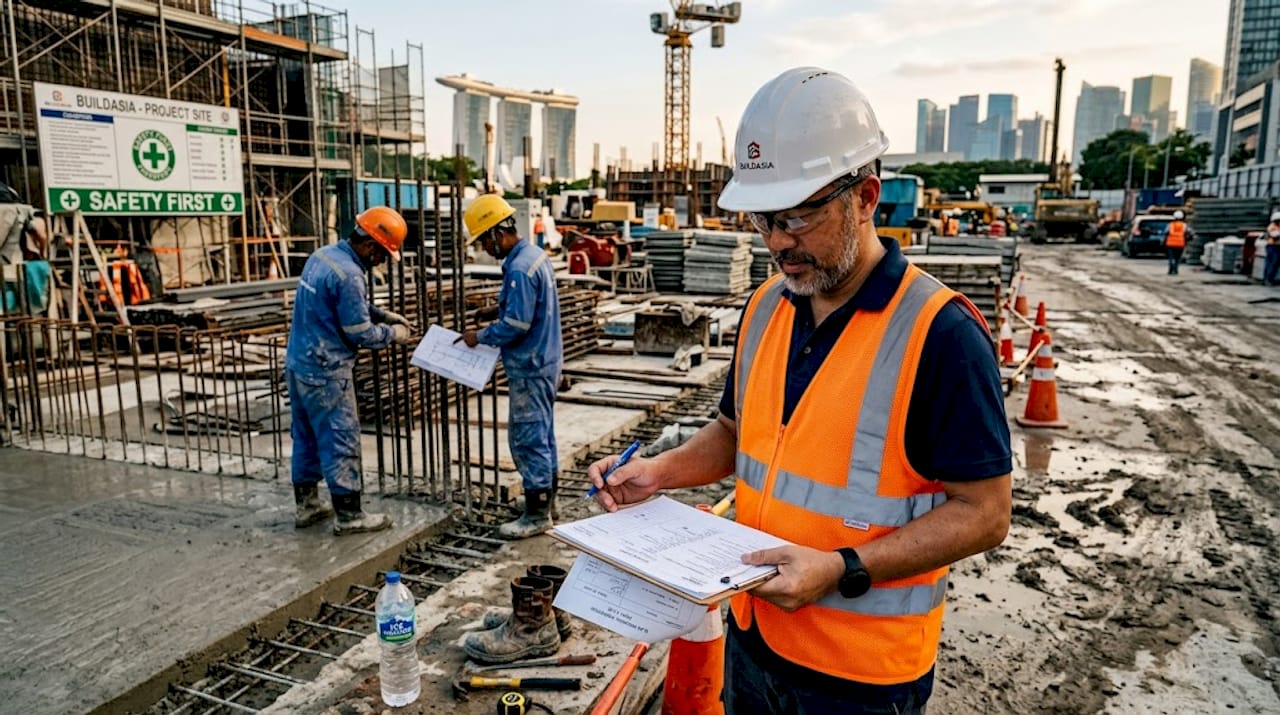

A missed permit, an outdated risk assessment, or a subcontractor working to the wrong procedure can derail a project faster than most scheduling issues. That is why a strong construction compliance management guide is not just a paperwork exercise. It is an operating discipline that protects workers, keeps projects moving, and reduces the chance of costly enforcement action, stop-work orders, failed audits, and client disputes.
For construction firms, compliance is rarely contained in one department. It sits across safety, environmental controls, quality requirements, site supervision, procurement, subcontractor management, training, and documentation. The companies that handle it well do not simply react when an audit is announced or when a major client asks for evidence. They build a system that can stand up to routine inspections, project-specific requirements, and changing regulations without creating unnecessary operational drag.
What construction compliance management actually involves
Construction compliance management is the structured process of identifying obligations, assigning responsibilities, implementing controls, and keeping evidence that those controls are working. That sounds straightforward on paper, but on an active site the challenge is always execution.
A contractor may need to meet legal safety requirements, environmental conditions, client standards, design-related obligations, permit conditions, equipment inspection rules, competency requirements, and quality procedures at the same time. Some of these requirements are fixed by law. Others are driven by contract, certification goals, insurer expectations, or principal contractor demands. The risk is not only missing a requirement. It is failing to translate requirements into site behavior.
That is where many organizations struggle. Policies exist, but supervisors use different versions. Training records are complete, but workers do not follow the task risk controls. Inspection forms are filled out, but corrective actions remain open. Good compliance management closes that gap between documentation and field practice.
Why a construction compliance management guide matters to project performance
Leaders often start paying close attention to compliance after a failed audit, a serious near miss, or pressure from a client prequalification process. But the real value shows up much earlier.
A disciplined compliance framework improves predictability. Project teams know which permits, plans, assessments, and approvals are required before work starts. Site leaders know who owns inspections, toolbox talks, equipment checks, incident reporting, and follow-up actions. Procurement teams know what evidence subcontractors must provide before mobilization. That clarity reduces rework and last-minute scrambling.
It also improves commercial resilience. Many contractors now win or lose work based on their ability to demonstrate safety and compliance maturity. Buyers and principal contractors increasingly expect documented systems, audit records, training evidence, and a credible approach to risk control. A company that can show consistent compliance performance is easier to trust.
There is also a practical risk reduction benefit. Most serious compliance failures are not caused by one dramatic breakdown. They build through small, repeated weaknesses – missing reviews, unclear ownership, poor document control, weak site verification, and slow closeout of nonconformities. A formal approach helps identify those weak points before they turn into incidents or enforcement matters.
The core elements of an effective construction compliance management guide
A useful system starts with a compliance register. This is the working record of what obligations apply to the business and to each project. It should cover regulatory requirements, permits, contract obligations, client standards, internal procedures, and certification-related controls where relevant. Without this baseline, teams are often relying on memory or copying requirements from previous jobs that may not fully apply.
The next step is role clarity. Compliance fails quickly when responsibilities are assumed rather than assigned. Senior management may own policy and resources, but project managers, site supervisors, EHS personnel, engineers, and subcontractor coordinators all need defined responsibilities. It should be clear who reviews permits, who signs off on method statements, who conducts inspections, who tracks corrective actions, and who verifies subcontractor compliance.
Documentation control is equally important. Construction environments generate a large volume of documents – plans, permits, registers, inspection forms, training records, equipment certifications, incident reports, and audit findings. If teams are working from obsolete versions or storing records inconsistently, the business may appear compliant without being able to prove it. During an inspection or client review, that distinction matters.
Field verification is where compliance becomes real. A policy that is not checked on site is only an intention. Regular inspections, behavioral observations, permit reviews, and supervisory walkdowns are necessary to confirm that documented controls are being followed. This is also where trade-offs need to be managed. Too little verification leaves blind spots. Too much bureaucracy can slow operations and create form-filling with little value. The right balance depends on project complexity, risk profile, workforce size, and subcontractor exposure.
Corrective action management is another non-negotiable element. Findings from audits, inspections, near misses, and incidents need more than a checkbox response. Root causes should be understood, actions should be assigned with deadlines, and closeout should be verified. Repeated findings usually point to system weaknesses, not isolated mistakes.
How to build a practical system that works on active jobsites
The best approach is to start simple and build control where it matters most. Many firms make the mistake of creating an impressive master manual that site teams cannot realistically use. A better model is to define a core framework at the company level, then adapt project-level controls according to scope and risk.
Begin by mapping your obligations. Identify what is required by law, what is required by clients, and what is required by your own management systems. Separate recurring company-wide controls from project-specific ones. This avoids overloading every project with the same level of administration.
Then assess your highest exposure points. For one contractor, the biggest issue may be subcontractor management. For another, it may be permit control, work-at-height compliance, temporary works documentation, environmental monitoring, or training and competency tracking. A construction compliance management guide should prioritize the areas where failure is most likely and most consequential.
Once priorities are clear, standardize the essentials. Use consistent templates for risk assessments, inspections, training records, induction tracking, corrective action logs, and permit monitoring. Standardization improves quality and makes internal auditing easier. But leave room for project-specific adjustments. A civil works project and a fit-out project do not carry the same risk profile, even if some controls overlap.
Technology can help, but it is not a cure by itself. Digital forms, dashboards, and document management tools improve visibility and speed. They can highlight overdue actions, expiring certifications, missing inspections, and recurring trends. Still, software will not fix poor ownership, weak supervision, or vague procedures. If the process is unclear offline, digitizing it will only make confusion faster.
Training also needs to go beyond induction. Supervisors need to understand not just what forms to complete, but why a control exists, what good evidence looks like, and when escalation is required. Project leaders need enough compliance literacy to challenge incomplete documentation and weak subcontractor performance. Workers need practical instruction tied to the tasks they perform, not generic presentations that are forgotten by the next shift.
Common breakdowns that weaken compliance systems
Most compliance failures are predictable. One common issue is treating compliance as the EHS team’s problem alone. EHS professionals play a central role, but they cannot control procurement decisions, project schedules, engineering changes, or subcontractor performance by themselves. Compliance is operational, which means line management must own it.
Another common weakness is overreliance on documentation. If a company focuses only on having forms in place, it may miss whether controls are actually implemented. During investigations, this gap becomes obvious very quickly. A completed checklist carries little weight if site conditions show the opposite.
Subcontractor oversight is another pressure point. Many contractors have decent internal systems but weak prequalification, onboarding, and verification processes for trade partners. If subcontractors are not aligned with site rules, permit controls, and reporting expectations, overall compliance degrades fast.
There is also the issue of stale systems. Regulations change, client expectations evolve, and project delivery models shift. A compliance framework that worked three years ago may now contain blind spots. Periodic review is necessary to keep systems current and proportionate.
When outside support makes sense
Some organizations have the internal capability to build and maintain strong systems. Others do not have enough time, technical depth, or site resources to manage everything effectively, especially during periods of rapid growth or before a certification, tender, or major audit.
External support is most useful when it is practical and implementation-focused. That may include gap assessments, audit preparation, documentation development, supervisor coaching, project-specific compliance planning, or outsourced safety expertise. The value is not in producing more paperwork. It is in helping the business create a system that site teams can use and leadership can trust. Firms such as MOSAIC Ecoconstruction Solutions Pte Ltd are typically brought in when companies need that blend of regulatory interpretation, construction knowledge, and hands-on execution support.
A good compliance system should make operations more controlled, not more complicated. If your teams can explain the rules, apply the controls, produce the records, and correct issues before they escalate, you are in a much stronger position than a company that only looks organized during audits. The goal is not perfect paperwork. It is reliable performance under real project conditions.