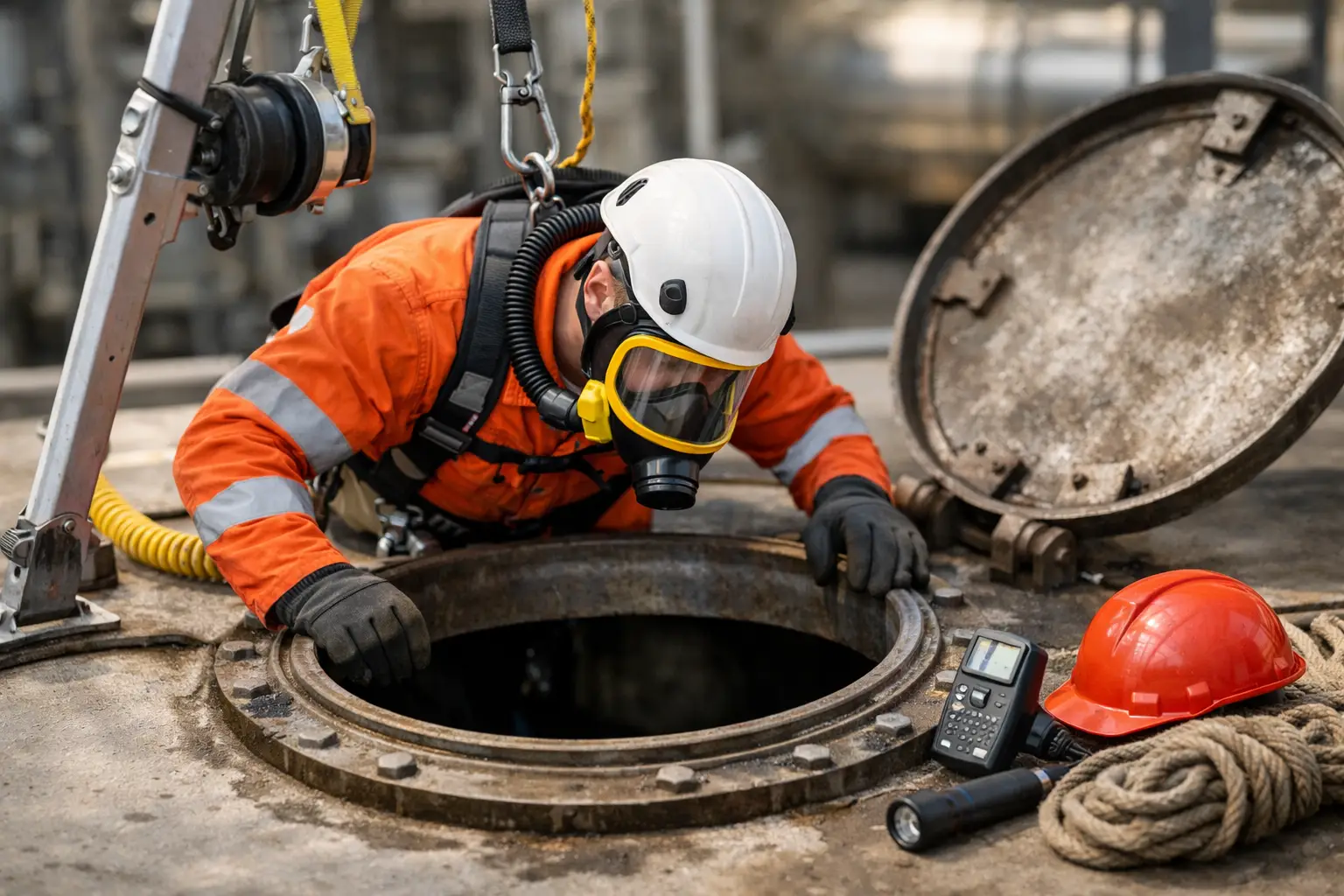

The benefits of safety training are defined as the measurable improvements in incident prevention, regulatory compliance, workforce productivity, and organizational liability protection that result from structured occupational health and safety education programs. In construction and industrial sectors, where the Occupational Safety and Health Administration (OSHA), the International Labour Organization (ILO), and regional statutory frameworks govern workforce conduct, these benefits are not optional enhancements. They are operational imperatives. The EcoOnline Workplace Safety Report 2026 confirms that 91% of global workers report that a safer workplace increases productivity, a figure that reframes safety training from a compliance cost into a direct performance driver. For safety managers and compliance officers operating under BizSAFE, ISO, or OSHA frameworks, understanding the full scope of these advantages is the foundation of every defensible safety management system.
1. Benefits of safety training: reduced accidents and injuries
Structured safety training reduces workplace accidents by increasing workers’ capacity to identify hazards before they cause harm. When employees understand the hazard control hierarchy, including elimination, substitution, engineering controls, and administrative procedures, they apply that knowledge in real time on active construction sites. Industry research from PITC KSA and ProProfs consistently shows that organizations with documented, role-specific training programs record lower incident rates than those relying on informal induction alone.

Psychosocial risks compound physical hazards in ways that standard toolbox talks rarely address. The ILO Workplace Safety and Health Report 2026 links 840,000 deaths annually to psychosocial risks, with 57% of workers attributing workplace illness or accidents to stress. Training programs that incorporate stress recognition, fatigue management, and mental health awareness address this dimension directly, reducing the probability of stress-induced errors on high-risk construction sites.
Ongoing refresher training is equally critical. A single induction session does not account for changing site conditions, new equipment, or revised statutory requirements. Construction safety programs that schedule periodic competency reassessments maintain workforce readiness as project phases evolve.
Pro Tip: Incorporate scenario-based exercises that replicate actual site conditions, such as confined space entry or working at height emergencies. Workers who rehearse emergency responses under simulated pressure develop the muscle memory needed to act correctly when real incidents occur, rather than freezing under stress.
2. Regulatory compliance and legal protection
Safety training serves as documented evidence of an employer’s due diligence, a factor that decides regulatory and litigation outcomes in a significant proportion of enforcement actions and civil claims. OSHA’s enforcement framework, the Saudi Labour Law mandate for role-specific training cited by PITC KSA, and Singapore’s Workplace Safety and Health Act all share a common principle: employers who cannot produce training records face presumptive liability. Comprehensive training documentation transforms that liability position fundamentally.
Beyond litigation defense, training compliance directly affects contractor qualification. Tender evaluation panels for government infrastructure projects and major private developers routinely assess BizSAFE level, OSHA compliance records, and training certifications as pass-fail criteria. Effective safety training evidences an employer’s serious legal compliance, improving competitiveness for tenders where safety performance is a scored criterion.
| Compliance factor | With documented safety training | Without documented safety training |
|---|---|---|
| Regulatory audit outcome | Evidence of due diligence; reduced penalty exposure | Presumptive non-compliance; elevated fine risk |
| Litigation defense | Training records serve as legal defense assets | Limited defense; higher settlement probability |
| Tender qualification | Meets BizSAFE, OSHA, and ISO scoring criteria | Disqualified from safety-scored tender categories |
| Insurance premium | Lower premiums due to demonstrated risk management | Higher premiums reflecting unmitigated risk profile |
| Work stoppage risk | Reduced; proactive compliance posture | Elevated; reactive enforcement response |
3. Productivity gains and employee engagement
The connection between safety perception and productivity is quantified, not assumed. EcoOnline’s 2026 data shows that 91% of global workers report increased productivity in safer workplaces, while 78% feel safe in their current workplace as of Q2 2026. The gap between those two figures represents a measurable productivity deficit that targeted training programs can close.
Gallup research on employee engagement reinforces this relationship. Global employee engagement fell to 21% in 2024, generating an estimated $438 billion in productivity losses. Highly engaged teams experience significantly fewer safety incidents, which means that training programs designed to build genuine safety culture, rather than satisfy minimum compliance requirements, simultaneously address both engagement and incident rate metrics.
The advantages of safety training for employee engagement include several interconnected mechanisms:
- Workers who receive regular, relevant training report higher job satisfaction and lower turnover intent, reducing the recruitment and onboarding costs that erode project margins.
- Recognition programs that reward demonstrated safe behaviors reinforce training content and sustain engagement between formal training cycles.
- Reduced absenteeism from fewer injuries directly increases available labor hours, improving schedule adherence on time-critical construction projects.
- Psychological safety, the confidence to report near-misses without fear of reprisal, depends on a training culture that treats hazard reporting as a competency rather than an admission of failure.
Safety managers who want to understand how contractor safety culture translates training investment into sustained engagement gains will find that recognition and feedback loops are as important as the training content itself.
4. Cost savings and return on investment
The financial case for safety training investment is grounded in actuarial data, not theoretical projections. Investing $1 in injury prevention returns $2 or more in measurable benefits, according to Liberty Mutual CFO Survey data cited by OSHA. Employers across the United States pay over $1 billion per week in workers’ compensation claims alone, a figure that contextualizes training expenditure as a fraction of the liability it offsets.
The direct cost savings from safety training in construction and industrial sectors include reduced workers’ compensation premiums, lower medical and rehabilitation costs, and decreased regulatory fines. Indirect savings are equally significant: fewer incidents mean less project downtime, reduced replacement labor costs, and preserved contract relationships with clients who monitor contractor safety performance. Insurance underwriters in the construction sector apply demonstrable risk management practices, including training records and audit histories, as pricing factors, meaning that documented training programs generate premium reductions that recur annually.
Pro Tip: Integrate digital safety management tools such as iAuditor by SafetyCulture or Intelex to automate training record management, schedule refresher notifications, and generate compliance reports. Automated documentation reduces administrative overhead while producing the audit-ready records that support insurance negotiations and regulatory reviews.
Government incentive programs in multiple jurisdictions, including Singapore’s WorkRight initiative and OSHA’s On-Site Consultation Program in the United States, provide subsidized safety training resources to qualifying employers. Safety managers who align their training calendars with these programs reduce direct training costs while maintaining the compliance posture required for BizSAFE progression and ISO 45001 certification.
5. Traditional versus modern safety training approaches
Safety training effectiveness varies substantially by delivery method, and the construction sector’s adoption of simulation-based and blended learning approaches has produced measurable outcome differences relative to conventional classroom instruction.
| Training method | Strengths | Limitations | Best application |
|---|---|---|---|
| Classroom instruction | Structured content delivery; cost-effective for large groups | Limited retention; no physical practice component | Regulatory inductions, legal briefings |
| Simulation-based training | Builds muscle memory; reduces emergency anxiety | Higher setup cost; requires specialist facilitation | Confined space, working at height, emergency response |
| Blended learning (digital + practical) | Flexible scheduling; combines knowledge and application | Requires digital infrastructure; learner self-discipline | Ongoing competency maintenance across distributed sites |
| AI-enabled adaptive training | Personalizes content to individual competency gaps | Emerging technology; variable platform maturity | Large organizations with diverse workforce profiles |
| Toolbox talks | Immediate, site-specific relevance | Informal; rarely documented adequately | Daily hazard briefings, shift-start communications |
Simulation-based safety training reduces emergency response anxiety more effectively than classroom training because simulated exercises build the muscle memory that enables correct responses under genuine stress conditions. This distinction is particularly relevant for construction scenarios involving fall arrest systems, scaffold collapse response, and chemical spill containment, where hesitation during an actual incident compounds harm.
Behavioral safety training programs that move beyond regulatory box-ticking to address worker attitudes, peer accountability, and near-miss reporting culture produce sustained incident rate reductions that one-time inductions cannot replicate. Safety training must be ongoing and adaptive to dynamic workplace hazards, not a static event conducted at project commencement and forgotten by week three.
6. Safety training impact on workforce retention and morale
Safety culture links directly to employee retention, engagement, and reduced turnover, a relationship that carries significant financial weight in construction sectors facing chronic skilled labor shortages. Workers who perceive their employer as genuinely invested in their physical and psychological wellbeing demonstrate higher organizational commitment and lower voluntary attrition rates. The cost of replacing a skilled tradesperson, accounting for recruitment, onboarding, and productivity ramp-up, routinely exceeds the annual cost of a structured safety training program.
Morale effects extend beyond individual workers. When site teams observe that management invests in quality training, provides updated personal protective equipment, and acts on hazard reports, the resulting trust reinforces the behavioral norms that training programs seek to establish. Psychosocial risk management through training, including stress awareness and workload management education, addresses the ILO’s finding that 57% of workers link workplace illness to stress, reducing both absenteeism and presenteeism on active construction projects.
Recognition programs that reward safe behavior, such as safety milestone acknowledgments, peer nomination systems, and performance-linked incentives, increase employee engagement and reinforce the training content workers receive. These programs signal that safety performance is valued at the organizational level, not merely mandated by statute.
7. Safety training as a strategic business asset
Treating safety training as a strategic business asset, rather than a statutory obligation, reframes how construction firms allocate training budgets and measure program outcomes. Organizations that achieve BizSAFE Star or ISO 45001 certification demonstrate to clients, insurers, and regulators that their safety management systems meet internationally recognized standards. This certification status directly influences contract award decisions in Singapore’s public sector procurement environment, where the Building and Construction Authority (BCA) and Land Transport Authority (LTA) assess contractor safety records as weighted evaluation criteria.
The safety training return on investment extends to organizational reputation. Construction firms with documented low incident rates and active training programs attract higher-caliber subcontractors, reduce project insurance costs, and sustain client relationships that generate repeat contract opportunities. Comprehensive training records protect against severe legal liability and regulatory action, functioning as a long-term asset that appreciates in value each time an enforcement review or litigation matter arises.
Safety managers who position training investment within the business continuity framework, rather than the compliance cost center, gain executive support for program funding and secure the organizational commitment needed to build a genuinely preventive safety culture.
Key takeaways
The benefits of safety training in construction and industrial sectors are realized only when programs are ongoing, documented, and aligned with both regulatory requirements and workforce engagement objectives.
| Point | Details |
|---|---|
| Incident reduction | Structured, scenario-based training reduces accidents by building hazard recognition and emergency response competency. |
| Compliance protection | Documented training records serve as legal defense assets and satisfy OSHA, BizSAFE, and ISO audit requirements. |
| Productivity and engagement | 91% of workers report higher productivity in safer workplaces; engaged teams record significantly fewer safety incidents. |
| Financial return | Every $1 invested in injury prevention returns $2 or more, with additional savings from reduced premiums and downtime. |
| Strategic positioning | ISO 45001 and BizSAFE certification, supported by training records, directly improves tender qualification and client retention. |
Why safety training is more than a compliance checkbox
Safety managers in construction often inherit programs designed by lawyers rather than practitioners. The documentation is thorough, the induction checklists are signed, and the regulatory boxes are ticked. Yet incident rates remain stubbornly elevated, and workers treat safety briefings as administrative formalities rather than operational guidance. That gap between compliance and culture is where most safety programs fail, and it is the gap that genuinely effective training is designed to close.
The organizations I have observed sustaining low incident rates over multi-year project portfolios share a common characteristic: they treat safety training as a continuous feedback loop rather than a periodic event. They conduct post-incident learning reviews that feed directly into training content updates. They recognize workers who identify and report near-misses, rather than treating near-miss reports as evidence of poor performance. They invest in simulation exercises that make emergency responses automatic rather than deliberate.
The emerging integration of AI-enabled training platforms and digital safety management systems represents a genuine advancement in training effectiveness, not because the technology is sophisticated, but because it enables personalized competency gap identification at scale. A workforce of 500 construction workers does not have uniform knowledge gaps, and training programs that treat them as if they do waste both time and budget.
The most defensible safety management system is one where training records, behavioral observations, and incident data form a coherent narrative of organizational commitment. That narrative protects the organization legally, commercially, and reputationally, and it is built one well-designed training session at a time.
— Aman
How MOSAIC supports your safety training and compliance objectives
Safety managers and compliance officers who need to translate the importance of workplace safety into structured, audit-ready programs benefit from specialist consultancy support that understands both the regulatory environment and the operational realities of active construction sites.

MOSAIC Ecoconstruction Solutions provides safety consultancy for Singapore construction firms seeking to build training programs that satisfy BizSAFE, ISO 45001, and WSH Act requirements while producing measurable incident rate reductions. From training needs analysis and program design through to safety audit preparation and ongoing compliance monitoring, MOSAIC’s QES specialists deliver the structured support that transforms safety training from a cost line into a competitive advantage. Contact MOSAIC to assess your current training program against statutory and certification benchmarks.
FAQ
What are the primary benefits of safety training in construction?
The primary benefits include reduced workplace accidents, regulatory compliance protection, lower workers’ compensation costs, and improved workforce productivity. Documented training programs also serve as legal defense assets during enforcement reviews and litigation.
How does safety training affect workers’ compensation costs?
Every $1 invested in injury prevention returns $2 or more in measurable benefits, according to Liberty Mutual CFO Survey data cited by OSHA. Fewer incidents directly reduce claims frequency, which lowers insurance premiums over time.
Why does safety training matter for tender qualification?
Regulatory bodies and major clients assess BizSAFE level, OSHA compliance records, and training certifications as scored evaluation criteria. Employers who cannot demonstrate documented training programs are disqualified from safety-weighted tender categories.
How often should safety training be conducted?
Safety training must be ongoing and adaptive to changing workplace hazards, not a one-time induction event. Refresher training frequency should align with project phase changes, equipment introductions, and regulatory updates.
What training method is most effective for construction workers?
Simulation-based training reduces emergency response anxiety more effectively than classroom instruction by building muscle memory through rehearsed scenarios. Blended approaches that combine digital learning with practical simulation produce the strongest competency outcomes across diverse workforce profiles.