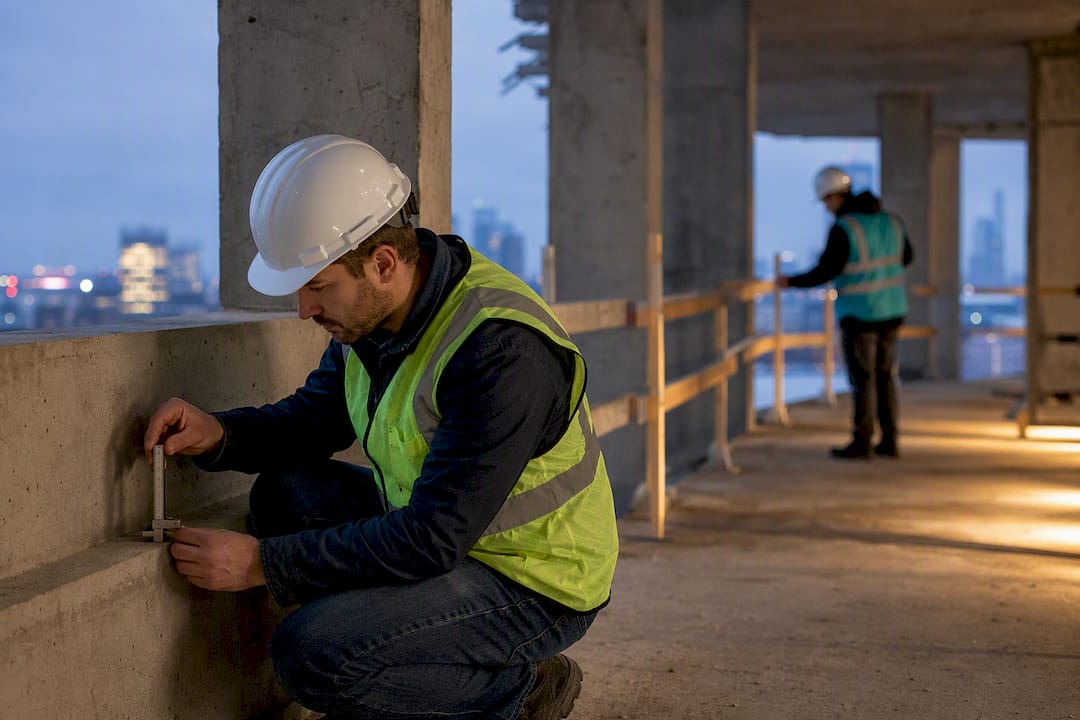

A missed guardrail, an unprotected floor opening, or a damaged lifting sling can turn a normal workday into a serious incident. A construction site inspection program gives project leaders a disciplined way to find these conditions early, assign corrective action, and confirm that the worksite remains under control as activities change.
For contractors, inspections should not be treated as paperwork completed before a client visit or regulatory audit. They are a field-management process that connects site conditions, worker behavior, subcontractor coordination, and legal compliance. When the process is practical and consistent, it helps reduce exposure to injuries, delays, rework, stop-work orders, and reputational damage.
What a Construction Site Inspection Program Should Achieve
An effective construction site inspection program does more than produce completed checklists. It establishes who inspects, what they inspect, how often inspections occur, how findings are prioritized, and who is accountable for closing each item.
The best programs recognize that construction sites are not static environments. Excavations change depth, scaffolds are altered, materials move through access routes, and several trades may work in the same area within hours. A finding that was not present during the morning walk-through may become critical by the afternoon. Inspection frequency and scope therefore need to follow the actual risk profile of the work, not simply a calendar requirement.
A well-managed program should help the project team achieve four practical outcomes:
- Identify unsafe conditions and unsafe work practices before they lead to an incident.
- Verify compliance with applicable regulations, client requirements, permits, and project safety plans.
- Assign corrective actions with clear owners and realistic completion dates.
- Build evidence that the contractor is actively managing workplace safety and health risks.
The last point matters during audits, incident investigations, prequalification reviews, and certification assessments. Documentation is valuable, but only when it shows that findings were acted on and verified rather than repeatedly recorded.
Start With Risk, Not a Generic Checklist
A generic checklist can provide a useful baseline, but it cannot replace a site-specific inspection plan. A high-rise structural project, an occupied-facility renovation, and a civil works project each present different critical risks. The inspection program must reflect the activities, work sequence, workforce, equipment, and site constraints involved.
Begin by reviewing the project risk assessment, method statements, permit-to-work controls, and construction schedule. This shows where high-risk work is taking place and what inspection attention is needed. For example, a project entering the steel erection phase should increase scrutiny of lifting operations, work at height, fall protection, temporary works, access, and dropped-object controls. When excavation begins, competent-person inspections, spoil pile placement, underground services, access and egress, water accumulation, and protective systems become immediate priorities.
The same principle applies to subcontractors. A subcontractor may have its own inspection records, but the main contractor still needs a coordinated view of site-wide risks. Gaps often appear at interfaces: crane lifting over shared work zones, delivery vehicles reversing near pedestrians, overlapping hot work, or incomplete handovers between trades.
Define inspection levels and responsibilities
Most projects benefit from several inspection levels rather than one all-purpose inspection. Daily pre-start checks are usually completed by supervisors or work teams and focus on the immediate work area, tools, equipment, and controls required for that shift. Formal weekly inspections provide a broader review of the project and are typically led by the site safety representative, project manager, or another competent person.
Specialized inspections are needed for higher-risk conditions and equipment. These may include scaffolds, excavations, lifting gear, temporary electrical systems, mobile elevated work platforms, formwork, and confined spaces. The person conducting these inspections must have appropriate competence for the equipment or activity. Assigning an unqualified person simply because they are available creates a weak control and may not satisfy regulatory or client expectations.
Responsibilities should be recorded in the project safety plan. Everyone should understand who raises findings, who approves temporary controls, who funds corrective work, and who verifies closure. Without this structure, findings remain open because each party assumes someone else is handling them.
Inspect the Conditions That Cause Real Losses
A site inspection should focus attention on hazards with the greatest potential for serious harm, not only minor housekeeping issues. Housekeeping matters, especially where poor storage blocks access or creates trip hazards, but it should not consume the entire inspection while critical fall, lifting, or energy-control failures go unnoticed.
Inspectors should routinely evaluate work at height, including guardrails, covers, ladder use, scaffold condition, anchorage points, and rescue arrangements. They should examine lifting operations for equipment certification, load control, exclusion zones, signaling, rigging condition, and operator visibility. Electrical inspections should cover damaged cords, temporary distribution boards, grounding, lockout procedures, and protection from water or physical damage.
Other priority areas include vehicle and pedestrian separation, excavation stability, fire prevention, hot-work controls, material storage, emergency access, welfare facilities, and the condition of personal protective equipment. The exact emphasis depends on the project phase. A competent inspector asks, “What could seriously injure someone here today?” before asking whether every form has been signed.
Behavioral observations should also be handled carefully. If workers repeatedly bypass a control, the issue may not be individual carelessness. The control may be impractical, poorly communicated, unavailable at the point of use, or incompatible with production pressure. A useful inspection program identifies these system failures and gives management a basis for correcting them.
Make Corrective Actions Clear and Traceable
An inspection finding is only useful if it leads to control. Each finding should state the location, observed condition, applicable requirement or expected standard, risk level, required corrective action, responsible person, and due date. Photos can strengthen the record when they clearly show the condition and are stored in a controlled system.
Risk ratings should drive response time. An imminent danger, such as an unprotected edge where workers are exposed to a fall, requires immediate action. The area may need to be barricaded or work stopped until adequate protection is installed. A lower-risk issue may be scheduled for correction, but it should still have an assigned owner and follow-up date.
Avoid vague entries such as “improve safety” or “monitor workers.” They do not tell the responsible party what must change. A stronger finding would state: “Install compliant guardrails at the open east stairwell landing before access resumes. Area supervisor to verify installation and submit photo confirmation by 2:00 p.m.”
Closure verification is where many programs fail. The person who raised the finding, or another designated competent person, should confirm that the action has been completed and that the control is effective. Closing an item based only on a verbal assurance can allow the same risk to remain in place.
Use Inspection Data to Improve the Project
Inspection records should be reviewed for patterns, not filed away individually. Repeated observations involving damaged access routes, missing barricades, incomplete permits, or poor material storage may indicate a planning, supervision, or subcontractor-management issue.
A monthly review can identify trends by trade, location, risk category, and corrective-action status. This allows project leaders to focus toolbox talks, supervisor coaching, procurement decisions, and management attention where they will have the greatest impact. If a subcontractor repeatedly has overdue corrective actions, the response may require a formal performance discussion rather than another reminder.
Digital inspection tools can make reporting and tracking faster, particularly on larger projects with several work fronts. However, technology is not the program. A mobile form cannot compensate for an inspector who lacks competence, a supervisor who lacks authority, or management that does not act on overdue high-risk findings. Smaller contractors may operate effectively with controlled paper forms or simple spreadsheets if the process is timely, accountable, and consistently followed.
Prepare Teams for Inspections Before They Reach the Site
Inspection quality depends on the people performing it. Supervisors need training on hazard recognition, applicable standards, risk assessment, documentation, and escalation. They also need the confidence to challenge unsafe conditions, including those created by senior personnel or high-performing subcontractors.
Workers should understand that inspections are not a fault-finding exercise aimed at punishment. Their input is often the fastest way to identify changing conditions, equipment defects, and impractical controls. Encourage workers to report hazards early, and show that reports result in visible action. When workers see recurring concerns ignored, reporting declines and risk becomes less visible to management.
For organizations preparing for client audits, ISO systems, safety certification, or regulatory inspections, an independent review can be valuable. An external safety professional can assess whether inspection forms match site risks, whether corrective actions are being closed effectively, and whether records demonstrate meaningful implementation rather than administrative compliance.
A construction site is safest when inspections become part of how work is planned and supervised, not an interruption added after the work begins. Start with the risks expected this week, walk the work areas with the people who know them best, and insist that every serious finding has a verified path to closure.