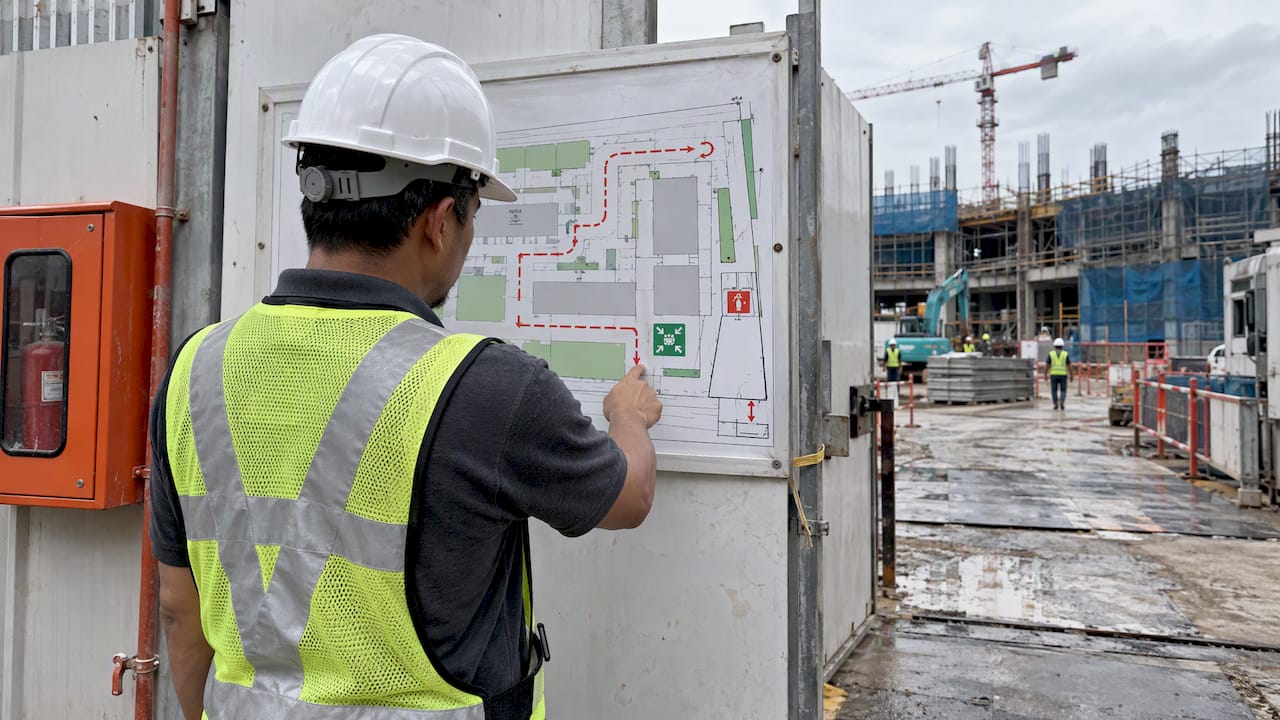

A leaking hydraulic hose beside a storm drain can become an environmental incident long before an auditor sees it. That is why an ISO 14001 implementation example is most useful when it starts with site realities: fuel storage, concrete washout, dust, waste, subcontractor activity, and changing work areas. For contractors, an environmental management system must work in the field, not only in a controlled document folder.
The following example shows how a mid-sized construction contractor can build an ISO 14001 environmental management system that supports operational control, customer requirements, and certification readiness. It is not a copy-and-paste template. The actual controls, legal obligations, and records should reflect the company’s project scope, location, contracts, and environmental risks.
ISO 14001 Implementation Example: A Construction Contractor
Consider a general contractor with 120 employees, several active commercial projects, a central yard, and regular use of subcontractors. The company has experienced no major environmental violations, but project teams manage environmental matters inconsistently. Some sites maintain waste-transfer records and spill kits well; others rely on informal site practices. A major client now requires ISO 14001 certification as part of prequalification.
Senior management appoints an EHS manager as the environmental management system coordinator, but does not assign the full workload to one person. Operations, procurement, project management, plant management, and site supervision each receive defined responsibilities. This matters because ISO 14001 is a management system, not simply an EHS department initiative.
The company sets an implementation period of six to nine months. A compressed schedule may be possible for an organization with mature controls, but rushing the process often creates records that do not match real practice. Certification auditors will test whether people understand and follow the system, especially at active work sites.
Step 1: Define the scope and leadership commitment
The contractor first defines the scope of its environmental management system. In this case, it covers construction operations, site offices, the equipment yard, procurement activities, and project management functions. It excludes a small separately managed property-holding entity that has no operational connection to construction delivery.
Leadership then approves an environmental policy. The policy commits the business to fulfill compliance obligations, prevent pollution, protect the environment, and improve environmental performance. It also reflects relevant impacts, such as waste generation, energy and fuel use, water pollution prevention, dust, and noise.
A policy is only credible when employees can connect it to their work. The company places it in induction materials, site notice boards, and supervisor briefings. Project managers are expected to explain what it means during project startup, rather than treating it as a framed certification requirement.
Step 2: Identify environmental aspects and significant impacts
The company conducts an environmental aspects and impacts assessment across its activities. An aspect is an element of work that can interact with the environment. An impact is the resulting environmental change, such as contaminated water, air emissions, resource depletion, or landfill use.
For example, excavation can create dust, sediment runoff, spoil disposal, and equipment emissions. Concrete works can generate alkaline wash water. Equipment maintenance can result in oil spills and hazardous waste. Procurement decisions influence packaging waste, material selection, and the availability of lower-impact alternatives.
The team uses a scoring method based on severity, frequency, existing controls, legal requirements, stakeholder concerns, and the potential for an emergency. The scoring method does not need to be unnecessarily complex. It does need to be consistently applied and understood by the people reviewing it.
The assessment identifies several significant environmental aspects: fuel and chemical storage, spill response, stormwater protection, construction waste management, concrete washout, dust control, and waste disposal by licensed vendors. These priorities become the foundation for the company’s objectives, procedures, inspections, and training.
Turning Risks Into Site Controls
An aspect register alone does not prevent an incident. The contractor translates each significant aspect into practical controls that project teams can apply before and during work.
For fuel and chemicals, the company requires labeled containers, current safety data sheets, secondary containment where appropriate, designated storage locations away from drains, and routine checks for leaks. Spill kits are positioned near storage areas and mobile equipment zones. Site supervisors verify that workers know who to call, how to stop a release safely, and how to protect nearby drains.
For stormwater and sediment, the preconstruction environmental plan identifies drainage points, nearby waterways, required barriers, inspection frequency, and rainy-weather arrangements. After major rainfall, the assigned supervisor checks sediment controls, exposed soil, material stockpiles, and any evidence of runoff leaving the site.
Waste control is also made measurable. Rather than stating that waste should be minimized, each project separates key waste streams where practical, maintains disposal records, verifies vendors, and records quantities or collections. Segregation may not be feasible in every constrained urban site, so the control can vary. What matters is that the project assesses the limitation, follows applicable disposal requirements, and can demonstrate reasonable management of waste.
The company establishes four core operational procedures:
- Environmental planning and aspect review at project startup and when work changes.
- Control of chemicals, fuels, hazardous materials, and spill response.
- Waste handling, disposal verification, and contractor waste responsibilities.
- Environmental inspection, incident reporting, corrective action, and follow-up.
These procedures are supported by simple site tools: a project environmental plan, weekly inspection checklist, spill report form, waste register, and corrective action log. The documents are controlled so teams use the current version, but they are written in clear operational language. A 30-page procedure that supervisors cannot use in the field is a liability, not a control.
Step 3: Set objectives that management can review
The contractor sets objectives based on its significant aspects and business priorities. One objective is to reduce mixed construction waste sent to landfill by 10 percent across applicable projects over 12 months. Another is to achieve 100 percent completion of environmental induction training for employees and long-term subcontractor supervisors before site access.
A third objective targets inspection closeout: 90 percent of environmental corrective actions should be closed by their assigned due date. This is useful because repeat findings often reveal a management weakness, even when the original issue appears minor.
Each objective has an owner, a target, a timeline, resources, and a method for evaluating results. Management reviews progress monthly or quarterly, depending on the organization’s operating rhythm. If the waste target is missed because a project lacks space for segregation, management should evaluate alternatives such as supplier take-back arrangements, scheduled collections, or revised site logistics rather than simply closing the objective as unsuccessful.
Step 4: Build competence across employees and subcontractors
Construction environmental performance depends heavily on supervisors, operators, and subcontractors. The company adds environmental requirements to induction, toolbox talks, procurement packages, and subcontractor agreements. Training focuses on task-specific expectations: where washout is permitted, how to store chemicals, how to prevent dust during cutting, and what to do after a spill.
Competence is verified through site observation, inspection results, and supervisor feedback, not attendance sheets alone. An operator who signs an induction form but stores a leaking container beside a drain has not demonstrated competence.
The contractor also communicates relevant environmental requirements to suppliers and subcontractors before mobilization. This reduces disputes over who provides bins, removes waste, manages packaging, or responds to an environmental incident.
Checking Performance Before Certification
After several months of operation, the company conducts internal audits. Auditors sample the central office, equipment yard, and active projects. They compare documented requirements against site conditions, interview personnel, review training and waste records, and examine whether corrective actions are actually effective.
One audit finds that weekly environmental inspections are completed, but recurring findings involving uncovered waste containers remain open beyond the due date. The corrective action is not merely to remind site teams. Management determines that container cover requirements were not included in subcontractor work packages and that replacement covers were not readily available. The company updates the procurement specification, assigns stock responsibility, and checks effectiveness during follow-up inspections.
Management review then examines audit findings, compliance status, incidents, stakeholder feedback, objective performance, resource needs, and opportunities for improvement. This is where leadership confirms that the system is being managed as a business control, rather than maintained solely for an external audit.
Before the certification audit, the contractor completes a readiness review. It checks that the scope is accurate, legal and other compliance obligations are evaluated, key records are traceable, employees understand their responsibilities, and project practices align with documented controls. An experienced implementation partner such as MOSAIC can provide an independent gap assessment and practical support where internal resources are limited.
Certification should not be treated as the finish line. The strongest environmental management systems make daily decisions easier: supervisors know what to inspect, project managers know what evidence to retain, and leadership can see where environmental risk is increasing. When those habits remain in place after the audit team leaves, ISO 14001 becomes a credible part of how the contractor delivers work.