
Introduction
Large Language Models (LLMs) are accelerating ISO 14001 environmental management audits in chemical manufacturing by automating document analysis, enabling real-time compliance verification, and improving risk prioritization—reducing audit cycle times by 40–60% in many programs, with some implementations reaching up to 80%. In chemical facilities where hazardous materials handling, emissions monitoring, and complex environmental obligations make audits slow and evidence-heavy, that shift means faster verification, better accuracy, and more consistent audit decisions across planning, fieldwork, and follow-up.
This article focuses on audit process optimization, compliance verification, risk assessment enhancement, automated evidence compilation, real-time monitoring, and phased LLM implementation for ISO 14001 audits in chemical manufacturing environments. It does not go into vendor selection, hardware procurement, or detailed cost comparisons. The discussion is written for EHS managers, compliance officers, internal audit teams, and EMS specialists who need to shorten audit cycles, improve document extraction accuracy, and use AI more effectively in audit preparation and risk profiling.
LLMs can materially compress ISO 14001 audit timeframes by handling large volumes of procedures, permits, logs, incident records, and corrective action data faster than manual review while flagging compliance gaps in real time. For chemical manufacturers, where environmental nonconformities can carry regulatory, operational, and reputational consequences, that makes LLM-supported auditing a practical tool for both compliance assurance and more proactive environmental management.
By the end of this article, you will understand:
-
How LLMs accelerate audit cycles from weeks to days in chemical manufacturing
-
Where automated document analysis delivers the highest accuracy and time savings
-
How faster audits can reduce costs through less manual effort and fewer operational disruptions
-
Strategies for real-time monitoring and data-driven audit trail generation
-
A phased implementation framework tailored to chemical facilities
Understanding ISO 14001 Audits and Environmental Management System in Chemical Manufacturing
ISO 14001 is an internationally recognized standard for environmental management systems, first published in 1996 by the International Organization for Standardization. It provides a structured framework for organizations to identify their environmental aspects, establish an environmental policy, set objectives for improving environmental performance, and demonstrate compliance with legal obligations. ISO 14001 is applicable to any organization regardless of size, though ISO 14001 certification is not legally required but often requested by clients, regulators, and supply chains as evidence of environmental responsibility. ISO 14001 certification is typically valid for three years and requires a third-party audit, with ongoing surveillance audits to verify continued conformance against the standard’s requirements.
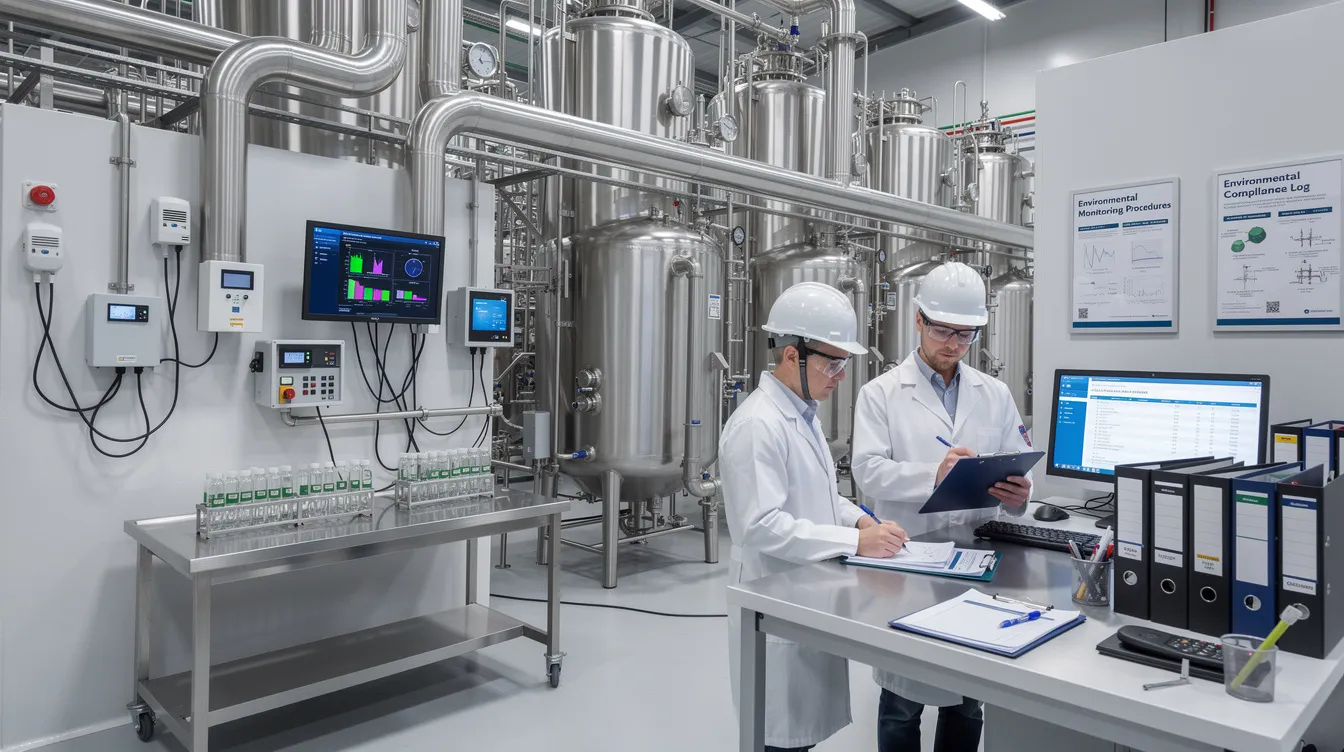
In chemical manufacturing, these audits are critical because facilities handle hazardous raw materials, generate complex air emissions, manage chemical effluents, and must track significant environmental aspects across multiple production processes. The environmental impacts of non-compliance are severe: regulatory penalties, production shutdowns, reputational damage, and public health risks. ISO 14001 enhances operational efficiency and reduces environmental risks – 83% of firms reported cost reductions averaging 16% after ISO 14001 adoption, and many manufacturing companies use certification to improve competitiveness and performance. ISO 14001 reduces operational disruptions and costly reactive remediation while enhancing resource efficiency across energy, water, and materials.
The chemical industry faces heavy regulatory burdens related to hazardous waste and toxic emissions, making an effective environmental management system not just a compliance checkbox but a strategic necessity for pollution prevention and environmental sustainability.
Traditional Internal Audits Challenges
Manual document review consumes 60–70% of total audit time in chemical facilities. Auditors must gather and cross-reference Safety Data Sheets (SDSs), environmental permits, emissions monitoring reports, waste manifests, and corrective action records – often stored across disparate systems or in paper formats. To maintain audit readiness, organizations must conduct internal audits to assess compliance with ISO 14001 requirements, and ISO 14001 requires documented internal audit procedures, yet pulling and verifying this documentation can take many days per audit cycle.
The regulatory landscape compounds this burden. Chemical manufacturers must navigate overlapping federal, state, and local environmental regulations – from REACH in the EU to EPA/TSCA in the US and NEA regulations in Singapore. Interpreting qualitative requirements such as “significant aspect” or “as appropriate” adds further complexity. Organizations must identify and monitor their legal obligations continuously, yet staying current with frequent regulatory updates across multiple jurisdictions strains even experienced EHS compliance teams.
The operational efficiency implications are direct: audit delays slow corrective actions, delay regulatory reporting or permit renewals, and can force production slowdowns when major non-conformities surface late. Large Language Models can reduce time and cognitive fatigue in ISO 14001 audits – and understanding how they work reveals why.
Large Language Models Fundamentals
LLMs are neural network models pretrained on massive text corpora that can process, interpret, and generate human language. When enhanced with Retrieval-Augmented Generation (RAG) or fine-tuned on domain-specific data, they gain capabilities directly relevant to environmental management: extracting structured data from unstructured documents, summarizing regulatory texts, generating checklists, and answering natural language queries over large document sets.
Their pattern recognition capability is particularly valuable for environmental compliance. LLMs can map regulatory clauses to internal documents, detect which permits or compliance obligations apply to specific operations, identify hazard phrases in SDSs, and flag discrepancies between documented procedures and regulatory requirements. Automated report generation – from draft audit findings to CAPA suggestions – reduces the writing burden that consumes significant auditor time. LLMs should not replace human judgment in the auditing process, but support it by handling the high-volume, repetitive tasks that slow audit cycles.
These capabilities map directly to the bottlenecks identified above, creating specific acceleration opportunities across every audit phase.
LLM Applications for Audit Acceleration
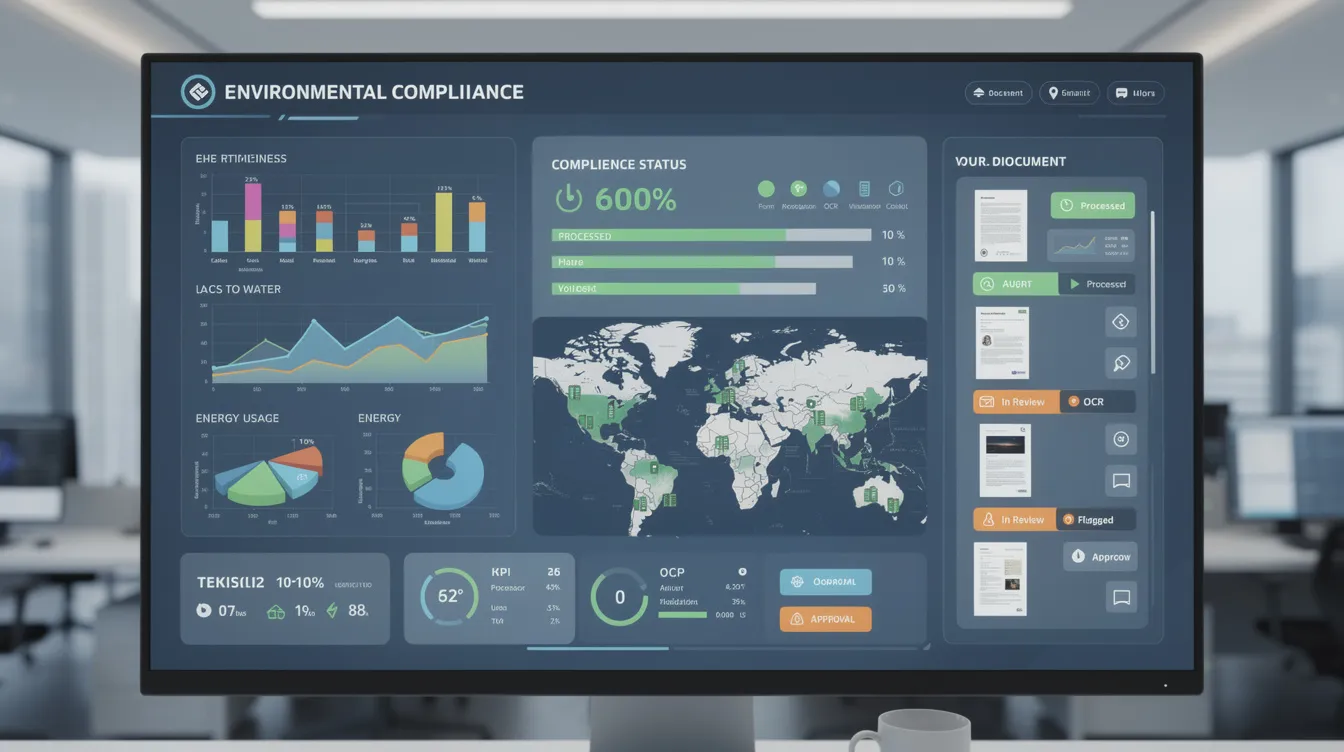
The most impactful applications of LLMs in ISO 14001 audits target the specific bottlenecks that consume the most time and introduce the most risk in chemical manufacturing environments. LLMs can assist Environmental, Health, and Safety teams in compliance efforts across three core areas: document analysis, risk assessment, and audit trail generation.
Automated Document Analysis and Compliance Verification
Automated document analysis improves efficiency in chemical manufacturing audits by transforming how facilities handle the massive volume of environmental documentation. A benchmark study on LLMs for Safety Data extraction processed over 50,000 data fields from SDSs and found that image-mode extraction achieved approximately 98.5% accuracy with leading multimodal models like GPT-4o and Claude 3.5 Sonnet – far surpassing text-mode recall rates that fell below 50% in some pipelines. This is significant because many compliance documents exist as scanned files or complex formatted PDFs rather than clean text.
Automated document review can identify compliance gaps against ISO 14001 clauses. Quadshift’s AI Agent for Chemical Compliance demonstrates this in practice: the system ingests PDF SDSs and extracts approximately 120–130 structured data points per document automatically, including chemical hazard classification and regulatory inventory thresholds. Its renewals agent autonomously finds over 60% of updated SDSs, while a difference agent compares old versus new versions – critical for maintaining current compliance records.
Cross-referencing capabilities enable real-time verification against regulatory databases and ISO 14001 requirements. Cepsa Química built a GenAI assistant using a RAG pipeline over regulatory documents and product sheets: users ask natural language questions such as “which regulation applies to product X?” or “what are exposure limits for chemical Y?” and receive grounded responses in seconds, down from approximately 30 minutes per complex query. LLMs can automate evidence retrieval and gap analysis in audit preparation, enabling auditors to focus on interpretation rather than information gathering.
Risk Assessment and Prioritization
LLMs combined with structured environmental data enable automated identification of high-risk areas based on historical incident data, regulatory violations, and environmental performance trends. Rather than relying solely on periodic site walk-downs and past experience, audit teams can use AI-driven pattern recognition to prioritize which manufacturing processes, waste streams, or compliance obligations require the closest scrutiny.
An AIoT system deployed at a chemical plant for BTX (benzene, toluene, xylene) recovery demonstrates the potential of AI-driven environmental monitoring: predictive models achieved a 79.45% decrease in BTX concentration and a 15.96% reduction in CO2 emissions while improving economic performance by 28.52%. While this example focuses on operational control rather than audit specifically, it illustrates how continuous data analysis can identify high-risk operating parameters before they become non-conformities – directly supporting the Plan Do Check Act cycle that underpins ISO 14001.
LLMs can enhance risk analysis and mitigation in auditing according to ISO 19011:2026, which provides guidelines for auditing management systems. By synthesizing environmental metrics into audit-ready summaries, LLMs help audit teams make informed decisions about where to focus limited resources. Integration with existing EHS management systems enables comprehensive risk profiling that accounts for energy consumption, raw material consumption, water usage, and waste reduction targets.
Real-Time Audit Trail Generation
Continuous auditing is beneficial for tracking compliance throughout the year, and LLMs enable this by transforming audit preparation from a periodic scramble into an ongoing process. Cybertrol’s environmental compliance system at a chemical facility demonstrates this approach: continuous monitoring of emissions controls, SCADA data, and environmental sensors feeds dashboards that log environmental performance, alarms, and compliance status over time. These logs serve as evidence when auditors require historical proof of environmental controls and can also support sustainability reporting.
LLMs can assemble automated evidence packages with annotations, references to relevant permit clauses, SDS sections, and monitoring data points – each linked back to source documents with page and clause numbers to satisfy audit evidence requirements and support sustainability reporting. Internal audits verify the effectiveness of the Environmental Management System, and having pre-assembled, source-linked evidence dramatically reduces preparation time.
Key time savings are substantial: in the Algus Digital Solution case study, environmental audits that previously took 1–2 weeks were reduced to 2–3 days – an 80% reduction – with regulatory reporting 70% faster, 100% compliance rate, and annual cost savings of approximately US$500,000.
These applications demonstrate that LLM-enabled acceleration is not theoretical – the question for most chemical manufacturers is how to implement it systematically.

Implementation Framework for Chemical Manufacturing Facilities
Deploying LLMs for ISO 14001 audit acceleration requires a structured approach that accounts for the existing technology landscape, data maturity, and organizational readiness of chemical manufacturing operations. Leadership commitment is essential for successful ISO 14001 implementation – senior management must actively participate in shaping environmental objectives and allocate resources for environmental management and the broader discipline of eco management, including AI-enabled audit tools.
Phased Implementation Approach
A systematic, phased deployment minimizes operational disruption while building organizational confidence in LLM-assisted audit processes. Controlled environments are essential for the deployment of LLMs to protect sensitive data, particularly given the proprietary nature of chemical formulations and process data.
-
Phase 1: Document digitization and baseline data collection. Collect and digitize all relevant documentation – SDSs, permits, regulatory correspondences, emissions reports, waste manifests. Establish OCR quality standards, unified document storage, and metadata tagging. Measure current baseline: how long document reviews, query resolution, and evidence gathering take. A global chemical manufacturer that implemented centralized EHS management through SAP EHS reduced manual effort by approximately 50% and achieved 100% audit readiness through this foundational digitization step alone.
-
Phase 2: LLM integration with existing EMS platforms and audit management systems. Select or fine-tune LLMs using RAG architectures anchored on chemical regulatory databases. Integrate with environmental management platforms, permit tracking systems, and compliance dashboards. Deploy initial agents for SDS extraction, regulatory query answering, and automated compliance checking. ISO 14001 requires organizations to identify their environmental aspects – LLM agents can accelerate this identification across complex chemical operations.
-
Phase 3: Advanced analytics deployment for predictive compliance monitoring. Use collected data to build risk scoring models and trend forecasting for emission drift, handling thresholds, and key environmental metrics. LLMs can synthesize environmental metrics into audit-ready summaries, enabling predictive rather than reactive compliance management. This phase supports the continuous improvement mandate central to modern ISO standards.
-
Phase 4: Full automation of routine audit activities and continuous improvement integration. Automate routine internal audit and surveillance audit steps including document reviews, evidence package assembly, and report drafting. Implement feedback loops where human auditors validate flagged items and improve LLM precision over time. Continuously monitor standard revision changes – especially relevant now with the ISO 14001:2026 transition – and regulatory updates. Root-Cause Analysis and corrective actions can be streamlined using LLMs at this mature stage.
Technology Integration Comparison
|
Criterion |
Standalone LLM Solutions |
Integrated EMS Platform with LLM |
Custom In-House Development |
|---|---|---|---|
|
Implementation Timeline |
Weeks to a few months |
Several months |
6–12 months or more |
|
Scalability |
Modular; easy to pilot per function |
System-wide; high long-term potential |
Tailored to facility complexity |
|
Integration Complexity |
Moderate; connectors to document stores |
High; alignment with EMS, SCADA, sensors |
Very complex; requires AI expertise |
|
Cost Considerations |
Lower initial; subscription-based |
Significant; vendor contracts, higher TCO |
High upfront; long validation cycle |
|
Key Advantages |
Quick wins; visible ROI; modular deployment |
Seamless dashboards; unified audit trail |
Full customization; maximum data control |
|
Trade-offs |
Potential integration silos; hallucination risk |
Vendor lock-in risk; longer lead time |
Scope creep risk; maintenance burden |
For most chemical manufacturing facilities, a phased approach starting with standalone solutions for SDS extraction and compliance verification – then scaling toward integrated platforms – balances speed-to-value against implementation risk. Organizations should periodically review their deployment against evolving regulatory requirements and facility needs. The choice depends on facility size, existing technology infrastructure, and the complexity of environmental aspects being managed.
Understanding the common challenges that arise during implementation helps chemical manufacturers prepare effective mitigation strategies.
Common Challenges and Solutions
Every chemical manufacturing facility implementing LLMs for audit acceleration encounters predictable obstacles. Addressing these proactively reduces costs, builds stakeholder trust, and ensures the technology delivers sustainable value for environmental management practices.
Data Quality and Standardization Issues
Chemical manufacturing documentation is inherently heterogeneous: SDS formats differ by supplier and country, permits exist as scanned images, batch records use inconsistent field labels, and units vary across systems. LLM extraction performance degrades significantly when document formatting is inconsistent.
Implement data governance frameworks that establish standard templates, metadata tagging conventions, and quality control checkpoints for environmental monitoring data. Deploy automated data validation protocols – document classification, layout normalization, and OCR quality checks – before documents enter the LLM pipeline. In human-in-the-loop workflows, have domain experts validate extracted entities for high-risk items such as hazard classifications and exposure limits. ISO 14001 helps identify inefficient routines and improve them – this principle applies equally to documentation processes.
Regulatory Interpretation Accuracy
LLMs may misinterpret regulatory clauses, miss jurisdiction-specific nuances, or hallucinate compliance obligations that do not exist. In chemical manufacturing, misreading hazard thresholds or misassigning classifications carries serious safety and legal consequences. Human auditors are essential for interpreting findings and making compliance decisions.
Establish human oversight protocols for all critical compliance decisions with regular LLM output validation. Use RAG architectures to ground outputs in up-to-date authoritative sources with version control. Configure systems to require human review for any high-risk determinations – exposure limits, non-conformity decisions, legal requirement interpretations. Implement training datasets specific to chemical manufacturing regulations and ISO 14001 requirements. Automated regulatory intelligence can keep track of changing environmental regulations, but final determinations must involve qualified professionals exercising due diligence.
Integration with Legacy Systems
Many chemical plants operate on legacy EMS, SCADA, and LIMS platforms with data silos and limited digital connectivity. Security concerns around proprietary chemical formulations and emissions data add complexity.
Develop API connections and middleware solutions enabling seamless data flow between existing platforms and LLM tools. Use agents capable of handling OCR, image extraction, and structured data conversion from legacy formats. Create change management programs that involve audit teams early in design, provide training, and demonstrate value through pilot projects. Visible leadership support signals environmental responsibility to employees and accelerates adoption. Leadership accountability is strengthened in the ISO 14001:2026 revision, making executive sponsorship of technology initiatives even more important.
These challenges are solvable – and addressing them positions chemical manufacturers for long-term competitive advantage in environmental stewardship.
Conclusion and Next Steps
LLMs offer chemical manufacturing facilities a proven path to transforming ISO 14001 audit efficiency – reducing audit cycles by 40–80%, helping reduce costs while improving compliance speed, improving extraction accuracy to above 98% for key document types, and enabling continuous compliance monitoring that replaces reactive audit preparation with proactive environmental management. ISO 14001 internal audits provide actionable insights for improvement, and LLM-enabled tools amplify the value of every audit cycle by freeing qualified auditors to focus on interpretation, judgment, and strategic recommendations rather than document gathering.
ISO 14001:2026 – the latest version of the standard for environmental management systems, published on 15 April 2026 – gives organizations until May 2029 to transition. The revision emphasizes lifecycle perspective, climate adaptation, and change management, creating immediate demand for gap analysis tools that LLMs are well-positioned to provide. ISO 19011:2026 provides updated guidelines for auditing management systems that further support technology-assisted audit approaches. Internal audits help organizations meet ISO 14001 compliance goals, and accelerating them through LLMs directly supports both certification maintenance and genuine environmental performance improvement.
To begin:
-
Conduct a current-state assessment of your audit processes – measure time spent on document review, regulatory query resolution, and evidence compilation to establish baseline metrics
-
Identify high-impact automation opportunities where document volume and repetitive tasks create the largest bottlenecks, particularly SDS management and regulatory cross-referencing
-
Launch a pilot program focused on automated document analysis and compliance verification using a standalone LLM solution, targeting measurable reductions in audit preparation time
-
Establish governance protocols ensuring human oversight of critical compliance decisions while building confidence in LLM outputs through validation and feedback loops
For organizations pursuing ISO certification or looking to integrate environmental management with quality management systems and safety standards, including in food processing, LLM-assisted auditing represents a foundational capability. Related considerations include AI governance frameworks, data security architectures for sensitive chemical data, and continuous improvement methodologies that leverage predictive analytics for environmental sustainability goals.
Additional Resources
-
ISO 14001:2026 transition planning: The standard was published in April 2026 with a three-year transition window. Conduct a gap analysis comparing your current EMS documentation against updated clause requirements, particularly around leadership accountability, lifecycle thinking, and climate adaptation. Organizations can transfer their ISO 14001 certification to accredited bodies such as ERM CVS during the transition period.
-
LLM evaluation criteria for EHS applications: Prioritize models with multimodal capabilities (image + text processing), RAG architecture support, source citation features, and deployment options that protect proprietary data. Benchmark extraction accuracy against your specific document types before full deployment. 22% of firms in South Korea are ISO 14001 certified, indicating the global scale of potential LLM adoption in certified organizations.
-
Industry benchmarks: Target 40–60% reduction in audit preparation time as a realistic first-year goal. Reference the Algus benchmark (80% faster audits, $500K annual savings) and SDS extraction benchmarks (98.5% accuracy in image mode) as upper-bound targets for mature implementations. ISO 14001 certification can reduce inefficiency by 2.74% in high-polluting firms – LLM-assisted audits can amplify these efficiency gains further.
-
Preparing for audits: Review guidance on how to prepare for safety audits and explore the future of EHS technology integration to align your LLM deployment with broader organizational strategy.