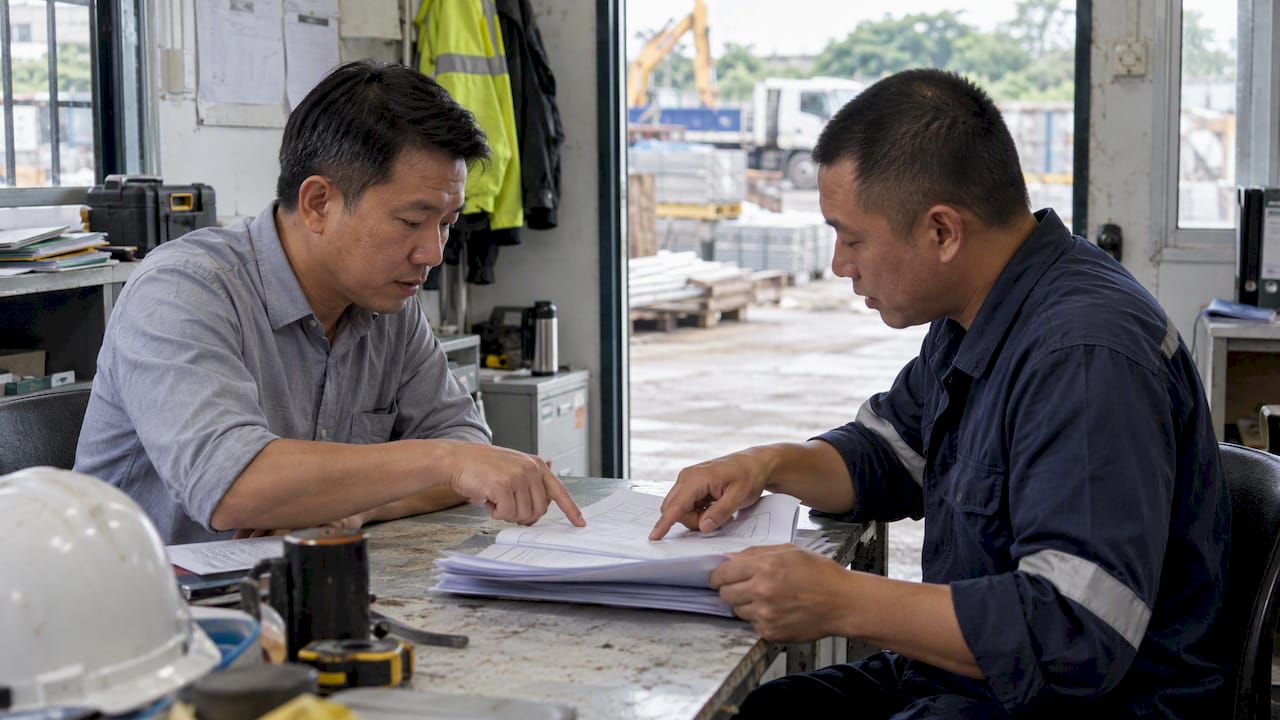
Introduction
Empowering workers to stop work when they spot a hazard is the single most direct way to prevent serious injuries on construction and industrial sites. Yet overcoming hierarchy barriers in safety reporting remains one of the hardest operational problems in Singapore’s high-risk sectors. A 2017 supplementary survey cited in the WSH 2028 strategy found that only 60% of employees in high-risk industries worked in companies with a policy allowing workers to stop work when they believed a task or environment was unsafe; the national target is 75% by 2028.
A Stop Work Order internal policy on paper is not enough. On a typical Singapore worksite, a frontline worker faces layers of authority: foreman, site supervisor, project manager, main contractor management. If a Bangladeshi scaffolder sees missing guardrails at height, he must decide whether to halt work and risk the displeasure of a supervisor who controls his overtime assignments. That decision depends on psychological safety, clear non-retaliation rules, simple reporting channels, and visible leadership commitment from senior management, with management commitment acting as the named requirement that makes those protections credible in practice. Without all four, the policy stays in the binder.
This article focuses on construction and industrial operations in Singapore, written for Operations Directors, Site Supervisors, and WSH Officers responsible for safety culture and worker hazard reporting in the practical context of occupational safety. Here is what you will gain:
-
How to design a Stop Work internal policy that bypasses hierarchy bottlenecks.
-
Specific steps to build psychological safety for frontline workers in Singapore.
-
Practical tools and communication tactics for worker hazard reporting.
-
Typical barriers (cultural, organisational) and concrete countermeasures.
-
How MOSAIC Ecoconstruction Solutions supports implementation and training within the organization’s safety culture.
Throughout the article, suggested images illustrate key ideas such as toolbox meetings, reporting tools, and comparison diagrams.
Understanding Stop Work Empowerment and Hierarchy in Safety
“Worker stop work empowerment” means that every person on site, regardless of rank, nationality, or employment contract, has the authority and the felt confidence to pause an activity they believe is unsafe, without negative consequences. It is not a clause in a safety manual. It is a lived behaviour: a worker verbally raises a concern, the activity stops, the hazard is assessed, and the crew resumes only after corrective action. Organizations with strong safety cultures experience 70% fewer incidents than those without, which makes this behaviour a key driver of safety performance and a practical way to strengthen the organization’s safety culture.
Traditional hierarchies on Singapore worksites, however, work against this behaviour. A foreman answers to a site supervisor who answers to a project manager who answers to an Operations Director. Information about unsafe conditions must travel upward through each layer, and at any point it can be filtered, delayed, or dismissed. In Asian and Singaporean contexts, where respect for authority runs deep, frontline workers are conditioned to defer. The result is under-reporting, delayed reporting, or “silent fixes” where a hazard is patched without any organizational learning. Empowering workers to halt unsafe work requires breaking down these traditional hierarchies.
Singapore’s Workplace Safety and Health Act (WSHA) places primary responsibility on employers and persons in control of workplaces to ensure safety and health. The Act grants the Commissioner power to issue stop-work orders where work poses imminent danger. However, the WSHA does not explicitly require non-supervisory workers to issue stop work orders. That gap must be filled by internal policies and formal safety programs that translate legal duties into site-level action, which is why every organization needs its own Stop Work Authority framework.
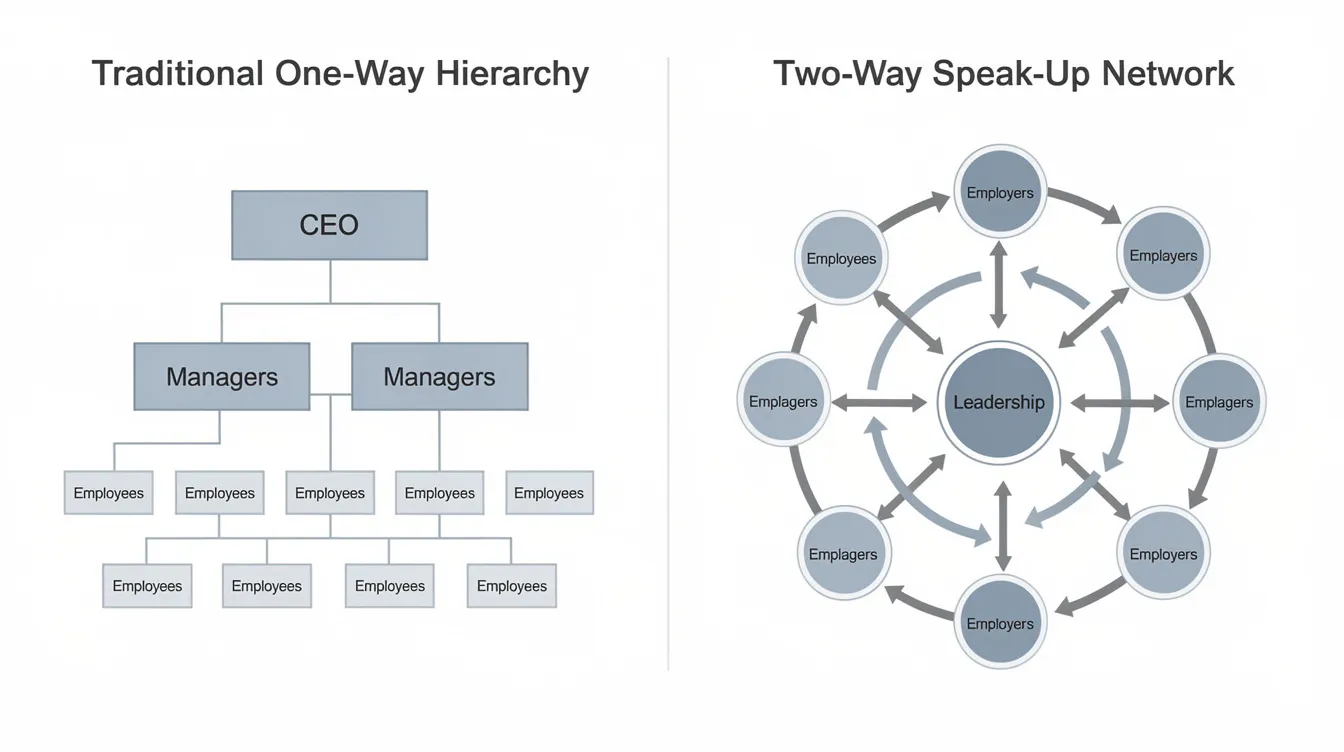
What Is “Stop Work Authority” vs “Stop Work Culture”?
Stop Work Authority (SWA) is the written policy in a company’s WSH management system that grants work authority to any employee to halt an unsafe task. Stop Work Authority empowers all employees to halt unsafe tasks, and SWA is crucial in construction, manufacturing, and oil industries. Many companies in Singapore already have this document. It sits in their bizSAFE or ISO 45001 files.
Stop Work culture is whether anyone actually uses it.
The difference is measurable. If a site has had zero Stop Work activations in 12 months despite operating cranes, working at height, and conducting hot work, the policy exists but the culture does not. Culture is shaped by norms, peer expectations, and how supervisors react when someone speaks up. Organizations with blame cultures struggle to learn from mistakes because workers learn quickly whether stopping work leads to a thank-you or a reprimand. The rest of this article focuses on moving from policy on paper to everyday practice on site.
How Hierarchy and Power Distance Show Up on the Worksite
Power distance, in practical terms, is the gap between a worker who depends on his supervisor for shift assignments, overtime, and contract renewal, and the supervisor who holds that influence. On Singapore construction sites, this gap is amplified by nationality, language, and employment structure. Diverse workforces can complicate safety culture development because workers from different backgrounds carry different expectations about authority.
Consider a Bangladeshi worker erecting scaffolding at a residential project in Punggol. He notices that edge protection is incomplete on the third level. His site supervisor, a local foreman with 15 years of experience, has told the crew to continue because the guardrails will be installed “after lunch.” The worker knows the safety rules. He also knows that his work permit renewal depends on his supervisor’s recommendation. He continues working.
Or consider a night-shift process operator on Jurong Island who detects an abnormal pressure reading. The plant manager is off-site. The shift lead says the reading is “probably a sensor glitch.” The operator hesitates to initiate a process shutdown because the last person who triggered a false alarm was reassigned to day shift, which pays less overtime.
These are not hypothetical scenarios. They reflect how power distance distorts hazard reporting across Singapore’s high-risk operations. The pattern is consistent: workers who identify hazards either stay silent, discuss them only among peers, or apply quick fixes that leave no record. Reducing hierarchical barriers facilitates open communication about safety issues, but this requires deliberate effort.
Psychological Safety: The Foundation for Speaking Up
Psychological safety means a worker believes they can raise safety concerns, stop work, or admit mistakes without humiliation, punishment, or career damage, which also protects worker well being. Psychological safety encourages employees to report hazards without fear. Without it, even the best-written Stop Work policy will collect dust.
SWA’s effectiveness relies on a culture of psychological safety. Research by the WSH Institute and NTU developed a model of WSH Ownership that includes safety climate (shared perceptions of policies and practices), safety citizenship (voluntary positive safety behaviours), and organisational support. In practice, a speak-up climate is part of occupational safety performance, not something separate from it. Singapore’s Civil Service College has documented how the absence of psychological safety stifles voice behaviour, particularly in teams where people avoid raising errors or concerns.
Observable signals of low psychological safety on your site:
-
Minimal near miss reports over several months despite the presence of potential hazards.
-
Workers discussing hazards among themselves but not filing formal reports; the WSH Officer is the sole source of hazard reporting.
-
Supervisors responding to safety observations with blame language: “Who left this here?” instead of “Let’s fix this.”
-
High turnover in safety committee volunteer roles because participation feels punitive rather than valued.
Fear of blame inhibits reporting of safety issues. Stop Work Authority cannot function sustainably when workers believe that speaking up carries personal risk. The next section translates these principles into a practical policy blueprint.
Designing a Stop Work Order Internal Policy That Bypasses Hierarchy Barriers
Turning principles into procedures requires a policy document that is clear, enforceable, and, above all, usable by a worker standing on a scaffold at 7 AM. In high-risk sectors such as LTA infrastructure projects, marine and offshore operations, gas operations, and process plants handling chemical exposures, a Stop Work internal policy is a control measure under Risk Management Regulations. Organizations should implement Stop Work Authority policies to empower all workers.
This section gives Operations Directors and WSH Officers a blueprint. The goal: any worker on your site can stop any activity, inform the right person, and see the hazard resolved, without needing to navigate three layers of management, supporting both safety compliance and business success through faster intervention and fewer escalations.
Core Elements of an Effective Stop Work Policy
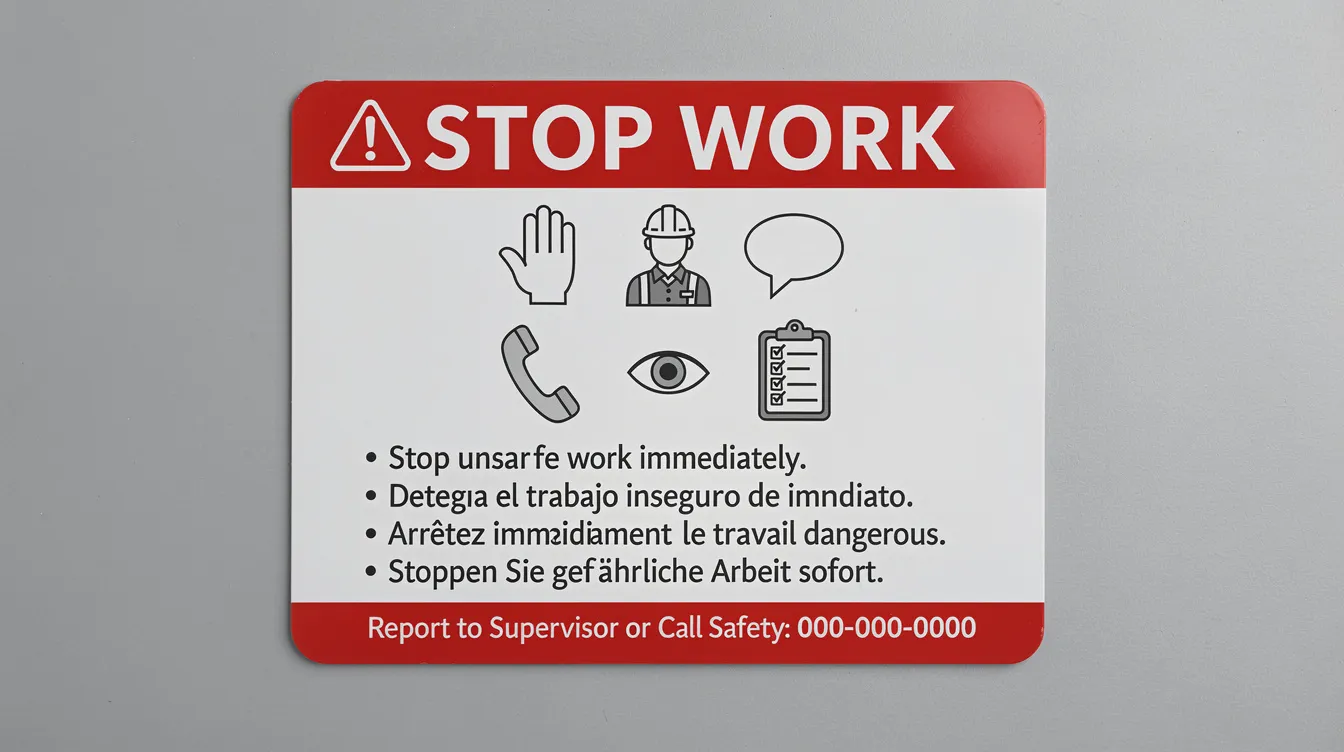
An effective policy is short enough to fit on a single laminated card and specific enough to remove ambiguity, and it should align with site safety protocols so workers know how Stop Work interacts with existing controls. It must include:
-
Scope: Any worker, including subcontractors, part-timers, and visitors, can stop any activity they reasonably believe is unsafe. Sun City Maintenance Pte Ltd, an ISO 45001-certified property care firm with approximately 600 staff, included all staff regardless of role in their Stop Work provisions.
-
Trigger conditions: Compromised scaffolds, absence of permits for hot work or confined space entry, gas detector alarms, missing lock-out/tag-out devices, workers at height without personal protective equipment, safety equipment found defective, or any situation where engineering controls have been bypassed. These conditions should cover hazards and their associated risks, not only visible unsafe acts.
-
Non-retaliation clause: No salary deductions, no overtime reduction, no blacklisting, no adverse work permit actions for good-faith stops. Non-retaliation protection policies are essential for encouraging safety reporting.
-
Post-stop steps: Who the worker must inform (immediate supervisor and WSH Officer), what to document (hazard description, location, time, photo if possible), and what to do with equipment (secure the area, do not resume until cleared).
-
Escalation path: If the immediate supervisor dismisses the concern, the worker can go directly to the WSH Officer, the project manager, or an anonymous hotline. This escalation must be written into the policy, not left to informal understanding.
Non-retaliation protection policies are essential for encouraging safety reporting. A just culture differentiates between human error and reckless behavior to encourage reporting; the policy should state this distinction so that workers understand that good-faith stops will never be treated as misconduct, and that they will have the safety resources needed to secure the area, document the issue, and follow the next steps.
Making the Policy Visible and Understandable to Frontline Workers
A policy locked in a SharePoint folder is invisible to the worker who needs it most. Multilingual communication is non-negotiable on Singapore sites. Sun City Maintenance translated Safe Work Procedures into Chinese and Malay. For construction projects with migrant workers, your Stop Work materials should be available in English, Mandarin, Tamil, Bengali, and Burmese at minimum.
Visual aids work better than text on active worksites:
-
Posters with a five-step icon sequence: See hazard → Stop → Inform → Resolve → Resume.
-
Laminated Stop Work cards clipped to every worker’s access pass, small enough to carry but visible enough to serve as a constant reminder.
-
Photo sequences shot on your actual site showing before-and-after scenarios of a Stop Work intervention.
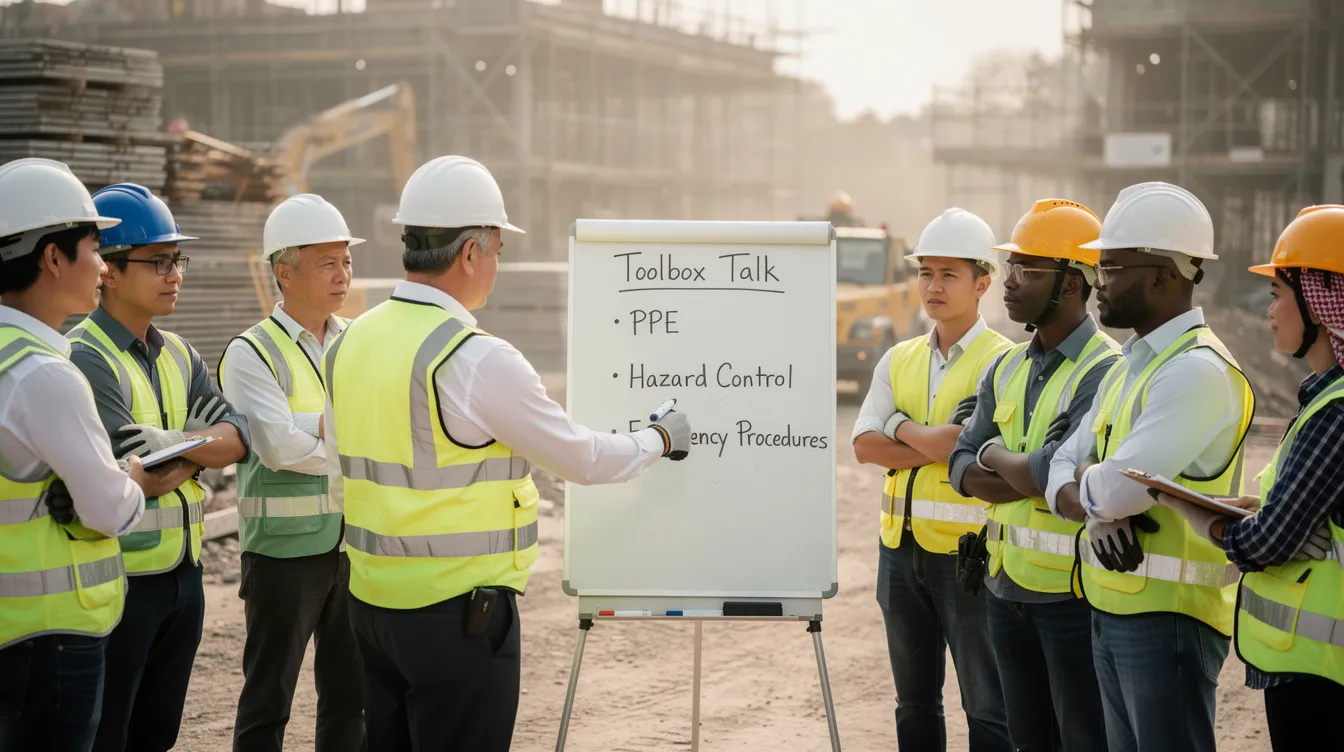
Toolbox talk scripts should repeat the same message weekly: “You will not be punished for stopping unsafe work.” Repetition is not redundant here; it is the mechanism through which the message moves from management pronouncement to worker belief. Effective SWA requires comprehensive training and clear communication, reinforced through ongoing communication at every level.
Embedding Stop Work into Contracts, Permits, and Risk Assessments
A standalone policy document can be bypassed under production pressure. To prevent this, embed safety by building Stop Work rights into the operational systems that supervisors interact with daily.
Subcontract agreements should include a clause stating that any worker can refuse an unsafe instruction without contractual penalty. When managing contractor safety, this clause ensures the main contractor’s Stop Work culture extends to every subcontractor on site. Including Stop Work behaviour in subcontractor onboarding and pre-qualification criteria makes the expectation clear before work begins.
Permit-to-Work systems for hot work, confined space, and lifting operations should print mandatory “Stop Work if…” conditions directly on the permit. A crane operator reviewing his lift plan sees the instruction on the document he is already reading, not in a separate manual.
Risk assessments and Safe Work Procedures, aligned with the WSH Council’s Risk Management Code of Practice, should identify the specific points where a worker is expected to stop and reassess, including emerging risks when site conditions, technologies, or work interfaces change during execution. A workplace risk assessment that names the Stop Work trigger for each identified hazard converts general empowerment into task-specific instruction.
Integration into existing processes ensures that supervisors cannot override Stop Work empowerment under schedule pressure. Policy alone is insufficient without training, practice, and leadership modelling, which is the subject of the next section.
Implementing Psychological Safety and Speak-Up Systems on Site
Policies set expectations. Systems and behaviours make those expectations real. Psychological safety must be deliberately engineered through leadership behaviours, system design, and proper training. Leadership should model openness to foster a culture of reporting and continuous learning. Left to chance, hierarchy reasserts itself within weeks.
Effective training is essential for empowering employees in safety reporting, but training alone is not the answer. The systems surrounding that training (how hazards are reported, how supervisors respond, how the organization recognizes good stops) determine whether workers will actually voice concerns.
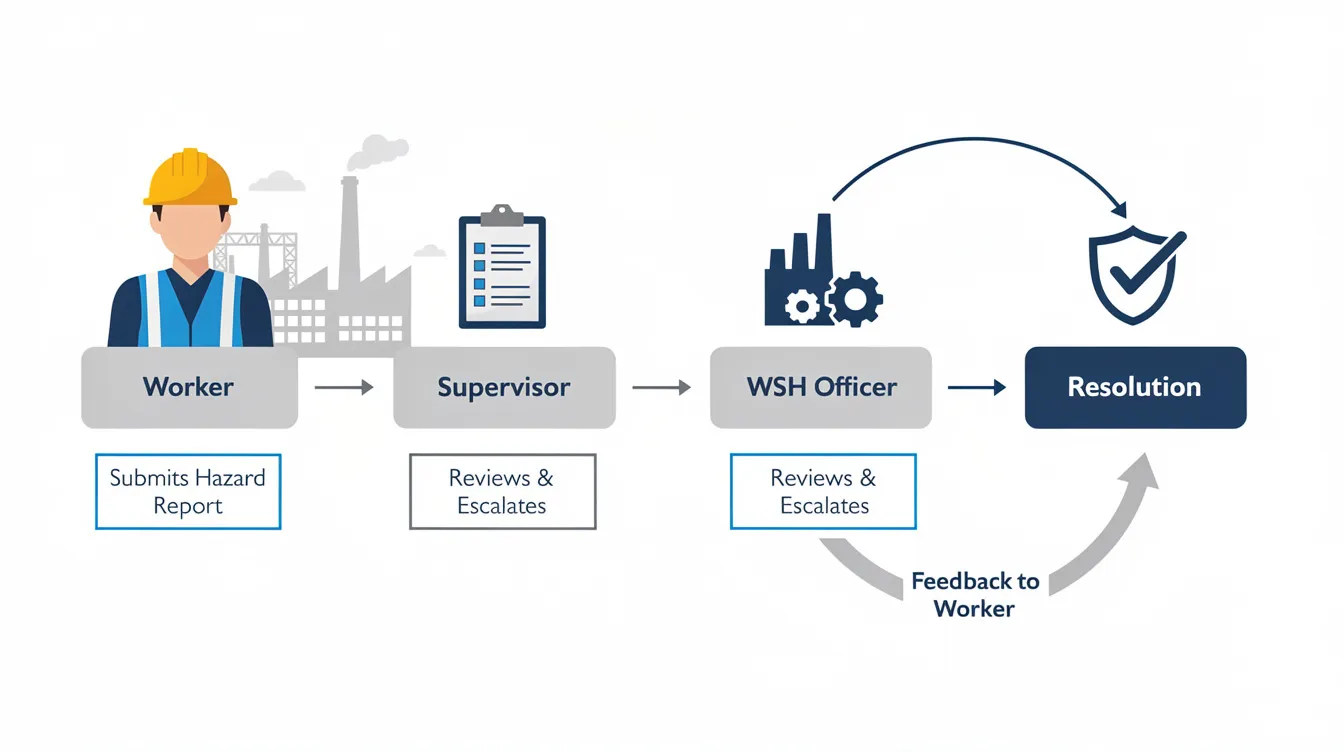
A Step-by-Step Process to Build a Speak-Up Culture
-
Diagnose current climate. Run a short anonymous survey asking workers whether they feel safe reporting hazards, whether they have seen someone punished for speaking up, and whether they trust their supervisor to act on concerns. Supplement with focus groups conducted in workers’ native languages. Measurement of reporting culture should include near-miss reporting and worker feedback.
-
Align leadership. Conduct a half-day workshop with Operations Directors, Project Managers, and Site Supervisors. Define non-negotiable responses when a Stop Work is called: the activity stops immediately, no exceptions. Management commitment is the condition that makes non-retaliation and immediate stoppage credible, and this workshop is where that commitment becomes concrete.
-
Redesign supervisor responses. Script how a supervisor must react: thank the worker, clarify the hazard, protect the area, and initiate investigation. Organizations should train managers to respond constructively to safety concerns. This is not a suggestion; it is a procedure, rehearsed and assessed.
-
Train and practise. Scenario-based role plays during WSH training sessions and toolbox talks where workers physically rehearse stopping a task and explaining why. Adequate training means the worker has practised the action before they face the real situation. Robust training programs integrate Stop Work scenarios into regular safety meetings.
-
Recognise and share wins. Publish Stop Work cases monthly at safety meetings and on site noticeboards. Name the worker (with consent), describe the hazard, and explain the corrective action taken. Positive reinforcement turns a single brave act into a norm, and early intervention supports business success by protecting schedule reliability, workforce trust, and client confidence. Transparent feedback on reported safety issues builds trust among employees.
-
Monitor and refine. Review Stop Work data and worker feedback quarterly. Track leading indicators: number of stops, near miss reports filed, time from report to resolution. Adjust processes based on what the data shows. Consistent follow-through on safety reports demonstrates organizational commitment to safety.
Designing Confidential and Low-Barrier Hazard Reporting Channels
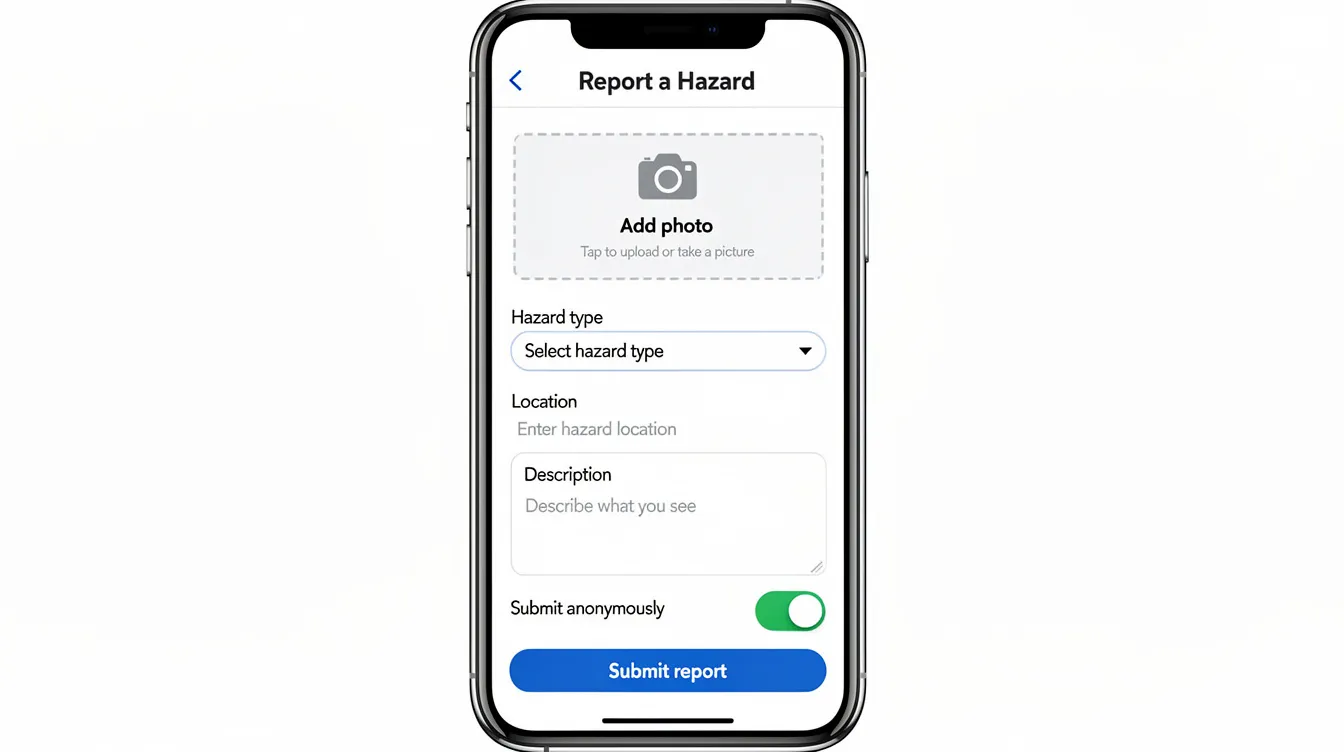
Worker hazard reporting must not depend solely on telling a direct supervisor. Multiple channels reduce the friction and the fear. Anonymous reporting channels help preserve worker anonymity when reporting hazards.
-
Messaging hotline (WhatsApp or Telegram) managed by the WSH Officer, where workers send a photo and a short description. Response within 2 hours during work hours.
-
QR-code posters at muster points and common areas, linking to a short online form with an anonymous submission option. The form should be mobile-friendly, multilingual, and take under 90 seconds to complete.
-
Physical drop-boxes in canteens and rest areas, cleared by the safety team weekly. Some workers prefer pen and paper, particularly those less comfortable with smartphones.
-
Digital safety app with a tap-to-report function for near-misses, integrated with the site’s incident management system. This builds the data set for tracking progress in safety observations over time.
Keep every channel short, multilingual, and accessible on low-data mobile connections. The fewer taps or steps required, the more reports you receive. The goal is to make report incidents as easy as sending a text to a friend.
Training Supervisors to Respond Without Blame
Without supervisor mindset change, Stop Work empowerment stalls regardless of how well the policy is written. Production pressure often prioritizes speed over safety, and supervisors are the transmission point where that pressure either overrides or respects safety decisions through their moment-to-moment reactions, which reinforce the organization’s safety culture.
Core skills to develop in Site Supervisors and line leaders:
-
Active listening. When a worker raises a concern, the supervisor stops, faces the worker, and repeats back what was said. Even when the concern seems minor, dismissing it teaches the entire crew that speaking up is pointless.
-
Separating production from safety decisions. Supervisors must be trained to say, in front of the crew: “We are behind schedule, but this hazard gets fixed before we continue.” This verbalization matters because it shows the team that safety is not just a policy; it is a priority that overrides the schedule.
-
Neutral, fact-finding language. Replace “Who left this unsecured?” with “Let’s find out what happened and fix the process.” This distinction is the difference between a blame culture and a learning culture.
-
Quick team learning moments. Each Stop Work incident becomes a 5-minute debrief with the immediate crew: what was the hazard, what was done, what do we do differently. This is not a scolding session.
These skills belong in mandatory WSH training, not in optional “soft skills” workshops. When every supervisor on site has rehearsed a non-blame response, the organization’s safety leadership moves from aspiration to daily practice and, over time, toward a world class safety culture. A positive safety culture improves productivity by 15-20%, and supervisor behaviour is the mechanism through which that improvement occurs.

Comparing Traditional Top-Down Safety vs Empowered Stop Work Culture
The shift from a traditional hierarchy-driven safety approach to an empowered Stop Work culture is not philosophical. It produces measurable differences in how hazards are handled, how information flows, and how incidents trend over time.
Key Differences and Business Impact
Formal safety programs provide the structure, while culture determines whether workers actually use that structure under pressure.
|
Criterion |
Traditional Top-Down Approach |
Empowered Stop Work Culture |
|---|---|---|
|
Reaction to hazards |
Only the WSH Officer investigates; workers wait for instructions |
Any worker can stop and trigger immediate review |
|
Information flow |
Vertical, slow, filtered through supervisor layers |
Multi-channel, direct, real-time via apps, hotlines, and verbal stops |
|
Worker morale and engagement |
Fear of blame, passive rule-following, low employee morale |
Ownership, active participation, pride in safety outcomes |
|
Incident trend |
Under-reporting, surprise major incidents, reactive investigations |
High near miss reports rates, fewer serious injuries, proactive safety culture |
|
Cost impact |
Higher workers’ compensation costs, regulatory fines, project delays from enforcement |
Strong safety cultures reduce workers’ compensation costs by 40-60% |
Organizations with strong safety cultures have 70% fewer incidents. The business case for an empowered culture is not abstract: fewer MOM enforcement actions, fewer project shutdowns, lower insurance premiums, stronger standing with clients who evaluate safety management systems during tender assessments, and better support for long-term business success.
In 2025, Singapore’s construction sector recorded a fatal and major injury rate of 26.3 per 100,000 workers, down from approximately 31.0 per 100,000 in 2024. Sectors with small-scale works (additions and alterations, renovations) accounted for over 60% of fatal and major injuries in construction. These are often the sites with the most fragmented subcontractor structures and the weakest speak-up cultures. Effective safety cultures are created by integrating workers into risk management processes.
Common Barriers to Worker Stop Work and How to Overcome Them
Barriers to Stop Work empowerment persist because they are structural, not personal. They are embedded in contracts, compensation systems, cultural norms, and organizational hierarchies. Each requires a specific countermeasure.
Barrier 1: Fear of Retaliation and Loss of Income
Workers fear transfer to less favourable shifts, reduced overtime, non-renewal of work permits, or informal blacklisting within the industry. In AWARE’s 2021 survey on workplace harassment, 70% of survivors did not report due to fear of retaliation or absence of support. While the context differs, the psychology is identical: people stay silent when they believe reporting carries personal cost.
Countermeasures that address this directly:
-
A written non-retaliation policy, signed by the Managing Director and displayed at every site entrance. The signature matters; it personalizes the commitment, and visible management commitment is what makes that promise believable to workers.
-
Post-Stop-Work tracking: HR monitors whether any worker who exercised Stop Work received adverse employment actions (shift changes, overtime reductions, contract non-renewal) in the 90 days following the event. Any pattern triggers an internal review.
-
Clear escalation if a worker believes they were punished: direct access to the WSH Officer or an anonymous channel managed independently of the worker’s supervisor chain, supported by accessible safety resources so workers have reporting tools and practical help when they act.
Barrier 2: Production Pressure and Tight Deadlines
Construction sites in Singapore operate under liquidated damages clauses that penalize delays. Main contractors push subcontractors to stay on schedule. When a worker stops a crane lift because the rigger’s certification has expired, the supervisor sees a two-hour delay. The project manager sees a milestone at risk.
Three practical strategies to counter production pressure:
Integrate safety metrics into project KPIs alongside schedule and cost. Near-miss reporting rate and Stop Work utilisation should appear in the same dashboard as percent completion and budget burn. When business leaders review project health, safety performance must be visible.
Require main contractors to demonstrate Stop Work usage in monthly progress meetings with clients. When the client asks “How many Stop Work events did you have this month?” and treats zero as a concern rather than a success, the incentive structure shifts.
Use pre-start meetings at every shift to state explicitly: “No job is so urgent that we cannot take time to do it safely.” This is not a slogan. It is a decision framework that supervisors invoke when they face the tension between speed and safety compliance. Continuous improvement in safety means building this discipline into daily operations, not reserving it for incident investigations.
Barrier 3: Cultural Norms and Respect for Authority
Workers from South Asia and parts of Southeast Asia may view questioning a supervisor as disrespectful. This is a genuine cultural norm, not a training gap. Overcoming it requires approaches that work within cultural frameworks rather than against them.
Appoint respected senior workers from each nationality as “Safety Ambassadors.” When a Bangladeshi worker sees another Bangladeshi worker (not a manager from a different background) stopping an unsafe task and being thanked for it, the behaviour becomes socially acceptable within his own cultural frame.
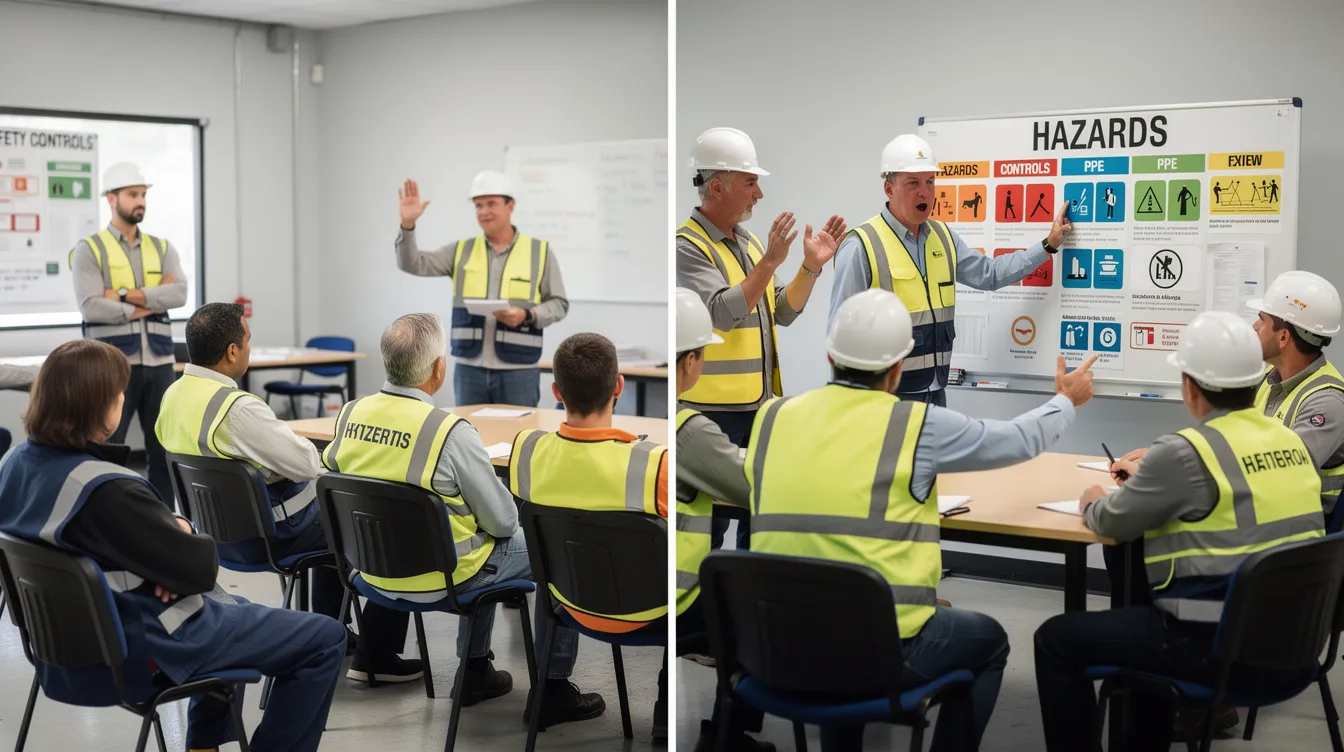
Role plays during toolbox talks should feature supervisors explicitly inviting workers to challenge them. The supervisor says: “If you see something wrong with what I just did, I want you to tell me. That is your job.” When this is rehearsed monthly, workers begin to internalize that speaking up is expected, not transgressive, which also supports worker well being by reducing fear and social isolation when raising concerns.
Visual storytelling through posters and short videos, showing a worker saving teammates by stopping unsafe work, with captions in Bengali, Tamil, Burmese, and Mandarin, reinforces the message without requiring literacy in English. A proactive safety culture anticipates and prevents risks by giving every worker the tools to participate.
Barrier 4: Fragmented Subcontractor Structures
When four or five subcontractors operate on the same site, workers are often uncertain whose permission is needed to stop work. The main contractor may disclaim responsibility for a subcontractor’s crew. The subcontractor may tell workers to follow the main contractor’s safety rules but not empower them to enforce those rules. The result is a gap where collective responsibility exists in theory but not in practice.
Countermeasures:
-
Site-wide Stop Work rules, enforced by the main contractor, apply to every person on site regardless of employer. This must be communicated during subcontractor safety onboarding and reinforced at joint safety orientations, because fragmented subcontracting weakens shared safety protocols unless the main contractor standardises them across all employers.
-
Subcontract agreements include a clause that workers retain the right to stop unsafe work without contractual penalty. This clause gives the worker legal cover and gives the subcontractor’s management a reason to support the behaviour.
-
Subcontractor performance evaluations include safety behaviour as a weighted criterion. Subcontractors whose workers file near miss reports and exercise Stop Work appropriately score higher in future pre-qualification. Subcontractors whose workers never report anything despite working in high-risk conditions score lower.
In H2 2024, 14 deaths occurred on Singapore construction sites, and 9 worksites received official stop-work orders from MOM due to inadequate safety management systems posing imminent danger. The true cost of a stop work order from MOM, including project delays, reputational damage, and regulatory scrutiny, far exceeds the cost of an internal Stop Work culture that prevents the conditions leading to enforcement action, especially on fragmented sites that struggle to embed safety consistently across contractor interfaces.
Conclusion and Practical Next Steps for Singapore Worksites
Stop Work empowerment is not a clause in a safety manual. It is a system shift that dismantles hierarchy barriers in safety reporting by combining policy, psychological safety, training, and leadership commitment. Safety culture starts with the decision to treat every worker’s concern as actionable intelligence, not as an interruption.
Actions you can take in the next 30 to 60 days:
-
Review your current Stop Work Order internal policy. Remove ambiguous language and add an explicit non-retaliation clause with named escalation contacts.
-
Run a short pulse survey on psychological safety and hazard reporting with frontline workers, conducted in their native languages.
-
Pilot one low-barrier reporting channel (QR-code form or messaging hotline) on a single site and measure response rates over 30 days.
-
Conduct one dedicated supervisor workshop on non-blame responses to Stop Work incidents, using scenario-based role plays.
-
Publicly recognise at least one positive Stop Work action at your next monthly safety meeting, naming the worker and describing the hazard averted.
MOSAIC Ecoconstruction Solutions Pte Ltd supports organizations through each of these steps: designing or refreshing Stop Work policies aligned with WSH requirements and ISO 45001, delivering psychological safety and speak-up training tailored to Singapore’s multicultural workforce, and implementing digital worker hazard reporting tools with analytics dashboards. ISO 45001 is the first international OHS management standard and aims to prevent work-related injury and ill health; ISO 45001 integrates OHS into core business processes, and achieving certification can reduce operational costs while improving safety outcomes. The certification process typically takes 6 to 12 months.
Related topics worth exploring next: building a proactive WSH culture in Singapore SMEs, continuous improvement in safety, and safety leadership development for site supervisors and project managers.
Frequently Asked Questions (FAQs)
Is a Stop Work Order internal policy mandatory under Singapore law?
The WSHA grants the Commissioner for Workplace Safety and Health the power to issue stop-work orders to persons in control of a workplace or work process. However, internal Stop Work Authority granted to non-supervisory workers is not explicitly mandated by the Act. An internal SWA policy supports regulatory compliance with the employer’s duty to ensure workplace safety and health, and is considered best practice under ISO 45001 within a broader occupational safety framework that requires consultation and active participation of workers in safety processes. SWA is also supported by OSHA’s General Duty Clause for workplace safety in international contexts.
How can I measure whether workers feel psychologically safe to report hazards?
Use periodic anonymous surveys with questions about comfort in raising safety concerns, trust in supervisor response, and fear of consequences. Supplement with near-miss reporting rates as a quantitative indicator: a site with many hazard reports and few major incidents has a healthier reporting culture than a site with zero reports and periodic emergencies. Focus groups conducted in workers’ native languages provide qualitative depth. WSH Ownership and iWorkHealth assessments are validated tools available through Singapore’s WSH Institute. ISO 45001 also includes managing psychosocial risks like stress, which connects to how workers experience their safety environment and affects worker well being.
Won’t encouraging Stop Work slow down production and increase costs?
Short-term, a Stop Work event may pause an activity for 30 minutes to two hours. Long-term, it prevents the incidents that cause multi-week project shutdowns. In H2 2024, nine Singapore worksites received MOM stop-work orders that halted all operations, not just the unsafe task. A positive safety culture improves productivity by 15-20%, and strong safety cultures reduce workers’ compensation costs by 40-60%. The benefits extend well beyond incident prevention and support business success. Safety culture is the collection of beliefs and values about safety that shapes daily decisions across the entire organization, and when those beliefs support early intervention, rework and remedial orders decrease.
How often should we train workers on Stop Work and hazard reporting?
Annual formal training is the minimum under most EHS standards and environmental management systems. Weekly toolbox talks should reinforce the Stop Work message with fresh scenarios. Supervisor refreshers on non-blame response techniques should occur at least quarterly. Effective SWA requires comprehensive training and clear communication; one-time training is not adequate training, and repeated reinforcement helps organizations prepare for emerging risks as work conditions and technologies change. Continuous communication of safety expectations, through safety committees, pre-start meetings, and noticeboard updates, keeps the topic present in daily operations.
Can outsourced or part-time workers also invoke Stop Work?
Yes. An effective Stop Work policy covers every person on site, regardless of employment status. This includes subcontractors, labour supply workers, part-timers, and visitors. Sun City Maintenance Pte Ltd included all staff regardless of role when they embedded Stop Work rights as part of their ISO 45001 certification. Excluding any group creates a gap where hazards go unreported because the person closest to the risk lacks authority. Deep understanding of this principle is what separates genuine commitment to safety from mere compliance.
For site-specific consultation or customised training programmes on Stop Work implementation, psychological safety, or safety management system development, contact MOSAIC Ecoconstruction Solutions Pte Ltd.