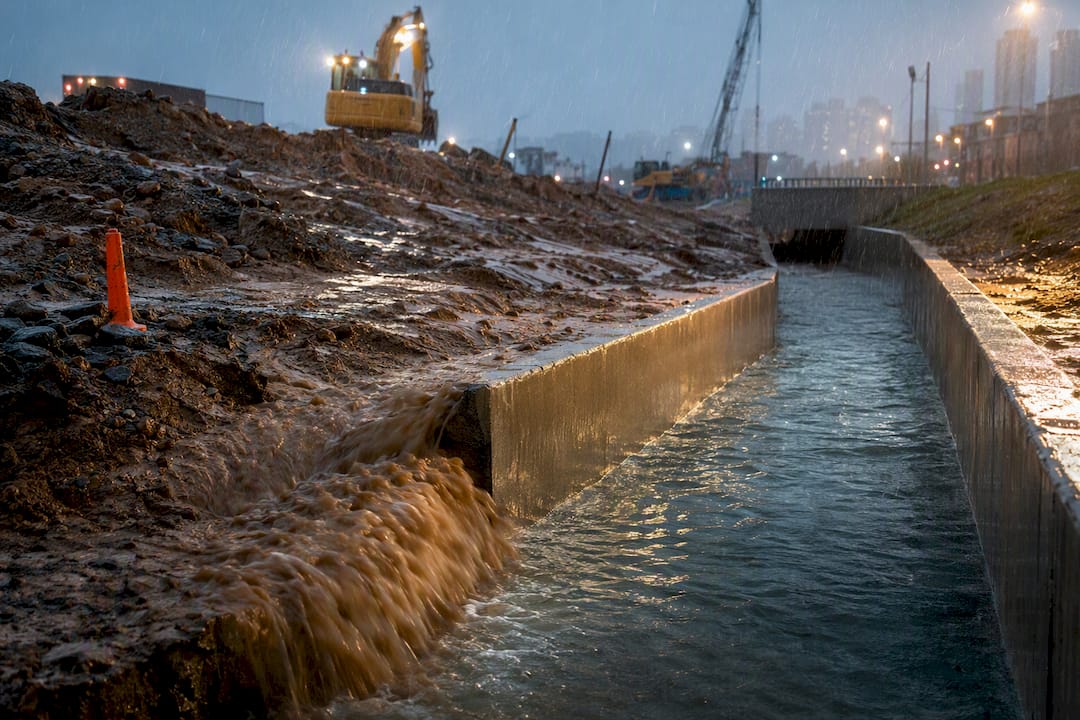
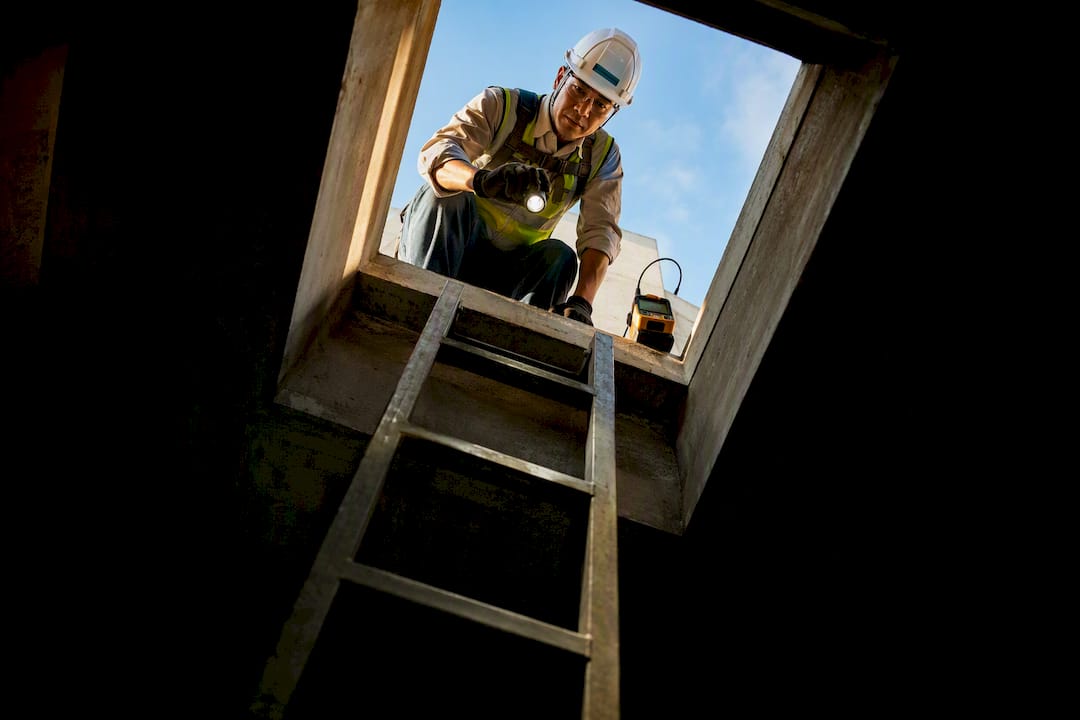
Under Singapore law, dutyholders must identify confined spaces, control access, use a permit-to-work system for hazardous spaces, test and monitor atmospheres, provide trained personnel, and maintain rescue readiness. The governing texts are the Workplace Safety and Health (Confined Spaces) Regulations and SS 568-2011. If your site has not classified every confined space and does not yet have a functioning permit system, the immediate move is to suspend nonessential entry, assess and classify each space, and stand up permits wherever hazards are present.
TL;DR:
- Only confined spaces with identified hazards require permits, meaning unclassified or hazard-free spaces may not need formal controls.
- Proper documentation, including signed permits, test logs, and rescue plans, is essential for compliance and effective supervision.
- Atmosphere testing must follow a strict order (oxygen, flammability, toxicity) and use calibrated equipment checked regularly.
- A realistic rescue plan should be tested periodically to ensure rapid retrieval within the hazardous atmosphere duration.
- Non-compliance risks include site shutdowns, fines, contract disqualification, and personal liability for supervisors, emphasizing rigorous verification.
Table of Contents
- What Confined Space Regulations Require Under Singapore Law
- Defining a Confined Space on a Singapore Construction Site
- Who Is Responsible: Employers, Supervisors, Attendants, and Workers
- The Entry Permit System: When You Need One and What It Must Contain
- Atmosphere Testing, Monitoring, and Ventilation Standards
- Training, Competence, and Rescue Planning
- Practical Compliance Checklist for Safety Officers
- Risk Assessment Methods Specific to Confined Spaces
- Penalties and Legal Consequences for Non-Compliance
- What Actually Trips Up Singapore Sites
- How MOSAIC Helps You Build a Compliant Confined Space Program
- Sources
What Confined Space Regulations Require Under Singapore Law
Singapore’s confined space regime rests on a single statutory instrument, backed by a code of practice that translates legal language into site procedure. The Workplace Safety and Health (Confined Spaces) Regulations 2009 place duties on employers, occupiers, and principals to identify every confined space under their control, prevent entry by unauthorized persons, and operate a permit system wherever a space presents a hazard to entrants. That last clause does a lot of work. It means the permit obligation is not universal. It is triggered by risk, so a safety officer’s first job is honest hazard identification, not paperwork for its own sake.
SS 568-2011 sits underneath the Regulations as the Singapore Standard that clarifies how compliance actually looks on a construction site. Where the Regulations state the duty, the code of practice supplies the operational detail: how to classify a space, what a permit should contain, and how atmosphere testing should be sequenced. Inspectors from the Ministry of Manpower typically use SS 568-2011 as the practical benchmark when assessing whether a permit system meets the spirit of the law, even though the code itself is a voluntary standard rather than subsidiary legislation.
Enforcement tends to concentrate on a few recurring gaps. Common enforcement triggers include:
- Confined spaces on site that were never formally identified or logged
- Entry occurring without a valid, signed permit
- Atmosphere testing records that are missing, incomplete, or clearly copied from a previous shift
- No documented rescue plan or standby rescue capability at the point of entry
- Attendants absent from post during active entry
Documentation is the currency of compliance here. An inspector who cannot see dated test logs, signed permits, and training records will assume the underlying control was never performed, regardless of what actually happened on site.
Defining a Confined Space on a Singapore Construction Site
A confined space, under Singapore’s Regulations, is broadly any enclosed or partially enclosed area not designed for continuous occupancy, with restricted means of entry or exit, where hazardous atmospheres, engulfment, or entrapment can develop. That definition covers far more of a typical construction site than most teams assume.
- Storage tanks and silos — cement silos, water tanks, and chemical storage vessels rank among the most common confined spaces flagged during site audits.
- Manholes and sewer chambers — restricted access combined with potential for toxic or oxygen-deficient atmospheres.
- Excavation pits and trenches — deep pits can trap heavier-than-air gases like hydrogen sulfide.
- Ductwork and ventilation shafts — long, narrow geometry that limits rescue access.
- Tunnels and underground utility runs — extended entry and exit times increase exposure risk.
- Boilers, pressure vessels, and process equipment interiors — often overlooked once equipment is decommissioned for maintenance.
Classification is not fixed. SS 568-2011 recognizes that a space normally safe to occupy can become a confined space during specific work activities, such as welding, spray painting, or chemical cleaning, because those activities generate or concentrate hazardous atmospheres. A storage room that is fine for casual access on Monday can be a permit-required space on Tuesday if welding starts inside it.
For rapid on-site screening, ask three questions: Is entry or exit restricted? Is the space not designed for continuous occupancy? Could a hazardous atmosphere, engulfment risk, or entrapment risk develop, including from the work about to happen inside it? A “yes” to any one of those warrants a formal assessment before anyone climbs in.
Who Is Responsible: Employers, Supervisors, Attendants, and Workers
Singapore’s Regulations distribute confined space duties across several roles, and blurred accountability is one of the fastest ways to fail an inspection. Each role carries a distinct, documented obligation.
- Employers and occupiers must identify all confined spaces under their control, prevent unauthorized entry, and ensure a compliant permit system operates wherever hazards are present.
- Site controllers or principals coordinate across multiple contractors working on the same premises, ensuring hazard information is shared before any subcontractor enters a space another party manages.
- Entry supervisors authorize permits, verify pre-entry testing has been completed, and confirm rescue arrangements are in place before signing off on entry.
- Attendants remain stationed outside the space throughout entry, maintain communication with entrants, and initiate rescue procedures without themselves entering unless properly equipped and trained to do so.
- Authorized entrants follow permit conditions, use assigned monitoring equipment correctly, and evacuate immediately when instructed or when conditions change.
Multi-contractor sites raise a specific coordination duty. Before any entry, the host employer must share known hazard information, including chemical residues, prior incidents, and adjacent process risks, with the contractor performing the work. Failing to pass that information along is one of the more common findings in incident investigations, because the contractor entering the space is frequently the one with the least institutional knowledge of what has historically gone wrong there.
Required records include the signed entry permit, atmosphere test logs with timestamps, training and competency certificates for entrants and attendants, and a written rescue plan. The entry supervisor typically retains custody of these records, though the employer bears ultimate responsibility for their availability during an inspection.
The Entry Permit System: When You Need One and What It Must Contain
A permit is required whenever a confined space presents a hazardous atmosphere, an engulfment risk, an entrapment risk, or another specified danger identified during assessment. Spaces that clear a documented risk assessment without any of these hazards may not require a full permit system, but that determination itself needs to be recorded, not assumed.
A compliant permit, aligned with SS 568-2011 and Tal, should record:
- Space identification, including location and a unique reference number
- Identified hazards specific to that space and that day’s work
- Control measures in place, including ventilation and isolation steps
- Names of authorized entrants and the standby attendant
- The atmosphere monitoring plan, including test frequency and alarm thresholds
- Permit start and expiry time, since a permit is valid only for a limited period
- Signatures from the entry supervisor and, where applicable, the site controller
Approval should never be a rubber stamp. The entry supervisor needs to physically confirm pre-entry testing results before signing, not rely on a verbal assurance. Permits require revalidation if conditions change mid-shift, such as a shift change, a break in work, or a spike in monitored gas levels, and must be formally cancelled the moment work finishes or conditions deteriorate beyond acceptable limits.
Pro Tip: Keep a physical or digital permit log at the site office, not just at the point of entry. When an inspector arrives unannounced, being able to produce the last thirty days of permits in under five minutes says more about your safety culture than any policy document on the wall.
Atmosphere Testing, Monitoring, and Ventilation Standards
Testing order matters as much as testing itself. The accepted sequence, drawn from both SS 568-2011 and comparable international practice under OSHA’s permit-space standard, tests oxygen content first, flammability or lower flammable limit second, and toxic gases such as hydrogen sulfide or carbon monoxide third. Testing oxygen first matters because a low reading changes how you interpret every subsequent flammability and toxicity result.
Continuous monitoring with audible and visual alarms is expected wherever atmospheric conditions could change during occupancy, which in practice means most active construction confined spaces. Periodic spot testing may suffice only for spaces with a stable, well-understood atmosphere and no ongoing work that could introduce new hazards, such as a static, previously ventilated tank awaiting demolition.
Essential equipment for a functioning program includes:
- Calibrated direct-reading multi-gas monitors, checked against a known calibration gas before each shift
- Mechanical ventilation blowers sized to the space’s volume and access geometry
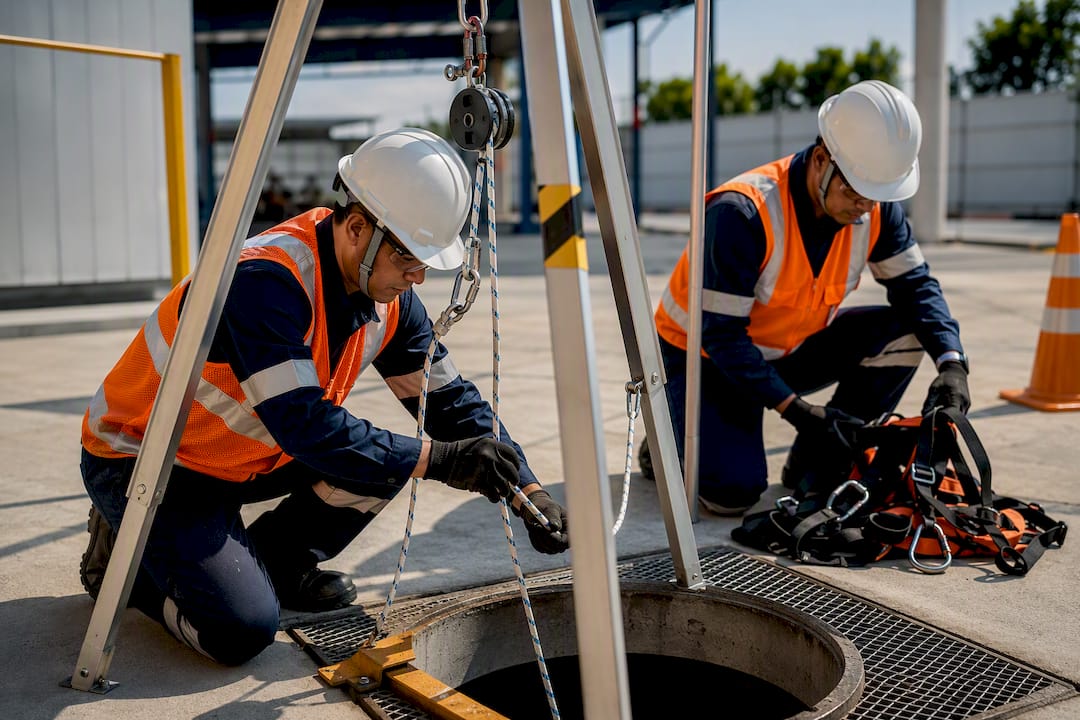
- Retrieval systems, including harnesses, tripods, and winches sized for the specific entry point
- Two-way communication equipment between entrants and the attendant
- Explosion-rated lighting suitable for the atmosphere classification
Calibration lapses are a quiet but common failure point. A monitor that reads “safe” because its sensor has drifted uncalibrated for months is arguably more dangerous than having no monitor at all, since it creates false confidence. Direct-reading instruments should be calibrated according to the manufacturer’s schedule, and that calibration record belongs in the same file as your permit logs.
Training, Competence, and Rescue Planning
Training has to match the role, not just the activity. Authorized entrants need instruction in hazard recognition, correct use of monitoring and retrieval equipment, and permit procedures specific to your site. Attendants need additional training in non-entry rescue techniques and communication protocols, since they are the first line of response if something goes wrong. Entry supervisors need the deepest grounding, covering permit authorization criteria, hazard reassessment, and the legal basis for stopping work.
- Hazard recognition and atmospheric testing — understanding what the monitor readings actually mean, not just how to press the button.
- Permit-to-work procedures — how to complete, verify, and revalidate a permit correctly.
- Equipment use — proper donning of retrieval harnesses, use of ventilation blowers, and communication devices.
- Emergency response and non-entry rescue — the skills an attendant needs before an entrant ever goes below grade.
Competence is not a one-time certificate. Practical guidance from TAL.sg frames refresher training as an ongoing requirement, particularly for attendants and supervisors whose skills degrade without regular drills. A “competent person” under Singapore’s framework is someone who holds documented training and demonstrable practical experience relevant to the specific hazards on your site, not simply someone who attended a course years ago. Course providers such as Prime First Aid Training’s confined space entry syllabus illustrate the breadth of curriculum, from atmosphere testing to gas detection, that a well-structured program should cover.
Rescue planning is where many sites fall short even when permits look immaculate on paper. A written rescue plan needs a realistic answer to one question: can the standby team retrieve an unconscious entrant within the window their atmosphere allows, using equipment already staged at the entry point? If the honest answer involves waiting for an external emergency service with no on-site retrieval capability, that gap needs fixing before entry, not after an incident.
Pro Tip: Run a timed rescue drill, not just a tabletop discussion. Most teams discover their retrieval system takes twice as long to deploy as they assumed once they actually try it under a stopwatch.
Practical Compliance Checklist for Safety Officers
Turning legal obligation into daily practice comes down to a repeatable sequence, applied to every confined space before anyone enters.
- Identify every confined space on site and log it, including spaces that only become confined during specific work activities.
- Assess each identified space for atmospheric, engulfment, and entrapment hazards before deciding whether a permit is required.
- Decide on the permit requirement and document the reasoning, even for spaces judged not to need one.
- Test the atmosphere in the correct order (oxygen, flammability, toxicity) before entry, using calibrated equipment.
- Issue the permit only after the entry supervisor has verified test results and confirmed rescue readiness.
- Monitor and record continuously during entry, with an attendant stationed at the point of access throughout.
- Debrief and archive the permit, test logs, and any incidents once entry is complete, retained for inspection.
| Compliance stage | What inspectors typically check | Recommended retention |
|---|---|---|
| Identification | Confined space register or log | Ongoing, updated per project |
| Permit issuance | Signed permit with all required fields | Minimum period |
| Atmosphere testing | Time-stamped gas monitor readings | Minimum period |
| Training | Competency certificates for entrants and attendants | Duration of employment plus 2 years |
| Rescue planning | Written rescue plan and drill records | Ongoing, reviewed per project |
Consultants often work with construction teams to convert this checklist into a live site system, from drafting risk assessment procedures to structuring permit templates that hold up under scrutiny during a safety audit.
Risk Assessment Methods Specific to Confined Spaces
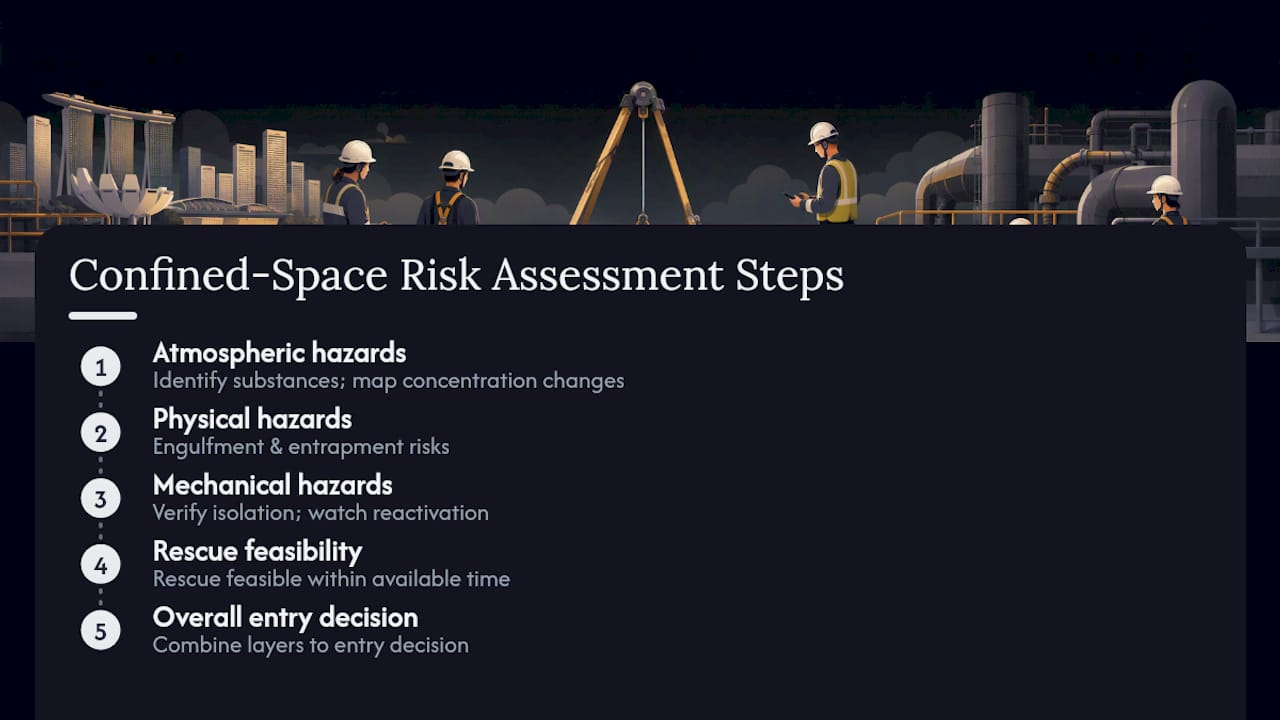
Generic workplace risk assessment templates rarely capture what makes confined spaces distinct: the interaction between restricted egress, changing atmospheres, and time pressure during rescue. A confined space risk assessment needs to evaluate each hazard category separately before combining them into an overall entry decision.
Start with atmospheric hazard mapping. This means identifying every substance that could realistically be present, whether from residual chemicals, decomposition, adjacent processes, or the work itself, and estimating how concentrations might change once entry begins and ventilation patterns shift. A tank that tested clean an hour ago can accumulate gas again if ventilation stops.
Physical hazard assessment covers engulfment risk from loose materials like grain, sand, or sludge, plus entrapment risk from narrow geometry or awkward access points. Mechanical hazards, such as agitators, augers, or conveyor systems that could reactivate, need explicit isolation verification, not just a switched-off assumption.
The final layer is rescue feasibility assessment, which asks whether a realistic rescue can be executed within the time an entrant’s atmosphere or physical condition allows. If the geometry, distance, or hazard profile makes rescue implausible within that window, the risk assessment should flag the entry as requiring additional controls before proceeding, such as remote inspection technology instead of physical entry.
Documenting each of these layers separately, rather than folding them into one generic risk score, gives inspectors and your own supervisors a clearer record of how the entry decision was actually reached.
Penalties and Legal Consequences for Non-Compliance
Breaching the Workplace Safety and Health (Confined Spaces) Regulations carries real financial and operational exposure, and enforcement in Singapore has grown more assertive as incident data draws public attention to confined space fatalities in the construction sector. Non-compliance findings typically follow a fatal or near-fatal incident investigation, though the Ministry of Manpower also conducts proactive site inspections that can surface violations before anyone is hurt.
Consequences extend beyond a fine on a single contractor. A confirmed breach can trigger a Stop-Work Order that halts an entire worksite until corrective measures are verified, which carries far greater cost than the underlying penalty itself through lost labor days and delayed project milestones. Repeated or serious violations can also affect a company’s BizSAFE status, which many developers and government tenders require as a prequalification condition, meaning noncompliance can quietly disqualify a firm from future contracts long after the immediate incident is resolved.
Directors and supervisors bear personal exposure too. Singapore’s WSH framework allows for prosecution of individuals in supervisory roles where negligence directly contributed to a breach, not only the corporate entity. That personal liability is precisely why permit sign-off should never be treated as a formality. The signature on a permit is a legal representation that the required checks were actually performed, and an inspector or investigator will treat it that way.
What Actually Trips Up Singapore Sites
The pattern across confined space failures is rarely a total absence of process. It is a process that exists on paper but breaks down under time pressure. Missing permits usually trace back to a supervisor who approved verbally to keep a schedule moving. Poor monitoring often means a calibrated device that nobody checked before the shift, not an absent device.
Rescue plans are the weakest link most often. Teams write a plan that names an external emergency contact and calls it done, without ever testing whether that contact can arrive before an entrant’s air runs out. The fix rarely requires new budget: a laminated permit template, a fifteen-minute weekly competence check, and one timed drill per quarter close most of the gap I see repeated across Singapore construction sites.
— Aman
How MOSAIC Helps You Build a Compliant Confined Space Program
Closing the gap between what the Regulations require and what actually happens on site is where MOSAIC Ecoconstruction Solutions focuses its work. If your current permit system exists mostly as a template nobody has updated since the last audit, that is the single most common finding across the construction sites reviewed for this article.

Safety consultancy firms provide safety audits, permit-to-work template development, entrant and attendant training, and rescue-plan reviews built specifically around Singapore’s WSH Regulations and SS 568-2011, alongside broader BizSAFE and ConSASS assessment support for firms working toward certification. Rather than handing you a generic checklist, the process starts with a site-specific audit that flags exactly which confined spaces are misclassified, which permits are missing required fields, and where your rescue capability has a real gap rather than a paper one.
If you want a clear picture of where your site currently stands, request a confined space compliance audit and get a documented action plan you can hand straight to your project team.
Sources
- Workplace Safety and Health (Confined Spaces) Regulations (Singapore Statutes Online)
- Code of practice for confined spaces (SS 568-2011) – Singapore Standards
- Tal
- 1910.146 – Permit-required confined spaces | OSHA