Introduction
Under Singapore’s WSH (Design for Safety) Regulations 2015, the developer – commonly referred to as the client – bears the primary legal responsibility for unpacking and communicating design safety requirements to all parties involved in a construction project. While “Regulation 34” is frequently searched as a catch-all reference for client obligations, the actual statutory duties are codified across Regulations 4 through 8 of the WSH (DfS) framework, which together form a comprehensive regime governing how clients must identify, document, and communicate safety requirements throughout the project lifecycle.
This article covers the full scope of client legal responsibility under Singapore law, including liability divisions between developers, designers, and contractors, the penalties for non-compliance, documentation and evidence requirements, and practical steps for achieving compliance. It is written for construction firms, project managers, developers, and safety professionals working on projects in Singapore who need clarity on where legal accountability begins and ends.
Direct answer: The client (legally termed “developer” under the WSH (DfS) Regulations 2015) is the person legally responsible for unpacking design safety requirements. This obligation includes eliminating or reducing foreseeable design risks, appointing competent designers and contractors, providing all relevant safety information, and maintaining a design-for-safety register – with penalties of up to S$50,000 and/or 2 years’ imprisonment for serious non-compliance.
By reading this article, you will gain:
-
A clear understanding of who is legally responsible for unpacking client requirements and why
-
The specific statutory duties under Regulations 4–8 of the WSH (DfS) Regulations 2015
-
Knowledge of how liability is divided among developers, designers, and contractors
-
Awareness of penalties, enforcement procedures, and documentation obligations
-
A practical compliance process and solutions to common challenges
Understanding WSH (Design for Safety) Regulation
The WSH (Design for Safety) Regulations 2015 establish a safety-by-design framework for all construction projects in Singapore involving structures. While “Regulation 34” does not exist as a standalone provision in the WSH (DfS) Regulations 2015, the term has become a common shorthand in industry discussions for the cluster of client-side duties found in Regulations 4 through 8. These provisions collectively define the obligation to unpack, document, and communicate design safety requirements – making the developer the head of the compliance chain.
The regulations apply to every project where a structure is being designed, constructed, or modified in Singapore. Their relevance extends beyond large-scale infrastructure and engineering projects; any development where design decisions affect workplace health, safety, or security triggers these duties. Understanding who is responsible – and to what extent – is essential for every person and organisation involved in the process.

Client Responsibilities Under Regulation
Under the WSH (DfS) Regulations 2015, the “developer” is defined in Regulation 2 as the person for whom a project is carried out – this is, in practice, the client who commissions the work. The developer’s responsibility to unpack client requirements is not optional or delegable in its entirety; it is a statutory obligation that applies from the earliest design stages through to project handover.
The specific unpacking obligations under Regulation 4 require the developer to ensure all foreseeable design risks are eliminated as far as reasonably practicable. Where elimination is not possible, the developer must reduce risks to as low as reasonably practicable, taking into account risk reduction at source and prioritising collective protective measures over individual ones. This demands that the client exercise professional judgment in identifying hazards – such as working at heights, facade maintenance access, or material lifting – and articulate these in a comprehensive design brief with safety requirement documentation.
Under Regulation 5, the developer must also ensure that appointed designers and contractors possess adequate competence, that sufficient time and resources are allocated for safety design work, and that every designer and contractor receives all relevant information needed to fulfil their duties. In this regard, the developer’s obligation is to create a clear, actionable safety brief – one that serves as the foundation for all downstream design and construction decisions. This is the core function of “unpacking client requirements” in the Design for Safety process. For a deeper exploration of these duties, see our WSH (Design for Safety) Regulations 2015 guide for developers and designers.
Appointed Person, Designers, and Contractor Responsibilities
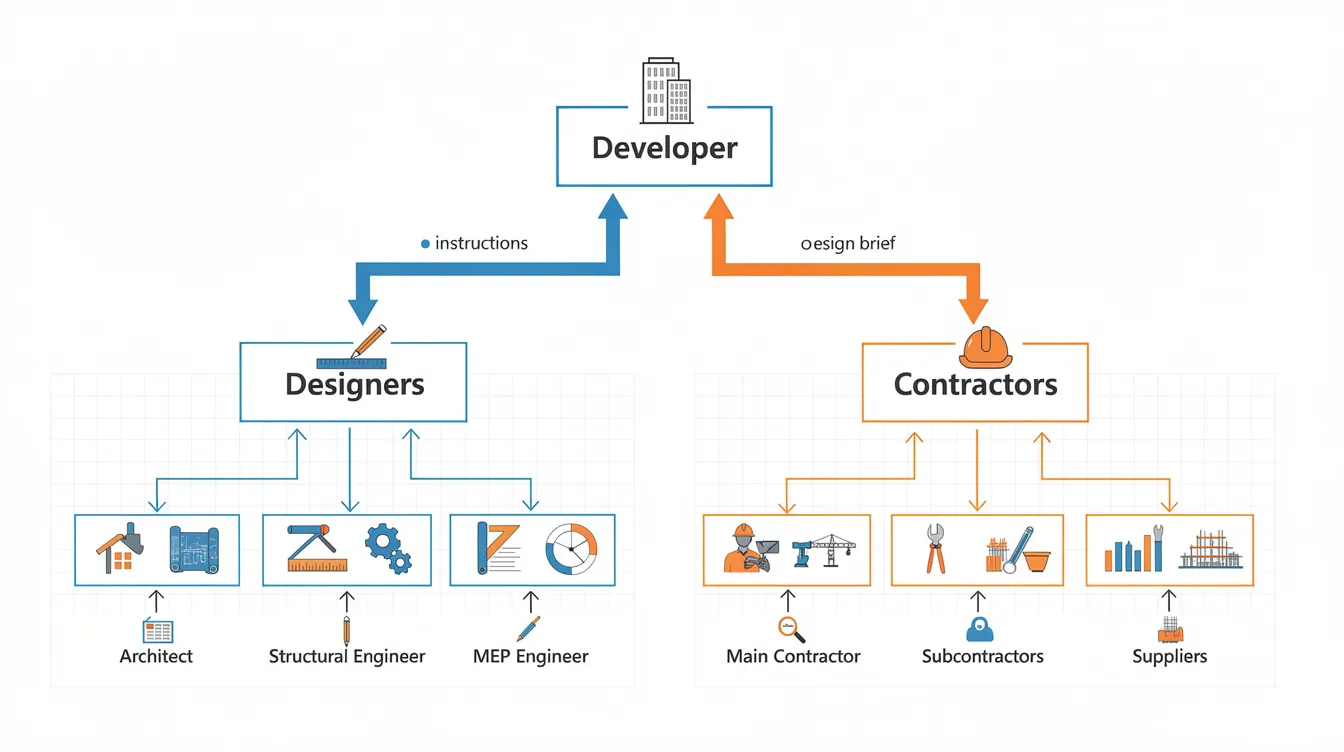
While the client holds primary legal responsibility, the WSH (DfS) Regulations establish a clear division of duties among other persons involved in the project. Designers bear their own obligations under Regulation 9: they must ensure foreseeable risks in their designs are eliminated or reduced, consider future use and maintenance of the structure, cooperate with other parties, and communicate residual risks. Contractors, under Regulation 10, must implement the design safety measures, coordinate with designers, and comply with all relevant safety provisions during construction.
However, these responsibilities arise only after the developer has unpacked and communicated the requirements. Designers and contractors act on the information, constraints, and safety expectations provided by the client. If the developer fails to provide a complete design brief or neglects to share critical site condition information, designers and contractors cannot be expected to fill the gap. They do, however, have a duty to raise concerns and highlight risks to the client and to each other – making the relationships between parties a two-way communication channel rather than a one-directional chain of command.
Under Regulation 8, the developer may delegate certain administrative duties (such as maintaining the design-for-safety register or conducting review meetings) to a Design for Safety Professional (DfSP). But even under delegation, the developer remains the legally responsible person. Delegation does not transfer liability – it merely assigns the function while keeping the obligation and legal standing with the developer.
Legal Liability and Compliance Requirements Under Singapore Law
With a clear picture of how responsibilities are divided, the next critical question is: what happens when compliance fails? The WSH (DfS) Regulations 2015 impose significant penalties, and enforcement by the Ministry of Manpower (MOM) is both structured and consequential.
Client Liability for Non-Compliance
Developers who fail to comply with their duties under Regulations 4 and 5 face serious legal consequences under Singapore law. The offences are set out in Regulation 12 of the WSH (DfS) Regulations 2015, and the penalties reflect the gravity of the obligation:
-
Serious offences (failure to eliminate or reduce foreseeable design risks, failure to appoint competent persons, failure to provide relevant information): fine of up to S$50,000, imprisonment of up to 2 years, or both.
-
Procedural offences (failure to maintain the design-for-safety register, failure to conduct review meetings): fine of up to S$20,000, with higher limits for repeat offenders.
-
Administrative offences (failure to hand over the register upon transfer of property interest): fine of up to S$10,000.
Since 1 June 2024, maximum fines under WSH subsidiary legislation – including the DfS Regulations – for breaches that could result in death, serious bodily injury, or dangerous occurrence were raised from S$20,000 to S$50,000. This reflects the government’s position that design-phase safety is not just best practice but a non-negotiable legal duty. A developer who is prosecuted may need to attend court and could face reputational damage alongside financial penalties. Insurance implications also arise: a failure to comply may void certain professional indemnity or public liability provisions, leaving the developer exposed to civil claims.
Documentation and Evidence Requirements
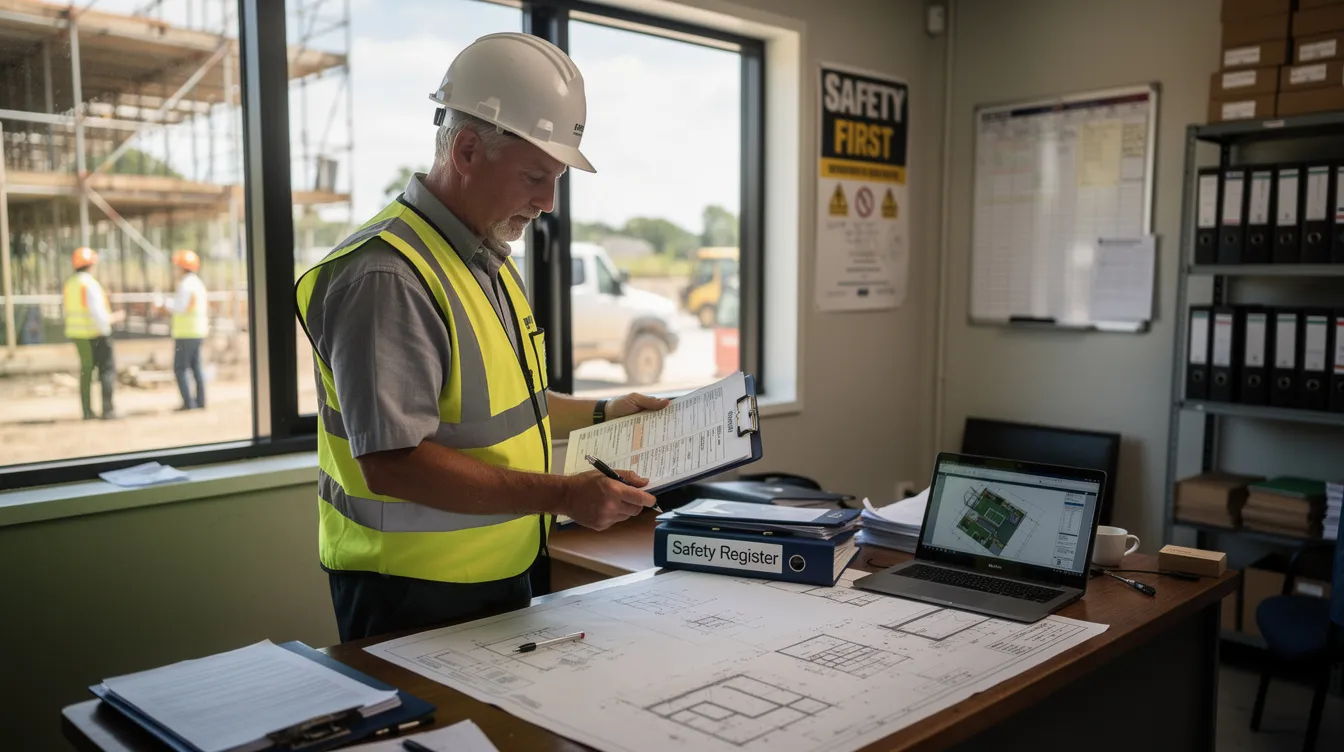
Compliance under the WSH (DfS) Regulations is heavily documentation-dependent. The developer must maintain a design-for-safety register under Regulation 6, updated whenever new risks are identified or decisions are taken in design review meetings. This register must be made available to MOM inspectors upon request and serves as the primary evidence of whether the developer has fulfilled their obligation to unpack and communicate safety requirements.
In detail, the documentation obligations include:
-
Design-for-safety register: A living document recording all identified design risks, risk elimination or reduction decisions, and the rationale for each decision.
-
Design review meeting records: Minutes, attendance lists, and outcomes of review meetings held at appropriate stages (conceptual, schematic, and detailed design phases).
-
Competence records: Evidence that appointed designers and contractors possess the relevant skills, qualifications, and track record.
-
Design brief and safety submissions: The client’s initial and updated design brief, including safety risk statements, objectives, constraints, and resource/time allocations, as well as relevant security constraints or site-specific security considerations where they affect design risk.
-
Handover documentation: Upon transfer of the developer’s interest in the property (sale, strata subdivision, etc.), the register must be handed to the new owner or management corporation, with a clear explanation of its purpose.
Record-keeping is not merely bureaucratic; it is the form through which legal compliance is demonstrated, safety and security-related design decisions can be verified where applicable, and disputes are resolved. Without documentation, a developer has no defence in the event of an MOM inspection or prosecution.
Enforcement and Inspection Procedures
MOM inspectors assess Regulation 34-related compliance by reviewing the presence and quality of the design-for-safety register, the conduct of review meetings, the completeness of the design brief, and the competence credentials of appointed persons. Inspections may be triggered by routine audit programs, workplace incidents, or complaints from other persons involved in the project.
During an inspection, the developer is obliged to produce all relevant documentation and to cooperate with the authority. Obstruction or failure to produce records constitutes a separate offence. Inspectors will look for evidence that the developer has not only created the required documents but has genuinely engaged with the safety design process – that risks have been identified, decisions documented, and safety requirements communicated with sufficient detail to designers and contractors. For more on how inspections interact with broader WSH management systems, see our guide on implementing a WSHMS audit checklist.
Practical Implementation and Compliance Process
Moving from legal framework to practical application, the following section outlines exactly how developers can develop and maintain a compliant approach to unpacking client requirements under the WSH (DfS) Regulations 2015.
Step-by-Step Compliance Procedure
This process should begin at the earliest stages of project conception – before designers or contractors are appointed – and continue through construction and handover.
-
Project assessment: Determine whether the project involves a structure and falls within the scope of the WSH (DfS) Regulations. Assess the nature, scale, and circumstances of the development.
-
Design brief preparation: Create a comprehensive design brief that includes safety risk statements, design objectives, known site conditions, foreseeable hazards, and constraints, including security-related constraints where they affect design risk and downstream duties. This is the core “unpacking” document – it must be prepared with care and professional judgment.
-
Safety requirement unpacking: Identify all foreseeable design risks in accordance with the hierarchy of controls: eliminate at source, then reduce collectively, then individually. Document the rationale for each decision.
-
Appointed person engagement: Select designers and contractors with demonstrated competence, verified against the scope of the specific job they are being appointed to perform. Include WSH (DfS) compliance requirements in contracts and ensure adequate time and money are allocated for safety design work. Consider appointing a Design for Safety Professional (DfSP) to assist with register management and review meetings.
-
Documentation and submission: Establish the design-for-safety register and begin recording risks, decisions, and review meeting outcomes. Ensure all submission requirements are met.
-
Ongoing monitoring and review: Hold design-for-safety review meetings at conceptual, schematic, and detailed design phases. Update the register as new risks arise or design changes occur, and ensure review meetings capture any new safety or security issues arising from those changes or evolving site conditions. Maintain communication with all parties.
-
Handover: Upon completion and transfer of interest in the property, hand the register to the new owner or management corporation, inform them of its purpose, and retain copies for your own records.
Compliance Checklist and Timeline
|
Compliance Task |
Responsible Party |
Typical Timeline |
|---|---|---|
|
Project scope and DfS applicability assessment |
Developer/Client |
Pre-design phase |
|
Design brief with safety risk statements |
Developer/Client |
Before designer appointment |
|
Competence assessment of designers/contractors |
Developer/Client |
During procurement |
|
Contractual inclusion of DfS obligations |
Developer/Client + Legal team |
Before contract award |
|
Establishment of DfS register |
Developer or DfSP |
At project commencement |
|
Design review meetings (conceptual) |
Developer, designers, DfSP |
Conceptual design phase |
|
Design review meetings (schematic/detailed) |
Developer, designers, contractors |
Schematic/detailed design |
|
Register update and ongoing risk documentation |
Developer or DfSP |
Throughout project |
|
Register handover to new owner/MC |
Developer/Client |
Upon project completion/transfer |
This table should serve as a working tool: adapt it to the specific circumstances of each project and ensure that no task is deferred past its critical deadline. For a broader view of risk assessment in construction, consult our dedicated compliance guide.
Common Challenges and Solutions
Even well-intentioned developers encounter obstacles in meeting their compliance obligations. The following are the most common challenges and practical ways to resolve them.
Incomplete Design Brief Documentation
A frequent issue is that the design brief does not contain sufficient detail on safety risks, security considerations, constraints, or expectations – often because the developer has not been made aware of the extent of their obligation or lacks the technical skills to identify foreseeable hazards.
Solution: Use standardised safety brief templates aligned with WSH (DfS) requirements. Engage a qualified DfSP or WSH consultant at the outset to assist with risk identification, identifying design issues with safety and security implications where relevant, and drawing up the brief. This ensures nothing is missed and that the developer’s position is defensible under inspection.
Unclear Division of Responsibilities and the Need to Exercise Professional Judgment
Ambiguity about which party is responsible for which aspect of design safety – especially in projects with multiple designers, consultants, and contractors – can lead to gaps in compliance, disputes, and finger-pointing when things go wrong.
Solution: Establish a formal responsibility matrix at the start of the project. Define, in writing, the function and obligation of each person and group involved. Include these allocations in contracts. Hold a kick-off meeting where all parties acknowledge their duties. The WSH Committee roles and responsibilities guide offers a useful framework for structuring this kind of accountability.
Late Compliance Discovery
Some developers only become aware of their WSH (DfS) obligations after design work is well underway – or even during construction. By that point, safety design decisions may have been made without proper documentation or the involvement of competent parties.
Solution: Conduct a compliance gap assessment immediately upon discovery. Engage a WSH advisory team to review existing design decisions, retrospectively document risks and rationale where possible, and implement corrective measures. While late action is better than no action, the best interests of the project and the developer are always served by early engagement. For developments that also require broader safety certifications, consider pursuing bizSAFE certification in parallel.

Conclusion and Next Steps
The legally responsible party for unpacking client requirements under Singapore’s WSH (Design for Safety) Regulations 2015 is the developer – the person for whom the project is carried out. This responsibility is not a passive one: it requires active identification, documentation, and communication of design safety risks; appointment of competent designers and contractors; allocation of sufficient time, resources, and budget; and maintenance of a design-for-safety register throughout the project and beyond. Penalties for non-compliance are substantial, with fines of up to S$50,000 and imprisonment of up to 2 years for serious offences.
Immediate actionable steps:
-
Conduct a compliance assessment of your current or upcoming projects against Regulations 4–8 of the WSH (DfS) Regulations 2015.
-
Engage a qualified Design for Safety Professional to assist with risk identification and register management.
-
Review and update your design briefs, responsibility matrices, and documentation practices.
-
Ensure all appointed designers and contractors have verified competence and contractual DfS obligations.
For related topics, explore our guides on Design for Safety implementation in Singapore, WSH risk assessment procedures, and construction site risk assessment.