Introduction
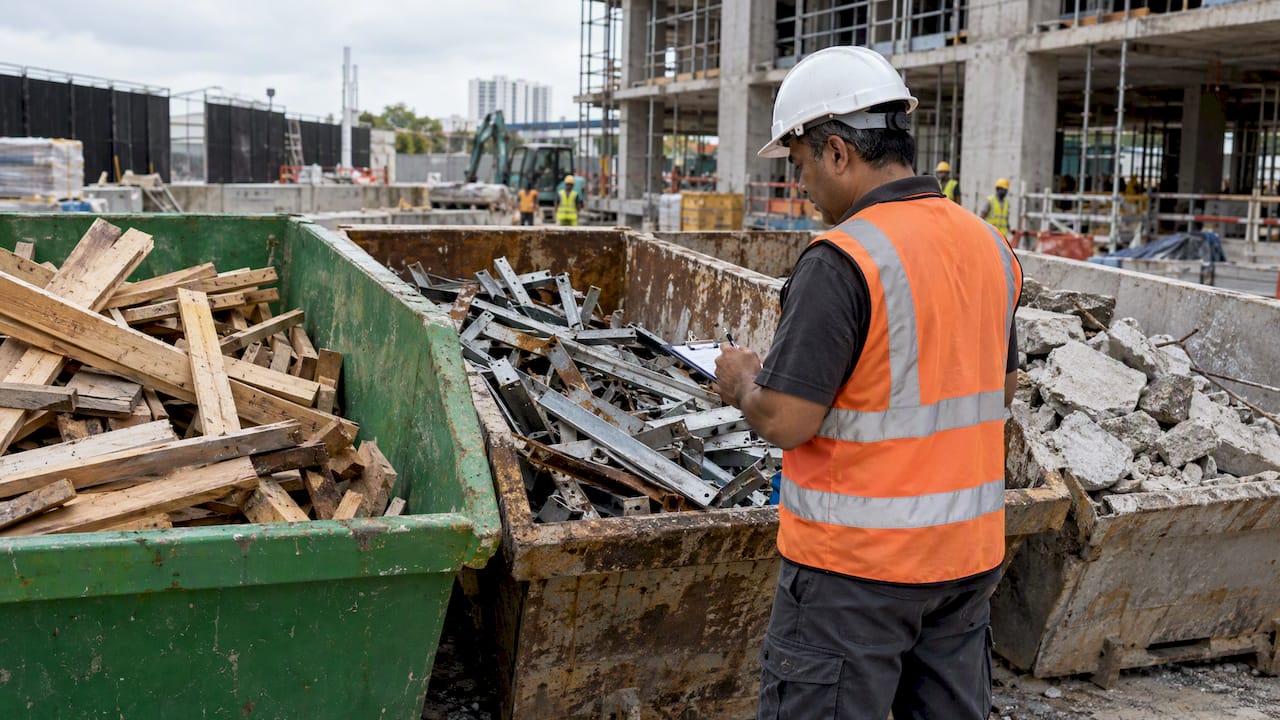
Design for Safety (DFS) requirements diverge sharply between HDB public housing projects and private condominium developments in Singapore, creating distinct compliance landscapes that every construction professional must navigate. While both sectors operate under the same core Workplace Safety and Health Regulations, the Housing and Development Board layers additional contractual obligations, technical standards, and enforcement mechanisms onto its projects that go well beyond minimum statutory requirements. Private condominiums, by contrast, follow a more flexible implementation model shaped by developer strategy, project scale, and market positioning.
This article breaks down the regulatory frameworks, implementation standards, documentation expectations, cost implications, and enforcement realities for DFS across both sectors. It is written for construction firms, private developers, contractors, and safety professionals working on residential projects in Singapore – whether you are bidding on an HDB tender, advising a boutique condo developer, or coordinating safety across a mixed portfolio.
The key differences in brief: HDB projects follow stringent public sector DFS protocols with mandatory review meetings for contracts exceeding S$10 million, external safety audits, contractor performance scorecards, and prescriptive technical requirements enforced through contractual clauses. Private condominiums must meet minimum BCA and MOM standards under the WSH (Design for Safety) Regulations 2015, but implementation depth varies widely – from prestige developers exceeding HDB-level rigour to boutique projects where compliance barely meets the regulatory floor.
By reading this article, you will gain:
-
A clear understanding of how DFS regulatory obligations differ between HDB and private housing
-
Insight into the documentation, audit, and enforcement expectations specific to each sector
-
Practical knowledge of cost and resource implications for DFS compliance
-
Awareness of construction quality data (CONQUAS ratings) and what it reveals about safety outcomes
-
Guidance on emerging policy trends that are reshaping safety expectations for private condominiums
Understanding Design for Safety (DFS) in Singapore’s Construction Context
Design for Safety is a systematic process that requires developers and designers to identify, eliminate where possible, or reduce safety and health risks during the design phase – before construction begins. DfS principles focus on identifying hazards early and managing them throughout the project lifecycle, covering not just construction workers but also those who will maintain, operate, or eventually dismantle a structure. Both HDB and private condominium projects follow the same core Workplace Safety and Health Regulations, but implementation depth and enforcement rigour differ considerably.
DFS Regulatory Framework Overview
The WSH (Design for Safety) Regulations 2015, which came into force on 1 August 2016, impose baseline obligations on all developers and designers. These include conducting DFS review meetings during design, maintaining a DFS register documenting identified hazards and mitigation measures, and ensuring that designers and contractors are competent. Design for Safety (DfS) in Singapore is a mandatory safety approach for projects over $10 million.
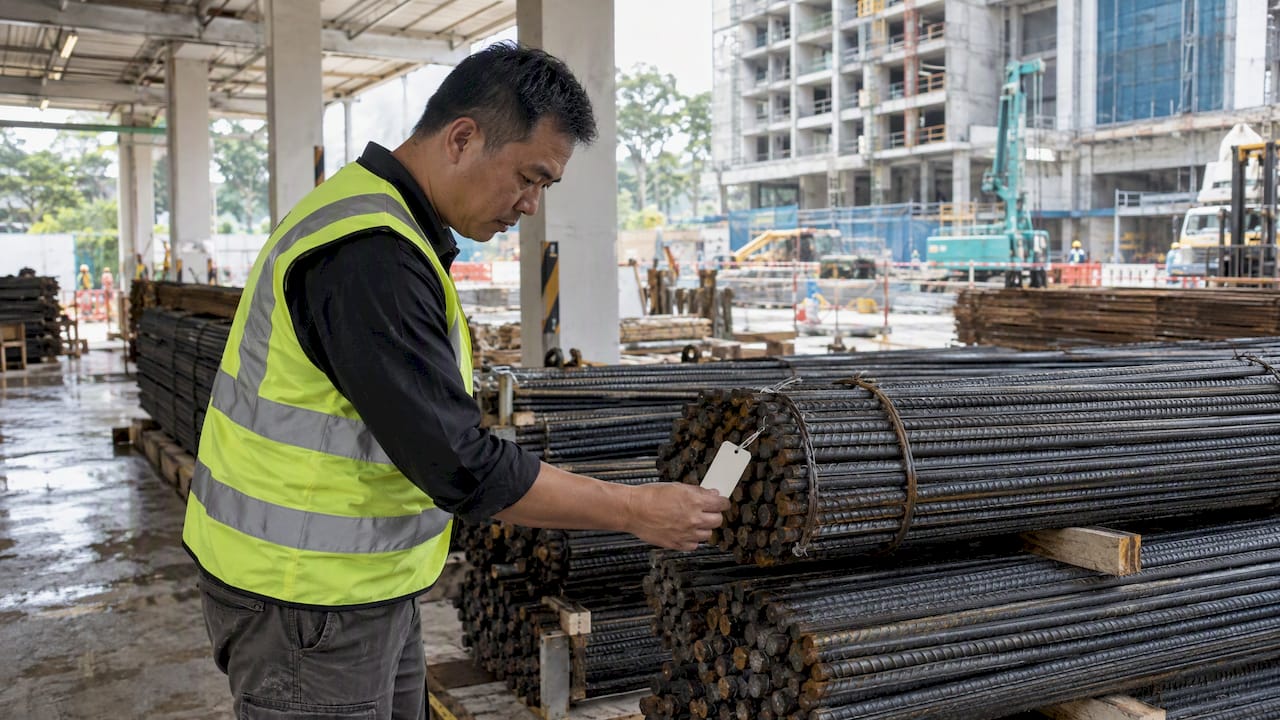
Complementary regulations from BCA govern building plan submissions (safety barriers, guardrails, roof parapets), while URA development control guidelines and SCDF fire safety codes layer additional requirements. The bizSAFE certification framework integrates with DFS by requiring contractors to demonstrate workplace safety and health management competence – a particularly significant requirement in HDB procurement, where subcontractors must maintain bizSAFE Level 3 certification.
Public vs Private Sector Safety Expectations
Government-led projects carry an inherent expectation of exemplary safety performance. HDB, as Singapore’s public housing authority serving Singapore citizens and permanent residents, operates under public scrutiny that extends to construction safety outcomes. HDB reports publicly on accident rates, uses safety disqualification frameworks, and embeds safety performance into contractor eligibility for future tenders.
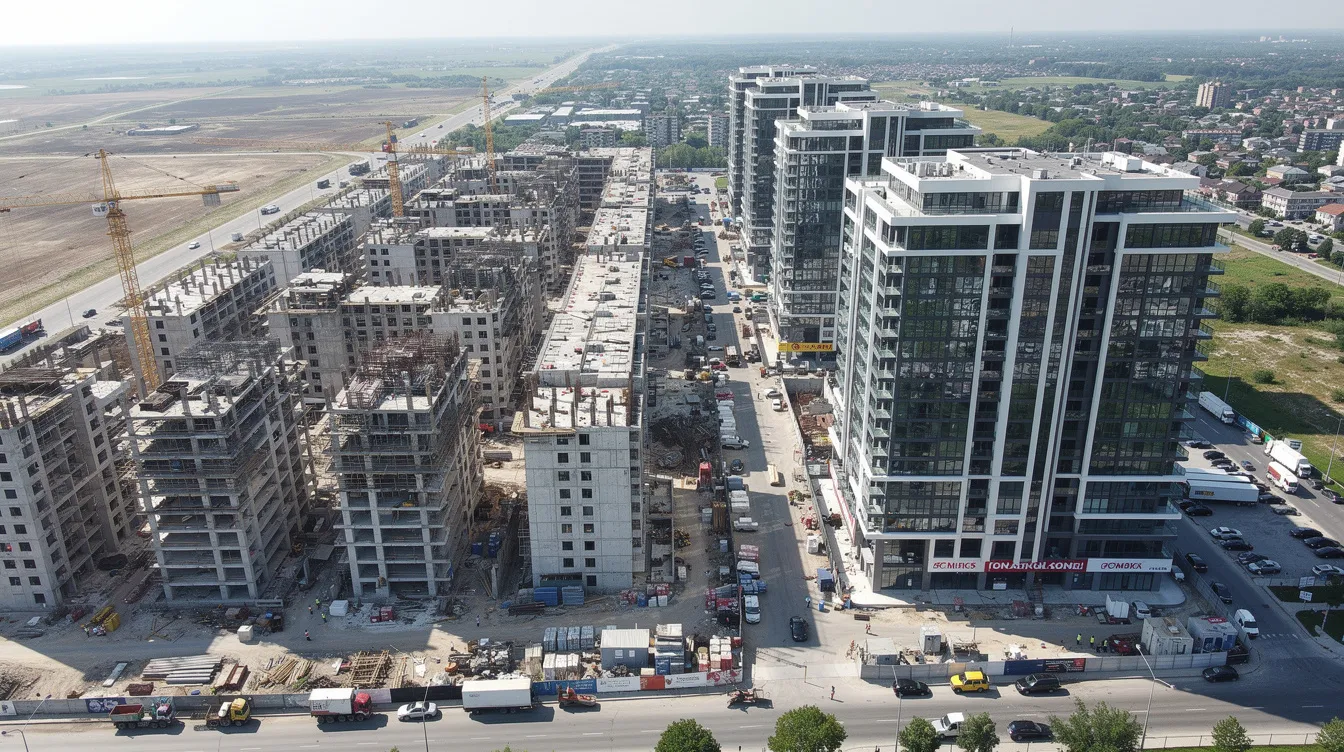
Private condominiums balance safety with market differentiation and resident experience. Private developers operate within the same legal boundaries but weigh safety investments against commercial considerations – project timelines, profit margins, and competitive positioning. The result is a wide spectrum: large reputable developers frequently exceed minimum requirements for brand differentiation and liability management, while budget-conscious projects focus on efficient compliance with regulatory minimums. This divergence becomes critical when examining how DFS plays out in practice across both sectors.
DFS Implementation in HDB Projects
HDB is not merely a regulator of public housing – it is the developer, and this dual role means DFS expectations are embedded directly into procurement contracts, design specifications, and construction oversight. HDB projects utilize uniform design and standard construction methods, creating a controlled environment where safety protocols can be systematically enforced at scale.
Mandatory DFS Requirements for HDB Flats Developments
According to HDB’s FY2024/25 Sustainability Report, any new HDB development with a contract value exceeding S$10 million must hold formal DFS review meetings during the design phase. This is not merely a recommendation – it is a contractual obligation enforced through HDB’s procurement framework. HDB projects rely on Design for Manufacturing and Assembly (DfMA) to reduce high-risk work, with prefabrication and modular construction methods minimising dangerous on-site activities.
Comprehensive DFS reports are required at the design stage with detailed hazard identification and mitigation measures. Where elimination of hazards is not feasible, residual risks must be reduced using collective protective measures (guardrails, safety nets) rather than individual measures (harnesses). HDB projects prioritize simple maintenance access to minimize work-at-height risks, and DfS for HDB projects focuses on durability and safe access for a diverse range of residents.
HDB developments incorporate safety elements that reduce maintenance hazards at height – a critical consideration given that HDB flats are public housing overseen by HDB and maintained over decades. HDB designs emphasize safety featuring communal usability and accessibility for large populations, with design decisions reflecting the long-term needs of residents across all demographics.
HDB-Specific Safety Standards
HDB’s architectural technical requirements prescribe specific dimensions that go beyond general BCA standards:
-
Parapet/railing height: Not less than 1.20m from finished floor level
-
Window cill height: Minimum 1.0m
-
Void/gap dimensions: Not exceeding 100mm between vertical members
-
Anti-climb design: No horizontal climbable members on railings
-
Glass cladding: Specific rules governing safety glass usage in exposed locations
-
Maintenance access: Mandatory provisions preventing external structures that hinder safe maintenance
HDB flats now feature communal facilities like parks and gyms, meaning safety considerations extend beyond individual units to shared spaces used by thousands of residents. These community safety considerations include pedestrian protection during construction, site boundary management, and safety signage requirements.
HDB also maintains a stringent Materials List (ML) requiring test reports from accredited laboratories, performance certification, and documented track records before any safety equipment, machinery, or building component can be used on HDB projects.
Compliance Monitoring and Enforcement
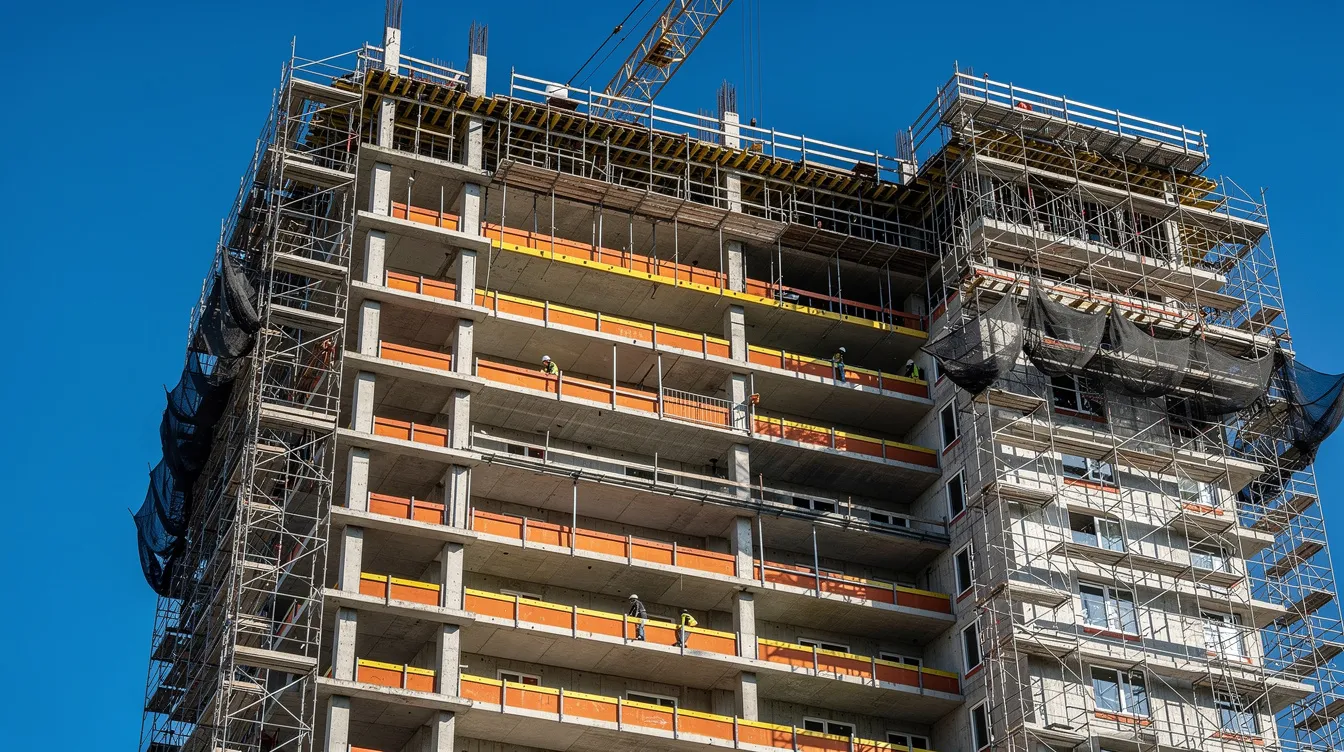
HDB’s enforcement operates through multiple layers that private projects rarely replicate:
-
Daily safety checks conducted by site safety personnel
-
Independent safety audits required every 6 months for projects above S$30 million
-
Biannual construction safety audits with external auditors
-
Full-time WSH officers deployed on site as a contractual requirement
-
AI and CCTV video analytics for crane operations and hazard detection
-
Safety Disqualification Framework: Contractor performance scorecards where safety non-compliance can affect eligibility for future HDB tenders
For HDB contracts, subcontractors must maintain bizSAFE Level 3 certification. Safety refresher training is required for all site personnel, PPE usage is mandated and checked, and non-compliance can trigger immediate work stoppages. This level of monitoring creates a fundamentally different compliance environment compared to private developments, where enforcement resources are more limited.
DFS Implementation in Private Condominium Projects
Private condominiums operate within the same legal framework but with significantly more latitude in how DFS obligations are fulfilled. The variation between a large-scale luxury development by a major listed developer and a boutique 30-unit project by a smaller firm can be as large as the gap between either and an HDB project.
Minimum Regulatory Compliance Approach
Private condominium developers must comply with the WSH (DfS) Regulations 2015, BCA building and fire safety codes, and URA development control guidelines. Private condominiums require bank loans for financing and are subject to market volatility and cooling measures, creating commercial pressures that shape how safety budgets are allocated.
Some building works in private developments are exempted from BCA plan approval when classified as “insignificant” – a flexibility not available in HDB projects, which are tied more closely to public-sector eligibility rules and ownership restrictions. Private condominiums can be sold or rented out anytime on the open market, and unlike HDB flats or ECs, they are not subject to a Minimum Occupation Period (MOP), which means developers are oriented toward speed of completion and market timing rather than long-term operational safety considerations. Private condominiums generally do not face the same HDB eligibility criteria seen in public housing or EC purchases. By contrast, executive condominiums (ECs) are built by private developers but still follow public-housing style eligibility and occupancy rules.
Risk-based DFS implementation is common, with resources concentrated on high-risk activities and critical construction phases rather than applied uniformly across all project elements. Documentation tends to be more streamlined – meeting legal requirements without the extensive layering of reports and registers that HDB contractually demands.
Developer-Specific Safety Standards
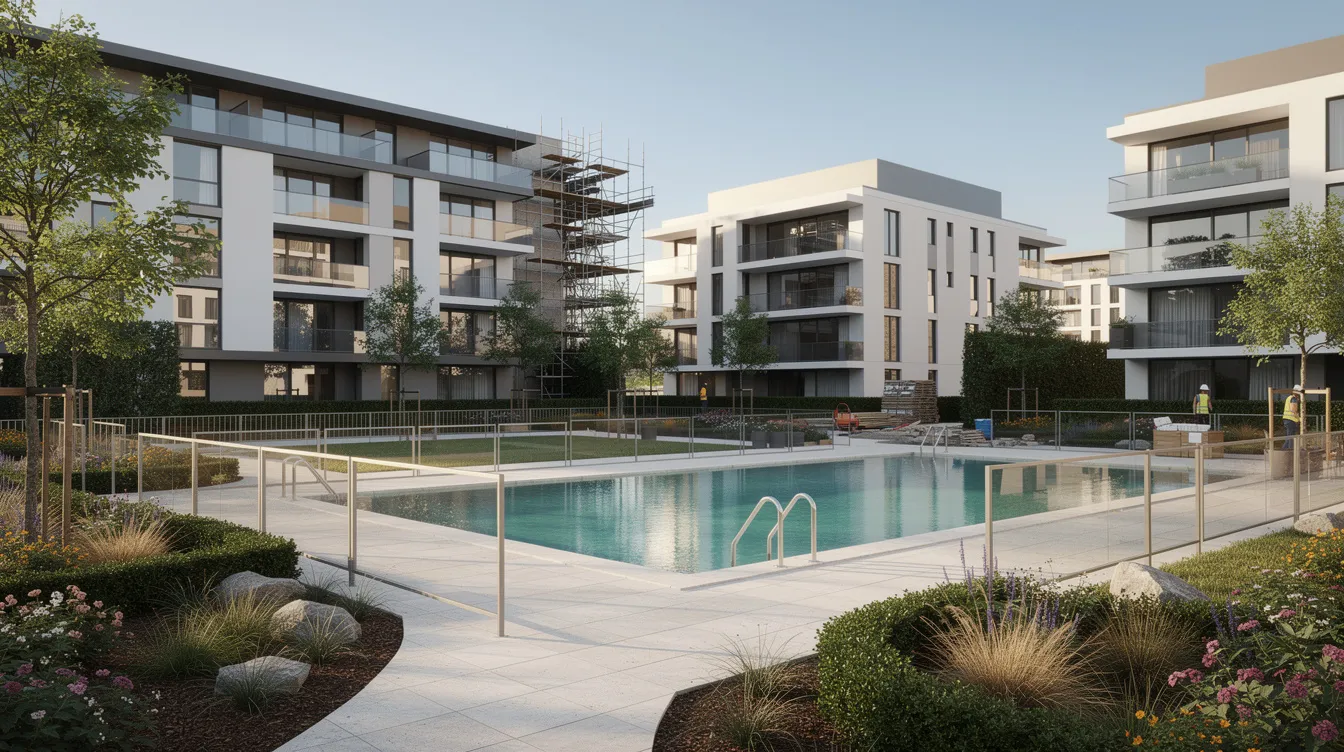
Private condominiums often appeal to buyers seeking condo living, so DfS for these projects includes tailored safety features that support higher lifestyle expectations as well as luxury design. Private condominiums feature unique architectural designs and complex structural loads, and private condominiums may involve more intensive non-standard construction methods – cantilevered balconies, infinity pools, double-height lobbies, and complex façade systems all introduce safety risks that require bespoke DFS solutions.
Premium developers in prime locations and prime districts often exceed minimum requirements substantially. Their motivation combines liability management, brand protection, and insurance premium optimisation. Condos offer a wider range of condominium-style facilities like swimming pools and gyms, and private condominiums often have security features like secured fencing and 24/7 security – all requiring specialized safety strategies for both construction and ongoing maintenance.
Private condominiums focus on maintaining high-end amenities, requiring specialized safety strategies. Condominium facilities such as swimming pools, tennis courts, and function rooms create ongoing maintenance safety obligations that must be addressed during the design phase. Private condominiums often include concierge services and BBQ pits, adding layers of operational safety consideration.
By contrast, boutique developers building smaller projects face acute cost pressures. BCA data reveals that of 167 private residential projects assessed via CONQUAS ratings over six years, 48 received low ratings (bands 4–6), and 28 of those were small condominium developments with fewer than 50 units. This indicates a higher incidence of workmanship defects – and by extension, safety shortcomings – in smaller private projects where oversight and resources are more limited.
Market-Driven Safety Considerations
Insurance requirements and liability exposure influence DFS implementation depth. Private developers face greater litigation risk than HDB, which has some degree of sovereign immunity. This creates a paradox: the projects with the weakest DFS implementation (boutique condos) may face the highest liability exposure relative to their resources.
Private condominiums can be purchased by foreigners, including foreign buyers, and reach a wider range of eligible buyers than regulated public-sector housing products, broadening the buyer pool while also raising expectations for international safety standards. Condos generally offer higher capital appreciation than HDB flats, and freehold condos tend to hold their value well over time – making construction quality and safety a direct contributor to resale value and investment potential, while also supporting the resale market.
Post-completion, private condos are managed by Management Corporation Strata Title (MCST) bodies. Private condos typically have higher maintenance fees than HDB flats, but whether those monthly maintenance fees fund adequate safety maintenance depends entirely on sinking fund levels and MCST governance, especially where rental demand and rental yield make ongoing safety upkeep more material for investor-owned units. Proposals are being explored to require condo councils to publish sinking fund information, ensuring enough funds for essential safety works – a reform that would narrow the accountability gap with public housing.
Key Differences and Practical Implications
The regulatory and implementation differences established above translate into concrete variations in documentation, timelines, costs, and resource allocation that contractors and developers must plan for.
Documentation and Reporting Requirements
|
Aspect |
HDB Projects |
Private Condominium Projects |
|---|---|---|
|
DFS Review Meetings |
Mandatory for contracts >S$10M; formally scheduled and documented |
Required by law; frequency at developer discretion |
|
DFS Register |
Comprehensive register with detailed risk assessments; maintained throughout project |
Required; may be more streamlined; smaller projects sometimes minimally comply |
|
Safety Audit Reports |
External audits every 6 months for projects >S$30M; independent auditors required |
BCA-scheduled inspections; voluntary additional audits by some developers |
|
Material Certification |
HDB Materials List requiring accredited lab test reports, performance certification, track records |
BCA/SS compliance; less prescriptive documentation unless developer specifies |
|
Safety Personnel |
Full-time WSH officers mandated; bizSAFE Level 3 for all subcontractors |
WSH coordinator as per regulations; scale of deployment varies by project size |
|
Technology Integration |
AI, CCTV, video analytics for crane and hazard monitoring |
Uncommon as standard practice; security-oriented surveillance more typical |
|
Post-Completion Documentation |
Operational safety documentation tied to handover; maintenance access design records |
Handover to MCST; documentation depth depends on developer standards |
|
Public Accountability |
Safety performance reported in annual sustainability reports; public scrutiny |
No unified public reporting; MCST transparency varies widely |
HDB projects requiring comprehensive DFS reports with detailed risk assessments and mitigation strategies submitted at multiple project stages reflects the public housing mandate: as a property type designed as an affordable entry point for first-time buyers, HDB flats carry heavier accountability and documentation expectations than in a typical hdb vs private development comparison. Private developments allow more streamlined documentation approaches while meeting regulatory minimums, though this flexibility can become a liability when quality problems emerge.
HDB flats also carry a 5-year Minimum Occupation Period before resale, which further distinguishes their downstream ownership lifecycle from private condominiums.
Implementation Timeline and Milestones
For HDB projects, the DFS implementation follows a structured sequence that differs by property type:
-
Design stage: Formal DFS review meetings conducted with all stakeholders; DFS register established; hazards identified and elimination/mitigation measures documented
-
Pre-construction: Safety management plan submitted and approved; contractor and subcontractor WSH qualifications verified; safety orientation completed for all site personnel; Materials List compliance confirmed
-
Construction phase: Daily safety checks; biannual external audits (projects >S$30M); continuous monitoring via WSH technology systems; safety performance tracking via scorecards; non-compliance triggers immediate rectification or work stoppage
-
Handover and operations: Operational safety documentation compiled; maintenance access provisions verified; safety features integrated into long-term building management
HDB flats have a 5-year Minimum Occupation Period before resale, so the long-term operating and ownership timeline differs from private condominium projects.
Private condominium timelines are generally compressed. Developers may conduct DFS review meetings in fewer formal sessions, integrate safety planning into broader project management workflows, and rely more on post-construction CONQUAS assessments and BCA inspections rather than continuous in-process monitoring. The design timeline may be condensed for speed-to-market, with risk assessment concentrated on high-risk elements rather than applied comprehensively.
Cost and Resource Implications
|
Cost Element |
HDB Projects |
Private Condominiums |
|---|---|---|
|
DFS Consultancy |
Comprehensive; engaged from design inception |
Variable; may be project-phase specific |
|
Safety Personnel |
Full-time WSH officers; larger safety teams |
Scaled to project size; may be part-time for smaller projects |
|
Safety Audits |
Mandatory external audits + internal checks |
Primarily regulatory inspections; voluntary audits by some developers |
|
Material Testing |
Accredited lab testing per HDB ML requirements |
SS/BCA compliance testing; less prescriptive |
|
Technology |
AI, CCTV, video analytics – increasingly standard |
Limited to security surveillance in most projects |
|
Non-Compliance Costs |
Work stoppages, scorecard penalties, tender disqualification |
BCA enforcement, potential litigation, reputational damage |
HDB flats typically provide a more affordable entry point, often costing between SGD 450,000 and SGD 800,000, while private condominiums generally come with a lower entry price that is still much higher by comparison, typically starting at around SGD 1 million. The higher purchase price of comparable private condominiums does not always translate to proportionally higher safety investment during construction. HDB’s economies of scale and standardised procurement lower per-unit safety costs, while smaller private projects may face disproportionate overhead for comprehensive DFS compliance.
HDB buyers may qualify for CPF Housing Grants, including the family grant for some first-time eligible buyers, subject to HDB eligibility criteria. HDB loans offer lower interest rates at 2.6%, and checking loan eligibility helps buyers understand the maximum financing available and repayment structure, with HDB loans allowing a longer repayment period of up to 25 years. Private condo buyers do not qualify for government grants, typically rely on a bank loan, and face larger down payments than HDB flats. HDB loans allow a maximum Loan-to-Value ratio of 75%. These financing structures – including the availability of government subsidies, CPF housing grants, and HDB concessionary loan options – shape the economics of each housing type but are distinct from the safety cost considerations that affect developers during construction.
HDB resale prices may depreciate with shorter lease terms, as lease tenure limits can affect long-term value.
Private condominiums are subject to additional buyer’s stamp duty considerations, and the entry price differential means private developers face different commercial calculations when weighing safety investments against project margins.
Common Challenges and Solutions
DFS implementation faces practical difficulties that differ between sectors but share common themes of resource allocation, coordination, and evolving regulatory expectations.
Navigating Different Compliance Standards
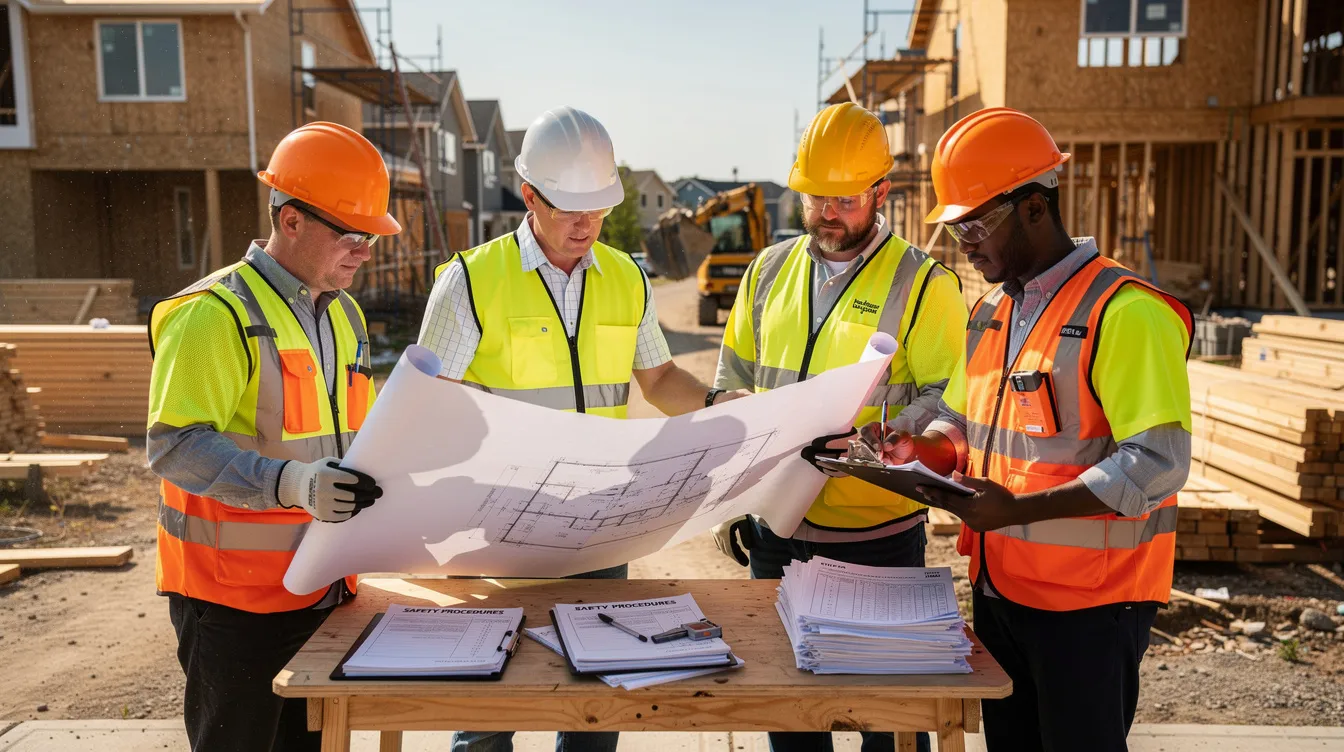
Contractors working across both HDB and private sectors must maintain dual compliance frameworks. HDB’s prescriptive requirements – specific barrier heights, anti-climb specifications, material certification via the Materials List – sit alongside BCA’s performance-based standards applicable to private projects. The solution: develop a comprehensive risk assessment framework that meets HDB requirements as a baseline, then scale down documentation for private projects where appropriate. This ensures no regulatory gap exists regardless of project type.
HDB projects are shaped by hdb eligibility criteria, including family nucleus requirements, unlike private condominiums where buyer eligibility is generally more flexible. These differences also affect personal circumstances and long term plans when firms advise clients across housing segments.
Resource Allocation and Budget Planning
HDB projects have clearer cost structures for safety because requirements are contractually specified. Private condominium developers face the challenge of right-sizing safety investments. The ROI argument is strongest for prestige developers: condos generally yield higher rental returns than HDB flats, and higher capital appreciation means construction quality directly affects long-term asset value. Executive condominiums (ECs) are often a middle-ground property type considered by hdb upgraders, and while they are typically launched in non-mature estates and often see strong appreciation after the Minimum Occupation Period, they offer a more affordable entry point than private condominiums but come with an income ceiling and other eligibility criteria. Future launches will no longer offer the Deferred Payment Scheme, which affects buyer cash-flow planning. Full privatisation of ECs can lead to significant price increases – making quality construction and safety design a tangible investment rather than a cost.
For boutique developers facing tighter margins, the practical strategy is engaging qualified DFS professionals early in the design phase. Early intervention is significantly cheaper than remediation, and poor CONQUAS ratings from workmanship defects can damage a developer’s pipeline.
Contractor and Subcontractor Coordination
HDB’s requirement for bizSAFE Level 3 certification among subcontractors creates a baseline of competence. Private projects lack this uniform requirement, leading to inconsistency when subcontractors move between sectors. Solutions include establishing project-specific safety induction programmes, requiring safety certifications as part of subcontract terms, and implementing regular toolbox meetings aligned with WSH committee best practices.
Government policies impose stricter rental regulations on HDB flats, and HDB flats can only be rented to Singapore citizens and PRs – meaning the post-occupancy safety profile differs from private condominiums that can be rented out without restrictions. This distinction affects DFS considerations around common area design, security service provisions, and resident safety orientation.
Technology and Documentation Management
HDB’s adoption of AI-powered hazard detection and CCTV video analytics sets a benchmark that private projects are beginning to follow. Digital tools for managing DFS documentation – tracking compliance status, automating audit schedules, and generating reports – reduce the administrative burden on both sectors. The emerging trend toward technology-driven WSH management offers particular value for private developers managing multiple smaller projects where dedicated safety personnel may not be economically viable.
HDB flats have lower service and conservancy charges than condos, but the centralised management model ensures consistent safety maintenance. Private condo maintenance fees fund MCST-managed safety systems, but effectiveness depends on governance quality – an area where regulatory reforms are likely to bring private sector standards closer to public sector benchmarks.
Conclusion and Next Steps
DFS implementation in Singapore’s residential construction sector operates on two distinct tracks. HDB projects embed safety into every phase through contractual mandates, prescriptive technical standards, multi-layered enforcement, and public accountability mechanisms. Private condominiums operate within the same legal framework but with implementation depth that ranges from exceeding HDB standards (among major developers) to bare-minimum compliance (among smaller boutique projects). The data supports this: CONQUAS ratings consistently show higher defect rates in small private developments, while HDB’s systematic approach delivers more uniform safety outcomes.
In HDB versus private condominium decisions, personal circumstances and family plans often matter as much as cost or market timing. Buyers comparing EC vs. private condominiums should also weigh eligibility rules, resale restrictions, and, when considering a second property, additional buyer’s stamp duty alongside lifestyle and investment goals.
Immediate next steps for construction professionals:
-
Assess your current project portfolio against the appropriate DFS standards – use HDB’s technical requirements as a benchmark even for private projects
-
Engage qualified DFS consultants for gap analysis, particularly if you are transitioning between HDB and private sector work
-
Develop project-specific DFS implementation plans that account for the documentation, audit, and personnel requirements of each sector
-
Monitor emerging regulatory changes – MCST transparency requirements, CONQUAS integration, and technology mandates are narrowing the gap between public and private sector expectations
For related guidance, explore bizSAFE certification requirements, WSH audit preparation strategies, and ISO 45001 integration opportunities to build a comprehensive safety management framework that serves both sectors effectively.