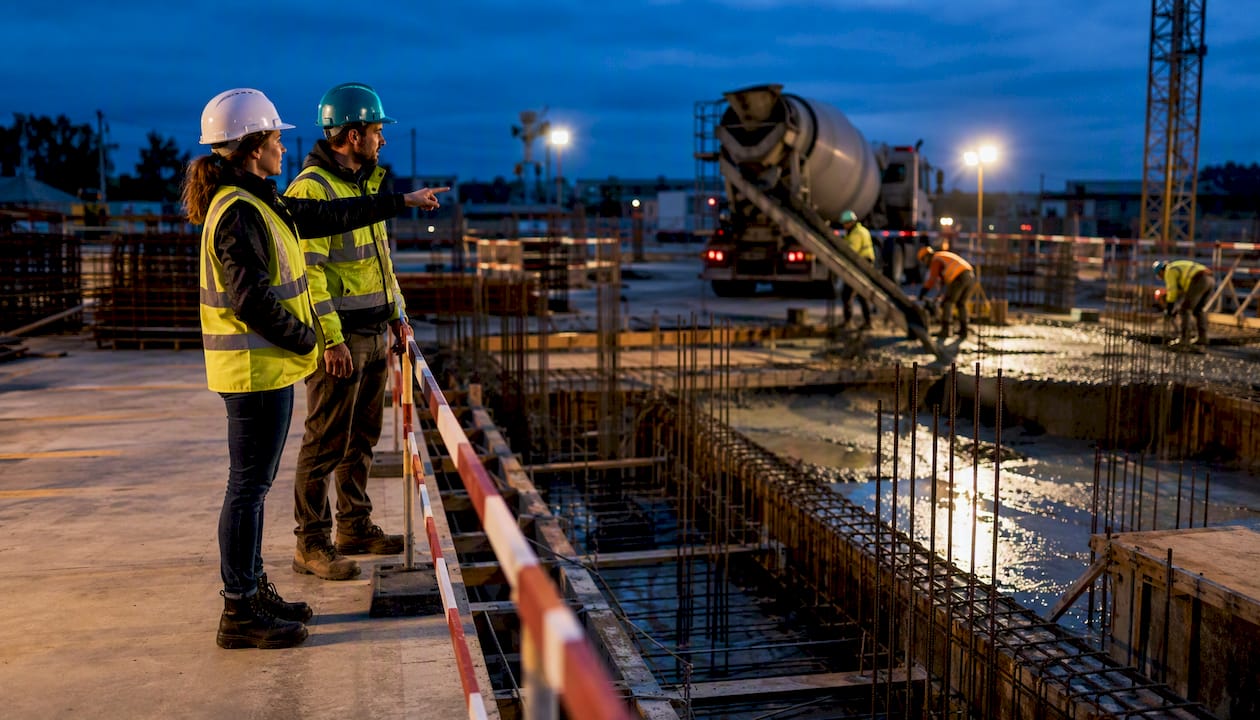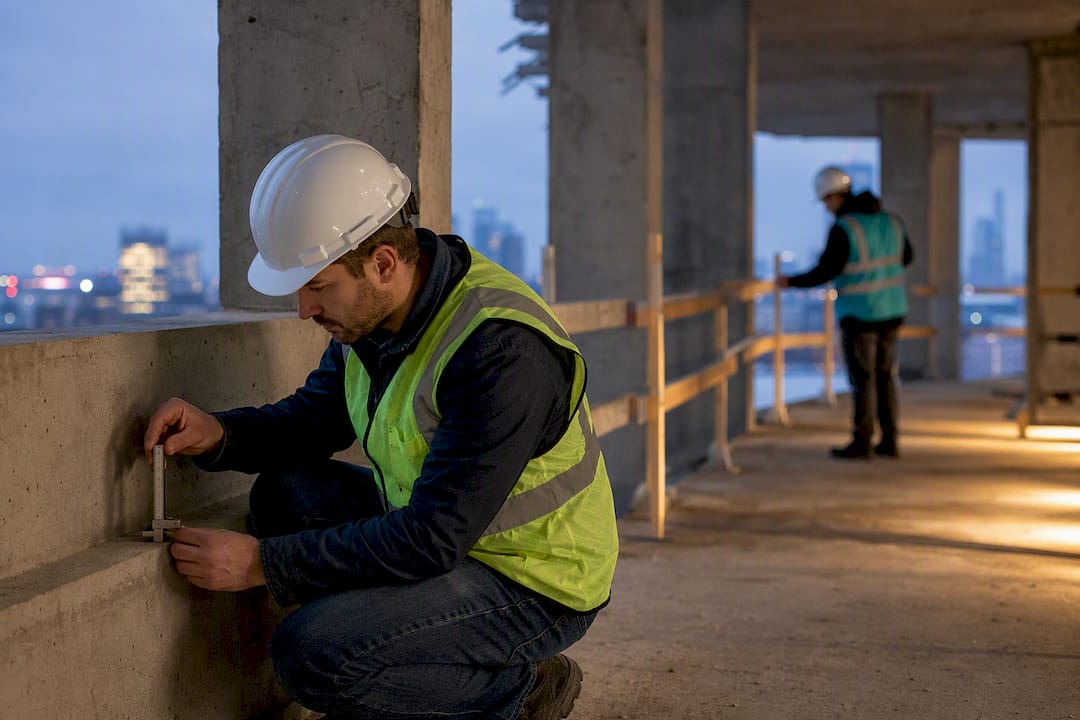
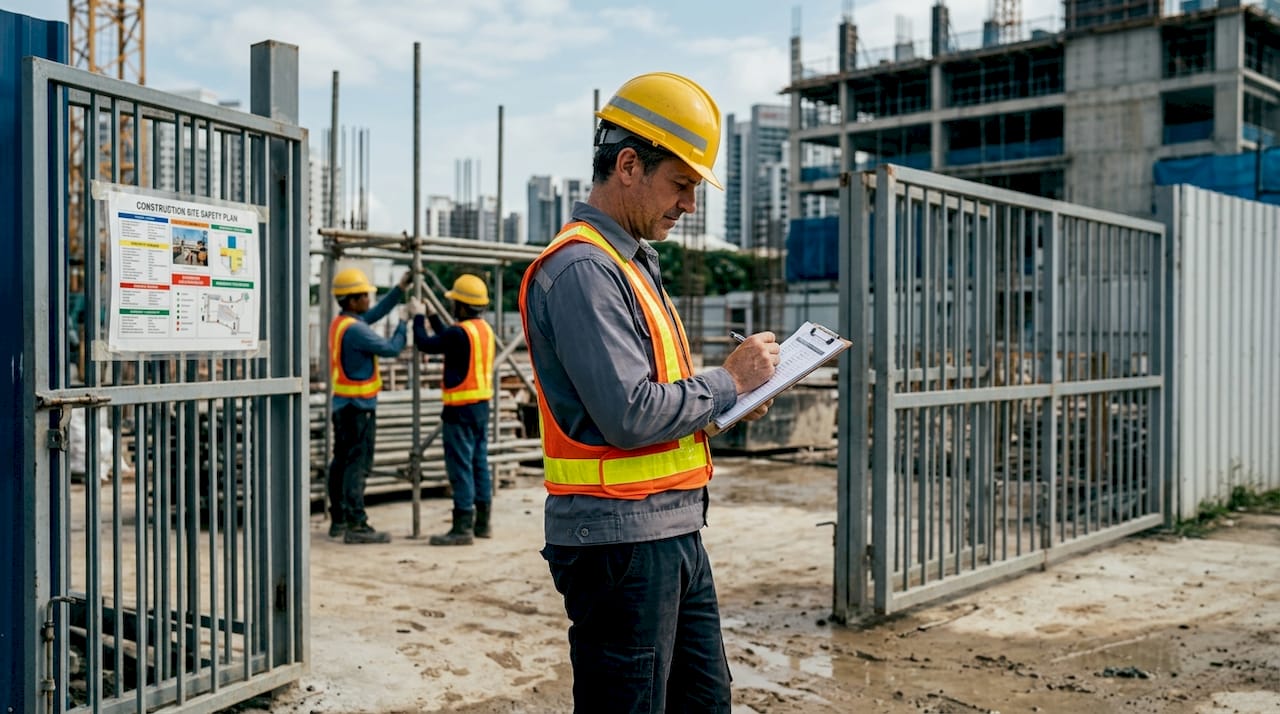
Singapore’s construction sector operates under one of the most rigorous statutory safety frameworks in Southeast Asia, and a single gap in audit documentation or staff preparedness can translate directly into failed certification, project delays, and significant regulatory penalties. The bizSAFE Level 3 audit requires verifiable risk management documentation alongside on-site verification of both implementation quality and staff understanding, making it a multi-dimensional compliance exercise rather than a straightforward paperwork submission. For construction executives and safety managers operating in Singapore, a structured, step-by-step command of the audit process is not merely advisable — it is operationally essential.
Table of Contents
- Understanding Singapore’s construction safety audit requirements
- Preparing for the construction safety audit: Prerequisites and tools
- Step-by-step construction safety audit process
- Common mistakes and troubleshooting in construction safety audits
- What most Singapore construction audits miss: Our frontline lessons
- Support for your next safety audit
- Frequently asked questions
Key Takeaways
| Point | Details |
|---|---|
| Understand bizSAFE Level 3 | Singapore construction audits hinge on complying with bizSAFE Level 3 requirements. |
| Prep documents and staff early | Early collection of paperwork and staff training reduces the risk of audit delays and failures. |
| Follow step-by-step audit process | A structured approach ensures all audit stages—documentation, inspection, and interviews—are well managed. |
| Avoid common pitfalls | Mock audits and proactive troubleshooting prevent errors that threaten compliance. |
| Tap expert guidance | Specialist support accelerates compliance and minimizes costly mistakes in audits. |
Understanding Singapore’s construction safety audit requirements
Singapore’s Workplace Safety and Health (WSH) regulatory framework positions the bizSAFE certification program as the primary mechanism through which construction firms demonstrate systematic risk management capability. Level 3 is the pivotal tier within this framework, representing the point at which a company must substantiate — through independent audit — that its risk management practices are operationalized, not merely documented on paper.
The bizSAFE Level 3 audit involves three distinct assessment domains: documentation review, on-site inspection, and staff interviews, each culminating in a formal audit report that the Ministry of Manpower uses to confirm certification eligibility. Understanding this tri-partite structure is non-negotiable for construction executives who intend to pass on the first attempt. The bizSAFE Level 3 guide available from MOSAIC clarifies the specific deliverables expected under each domain.
The importance of bizSAFE Level 3 extends well beyond regulatory compliance. Many public sector clients and major developers in Singapore now require Level 3 certification as a mandatory pre-qualification criterion for contract awards, making it a commercial necessity alongside its statutory function. Understanding the foundational requirements of building safety standards also informs how physical site conditions must align with documented protocols.
Key areas assessed in a bizSAFE Level 3 construction safety audit:
- Completeness and currency of the Risk Management (RM) plan, defined as the organization-level document specifying hazard identification, risk evaluation, and control measures for all work activities
- Evidence that risk assessments have been conducted for every identifiable work activity on-site
- Maintenance of training records, competency logs, and toolbox meeting attendance registers
- Incident reporting records, near-miss logs, and corrective action documentation
- Physical site conditions, including the installation and maintenance of engineered controls and personal protective equipment (PPE) stations
- Demonstrated staff awareness and practical understanding of site-specific safety protocols
| Audit domain | What is assessed | Common deficiency |
|---|---|---|
| Documentation review | RM plan, risk assessments, training records | Outdated assessments, missing sign-offs |
| On-site inspection | Physical controls, PPE compliance, signage | Inadequate controls, unmaintained equipment |
| Staff interviews | Protocol knowledge, hazard identification | Scripted or shallow answers, knowledge gaps |
Typical deficiencies that cause audit failure include incomplete risk assessment coverage for non-routine activities, training records that cannot be traced to specific work tasks, and staff who cannot articulate the risk controls relevant to their daily activities. Each of these failure points is preventable with structured preparation.
Preparing for the construction safety audit: Prerequisites and tools
Effective audit preparation is the most consequential variable separating firms that pass on the first attempt from those requiring reassessment cycles. The bizSAFE Level 3 audit framework recognizes compliance with WSH Regulations specifically through risk assessments that cover every work activity, which means preparation must be both exhaustive in scope and precise in execution.
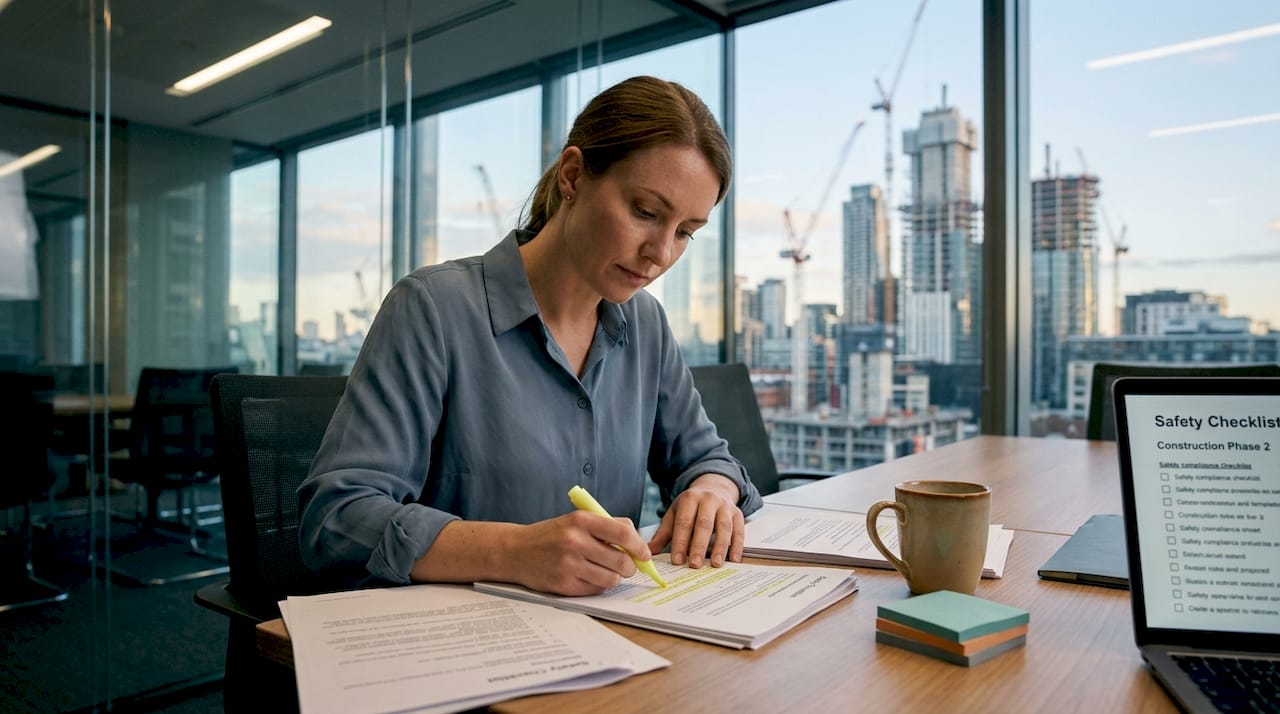
Construction executives should initiate preparation at minimum two weeks before the scheduled audit date. This timeline allows sufficient cycles for internal review, gap rectification, and staff briefing without compressing any single activity to the point of inadequate execution. The bizSAFE Level 3 achievement process outlines the prerequisite training and documentation milestones that must be in place before the audit can be formally scheduled.
Essential documents to compile and verify before audit day:
- Current RM plan, reviewed and endorsed within the past 12 months
- Risk assessments for all routine and non-routine work activities, including tasks conducted by subcontractors on-site
- Training records cross-referenced against the site’s workforce roster
- Toolbox meeting attendance registers for the preceding three to six months
- Incident reports and near-miss logs with documented follow-up actions
- Safe Work Procedures (SWPs) for high-risk activities such as working at height, confined space entry, and crane operations
- Emergency response plans and drill records
Selecting the right bizSAFE consultant at this stage can significantly reduce the preparation burden, particularly for firms undergoing their first Level 3 audit or those managing multiple concurrent project sites under a single certification scope.
| Preparation activity | Recommended timeline | Responsible party |
|---|---|---|
| Document compilation and gap review | Week 1 to 2 before audit | Safety manager |
| Site inspection walkthrough | Week 1 before audit | Safety officer plus site supervisor |
| Staff briefing and mock interview | 3 to 5 days before audit | Safety manager |
| Final document verification | 1 day before audit | Safety manager plus executive sign-off |
Pro Tip: Construct a master audit checklist that maps each document to the specific audit requirement it addresses. This prevents the common scenario where documentation exists but cannot be located or matched to its relevant WSH regulatory reference during the live audit.
Step-by-step construction safety audit process
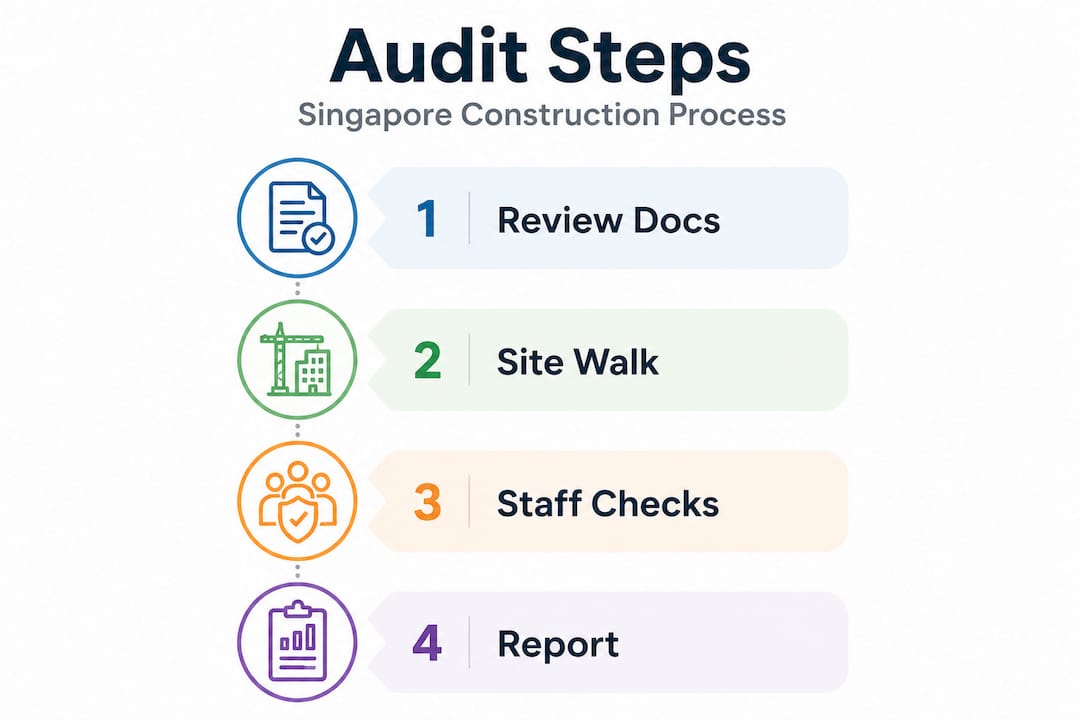
With preparation systematically completed, construction executives and safety managers must understand the precise sequence of events during the audit itself, and how to optimize performance at each stage. The bizSAFE Level 3 audit is completed through document review, on-site verification, and staff interviews, then formalized through an audit report submitted for certification processing.
The audit unfolds in the following sequence:
-
Opening meeting: The auditor introduces the audit scope, confirms the organizational structure, and verifies that the RM plan has been formally endorsed by senior management. Construction executives should be present at this stage to demonstrate organizational commitment.
-
Documentation review: The auditor systematically examines the RM plan, risk assessments, training records, incident logs, and SWPs. Every document must be current, complete, and internally consistent. Cross-referencing between documents — for example, ensuring that hazards identified in risk assessments are addressed in corresponding SWPs — is a standard audit technique.
-
On-site inspection: The auditor physically walks the project site or workplace to verify that documented controls are actually implemented. This includes checking that engineering controls such as guardrails, barricades, and ventilation systems are installed and maintained, and that PPE provisions match the requirements specified in the risk assessments.
-
Staff interviews: Auditors select workers across multiple levels, from frontline laborers to supervisors, and assess their understanding of site-specific hazards and control measures. Workers should be able to identify the key risks in their work area and describe the controls they use — without relying on memorized scripts.
-
Closing meeting: The auditor summarizes findings, highlights non-conformances or observations, and outlines the next steps for the audit report. Construction executives should request clarification on any finding at this stage rather than waiting for the written report.
“Auditors are trained to distinguish between organizations that have built genuine safety cultures and those that have merely assembled documentation for the audit. The quality of unprompted staff responses is often the most revealing indicator of real implementation.” — MOSAIC Ecoconstruction Solutions, frontline audit experience.
Audit stage performance indicators:
| Audit stage | Pass indicator | Failure indicator |
|---|---|---|
| Documentation review | All records current, complete, cross-referenced | Missing sign-offs, outdated assessments |
| On-site inspection | Controls installed and maintained as documented | Discrepancies between documents and physical site |
| Staff interviews | Workers articulate hazards and controls unprompted | Workers unable to name site-specific risks |
Research within Singapore’s WSH landscape indicates that over 90% of failed audits trace directly to inadequate documentation or insufficient staff preparedness, reinforcing the primacy of structured pre-audit investment in both areas. The strategic value of passing on the first attempt extends well beyond cost savings, as detailed in MOSAIC’s analysis of bizSAFE Level 3 as a competitive advantage in contractor pre-qualification processes.
Construction firms pursuing progressive certification should also familiarize themselves with the bizSAFE certification process at Levels 4 and Star, as the documentation disciplines established at Level 3 form the foundational architecture for advanced certification tiers.
Common mistakes and troubleshooting in construction safety audits
Even construction firms with experienced safety teams encounter audit vulnerabilities that are not immediately apparent during internal review. Identifying these latent failure points before the auditor does is the mark of a mature safety management system. Auditors verify documentation and on-site implementation, and staff interviews constitute a crucial assessment mechanism that many firms underestimate until it is too late.
Most frequently cited audit failure causes in Singapore construction contexts:
- Risk assessments that cover only routine activities, omitting maintenance, emergency response, and subcontractor tasks
- Training records that exist but lack signatures, dates, or linkage to specific competency requirements
- Safe Work Procedures that reference outdated regulatory standards or use terminology inconsistent with current WSH frameworks
- Safety signage and physical controls on-site that do not match the specifications documented in the RM plan
- Workers who have received training but cannot demonstrate retention or application of safety knowledge during interviews
- Incident and near-miss logs with documented reports but no evidence of corrective action follow-through
The key benefits of bizSAFE Level 3 certification are fully realized only when certification is sustained through continuous compliance, making post-audit maintenance as important as the initial audit pass. Similarly, firms preparing for bizSAFE Level 4 audit preparation will find that deficiencies not resolved at Level 3 compound significantly at higher tiers.
When evaluating contractor safety audit performance, experienced evaluators consistently identify staff preparedness as the differentiating variable between firms with genuine safety culture and those operating purely on procedural compliance.
A robust pre-audit preparation process reduces audit failure rates by up to 70%, based on industry benchmarking data from Singapore’s construction sector. This figure underscores the economic case for investing in structured preparation, since reassessment cycles carry direct costs in auditor fees, productivity disruption, and potential project timeline impacts.
Pro Tip: Schedule a formal mock audit conducted by an external safety professional at least one week before the actual audit. A mock audit by someone unfamiliar with your site’s daily operations closely replicates the auditor’s perspective and surfaces gaps that internal teams routinely overlook due to proximity bias.
What most Singapore construction audits miss: Our frontline lessons
The conventional guidance on construction safety audits focuses heavily on documentation completeness and site condition compliance, and while these are unquestionably necessary, they represent only the visible surface of what auditors are actually evaluating. From direct engagement with Singapore construction firms across multiple bizSAFE certification cycles, a more consequential pattern emerges: the firms that consistently pass with minimal findings are those that have invested in genuine staff safety engagement, not merely procedural compliance infrastructure.
The most revealing audit moment is almost never the documentation review. It is the unscripted conversation between an auditor and a site supervisor who did not expect to be questioned, or a frontline worker who is asked to explain why a particular control measure is in place rather than simply confirming that it exists. Scripted or rehearsed answers are immediately identifiable to experienced auditors, and they signal exactly the organizational behavior that the audit is designed to detect: safety as performance rather than practice.
Construction executives often invest significant resources in formatting and organizing documentation but allocate minimal time to the more demanding work of building genuine hazard awareness across the workforce. The ultimate 2025 guide to bizSAFE Level 1 and 2 illustrates how foundational safety culture development at the early certification stages creates a compounding return on investment at Level 3 and beyond.
Firms that combine proactive training programs — regularly updated to reflect actual site conditions rather than generic templates — with monthly internal audit cycles develop a safety culture resilient enough to perform well even under adversarial audit conditions. This approach transforms the audit from a periodic compliance event into a confirmation of continuous operational practice. That shift in organizational posture is what genuinely separates firms with sustainable certification track records from those perpetually caught in reassessment cycles.
Support for your next safety audit
Navigating the full spectrum of bizSAFE Level 3 audit requirements demands both technical precision and strategic foresight — two competencies that MOSAIC Ecoconstruction Solutions brings to every client engagement. If your organization is approaching an audit deadline, facing reassessment after a deficiency report, or building a safety compliance program from the ground up, structured professional support can reduce preparation time, minimize failure risk, and position your firm for sustained certification.
MOSAIC’s team provides tailored audit preparation support that spans documentation gap analysis, on-site readiness assessments, staff competency briefings, and mock audit facilitation. Detailed guidance on how to prepare for a safety audit is available through our resource library, and our consultancy services are specifically calibrated to the Singapore regulatory context. Reach out to MOSAIC Ecoconstruction Solutions to discuss how we can support your next audit cycle with precision and confidence.
Frequently asked questions
What documents are required for a bizSAFE Level 3 construction safety audit in Singapore?
You need risk assessment records covering every work activity, an RM plan, training logs, incident reports, Safe Work Procedures, and relevant safety documentation traceable to WSH regulatory requirements. All records must carry current dates, appropriate signatures, and cross-references to the corresponding regulatory standards.
How long does a typical bizSAFE Level 3 audit take?
The audit generally requires one full day on-site, with the documentation review and site inspection often consuming the majority of the day, followed by additional time for the auditor to prepare and submit the formal report. Firms with well-organized documentation typically experience shorter review cycles within the day.
What happens if gaps are found during the audit?
Identified deficiencies are documented in the audit report, and you must remediate all non-conformances within the prescribed timeframe before certification is granted or renewed. Major non-conformances typically require evidence of corrective action and may necessitate a follow-up verification visit before the certification decision is finalized.
How can construction companies reduce the risk of audit failure?
Regular mock audits, continuously updated documentation, and thorough staff training aligned to actual site hazards are the primary mechanisms for preventing audit failure due to inadequate preparation. Engaging an external safety consultant to conduct pre-audit gap analysis adds an independent layer of scrutiny that internal teams often cannot replicate objectively.
Recommended
- Essential Guide: Singapore Construction Safety Standards
- Risk assessment process: mastering construction safety in Singapore
- Safety management systems: A complete guide for Singapore construction
- The Comprehensive Guide to Design for Safety Professionals (DFSP) in Singapore Construction Projects – MOSAIC Eco-construction Solutions Pte Ltd
- Fixings in building safety: essential guide for secure structures – Aussie Nails and Fasteners Warehouse