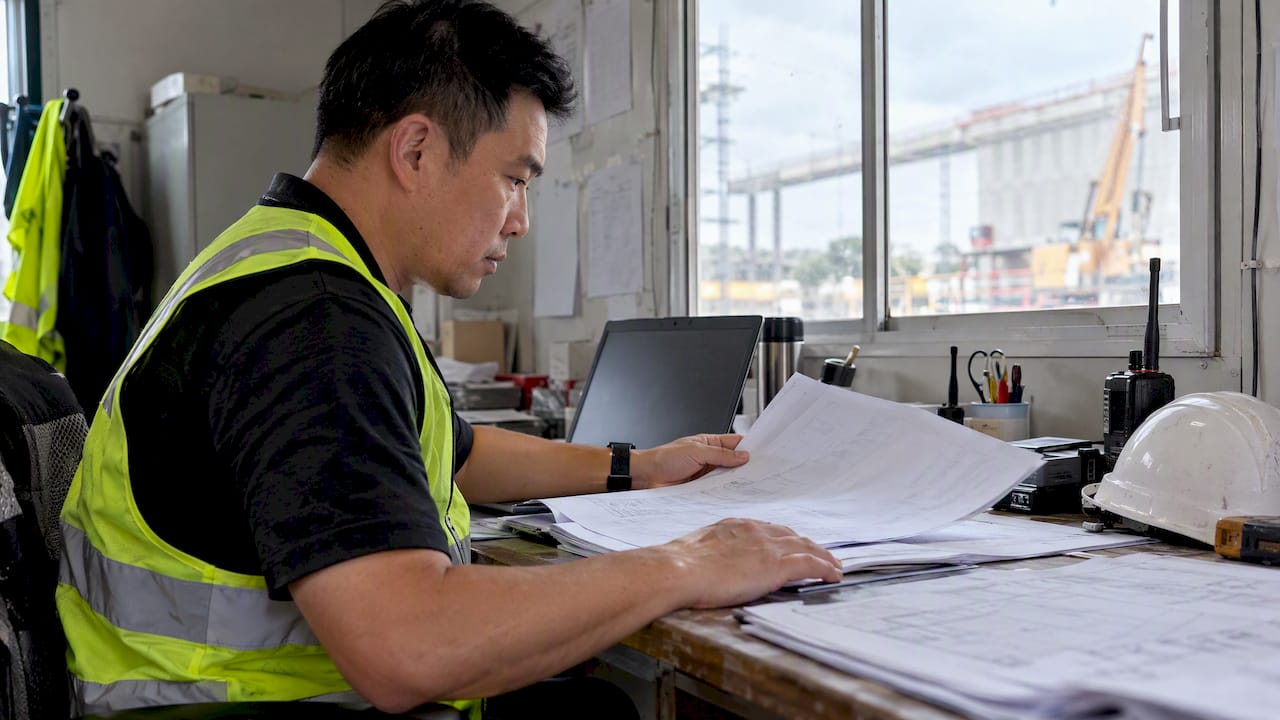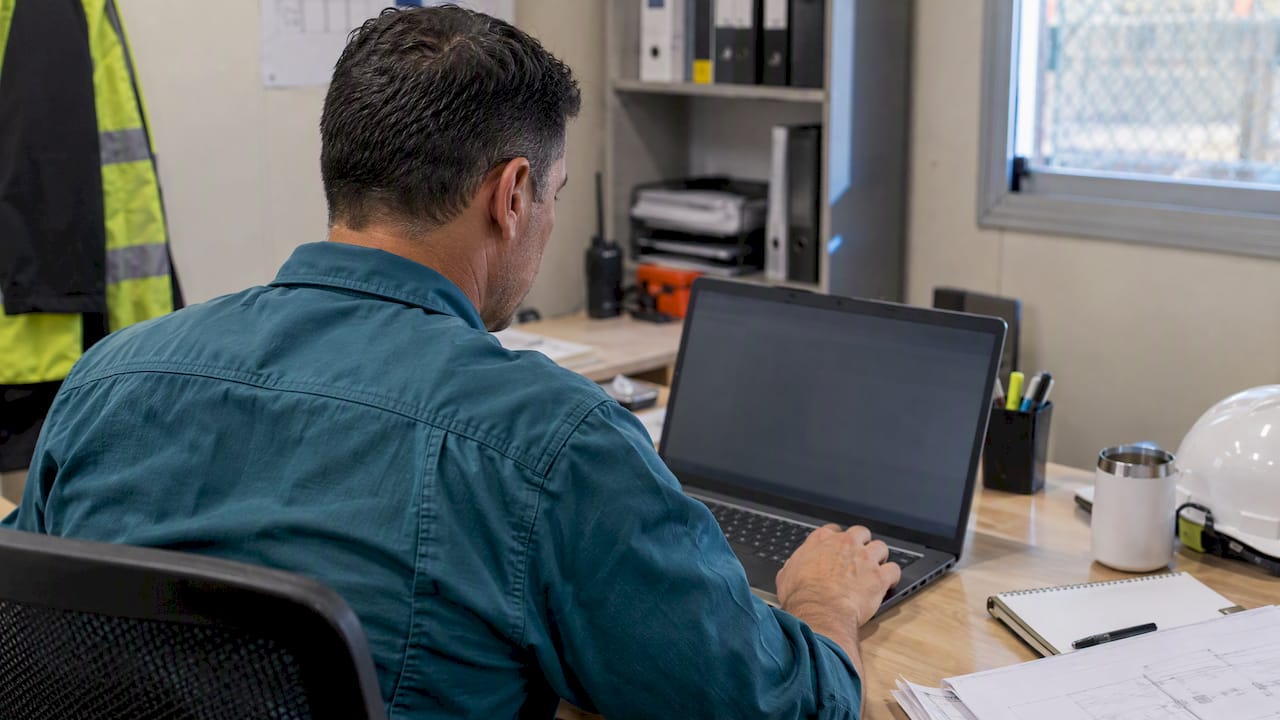

Ergonomic design is the intentional creation of work environments, tools, and products that fit users’ physical and cognitive needs to maximize comfort, productivity, and health. The discipline, formally known as human factors engineering, addresses why prioritize ergonomic design as a core question for any organization managing people and physical space. A 2026 study recorded a 0.46 beta coefficient increase in productivity directly linked to ergonomic digital workplace design. That figure represents a statistically significant performance gain, not a marginal improvement. Research using DEMATEL-ANP methodology further confirms that employee well-being surpasses physical health metrics as the top driver of workplace social sustainability.
Why prioritize ergonomic design: the productivity and injury case
The most direct argument for ergonomic investment is the measurable link between physical comfort and output quality. When workers operate in environments that force awkward postures, excessive reach, or sustained static loading, their bodies compensate through muscle tension and joint stress. That compensation degrades both speed and accuracy over a full shift.
The injury data reinforces this point. Musculoskeletal disorders negatively affect efficiency, task quality, and worker commitment according to 2026 research. These disorders are not random events. They accumulate from repeated exposure to poor workstation geometry, inadequate tool design, and insufficient recovery time.
Assembly sector evidence is particularly compelling. 95% of assembly workers reported high comfort improvements in the upper back, neck, and lower back after ergonomic workstation changes were implemented. That near-universal response rate signals that ergonomic deficiencies are systemic, not individual, and that well-designed interventions produce consistent results across a workforce.
The financial consequences extend beyond workers’ compensation claims. Absenteeism, reduced output during recovery, and replacement labor costs compound the direct injury expense. Employers who treat ergonomics as a cost center rather than a risk mitigation mechanism consistently underestimate these compounding liabilities. The importance of ergonomic design becomes clearest when organizations calculate the full cost of ignoring it.
- Reduced musculoskeletal disorder rates lower absenteeism and replacement labor costs
- Optimized tool placement and workstation geometry cut task completion time
- Proper posture support reduces fatigue accumulation across a full shift
- Ergonomic improvements correlate with higher task quality and fewer errors
- Decreased physical strain supports sustained worker commitment and retention
Pro Tip: Track injury incident rates and absenteeism data for six months before any ergonomic intervention. That baseline makes the financial return on ergonomic investment measurable and defensible to leadership.
What ergonomic principles should you prioritize in workplace design?
The benefits of ergonomic design depend entirely on which principles receive implementation priority. Not all ergonomic interventions deliver equal returns. The highest-impact principles address both physical mechanics and cognitive load simultaneously.
Physical ergonomics centers on neutral posture, reduced motion, and appropriate force requirements. Adjustable workstations, proper tool placement, and posture support significantly lower discomfort risks in industrial workers by aligning equipment with body mechanics rather than forcing the body to adapt to fixed equipment. Height-adjustable desks, monitor arms, and anti-fatigue matting represent the most commonly deployed physical interventions, and they deliver measurable reductions in neck, back, and shoulder strain.

Cognitive ergonomics receives far less attention but carries equal weight in high-stakes environments. Cognitive ergonomic design reduces mental workload and human error by simplifying information presentation and interaction sequences. A cluttered control interface in a manufacturing cell creates the same category of risk as a poorly positioned tool grip. Both force the worker to compensate, and both increase error probability.
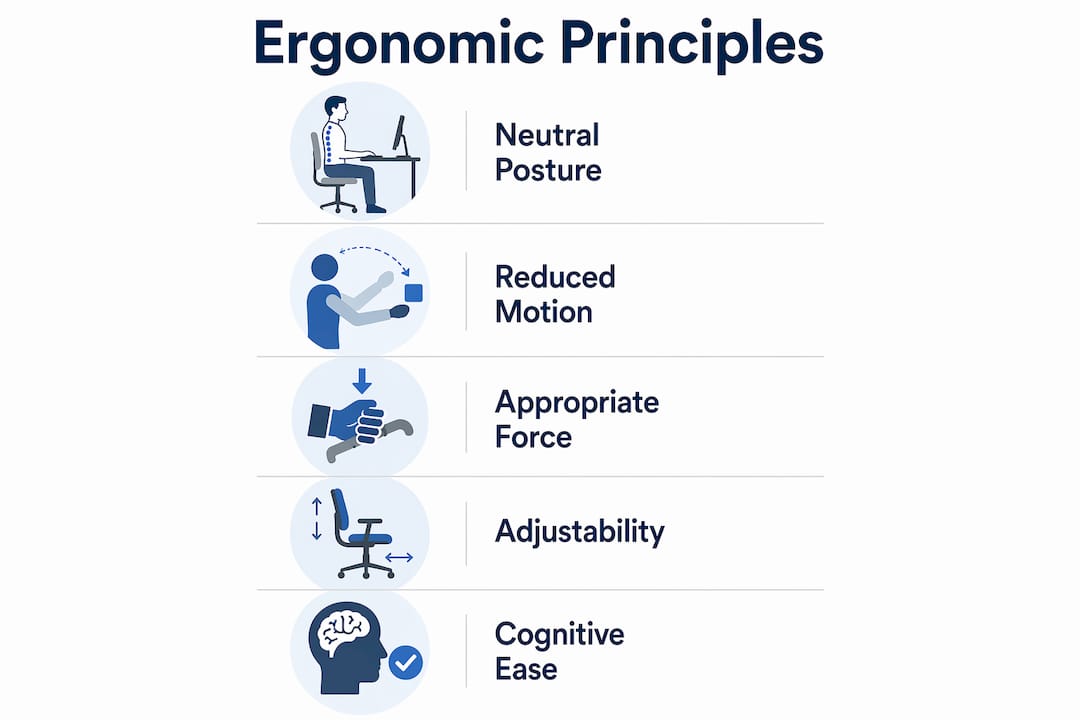
Temporal ergonomics, meaning how work is structured over time, completes the framework. Micro-breaks and task rotation every 30–60 minutes reduce repetitive strain injuries more effectively than static ergonomic furniture alone. This finding challenges the common assumption that equipment upgrades are the primary lever for ergonomic improvement.
Key ergonomic principles to prioritize:
- Neutral posture support: Design workstations so joints operate near their natural resting positions
- Reduced reach and force: Place frequently used tools within the primary work zone to minimize shoulder and wrist loading
- Cognitive load reduction: Simplify interfaces, labels, and decision sequences to reduce mental fatigue
- Adequate lighting: Provide task-appropriate illumination to prevent eye strain and postural compensation
- Scheduled micro-breaks: Build 30–60 minute rotation cycles into work schedules as a structural feature, not an optional benefit
Pro Tip: When specifying ergonomic furniture, prioritize adjustability range over aesthetic finish. A chair that adjusts across a wide seat height range serves more body types and delivers better population-level outcomes than a fixed-height premium model.
Common pitfalls in implementing ergonomic design effectively
Ergonomic design fails most often not from poor intent but from flawed implementation logic. The most prevalent error is treating ergonomics as a one-time equipment purchase rather than a continuous management process. Organizations buy height-adjustable desks, distribute them, and consider the program complete. Six months later, most desks remain at a fixed height because workers were never trained to use the adjustment mechanism.
Continuous assessment is the corrective discipline. Ergonomic risk assessments using tools like REBA or RULA are essential before investing in equipment purchases. REBA (Rapid Entire Body Assessment) and RULA (Rapid Upper Limb Assessment) are structured observational tools that score posture risk across body segments. They identify which tasks carry the highest injury probability and direct investment toward the highest-risk activities first.
The second common pitfall is neglecting cognitive ergonomics entirely. Ignoring cognitive ergonomics increases mental fatigue and error rates. Simplifying interfaces and processes carries the same priority as addressing physical strain, particularly in roles involving digital systems, quality inspection, or complex assembly sequences.
A structured implementation sequence reduces both pitfalls:
- Conduct a baseline REBA or RULA assessment across all job roles before purchasing any equipment
- Rank tasks by injury risk score and address the highest-risk activities first
- Train workers on all adjustable equipment immediately after installation, not weeks later
- Schedule quarterly ergonomic reviews to capture changes in task demands or workforce demographics
- Audit cognitive interfaces, including software dashboards and control panels, with the same rigor applied to physical workstations
For construction and industrial environments, managing risk during the design stage provides a proactive framework that embeds ergonomic considerations before physical infrastructure is fixed. Retrofitting ergonomics into a completed facility costs significantly more than designing it in from the outset.
How does ergonomic design apply across different workplace environments?
The ergonomic design advantages that apply in a corporate office differ in form but not in principle from those required in a construction site or a digital product environment. The underlying logic, fitting the work to the worker, remains constant. The specific interventions change based on the physical demands, cognitive requirements, and regulatory context of each environment.
| Workplace type | Primary ergonomic risk | Priority intervention |
|---|---|---|
| Office | Static posture, screen glare | Adjustable seating, monitor positioning |
| Industrial/construction | Manual handling, repetitive motion | Tool redesign, task rotation, REBA assessment |
| Digital product design | Cognitive overload, interface complexity | Simplified workflows, reduced decision steps |
| Healthcare | Patient handling, prolonged standing | Lift-assist equipment, anti-fatigue flooring |
Construction environments carry particularly acute ergonomic risk because workers operate in variable, often uncontrolled physical conditions. Construction site ergonomics requires site managers to address tool weight, ground surface variability, overhead work duration, and load-carrying distances as interconnected ergonomic variables, not isolated hazards.
Ergonomics in workplace design also connects directly to employee satisfaction and retention. Workers who experience chronic discomfort attribute it, accurately, to their employer’s decisions about their environment. Addressing ergonomic risk signals organizational respect for workforce well-being. That signal has measurable retention value, particularly in skilled trades where replacement costs are high. Property managers and contractors who reduce cost and risk through better workforce management recognize ergonomics as a retention and liability tool, not merely a compliance checkbox.
Key Takeaways
Ergonomic design is a measurable performance and risk management discipline, not a comfort amenity, and organizations that treat it as the latter consistently absorb preventable injury costs and productivity losses.
| Point | Details |
|---|---|
| Productivity link is quantified | A 2026 study recorded a 0.46 beta coefficient productivity gain tied directly to ergonomic workplace design. |
| Equipment alone is insufficient | Micro-breaks and task rotation every 30–60 minutes outperform static furniture upgrades for injury prevention. |
| Assess before you invest | REBA and RULA assessments must precede equipment purchases to direct resources toward highest-risk tasks. |
| Cognitive ergonomics is non-negotiable | Simplifying interfaces and decision sequences reduces mental fatigue and error rates alongside physical interventions. |
| Design stage is the lowest-cost entry point | Embedding ergonomic principles during facility or product design costs far less than retrofitting after construction. |
The case for treating ergonomics as a strategic imperative
The management teams I observe most often frame ergonomics as a facilities budget line. That framing is the root cause of most implementation failures. When ergonomics competes with office furniture and cleaning contracts for budget allocation, it loses. When it sits inside the risk management framework alongside insurance premiums and safety compliance, it wins, because the financial logic becomes undeniable.
Leadership should reframe ergonomics as a risk mitigation strategy with direct bottom-line financial benefits. The organizations I have seen execute this reframe successfully share one characteristic: they quantify the cost of inaction before proposing any intervention budget. They present injury frequency rates, absenteeism days, and workers’ compensation claim values alongside the proposed ergonomic investment. The return on investment calculation then speaks for itself.
The second observation worth stating directly: ergonomics is a competitive differentiator in product design, not just a workplace health issue. When product function and price are comparable, ease of use defined by ergonomic quality determines user preference. Design professionals who internalize this principle build it into every specification decision, not just the ones flagged as “ergonomics tasks.”
The organizations that will lead their sectors over the next decade are those that treat ergonomic assessment as a continuous operational discipline, not a project with a completion date.
— Aman
How Com supports ergonomic safety in construction environments

Com, operating as MOSAIC Ecoconstruction Solutions, delivers specialist safety consultancy services that embed ergonomic risk assessment directly into construction project workflows. The firm’s safety consultancy services cover ergonomic risk identification, REBA and RULA-informed assessments, BizSAFE and ISO compliance support, and Design for Safety integration across project phases. For construction companies and developers seeking to move beyond reactive injury management, Com provides the structured assessment frameworks and audit expertise needed to build ergonomic discipline into every stage of a project. Reach Com through the MOSAIC Ecoconstruction Solutions website to discuss how professional ergonomic consultancy translates into measurable safety and productivity outcomes for your workforce.
FAQ
What is ergonomic design in the workplace?
Ergonomic design is the practice of fitting work environments, tools, and tasks to the physical and cognitive needs of workers. The goal is to reduce injury risk, minimize fatigue, and maximize sustained productivity.
How does ergonomic design improve health outcomes?
Ergonomic design reduces musculoskeletal disorders by correcting posture loading, minimizing repetitive motion, and structuring work schedules to include recovery intervals. A 2026 study recorded a statistically significant negative correlation between ergonomic workplace design and musculoskeletal problem rates.
What tools are used to assess ergonomic risk?
REBA (Rapid Entire Body Assessment) and RULA (Rapid Upper Limb Assessment) are the standard observational tools used to score posture risk and prioritize ergonomic interventions by task severity.
Is ergonomic design relevant to construction sites?
Construction sites carry acute ergonomic risk from manual handling, overhead work, and variable ground conditions. A workplace risk assessment framework adapted to construction environments addresses these variables systematically.
Does ergonomic design affect employee retention?
Workers who experience chronic physical discomfort attribute it to employer decisions about their environment. Addressing ergonomic risk signals organizational investment in workforce well-being, which directly supports retention, particularly in skilled trades with high replacement costs.