Introduction
Video analytics and AI surveillance upgrading worksite safety in Singapore is no longer a forward-looking concept – it is an operational reality reshaping how construction sites, warehouses, and industrial yards manage safety risks every day. AI powered video analytics systems now use ai and computer vision to monitor live camera feeds in real time, automatically flagging missing personal protective equipment, unauthorized entry into restricted zones, and near-miss events that would otherwise go unnoticed and unreported. For project managers and safety officers navigating Singapore’s tightening regulatory landscape, these capabilities represent a decisive shift from reactive incident response to proactive risk management.
The urgency is clear. Singapore aims for less than 1.0 workplace fatality per 100,000 workers by 2028, and in 2025, Singapore’s workplace death rate fell to 0.96 per 100,000 workers – meeting the WSH 2028 target ahead of schedule. Yet construction and transport & storage sectors still account for a disproportionate share of fatalities and major injuries. Mandatory Video Surveillance Systems apply to construction projects over $5 million from June 2024, and MOM WSH tech grants now subsidize these advanced ai technologies for safety monitoring. The regulatory and financial environment has never been more supportive of technology workplace AI adoption for workplace safety and health.
This article is written for construction project managers, warehouse operations managers, and safety or technology officers in Singapore. Whether you are planning a new $50M build, managing a 30,000 m² logistics hub, or retrofitting AI onto existing cameras at a JTC industrial estate, you will find practical guidance here. The scope covers construction sites, warehouses, and industrial yards – the high risk environments where AI safety vision delivers the strongest returns for worker safety.
Here is what you will learn:
-
How AI video analytics works and what distinguishes it from traditional CCTV recording
-
Which safety violations current AI systems can reliably detect on Singapore worksites
-
A step-by-step deployment roadmap from risk mapping through pilot to scale-up
-
How to align AI surveillance with MOM regulations, PDPA, bizSAFE, and ISO 45001
-
How MOSAIC Ecoconstruction Solutions helps firms integrate AI into their WSH programmes
Understanding AI Safety Vision for Singapore Worksites
“AI safety vision” refers to computer vision systems that analyse live video feeds to detect unsafe behaviors, missing safety gear, and hazardous conditions on worksites in real time. “Video analytics” is the broader software and hardware stack that transforms raw CCTV footage into actionable insights – alerts, heatmaps, trend reports, and exportable evidence. Together, these technologies form the backbone of an intelligent future workplace where safety data drives decision-making rather than after-the-fact reviews.
Why has 24/7 automated detection become critical? Singapore’s MOM now mandates continuous monitoring and the WSH 2028 vision explicitly calls for technology-enabled workplace safety and health improvements. A typical large construction site may deploy 30–50 or more cameras. No team of safety supervisors can realistically watch every feed simultaneously – especially during night shifts or weekend pours. AI algorithms analyze live video streams continuously without fatigue, filling the gap that human error and manpower constraints create.
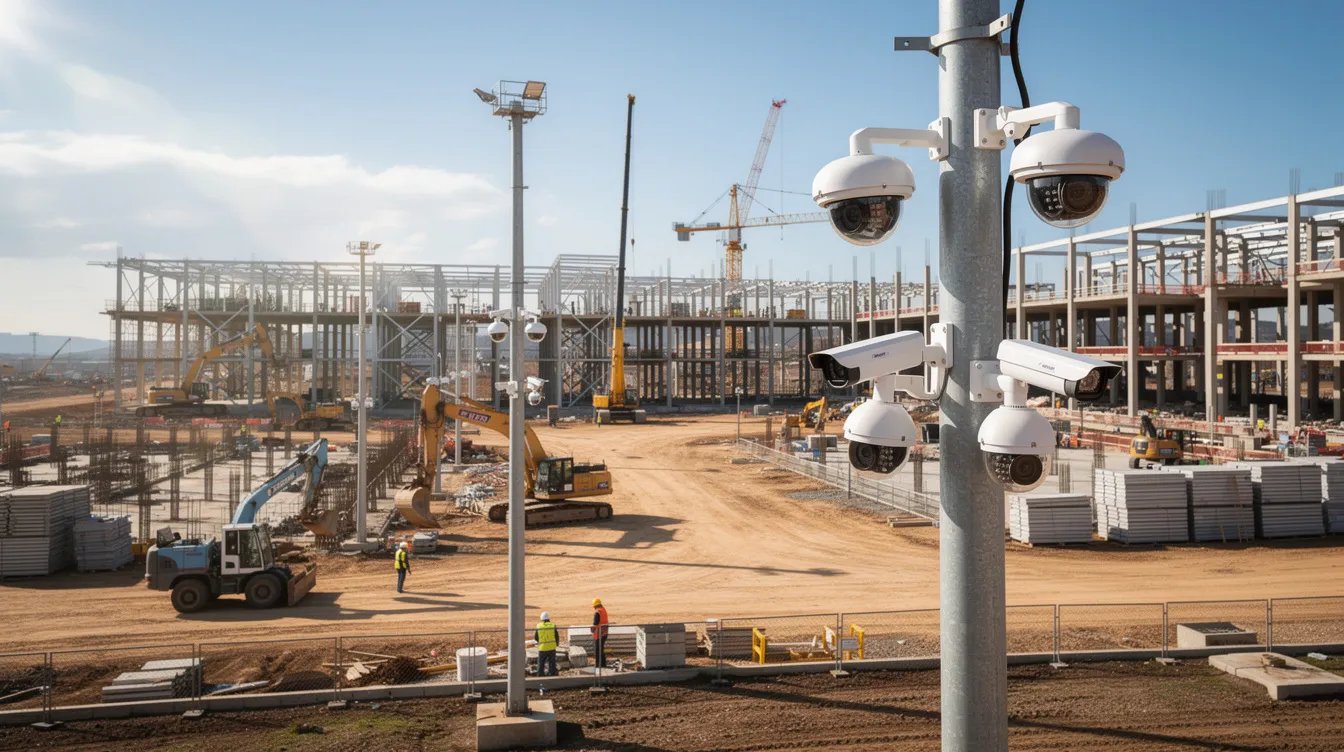
Most solutions build on existing CCTV systems. An AI analytics layer is added on top of IP cameras already installed for security or compliance purposes. Processing can occur on edge devices housed in site offices or via cloud servers, depending on connectivity and data residency requirements.
From CCTV Recording to Intelligent Surveillance
Traditional CCTV is passive. Cameras record footage that sits on a hard drive until someone reviews it – usually after incidents occur. The footage helps with post-incident investigation, but it does nothing to prevent the event in the first place. AI surveillance flips this model. AI systems can analyze video streams to detect near-misses and hazardous behaviors the moment they happen, sending real-time alerts to safety officers so intervention can occur within seconds rather than hours or days.
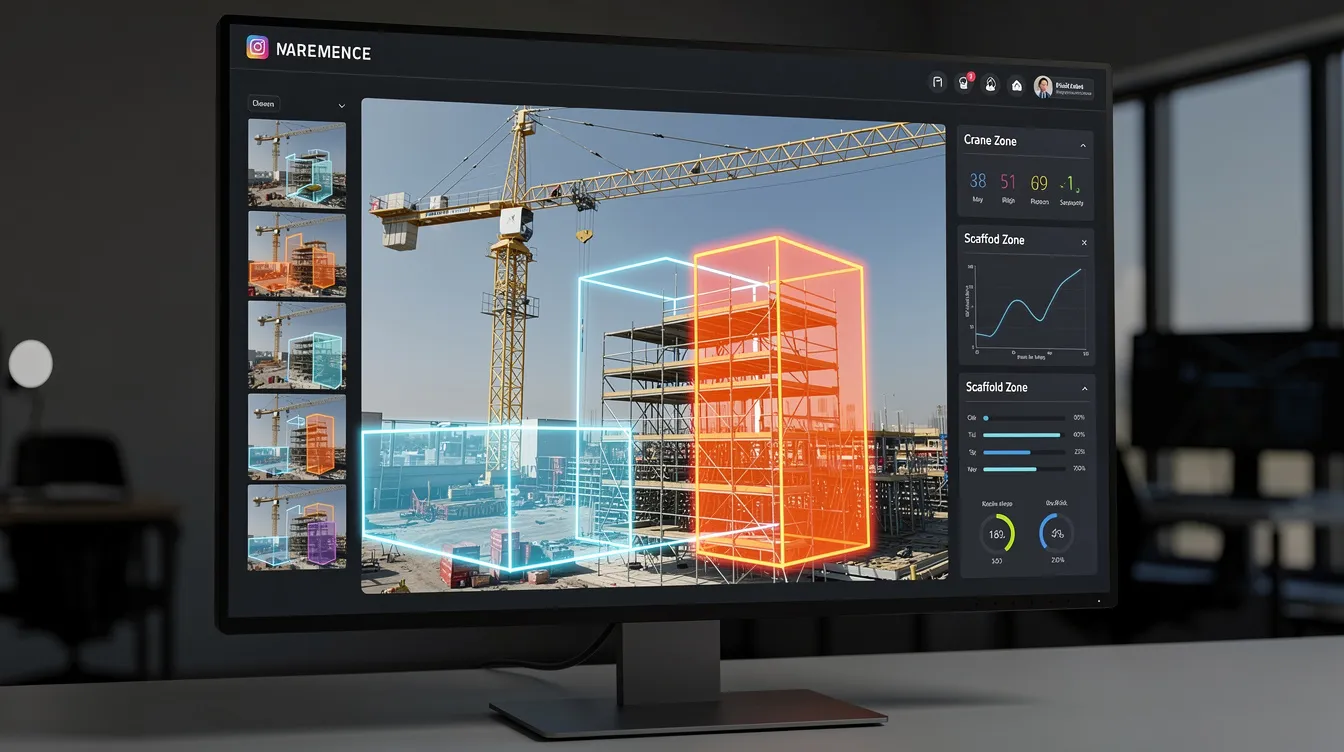
The capabilities available today go well beyond simple motion detection. Object detection models identify people, hard hats, safety vests, harnesses, and vehicles. Activity recognition algorithms spot falls, loitering in danger zones, and unsafe proximity between workers and heavy machinery. Zone-based rules establish virtual boundaries – for example, around a tower crane’s slewing radius or a forklift aisle – and trigger alarms when unauthorized personnel cross those lines. AI can track hazardous proximity between pedestrians and heavy machinery, a scenario that manual monitoring consistently misses.
Consider a Singapore construction site with 50+ cameras spread across basement excavation works, a tower crane zone, formwork decks on upper floors, and a materials laydown area. Even with two dedicated monitors in the site office, the vast majority of feeds go unwatched at any given moment. Modern AI systems process every feed simultaneously, surfacing only the events that matter. Video surveillance integrated with AI can enhance situational awareness for safety personnel, turning an overwhelming wall of screens into a focused, prioritised alert stream. Notifications can be delivered via mobile apps, WhatsApp, Microsoft Teams, audible alarms, or light beacons – whatever the site’s workflow demands.
Core Components of an AI Safety Vision Stack
An effective AI safety vision deployment involves four interconnected layers. Here are the main building blocks in practical terms:
-
Cameras: IP CCTV cameras for broad area coverage, PTZ (pan-tilt-zoom) cameras for flexible views, and temporary pole-mounted units for zones that change as construction progresses. All cameras must satisfy MOM’s mandatory VSS specifications: HD-1080 resolution, minimum 12 fps, colour recording, timestamps, and camera IDs. Existing cameras on BCA-regulated projects and JTC industrial estates can often be reused if they meet these standards.
-
Processing: Edge devices (NVIDIA Jetson-class compute boxes in site offices) handle local inference with minimal latency and continue operating during connectivity loss. Cloud servers provide scalability, centralised dashboards for multi-site monitoring, and the compute power needed for model retraining. Edge computing processes video streams locally for real-time safety alerts, making it the preferred option for remote or connectivity-challenged sites.
-
AI Models: Trained to recognise helmets, safety vests, harnesses, vehicles, and unsafe proximity. Modern architectures (often referred to as “YOLO-style” detectors) can flag high-risk scenarios instantly in real-time. Models must be tuned for Singapore’s diverse work environments – accounting for tropical rain, glare, day-night transitions, and varying PPE types across different trades.
-
Safety Platform: Centralized dashboards enable real-time monitoring across multiple construction sites, displaying heatmaps of risk zones, configurable alert rules, incident video clips, and exportable logs for MOM inspections and internal safety audits. Scheduled reports and trend analysis support weekly WSH meetings and management reviews.
MOSAIC Ecoconstruction Solutions does not build AI models. Instead, MOSAIC designs the safety use-cases – deciding which violations matter most based on the project’s risk assessments and safe work procedures – defines procedural governance, and ensures the system aligns with regulatory and data protection requirements.
Why AI Surveillance Matters for WSH in Singapore
Singapore’s construction fatal injury rate dropped from 31.0 to 26.3 per 100,000 workers in 2025 – a meaningful improvement, but still an order of magnitude higher than the national average. Singapore’s construction fatal injury rates have shown improvement, emphasizing enhanced safety measures, yet work at height, lifting operations, and vehicular traffic management continue to drive severe injuries and fatalities. AI surveillance is now viewed by MOM and the WSH Council as a practical lever to sustain the sub-1.0 national fatality rate and push construction-specific numbers further down.
Under the WSH Act and the Code of Practice on WSH Risk Management, employers must conduct regular risk assessments and implement reasonably practicable controls for high-risk work. The Code of Practice mandates corporate accountability for workplace safety. AI safety systems qualify as one such control – particularly for detecting transient unsafe conditions that occur during night shifts, peak activity periods, or in areas where direct supervision is physically impossible. Continuous video monitoring can shift safety management from reactive to proactive approaches.
AI safety vision also provides objective, time-stamped evidence that strengthens incident investigations, MOM inspections, WSH audits, tender pre-qualification submissions, and worker safety outcomes. AI analytics provide evidence for incident investigations and help identify systemic safety issues. Video analytics helps organizations comply with WSH requirements and improve safety audits, producing audit-ready documentation that would take safety officers hours to compile manually. This compliance value alone justifies the investment for many firms navigating the Demerit Point System, which penalizes companies with 25 points or more with labor bans.
How Video Analytics Upgrades Worksite Safety on the Ground
Understanding the technology stack is important, but construction project managers and warehouse ops leaders ultimately need to know what AI surveillance can do on the ground. This section focuses on the three core areas where video analytics delivers the most immediate value: near-miss detection, missing PPE identification, and unauthorized restricted area entry. Each sub-section includes real deployment outcomes from Singapore worksites.
Automatic PPE Compliance Monitoring
PPE compliance monitoring ensures workers wear required safety gear at worksites – but enforcing this consistently across a large site with hundreds of workers is one of the most persistent challenges for safety supervisors. AI models detect helmets, safety vests, and harnesses at entry points, scaffold access ladders, formwork decks, and lifting zones. AI in safety monitoring can detect missing PPE with 94% precision under controlled conditions, though real-world accuracy typically ranges from 85% to mid-90s depending on camera quality, angle, and site conditions.
Consider a practical scenario: a worker enters a formwork deck on the 29th storey without a helmet. Within 2–3 seconds, the AI system flags the violation, captures a time-stamped video clip, and pings the Safety Coordinator’s mobile phone. AI-powered smart cameras detect unsafe behaviors in real-time, eliminating the delay between violation and intervention. This kind of proactive threat detection is particularly valuable during peak concrete pours and night shifts, when supervisors are stretched thin and human error is most likely.
The impact compounds over time. Automated monitoring can reduce reliance on manual inspections and promote scalable safety operations. One Housing and Development Board (HDB) estate project connecting AI to 30 existing CCTV cameras achieved 60% fewer safety incidents and 40% faster incident response, with roughly eight times more observations compared to manual patrols. Detection accuracy was verified at above 85% on live site footage.
MOSAIC can help define camera positions and alert rules aligned with a project’s risk assessment and Method Statements, ensuring that the AI system targets the areas and trades where PPE non-compliance poses the greatest injury risk.
Restricted Zone and Dangerous Area Intrusion
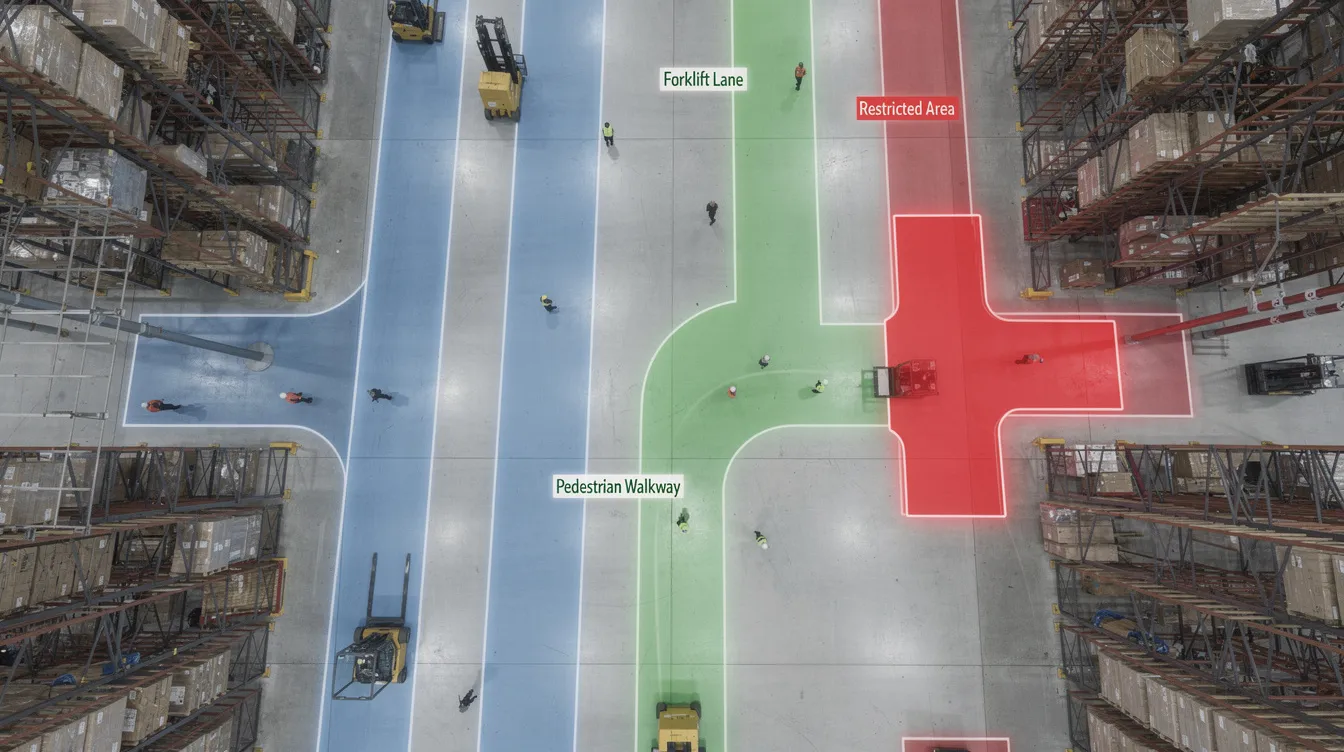
Geofencing of danger zones is one of the highest-value applications of safety video analytics. Virtual boundaries can be drawn around tower crane slewing radii, exclusion zones during mobile crane lifts, MEWP operations, chemical storage areas, and forklift aisles. AI systems can trigger alerts when workers enter restricted zones or perform unsafe acts, sending notifications to safety officers and – if configured – activating sirens or local alarms at the point of intrusion.
In warehouse and logistics environments, restricted zone detection protects workers from forklift collisions as a direct worker safety measure. Picture a Tuas logistics hub where pedestrians must stay within demarcated walkways. The moment someone steps outside the walkway and into a forklift lane, the system sends an alert and can broadcast an audible warning. This kind of incident detection addresses a category of accidents that often occurs too quickly for manual intervention.
Construction sites with high risks must prioritize safety around lifting operations and machinery. Penta-Ocean, an early adopter of VSS with AI capabilities, deployed 34 cameras and saw near-miss detections rise from 29 to 38 per month – revealing hazardous events that were previously going unreported. The system identifies unauthorised personnel in restricted areas around lifting and excavation works, where collapse or vehicle collision risks are highest.
Near-Miss and Unsafe Behavior Detection
A near-miss is an event that could have resulted in injury or damage but did not – a worker narrowly avoiding a reversing excavator, someone walking under a suspended load, or a person standing at an open edge without guardrails. Near-misses are chronically under-reported because workers either do not recognise them as significant or fear repercussions. AI can help identify unsafe behaviors and conditions for proactive safety interventions, logging events that would otherwise vanish from the safety record.
AI detection patterns for near-misses include: unsafe proximity to moving forklifts, workers passing through crane swing zones during lifting, standing at unprotected edges, and riding on pallet trucks. AI video analytics can detect slips, trips, and missing PPE in real time, while also capturing video snippets of each event. Automating hazard detection can save significant administrative time in incident reporting – instead of filling out manual near-miss forms, safety officers receive pre-packaged clips with timestamps, camera IDs, and location data.
These logs transform weekly safety review meetings. Rather than relying on anecdotal reports, safety teams can review trend data – identifying recurring unsafe behaviors at specific locations or times. Data-driven insights from AI can inform training programs to enhance safety culture, feeding directly into toolbox talks, induction content, and Design for Safety reviews. AI models support worker engagement and training by identifying areas for improvement, connecting safety data to behaviour-based safety programmes.
Work at Height, Falls, and Unsafe Access
Falls remain a leading cause of workplace fatalities in Singapore’s construction sector. MOM’s mandatory VSS requirement specifically includes all areas where work at height exceeds 2 metres, as well as erection and dismantling of scaffolds and formwork. Video analytics detects unsafe behaviors in real-time, including absence of lifelines or harnesses during roof work, access to scaffolds without full guardrails, and ladders being used improperly.
However, limitations exist. Detection accuracy depends heavily on camera placement – angles must capture edges and harness anchor points without severe occlusion from scaffold members or structural elements. Night work and poor lighting conditions further reduce model reliability. For this reason, AI should be paired with physical controls (guardrails, safety nets) and periodic physical inspections. Advanced AI models reduce false alerts by recognizing context, such as distinguishing between a worker wearing a harness clipped to an anchor and one wearing an unclipped harness.
AI heatmaps reveal recurrent unsafe access points over days and weeks, giving project teams the evidence needed to justify design modifications – additional barriers, rerouted walkways, or relocated access ladders. This integration between analytics and physical design is where technology meets Design for Safety principles.
Additionally, drones inspect hard-to-reach areas without exposing workers to danger. Drones create detailed 3D maps for site monitoring and hazard identification, while drones equipped with thermal sensors detect temperature changes for safety in areas such as roof membranes or underground services. Drones enhance emergency response by quickly assessing hazardous situations and reduce the need for scaffolding and ladders, cutting project costs. When combined with fixed camera video analytics, drone deployments deliver comprehensive coverage of both permanent and temporary high-risk zones.
Environmental and Housekeeping Hazards
Beyond worker behaviour, AI systems detect environmental and housekeeping hazards that contribute to slips, trips, and falls. Continuous monitoring can detect environmental hazards like fire and smoke indicators – particularly valuable for outdoor storage yards and temporary site offices that may lack full fire detector coverage. Systems can also identify blocked emergency exits, cluttered access routes, and poor housekeeping around stairwells and loading bays.
These alerts feed directly into 5S or housekeeping campaigns managed under the site’s safety management system. Operational insight creates a feedback loop: AI flags a cluttered walkway at 07:30, the supervisor clears it before the workforce arrives at 08:00, and the system confirms resolution – all documented with timestamps for audit purposes. This solution enhances workplace safety at the housekeeping level, where many injuries originate but where traditional inspection regimes are inconsistent.
Designing and Implementing an AI Surveillance Programme
Deployment of video analytics often requires upfront investment for infrastructure and integration, but the technology itself is only half the equation. Success depends more on planning, risk assessment, and change management than on the AI model itself. A poorly designed system generates noise; a well-designed one delivers enhanced efficiency and measurable safety outcomes.
MOSAIC Ecoconstruction Solutions works with firms as a QES and WSH consultant, helping them integrate AI into their existing risk management processes – not simply buy a product. The following roadmap reflects a proven approach for both new project start-ups and retrofits on live sites.
Step-by-Step Deployment Roadmap
The following process applies whether you are commissioning a new-build site or retrofitting AI onto an operating warehouse. It is designed to be practical for teams managing diverse work environments.
-
Conduct a joint WSH and camera coverage audit – Map high-risk tasks (lifting, work at height, traffic routes, confined spaces) against existing CCTV positions. Identify blind spots, backlighting issues, and areas where temporary pole-mounted cameras are needed. A thorough risk assessment forms the foundation.
-
Define safety use-cases and KPIs – Prioritise 2–3 high-impact detections rather than attempting everything at once. For example: target a 50% reduction in helmet non-compliance at key gates, zero unauthorized crane zone entries, or a 30% increase in reported near-misses over 6–12 months. Clear KPIs prevent scope creep and make ROI measurable.
-
Run a contained pilot – Select one representative site (e.g. a $20–50M project or a 30,000 m² warehouse). Define pass/fail criteria covering detection accuracy, alert latency, false positive rate, and supervisor response time. Test across a full cycle of conditions: day, night, rain, glare, and shift changes.
-
Integrate alerts into daily workflows – Determine who gets notified (Safety Officer, Site Supervisor, WSH Committee), through which channel (app, WhatsApp, SMS), and what escalation path applies. Real-time alerts from AI systems help reduce response times for safety incidents, but only if they reach the right person with the authority to act.
-
Formalise procedures – Update Risk Assessments, Safe Work Procedures, and WSHMS documentation to reflect AI surveillance controls. Document camera positions, alert rules, response protocols, and footage retention policies.
-
Scale and refine – Post-pilot, expand coverage to similar sites and embed review of AI safety data into monthly WSH meetings. AI algorithms can flag high-risk scenarios instantly in real-time across all connected locations.
Choosing the Right Technical Architecture
The choice between edge-heavy and cloud-centric processing affects latency, cost, data privacy, and scalability. Both approaches are viable – the right choice depends on your site profile and IT capabilities.
Edge vs Cloud for AI Safety Vision
|
Criterion |
Edge-Focused Deployment |
Cloud-Focused Deployment |
|---|---|---|
|
Latency & Reliability |
Sub-second alerts; functions during internet outage |
Slightly higher latency (1–3 seconds); depends on stable connectivity |
|
Bandwidth Use |
Minimal – processes video locally, sends only alerts/clips |
High – streams raw video to cloud servers for processing |
|
PDPA / Data Residency |
Stronger comfort – raw footage stays on-site |
Requires careful vendor vetting on data location and access control |
|
Upfront vs Operating Cost |
Higher hardware cost per site; lower recurring fees |
Lower upfront cost; ongoing subscription and bandwidth fees |
|
Best Suited For |
Remote construction sites, poor connectivity areas, high PDPA sensitivity |
Multi-site warehouse operations with good fibre/5G, centralised management |
For many Singapore construction projects, a hybrid approach works best: edge processing for real-time alerts and local footage retention, with periodic cloud sync for dashboards, model updates, and multi-site analytics. MOSAIC can work with the client’s IT team and chosen vendor to align architecture with WSH requirements, corporate IT policies, and PDPA obligations.
Aligning AI Surveillance with MOM Regulations and PDPA
In Singapore, safety video analytics must be deployed within MOM’s WSH requirements and PDPA rules – not just IT preferences. This section focuses on practical compliance. It is not exhaustive legal advice, but it covers the essentials that project managers and safety officers need to address during planning.
Mandatory VSS and WSH Requirements for Construction
The Ministry of Manpower requires VSS for construction sites with contract values over SGD 5 million. This requirement took effect on 1 June 2024. Video surveillance systems must adhere to minimum recording standards and retention periods: cameras must record in colour at HD-1080 or equivalent, at minimum 12 fps, with timestamps and camera IDs. Footage must be retained for at least 30 days – or 180 days if related to a reportable WSH incident.
Cameras must cover specific high-risk areas rather than the entire site. Required coverage includes lifting zones, formwork and scaffold areas, vehicular traffic routes, loading/unloading bays, confined spaces, and all areas where work at height exceeds 2 metres. The detailed requirements are outlined in MOM’s VSS compliance guidance.
Integrating AI video analytics on top of mandatory VSS turns “compliance CCTV” into proactive safety tools. Instead of footage sitting unused until an accident triggers a review, AI-generated records support MOM inspections, accident reporting, and Demerit Point System risk mitigation. Video analytics helps ensure compliance with safety standards while simultaneously delivering operational insight that enhances safety outcomes.
PDPA, Worker Privacy, and Ethical Use
Worker privacy must be protected in surveillance systems as per Singapore’s PDPA. The key principles relevant to AI surveillance are purpose limitation (footage used only for workplace safety), notification (workers informed about monitoring), access control (role-based access to footage and analytics), and retention (footage deleted after defined periods unless linked to investigations).
The Employment Exception under PDPA allows employers to collect and use personal data – including video – for legitimate safety purposes without separate consent, provided certain conditions are met. However, transparency remains essential. Good practices include: safety signage at all site entrances, worker briefings during inductions explaining what AI monitors and why, masking faces in any exported training materials, and strict role-based access control to footage. AI often reduces manual viewing of full footage by surfacing only relevant clips, which can actually improve privacy compared to traditional CCTV monitoring where personnel review hours of raw video.
MOSAIC’s EHS advisory services help clients document AI surveillance policies within their WSHMS and PDPA compliance frameworks, ensuring that the system is defensible to regulators and workforce alike.
Integrating AI Insights into bizSAFE and ISO Systems
AI monitoring and logs can strengthen bizSAFE Level 3 and above submissions. Safety data from video analytics – near-miss trends, PPE compliance rates, restricted zone breach counts – provides concrete risk management evidence that auditors and certifiers value. AI-generated monthly safety KPI reports, near-miss trend charts, and camera coverage diagrams can be included directly in bizSAFE certification and audit files.
For firms pursuing ISO 45001 Occupational Health & Safety Management Systems, AI surveillance aligns directly with continual improvement requirements. Process monitoring data feeds into management reviews, corrective action tracking, and performance evaluation – all core ISO 45001 clauses. Similar alignment exists with ISO 9001 and ISO 14001 where process monitoring and evidence-based decision-making are required.
Common Challenges When Rolling Out AI Safety Vision – and How to Solve Them
No deployment is without friction. Site teams worry about false alarms, unions ask about surveillance overreach, and management questions ROI. These are legitimate concerns – and each has a practical solution. The following challenges draw on MOSAIC’s consulting experience across Singapore worksites.
Challenge 1: Poor Camera Placement and Site Conditions
Problem: Scaffolding obstructs views. Backlighting from the afternoon sun washes out faces and PPE. Rain and dust degrade image quality. The site layout changes weekly as construction progresses.
Solution: Conduct joint WSH–site–IT walkdowns before deployment, repositioning or adding temporary pole-mounted cameras as needed. Specify minimum resolution and IR/night-vision capability in procurement specs. Schedule regular camera health checks – monthly at minimum. Camera layout should be reviewed during Design for Safety reviews on large projects to ensure coverage adapts to construction phases.
Challenge 2: Alert Fatigue and False Positives
Problem: Too many low-quality alerts cause supervisors to ignore notifications. False positives – for example, flagging a yellow raincoat as a missing vest – erode trust in the system.
Solution: Start with a narrow set of use-cases (e.g. only no-helmet detection at key gates plus crane exclusion zone breaches). Tune confidence thresholds so only high-certainty detections trigger alerts. Advanced AI models reduce false alerts by recognizing context. Implement feedback loops where safety officers confirm or dismiss alerts, which improves model accuracy over time. Weekly calibration sessions between vendor, Safety Officer, and MOSAIC consultant during the first 2–3 months are strongly recommended.
Challenge 3: Workforce Trust and Perception of Surveillance
Problem: Workers and safety officers fear punishment, micromanagement, or job replacement. Resistance undermines the system’s effectiveness.
Solution: Position AI as a “second pair of eyes” that is deployed to improve worker safety while protecting workers, not replace them. Share success stories where real-time alerts prevented injury. Commit to using safety data for coaching and training rather than punitive action alone. Include an AI surveillance overview in site safety orientation and WSH Committee agendas, with open Q&A sessions. Wearable safety devices monitor workers’ health and environmental conditions alongside camera-based systems, reinforcing the message that technology is deployed for worker welfare.
Challenge 4: Fragmented Ownership Between Safety, Ops, and IT
Problem: Safety wants features, Ops worries about disruption, IT focuses on cybersecurity – and nobody owns the project end-to-end.
Solution: Form a small cross-functional Working Group with a clear project sponsor and a RACI matrix defining responsibilities. Governance over footage access, retention, and incident workflows should be agreed upfront. An external consultant like MOSAIC can facilitate this process, bringing domain expertise in WSH while remaining vendor-neutral. This approach helps strengthen operational resilience by ensuring all stakeholders are aligned before the system goes live.
Leveraging Singapore WSH Tech Grants to Fund AI Surveillance
Cost is a genuine barrier – particularly for SMEs in high risk industries managing tight margins. However, Singapore offers multiple grant schemes that reduce the net investment required for AI safety vision adoption. Note that scheme details evolve; readers should verify current terms on official sites.
Productivity Solutions Grant (PSG) for AI-Enabled VSS
The Productivity Solutions Grant co-funds pre-approved IT solutions, including AI-integrated VSS packages recommended by MOM for construction and logistics SMEs. Typical support covers up to 50% of qualifying costs, subject to prevailing caps – but always check the latest Enterprise Singapore guidelines for current figures.
Qualifying costs typically include cameras, NVRs, AI software licences, edge devices, and basic implementation services. MOSAIC can help clients build the safety and productivity justification for PSG applications and select suitable pre-approved packages that align with their project’s hazard identification priorities.
Training and Capability Grants (e.g. NTUC CTC Grant)
NTUC’s Company Training Committee (CTC) Grant supports upskilling local workers to operate AI safety systems, interpret analytics, and manage change. Training outcomes include supervisors able to respond effectively to real-time alerts and Safety Coordinators able to pull reports and trend analyses for WSH meetings.
50% of employees currently access employer-initiated health promotion activities – integrating AI training into these programmes can improve uptake. MOSAIC can design WSH-focused training roadmaps that complement PSG-funded hardware and software, developing future-ready talent capable of operating in a technology-enhanced safety environment.
Other Sector-Specific Support (e.g. Lorry Crane and High-Risk Equipment Grants)
MOM’s Lorry Crane Safety Support scheme (2023–2025) illustrates how targeted safety tech funding works – it included video and sensor-based solutions for specific equipment categories. Similar targeted schemes may be launched for other high-risk equipment, making AI video analytics an eligible component.
Project teams should monitor MOM and WSH Council announcements, or engage MOSAIC to track and interpret grant opportunities as they emerge. Staying ahead of new funding rounds can significantly improve the payback period for AI safety vision investments.
How MOSAIC Ecoconstruction Solutions Supports AI Safety Vision Adoption
MOSAIC Ecoconstruction Solutions is a Singapore-based WSH and QES consultancy that helps firms turn AI surveillance from a technology purchase into a safety programme. MOSAIC is vendor-neutral and focuses on safety outcomes, consistent regulatory compliance, and integration into management systems – not on selling hardware or software.
Strategy, Risk Assessment, and Design for Safety Integration
MOSAIC reviews existing Risk Assessments and Design for Safety submissions to identify where AI surveillance adds the most value. Services include camera and risk mapping workshops, AI use-case prioritisation, and drafting of WSHMS procedures that incorporate AI controls. This strategic approach enhances operational oversight by ensuring camera coverage maps directly to the project’s highest-risk activities.
The benefits extend beyond safety operations. Well-documented AI surveillance programmes strengthen tender bids, client audits, and ISO/bizSAFE certification journeys – providing tangible competitive advantage in Singapore’s increasingly safety-conscious construction market.
Implementation Support and Change Management
MOSAIC works alongside the chosen AI vendor to plan pilots, define KPIs, and coach site teams during rollout. Typical deliverables include site AI coverage plans, training materials for supervisors, and toolbox talk content explaining AI-driven alerts. For firms that need dedicated on-site support, MOSAIC offers outsourced WSH officer or coordinator services to manage AI data and close the loop into corrective actions.
Change management is where many deployments fail or succeed. MOSAIC helps position AI surveillance as a tool that monitors safety protocols to protect workers – not as a disciplinary mechanism – ensuring buy-in from frontline teams and management alike.
Ongoing Audits, Continuous Improvement, and Reporting
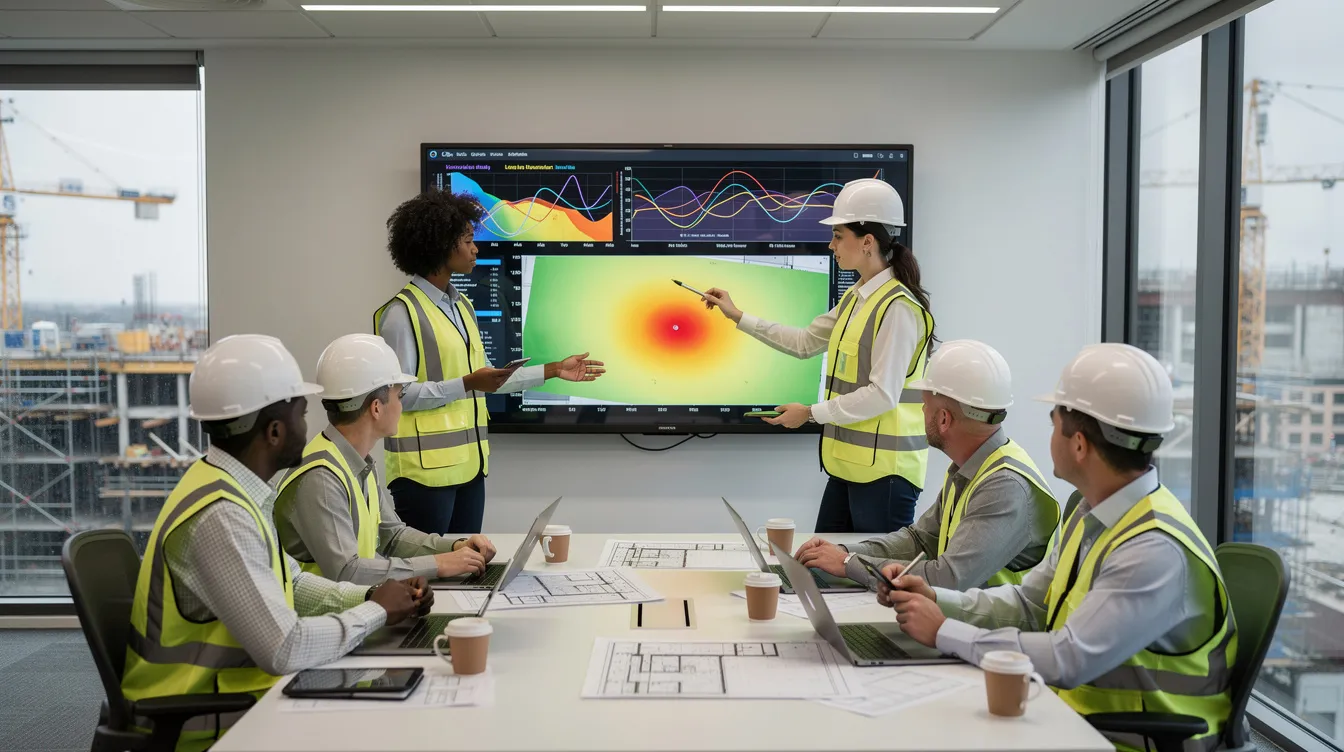
MOSAIC conducts periodic AI-enabled safety audits where analytics data is interpreted alongside physical site observations. These audits identify systemic issues – recurring unsafe access points, time-of-day patterns in PPE non-compliance, layout problems generating near-misses – and recommend improvements to procedures or physical design.
Management-ready reports link AI safety indicators to lagging metrics (lost-time injuries, near-miss frequency) and compliance status, satisfying both regulatory expectations and client ESG requirements. This continual improvement cycle aligns directly with ISO 45001 and the proactive WSH culture that Singapore’s regulatory framework demands.
Conclusion and Practical Next Steps
In Singapore, video analytics and AI surveillance are becoming core to modern workplace safety and health – not optional extras reserved for prestige projects. The regulatory framework (mandatory VSS, WSH 2028, Demerit Point System), grant support (PSG, CTC), and proven outcomes from early adopters have created conditions where adoption is both practical and financially viable.
The benefits are concrete: earlier detection of near-misses, stronger PPE and restricted-zone safety compliance, objective evidence for regulators and clients, and a measurable shift from reactive incident response to proactive risk management. AI video analytics can reduce manual monitoring time significantly while delivering more observations, better data, and faster response.
Here are your immediate next steps:
-
Conduct a camera and risk mapping exercise – Walk your site with your Safety Officer and identify the 3–5 highest-risk zones where AI detection would deliver the greatest impact.
-
Shortlist 1–2 safety use-cases – Start focused (e.g. PPE at entry gates, crane zone intrusion) rather than attempting site-wide coverage on day one.
-
Speak to a WSH consultant – A vendor-neutral advisor like MOSAIC can help align your AI plans with your risk assessment, WSH management system, and compliance obligations.
-
Explore MOM and Enterprise Singapore grant eligibility – Confirm whether your project qualifies for PSG or other funding before committing to procurement.
-
Engage your workforce early – Include AI surveillance in your safety orientation and WSH Committee agenda to build trust before cameras are switched on.
If you are considering AI safety vision for your construction site, warehouse, or industrial yard, contact MOSAIC Ecoconstruction Solutions for a WSH tech readiness discussion. Whether you are pursuing bizSAFE certification, preparing for an ISO 45001 audit, or simply looking to enhance safety on a live project, MOSAIC can help you design a programme that delivers results.
Frequently Asked Questions on AI Safety Vision in Singapore
Does AI video analytics replace my Safety Officer or WSH Coordinator?
No. AI is a support tool, not a replacement. It shifts safety officers from patrol-heavy work – walking floors checking PPE – to higher-value analysis, coaching, and risk management. Safety officers become interpreters of safety data and drivers of behaviour change, while AI handles the continuous monitoring that no individual can sustain across a full site.
What kinds of safety violations can current AI systems reliably detect on Singapore sites?
Current systems reliably detect PPE non-compliance (helmets, safety vests, harnesses), unauthorized entry to restricted danger zones, vehicle-pedestrian proximity hazards, work-at-height irregularities, overcrowding, and housekeeping issues such as blocked exits. Actual capabilities depend on camera quality, placement, lighting, and the specific vendor’s model. AI video analytics can detect slips, trips, and missing PPE in real time under good conditions.
How fast can alerts be raised, and what is typical accuracy?
Alerts typically reach safety personnel within 1–3 seconds of the detected event. Detection precision for PPE under controlled conditions has been demonstrated at 94%, though real-world accuracy on live sites generally falls in the high-80s to mid-90s range. Accuracy improves significantly with proper camera setup, initial model tuning, and ongoing feedback from site teams.
Will AI surveillance expose us to higher PDPA risk?
PDPA risk is manageable with proper purpose definition, worker notification, role-based access control to footage, and clear retention policies. AI systems actually reduce privacy exposure in many cases – instead of personnel reviewing hours of raw footage, the system surfaces only relevant safety clips. Documentation of these safeguards within your WSHMS provides a defensible compliance position.
Is it necessary to replace all existing CCTV cameras to start?
Not necessarily. Many Singapore projects can leverage existing IP CCTV systems if resolution and angles are adequate. Upgrades are required when cameras are analogue, very low resolution, or positioned with severe blind spots relative to the areas MOM’s VSS mandate requires coverage of. A camera audit is the first practical step to determine what can be reused and what needs replacement.
How can SMEs justify ROI on AI safety vision?
The main ROI levers include: avoided accidents and associated downtime, reduced fines and Demerit Point risk, fewer manual patrol hours, streamlined safety audits, and stronger client confidence during tender evaluation. Grants like the Productivity Solutions Grant can fund up to 50% of qualifying costs, significantly improving payback. Automated monitoring can reduce reliance on manual inspections and promote scalable safety operations – delivering enhanced efficiency that compounds across the project lifecycle.