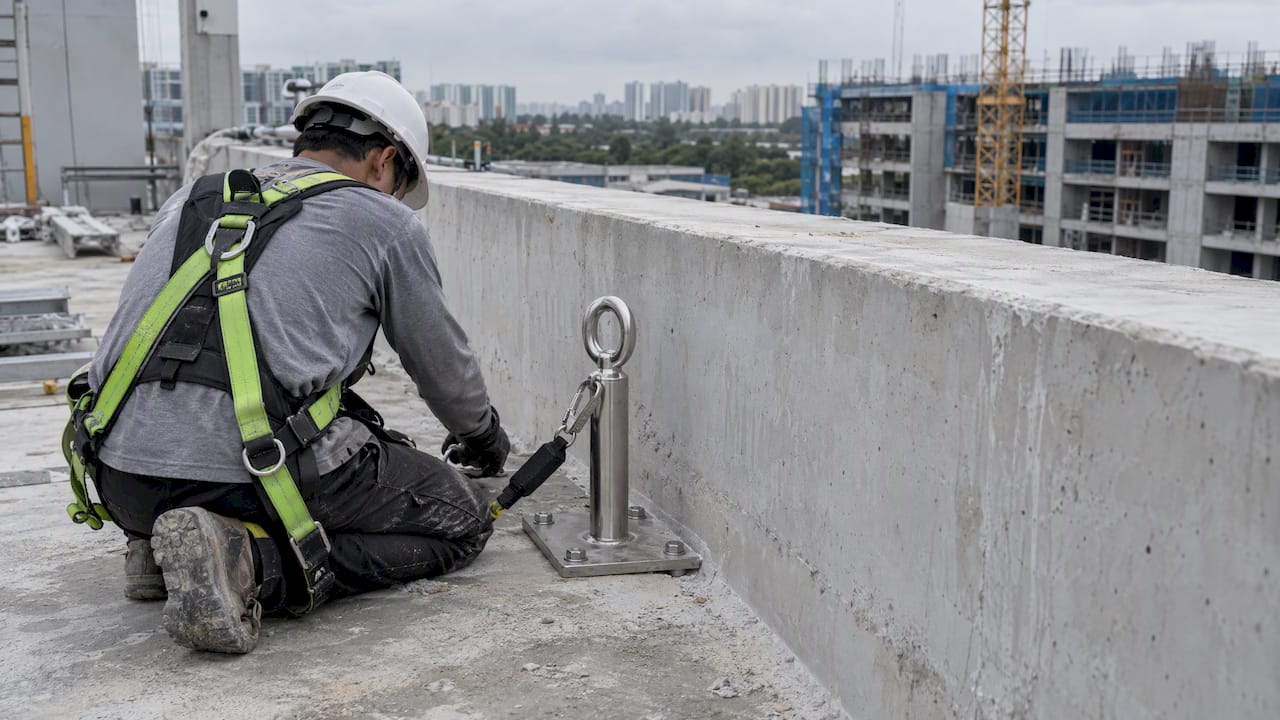
A project can have written procedures, completed inductions, and hard hats at the gate, yet still be unsafe. The top signs of poor safety culture usually appear in everyday decisions: whether a supervisor stops a rushed task, whether a worker speaks up about a faulty access platform, and whether corrective actions are actually closed.
For construction and industrial leaders, safety culture is not a poster campaign or an annual training event. It is the shared standard people follow when production pressure, changing site conditions, and competing priorities make the safe choice less convenient. Recognizing cultural warning signs early gives management time to correct them before they become injuries, enforcement action, client concerns, or costly project disruption.
10 top signs of poor safety culture
1. Production pressure routinely overrides safe methods
Deadlines matter, but a site becomes vulnerable when crews are repeatedly told to “get it done” despite incomplete permits, missing controls, poor housekeeping, or unsuitable weather conditions. Workers quickly learn what leadership truly values by observing which rules are negotiable when the schedule is tight.
This does not mean every delay requires stopping an entire project. It means supervisors need a clear escalation process for tasks that cannot proceed safely. When planning includes realistic manpower, equipment availability, and contingency time, safety and productivity are less likely to be framed as opposing goals.
2. Near misses are ignored, underreported, or treated as blame events
A near miss is operational intelligence. A dropped object that narrowly misses a worker, a plant-pedestrian conflict, or a scaffold component found unsecured may reveal a control failure before someone is harmed.
In a poor culture, these events are dismissed as “nothing happened” or workers avoid reporting them because they expect discipline, embarrassment, or extra paperwork. The result is a distorted picture of site risk. Leaders may see low incident numbers and assume performance is strong, while crews have stopped sharing the information needed to prevent a serious event.
3. Supervisors enforce rules inconsistently
If one foreman requires proper barricading and another permits shortcuts, workers will follow the standard that seems easiest or fastest. Inconsistency is especially dangerous on multi-employer sites, where subcontractors may receive different instructions from different project leaders.
Consistent enforcement does not require a punitive approach. It requires supervisors who understand the risk assessment, explain the reason for controls, correct unsafe behavior promptly, and document repeated gaps. Leaders should also be held accountable when they overlook the same issues they expect workers to address.
4. Toolbox talks are generic and disconnected from the work
A toolbox talk should prepare a crew for the hazards they will face that day or that shift. When talks become a signature-collection exercise, workers may attend physically but leave without a clear understanding of task changes, interfaces, exclusion zones, lifting risks, or emergency arrangements.
Effective briefings use current site conditions. A concrete pour, confined-space entry, work at height, energized work, and simultaneous operations each require specific discussion. Questions from the crew are useful evidence that people are thinking about the job, not a sign that the meeting has gone off track.
5. Workers hesitate to stop work or challenge unsafe conditions
A worker who sees a damaged sling, unstable excavation edge, or missing guardrail should be able to pause the task without fearing retaliation. If employees believe raising concerns will label them as difficult, slow, or inexperienced, hazards remain in place until an incident forces attention.
Psychological safety is not separate from physical safety. It is the condition that allows people to report a problem, ask for clarification, and admit they do not understand a task. Management must make stop-work authority explicit, support reasonable interventions, and investigate the condition rather than blaming the person who raised it.
6. Risk assessments exist on paper but not in the field
Many organizations can produce method statements, job hazard analyses, and permits during an audit. The real test is whether workers can explain the critical controls and whether those controls are visible at the point of work.
A risk assessment becomes weak when it is copied from a previous job, fails to reflect a changed work sequence, or is not communicated to the crew. Field verification matters: Are lifting zones maintained? Is the required fall protection available and used? Are temporary electrical systems inspected? Documentation supports control, but it cannot substitute for control.
7. Repeat findings remain open for too long
The same blocked access route, missing inspection tag, poor material storage, or incomplete permit should not appear on inspection reports week after week. Repeat findings suggest that corrective-action ownership is unclear, resources are not being assigned, or managers are accepting an avoidable level of risk.
A useful corrective-action process identifies the immediate fix, the underlying cause, an accountable owner, a due date, and verification of completion. Closing an item in a tracker is not enough if the condition returns on the next shift. Trends should be reviewed at management level, particularly for high-risk activities and recurring contractor issues.
8. Training is treated as a credential, not competence
A valid card, attendance record, or completed e-learning module does not prove that a person can perform a task safely. This gap is common when new workers, temporary labor, or subcontractors arrive on a project with varying experience levels.
Competence should be checked through observation, supervised practice, and role-specific briefing. The right approach depends on the task and the worker’s experience. A competent equipment operator may need a short site-specific orientation, while a newly assigned worker may require closer supervision before undertaking higher-risk work independently.
9. Leaders are rarely visible in the work area
Safety is weakened when leadership appears only after an incident, client inspection, or regulatory visit. Site walks by project managers and senior leaders show that conditions in the field matter, but only if those walks focus on learning rather than fault-finding.
The most valuable conversations are specific: What has changed since the plan was written? What makes this task difficult to perform safely? Which controls are not working as intended? Leaders who listen, remove obstacles, and follow through build credibility faster than leaders who issue broad reminders from an office.
10. Incident investigations focus on worker error alone
When every investigation concludes that someone “failed to follow procedure,” the organization misses the management system failures behind the event. Procedures may have been unclear, supervision inadequate, equipment unavailable, work sequencing unrealistic, or training ineffective.
Individual accountability can be appropriate in cases of willful disregard, but it should not become a shortcut for analysis. A credible investigation examines planning, communication, contractor coordination, maintenance, supervision, and the conditions that shaped the decision. That is how organizations prevent recurrence instead of simply assigning blame.
Why these warning signs matter to business performance
Poor safety culture creates exposure beyond injury statistics. It can affect schedule reliability, workforce retention, insurance costs, tender eligibility, client confidence, and readiness for audits or certification reviews. On construction projects, one uncontrolled high-risk activity can also disrupt multiple trades and create liability across the supply chain.
There is a practical trade-off to manage. Excessive paperwork that does not improve field control frustrates workers and can weaken engagement. Too little structure leaves supervisors without clear standards or evidence of compliance. The objective is a safety management system that is proportionate to the risk, understood by the workforce, and routinely tested in real conditions.
Turning warning signs into measurable improvement
Start with an honest baseline. Review recent incidents, near misses, inspection findings, training records, worker feedback, and subcontractor performance. Then compare what procedures require with what supervisors and crews actually do on site. The difference between the two is where improvement work should begin.
Prioritize a small number of high-consequence risks rather than launching a broad campaign with no ownership. Set clear actions for responsible managers, verify completion in the field, and communicate what changed as a result of worker input. Independent WSH audits, targeted inspections, competency reviews, and practical supervisor coaching can provide the outside perspective needed to identify blind spots.
MOSAIC Ecoconstruction Solutions supports contractors and industrial organizations with hands-on safety advisory, audits, documentation, training, and implementation support designed around site realities. The right support should strengthen internal capability, not create another binder that sits unused.
The clearest sign of a healthy culture is not a perfect record or a polished policy. It is a workforce that recognizes risk early, speaks honestly about it, and trusts that management will act before a close call becomes a life-changing event.