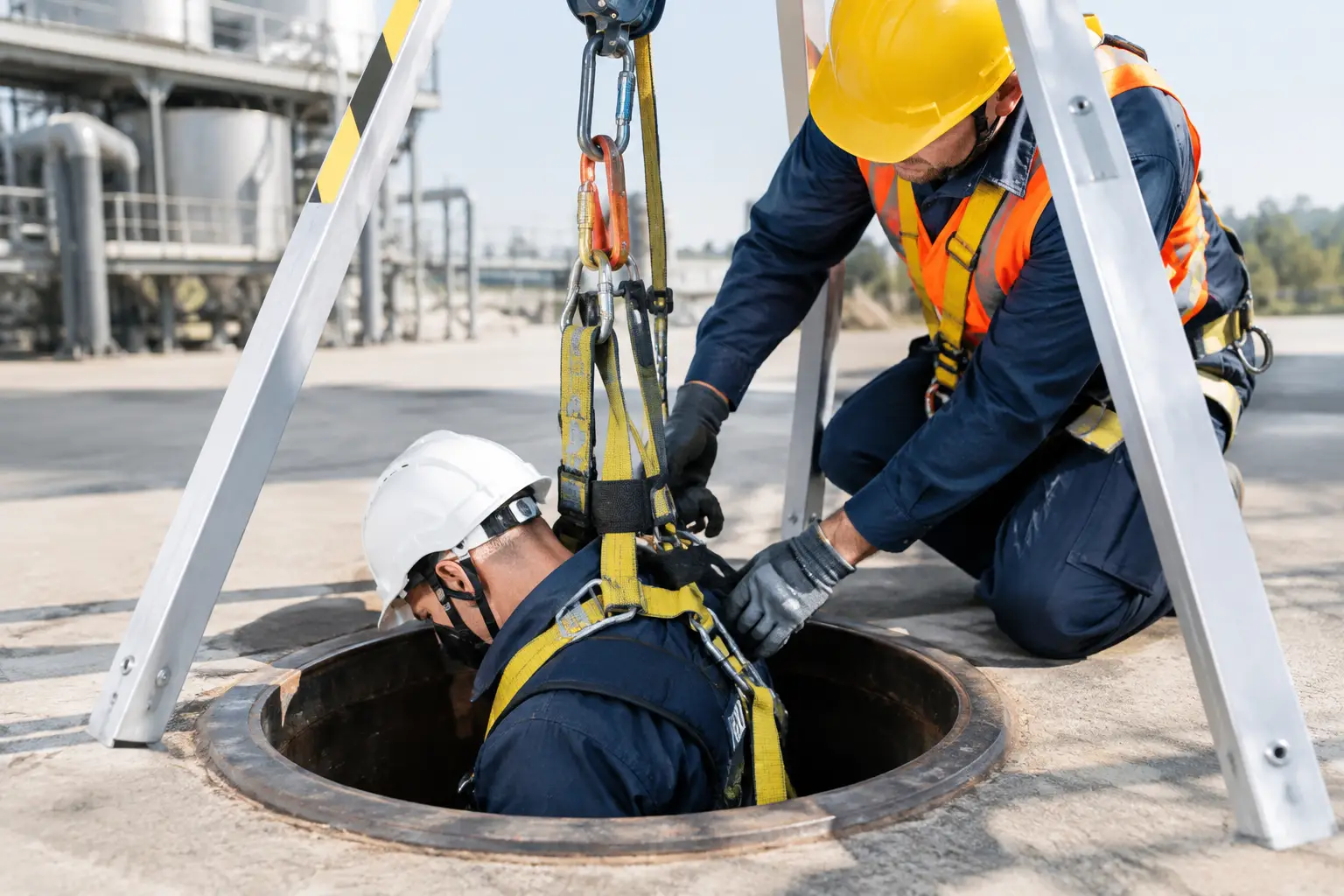

Quality management best practices are structured methods organizations use to ensure construction outputs meet defined standards consistently, from foundation work through final inspection. The formal framework for these practices is a Quality Management System, or QMS, which ISO 9001:2015 defines as the backbone of any compliant construction operation. The Plan-Do-Check-Act cycle, known as PDCA, forms the structural core of ISO 9001 and drives continuous improvement across every project phase. For construction leaders managing regulatory pressure, subcontractor networks, and site-level variability, a disciplined QMS is not optional. It is the mechanism that converts compliance requirements into repeatable, measurable outcomes.
1. Establish leadership commitment as the foundation
Quality management in construction fails most often at the top, not the field. When senior leaders treat quality as a documentation exercise rather than an operational priority, frontline teams follow that signal. Leadership commitment means allocating budget for training, participating in management reviews, and holding project managers accountable to quality KPIs. Without that visible commitment, even the most detailed QMS procedures become shelf documents.
2. Develop Standard Operating Procedures that reflect real site conditions
Standard Operating Procedures, or SOPs, are the operational backbone of any quality management process guide. The critical failure point is writing SOPs that describe ideal conditions rather than actual site practices. When procedures do not match reality, workers create shadow processes that bypass documented controls entirely. This gap between written procedure and field behavior is one of the most common causes of nonconformance findings during certification audits.

SOPs must be written with input from the workers who execute the tasks. A concrete pour procedure authored solely by a QMS coordinator will miss the sequencing decisions that experienced site crews make automatically. Practical SOPs reduce rework, accelerate onboarding, and give auditors the documented evidence they require.
Pro Tip: Field-test every new SOP on a live task before finalizing it. If the crew modifies the steps to make the work possible, revise the procedure, not the crew’s behavior.
3. Map your processes before you manage them
Process mapping uncovers hidden inefficiencies and redundant steps that verbal walkthroughs consistently miss. A visual map of a concrete inspection workflow, for example, often reveals that three separate teams are performing overlapping checks with no shared record. That redundancy costs time and creates conflicting documentation.
Effective process maps for construction quality management include:
- The sequence of every task from initiation to sign-off
- The responsible role or team at each step
- Decision points where nonconformance triggers a corrective action
- Document or record outputs at each stage
- Handoff points between subcontractors and the main contractor
Pro Tip: Involve frontline supervisors in mapping sessions, not just QMS staff. They know where the actual bottlenecks occur, and their input produces maps that workers will actually follow.
4. Embed risk-based thinking directly into workflows
Risk-based thinking is a core requirement of ISO 9001:2015, but most construction firms treat it as a separate compliance register rather than an operational tool. Risk controls must be embedded directly into SOPs and daily workflows, not housed in a standalone document that site crews never consult.
Practical integration looks like this:
- Include a risk checkpoint within each SOP at the point where the highest-consequence decision occurs
- Link identified risks directly to Corrective and Preventive Action, or CAPA, procedures
- Update risk assessments immediately after any near-miss or nonconformance event
- Assign risk ownership to the role executing the task, not the QMS manager
When risk management becomes part of daily workflow rather than a periodic compliance activity, construction teams identify problems before they become defects. That shift from reactive to preventive is the defining characteristic of mature quality assurance techniques.
5. Schedule procedure reviews annually and after every incident
Document reviews must occur at minimum annually, and immediately following any process incident that results in a nonconformance or near-miss. Annual reviews catch regulatory changes, new equipment introductions, and scope expansions that render existing procedures obsolete. Post-incident reviews prevent recurrence by updating the procedure before the next similar task begins.
Construction projects move fast. A procedure written for a standard residential build may not address the sequencing demands of a mixed-use development. Scheduled reviews keep the QMS current and defensible during surveillance audits.
6. Define KPIs that connect directly to quality outcomes
KPIs are the measurement layer of any quality management implementation workflow. Generic metrics like “number of audits completed” tell leaders nothing about quality performance. Construction-specific KPIs that carry real diagnostic value include defect rates per trade, rework costs as a percentage of contract value, inspection pass rates on first submission, and nonconformance closure times.
Each KPI must have a defined target, a measurement method, and a review frequency. Without those three elements, the metric becomes a data point without consequence. KPIs feed directly into management reviews, where leaders use the data to allocate resources and adjust procedures.
Pro Tip: Set KPI baselines during the first project phase before making any QMS changes. Without a baseline, you cannot measure whether your improvements are working.
7. Implement document control with version history and access permissions
Document control is the administrative infrastructure that makes a QMS auditable. Every procedure, inspection record, and corrective action report must carry a version number, an approval date, and a defined access level. Without version control, teams risk working from outdated procedures, which creates nonconformances that are entirely preventable.
Construction projects generate substantial documentation across multiple sites and subcontractors. A centralized document control system, whether a dedicated quality platform or a structured folder architecture with access permissions, prevents the version confusion that undermines audit readiness. ISO 9001 certification audits specifically examine whether the right people have access to the right version of every document.
8. Link employee training directly to current procedures
Certification audits frequently fail not because policies are weak, but because organizations cannot produce documented evidence that employees were trained on the exact current version of each procedure. Auditors look for training records that reference specific procedure version numbers, not generic competency certificates.
Training programs must be updated every time a procedure changes. A worker trained on version 1.2 of a concrete inspection SOP is not demonstrably competent on version 1.4. That gap is a finding. Construction leaders who treat training as a one-time onboarding activity rather than a continuous, procedure-linked process expose their organizations to certification risk.
9. Conduct internal audits as collaborative health checks
Internal audits function as health checks to verify process alignment, not as fault-finding missions. When audit culture becomes adversarial, site teams hide problems rather than surface them. The result is a QMS that looks compliant on paper but fails under external scrutiny.
Effective internal audits in construction involve the auditee in reviewing findings before the report is finalized. This collaborative approach produces more accurate findings and generates buy-in for corrective actions. ISO 9001 certificates carry a three-year validity with annual surveillance audits required. Internal audits between those surveillance cycles keep the organization continuously prepared rather than scrambling before each external visit.
For construction firms operating across multiple sites, a quality assurance checklist tailored to each project type standardizes what internal auditors examine and ensures no critical control point is overlooked.
10. Use management reviews to drive data-driven decisions
Management reviews are the formal mechanism through which data-driven decision-making enters the QMS cycle. They are not status meetings. A structured management review examines KPI trends, audit findings, customer feedback, and resource adequacy, then produces documented decisions and assigned actions.
Construction leaders who conduct management reviews quarterly rather than annually gain a significant advantage. Quarterly reviews allow course corrections within a project lifecycle rather than after project completion. The output of each review must include specific improvement actions with owners and deadlines. Without that accountability structure, the review produces insight but no change.
Understanding the distinction between QA and QC sharpens how management reviews are structured. Quality assurance prevents defects within processes. Quality control detects defects in finished outputs. Management reviews must address both dimensions to give leaders a complete picture of system performance.
Key takeaways
The most effective quality management best practices in construction combine procedural discipline, risk integration, and a culture where quality is owned at every level, not just the QMS function.
| Point | Details |
|---|---|
| SOPs must reflect reality | Procedures written without field input create shadow processes that bypass documented controls. |
| Risk belongs in workflows | Embed risk controls inside SOPs at decision points, not in a separate compliance register. |
| Training must track procedures | Link every training record to the specific procedure version to survive certification audits. |
| Audits are health checks | Collaborative internal audits surface real problems; adversarial audits produce compliant paperwork only. |
| KPIs require baselines | Measure before changing anything so you can demonstrate whether improvements are working. |
What I’ve learned about quality management that most guides won’t tell you
The construction industry has a persistent problem with QMS theater. Organizations build elaborate procedure libraries, pass their Stage 1 and Stage 2 audits, and then watch the system calcify because no one owns it operationally after certification day. I’ve seen this pattern repeat across firms of every size.
The uncomfortable truth is that quality success depends more on cultural transformation than on documentation volume. A 40-page SOP library that no site supervisor has read is less valuable than five concise procedures that crews actually follow. The goal is not a comprehensive document set. The goal is consistent behavior on site.
What actually works is making quality visible at the leadership level every week, not just during audit season. When project directors reference defect rates in weekly briefings and hold subcontractors to inspection pass rate targets, quality becomes part of the operational language. That shift does not come from a consultant writing better procedures. It comes from leaders who treat quality data the same way they treat cost and schedule data.
The other lesson I’d offer is this: embedding quality as a core value throughout the organization produces more durable systems than any certification-driven push. Certification is a milestone, not the destination. The firms that sustain high quality performance are the ones where frontline workers understand why the procedures exist, not just what they require.
— Aman
How Com supports quality management implementation in construction
Construction leaders who need to move from procedural intent to certified, auditable performance require more than a template library.

Com, operating as MOSAIC Ecoconstruction Solutions, delivers specialized QES consultancy that covers ISO 9001 implementation, internal audit programs, and regulatory compliance support tailored specifically for construction firms. The team guides organizations through the full certification cycle, from gap assessment through Stage 2 audit readiness, and provides ongoing support during annual surveillance periods. For construction leaders ready to build a QMS that performs under external scrutiny, Com’s safety consultancy services provide the structured, experienced support that certification demands.
FAQ
What is a Quality Management System in construction?
A Quality Management System in construction is a documented framework of procedures, KPIs, and audit processes that ensures project outputs consistently meet defined standards. ISO 9001:2015 is the internationally recognized standard governing QMS structure and certification.
What is the difference between quality assurance and quality control?
Quality assurance prevents defects within processes, while quality control detects defects in finished outputs. Both functions are required in a complete construction quality management program.
How often should construction QMS procedures be reviewed?
Procedures require review at minimum once per year, and immediately after any process incident or nonconformance event. This dual-trigger review cycle keeps documentation current and prevents recurrence of known failures.
What KPIs matter most for construction quality management?
The most diagnostic KPIs for construction quality include defect rates per trade, rework costs as a percentage of contract value, and inspection pass rates on first submission. These metrics connect directly to project cost and schedule performance.
How does ISO 9001 certification work for construction firms?
ISO 9001 certification requires a Stage 1 document review audit followed by a Stage 2 on-site audit. Certificates are valid for three years with mandatory annual surveillance audits to maintain compliance throughout the certification cycle.