Introduction
Under Singapore’s Workplace Safety and Health Act (WSH Act), employers carry the primary legal duty to manage workplace safety across every operation, while employees must cooperate, follow safety procedures, and use the controls provided. Understanding how employer WSH liability differs from employee responsibility is essential for any business operating in Singapore-whether on construction sites, in factories, or in office workplaces.
This article provides a practical Workplace Safety and Health Act Singapore summary for legal counsel, HR professionals, and business owners. Rather than dissecting dense case law, we break down the obligations each party holds, explain where they overlap, and show how to operationalise these duties so your organisation stays compliant and your people stay safe. The WSH Act emphasizes shared responsibility for workplace safety between employers and employees, and getting the balance right matters more than ever: 37 workplace fatalities were reported in Singapore in 2023, and enforcement penalties continue to rise.
Here is what you will gain from this article:
-
Understand who is liable when workplace accidents occur, and how MOM assesses employer vs employee fault.
-
Learn what “reasonably practicable” means in real, business-relevant terms-not just legal theory.
-
Know how to document duties and control measures to protect the company during investigations.
-
Recognise where employee responsibilities begin and employer duties end, with practical side-by-side comparisons.
-
Discover how to build a strong safety culture that reduces workplace risks and legal repercussions.
MOSAIC Ecoconstruction Solutions Pte Ltd provides consultancy, safety training, and outsourced EHS manpower to help businesses across Singapore operationalise these legal duties-from risk assessment workshops to bizSAFE certification support.
Understanding the WSH Act and Shared Responsibility
The Workplace Safety and Health Act (commonly referred to as the WSH Act) is Singapore’s principal legislation governing occupational safety and workplace health. The WSH Act was enacted in 2006 to cover all workplaces, replacing the older Factories Act with a risk-based, performance-driven model. This shift means that liability is tied not to industry type but to a stakeholder’s level of control over hazards and the foreseeability of harm.
The Act is enforced by the Ministry of Manpower (MOM) and applies to every workplace in Singapore-including offices, factories, project sites, warehouses, and retail establishments. The WSH Act covers all workplaces, including offices and factories, and is supported by subsidiary regulations and Approved Codes of Practice (ACOPs) published by the Workplace Safety and Health Council.
The central idea underpinning the Act is shared responsibility. Duties under the WSH Act apply to various stakeholders including employers, employees, and others in control of the workplace. Each duty-holder-employer, occupier, principal, contractor, self-employed person, or employee-must manage the risks they are positioned to control. No single party bears all responsibility, but as we will see, employer duties are broader and carry heavier consequences.
The rest of this article zooms in on the employer vs employee split, using practical examples and structured comparisons rather than legal jargon.
Core Principles of the WSH Act
Three key features define how the WSH Act works in practice:
1. Reducing risks at source. The Act requires duty-holders to eliminate or minimise workplace risks through design, engineering controls, safe equipment, and well-planned processes-rather than relying solely on personal protective equipment or worker behaviour. This is why employers who fail to plan and control risks at source face the steepest penalties.
2. Promoting industry ownership of safety outcomes. The WSH Act moves away from a prescriptive, government-policing model. Instead, it expects industries and individual businesses to take ownership of safety practices, conduct risk assessments, and implement control measures tailored to their operations. Programmes like bizSAFE-a nationally recognised safety programme in Singapore-reinforce this principle by encouraging companies to build structured safety management systems.
3. Imposing higher penalties to deter poor safety management. Employers can face fines up to S$500,000 for violations, directors can be fined up to S$200,000 for negligence, and non-compliance can lead to work stoppages or imprisonment. These penalties reflect the Act’s zero-tolerance approach to poor safety management and are designed to ensure that employer WSH liability is taken seriously at board level.
Consider a contractor failing to plan lifting operations on a construction site. Under the WSH Act, that failure is not merely an operational oversight-it is a breach of the employer’s duty to ensure safe systems of work, and it can result in personal liability for the individual directing the work. In 2019, an individual named Ong Chin Chong was fined S$140,000-the highest fine imposed on an individual under the WSH Act at that time-for unsafe lifting operations that led to a fatality.
Who Are the Duty-Holders Under the WSH Act?
The WSH Act identifies several categories of duty-holders, each with obligations proportionate to their control over workplace risks:
-
Employers – carry the broadest duties to ensure safety for employees and others affected by their undertaking.
-
Occupiers – responsible for the safety of the physical premises.
-
Principals – those who engage contractors; they share duties for the safety of contractor workers.
-
Contractors and self-employed persons – must manage risks arising from their own work.
-
Manufacturers, suppliers, installers – must ensure equipment and substances are safe for use.
-
Employees (persons at work) – must cooperate with safety measures, follow procedures, and report hazards.
One company can occupy multiple roles simultaneously. For example, a main contractor on a construction site may be both an employer (to its own workers) and a principal (to its subcontractors), carrying overlapping safety obligations under each role.
This article focuses on the employer vs employee boundary, but it is important to recognise that these responsibilities interact with the duties of principals, occupiers, and contractors. Understanding employer duties first is essential for HR, legal, and management to frame internal safety policies and employment contracts correctly.
Employer Duties Under Singapore’s WSH Act
Employers have a primary, overarching duty to manage workplace safety. Under Section 12 of the WSH Act, every employer must take reasonably practicable measures to ensure safety and health at work for their employees. Crucially, employers are accountable for not just employees but also others potentially affected by their work-including contractors, visitors, and members of the public. The 2024 High Court case of Koh Lian Kok v Public Prosecutor reinforced that an employer’s duty under Section 12(2) extends to non-employees affected by the employer’s undertaking.
Providing a Safe Workplace and Systems of Work
Employers are responsible for providing a safe working environment and suitable welfare facilities. This includes:
-
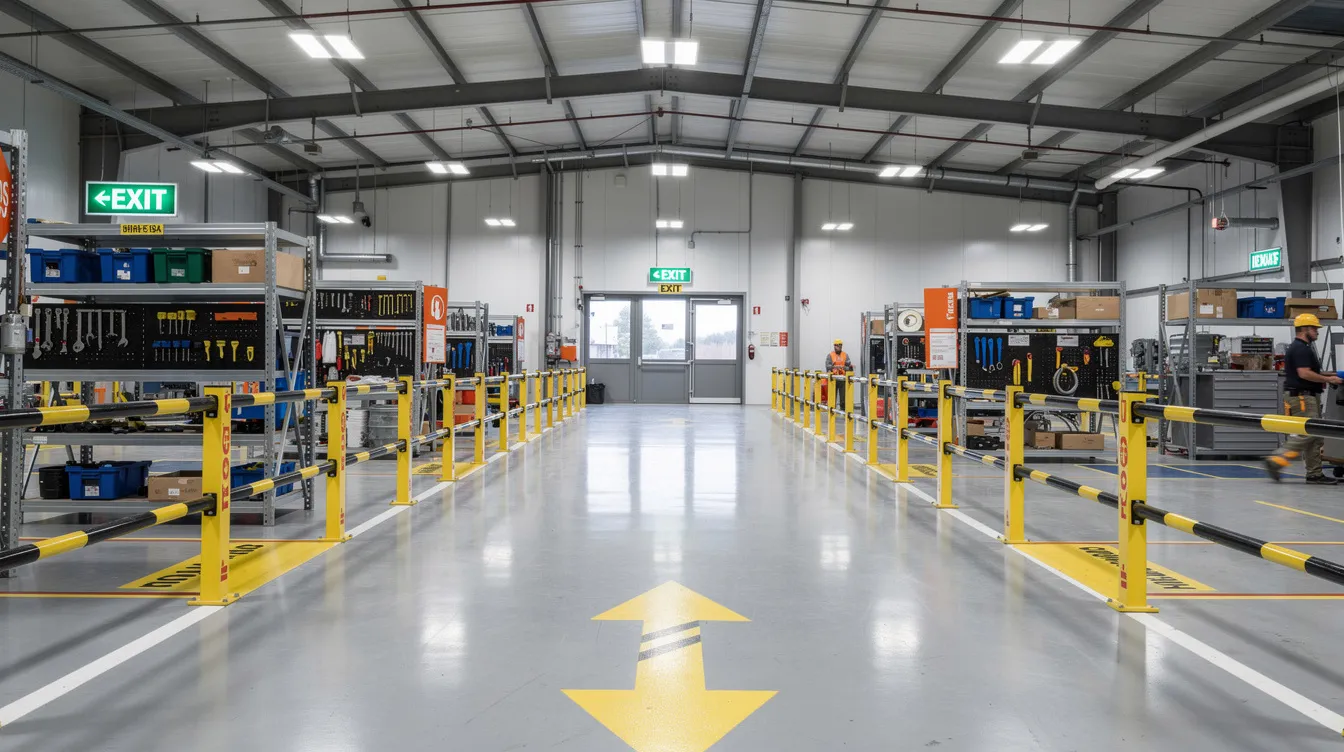
Safe access and egress: clear walkways, properly lit corridors, unobstructed emergency exits, and managed traffic routes on construction sites and in warehouses.
-
Housekeeping and site organisation: keeping work areas free from tripping hazards, oil spills, and clutter that create unsafe conditions.
-
Safe machinery, tools, and plant: employers must ensure safe systems of work and maintain equipment. This means regular inspections, servicing, and certification of forklifts, cranes, MEWPs, and other new equipment before use.
“Systems of work” means more than verbal instructions. Employers must develop written safe work procedures, permit-to-work systems for high risk industries and tasks, and lockout-tagout protocols for maintenance activities. Failure to provide these systems is often where employer WSH liability arises during MOM investigations. A missing permit-to-work for work at height, for example, is one of the most common findings in fatal accident inquiries on construction sites.
Risk Management, Training and Supervision
Employers must conduct formal risk assessments for all work activities under the WSH (Risk Management) Regulations 2006. These risk assessments are foundational to WSH compliance and carry specific legal requirements:
-
Risk assessments must identify every foreseeable hazard in the workplace, from manual handling injuries to exposure to hazardous substances and electrical hazards.
-
A competent person must conduct or supervise the risk assessment.
-
Risk assessments must be updated after changes in work processes, after workplace incidents, or when new equipment is introduced.
-
Employers must implement control measures following the hierarchy of controls: elimination, substitution, engineering controls, administrative controls, and finally personal protective equipment.
-
Employers must conduct regular risk assessments under the WSH Act-not as a one-off exercise, but as an ongoing discipline.
Training and supervision are equally critical. Employers must provide adequate safety training to workers, covering induction, task-specific skills, toolbox meetings, and emergency procedures. Consider a new crane operator arriving on site or an intern starting work in a chemical laboratory-both require role-specific instruction and close supervision before they can work independently. Foreign workers, who may face language barriers and unfamiliarity with local safety protocols, require particular attention in training design.
MOSAIC Ecoconstruction Solutions can assist with risk assessment workshops and WSH training tailored to your industry, helping employers meet these obligations efficiently.
Provision of PPE, Information and Welfare Facilities
Employers must provide personal protective equipment at no cost to employees. This includes helmets, safety shoes, harnesses for work at height, hearing protection in noisy environments, respirators in paint booths, and any other appropriate personal protective equipment relevant to the workplace risks identified in the risk assessment.
But the duty does not end at distribution. Employers must:
-
Provide clear information and instructions on safe use-through signage, induction booklets, and multilingual briefings where the workforce includes foreign workers.
-
Check that PPE is used correctly and replaced when defective or expired.
-
Ensure safety measures are effectively enforced and communicated to all staff.
Welfare facilities are also part of the employer’s obligation: drinking water, sanitary facilities, and rest areas, especially in hot outdoor environments where heat stress is a growing concern. From 1 December 2026, heat stress management for outdoor work will become mandatory, requiring employers to monitor WBGT readings, provide shade, and schedule rest intervals.
Incident Reporting, Investigation and Corrective Action
Employers must report workplace fatalities immediately to MOM, and must also report workplace accidents, dangerous occurrences, and occupational diseases within statutory timelines. Failure to report incidents can result in additional penalties.
Beyond reporting, employers have a duty to investigate incidents, find root causes, and implement corrective and preventive actions-whether engineering fixes, procedural updates, or additional training. Incident reporting is not just a legal formality; it is the mechanism through which organisations learn and prevent recurrence.
Record-keeping is crucial for defending employer WSH liability claims. Employers should maintain:
-
Risk assessments and method statements (RAMS).
-
Training records and competency assessments.
-
Inspection checklists, maintenance logs, and permit forms.
-
Investigation reports with root-cause analysis and corrective actions.
Poor documentation has repeatedly hurt companies during MOM investigations. In one typical pattern, an employer could demonstrate they had purchased PPE but had no records showing workers were trained to use it. In another, a company had risk assessments on file but had not updated them after a major process change-leaving them exposed when an accident occurred in the new process. In the ATEC Machinery case (2022), the company was convicted under Section 12(2) for failing to take measures to ensure safety of non-employees; robust documentation could have strengthened their defence.
Key takeaway for this section: Employer duties are broad, proactive, and documented. They cover the physical environment, risk management, training, PPE, welfare, incident response, and record-keeping. When an accident happens, MOM’s first question is: what did the employer do to prevent it? This naturally raises the question of what the employee was expected to do-which we turn to next.
Employee Responsibilities Under the WSH Act
Employees are not passive recipients of safety measures. The WSH Act imposes legal duties on every person at work to cooperate and act safely. HR and legal teams should ensure these statutory duties are reflected in employment contracts, handbooks, and disciplinary frameworks-not left as informal expectations.
Duty to Take Reasonable Care for Their Own and Others’ Safety
Employees must follow safety procedures at work and take reasonable care for their own safety and health, as well as that of co-workers and others who may be affected by their actions. This is a statutory obligation under Section 15 of the WSH Act, not simply a moral expectation.
Concrete examples include:
-
Not bypassing machine guards or safety interlocks.
-
Not standing under suspended loads during lifting operations.
-
Not blocking fire exits or emergency exits with personal belongings or stored materials.
-
Not using mobile phones while driving company vehicles or operating machinery.
Reckless endangerment can lead to fines up to S$5,000, and more serious breaches can attract higher penalties or imprisonment. The WSH Act carries real legal repercussions for employees who wilfully disregard safety.
Duty to Follow Safety Procedures and Use PPE
Employees must use personal protective equipment as required, and must:
-
Comply with safe work procedures, permits, and instructions issued by the employer.
-
Use protective gear properly whenever required-harnesses on scaffolds, respirators in confined spaces, hearing protection in noisy workshops.
-
Attend mandatory safety briefings and training sessions.
Common non-compliance behaviours-removing helmets in hot weather, defeating machine interlocks to speed up production, skipping toolbox talks-are not merely policy breaches. They are offences under the WSH Act. Employees must cooperate with employer’s safety measures, and failure to do so can result in disciplinary action and prosecution.
Employers can document non-compliance through written warnings, records of counselling sessions, and witness statements. These records support fair treatment in disciplinary proceedings and demonstrate to MOM that the employer took enforcement seriously.
Duty to Report Hazards, Defects and Incidents
Employees must report hazards and unsafe conditions immediately. This includes:
-
Unsafe conditions such as oil spills, damaged ladders, or missing guardrails.
-
Defective equipment and missing machine guards.
-
Near-misses and minor workplace injuries.
Reporting hazards is essential for the employer to fulfil its own WSH obligations-employers cannot fix what they do not know about. Organisations should establish anonymous or non-punitive reporting channels to encourage employee participation and overcome the reluctance to speak up. A healthy reporting culture is one of the strongest indicators of a strong safety culture.
Prohibited Conduct and Consequences
Employees must not:
-
Misuse or interfere with safety equipment such as fire extinguishers, emergency stops, or machine guards.
-
Engage in horseplay, intoxication at work, or wilful disregard of instructions.
Sanctions for such conduct range from internal disciplinary action (up to dismissal) to legal penalties including fines and, in serious cases, imprisonment. However, management still must demonstrate they took reasonably practicable steps-through training, supervision, and effective enforcement-even when an employee misbehaved. An employee’s misconduct does not automatically absolve the employer of liability.
Employer vs Employee Responsibilities: Drawing the Line
Disputes frequently arise over “who is at fault” after a workplace accident. Understanding the practical boundary between employer duties and employee responsibilities helps prevent conflict, strengthens legal defensibility, and supports fair outcomes. This section uses structured comparison, a reference table, and concrete scenarios to clarify the split.
Side-by-Side Comparison of Core Duties
The following table captures how typical safety obligations are divided between employers and employees under the WSH Act:
|
Duty Area |
Employer Responsibility |
Employee Responsibility |
|---|---|---|
|
Personal protective equipment |
Provide appropriate PPE at no cost; train on proper use; replace when defective |
Use PPE correctly whenever required; report damaged or ill-fitting PPE |
|
Safe work procedures |
Develop, document, and communicate written procedures |
Follow procedures and permits; not take shortcuts |
|
Risk assessments |
Conduct risk assessments, identify hazards, implement control measures |
Report new or observed hazards; cooperate with assessment process |
|
Equipment and machinery |
Maintain, inspect, and certify equipment; implement lockout-tagout |
Not abuse, tamper with, or misuse equipment or safety devices |
|
Training |
Provide induction, task-specific, and refresher safety training |
Attend all mandatory training; apply what is learned on the job |
|
Incident reporting |
Report accidents, dangerous occurrences, and occupational diseases to MOM |
Report hazards, near-misses, defects, and injuries to supervisor/employer |
|
Emergency procedures |
Develop emergency plans; conduct fire drills; provide medical emergencies response |
Participate in drills; follow evacuation procedures; not re-enter buildings |
|
Supervision |
Provide adequate supervision, especially for new or high-risk workers |
Cooperate with supervisors; follow lawful instructions |
Liability is often shared, but MOM looks primarily at what the employer did to control foreseeable risks. If the employer failed to provide adequate training, supervision, or enforcement mechanisms, the employer will be held accountable-even if the employee also acted improperly.
What “Reasonably Practicable” Means in Real Life
“Reasonably practicable” is the legal yardstick used throughout the WSH Act. In non-legal terms, it means weighing the severity and likelihood of harm against the time, cost, and effort of implementing control measures. It does not mean “technically possible at any cost,” nor does it allow employers to skip safety measures simply because they are expensive.
Consider these scenarios:
-
Construction firm and work at height: Installing edge protection, guardrails, and lifelines for roof work is a well-known, widely available safety measure. A firm that fails to install these protections because of cost or schedule pressure will struggle to argue they took reasonably practicable steps. Courts and MOM will note that the controls are standard industry practice.
-
Office employer and ergonomic risks: An employer should adjust workstation setups, provide ergonomic furniture, and manage workload to reduce musculoskeletal disorders and mental health risks. While not as dramatic as fall protection, these are reasonably practicable measures for office workplaces-and failure to address known ergonomic risks or workplace harassment can attract scrutiny.
Employers should document their reasoning in risk assessment notes, management meeting minutes, and budget allocation records. This documentation shows that management considered practicable steps and made informed decisions. Critically, employees cannot “consent” to waive these protections-employer WSH liability remains regardless of any employee agreement to accept risk.
Case-Style Scenarios: Who Is Liable When Things Go Wrong?
Scenario 1: Fall from scaffold with missing guardrails. A worker falls from a scaffold where guardrails were absent and no permit-to-work was in place. This is a clear employer failure: the duty to provide safe systems of work, conduct risk assessments, and implement engineering controls was not met. MOM will focus on why the guardrails were missing and whether a permit system existed. The employer faces prosecution under Section 12, with potential fines up to S$500,000 for the company.
Scenario 2: Employee removes a machine guard. An employee removes a machine guard despite having received repeated training and despite clear signage prohibiting removal. The employee may face prosecution for wilful non-compliance. However, MOM will still ask: did the employer have a documented disciplinary policy for repeated breaches? Was supervision adequate? Were there engineering controls (e.g., interlocks) that would prevent the machine from operating without the guard? If the employer had no enforcement mechanism, liability will be shared-and the employer’s position will be weaker.
Scenario 3: Office worker ignores fire drill. During a fire alarm, an office worker ignores the evacuation procedure, re-enters the building, and is injured. The employee clearly breached their duty to follow emergency procedures. But MOM will examine whether the employer conducted regular fire drills, whether evacuation procedures were clearly communicated, and whether attendance was documented in training records. Shared responsibility applies, but the employer who can show consistent drills, clear signage near emergency exits, and documented briefings is in a much stronger position.
These examples show that practical implementation and solid documentation are what convert paper duties into real protection for both people and the business.
Implementing WSH Duties in Your Organisation
Many HR and legal teams understand the statute on paper but struggle to operationalise it across sites and departments. This section provides a step-by-step framework adaptable to both SMEs and large enterprises.
Step-by-Step Compliance Framework for Employers
Follow these steps to build a robust WSH compliance structure:
-
Map your duty-holders across all Singapore entities and sites. Identify where your organisation acts as employer, occupier, or principal, and clarify who holds accountability in each role.
-
Conduct a gap assessment against WSH Act and Risk Management Regulations requirements. Compare your current safety policies, procedures, and documentation against statutory obligations.
-
Develop or update your WSH policy, risk assessments, and safe work procedures. Ensure they cover all work activities-including non-core tasks like cleaning, maintenance, and contractor work.
-
Integrate duties into employment contracts, handbooks, and onboarding materials. Make statutory employee responsibilities explicit, including PPE use, reporting hazards, and attending training.
-
Roll out role-specific training for managers, supervisors, and workers. Train employees on their specific WSH obligations, not just generic safety awareness.
-
Set up reporting systems for hazards, near-misses, and incidents. Ensure channels are accessible, and consider anonymous options to encourage employee participation.
-
Audit and review at planned intervals. Schedule regular workplace inspections and compliance reviews; adjust controls and documentation after incidents or process changes.
-
Consider external support. Organisations without in-house WSH expertise can engage consultants like MOSAIC Ecoconstruction Solutions for facilitating risk workshops, preparing for MOM inspections, or pursuing bizSAFE certification.
Aligning HR, Legal and Operations on WSH
WSH compliance fails when safety is seen as only the WSH officer’s job. HR, legal, and operations must align to create safe workplaces:
-
Hold regular cross-functional meetings between HR, legal, WSH leads, and operations managers to review safety performance, incident trends, and regulatory updates.
-
Include WSH performance in KPIs for line managers and supervisors. When daily operations managers are measured on safety outcomes, accountability becomes real.
-
Ensure disciplinary processes support safety enforcement. HR must be prepared to act consistently on repeated non-compliance, and legal must ensure processes are fair and documented.
-
Use incident investigations and MOM circulars as learning opportunities for the leadership team-not just compliance exercises.
Effective safety cultures require commitment from both leadership and employees. Companies with strong safety cultures see increased employee retention, fewer workplace incidents, and stronger legal defensibility.
Documenting Duties to Protect the Business
Solid documentation is the foundation of WSH compliance and the strongest defence in investigations. Key documents HR and legal should maintain include:
-
Risk assessments and method statements (RAMS) for all work activities.
-
Training attendance records and competency assessments-including dates, topics, trainer qualifications.
-
Toolbox talk minutes and safety briefing materials, signed by attendees.
-
Inspection checklists, maintenance logs, and permit forms showing regular workplace inspections.
-
Records of disciplinary action for repeated safety non-compliance.
These records serve multiple purposes:
-
MOM investigations and potential prosecutions: Documentation demonstrates the employer took reasonably practicable steps to ensure safety and can significantly reduce employer WSH liability exposure.
-
Work injury compensation act claims and insurance discussions: Clear records help establish the facts and support or defend claims.
-
Board reporting and ESG disclosures: Safety performance data supports governance obligations and investor expectations.

Common Challenges and Practical Solutions
Even committed businesses face recurring obstacles in balancing employer and employee responsibilities under the WSH Act. The following challenges appear across construction, manufacturing, and office environments in Singapore.
Challenge 1: “Safety Is the WSH Officer’s Job, Not Mine”
The issue: managers and supervisors distance themselves from WSH duties, assuming the safety department “owns” everything. This creates gaps in supervision, risk management, and enforcement-precisely the areas MOM scrutinises after workplace accidents.
Solutions:
-
Clarify line accountability in job descriptions, appraisals, and management KPIs. Every supervisor should understand their personal liability under the Act.
-
Deliver manager-specific training on their WSH Act responsibilities, including the risk of prosecution.
-
Have top management visibly participate in safety walks, briefings, and WSH committee meetings. Visible leadership changes behaviour more effectively than policy documents alone.
Challenge 2: Employee Complacency and Non-Compliance
Typical behaviours-ignoring PPE requirements, taking shortcuts, under-reporting near-misses-threaten both safety and legal compliance. These patterns are especially common where workers have performed the same tasks for years without incident.
Practical responses:
-
Adopt a just culture approach that balances learning with accountability. Not every mistake warrants punishment, but wilful breaches must have consequences.
-
Use targeted campaigns (e.g., “no shortcut” month) and peer safety champions to reinforce safety practices on the ground.
-
Apply consistent, documented disciplinary action for wilful breaches. Fair treatment in enforcement protects both the worker and the employer’s legal position.
Challenge 3: Keeping Up with Regulatory Changes and MOM Guidance
MOM periodically updates Codes of Practice, circulars, and sector-specific requirements. The 2024 WSH Act amendments expanded duties for principals and introduced new WSH management system requirements effective from January 2025. From December 2026, heat stress management becomes mandatory for outdoor work.
Solutions:
-
Assign a responsible person or WSH committee to monitor MOM and WSH Council updates systematically.
-
Schedule annual or semi-annual legal/WSH compliance reviews to catch gaps before MOM does.
-
Leverage external advisors, industry associations, and continuing safety training to stay current. Singapore’s workplace fatal injury rate fell over 75% since 2004-evidence that sustained regulatory engagement and industry commitment produce results.
A structured approach turns these challenges into manageable routines rather than crisis responses.
Conclusion and Next Steps
Employers bear primary responsibility to create safe systems and environments under the WSH Act. Their duties encompass risk management, safe work procedures, training, PPE provision, incident reporting, and thorough documentation-covering not only their own employees but anyone affected by their undertaking. The scope of employer WSH liability is broad, and the penalties for failure are severe and increasing.
Employees, in turn, must cooperate by acting safely, using provided controls, attending training, and reporting hazards. Their responsibilities are legal obligations, not optional guidelines, and wilful breaches carry their own penalties. Both parties play essential roles in ensuring workplace safety and health.
Legal counsel, HR professionals, and business owners can significantly reduce employer WSH liability by clarifying and documenting these roles throughout the organisation. Implementing bizSAFE practices reduces workplace accidents significantly, and bizSAFE certification-supported by the Workplace Safety and Health Council-helps organisations in construction, manufacturing, and other sectors systematically improve safety management systems.
Your next steps:
-
Review your current WSH policy and employment contracts for alignment with statutory employer duties and employee responsibilities.
-
Conduct or update a company-wide risk assessment and gap analysis.
-
Run a focused briefing for managers on their WSH roles and personal liability.
-
Set up or refine systems for hazard/near-miss reporting and incident investigation.
-
Plan annual refresher training for both management and workers, covering current regulations and emerging safety issues.
Related areas worth exploring next include bizSAFE certification, ISO 45001 implementation, and integrating WSH with ESG reporting. MOSAIC Ecoconstruction Solutions Pte Ltd supports organisations across these areas with consultancy, outsourced EHS manpower, and certification preparation.
Additional Resources and Visual Aids
Key Singapore WSH References
The following resources serve as baseline documents for HR and legal teams updating internal safety policies:
-
MOM’s Workplace Safety and Health Act portal – the primary source for the full Act, subsidiary legislation, and enforcement information.
-
WSH (Risk Management) Regulations 2006 – detailed requirements for employers to identify hazards, assess risks, and implement controls.
-
WSH Council guidelines – published codes covering risk management, working at height, confined spaces, mental health and well-being, and specific sectors such as cleaning and custodial services.
-
bizSAFE programme information – the nationally recognised programme for SMEs and larger organisations pursuing structured safety management. Companies in construction and manufacturing can pursue bizSAFE certification as a practical path to compliance.
-
MOM liabilities and penalties page – current penalty ranges for breaches, including corporate and individual fines.
Suggested Diagrams, Flowcharts and Tables
To make this content more accessible for HR and board presentations, consider creating the following visuals:
-
WSH Compliance Cycle Flowchart: Assess → Control → Train → Monitor → Review, with employer vs employee roles highlighted at each stage. Employers drive assessment and control; employees participate in training and monitoring; both contribute to the review stage.
-
Shared Responsibilities Infographic: A centre circle labelled “Safe & Healthy Workplace” surrounded by labelled segments-employer duties (risk assessment, PPE provision, training, supervision, reporting to MOM) on one side and employee duties (following procedures, using PPE, reporting hazards, cooperating) on the other.
-
Decision Tree: “Is this my responsibility as employer, supervisor, or employee?”-based on who has control over the risk, who can eliminate or reduce it, and who must comply with the control measure.
-
Singapore WSH Timeline: Key milestones from the pre-2006 Factories Act, through the 2006 WSH Act enactment, the 2014 Code of Practice for Board and CE duties, the 2024 amendments expanding principal duties, and upcoming mandatory heat stress requirements from December 2026.
-
Penalty Summary Table: Visual breakdown of maximum fines for individuals (up to S$200,000), corporates (up to S$500,000, rising to S$1 million for repeat offences involving death), and imprisonment terms.
All visuals should be clean, brand-aligned, and suitable for inclusion in internal compliance presentations and safety briefings.
FAQ: Navigating Employer Duties vs Employee Responsibilities
Does the WSH Act apply to office-only businesses?
Yes. The WSH Act covers all workplaces, including office workplaces. Typical office hazards include ergonomic risks from prolonged sitting, slips and trips from wet floors or loose cables, electrical hazards, fire safety, and psychosocial risks such as workplace harassment, excessive workload, and mental health concerns. Employers must conduct risk assessments and implement control measures for these hazards, and employees must follow the resulting safety procedures-just as they would on a construction site.
Can an employer be liable if an employee ignores safety rules?
Yes. Employees can be prosecuted for wilful breaches, but MOM will still examine whether the employer took reasonably practicable steps to prevent such behaviour. This includes whether the employer provided adequate training, exercised proper supervision, documented non-compliance, and applied consistent disciplinary action. If the employer cannot demonstrate these measures, employer WSH liability will remain-even where the employee clearly acted improperly.
What are the maximum penalties for serious WSH breaches?
For general duty breaches without a specific prescribed penalty, individuals (including directors and managers) face fines up to S$200,000 or up to two years imprisonment on first conviction. Corporates face fines up to S$500,000. Repeat offences-particularly those resulting in death-can attract fines up to S$1 million for corporates. Breach of a stop-work order can result in fines up to S$500,000 plus S$20,000 per day, or up to 12 months imprisonment. These figures underscore the serious injuries, fatalities, and legal repercussions that flow from non-compliance.
How often should risk assessments and WSH policies be reviewed?
As a guideline, review risk assessments and safety policies at least annually, and immediately after any significant change in processes, equipment, layout, staffing, or after any workplace incident or near-miss. High-risk work activities-such as work at height, confined space entry, or hot work-may require more frequent reviews. Regular risk assessments are not just good practice; they are a legal requirement under the WSH (Risk Management) Regulations.
How can outsourcing WSH functions help with compliance?
Companies without in-house WSH expertise can engage qualified WSH officers or consultants for outsourced safety manpower, compliance audits, bizSAFE preparation, and ISO 45001 implementation support. This approach gives businesses access to specialist knowledge for conducting risk assessments, preparing for MOM inspections, setting up incident reporting systems, and keeping pace with regulatory changes-without the overhead of building a full internal team. It is particularly valuable for SMEs and companies operating across multiple sites or in high risk industries where the compliance burden is substantial.