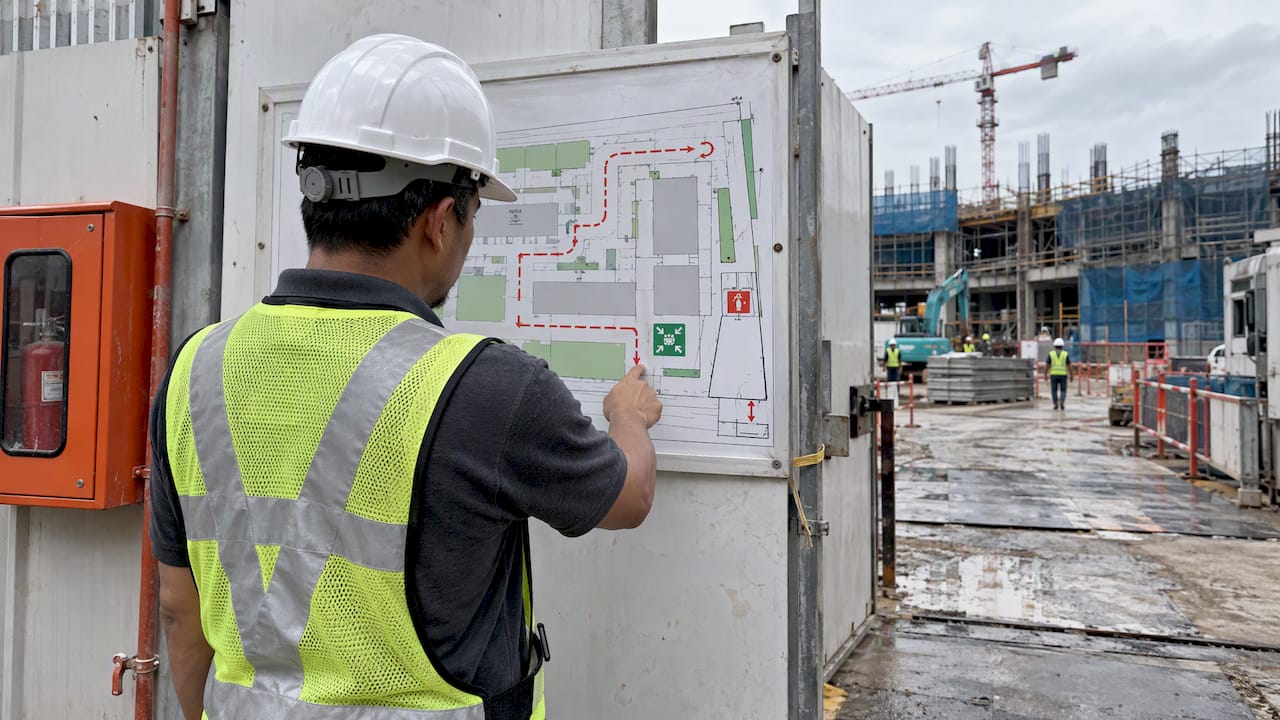

A consultant can produce a complete set of ISO documents and still leave a contractor unprepared for the realities of implementation. That is why ISO consultant selection criteria should extend beyond price, proposed timelines, and a polished presentation. For construction and industrial organizations, the right partner must understand how management systems operate when work is moving across sites, subcontractors are involved, and safety, quality, and environmental controls must hold up under scrutiny.
ISO certification is not simply a paperwork exercise. It requires a management system that reflects actual operations, assigns clear accountability, captures evidence, and supports continuous improvement. A well-chosen consultant helps the business achieve certification readiness while building controls that remain useful after the external audit.
Why ISO consultant selection criteria matter
Choosing the lowest-cost provider can appear efficient at the start of a certification project. The hidden cost emerges when generic templates do not match site activities, employees do not understand their responsibilities, internal audits become superficial, or corrective actions remain open before the certification audit.
This risk is especially high in construction, engineering, manufacturing, logistics, and other regulated operations. These businesses often need ISO 9001 quality controls alongside ISO 14001 environmental management or ISO 45001 occupational health and safety requirements. Their systems must also work with client specifications, subcontractor management processes, permit requirements, incident reporting, and existing legal obligations.
A capable consultant brings structure to this complexity. More importantly, they should challenge weak practices constructively and help leaders make practical decisions about risk, resources, and accountability. The objective is not to create a system that looks good in a manual. It is to create one that teams can operate consistently.
ISO consultant selection criteria for construction and industry
The most reliable selection process assesses a consultant against the operating conditions of your business. Technical knowledge matters, but so do delivery discipline, communication, and the ability to translate standards into site-level action.
1. Relevant sector and operational experience
Ask whether the consultant has worked with organizations that face risks similar to yours. A consultant familiar with office-based service businesses may understand ISO clauses but lack the practical context needed for a construction contractor managing lifting operations, work at height, temporary works, chemical use, multiple trades, and changing site conditions.
Relevant experience should be specific. Request examples of the industries served, the ISO standards supported, and the types of operational challenges addressed. For a contractor, useful experience may include project quality plans, subcontractor evaluations, inspection and test records, environmental aspect registers, risk assessments, emergency preparedness, and corrective-action investigations.
Sector familiarity does not mean every process should be copied from another company. Your consultant should use proven methods while tailoring the system to your project size, workforce profile, contractual requirements, and existing controls.
2. Clear understanding of the applicable standards
Many organizations pursue more than one standard. ISO 9001 focuses on quality management, ISO 14001 addresses environmental management, and ISO 45001 covers occupational health and safety. Each standard has distinct requirements, but an integrated system can reduce duplication when it is designed well.
Ask the consultant to explain how they would identify applicable requirements and integrate common processes such as document control, competency, internal audits, management review, risk assessment, and corrective action. Their explanation should be clear enough for operational leaders to understand without relying on jargon.
Also confirm the consultant understands the boundary between consulting and certification. A consultant may prepare your organization for certification, conduct gap assessments, train employees, and support implementation. The accredited certification body remains independent and makes the certification decision. Any provider that blurs this distinction should be assessed carefully.
3. A practical gap assessment and implementation plan
Before committing to a program, ask what the initial assessment will cover and what deliverables you will receive. A meaningful gap assessment should review more than existing policies. It should examine how work is planned, controlled, inspected, recorded, reviewed, and improved.
The outcome should be a prioritized plan that identifies gaps, accountable owners, required evidence, target dates, and dependencies. For example, a missing procedure may not be the first issue to solve if supervisors have not been trained to conduct inspections or project teams lack a consistent method for closing corrective actions.
Be cautious of fixed document packages offered before the consultant understands your business. Templates can speed up development, but they must be adapted, implemented, and tested. The value of consulting lies in helping people use the system, not merely receiving files.
4. Evidence of audit readiness capability
Certification readiness depends on objective evidence. This includes controlled documents, completed records, internal audit results, management review outputs, competence records, performance data, and corrective-action follow-up. A consultant should explain how they will help your organization generate and organize this evidence before the certification audit.
Ask how internal audits will be handled. Will the consultant train your internal auditors, conduct an independent internal audit, or support a hybrid approach? The best option depends on internal capability and the scope of certification. Smaller organizations may need more hands-on support, while larger companies may benefit from building internal audit capacity for long-term control.
A useful consultant also prepares leaders for management review. This is not a ceremonial meeting. It is where management reviews performance, resource needs, risks, opportunities, audit findings, compliance issues, and improvement actions. Weak management review is often a sign that the system has not been embedded.
5. Delivery scope, project ownership, and access to experts
Consulting proposals can look similar while offering very different levels of support. One provider may supply documents and limited remote guidance. Another may include site visits, workshops, implementation coaching, internal audits, management review support, and assistance during the certification audit.
Clarify the delivery scope in writing. Confirm the number of site visits, expected workshops, documentation support, audit days, response times, and whether certification-audit support is included. If your operations run across multiple sites, determine whether the proposal covers sampling, site-specific controls, and travel requirements.
It is also reasonable to ask who will do the work. Senior expertise at the sales stage has limited value if the delivery team lacks relevant experience. Identify the lead consultant, their qualifications, their industry background, and how technical questions will be escalated.
6. Communication that works from leadership to the worksite
ISO implementation often fails because the system is explained only to managers. Supervisors, engineers, coordinators, and workers need to know what changes affect their work and why. A capable consultant can communicate requirements in a way that suits each audience.
For site teams, that may mean concise procedures, practical briefings, visual checklists, and clear inspection records. For directors and project managers, it may mean dashboards, risk trends, audit findings, resource recommendations, and management review inputs. The format differs, but the controls must remain connected.
During selection, assess responsiveness and clarity from the first conversation. If a consultant cannot explain the project scope, key risks, and expected responsibilities plainly before appointment, implementation may become frustrating later.
Evaluate value, not only the consulting fee
Cost is a legitimate procurement factor, but it should be considered against the full cost of certification readiness. A low initial fee may lead to additional spending on rework, delayed audits, consultant change requests, rushed training, or corrective actions after a nonconformity.
Compare proposals based on defined outputs and practical support. Consider the consultant’s relevant experience, implementation hours, availability, site engagement, internal audit approach, employee training, and post-certification support. A short engagement can be appropriate for a mature organization with strong internal resources. A business building its first management system may require a more involved partnership.
A simple weighted evaluation can help decision-makers avoid subjective choices. Give greater weight to sector experience, implementation methodology, audit readiness support, and the capability of the assigned team than to presentation quality alone. Procurement, operations, EHS, and quality leaders should participate in the assessment because each group sees different risks.
Questions to ask before appointing an ISO consultant
A productive selection meeting should reveal how the consultant thinks, not just what documents they can provide. Ask how they would approach your current gaps, how they would engage site personnel, and what evidence they expect to see before certification.
You should also ask about likely project risks. For example, a consultant should be able to identify challenges such as inconsistent subcontractor controls, incomplete inspection records, limited leadership availability, or multiple project locations. Honest discussion of these issues is a positive sign. It shows the provider is planning for implementation rather than promising an unrealistic shortcut.
Finally, request a clear project roadmap with milestones, responsibilities, review points, and assumptions. Certification timing depends on the maturity of existing controls, the scope of the management system, available records, and the organization’s willingness to close gaps. Any guaranteed timeline should be tested against these realities.
The right consultant should leave your organization more capable, not more dependent. Select a partner that can turn ISO requirements into practical operating controls, equip your people to maintain them, and give leadership confidence that compliance is being managed where it matters most: in everyday work.