

A fire risk assessment is a structured, legally required process that identifies potential fire hazards, evaluates associated risks, and implements controls to safeguard occupants and property. For safety professionals and business owners operating in regulated industries, conducting a rigorous fire risk assessment is not optional. It is the foundation of statutory fire safety compliance and the primary mechanism for preventing loss of life, property damage, and regulatory penalties. This fire risk assessment guide covers the standardized 5-step methodology, assessment types, hazard prioritization techniques, and action plan development to support full compliance in 2026.
What are the five key steps of a fire risk assessment?
The legal fire risk assessment process follows a standardized 5-step methodology recognized across regulatory frameworks. Each step builds on the previous, creating a systematic chain from hazard identification through to ongoing review. Skipping any step creates compliance gaps that inspectors and insurers will identify.
Step 1: Identify fire hazards
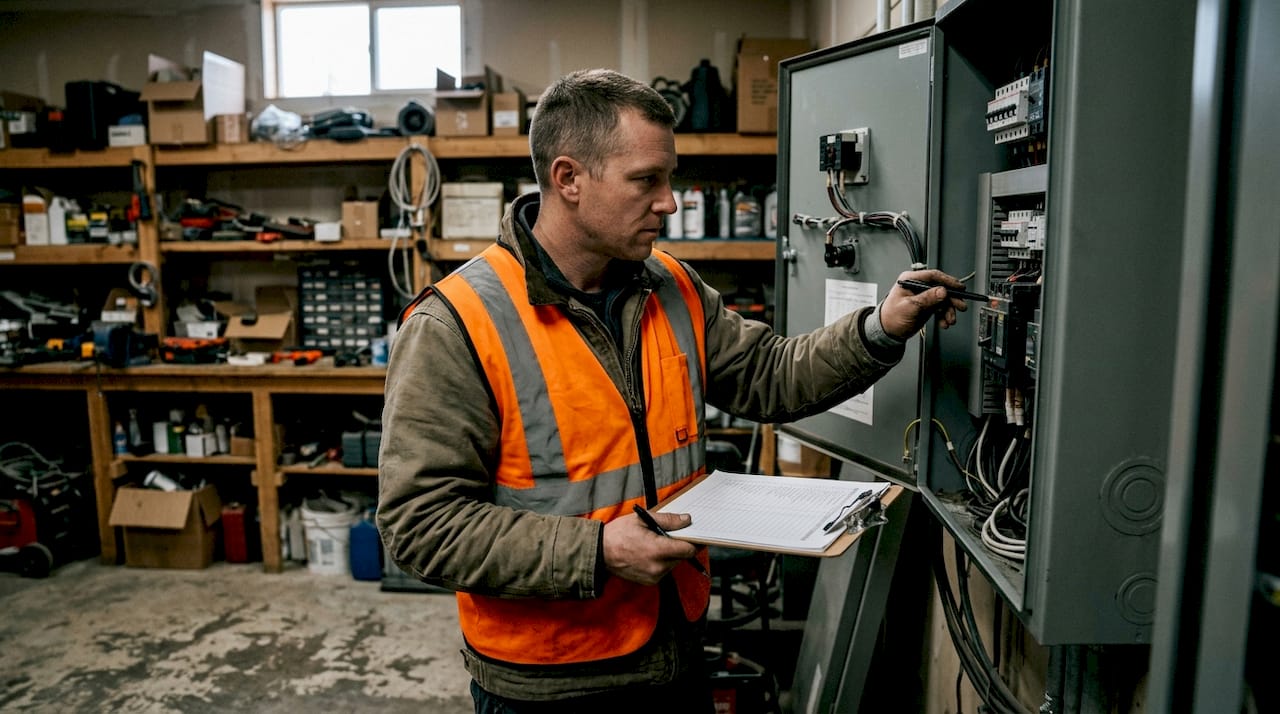
Hazard identification requires cataloging all ignition sources, fuel sources, and oxygen supplies present on the premises. Ignition sources include electrical equipment, heating systems, hot work activities, and smoking areas. Fuel sources range from paper and cardboard to flammable liquids and combustible wall linings. Oxygen sources include the building’s ventilation systems and any stored oxidizing agents.
Step 2: Identify people at risk
Every person who occupies or accesses the premises must be considered. This includes employees, contractors, visitors, and vulnerable groups such as individuals with mobility impairments or those unfamiliar with the building layout. Sleeping occupants in residential or hospitality settings represent a distinct and elevated risk category requiring specific controls.
Step 3: Evaluate and reduce risks
Risk evaluation requires comparing identified hazards against existing controls and determining whether residual risk is acceptable. Where it is not, additional controls must be implemented. The hierarchy of controls applies here: eliminate the hazard first, then substitute, then engineer controls, then administrative measures, and finally personal protective equipment.
Step 4: Record findings and create an action plan
Recording findings is mandatory for businesses with 5 or more employees. The record must document identified hazards, the people at risk, existing controls, and the action plan with specific deadlines and named responsible persons. Vague records fail regulatory audits and insurer reviews.
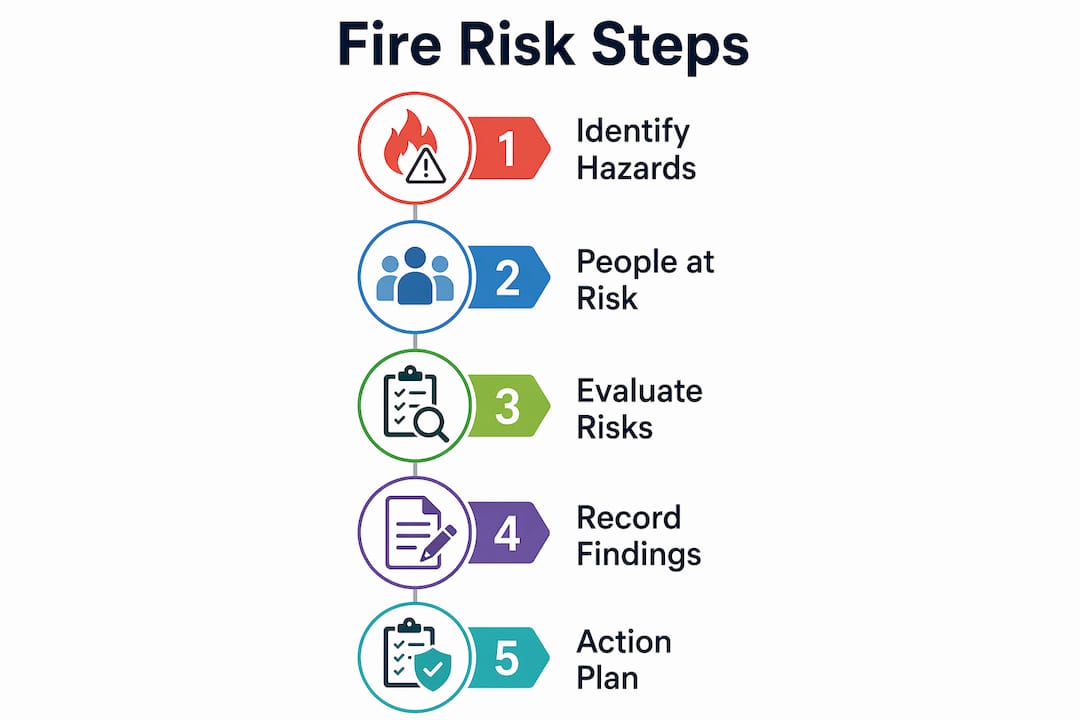
Step 5: Review and update regularly
Regular review is a legal requirement, though no fixed frequency is mandated. Reviews must occur after significant building changes, changes in occupancy, fire incidents, or near misses. A static assessment in a dynamic environment is a compliance liability.
- Record the identity of any competent person engaged to conduct the assessment
- Integrate staff training records into the assessment documentation
- Confirm emergency evacuation procedures are current and tested
Pro Tip: Digital templates and apps enable easier hazard tracking and history logging. Storing assessment records digitally improves accountability during regulatory audits and insurer reviews.
How can safety professionals prioritize and evaluate fire risks effectively?
Effective fire hazard analysis requires more than a walkthrough with a clipboard. Risk management experts recommend a 1-to-5 scoring matrix for both likelihood and severity, producing a combined score on a 25-point scale. Risks scoring 15 or higher require immediate intervention. This threshold approach removes subjectivity from prioritization and creates a defensible, documented rationale for resource allocation.
The Fire Triangle concept is the analytical backbone of any credible fire safety assessment. Every fire requires three elements: ignition, fuel, and oxygen. Effective assessments require actively identifying all three factors, not just checking whether fire extinguishers are present. Removing any one element of the triangle eliminates the fire risk entirely.
Common hazards that assessors overlook include:
- Blocked or obstructed fire exits reducing evacuation capacity
- Overloaded extension cords creating ignition risk in office and workshop environments
- Combustible materials stored adjacent to heat sources or electrical panels
- Inadequate separation between flammable liquid storage and ignition sources
- Damaged or missing fire door seals compromising compartmentalization
Structured scoring methodologies also align with insurer and regulator expectations for documented risk management. An assessment that produces a scored hazard register is significantly more credible to an insurance underwriter than a narrative report without quantified risk levels. For construction environments specifically, applying scoring matrices to fire-related incidents on building projects produces the most defensible compliance documentation.
Pro Tip: Document every hazard with a measurable, time-bound remediation action. “Fix electrical panel” fails an audit. “Replace damaged wiring in Panel B by [specific date], assigned to [named person]” passes one.
What are the different types of fire risk assessments?
Assessment types range from basic visual inspections to invasive technical surveys involving the opening of ceilings, risers, and concealed voids. The type required depends on building complexity, occupancy, and regulatory context. Selecting the wrong type is a compliance failure, not a minor procedural oversight.
| Assessment Type | Inspection Depth | Typical Application |
|---|---|---|
| Type 1 | Non-invasive visual survey | Small, simple premises with accessible common areas |
| Type 2 | Non-invasive with sampling | Premises where hidden combustibles are suspected |
| Type 3 | Invasive, no destructive opening | Complex buildings requiring structural inspection |
| Type 4 | Invasive and destructive | High-risk buildings, post-Grenfell compliance cases |
Post-Grenfell regulatory changes have significantly increased the technical requirements for assessments in residential high-rise buildings and complex mixed-use developments. Complex buildings demand Type 2–4 assessments involving invasive inspections beyond basic visual surveys to comply with enhanced fire safety regulations. A Type 1 assessment on a building that legally requires a Type 4 creates substantial legal exposure for the responsible person.
Practitioners emphasize the importance of matching inspection depth to building complexity. A competent assessor will specify the required type before commencing work. Owners of small premises may conduct their own assessments using government checklists, but must engage a competent person if they lack the necessary expertise. The competent person’s identity must be recorded as part of the compliance documentation.
For construction sites and regulated industrial environments, the assessment type must account for dynamic site conditions, changing occupancy, and evolving hazard profiles. A construction site risk assessment approach that integrates fire hazard analysis into the broader site safety plan produces more durable compliance outcomes than a standalone fire survey.
How to develop and maintain an effective fire risk assessment action plan?
The true measure of a fire safety assessment is not the hazard register. It is the quality of the action plan that follows. Experienced assessors confirm that detailed, prioritized action plans with specific timelines and named responsible parties are the definitive compliance standard. A plan without these elements will not satisfy a regulatory inspector or an insurance underwriter.
A compliant action plan must include four components for each identified deficiency:
- Deficiency description: A precise statement of the hazard or control gap identified
- Proposed action: The specific remediation measure to be implemented
- Deadline: A fixed date by which the action must be completed
- Responsible person: The named individual accountable for completion
Common pitfalls undermine otherwise sound assessments. Vague actions such as “improve housekeeping” or “check fire doors” provide no accountability mechanism and no audit trail. Non-time-bound actions create indefinite deferrals that accumulate into systemic compliance failures. Staff training records must be integrated into the action plan, confirming that evacuation procedures have been communicated and tested.
Review triggers must be defined in advance, not identified reactively. Building alterations, changes in occupancy type, new processes introducing additional ignition or fuel sources, and any fire incident or near miss all mandate an immediate reassessment. Digital formats improve tracking, training integration, and compliance with regulatory audits by maintaining a timestamped history of assessments and actions. For organizations managing risk assessment across construction projects, a centralized digital system is the only practical mechanism for maintaining current documentation across multiple sites.
Pro Tip: Schedule your next review date on the day you complete the current assessment. Waiting until a trigger event occurs means the review is already overdue.
Key Takeaways
A fire risk assessment’s compliance value is determined by the specificity of its action plan, the competence of its assessor, and the regularity of its review cycle.
| Point | Details |
|---|---|
| Follow the 5-step process | Identify hazards, assess people at risk, evaluate controls, record findings, and review regularly. |
| Use a scoring matrix | Apply a 1-to-5 likelihood and severity matrix; risks scoring 15 or higher require immediate action. |
| Match assessment type to building | Complex or high-rise buildings require Type 2–4 invasive inspections, not basic visual surveys. |
| Build a specific action plan | Every deficiency needs a description, proposed action, fixed deadline, and named responsible person. |
| Review after every trigger event | Building changes, occupancy shifts, and incidents all mandate an immediate reassessment. |
What I’ve learned from years of fire risk assessment work
The most persistent failure I see in fire risk assessments is not a missing extinguisher or an unlabeled exit. It is a completed checklist that generates no meaningful action. Organizations invest time in the walkthrough and produce a document that satisfies the appearance of compliance without creating any actual change in risk. The checklist becomes the end point rather than the starting point.
Record-keeping weaknesses compound this problem. Assessments filed without version control, without named responsible persons, and without evidence of staff briefings are legally vulnerable. When an incident occurs and regulators examine the documentation, the absence of a dated, signed action plan with completion records is treated as evidence of systemic negligence, not administrative oversight.
The competent person requirement is frequently misunderstood. Competence is not a credential. It is a demonstrated combination of training, experience, and knowledge sufficient to prevent harm. Engaging a person who holds a certificate but lacks practical experience with the specific building type produces an assessment that looks compliant but misses critical risks. For complex or high-risk premises, the assessor’s track record with comparable buildings is the most reliable indicator of assessment quality.
Regular training and reassessment are not administrative burdens. They are the mechanism by which a fire prevention strategy remains calibrated to actual site conditions. A fire risk management program that does not evolve with the building and its occupants will eventually fail the people it is designed to protect.
— Aman
How Com supports fire risk assessment compliance
Com, operating as part of MOSAIC Ecoconstruction Solutions, delivers safety consultancy services tailored to the construction sector and regulated industries where fire safety compliance is a statutory obligation.

Com’s consultancy team supports organizations through the full fire risk assessment lifecycle, from initial hazard identification and scoring through to action plan development, staff training integration, and regulatory audit preparation. For businesses managing complex sites or multi-building portfolios, Com provides structured safety audit support that aligns assessment documentation with BizSAFE, ISO, and sector-specific compliance requirements. The firm’s approach prioritizes measurable, time-bound remediation planning, ensuring that every assessment produces a defensible compliance record.
FAQ
What is a fire risk assessment?
A fire risk assessment is a systematic process that identifies fire hazards, evaluates associated risks, and implements controls to protect occupants and property. The standardized 5-step process covers hazard identification, people at risk, risk evaluation, recording findings, and regular review.
Who is legally required to conduct a fire risk assessment?
The responsible person for any non-domestic premises is legally required to conduct or commission a fire risk assessment. Businesses with 5 or more employees must record their findings and action plans in writing.
How often should a fire risk assessment be reviewed?
Reviews are legally required on a regular basis, with no fixed interval specified. A review must occur after any significant building change, change in occupancy, fire incident, or near miss.
What makes a fire risk assessor “competent”?
A competent person has sufficient training, experience, or knowledge to identify hazards and prevent harm. Competence is demonstrated through practical track record with comparable premises, not solely through certification.
What is the difference between Type 1 and Type 4 fire risk assessments?
A Type 1 assessment is a non-invasive visual survey suited to simple, small premises. A Type 4 assessment involves invasive and destructive inspection of concealed voids and structural elements, required for complex or high-risk buildings under post-Grenfell regulations.