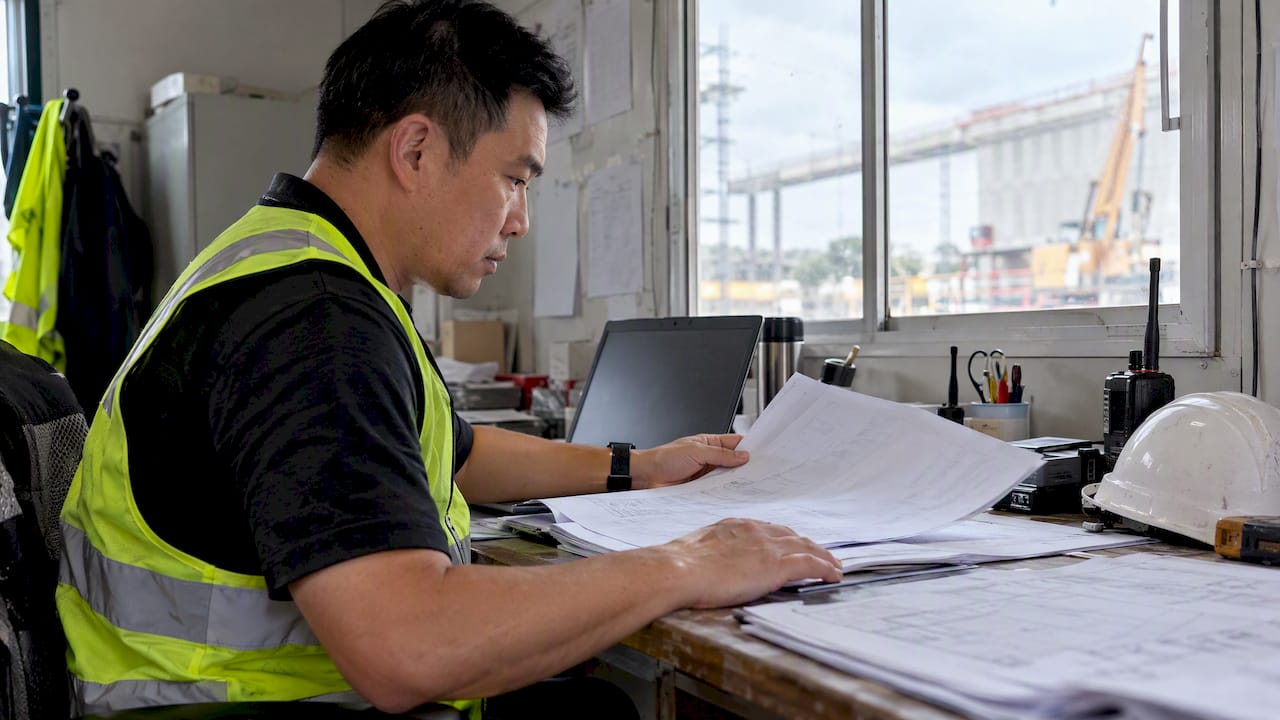

A contractor can clear BizSAFE Level 4 and still find itself unprepared for BizSAFE Star. That gap usually shows up during audits – not because the company lacks effort, but because the expectations are different in depth, maturity, and consistency. When businesses compare bizsafe level 4 vs star, the real question is not which badge looks better. It is which level matches your operational complexity, client requirements, and readiness to sustain a stronger safety management system.
Understanding bizsafe level 4 vs star
BizSAFE Level 4 and BizSAFE Star both signal that a company has moved beyond basic compliance steps and into formal workplace safety and health management. But they are not interchangeable.
BizSAFE Level 4 is generally the stage where your company undergoes an external audit to verify the implementation of a Workplace Safety and Health Management System. At this level, the focus is on whether the system is in place and functioning in line with recognized requirements. It is a serious milestone, especially for SMEs and contractors building a structured safety framework for the first time.
BizSAFE Star sits at a higher level of maturity. It is typically aligned with organizations that have achieved a recognized WSH management system certification and can demonstrate stronger integration, discipline, and long-term control across operations. In practical terms, Star is not just about having procedures. It is about showing that safety management is embedded, auditable, and sustained.
That difference matters for companies bidding on larger projects, responding to stricter prequalification criteria, or operating in higher-risk environments where clients expect more than minimum compliance.
What BizSAFE Level 4 is designed to prove
Level 4 is often the point where a company validates that its documented WSH management system is not just paperwork. The audit looks at whether key elements have been developed and implemented. This usually includes policy, risk management processes, training records, inspection routines, incident management, and internal controls relevant to the company’s activities.
For many construction firms and subcontractors, Level 4 is a significant operational achievement. It means the organization has moved from reactive safety handling to a more structured management approach. That alone can improve consistency on site, reduce non-conformities, and give project teams clearer accountability.
Still, Level 4 has a practical limitation. Passing the audit does not automatically mean the system is mature across every department, project, or subcontractor interface. A company may satisfy the audit requirements while still depending heavily on a few key personnel to keep everything together. That is common, especially in growing firms.
What BizSAFE Star is expected to demonstrate
BizSAFE Level 4 vs Star in system maturity
If Level 4 asks, “Do you have an implemented WSH management system?” Star asks, “Can your system stand up to stronger scrutiny as a stable part of how the business is run?”
BizSAFE Star usually reflects a broader and more disciplined standard. The company is expected to show that management systems are established, consistently maintained, and capable of supporting continuous improvement. Leadership involvement, objective evidence, follow-through on corrective actions, and system-wide control become more important.
For decision-makers, this is where the business case becomes clearer. Star can strengthen tender competitiveness, improve confidence among developers and main contractors, and support alignment with broader quality, environmental, and operational governance systems. It can also reduce the disruption that comes from fragmented safety practices across projects.
That said, Star is not the right next step for every company at every stage. If your documentation is weak, internal ownership is inconsistent, or site controls vary too much from project to project, pushing for Star too early can create unnecessary cost and audit pressure.
The main differences in audit expectations
The most useful way to compare bizsafe level 4 vs star is through audit readiness. Both levels require evidence, but the standard of evidence is not the same.
At Level 4, auditors are often testing whether required system elements exist and are being applied. At Star, the expectation is more demanding. Auditors will want to see stronger consistency, deeper records, better traceability, and clearer proof that management review and continual improvement are active rather than nominal.
This affects how companies prepare. For Level 4, the work often centers on closing obvious gaps in procedures, risk assessments, inspections, and training records. For Star, preparation usually extends into internal audit quality, management review discipline, corrective action effectiveness, performance tracking, and cross-functional ownership.
In construction and industrial settings, that difference becomes visible fast. A company pursuing Star may need tighter subcontractor management, stronger permit controls, more reliable document control, and more disciplined follow-up of site observations. These are not cosmetic changes. They require operational ownership.
Which level is right for your business
BizSAFE Level 4 vs Star based on business needs
The right choice depends on where your business is now and what external demands you face.
If you are an SME contractor building a formal safety structure, Level 4 may be the most practical target. It gives your business a credible framework, supports compliance improvement, and can meet many client expectations without forcing a premature leap into a more demanding certification environment.
If you are already managing multiple sites, facing stricter tender requirements, or serving higher-risk industrial clients, Star may be the more strategic direction. In these cases, the stronger management system expectation is not just a certification issue. It supports control across scale, complexity, and stakeholder scrutiny.
There is also a commercial angle. Some procurement teams view Star as evidence of stronger governance and lower operational risk. That does not mean Level 4 lacks value. It means the market may interpret the two levels differently depending on the project type, sector, and client profile.
Common mistakes when moving from Level 4 to Star
One common mistake is assuming that a successful Level 4 audit means Star is only a paperwork upgrade. It is not. Companies often underestimate how much discipline is required in recordkeeping, internal audit closure, leadership review, and site-level implementation.
Another issue is treating the system as a safety department responsibility alone. Star readiness usually depends on broader business participation. Operations, project management, HR, procurement, and top management all need to play a role. If the system lives only with one WSH officer or consultant, it is harder to demonstrate durability.
A third mistake is focusing on documents without testing whether actual practice matches the documents. Auditors quickly detect when procedures look polished but are not reflected in permits, inspections, toolbox talks, or corrective action records.
This is why many firms benefit from a gap assessment before committing to the next level. The goal is to understand whether the issue is documentation, implementation, competence, or leadership ownership. Each gap needs a different response.
How to prepare without disrupting operations
The best preparation approach is staged, not rushed. Start by reviewing your current system against the actual audit expectations for your target level. Then validate whether that system is consistently applied at site level, not just at head office.
For Level 4, the emphasis is usually on establishing complete and auditable fundamentals. For Star, the effort often shifts toward system maturity, evidence quality, and sustained management control. That means internal audits need to be meaningful, corrective actions need to close properly, and management review must be more than a calendar exercise.
For companies that cannot afford trial and error during tender periods or active project delivery, external guidance can shorten the timeline and reduce rework. A specialist partner such as MOSAIC Ecoconstruction Solutions Pte Ltd can help translate requirements into practical implementation steps that fit actual construction and industrial operations, rather than generic templates.
The decision is less about status and more about fit
Businesses often frame this as a simple progression, but bizsafe level 4 vs star is really a question of fit, timing, and operational readiness. Level 4 is a strong and credible milestone for many companies. Star is a higher demonstration of management system maturity, but it delivers the most value when the business is ready to sustain it.
If your current challenge is building control, consistency, and documented compliance, Level 4 may be the right target. If your challenge is scaling safely, meeting tougher client standards, and proving stronger governance, Star may be the better investment. The right move is the one your organization can implement properly, defend during audit, and maintain after certification. That is where real safety performance starts to show.