
A near miss during a lifting operation, an incomplete permit, or a worker who hesitates to report fatigue can become the first signal of a serious incident. For construction and industrial leaders, workplace safety trends are not abstract management topics. They are changing how projects plan work, supervise contractors, prove compliance, and protect people in high-risk environments.
The most valuable changes are not necessarily the newest technologies or the most polished dashboards. They are the practices that give supervisors and decision-makers earlier visibility of risk, reinforce accountability in the field, and make safety controls workable under real project pressures.
Workplace Safety Trends Are Moving Upstream
For many years, safety performance was largely judged by lagging indicators such as lost-time injuries, medical treatment cases, and workers’ compensation costs. These measures still matter, but they only describe what happened after a control failed. Stronger safety programs are now giving equal attention to leading indicators that reveal whether work is being planned and controlled before an incident occurs.
Examples include the quality of pre-task risk assessments, closeout rates for corrective actions, field verification of critical controls, supervisor safety conversations, inspection findings, and competency records for high-risk work. The point is not to create more paperwork. It is to identify whether the safeguards described in a risk assessment are actually present when the work begins.
This shift requires judgment. A high number of inspections does not automatically mean a safer site if observations are superficial or recurring findings remain open. Organizations should select a small group of indicators connected to their primary risks, such as falls, lifting, excavation, mobile equipment, confined spaces, or energy isolation. Those indicators should then be reviewed at project and leadership level with clear ownership for action.
Field Verification Is Replacing Paper-Only Assurance
Risk assessments, safe work procedures, and permits remain essential documents, particularly for regulatory compliance and contractor management. Yet documents alone do not control a changing worksite. Conditions can change between the morning briefing and the start of work because of weather, overlapping trades, revised sequencing, equipment availability, or new access restrictions.
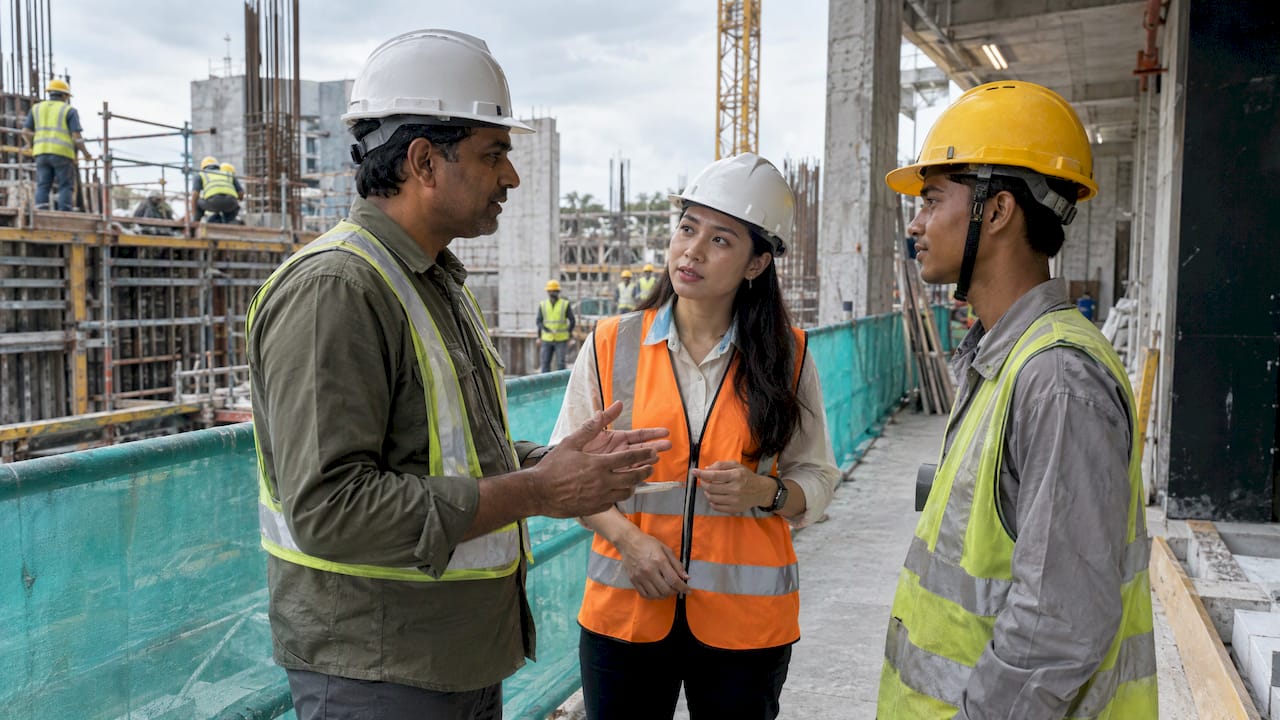
A growing expectation is that supervisors verify critical controls in the field. For a lifting operation, that may mean confirming ground conditions, exclusion zones, rigging condition, communication arrangements, and the lift plan before movement starts. For work at height, it means checking access, edge protection, anchor points, rescue provisions, and the competence of the crew assigned to the task.
This approach makes documentation more credible during an audit or inspection because it connects written controls to observable practice. It also gives frontline leaders a defined role beyond collecting signatures.
Digital Reporting Must Improve Decisions, Not Add Noise
Mobile inspections, digital permits, incident reporting applications, and QR-based equipment records are increasingly common. Used well, these tools reduce delays in reporting, make evidence easier to retrieve, and help project teams spot repeat issues across multiple sites.
The trade-off is data quality. A digital checklist with automatic responses can create a false sense of assurance if workers are completing it without inspecting the conditions. The same applies to dashboards that display many metrics but do not explain which risks require immediate intervention.
Organizations should introduce technology around a clear operational problem. A contractor with recurring scaffold defects may benefit from a photo-based inspection process and escalation workflow. A company managing multiple projects may need centralized visibility of overdue corrective actions, training expiry dates, and high-risk permit activity. A smaller contractor may be better served by a simple, consistently applied reporting process than by a complex platform no one owns.
Artificial intelligence is also beginning to support document reviews, trend analysis, and image-based hazard identification. It can help safety teams process information faster, but it should not replace competent review. Site context matters. A system may recognize a missing hard hat in a photograph, but it cannot independently determine whether a lift plan reflects changing ground conditions or whether workers understand a last-minute change in sequence.
Contractor Management Is Becoming a Core Safety Control
Construction projects depend on subcontractors, temporary workers, equipment suppliers, and specialist trades. As project delivery becomes more fragmented, contractor management has become one of the most significant workplace safety trends for principal contractors and clients.
Prequalification remains necessary, but a certificate or policy is only a starting point. Effective oversight considers whether contractors have the competency, manpower, supervision, equipment, and practical systems required for the scope they will perform. It also assesses their actual performance after mobilization.
Clear interfaces are especially critical where different trades work in the same area. Who controls access? Who authorizes changes to a work zone? How are simultaneous operations reviewed? Who has authority to stop work when a critical control is missing? These questions must be resolved before work begins, not after an incident exposes a gap.
Contractor performance should be reviewed through regular field observations, corrective-action closeout, coordination meetings, and targeted audits. The objective is not to shift liability down the supply chain. It is to establish consistent standards and make sure every employer understands how its work affects others.
Heat, Fatigue, and Well-Being Are Operational Risks
Heat stress, long shifts, physically demanding work, commuting demands, and schedule pressure can all reduce attention and decision-making. These factors have always existed on construction and industrial sites, but employers are increasingly treating them as operational risks rather than personal issues.
A practical heat-stress program considers work-rest cycles, hydration, acclimatization, shade, task scheduling, worker education, and active monitoring. The right controls depend on climate, workload, protective equipment, and individual vulnerability. Simply telling workers to drink water is not sufficient when the schedule, work area, and supervision make recovery difficult.
Fatigue management requires similar realism. Projects often face deadline pressure, but extended hours and poorly managed overtime can undermine the controls a project relies on. Supervisors should be trained to recognize signs of fatigue, workers need a reliable way to raise concerns, and planning teams should avoid treating excessive hours as a permanent production solution.
Psychological safety matters here as well. A workforce that fears blame is less likely to report a near miss, question an unsafe instruction, or admit that a task is beyond its competence. Respectful communication and visible follow-up build trust more effectively than broad safety slogans.
Competency Must Match the Task and the Change
Training records are often checked during audits, but attendance does not always demonstrate competence. The current direction is toward task-specific verification: can a worker apply the procedure, identify changing conditions, use the equipment correctly, and know when to stop?
This is particularly relevant for high-risk activities and for workers moving between projects with different site rules, equipment, and client requirements. Brief, focused refresher training and on-the-job assessment can be more effective than repeating broad classroom content. Supervisors also need development. They are the people most often required to translate policy into safe production under time pressure.
Organizations should review competency whenever there is a material change in equipment, work method, workforce composition, or project environment. New technology, revised designs, and unfamiliar subcontractors can all introduce risks that existing training records do not address.
Design and Planning Are Carrying More of the Safety Burden
The strongest controls are often decided before workers arrive on site. Design for safety, constructability reviews, logistics planning, and early contractor involvement can eliminate hazards or reduce exposure through better choices about access, materials, sequencing, lifting points, maintenance needs, and temporary works.
This does not mean every risk can be designed out. Construction remains variable, and site conditions can require adjustments. However, early planning gives teams more options than a last-minute response at the workface. It also supports clearer risk ownership among designers, project managers, contractors, and specialist consultants.
For regulated organizations, this planning discipline improves audit readiness as well. Inspectors and clients increasingly expect to see evidence that significant risks were anticipated, assigned, controlled, and reviewed as the project developed.
Turning Trends Into Practical Control
Not every trend deserves immediate investment. Leaders should begin with a focused review of their highest-consequence risks, recent incidents and near misses, recurring audit findings, and contractor performance gaps. From there, they can identify where field verification, better data, competency checks, or earlier planning will make the greatest difference.
The most effective programs connect governance with daily execution. Senior leaders provide resources and accountability, project managers integrate safety into planning, supervisors verify controls, and workers are empowered to raise concerns without delay. Documentation, training, audits, and inspections should all reinforce that same operating model.
For contractors that need support translating these expectations into practical systems, MOSAIC Ecoconstruction Solutions can help align risk assessments, audits, training, documentation, and implementation with the realities of construction and industrial operations. The goal is not a thicker safety file. It is a worksite where critical controls are understood, visible, and consistently applied when they matter most.