A fall-protection plan can look complete in a project file and still fail at the point of work. The same is true of equipment inspections, permit controls, worker competency records, and corrective actions. Construction safety technology can close part of that gap by giving supervisors timely, usable information where decisions are being made: on the site, around active work fronts, and before a minor deviation becomes an incident.
The value is not in buying more devices or digitizing every form. It is in using the right technology to strengthen the controls a contractor already needs: hazard identification, communication, supervision, verification, and documented follow-up. For project managers and EHS leaders, the question is not whether technology is available. It is whether it will improve safety performance without creating another system that crews avoid, supervisors cannot maintain, or auditors cannot verify.
Where Construction Safety Technology Delivers Real Value
Construction projects change by the hour. A delivery alters traffic flow, a trade begins overhead work, weather changes ground conditions, or a revised sequence creates new interface risks. Paper-based systems can record these changes, but they often do so after the fact. Well-implemented digital tools can make risk controls more visible and easier to act on while the work is still underway.
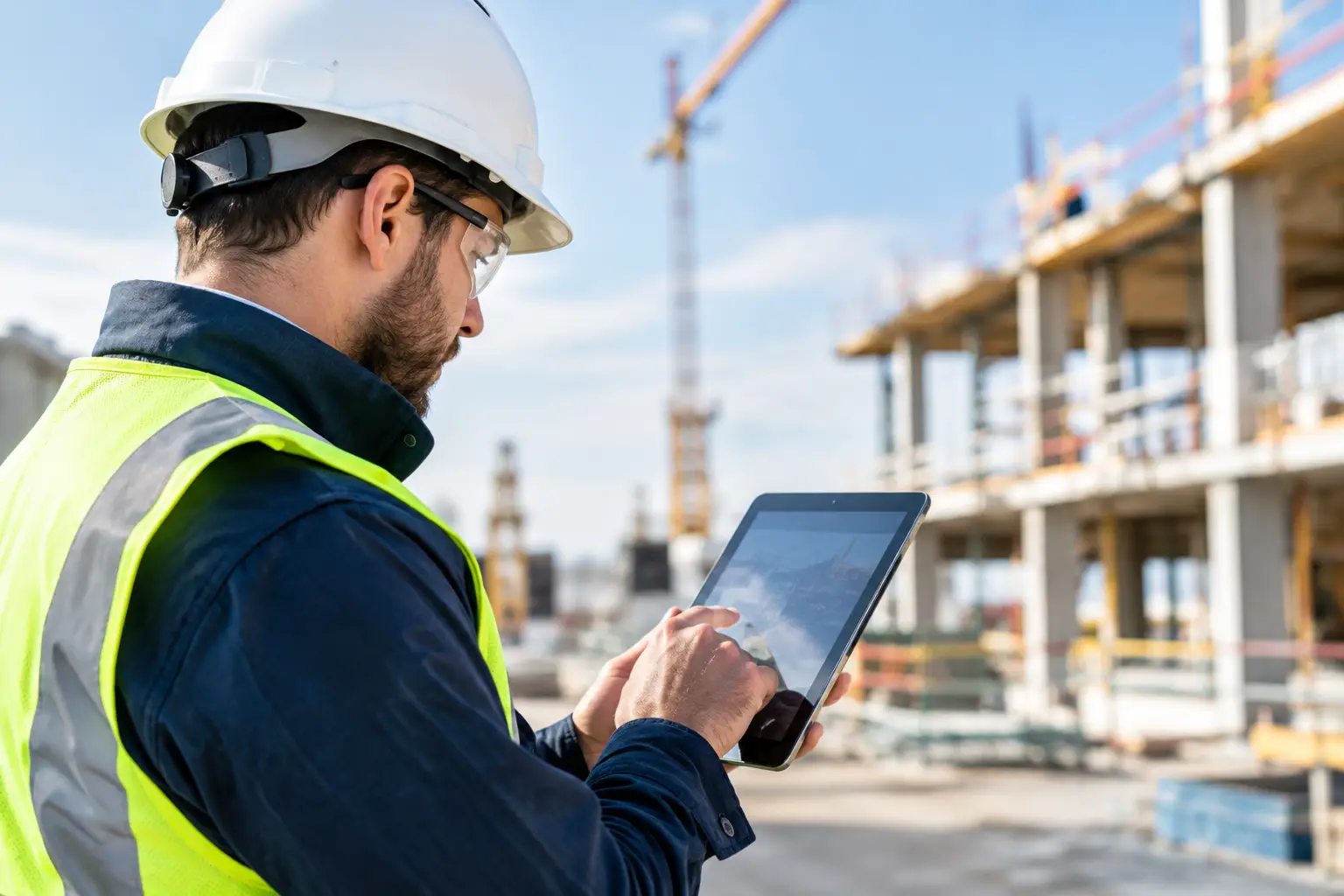
Mobile inspection and observation platforms are one of the most practical starting points. Supervisors can complete site inspections, attach photographs, assign corrective actions, and track closure from a phone or tablet. This reduces lost paperwork and gives management a clearer view of recurring gaps, such as incomplete barricading, poor housekeeping, or repeated defects in personal protective equipment.
Digital permit-to-work systems can also improve control over higher-risk activities, including hot work, confined-space entry, lifting operations, and energized work. The benefit is not simply faster approval. A properly configured system requires the right checks, identifies responsible persons, records changes in conditions, and preserves a traceable approval history. It should support the site’s existing permit process, not bypass the judgment of competent personnel.
Wearables, proximity alerts, connected equipment, and location-based systems can offer another layer of protection where the risk justifies the investment. Vehicle-pedestrian interaction, blind spots around heavy equipment, lone work, and restricted zones are common use cases. An alert may give an operator or worker seconds to react. But alerts are only an additional control. They do not replace traffic management plans, exclusion zones, trained spotters, or competent equipment operators.
Start With the Risk, Not the Product
Technology adoption often stalls because a company starts with a product demonstration rather than a defined safety problem. A contractor may invest in a reporting app when its real weakness is poor corrective-action accountability. Another may purchase wearables when the more urgent issue is inadequate planning for vehicle routes and work zones.
Begin by reviewing incident data, near misses, inspection findings, audit results, and feedback from supervisors and workers. Look for patterns that repeatedly affect production, compliance, or safety performance. If the same defect appears across multiple sites, the issue may be a weak process rather than individual behavior.
For example, if inspections are being completed but hazards remain unresolved, the organization may need automated escalation, clearer action ownership, and management review of overdue items. If subcontractor workers arrive without verified training or authorization, a digital competency register may be more valuable than another generic induction presentation. If lifting operations are frequently delayed because documents are incomplete, a controlled pre-lift workflow can improve both safety assurance and operational readiness.
The strongest business case connects the technology to a measurable control. That might be faster closure of corrective actions, better verification of pre-task briefings, fewer unauthorized entries into high-risk areas, or improved availability of inspection records during a client review.
Build Technology Into the Safety Management System
A safety app by itself is not a safety management system. For technology to stand up to project scrutiny, it must align with documented procedures, risk assessments, responsibilities, training requirements, and review processes.
First, define who owns each workflow. A site supervisor may raise a corrective action, but a project manager may need to authorize resources for closure. The EHS team may review trend data, while senior leadership monitors unresolved high-risk findings. If these responsibilities are unclear, digital dashboards will merely show the same problems in brighter colors.
Second, ensure forms and workflows reflect actual site conditions. Generic templates can miss critical project-specific risks. A scaffold inspection checklist should reflect the scope, competent-person requirements, tagging method, access conditions, and local rules in force on that project. A digital process that is too long or irrelevant will encourage rushed entries and weak data.
Third, establish record controls. Contractors need to know where safety records are stored, who can revise them, how long they are retained, and how they can be retrieved for a client, regulator, insurer, or internal audit. Technology should improve document control, not create a collection of disconnected files spread across personal devices and vendor platforms.
Finally, train for the work, not just the software. Workers need to understand why they are reporting a near miss, supervisors need to know how to verify closure, and managers need to know what action is expected when the data identifies a trend. A short application tutorial is not enough if the underlying safety process remains unclear.
Common Technology Choices and Their Trade-Offs
Not every construction company needs the same tools. The appropriate solution depends on project scale, risk profile, workforce mix, client requirements, connectivity, and the maturity of existing EHS systems.
Mobile inspection tools are usually accessible for small and mid-sized contractors because they address everyday activities and require limited hardware. Their limitation is data quality. If inspections become a box-checking exercise, the platform can produce impressive reports without improving field conditions.
Digital training and competency platforms help companies verify inductions, licenses, toolbox talks, and refresher requirements. They are particularly useful where multiple subcontractors move between projects. However, a completed digital record does not prove that a worker can apply the training safely. Practical assessment and supervision remain necessary.
Connected equipment and proximity-warning systems can be highly effective in active plant environments. They may reduce exposure to struck-by hazards and improve visibility of equipment movements. Their trade-off is cost, installation, maintenance, and the risk of alert fatigue. Settings must be tested on the actual project, with worker input, before broad deployment.
Drones, reality capture, and remote monitoring can support inspections in inaccessible or hazardous areas, document site conditions, and assist planning. They also introduce privacy, flight-control, data-security, and competency considerations. A clear operating procedure is essential before these tools are used for safety-critical decisions.
Artificial intelligence may help review images, identify trends, or prioritize large volumes of safety data. It should be treated carefully. Automated findings require competent human review, particularly where lighting, site congestion, changing work conditions, or incomplete data can lead to incorrect conclusions.
Make Adoption a Field Process
The most reliable rollout begins with a pilot on a defined work activity or project area. Set a baseline before implementation. If the objective is to improve corrective-action closure, measure current closure times, the number of overdue high-risk actions, and repeat findings. Then compare the results after the workflow has been used consistently.
Involve foremen, equipment operators, subcontractor representatives, and safety personnel early. They understand where connectivity is weak, where gloves make device use difficult, and where a form does not match the pace of work. Their feedback can prevent a well-intended system from becoming an administrative burden.
Keep the initial process focused. A contractor does not need to digitize every safety form on day one. Start with an activity that has clear risk, frequent use, and a visible owner. Once the team can demonstrate improved reporting, action closure, or verification, expand with discipline.
Management review is the final step that gives the data meaning. Leaders should not only ask how many inspections were completed. They should ask what risks were found, whether controls were effective, why actions were delayed, and which issues are repeating across projects. That conversation turns information into prevention.
Technology Supports Safety Leadership
Construction safety technology is most effective when it makes safe work easier to plan, verify, and improve. It cannot compensate for weak supervision, unclear responsibilities, or a culture that values production over control. Used with a sound safety management system, competent personnel, and regular field engagement, it can give contractors stronger evidence that critical controls are working when it matters most.
The next useful investment may not be the most advanced device on the market. It may be the tool that helps your team see one recurring risk sooner, assign one action more clearly, and verify one critical control before work begins.