Introduction
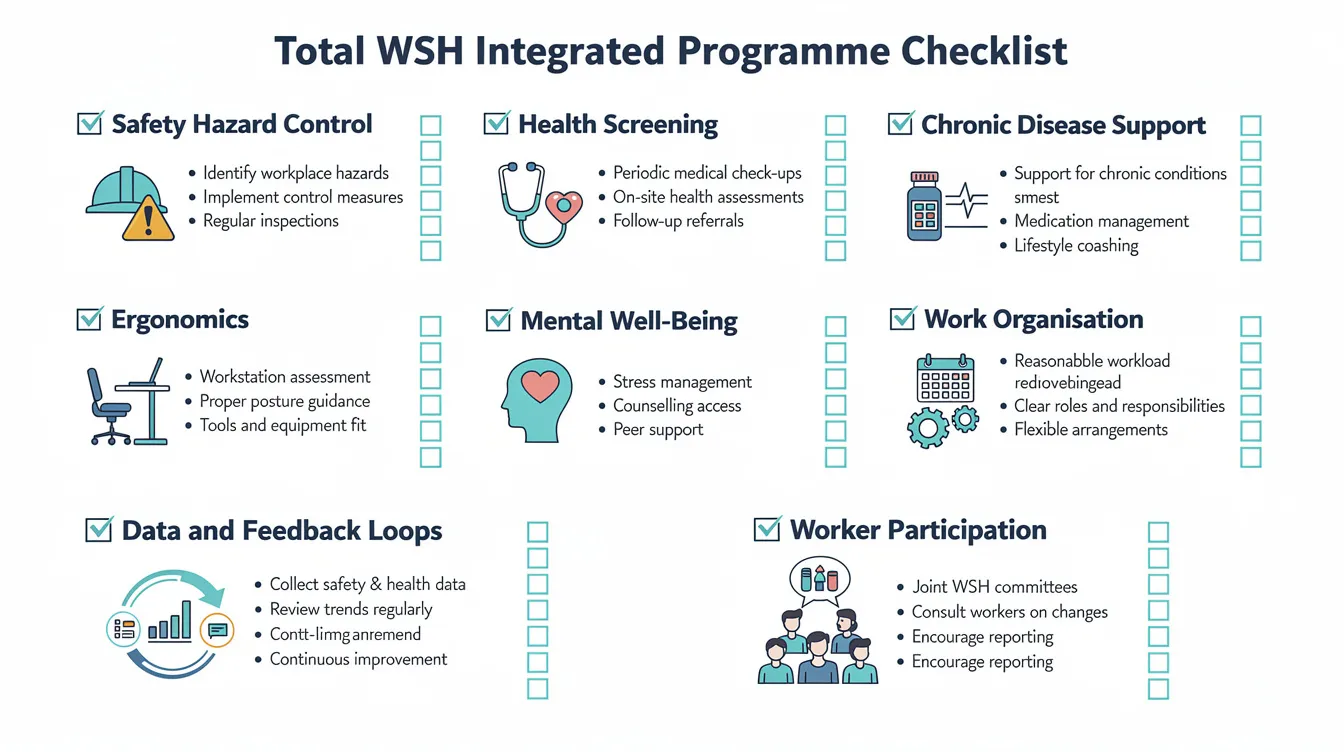
Total Workplace Safety and Health (Total WSH) represents Singapore’s most significant shift in how companies protect their people – moving well beyond the compliance-driven model of traditional safety to integrate physical safety, occupational health, ergonomics, chronic disease management, and mental well-being into a single, unified strategy. If you are an EHS Manager, HR Head, or Wellness Coordinator in Singapore facing mounting pressure to reduce workplace injuries, manage rising occupational disease numbers, and meet evolving WSH regulations, this distinction matters more now than it did even two years ago.
The core difference is straightforward: traditional safety focuses on preventing immediate physical injuries and illnesses caused by the job, often operating in siloed departments disconnected from wellness programs. Total WSH integrates protection from safety hazards with promotion of overall well-being – covering everything from musculoskeletal disorders and heat stress to cardiovascular risk and psychosocial factors – treating the worker as a whole person rather than just an accident statistic. Total WSH promotes holistic worker health and safety, and it is this integrated approach that reduces workplace injuries and improves well-being across the board.
This article focuses on Singapore’s Total WSH framework and its practical integration in construction, manufacturing, logistics, and industrial SMEs. It is not a legal commentary or academic review. Instead, it is a working guide for leaders who want to understand, compare, and implement the Total WSH model in their organisations. Diagrams and comparison visuals are included throughout to support understanding.
What you’ll learn:
-
The key differences between Total WSH and traditional safety, and why those differences affect safety outcomes
-
How physical safety and worker health interact in real workplace scenarios – construction, manufacturing, and logistics
-
A step-by-step roadmap for implementing Total WSH in organisations already running bizSAFE or ISO 45001
-
Practical examples of Total WSH implementation relevant to Singapore companies
-
How to overcome common challenges such as siloed teams, limited budgets, and data privacy concerns
Understanding Total Workplace Safety and Health (Total WSH) vs Traditional Safety
Traditional workplace safety in Singapore has historically centred on compliance: meeting statutory requirements under the WSH Act, preventing acute injuries (falls, machinery incidents, electrical hazards), and responding to incidents after they occur. This model has served its purpose – Singapore’s workplace fatal injury rate dropped to 0.99 per 100,000 workers in 2023, the first time it fell below 1.0. But compliance alone does not address the full spectrum of health and safety risks that workers face daily.
Total WSH, championed by the WSH Council, is an integrated approach that combines workplace safety, occupational health, and personal health (including mental health) into one framework. While it is conceptually aligned with the National Institute for Occupational Safety and Health’s (NIOSH) Total Worker Health® model in the United States, Total WSH is tailored specifically to Singapore’s regulatory and institutional environment – built around tripartism, the Health Promotion Board (HPB), MOM, MOH, and modular support structures for employers. The shift is from a narrow, incident-based view to a systems-level, worker-centred view that includes health risks like musculoskeletal disorders, cardiovascular disease, psychosocial hazards, and chronic illness.
What Traditional Workplace Safety Typically Covers
Traditional safety, as commonly practised across Singapore companies, focuses primarily on physical hazards: fall protection, machinery guarding, electrical safety, fire prevention, and hazardous materials handling. It operates through statutory WSH Act compliance – risk assessments centred on acute injury, permits-to-work, toolbox meetings, PPE enforcement, incident reporting, and the defined roles of Workplace Safety and Health Officers (WSHOs).
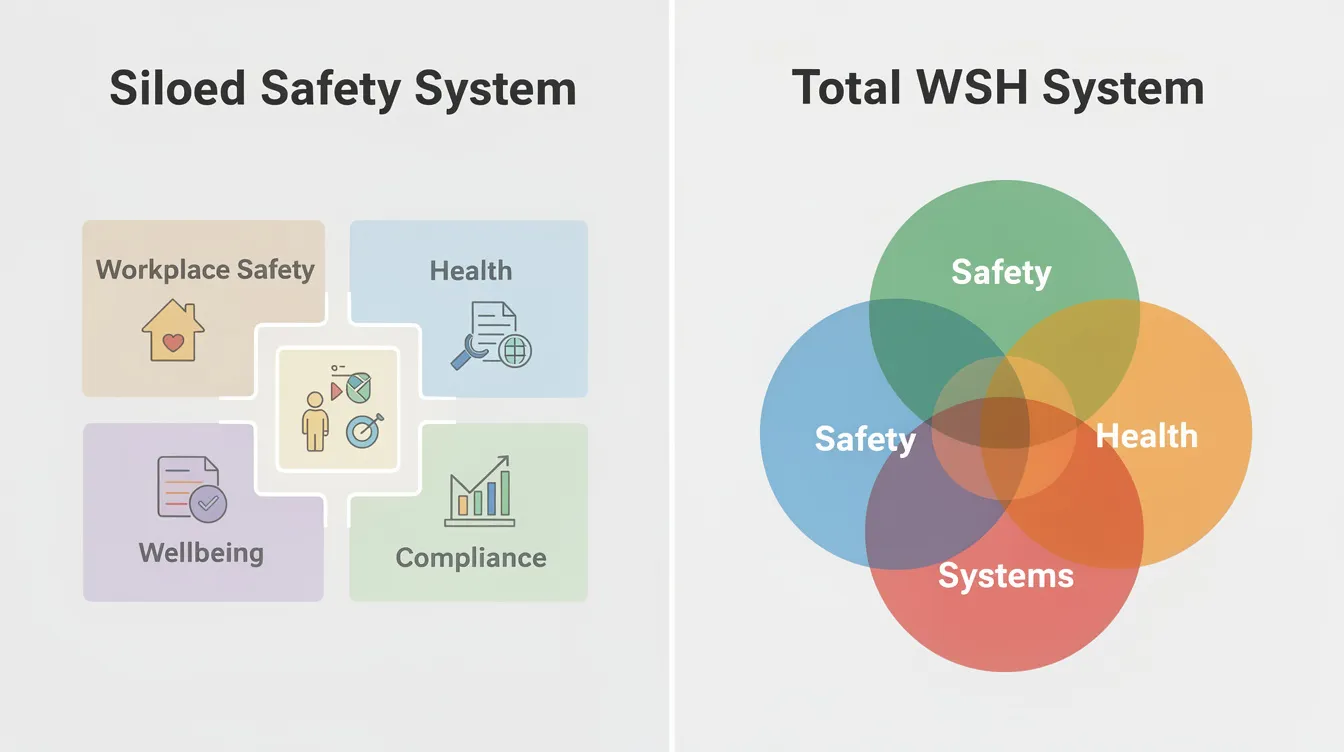
Typical activities include periodic workplace risk assessments aimed at identifying and controlling acute hazards, conducting toolbox talks before shifts, ensuring PPE is worn correctly, and investigating incidents to prevent recurrence. These practices are essential and remain foundational. Traditional safety operates often in siloed departments disconnected from wellness programs, meaning that ergonomic risks, chronic illness, fatigue, and psychosocial factors are often handled separately – if at all – by HR, medical insurance providers, or not addressed systematically.
Many Singapore firms, especially smaller contractors and SMEs, still operate primarily within this traditional model. Resource constraints, legacy systems, and the perception that “safety” means only “accident prevention” contribute to this. While this model can meet minimum legal requirements, it leaves significant gaps in worker health, illness prevention efforts, and long-term occupational safety.
What Total WSH Adds: Integrating Safety, Health, and Well‑Being
Total WSH is the WSH Council initiative that explicitly integrates workplace safety, occupational health, and personal health – including mental health – into a unified strategy for work related safety. Total WSH includes safety, occupational health, and personal health, and it uses the Singapore Assessment-Intervention-Monitoring & Evaluation (A I ME) framework methodology to structure its programmes. Total Worker Health integrates protection from safety hazards with promotion of overall well-being, and the A I ME framework provides a structured methodology for companies to assess, intervene, monitor, and evaluate their progress.
What Total WSH adds beyond traditional safety includes:
-
Ergonomic risk control: Systematic assessment and redesign of tasks, workstations, and manual handling processes to prevent musculoskeletal disorders
-
Chronic disease risk management: Health screening for hypertension, diabetes, and obesity as part of workplace health programmes, not just individual medical insurance
-
Mental well-being: Stress management, workload design, peer support, and employee assistance programmes integrated into the safety strategy
-
Health promotion: Physical activity, nutrition education, sleep hygiene – especially for shift workers and mature employees
-
Root-cause analysis at work organisation level: Examining shift patterns, workload distribution, supervision quality, and job design rather than only individual behaviour
The framework also includes managing infectious diseases at the workplace, reflecting lessons from recent public health events.
Key supporting infrastructure in Singapore includes the Total WSH Programme (offering modular, often free services for employers), Total WSH Clinics providing one-stop safety and health services, and HPB grants and partnerships. Service providers like MOSAIC Ecoconstruction Solutions help companies – particularly those in construction and manufacturing – integrate these elements into existing safety management systems as a total WSH services provider.
Total Worker Health requires systems-level integration across safety, human resources, and health practices. To move from traditional safety to Total WSH, companies need to understand how physical safety and worker health interact in day-to-day operations – which the next section unpacks.
How Physical Safety and Worker Health Interact in the Total WSH Framework
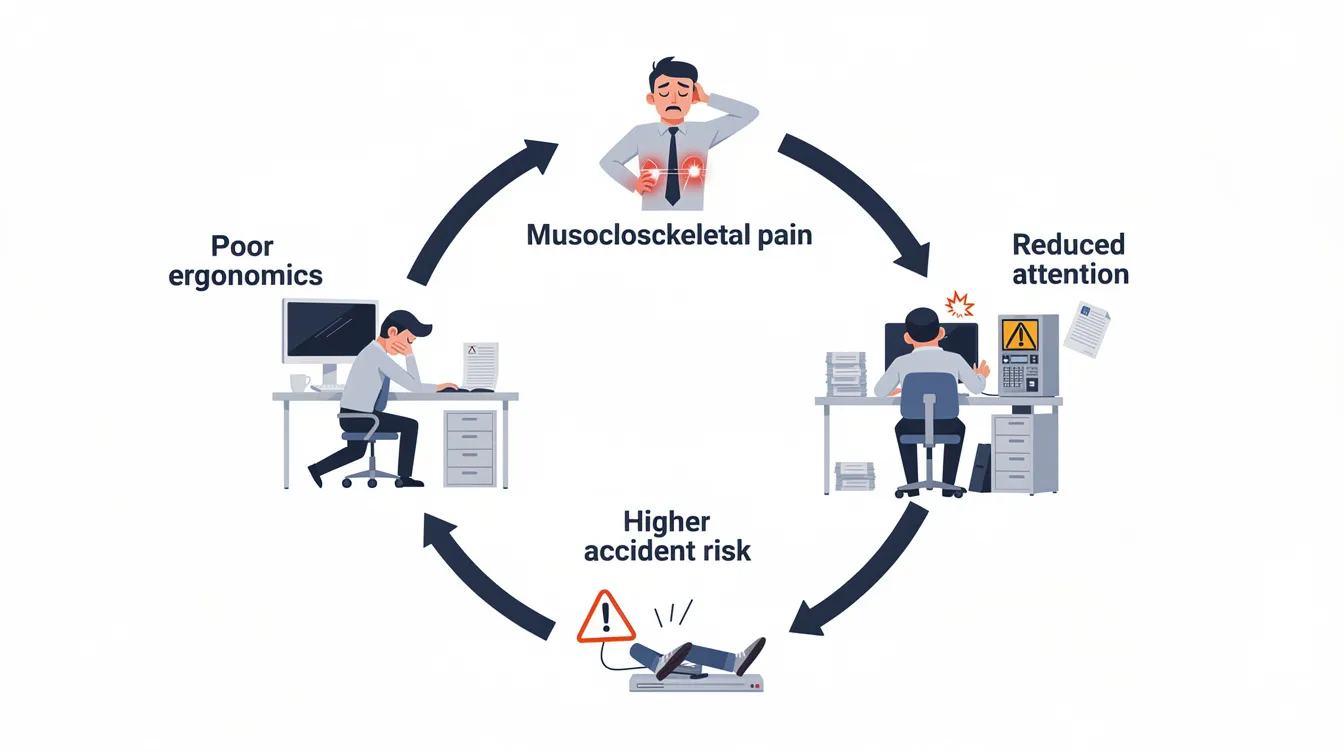
Incidents and ill-health are not separate problems. Poor ergonomics, long working hours, unmanaged chronic disease, heat stress, and psychosocial strain all increase accident risk. A worker with untreated hypertension performing heavy manual work in Singapore’s tropical heat faces compounded risk – not just of a cardiovascular event, but of impaired concentration that leads to a slip, trip, or fall. These interactions are precisely why integrated workplace safety models outperform traditional, siloed approaches.
The Total WSH framework encourages companies to assess both safety hazards and health risks together, using common processes like risk assessment and surveillance. Workplace assessments identify root causes of incidents that traditional safety analysis might miss – for instance, connecting a pattern of near-misses to chronic fatigue driven by shift scheduling rather than just individual carelessness. This section uses concrete examples from construction and manufacturing, familiar to Singapore’s industrial employers.
Physical Hazards, Ergonomics, and Musculoskeletal Health
Manual handling, awkward postures, repetitive tasks, and vibration exposure are daily realities in construction, manufacturing, and logistics. These contribute directly to back injuries, tendon damage, and long-term musculoskeletal disorders (MSDs). Singapore data shows an average of approximately 338 MSD cases reported annually between 2020 and mid-2024, with over 90% being back injuries.
In a traditional safety system, each MSD case may be treated as an isolated incident – a worker gets injured, files a claim, and returns to work. Under Total WSH, these are analysed as ongoing risk factors that affect both safety and health. A worker experiencing chronic lower back pain has reduced attention and slower reaction times, increasing the likelihood of slips, trips, and machine-related accidents. The NIOSH Hierarchy of Controls prioritises organisational changes over individual behaviour changes – redesigning the task rather than simply telling workers to “lift correctly.”
Mini-example 1: On a construction site, rebar-tying tasks traditionally require prolonged bending, leading to cumulative back strain. A Total WSH intervention might introduce mechanical tying tools and redesigned work platforms that allow workers to tie rebar at waist height, reducing both acute injury risk and long-term MSD development.
Mini-example 2: In a precision engineering plant, repetitive wrist movements during assembly cause tendonitis. An integrated assessment introduces adjustable jigs, anti-fatigue matting, and scheduled micro-breaks – addressing both the ergonomic health hazard and the safety risk from fatigued, distracted workers.
Heat Stress, Fatigue, and Chronic Disease Risks
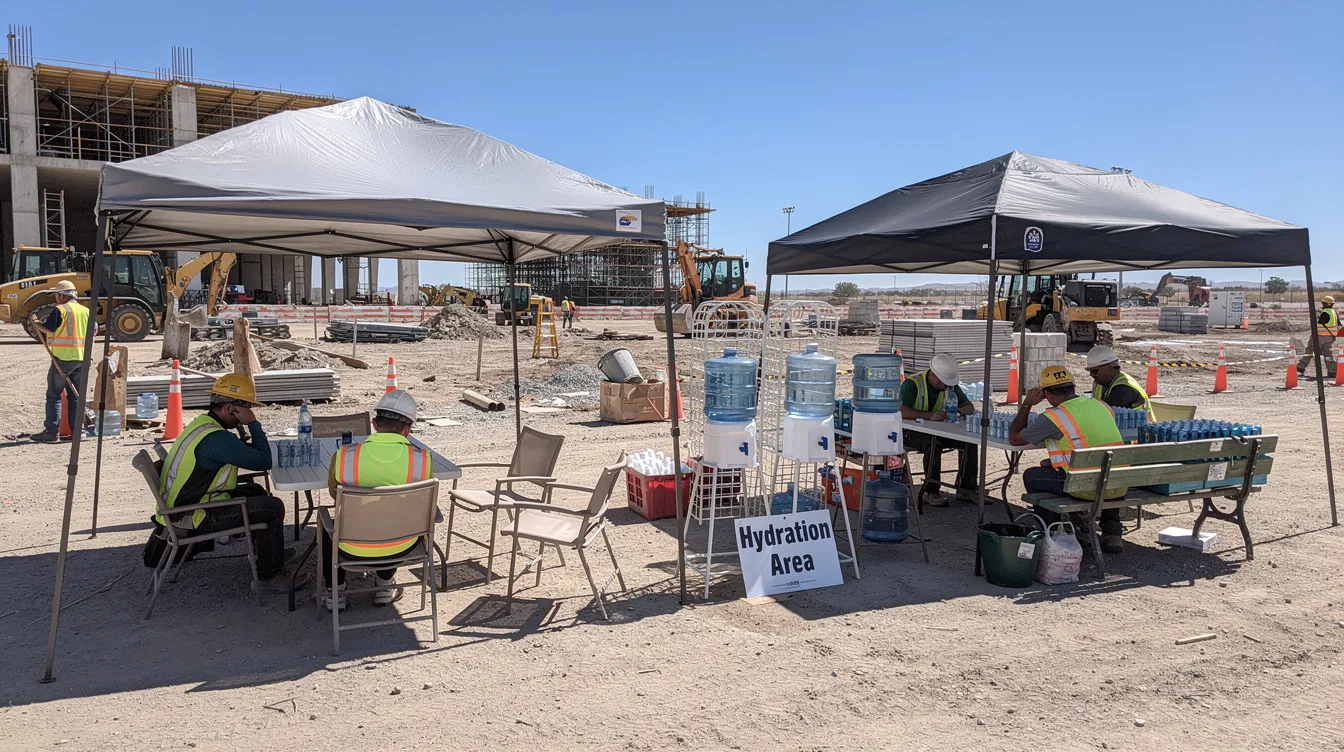
Singapore’s tropical climate produces high Wet Bulb Globe Temperature (WBGT) conditions year-round, particularly dangerous for outdoor workers in construction, shipyards, and maintenance. PPE – while essential for physical safety – aggravates heat load. Workers with hypertension, heart disease, or obesity are especially vulnerable to heat-related illness and collapse.
Under traditional safety practices, heat controls might include basic rest breaks or shade structures, but often without individualised risk screening or monitoring. A worker with undiagnosed high blood pressure faces substantially greater risk during heat exposure, yet traditional systems rarely identify potential health vulnerabilities at this level.
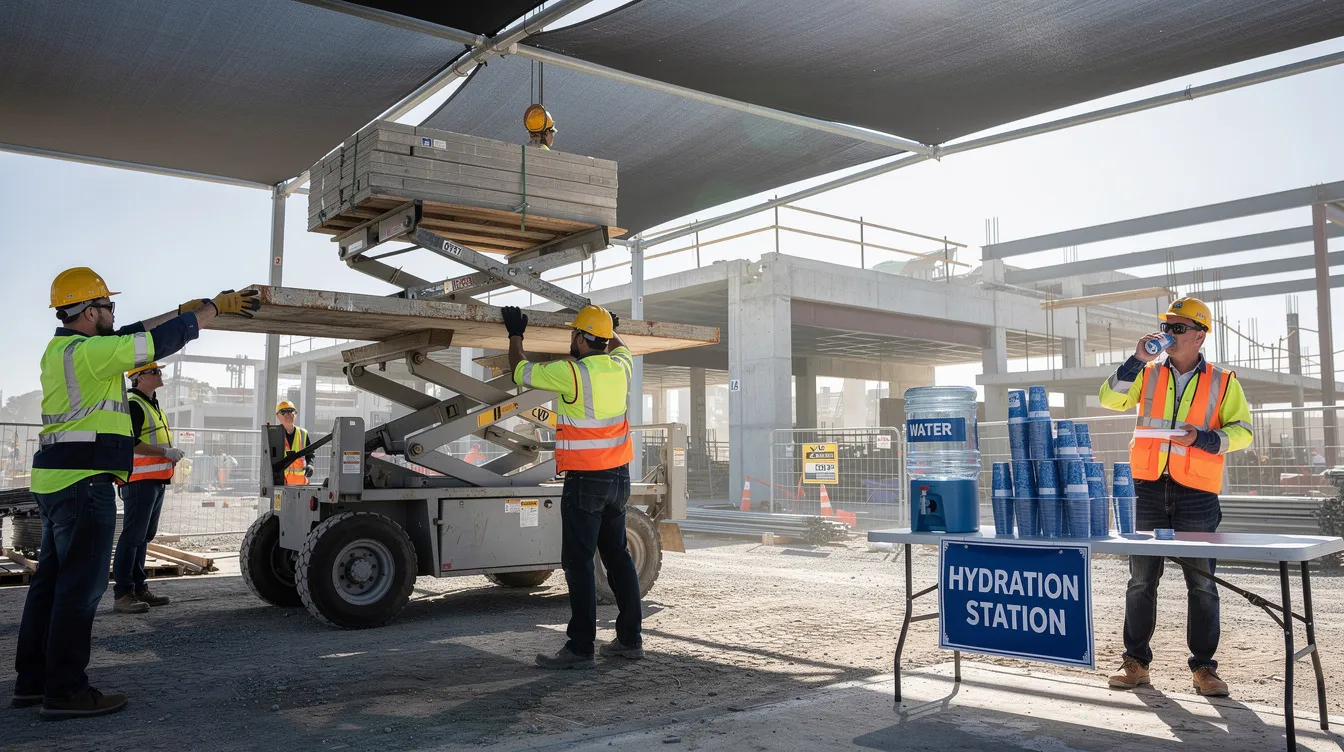
Total WSH control measures address both the safety hazard and the health risk simultaneously: WBGT monitoring stations, mandatory hydration breaks, shaded rest shelters, scheduling heavy work outside peak heat hours, medical screening for cardiovascular and metabolic conditions, and education on recognising early warning signs of heat illness. On a Thomson-East Coast Line construction project where Total WSH principles were implemented, over 45% of workers were found to be overweight and approximately 50% of those aged 20–44 had at least one chronic condition. Integrated interventions including chronic disease management, heat stress controls, and ergonomic modifications resulted in fewer heat incidents, reduced back pain complaints, and improved productivity.
This is widely applicable across Singapore’s industries, especially where workers face combined exposure to heat, physical exertion, and PPE requirements. Effective policies enhance worker safety and organizational performance by treating heat stress not just as a safety compliance item but as a health management priority.
Mental Health, Psychosocial Risks, and Safety Performance
Psychosocial risks – excessive workload, low job control, bullying, job insecurity, poor supervisor support – contribute to stress, burnout, and depression. These are not merely HR concerns. Stress and fatigue directly increase safety incidents: lapses in lock-out/tag-out procedures, poor situational awareness during crane operations, errors in forklift navigation, and fatigue-related driving incidents in logistics.
Total Worker Health expands the scope to include work organisation and psychosocial factors, and Total Worker Health recognises work itself as a social determinant of health. Under Total WSH, stress management, workload design, and mental well-being programmes are integrated into safety strategy rather than treated as optional HR initiatives. HPB’s peer support programme, for instance, trained security officers through Certis Training Academy to provide peer mental health support – a model applicable across industries. Regular communication from leaders enhances safety awareness and helps normalise conversations about psychosocial risk.
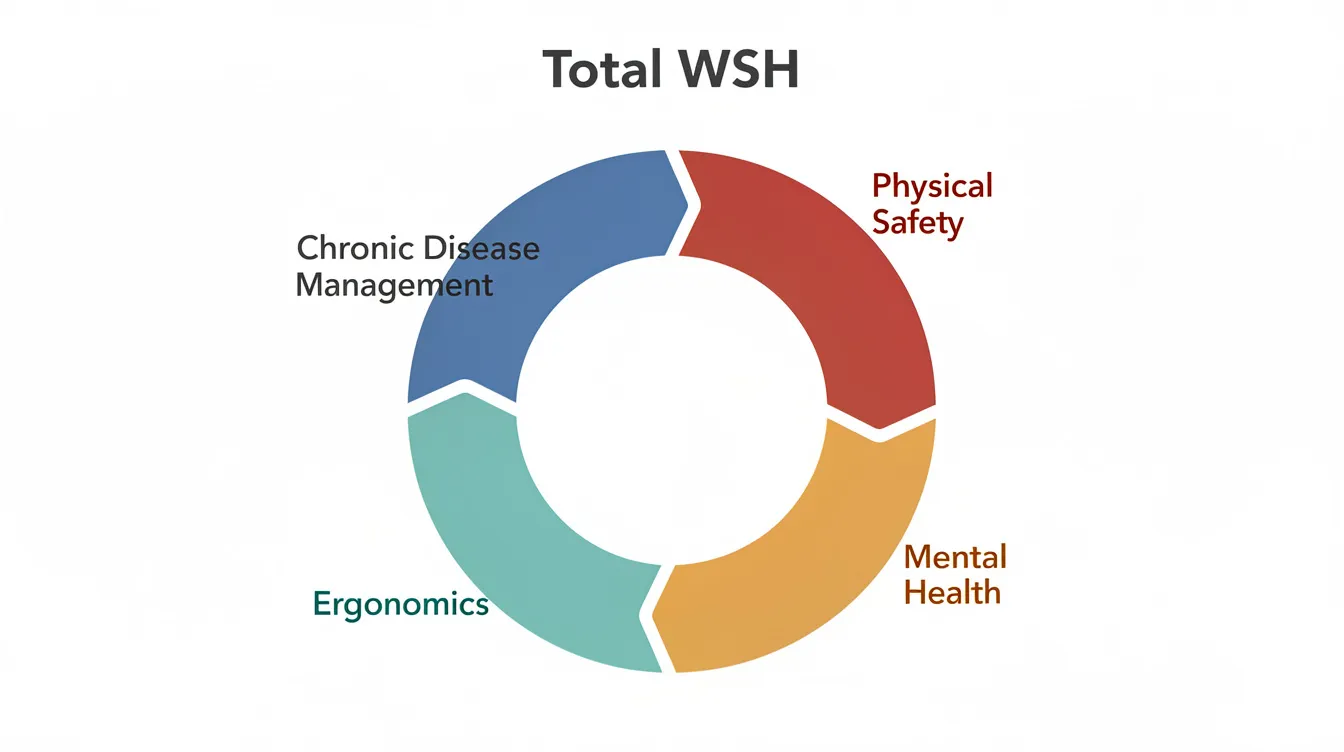
Total WSH treats the worker as a whole person. This is why the implementation approach – combining safety programs, occupational health, health promotion, and worker well being into one system – differs fundamentally from traditional safety management.
Implementing Total WSH in a Traditionally Safety‑Focused Organisation
Many companies in Singapore already hold bizSAFE certification, ISO 45001, or run internal WSH management systems. Total WSH is an evolution of these systems, not a replacement. It layers health and well-being components onto existing safety infrastructure. But this evolution requires collaboration: EHS, HR, operations, and wellness teams must work together, and external consultants like MOSAIC Ecoconstruction Solutions can help structure the journey from traditional safety to an end to end suite of integrated safety and health services.
Step‑by‑Step Roadmap to Move from Traditional Safety to Total WSH
The following roadmap provides a practical path for implementing Total WSH in organisations currently focused on traditional safety:
-
Diagnose current state: Review accident data, occupational disease records, medical leave patterns, health insurance claims, and employee surveys. Map where safety and health intersect – for example, are back injuries concentrated in teams with heavy manual handling? Are heat-related incidents higher among workers with known chronic conditions? The WISH Assessment measures workplace safety and health practices and can serve as a structured diagnostic tool. The WISH Assessment evaluates organizational policies and practices across six core constructs for worker safety.
-
Build a cross-functional Total WSH team: Include WSH officers, HR managers, operations supervisors, worker representatives, and where possible, an occupational health provider or Total WSH Clinic partner. Traditional safety teams are often isolated; Total WSH demands shared ownership. A functioning WSH Committee provides the governance backbone for this integration.
-
Integrate risk assessment: Modify existing risk assessments to include ergonomic, health, and psychosocial factors alongside physical hazards. For a construction site, this means adding heat stress exposure, manual handling frequency, and shift fatigue into the same risk register used for fall protection and crane operations.
-
Prioritise integrated interventions: Select interventions that address multiple risks simultaneously. For example, installing mechanical lifting aids reduces both ergonomic injury risk and safety hazards from worker fatigue. Combining machine guarding upgrades with workstation ergonomic redesign and worker health screening multiplies impact without multiplying cost. Effective integration includes aligning safety measures with health promotion initiatives.
-
Pilot and evaluate: Run a small pilot in a single site or department. Track indicators including injuries, near misses, health screening results, medical leave days, absenteeism, and staff feedback. Total WSH reduces workplace injuries and ill-health risks – but you need data from your own operations to prove it internally. Regular evaluations guide continuous improvement in workplace safety.
-
Scale and embed: Update policies, training resources, procurement specifications, and KPIs so Total WSH becomes business-as-usual. Ensure health metrics appear in top management reviews alongside incident statistics. Companies adopting Total WSH see improved safety culture when integration is embedded in governance, not treated as a side project.
Comparison: Total WSH vs Traditional Safety Approaches
A clear visual comparison helps senior management grasp why the integrated approach is worth investing in. The following table summarises the key differences:
|
Dimension |
Traditional Safety Management |
Total WSH Approach |
|---|---|---|
|
Focus |
Injury prevention and legal compliance |
Injury + illness prevention, worker well being, and productivity |
|
Scope of Risks |
Physical and acute hazards |
Physical, ergonomic, mental, and chronic disease risks |
|
Key Stakeholders |
WSH department and line supervisors |
WSH + HR + management + health providers + workers |
|
Data Used |
Incident and near-miss counts |
Incidents + medical leave + health screening + employee well-being data |
|
Typical Outcomes |
Fewer reportable accidents |
Fewer accidents, lower chronic illness impact, improved quality of engagement and retention |
|
Approach to Health |
Separate (HR/insurance) |
Integrated into safety risk management |
|
Work Organisation |
Rarely assessed |
Shift patterns, workload, supervision analysed as risk factors |
Total WSH supports better business performance through healthier staff – not as a vague aspiration but as a measurable outcome when tracked properly. Implementing Total WSH lowers absenteeism rates and healthcare costs, and Total WSH enhances employee well-being and productivity.
Aligning Total WSH with bizSAFE, ISO 45001, and Singapore Regulations
Total WSH layers naturally onto existing management systems. If your organisation holds bizSAFE Level 3 or Star, or is certified to ISO 45001, you already have the structural foundations – management commitment, risk assessment processes, performance monitoring, and management review. Total WSH enhances these systems by adding health and well-being data into management review meetings, incorporating ergonomic and chronic disease criteria into risk registers, and integrating health promotion into Design for Safety reviews for new projects.
Singapore’s regulatory environment is also moving in this direction. From 1 December 2025, the Occupational Disease list under the WSH Act and WICA was expanded to cover a broader set of conditions – including musculoskeletal disorders beyond upper limbs and additional infectious diseases – reflecting modern medical evidence and aligning with the Total WSH philosophy. MOM is also reviewing the bizSAFE framework to better reflect actual WSH performance, not just procedural compliance. Leadership commitment is crucial for workplace safety initiatives, and top management must prioritise worker health and safety to drive meaningful change. Leadership shapes organisational safety culture and climate.
MOSAIC Ecoconstruction Solutions can assist organisations in mapping their current ISO/bizSAFE systems to a Total WSH roadmap, identifying gaps, and designing practical integration plans that advance worker well being without disrupting existing certification frameworks.
Practical Examples of Integrating Physical Safety with Worker Health
The following scenarios illustrate what Singapore companies implement under the Total WSH framework, particularly in construction and industrial settings. Each example demonstrates both safety and health outcomes, with approximate metrics where available.
Example 1: Construction Site – Heat Stress and Musculoskeletal Risk Management
Consider a high-rise construction site during Singapore’s mid-year hot season. Workers face daily WBGT readings above recommended thresholds, heavy manual lifting of formwork and rebar, and sustained physical effort over 10–12 hour shifts.
Integrated interventions under Total WSH:
-
WBGT monitoring stations with automatic alerts when thresholds are exceeded
-
Mandatory water breaks every 45 minutes during high-heat periods
-
Shaded rest areas with cooling fans
-
Job rotation to reduce continuous heat and ergonomic exposure
-
Pre-placement medical screening identifying workers with hypertension, diabetes, or obesity
-
On-site Total WSH Clinic visits for health screening and health promotion
-
Mechanical lifting aids and redesigned manual handling procedures
-
WSH training on recognising heat illness and musculoskeletal warning signs
Outcomes: Reduced heat-related incidents, fewer back pain complaints, lower medical leave rates, and improved worker satisfaction scores. Over 11,000 participants from more than 80 companies have benefited from similar Total WSH programme interventions including chronic disease screening, ergonomics assessments, and mental well-being workshops.
Example 2: Manufacturing Plant – Ergonomics, Chronic Disease, and Shift Work
A precision engineering plant runs three-shift operations with an aging workforce. Workers perform repetitive assembly tasks, stand for extended periods, and rotate through night shifts that disrupt sleep patterns and metabolic health.
Integrated interventions:
-
Ergonomic redesign of workstations: adjustable-height benches, anti-fatigue mats, task rotation to reduce repetitive strain
-
Annual health screening focusing on blood pressure, glucose, and BMI
-
Nutrition and sleep hygiene education targeting night-shift workers, delivered through HPB-partnered health promotion programmes
-
Physical activity programmes encouraging stretching routines and short exercise sessions during breaks
-
Collaboration between EHS, HR, and an external occupational health provider
Outcomes: Improved alertness during night shifts, fewer minor handling injuries, reduced near-misses during machine setup and maintenance, and early identification of workers at risk for chronic conditions. This example demonstrates how occupational and environmental medicine principles translate into practical, measurable improvements in both worker health and safety outcomes.
Example 3: Logistics and Warehousing – Psychosocial Risks and Traffic Safety
A Singapore logistics hub employs drivers and warehouse staff who face tight delivery deadlines, long working hours, and high-pressure scheduling. Work related injuries in this sector often involve vehicle incidents and manual handling in warehouses.
Combined measures:
-
Traffic risk assessment integrated with driver fatigue and stress assessments
-
Vehicle safety checks and GPS route planning to avoid peak congestion and reduce driving time
-
Stress management workshops and supervisor training on supportive leadership
-
Simple digital check-in tools allowing drivers to self-report fatigue levels before shifts
-
Employee assistance programme access for workers experiencing high stress or mental health difficulties
Outcomes: Fewer vehicle incidents, improved driver retention, lower reported stress levels in periodic surveys, and a more engaged workforce. Total Worker Health encourages active worker participation in health and safety initiatives – and logistics operations benefit significantly when drivers themselves are empowered to flag fatigue risks. Effective leadership drives accountability for safety practices across the entire operation.
These programmes fall squarely within Total WSH, crossing the boundaries of what traditional safety, HR, or wellness would handle independently. They also create safer and healthier workplaces that directly support business performance. However, most organisations encounter specific challenges when attempting this integration.
Common Challenges When Moving to Total WSH – and How to Overcome Them
While the benefits of Total WSH are well-documented – including reduced work related injuries, lower healthcare costs, and improved employee well being – many organisations struggle with siloed structures, limited data, and resource constraints. The following obstacles are the most common, along with pragmatic responses for EHS and HR leaders.
Challenge 1: Siloed Responsibilities Between Safety, HR, and Wellness
The problem: The safety team owns incident data. HR owns medical leave and absenteeism records. Wellness programmes sit separately with low participation. No single team sees the full picture of how worker health and workplace safety interact.
Solutions: Form a cross-functional Total WSH committee with shared KPIs. Schedule joint quarterly reviews where incident data, health screening results, and wellness participation are discussed together. Create a combined dashboard that covers incidents, health metrics, absenteeism trends, and employee well-being survey results. Involving external facilitators – such as MOSAIC – to run initial integration workshops can accelerate alignment and identify overlapping data sources that currently sit in separate systems.
Challenge 2: Limited Management Buy‑In and Budget
The problem: Senior management may view Total WSH as discretionary spending beyond compliance requirements. Safety budgets are traditionally tied to regulatory obligations, making health promotion or ergonomic investment seem secondary.
Solutions: Build a concise business case that quantifies potential savings from reduced medical leave, lower staff turnover, and decreased incident-related downtime. In 1H 2026, Singapore’s major injury rate dropped to 14.6 per 100,000 workers – companies contributing to this trend through integrated programmes can demonstrate real returns. Leverage available government support: the Total WSH Programme offers modular, often free services; HPB schemes offset health screening and wellness costs; and the Productivity Solutions Grant supports WSH technology adoption. Use pilot projects to deliver quick wins that build momentum for larger investment.
Challenge 3: Lack of Internal Expertise in Occupational Health and Ergonomics
The problem: Many SMEs and mid-size firms have competent safety officers but limited ergonomic or occupational health expertise. Identifying potential health risks like chronic disease or psychosocial hazards falls outside traditional WSH training.
Solutions: Partner with Total WSH Clinics – the pilot model that started in October 2022 has scaled to reach approximately 46,000 workers from 714 companies – or engage occupational health physicians, ergonomists, or consultancy firms such as MOSAIC Ecoconstruction Solutions for assessments, training, and programme design. Upskill internal staff through targeted courses, including the professional certificate programmes in implementing Total WSH offered by local institutions. Use tools like iWorkHealth (MOM’s psychosocial risk survey tool) and incident cost calculators to build internal capability while relying on external experts for complex areas initially.
Challenge 4: Data Privacy and Use of Health Information
The problem: Handling employee medical data triggers concerns under the Personal Data Protection Act (PDPA). Workers may distrust how their health information is used, particularly if screening reveals conditions that could affect employment.
Solutions: Use aggregated, anonymised health data for risk assessment and programme planning – individual results go only to the worker and their healthcare provider. Establish clear communication protocols explaining what data is collected, how it is used, and what protections are in place. Work with legal, HR, and medical partners to develop consent forms and data handling policies that support Total WSH objectives without compromising privacy. Transparency builds trust, and trust drives participation.
Despite these challenges, the path forward is clear – and companies can take concrete next steps immediately.
Conclusion and Next Steps
Total WSH is not a replacement for traditional safety but a necessary expansion that integrate protection from hazards with promotion of overall health. In Singapore’s regulatory and demographic context – an aging workforce, tropical climate, high occupational disease reporting, and government-backed health initiatives like Healthier SG – the case for integration is compelling. Total WSH promotes a holistic approach to workplace health that delivers better safety outcomes, lower absenteeism, reduced healthcare costs, and stronger employee engagement than traditional safety alone.
EHS Managers, HR Heads, and Wellness Coordinators are central to driving this integration. It requires cross-functional collaboration, data-informed planning, and a willingness to expand the definition of “workplace safety” to include the full scope of health hazards that workers face. The framework uses the Singapore A I ME methodology – Assess, Intervene, Monitor and Evaluate – to promote worker safety through structured, measurable action.
Next steps:
-
Map your current safety and health activities against the Total WSH framework – identify where your organisation already addresses worker health and where gaps exist
-
Identify one pilot area (site, department, or risk) where safety and health clearly intersect, such as heat stress on a construction site or ergonomic strain in a manufacturing line
-
Form a small cross-functional team to design an integrated intervention for that pilot
-
Engage an external Total WSH partner (such as MOSAIC Ecoconstruction Solutions) or a Total WSH Clinic for specialised occupational health and ergonomic input
-
Track results – injuries, near-misses, health screening outcomes, medical leave, staff satisfaction – and use them to justify scaling Total WSH across the organisation
Related topics worth exploring include building a proactive WSH culture in SMEs, integrating Design for Safety into project planning, and adopting WSH technology solutions such as wearables and environmental sensors that support both safety monitoring and health data collection. MOSAIC serves as a leading provider and advisor across all these areas.
Additional Resources and Tools for Implementing Total WSH
-
WSH Council Total WSH Framework: The official Total WSH guidance provides a high-level overview of the framework’s three pillars (safety, occupational health, personal health) and explains how employers can access modular new programs and services.
-
Total WSH Programme and Clinics: Information on participating in the Total WSH Programme – including eligibility, service provider listings, and the Total WSH Clinics model offering health screening, ergonomics assessment, and mental well-being workshops – is available through the WSH Council’s programme portal.
-
Singapore Standards and Guidelines: Relevant codes of practice cover ergonomic risk management, heat stress control, and mental well-being at work. MOM’s WSH resources page includes tools like iWorkHealth for psychosocial risk surveys and incident cost calculators.
-
MOSAIC Ecoconstruction Solutions: As a total WSH services provider and safety and health services consultancy, MOSAIC offers integrated risk assessments, Total WSH programme design, WSH audits, and ISO/bizSAFE consultancy for construction, manufacturing, and industrial employers across Singapore. Contact MOSAIC for a consultation on mapping your organisation’s path from traditional safety to Total WSH.