
Introduction
Domain-specific Large Language Models (LLMs) are fundamentally changing how organizations draft audit-compliant Standard Operating Procedures (SOPs) for ISO 9001 continuous improvement cycles. Rather than relying on manual processes that stretch across weeks of drafting, review, and revision, quality managers can now support ISO 9001 documentation workflows by integrating ai through domain-specific models trained on quality management terminology, regulatory frameworks, and audit compliance language to produce SOPs that meet certification body expectations from the first draft.
This article is written for quality managers, ISO coordinators, HSE professionals in construction and manufacturing, and consultants who need to streamline SOP development while maintaining rigorous compliance with ISO 9001:2015 requirements. If you are managing a quality management system with dozens or hundreds of procedures that require periodic updates, corrective actions integration, and audit readiness, this content addresses your core challenges directly.
Effective SOP drafting using domain-specific LLMs helps organizations improve processes while reducing documentation time by 60–70% and ensuring compliance with ISO 9001 clause 4.4 process requirements, document control standards, and continuous improvement mandates. Organizations using AI report a 30% increase in operational efficiency, and in documented case studies, SOP preparation time has dropped from 1–5 days to under 10 minutes.
After reading this article, you will understand:
-
How domain-specific LLMs differ from general AI tools in producing audit-compliant quality documentation
-
What ISO 9001:2015 clauses govern continuous improvement and how SOPs must reflect PDCA methodology
-
The implementation methodology for integrating LLM-assisted SOP drafting into your quality processes
-
How to mitigate hallucination, version control, and regulatory compliance risks when using ai systems for documentation
-
Practical steps to pilot LLM-assisted SOP development within your existing management systems

Understanding Domain-Specific LLMs for ISO 9001 Quality Management System Documentation
Domain-specific LLMs are AI models trained or fine-tuned on curated corpora that include quality management terminology, ISO 9001:2015 clause requirements, industry-specific compliance language, previous audit findings, and regulatory texts relevant to sectors like construction and manufacturing. Unlike general-purpose natural language processing models, these ai tools incorporate domain vocabulary-terms like “nonconformity,” “corrective actions,” “management reviews,” and “risk based thinking”-with precision that reflects how external auditors and internal auditors actually evaluate quality documents.
Domain-specific language models (DS-LMs) enhance Quality Management Systems (QMS) compliance by understanding the relationships between ISO clauses, quality objectives, and operational controls. When connected to approved internal repositories through Retrieval-Augmented Generation (RAG), these models ground their outputs in existing documentation-quality manuals, audit logs, risk registers, and training records-rather than generating content from statistical patterns alone. RAG connects domain-specific models to existing quality manuals and audit logs, ensuring that citations to legislation, regulation, or ISO clauses are accurate, current, and traceable.
ISO 9001 Continuous Improvement Cycle Requirements
ISO 9001 emphasizes continuous improvement as one of the key principles of quality management. Clause 10.3 of the standard mandates that organizations “continually improve the suitability, adequacy and effectiveness of the quality management system” through documented procedures and measurable outcomes. This is not a standalone requirement-it connects to clause 10.2 (nonconformity and corrective actions), clause 9.1 and 9.2 (performance monitoring, internal audits), clause 6 (planning including risks and opportunities), and clause 4.4 (process approach).
The Plan-Do-Check-Act (PDCA) cycle is fundamental to ISO 9001 compliance because it operationalizes these clause relationships in line with the standard’s key principles. Every SOP must reflect this methodology: processes are planned with quality objectives and risk analysis (Plan), implemented with defined operational controls (Do), monitored through performance metrics and internal audits (Check), and improved through corrective actions and management reviews (Act). Continuous improvement loops must be incorporated into SOP workflows to satisfy ISO 9001 requirements-meaning every procedure must contain explicit mechanisms for feedback collection, nonconformity handling, periodic review, and measurable improvement.
Audit Compliance Standards for SOPs
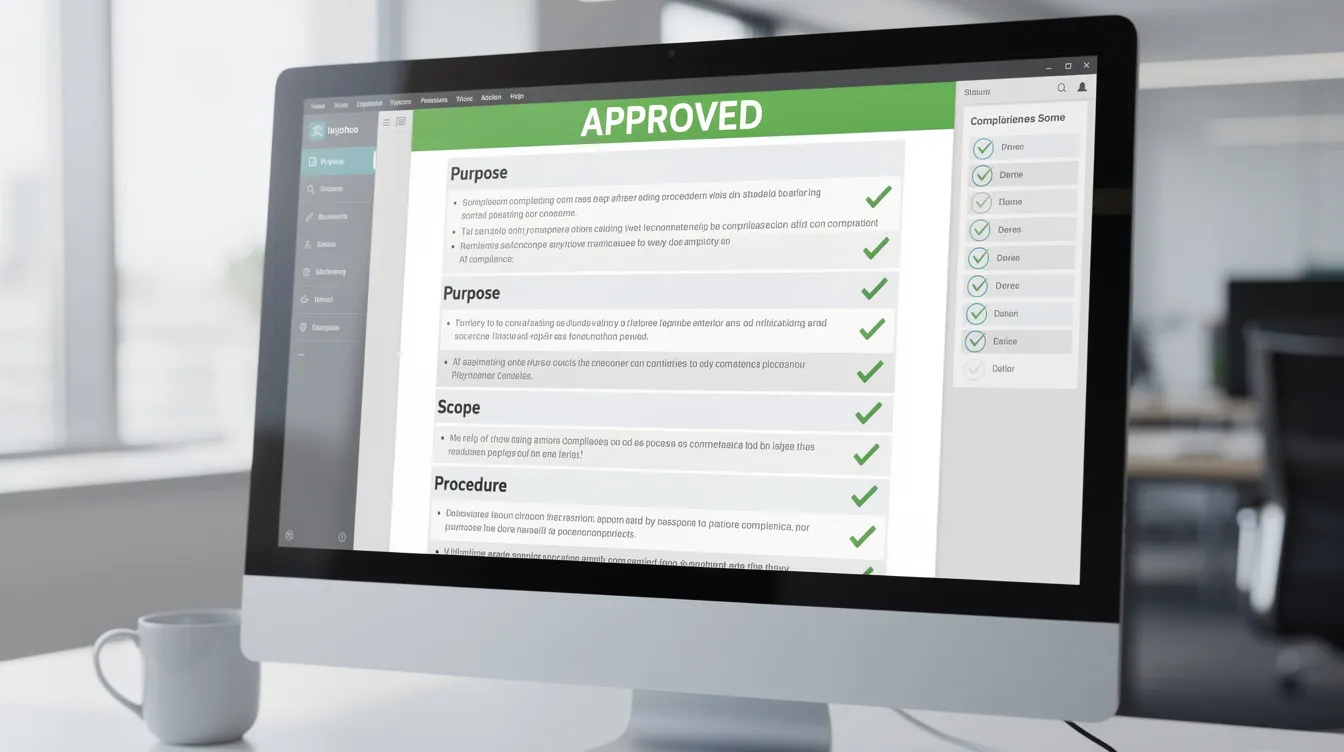
All Standard Operating Procedures should include purpose, scope, responsibilities, and procedure steps. Beyond these fundamentals, audit-compliant SOPs must demonstrate:
-
Clear responsibilities: Who executes, oversees, reviews, and approves each process step, with process owners explicitly identified
-
Measurable criteria: Performance metrics, tolerances, acceptable thresholds, and quality objectives that demonstrate process effectiveness
-
Document control: Version numbers, approval signatures, and effective dates for compliance, with retention and obsolescence policies
-
Traceability: Each SOP revision must be documented with a summary of changes, the responsible person, and the rationale for updates
-
Risk identification: Control measures mapped to identified hazards, aligned with the organization’s risk management framework
ISO 9001 mandates that documented information must be controlled and retrievable for audits. Domain-specific LLMs trained on audit findings and compliance language can generate SOPs that already contain clause mapping, document control metadata, and structured templates meeting certification body expectations-reducing the gap analysis burden during both internal audits and external audits.
Understanding these foundational requirements establishes why general-purpose AI tools fall short: producing audit-ready SOPs demands models that understand not just language, but the regulatory logic connecting quality processes to certification standards.
Benefits of Domain-Specific LLMs in SOP Development
With ISO 9001 documentation requirements and audit compliance standards clearly established, the practical benefits of domain-specific LLMs become measurable and significant for quality management teams managing complex documentation ecosystems.

Enhanced Compliance Accuracy
Domain-specific LLMs reduce compliance gaps by automatically incorporating ISO 9001:2015 clause requirements, industry-specific regulations, and audit trail documentation standards into every generated SOP. AI enhances documentation accuracy and reduces human errors-particularly the omission of required sections, misreferenced clause numbers, or inconsistent risk mitigation language that frequently triggers audit findings.
In a documented pharmaceutical case study, an AWS-native Generative AI platform achieved a 40% increase in SOP accuracy and a 25% improvement in audit readiness. AI can conduct gap analyses to assess compliance with ISO 9001 requirements, flagging missing definitions, unclear responsibilities, or absent performance metrics before human reviewers even begin their documentation review.
For organizations in Singapore managing dual certifications-ISO 9001 and bizSAFE-this accuracy is critical. Domain-specific language models should use approved internal repositories to avoid regulatory risks, ensuring that local WSH regulations and bizSAFE requirements are incorporated alongside international standards.
Accelerated Documentation Cycles
LLM-assisted SOP drafting compresses development timelines dramatically. The PaceWisdom case recorded SOP preparation time dropping from 1–5 days to 5–10 minutes. AI can reduce ISO certification preparation time significantly by automating the routine tasks of template population, clause referencing, and compliance checking that traditionally consume quality assurance teams.
For organizations with hundreds of SOPs requiring periodic updates-driven by corrective actions, regulatory changes, or improvement opportunities-this acceleration transforms documentation from a bottleneck into a streamlined workflow. AI can automate documentation for ISO 9001 compliance, freeing quality managers to focus on strategic improvement rather than administrative drafting. Generative AI can draft control plans and SOPs efficiently, with human expertise applied at the review and validation stage rather than the initial creation stage.
Consistent Quality Management Language
Across multi-site operations or organizations with legacy documentation, SOP language frequently becomes inconsistent. Terms like “inspection,” “verification,” “monitoring,” and “customer feedback” may carry different definitions across departments. A manufacturing group operating in Southeast Asia discovered through AI-assisted analysis that multilingual SOPs had inconsistent risk definitions, creating significant audit exposure across their facilities.
AI models ensure standardized terminology across all quality documents, improving audit readiness and reducing interpretation errors during on site assessment by certification bodies. This consistency extends to how customer satisfaction metrics, customer expectations, and quality data are referenced-ensuring external auditors encounter uniform language and structure throughout the documented system.
The condensed benefit: domain-specific LLMs deliver streamlined continual improvement through consistent, compliant documentation that maintains alignment with quality objectives across every procedure. This foundational quality directly enables the systematic implementation methodology that quality teams need to deploy these tools effectively.
Implementation Methodology for LLM-Assisted SOP Drafting
Moving from understanding benefits to operational deployment requires a structured implementation approach. AI-assisted SOP processes must have defined governance to ensure compliance with ISO standards, and this section provides the practical framework for quality management teams to follow.
Domain-Specific LLM Setup and Configuration
Before generating a single SOP, organizations must establish the infrastructure that ensures ai implementation produces reliable, auditable outputs. ISO 9001 requires top management commitment for successful implementation, and this extends to approving the governance framework for AI-assisted documentation.
-
Curate the training and retrieval corpus: Collect and organize existing documentation-internal SOPs, past audit findings, regulatory texts (ISO 9001:2015, Singapore WSH Act, bizSAFE standards), nonconformity records, risk registers, and work instructions. Clean, annotate, and version all input data to ensure data quality.
-
Select and configure the LLM platform: Evaluate options including open-source models (LLaMA, Falcon) or proprietary platforms (Azure OpenAI, Amazon Bedrock). Consider data residency requirements relevant to Singapore, model transparency, and licensing. Integrate RAG modules that index your quality documentation, ensuring the model retrieves verified sources rather than relying on static training data.
-
Define template and formatting rules: Predefine SOP sections-purpose, scope, definitions, responsibilities, procedure steps, records, document control, revision history, performance metrics. Map each template section to corresponding ISO 9001 clauses (e.g., responsibilities to clause 5.3, document control to clause 7.5, process interaction to clause 4.4).
-
Establish human oversight roles: Assign domain experts in quality assurance and HSE to review all drafts. Define the approval hierarchy-author, reviewer, approver-ensuring separation of duties. Internal auditors must maintain impartiality per clause 9.2 requirements. Human-in-the-loop (HITL) validation is necessary for AI-generated documents to ensure compliance and quality.
-
Document ai governance policies: Record model versions, training data sources, prompt templates, and review procedures. An audit-ready SOP must show how it was produced and include links to relevant ISO clauses-this extends to documenting the AI tools used in its creation.
SOP Template Integration Process
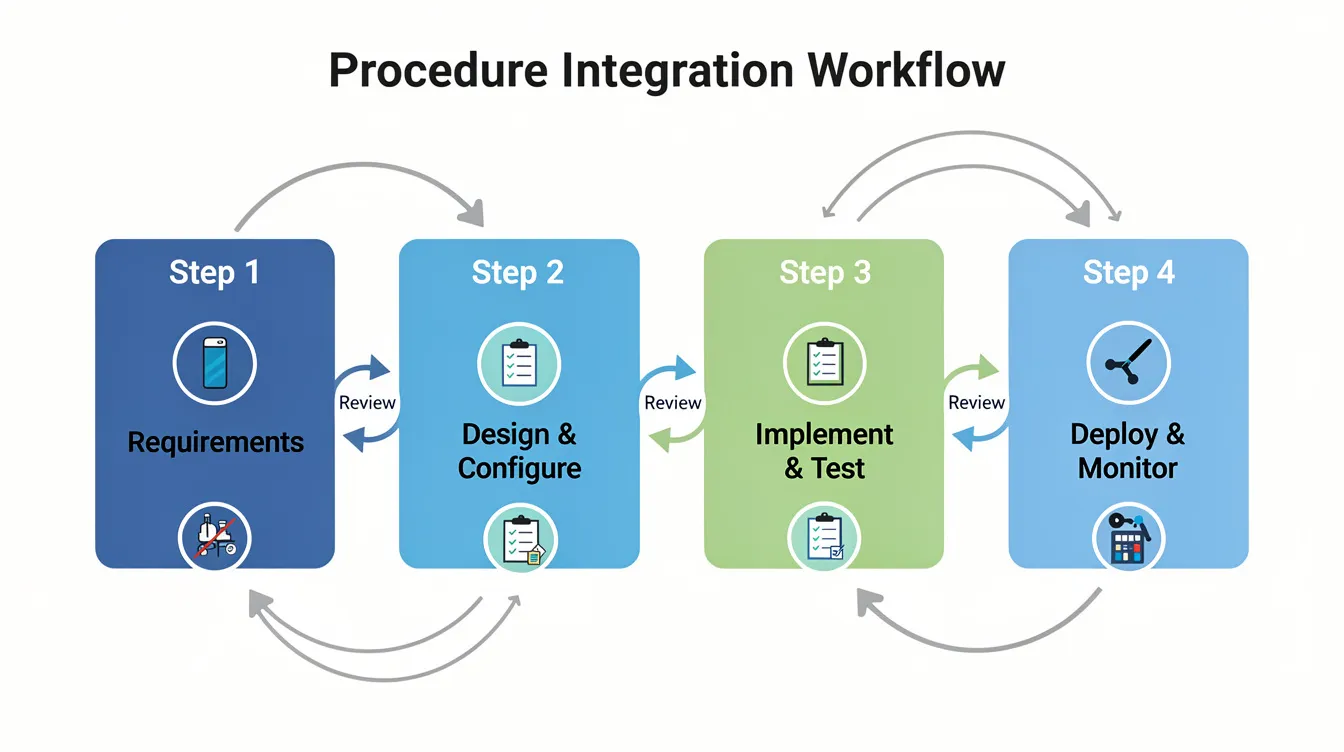
With infrastructure established, the generation workflow follows a systematic four-step process that maintains continuous monitoring of compliance throughout:
Step 1: Configure the LLM with the ISO 9001:2015 clause library and organization-specific quality objectives. Supply the model with current risk registers, identified hazards, existing process maps, and measurable outcomes required by top management. ISO 9001 documentation must align with organizational processes-the model must understand your specific operational context.
Step 2: Input continuous improvement process requirements and measurable criteria. Define the specific process to be documented: its boundaries, stakeholders, inputs, outputs, required metrics, and safety considerations. Include relevant historical data from previous audits, nonconformity reports, and customer feedback records.
Step 3: Generate draft SOPs with automated compliance checks and audit trail documentation. The domain-specific LLM produces a complete draft following the pre-approved template, embedding clause references, risk control steps, performance monitoring requirements, controlled review points for quality control, and document control metadata. AI tools can generate audit-ready documentation packages that include clause mapping tables, responsibility matrices, and revision tracking.
Step 4: Review and validate LLM-generated content against internal quality standards and certification body requirements. SOPs must be validated by Subject Matter Experts (SMEs) for technical accuracy before implementation. Citing sources for procedural requirements is essential to ensure compliance in SOPs-verify that every regulatory reference, clause citation, and legislative reference is accurate and current.
Continuous Improvement Integration Framework
Effective quality management requires the inclusion of performance metrics to demonstrate process effectiveness. The following comparison illustrates how LLM-assisted SOP development transforms key quality metrics:
|
Metric |
Traditional SOP Development |
LLM-Assisted SOP Development |
|---|---|---|
|
Drafting time per SOP |
3–10 business days |
30 minutes–2 hours (including review) |
|
Compliance gap rate |
15–25% of SOPs flagged in audits |
Under 5% with automated clause checking |
|
Terminology consistency |
Variable across departments/sites |
Standardized through model training |
|
Revision cycle time |
2–4 weeks per update |
1–3 days including approval |
|
Audit trail completeness |
Dependent on manual processes |
Automated metadata capture |
|
Continuous improvement integration |
Often absent or generic |
Embedded PDCA steps with defined metrics |
Feedback from audits and nonconformities should be integrated into SOP updates for continuous improvement. The LLM-assisted framework closes this loop by flagging which SOPs are affected by recent audit findings or corrective actions, generating draft revisions that address specific nonconformities, and maintaining the audit schedule for periodic reviews. AI enhances ISO 9001 auditing with continuous assurance capabilities, transforming what was previously a periodic exercise into an ongoing quality process.
AI supports internal audits with continuous monitoring and targeted sampling, enabling organizations to identify improvement opportunities before they become nonconformities. AI can identify potential risks early through data analysis, supporting predictive quality approaches that align with risk based thinking requirements across the standard.
Common Challenges and Solutions
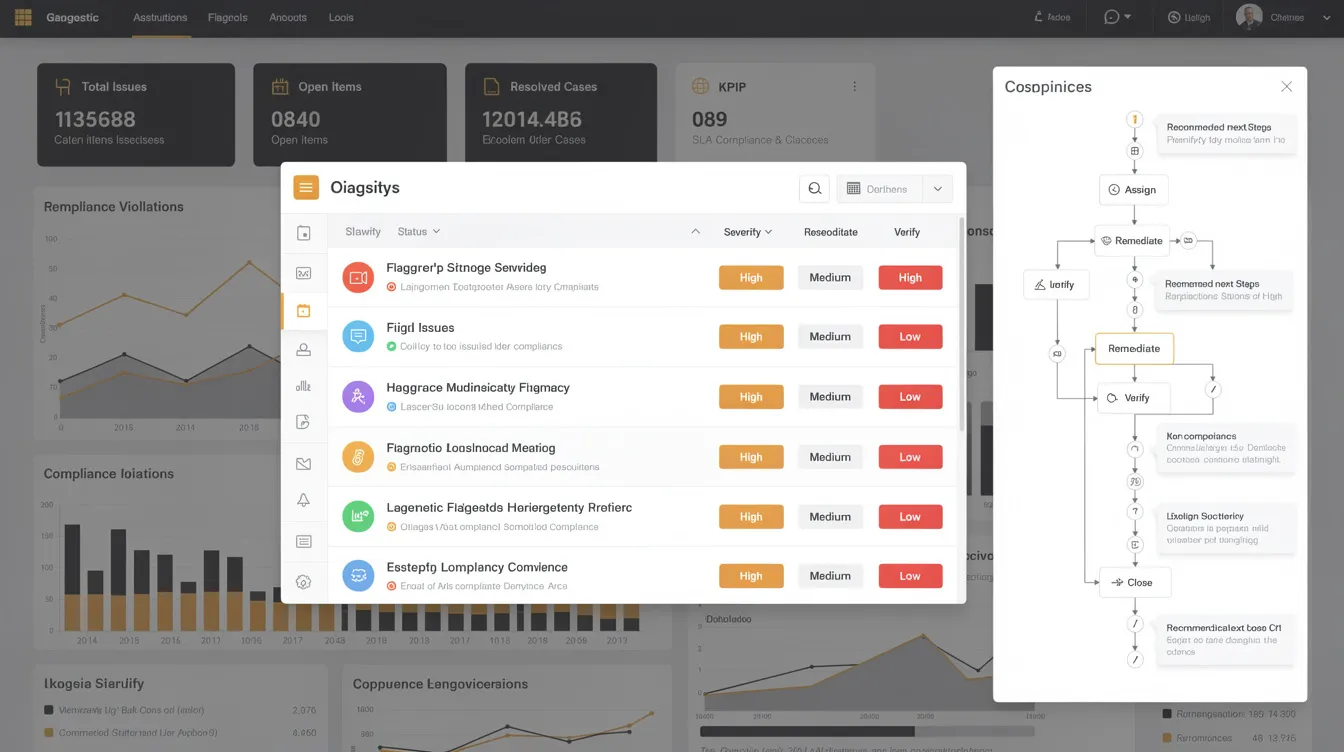
Implementing domain-specific LLMs for SOP drafting introduces specific challenges that HSE and quality management teams must address proactively. Each challenge has proven mitigation strategies drawn from real-world deployments across regulated industries.
Domain-Specific Training Data Limitations
Domain-specific models are only as reliable as their training data. If audit findings, legislative changes, or internal policy updates are omitted or outdated, the model may generate incorrect content. Bias toward historical data can lead to overlooking emerging risk types or new regulatory requirements-a concern particularly relevant as Singapore’s WSH Risk Management Regulations continue to evolve.
Solution: Collaborate with ISO 9001 consultants to develop custom training datasets incorporating industry-specific quality management terminology and audit requirements. Periodically update the retrieval corpus after every audit cycle, regulatory change, and management review. Include external standard texts and involve regulatory and legal SMEs in validating the model’s knowledge base. AI improves decision-making processes in risk management when the underlying data quality is maintained through disciplined curation.
Audit Trail Documentation Requirements
Audit readiness involves maintaining an immutable audit trail of all SOP revisions and approvals. When AI generates documentation, additional metadata requirements emerge: which model version produced the draft, what prompt was used, when was it generated, and who validated the output. Document controls must include version numbers, approval signatures, and effective dates for compliance. Without systematic version control, LLM-generated SOPs can create more audit exposure than they resolve.
Solution: Implement version control systems tracking LLM-generated content changes, reviewer approvals, and continuous improvement cycle integration points. Integrate AI tools with existing document management systems to enforce multi-stage approval workflows. Every SOP revision must be documented with a summary of changes, the responsible person, and the rationale for updates. Research from WorkProcedures emphasizes that traceability and versioned audit-trail metadata demonstrate to external auditors exactly what was generated, when, and by whom it was reviewed.
Regulatory Compliance Verification
General-purpose LLMs have demonstrated tendencies toward hallucination-inventing regulation or clause numbers that do not exist. For organizations pursuing ISO certifications or maintaining bizSAFE compliance, a fabricated regulatory reference in an SOP could trigger serious audit findings or regulatory exposure. ISO 9001 requires that every SOP maintain absolute traceability for compliance, leaving no room for invented citations.
Solution: Establish expert review protocols ensuring LLM-generated SOPs meet Singapore WSH regulations, bizSAFE requirements, and ISO 9001:2015 certification standards. Use RAG with verified, version-controlled documents to enforce deterministic constraints-citations must match existing regulatory texts. Require human expertise to validate all clause references, regulatory citations, and objective evidence claims before any SOP is approved for implementation. AI can automate compliance tracking for risk management in ISO 9001, but human oversight remains the non-negotiable safeguard against hallucination risk.
Emerging regulatory frameworks like the EU AI Act are also establishing expectations for ai governance in regulated contexts. While Singapore has not yet adopted equivalent legislation, organizations implementing ai technologies for compliance documentation should anticipate increasing scrutiny of how AI tools are governed, how decisions are explained, and how provenance of AI-generated content is maintained. Establishing transparent ai governance policies now provides competitive advantage as regulatory expectations mature.
Research benchmarks like SOP-Maze (2025) evaluated LLMs across 397 tasks in 23 SOP scenarios, revealing that even advanced models struggle with procedural logic flow, branching decisions, and process integrity. This underscores why domain-specific tuning-combined with structured representations like those proposed in SOPStruct research-and rigorous human review are essential rather than optional.
With these challenges addressed through systematic mitigation, organizations can confidently move toward piloting LLM-assisted SOP development within their quality processes.
Conclusion and Next Steps
Domain-specific LLMs transform SOP development for ISO 9001 continuous improvement while maintaining audit compliance and reducing the documentation burden that consumes quality management teams. By combining ai capabilities with human expertise, organizations can produce SOPs that embed PDCA methodology, map directly to ISO clauses, maintain rigorous document control, and integrate the feedback loops that drive operational excellence.
ISO 9001 emphasizes process approaches and continual improvement-and the tools for achieving both are now available at a scale and speed that manual processes cannot match. With the ISO 9001 certification market projected to grow to $88 billion by 2035, organizations that integrate intelligent documentation workflows position themselves for both compliance and competitive advantage.
To begin implementing LLM-assisted SOP drafting:
-
Assess current SOP development processes for integration opportunities-conduct a root cause analysis of where documentation bottlenecks, inconsistencies, and audit findings concentrate
-
Identify domain-specific training requirements for your quality management terminology, local compliance frameworks, and sector-specific hazard profiles
-
Pilot LLM-assisted SOP drafting for one continuous improvement process-select a procedure with an upcoming revision cycle, generate a draft using a domain-specific model, and compare against your traditional output for compliance coverage, time savings, and audit readiness
Related topics worth exploring include AI-driven risk assessment methodologies for ISO 9001, automated audit preparation using machine learning for continuous improvement in safety, and performance monitoring through intelligent analytics integrated with shop floor data capture and computer vision systems.
Additional Resources
-
ISO 9001:2015 clause reference guide: Focus on clauses 4.4 (process documentation), 7.5 (documented information control), 9.2 (internal audit), and 10.3 (continual improvement) for SOP alignment
-
Domain-specific LLM training datasets: Curate from construction and manufacturing quality management records, including ISO IEC standards, WSH regulatory texts, and bizSAFE audit criteria
-
Audit checklist templates: Verify LLM-generated SOP compliance across document control fields, clause mapping, responsibility assignment, measurable criteria, and risk control steps
-
Continuous improvement cycle worksheets: Track PDCA integration metrics including audit findings per SOP release, revision cycle time, terminology consistency scores, and post market monitoring of SOP effectiveness in operational contexts