
WSH risk management regulations adherence is defined as the systematic, legally mandated process of identifying workplace hazards, assessing their risks, implementing controls, and reviewing those controls to protect workers on construction sites. Singapore’s Workplace Safety and Health (WSH) Act establishes this framework as a non-negotiable obligation for employers and principals operating in construction. Compliance risk carries real legal and financial consequences, making proactive adherence the only defensible position for safety managers. This guide covers the WSH risk management framework steps, documentation requirements, control hierarchies, and mandatory review cycles that every construction professional must understand and apply.
What are the key WSH risk management framework steps?
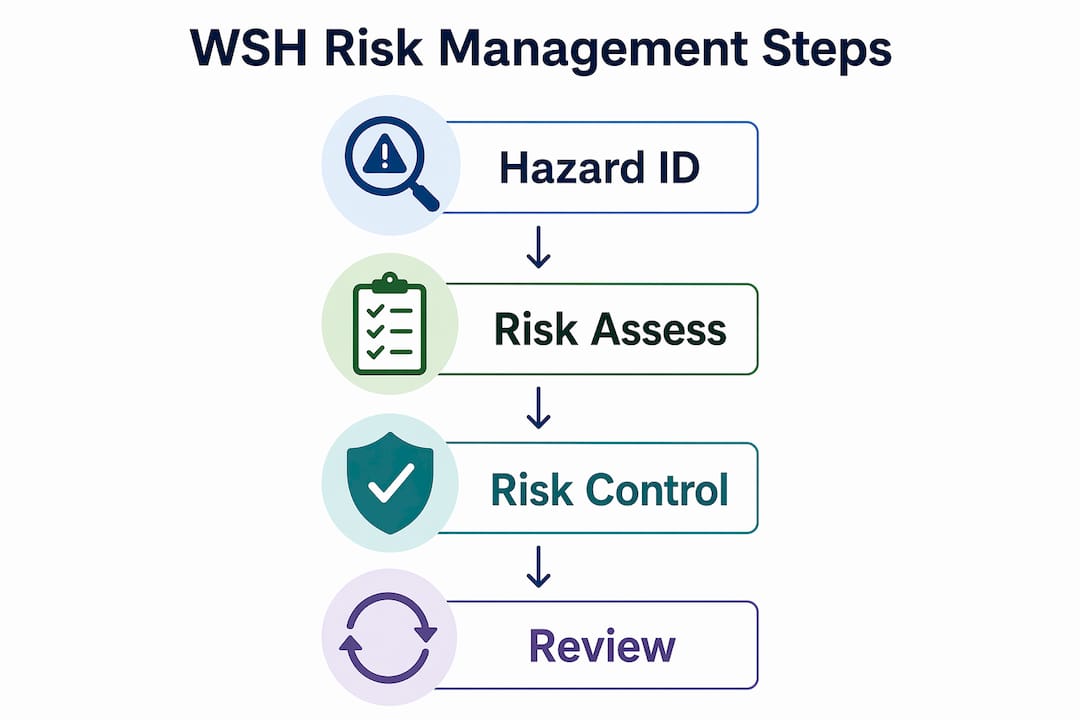
The WSH risk management framework follows four structured steps: hazard identification, risk assessment, risk control, and review. WSH regulations mandate a systematic process tailored to each workplace’s specific operations, meaning a generic checklist is never sufficient for a construction site. Each step builds on the last, and skipping any one of them creates both legal exposure and physical danger for workers.
Step 1: Hazard identification
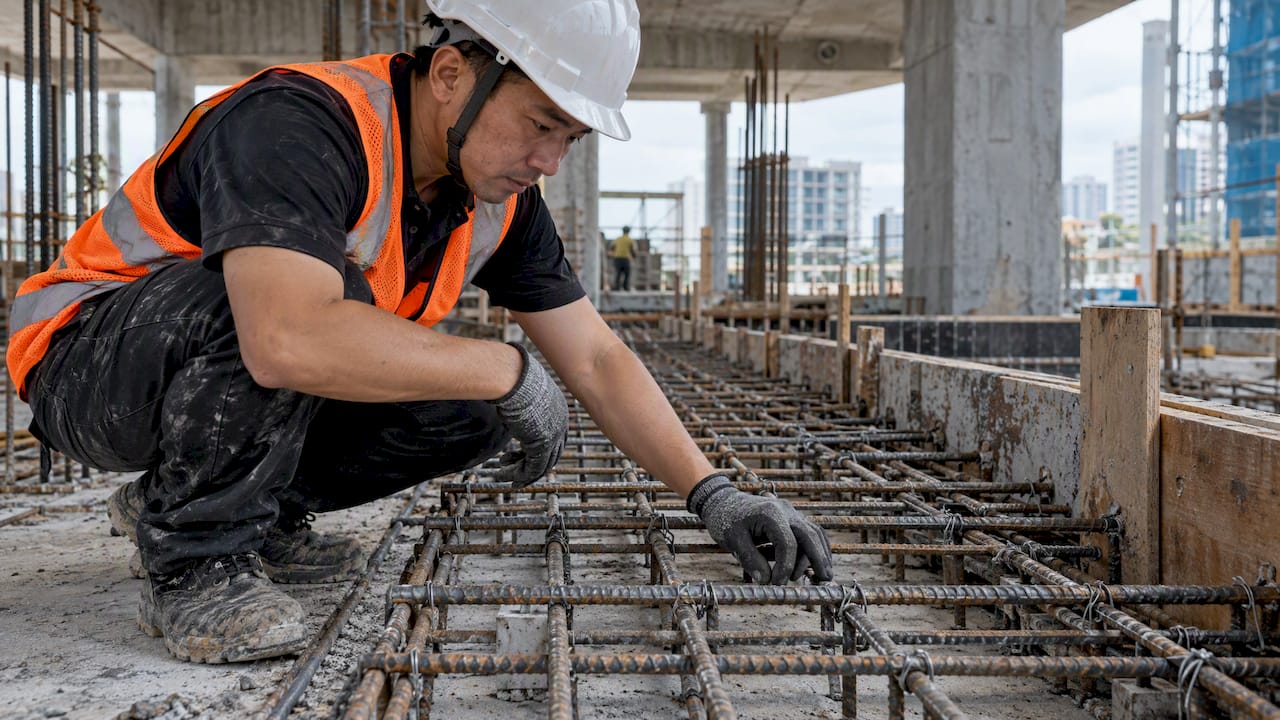
Hazard identification requires a thorough walkthrough of every work activity on site, from excavation and scaffolding to electrical installation and confined space entry. Safety managers must examine the work environment, the equipment in use, and the people performing the tasks. Identifying hazards before work begins is far more effective than reacting after an incident.
Step 2: Risk assessment
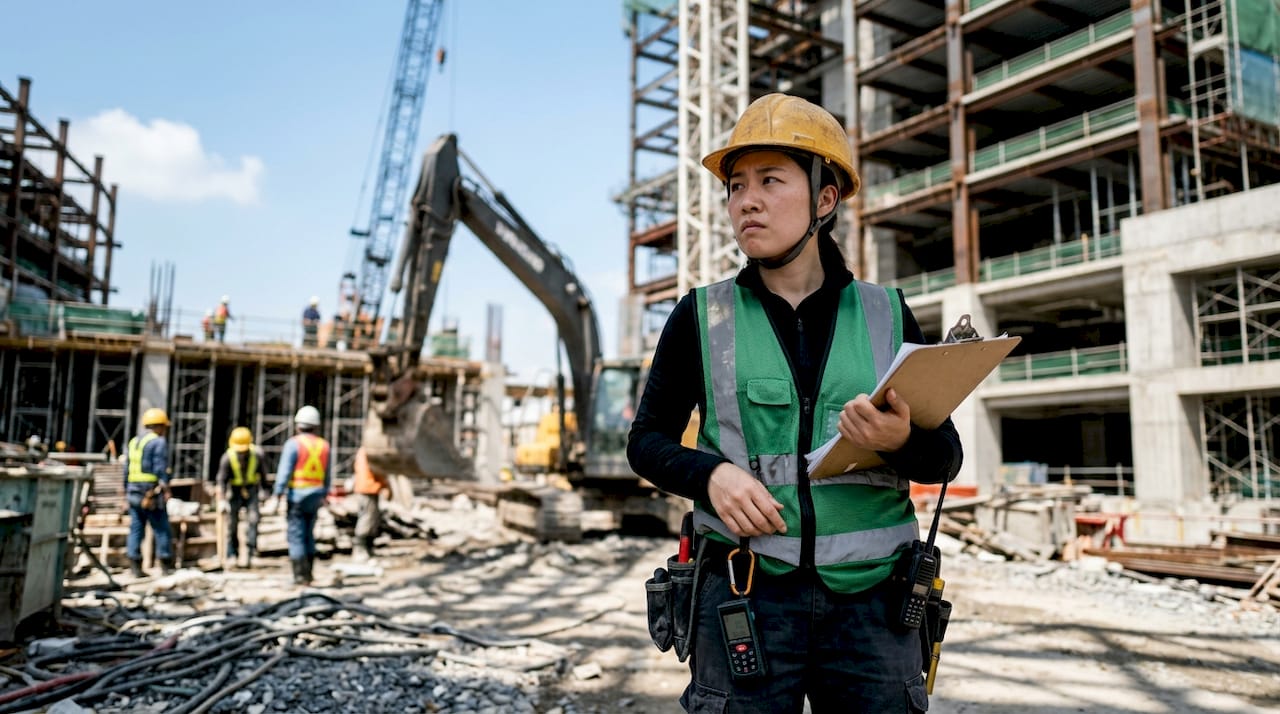
Risk assessment assigns a severity and likelihood rating to each identified hazard. This prioritization tells you which hazards demand immediate attention and which can be managed through routine controls. A construction site risk assessment must be specific to the tasks, not copied from a previous project.
Step 3: Risk control
Risk control translates the assessment into concrete protective measures. The hierarchy of controls, discussed in detail later, governs which measures take priority. Controls must be implemented before work begins on any high-risk activity.
Step 4: Review
Review closes the loop by verifying that controls are working and that no new hazards have emerged. This step is legally required at defined intervals under WSH regulations.
| Step | Action Required | Key Output |
|---|---|---|
| Hazard identification | Examine all work activities, environments, and equipment | Hazard register |
| Risk assessment | Rate severity and likelihood for each hazard | Prioritized risk list |
| Risk control | Select and implement controls per hierarchy | Control measures log |
| Review | Verify effectiveness and update as needed | Revised risk assessment records |
Pro Tip: Map every work activity to a specific hazard before the assessment begins. A task-based approach catches hazards that a general site walkthrough misses.
How to conduct and document risk assessments under WSH regulations?
A compliant risk assessment starts with assembling a competent team that includes the site supervisor, a WSH officer, and workers who perform the tasks being assessed. Worker input is not optional. Workers often identify hazards that supervisors overlook because they experience the work firsthand. The risk assessment process must be documented in writing and retained for regulatory inspection.
Employers must maintain records of all risk assessments and the control measures implemented, and make these records available to the Commissioner for Workplace Safety and Health upon request. This is not a bureaucratic formality. It is the primary mechanism by which regulators verify that a site is operating within the law.
Documentation best practices for WSH-compliant risk assessments:
- Record the date the assessment was conducted and the names of all team members involved.
- List every hazard identified, the activity it relates to, and the location on site.
- Document the risk rating assigned, including the severity and likelihood scores used.
- Specify every control measure selected and the person responsible for implementing it.
- Retain all records for at least three years, even after a project concludes.
- Make records accessible to workers and supervisors, not just stored in a head office filing system.
Regulations require employers to inform workers of the risks identified and the control procedures in place. Posting risk assessment summaries at the workstation or toolbox meeting point satisfies this requirement and reinforces safety culture simultaneously.
Pro Tip: Use a standardized risk assessment template across all your projects. Consistency reduces the chance of missing a required field and makes audits significantly faster.
What risk control measures are required under WSH regulations?
Risk control measures follow a strict hierarchy: elimination, substitution, engineering controls, administrative controls, and personal protective equipment (PPE) as the last resort. This hierarchy is not a suggestion. WSH regulations expect employers to work through it in order, applying the highest-level control that is reasonably practicable before moving to lower-level options.
Elimination removes the hazard entirely. On a construction site, this might mean redesigning a work process so that workers never need to enter a confined space. Substitution replaces a dangerous material or method with a safer one, such as using water-based coatings instead of solvent-based products to reduce inhalation risk.
Engineering controls physically separate workers from the hazard. Examples include installing guardrails on elevated platforms, using mechanical lifting equipment instead of manual handling, and fitting dust extraction systems on cutting tools. These controls work regardless of worker behavior, which makes them far more reliable than administrative measures.
Administrative controls change how work is organized. Rotating workers to limit exposure time, scheduling high-noise activities during periods when fewer workers are on site, and requiring permit-to-work systems for confined space entry all fall into this category. PPE, including hard hats, safety harnesses, and respiratory protection, addresses residual risk only after all higher-level controls have been applied.
Practical steps for integrating controls into daily operations:
- Assign a named person responsible for each control measure on the risk assessment record.
- Verify that engineering controls are inspected before each shift begins.
- Include control measure requirements in daily toolbox briefings.
- Conduct spot checks to confirm that PPE is being used correctly and consistently.
- Review construction site safety tips regularly to catch gaps in your current control setup.
Pro Tip: When workers bypass a control, treat it as a system failure, not a disciplinary issue. The control was either impractical or poorly communicated. Fix the system first.
Workers’ compensation coverage is also a critical layer of protection. Business owners need workers’ compensation to cover themselves and their teams when incidents occur despite best-practice controls. Insurance does not replace risk management, but it provides a financial safety net that protects the business and supports injured workers.
When should risk assessments be reviewed under WSH regulations?
WSH Risk Management Regulations require risk assessments to be reviewed and revised at least once every three years. This is the baseline legal requirement. Construction sites, however, change constantly, and the three-year cycle is a floor, not a ceiling.
Immediate review is mandatory in four specific situations:
- A bodily injury occurs on site, regardless of severity.
- A near-miss incident reveals a hazard not previously identified or adequately controlled.
- A significant change in work processes, materials, or equipment introduces new hazards.
- New information about a known hazard becomes available, such as updated safety data sheets or revised regulatory guidance.
Conducting an effective review requires more than pulling out the original risk assessment document. The review team must physically inspect the site, interview workers, and compare current conditions against the original hazard register. Regular audits and inspections identify gaps in risk management that desk reviews miss entirely.
OSHA standards recommend conducting safety inspections at least quarterly for high-hazard industries like construction. Applying this frequency to your internal review schedule keeps your risk assessments current between the mandatory three-year cycles and reduces the likelihood of a compliance gap appearing during a regulatory inspection.
Pro Tip: Tie your risk assessment review schedule to project milestones, not just calendar dates. A review at the start of each new construction phase catches hazards introduced by changing site conditions.
Document every review with a dated record that identifies what was examined, what changed, and who authorized the revision. Communicate all changes to workers before the revised controls take effect. A WSH management system that embeds review triggers into project management workflows makes this process reliable rather than reactive.
Key Takeaways
Adhering to WSH risk management regulations requires completing all four framework steps, maintaining thorough documentation, applying the hierarchy of controls, and reviewing assessments at mandatory intervals and whenever site conditions change.
| Point | Details |
|---|---|
| Four-step framework | Hazard identification, risk assessment, risk control, and review form the legal backbone of WSH compliance. |
| Documentation is mandatory | Records of all risk assessments and controls must be retained and made available to the Commissioner upon request. |
| Hierarchy of controls | Elimination and engineering controls take priority over PPE, which addresses only residual risk. |
| Three-year review cycle | WSH regulations require review at least every three years, plus immediate review after any incident or process change. |
| Worker communication | Informing workers of identified risks and control measures is a legal obligation, not a best practice option. |
Why compliance culture matters more than compliance checklists
The most persistent challenge I observe on construction sites is not ignorance of WSH regulations. Safety managers generally know the rules. The real problem is the gap between documented compliance and lived compliance. A risk assessment that sits in a site office filing cabinet, unread by the workers it is meant to protect, satisfies the letter of the law but fails its purpose entirely.
The sites that achieve genuine safety outcomes treat risk management as a daily operational discipline, not a periodic administrative exercise. They brief workers on control measures at every toolbox meeting. They empower supervisors to stop work when a control has failed. They review near-misses with the same rigor they apply to recordable incidents. This culture does not emerge from a single training session. It develops through consistent leadership behavior over months and years.
My recommendation for safety managers is to focus first on communication quality. The regulation requiring employers to inform workers of risks exists because regulators understand that paper controls do not protect people. Workers who understand why a control exists are far more likely to apply it correctly and report when it fails. That feedback loop is the most reliable early warning system a construction site can have.
— Aman
How MOSAIC supports your WSH compliance program
Construction firms that need structured support to meet Singapore’s WSH obligations have a clear path forward with Com.

Com’s BizSAFE Star certification support guides construction companies through the full compliance process, from initial risk management framework development to audit preparation and certification. The program addresses the specific requirements of Singapore’s WSH Act, including risk assessment documentation, control implementation, and mandatory review cycles. Com’s consultants bring direct construction industry experience, which means the guidance you receive reflects real site conditions rather than generic regulatory text. For firms seeking to formalize their safety management and demonstrate compliance to clients and regulators, this is the structured support that closes the gap between intention and verified performance.
FAQ
What does WSH risk management compliance require from employers?
Employers must identify hazards, assess risks, implement controls, maintain records, and communicate risks to workers under Singapore’s WSH Risk Management Regulations. These obligations apply to all workplaces, with construction sites subject to particularly rigorous enforcement.
How often must risk assessments be reviewed under WSH regulations?
WSH regulations require risk assessments to be reviewed at least once every three years. Immediate review is also required after any bodily injury, significant process change, or new hazard information.
What is the hierarchy of controls in WSH risk management?
The hierarchy prioritizes elimination, then substitution, engineering controls, administrative controls, and PPE as the last resort. Higher-level controls are more reliable because they reduce hazards at the source rather than relying on worker behavior.
What records must construction sites keep for WSH compliance?
Sites must retain written records of all risk assessments, the hazards identified, the risk ratings assigned, and the control measures implemented. These records must be available to the Commissioner for Workplace Safety and Health upon request.
When should a risk assessment be immediately revised?
A risk assessment requires immediate revision after a workplace injury, a near-miss incident, a significant change in work processes or materials, or when new information about an existing hazard becomes available.
Recommended
- WSH Risk Management Regulations 2026: Are Your Safety Assessments Updated? – MOSAIC Eco-construction Solutions Pte Ltd
- WSH (Design for Safety) Regulations 2015: A Guide for Developers and Designers – MOSAIC Eco-construction Solutions Pte Ltd
- Managing Risk During the Design Stage: A Proactive Approach to Safer, More Efficient Construction – MOSAIC Eco-construction Solutions Pte Ltd