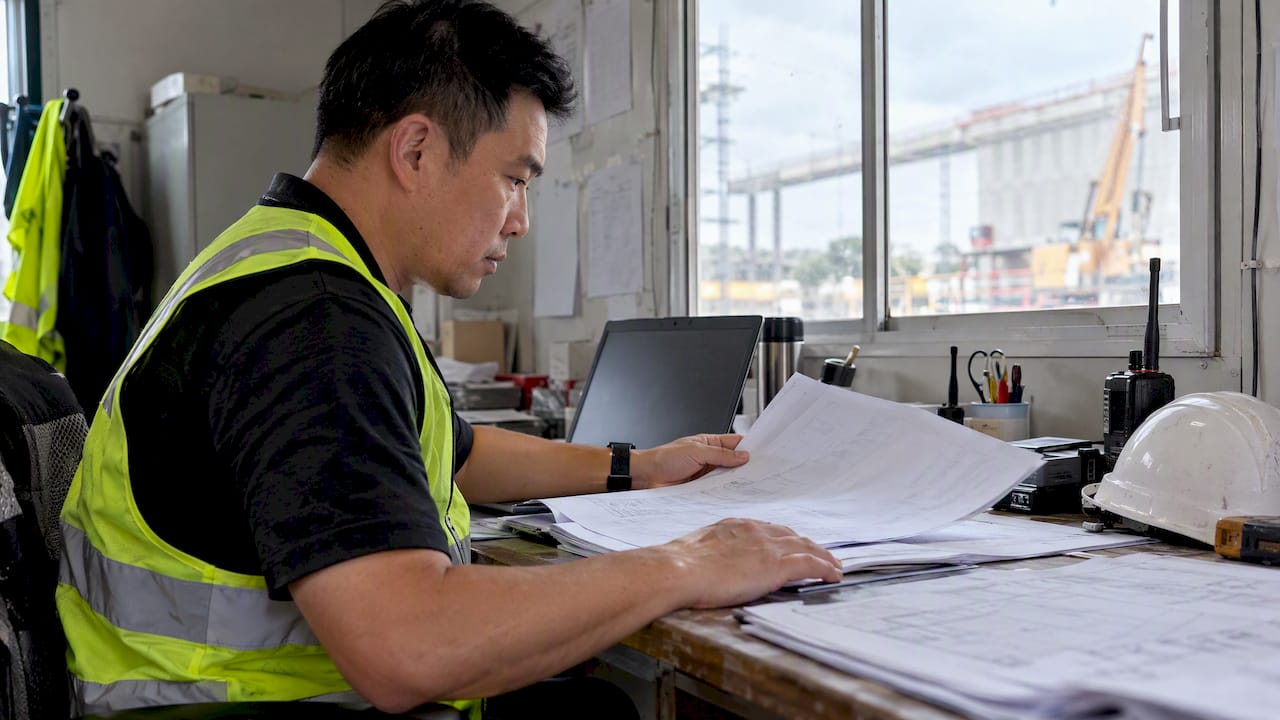
If a client, main contractor, or tender document has asked for BizSAFE Level 3, the issue is rarely just certification. It usually means your company needs a working risk management system that stands up to review, matches site realities, and can be shown clearly during assessment. That is where a practical BizSAFE Level 3 requirements checklist becomes useful – not as a formality, but as a way to close gaps before they delay projects or create avoidable exposure.
For most contractors and industrial operators, Level 3 is the point where good intentions must become documented controls. You are no longer relying on informal toolbox briefings or experience alone. The assessor will expect evidence that risks have been identified, evaluated, controlled, communicated, and reviewed in a structured way.
What BizSAFE Level 3 is really testing
BizSAFE Level 3 centers on whether your organization has implemented a risk management process that aligns with regulatory expectations and day-to-day operations. In practice, this means your company should be able to show more than a completed risk register. The assessment looks at whether the system is active, relevant, and understood by the people doing the work.
This is where many companies run into trouble. They may have documents prepared for submission, but the documents do not reflect actual activities, current manpower, subcontractor arrangements, or site-specific hazards. A technically complete file can still raise concerns if the controls are generic or outdated.
For that reason, the strongest preparation approach is to treat the checklist as an operational review. Ask whether your documentation mirrors what happens on the ground, whether supervisors know the controls, and whether the company can show evidence of implementation rather than intent.
BizSAFE Level 3 requirements checklist
A sound BizSAFE Level 3 requirements checklist should cover leadership, competency, risk assessment, implementation, and records. The exact presentation may vary by business type, but the core expectations are consistent.
1. Top management commitment is visible
Management should be able to demonstrate active support for workplace safety and health. This is not limited to signing a policy. It includes assigning responsibilities, approving resources, and making sure risk controls are enforced.
If leadership is absent during preparation, the weakness usually appears quickly. Risk assessments remain unfinished, corrective actions stay open, and site teams receive mixed messages about priorities. Assessors tend to notice when safety is treated as an administrative add-on rather than a management function.
2. A valid risk management champion is appointed
Your company should have a properly trained Risk Management Champion. This role matters because Level 3 expects coordination, follow-up, and ownership of the risk management process.
The appointment should be clear, current, and supported by training records. If the named person has left the company, changed roles, or cannot explain the process, that gap can undermine the assessment even if the paperwork appears complete.
3. Risk assessments are completed for relevant work activities
This is the center of the Level 3 review. Risk assessments should cover the actual tasks your company performs, including routine activities, non-routine work where relevant, and higher-risk operations that carry more serious consequences.
A common mistake is using broad templates that mention generic hazards but do not reflect the way work is carried out. For example, lifting operations, work at height, hot work, electrical activities, traffic movement, and interface with other contractors often require more specific attention than a standard office-style risk assessment can provide.
4. Control measures follow the hierarchy of control
The assessment is not only about listing hazards. It is also about showing that controls have been selected thoughtfully. If a significant risk is managed only through reminders or personal protective equipment, the assessor may question whether stronger controls were considered first.
This is one of those areas where it depends on the nature of the work. Some tasks genuinely rely on administrative controls and PPE because elimination or substitution is not practical. But your records should show that the decision was evaluated, not assumed.
5. Safe work procedures support the risk assessments
Where the activity requires formal work instructions, safe work procedures should align with the risk assessment. The two documents should not contradict each other.
This sounds simple, but it is a frequent gap. Companies update a risk assessment after a project change, yet the corresponding procedure still refers to old equipment, old access methods, or outdated emergency steps. That inconsistency can create both audit issues and operational confusion.
6. Employees are informed and trained on the controls
You should be able to show that workers and supervisors have been briefed on the hazards and required controls. Evidence may include induction records, toolbox meeting records, task briefings, and training attendance.
The key point is traceability. An assessor may accept different training formats depending on your operation, but there should be a clear path from documented risk to communicated control. If workers are unaware of the precautions listed in the assessment, the document has limited value.
7. Records of implementation are available
This is where many companies strengthen or weaken their case. A Level 3 submission is more credible when it is supported by evidence such as inspection records, corrective action logs, permit records where applicable, maintenance checks, training records, and monitoring forms.
Not every company will need the same depth of records. A small subcontractor and a large industrial operator will not present the same volume of documentation. Still, both need enough evidence to show that controls are not merely theoretical.
8. Risk assessments are reviewed and updated
The review process should be defined and actually used. Risk assessments should be revisited when there are changes in work scope, equipment, manpower, work environment, incidents, or legal and client requirements.
An old risk register is one of the fastest ways to signal weak implementation. Even if the original assessment was well written, it becomes less defensible when work methods have changed but the records have not.
Documents that are commonly expected
Most companies preparing for assessment should expect to gather several core records. These typically include the company safety and health policy, Risk Management Champion training record, appointment letters, risk assessments, safe work procedures, training and briefing records, inspection records, and evidence of corrective actions.
Depending on the nature of your operations, you may also need permits, equipment inspection records, emergency preparedness documents, incident records, and subcontractor control records. The exact set depends on your work activities. Construction firms, maintenance contractors, fabrication companies, and logistics operators will not all present identical files.
Where companies usually fail the checklist
The problem is often not the absence of documents. It is the mismatch between documents and operations. Risk assessments may be copied from another project. Supervisors may not know the latest revision. Corrective actions may be listed but never closed. Training records may exist for core staff but not for new hires or subcontract personnel.
Another common issue is over-documentation without control. Some companies create too many forms, too many versions, and too many overlapping procedures. That can make the system harder to implement, especially for SMEs with limited internal resources. A lean, accurate system is usually more effective than a large file that no one uses properly.
How to use this checklist before your assessment
Start by reviewing your business activities line by line rather than document by document. Identify what work your company actually performs, then confirm that each activity has a corresponding risk assessment and, where needed, a safe work procedure. After that, test implementation by speaking with supervisors and checking whether records exist for training, inspections, and follow-up actions.
It also helps to conduct an internal mock review. Ask simple questions. Are the documents current? Do the controls reflect real site conditions? Can the appointed personnel explain their responsibilities? Are there signed records to support what the company says it does?
If gaps appear, fix the operational issue first and then update the paperwork. Reversing that order often creates weak systems that look compliant but fail under questioning.
For companies managing multiple projects or subcontractors, coordination is especially important. Level 3 readiness can be affected by handoffs between office documentation and site execution. If procurement, project management, and safety personnel are not aligned, the same control may be interpreted differently across teams.
Why a practical approach matters
BizSAFE Level 3 should help your business do more than pass an assessment. A properly built system reduces confusion, supports supervision, and gives clients greater confidence in your ability to manage work safely. That matters in construction and industrial settings where one weak control can affect schedule, cost, incident exposure, and commercial credibility.
This is why many firms choose implementation support rather than document-only preparation. A consultant who understands both the standard and site conditions can usually identify whether the real issue is missing documentation, weak process ownership, poor training follow-through, or inconsistent field application. For businesses that need efficient preparation without building a full in-house compliance team, that kind of support can save time and reduce rework.
If you are preparing for assessment, treat the checklist as a management tool, not a paperwork exercise. The companies that move through Level 3 with fewer delays are usually the ones that can show a clear line between hazard, control, communication, and evidence. When that line is visible, certification readiness becomes much more straightforward.