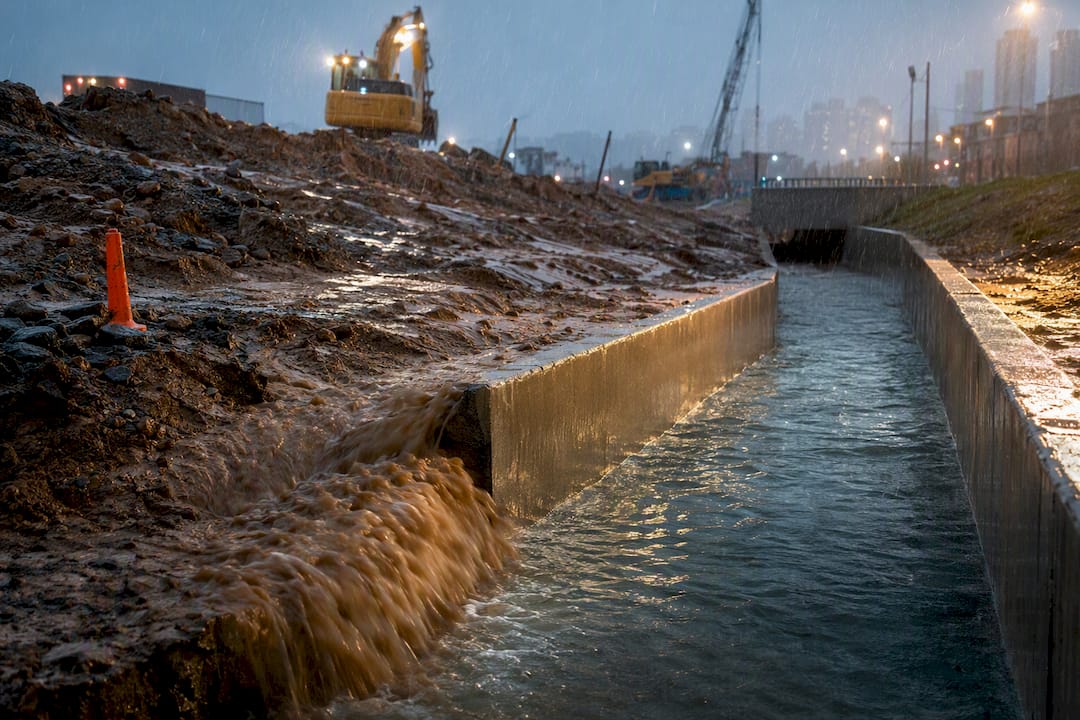

Why Your Architect and Engineer Need a Design for Safety Professional on the Team from Day One
The global construction sector represents a monumental pillar of the world economy, valued at approximately $14.4 trillion in 2022 and accounting for roughly 14.2% of global Gross Domestic Product (GDP).1
Current projections anticipate a steady annual growth rate of 6.2% through 2032, driven by massive infrastructure development, industrialization, and a surge in green construction initiatives.1
However, this economic powerhouse bears a catastrophic human and financial burden. The construction industry remains one of the world’s most dangerous occupations.
In 2022 alone, the United States recorded 1,092 fatalities in the construction sector, representing nearly 20% of all workplace deaths nationwide.3
Globally, the International Labor Organization estimates that at least 108,000 construction workers are killed on-site every year, constituting approximately 30% of all occupational fatal injuries.1
Historically, the architecture, engineering, and construction (AEC) industry has operated within a highly fragmented and adversarial ecosystem.5
Architects prioritize aesthetic vision, spatial functionality, and building code compliance; engineers focus on structural integrity and complex mechanical systems; and contractors are subsequently left to navigate the occupational hazards associated with bringing those designs to physical reality.7
This segmented approach—where design professionals create blueprints in isolation and pass them “over the wall” to builders—is fundamentally flawed.6
It creates a vacuum of accountability, fuels spiraling project costs, inflates professional liability insurance premiums, and perpetuates devastating human tragedies.6
A transformative paradigm shift is actively revolutionizing this landscape. Recognizing that reactive, on-site safety management relies on the weakest methods of hazard control, global legislative frameworks are aggressively enforcing a proactive strategy known internationally as Prevention through Design (PtD), Safety in Design (SiD), or Design for Safety (DfS).12
At the absolute core of this methodology is the mandatory integration of a Design for Safety Professional (DfSP), or a Principal Designer, into the project team from day one.15
The undisputed reality is that safety is no longer merely a compliance checkbox managed on the job site; it is a foundational, measurable design metric.
By embedding a Design for Safety Professional during the conceptual and feasibility phases, developers and construction management teams fundamentally engineer out hazards, unlock staggering financial returns, and shield design professionals from crippling legal liabilities.
The Economics of Early Intervention: Understanding the MacLeamy Curve
To fully comprehend why a Design for Safety Professional must be integrated at the very inception of a project, the economic principles governing architectural risk management must be analyzed.
This dynamic is best illustrated by the MacLeamy Curve, a conceptual framework formalized in 2004 by Patrick MacLeamy, which maps the life cycle of a construction project against the cost of design changes and the ability to influence final project outcomes.17
The MacLeamy Curve demonstrates a self-evident but frequently ignored truth: an architectural project becomes exponentially more difficult and expensive to alter as it progresses from conceptualization to physical construction.18
During the pre-design and schematic design phases, the ability to influence safety, cost, structural performance, and sustainability is at its absolute peak, while the financial cost of making design changes is practically negligible, as modifications occur purely in digital or paper formats.20
Conversely, once a project reaches the construction documentation phase or breaks ground, the ability to influence inherent safety plummets, and the financial penalty for mitigating hazards or issuing late-stage change orders skyrockets.20
| Project Lifecycle Phase | Ability to Influence Safety Outcomes | Cost of Design Modifications | Impact on Project Schedule |
| Conceptual / Pre-Design | Maximum (Highest Leverage) | Minimal (Digital/Paper alterations) | None |
| Detailed Design | High | Moderate (Coordination and redrawing) | Low |
| Pre-Construction | Low (Reactive planning and logistics) | High (Procurement delays, material costs) | High |
| Construction Execution | Lowest (Total reliance on PPE/Controls) | Maximum (Rework, demolition, severe delays) | Severe |
Traditional AEC workflows expend the vast majority of their intellectual effort and labor during the detailed design and construction documentation phases, precisely when changes begin to incur heavy premiums.18
A Design for Safety Professional forces a strategic “front-loading” of this effort.20
By applying safety-in-design principles during the earliest conceptual phases, the DfSP ensures that critical decisions are locked in when the design is most malleable.20
Research indicates that an estimated 42% of work-related accidents in construction projects can be directly attributed to architectural and engineering decisions made during the planning stage.24
European research similarly suggests that 60% of construction accidents could have been avoided or significantly mitigated by design alterations or pre-construction interventions.8
Waiting until the construction phase to address these structural risks forces general contractors and sub-contractors to rely on inferior administrative controls, temporary scaffolding, and personal protective equipment (PPE), which are universally recognized as the least effective measures in the hierarchy of hazard controls.14
By front-loading the safety analysis under the guidance of a DfSP, design errors caught early can prevent up to a 14% addition to total project costs caused by downstream waste and rework.20
The Global Legislative Landscape: Mandating Upstream Accountability
The imperative to hire a Design for Safety Professional has transcended voluntary best practices; in many of the world’s premier real estate and infrastructure markets, it is an inescapable statutory mandate.
Regulatory authorities have recognized that the traditional, reactive approach to construction safety has reached a plateau in curbing fatality rates, prompting a decisive legislative shift upstream toward the actual creators of the risk: the developers and the design teams.12
The United Kingdom: CDM 2015 and the Principal Designer
The United Kingdom has long been at the vanguard of occupational safety legislation. Driven by European Union Council Directive 92/57/EEC, the UK introduced the Construction (Design and Management) Regulations in 1994, which placed formal responsibilities on design professionals.27
These regulations were comprehensively overhauled and updated in April 2015 (CDM 2015), fundamentally revolutionizing project accountability by legally requiring the appointment of a Principal Designer on any project involving more than one contractor.16
The Principal Designer is a highly specialized role embedded within the design team, tasked specifically with planning, managing, monitoring, and coordinating health and safety during the pre-construction phase.15
Under the CDM 2015 framework, the client (or developer) bears the ultimate criminal and financial accountability for project safety, but the Principal Designer executes the critical, day-to-day duty of ensuring that all architects, structural engineers, and mechanical designers comply with safety regulations.13
The Principal Designer must actively identify and eliminate foreseeable risks to anyone affected by the work.32
If risks cannot be entirely eliminated, they must be reduced to levels that are “As Low As Reasonably Practicable” (ALARP).1
Furthermore, the Principal Designer is responsible for compiling the Pre-Construction Information (PCI) and the ultimate Health and Safety File, which details residual risks for the end-user and future maintenance teams.15
The UK’s stringent adherence to these upstream design regulations has yielded remarkable empirical results; the UK construction fatality rate is consistently a fraction of that seen in the United States, and in 2018, the UK’s standardized occupational fatality rate of 0.61 per 100,000 employees was among the lowest in all of Europe.1
Singapore: WSH (Design for Safety) Regulations 2015
Following a sequence of tragic construction accidents that highlighted the limitations of site-level safety management, Singapore’s Ministry of Manpower enacted the Workplace Safety and Health (Design for Safety) Regulations 2015, which came into full legal effect in August 2016.1
These rigorous regulations apply to all projects that meet three cumulative criteria: they must be undertaken by a developer in the course of business (exempting private homeowners), have a construction contract sum of S$10 million or greater, and fall under the definition of “development” in the Planning Act.12
Additionally, any modification carried out on a building that already possesses an existing DfS Register must comply, regardless of the contract value.12
Singapore’s framework mandates a cultural shift toward shared ownership of safety outcomes. It explicitly requires developers to ensure that foreseeable design risks are eliminated or reduced at the source.12
To accomplish this, developers are empowered under Regulation 8 to formally delegate specific procedural duties to a certified Design for Safety Professional (DfSP).12
The DfSP is an independent facilitator—frequently a registered architect or professional engineer who has completed mandatory Ministry of Manpower-accredited training—who bridges the chasm between design intent and construction reality.7
The DfSP orchestrates the mandatory GUIDE Process, a phased review system implemented throughout the project lifecycle:
- GUIDE-1 (Concept Design Review): Conducted during the schematic phase to eliminate high-level, systemic hazards. Decisions here might include adopting prefabricated volumetric construction to minimize high-risk work-at-height or selecting inherently safer structural forms.12
- GUIDE-2 (Detailed Design & Maintenance Review): A highly granular examination of specific building components, focusing on buildability and the long-term safety of cleaning, maintenance, and repair operations (e.g., analyzing facade access systems).12
- GUIDE-3 (Pre-Construction Review): Facilitating the formal, safe handover of design risk information to the appointed main contractor, ensuring that the contractor’s site-specific safety plans adequately account for the residual hazards the design team could not entirely eliminate.7
Throughout this process, the DfSP meticulously records all interventions in the DfS Register, a living legal document that tracks identified hazards, implemented mitigation measures, and remaining residual risks.11
This register must be handed over to the building owner or Management Corporation Strata Title (MCST) upon project completion, providing a vital safety blueprint for future facility managers, HVAC technicians, window cleaners, and eventual demolition crews.12
The United States and Australia: PtD and Safe Design
While the United States lacks a comprehensive, mandatory federal regulation akin to the UK’s CDM or Singapore’s DfS, the National Institute for Occupational Safety and Health (NIOSH) heavily advocates for the Prevention through Design (PtD) initiative.1
In the US, the construction industry accounts for 20% of all workplace fatalities despite representing only 5% of the workforce.4
The “Fatal Four” hazards—falls, struck-by incidents, electrocutions, and caught-in/between accidents—persistently dominate the statistics, with falls alone causing nearly 40% of construction deaths.4
The US framework relies primarily on voluntary consensus standards, such as the ANSI/ASSP A10.100 standard on PtD, and the economic leverage of major developers.25
Forward-thinking US developers and large corporations are increasingly demanding the inclusion of PtD specialists during the design phase to protect their capital investments, bypass costly litigation, and achieve specialized credentials like the LEED PtD pilot credits.25
In Australia, the concept is formalized as “Safe Design” or “Safety in Design” (SiD).14
Governed by comprehensive Work Health and Safety (WHS) laws and model codes of practice, Australian designers are legally obligated to proactively “design out” potential hazards, recognizing that design is a significant contributor to 37% of work-related fatalities in the country.14
Bridging the Imagination Gap: The DfSP’s Role in Collaborative Design
Architects and structural engineers are highly trained in their respective disciplines, but their academic curricula rarely include comprehensive instruction on construction site safety protocols, heavy crane logistics, or the granular realities of long-term facility maintenance.46
Furthermore, traditional design contracts and established legal precedents have historically encouraged a strict separation between the “studio” (the designer’s domain) and the “jobsite” (the contractor’s domain), breeding a culture where designers are hesitant to influence construction means and methods out of fear of assuming liability.9
This highly siloed approach creates a dangerous “imagination gap.” A structural engineer might design an intricate, sweeping roof truss that is mathematically sound and aesthetically striking, without realizing that its eventual installation requires ironworkers to perform high-risk welds while suspended 100 feet in the air without adequate, built-in tie-off points.48
The Design for Safety Professional eliminates this gap by injecting construction-phase realism into the conceptual studio environment.6
They do not usurp the architect’s creative vision; rather, they provide specialized parameters that guide the design toward safer execution.
Tangible Design Interventions and Case Studies
When a DfSP collaborates with the design team from day one, they facilitate tangible, physical design modifications that save lives, streamline construction, and reduce long-term operational expenditures 6:
- Facade, Roof Access, and Fall Prevention: Falls from elevation remain the leading cause of construction fatalities.50 A DfSP will advocate for designing minimum 42-inch parapet walls around all roof edges to serve as permanent, OSHA-compliant fall protection, completely eliminating the need for contractors to install and later remove temporary guardrails.22 Furthermore, they ensure the integration of built-in davit systems, horizontal lifelines, and embedded anchorages to support rope descent systems and Building Maintenance Units (BMUs) for future window washing and exterior facade repair.37
- MEP Systems Location and Access: Mechanical, Electrical, and Plumbing (MEP) coordination is historically fraught with spatial clashes and safety hazards.53 A DfSP will review MEP layouts to relocate heavy HVAC units, exhaust fans, or electrical distribution panels from high-risk rooftops, leading edges, or confined spaces down to ground-level mechanical rooms.22 This drastically reduces fall and electrocution risks for future maintenance personnel who must perform routine servicing.22
- Prefabrication and Modularization (DfMA): One of the most effective risk elimination strategies is Design for Manufacture and Assembly (DfMA).56 By recommending the use of shop-fabricated, pre-assembled structural steel modules or fully fitted bathroom pods, the DfSP shifts complex, high-risk construction work from a chaotic, weather-dependent job site to a highly controlled factory environment. This minimizes at-height work, reduces on-site labor density, and vastly improves quality control.23
- Industrial Ergonomics and the Tesla “Supertub”: While DfS is predominantly associated with commercial real estate, its principles are equally revolutionary within the high-stakes realm of industrial manufacturing facility design.58 Tesla Inc., operating at the vanguard of automotive technology, utilized PtD principles to combat a pervasive threat to their workforce: musculoskeletal injuries. Analyzing internal incident data, Tesla recognized that two-thirds of recorded injuries were caused by the repetitive motions and awkward postures demanded by the traditional vehicle assembly line.58 Rather than relying on reactive administrative controls like increased shift rotations, Tesla attacked the problem at the design source. Through intensive collaboration between ergonomics experts and engineering designers, they completely reimagined the architecture of the vehicle itself, designing the “Supertub”—a highly innovative, modular underbody.58 This foundational design alteration allowed production associates to stand comfortably erect while constructing the vehicle’s interior, eliminating dangerous repetitive bending. The implementation of this design resulted in an unprecedented 95% reduction in recordable injuries on that production line, while simultaneously boosting manufacturing quality and worker morale.58
The Human Factor: Cognitive Load and Psychological Well-being
A critical, yet frequently overlooked, dimension of architectural risk management is the profound psychological and cognitive toll that unsafe designs exact on the construction workforce.
The modern construction environment is inherently dynamic, complex, and chaotic.59
When designers rely entirely on general contractors to manage hazards through the use of administrative controls, complex fall-arrest harnesses, and an abundance of warning signage, they place an immense cognitive burden directly on the workers.14
Research into human factors psychology and cognitive load demonstrates that human information processing capacity is strictly finite.61
When construction workers are forced to navigate environments laden with multiple safety signs, complex procedures, and constant spatial awareness demands, their working memory becomes overloaded.59
High cognitive load directly correlates with delayed hazard identification, diminished situational awareness, and a sharp increase in human error—which is widely acknowledged as the primary cause of structural failures and job site fatalities.59
Studies on safety signage alone reveal that workers can typically recall only a fraction of the information presented to them, and excessive signage leads to cognitive overload and unsafe behaviors.61
Furthermore, the constant, daily exposure to high-risk environments and physical stressors exacts a severe toll on the mental health of construction workers. Recent studies indicate that construction workers suffer from depression, anxiety, and post-traumatic stress disorder at rates significantly higher than the general population.64
The industry grapples with alarming rates of substance abuse, and the suicide rate among male construction workers is considerably higher than the national average.4
The shame, stigma, and fear of negative job consequences often prevent these workers from seeking necessary psychiatric care.65
The Design for Safety Professional mitigates this escalating crisis at its absolute root. By physically “designing out” the hazard—such as installing permanent, secure stairs early in the construction sequence instead of forcing workers to use temporary ladders, or utilizing self-consolidating concrete to reduce exposure to debilitating noise and vibration—the DfSP permanently removes the cognitive and psychological stressor from the worker’s daily environment.22
A safer, more intuitive physical design directly fosters a healthier, more focused, and psychologically secure workforce.62
Shielding the Firm: Professional Liability and Insurance Premium Dynamics
In recent years, the legal and financial landscape for architectural and engineering firms has grown increasingly hostile.
The AEC industry is currently experiencing a massive surge in “social inflation” and “nuclear verdicts”—jury awards that far exceed typical economic damages, driven by a societal perception that large corporate entities and design firms should pay heavy penalties when catastrophic accidents occur.10
Consequently, Errors and Omissions (E&O) and Professional Indemnity (PI) insurance premiums for design professionals are skyrocketing, heavily impacting firm profitability.10
When catastrophic structural failures, project delays, or job site fatalities occur due to design flaws or inadequate safety planning, claimants and injured workers increasingly bypass the contractor’s limited workers’ compensation shield.
Instead, they target the deep pockets of the architecture and engineering firms through third-party tort claims, alleging negligent misrepresentation, design defects, or a breach of the professional standard of care.69
The Ultimate Defensive Strategy
Integrating a Design for Safety Professional is the most potent, proactive defensive mechanism a design firm can employ against the existential threat of professional liability claims.
- Establishing and Exceeding the Standard of Care: A professional liability policy is not an all-risk contract; it is a safety net that applies primarily when a firm fails to meet accepted industry standards or acts with unintentional neglect.71 By formally utilizing a DfSP and adhering to structured, auditable hazard analysis methodologies like the UK’s CDM pre-construction planning or Singapore’s GUIDE process, the design firm creates an immutable, legally defensible paper trail.12
- The DfS Register as a Legal Shield: The meticulous documentation contained within the DfS Register or Health and Safety File serves as concrete proof that the architects and engineers did not operate negligently.11 It demonstrates to regulatory bodies and courts that foreseeable risks were systematically identified, rigorously evaluated against the hierarchy of controls, and properly communicated to the downstream contractor.11 If a construction accident subsequently occurs because a contractor wilfully ignored or failed to manage the explicitly communicated residual risks, the design team is largely shielded from liability, as the responsibility clearly shifts back to the contractor’s execution of means and methods.14
- Premium Reductions and Underwriting Favorability: Insurance underwriters evaluate the risk profile of AEC firms based on their internal risk management protocols and claims history.73 Firms that consistently employ Design for Safety practices, maintain rigorous project checklists, and utilize digital safety coordination present a demonstrably lower risk profile.73 This proactive risk mitigation directly translates to competitive leverage during policy renewals, reduced PI insurance premiums, and the ability to confidently bid on larger, more complex megaprojects without exhausting coverage limits or being forced into restrictive run-off insurance scenarios.73
The Undeniable Financial ROI of Design for Safety
For developers, owners, and construction managers, the decision to invest in a DfSP during the conceptual phase is frequently scrutinized strictly under the lens of upfront capital expenditure.
However, exhaustive financial modeling, longitudinal studies, and industry research universally conclude that Design for Safety is not a sunk cost; it is a high-yield, strategic investment that protects project margins.78
The Core Financial Metrics and Multipliers
- The Return Multiplier: According to extensive data from the National Safety Council (NSC) and the Occupational Safety and Health Administration (OSHA), every $1 invested in robust safety and injury prevention programs yields a direct return of $2 to $6.79
Over 60 percent of chief financial officers report that investments in injury prevention return $2 or more, while highlighting productivity as the top benefit.81
- The Design-Phase Leverage (The 1:10 Ratio): When safety interventions are made during the design phase—capitalizing on the leverage illustrated by the MacLeamy Curve—the financial return is exponentially greater. Industry data suggests a 1:10 ratio, where $1 spent on early Design for Safety coordination saves up to $10 in downstream rectification, change orders, and operational delays.79
- The True Cost of Incidents: The economic burden of a single workplace incident is catastrophic and far-reaching. The average direct cost of a workplace fatality is estimated at $1.46 million, while non-fatal disabling injuries average over $43,000 each.40 However, indirect costs—including litigation, regulatory fines, schedule delays, worker replacement, damaged equipment, and severe reputational damage—multiply that direct cost figure by up to 17 times.4 The Construction Safety Research Alliance (CSRA) provides a stark metric: a single medical treatment case can trigger a 3.68% reduction in a firm’s overarching financial value in the subsequent quarter, meaning a single incident could cost a $10 million firm $368,000 in lost value.78
Operational Excellence and Schedule Predictability
Beyond preventing human tragedy, a DfSP ensures operational efficiency and timeline fidelity. Projects optimized for buildability experience drastically fewer site shutdowns, safety investigations, and regulatory stop-work orders.79
Research conducted by the Construction Industry Institute (CII) demonstrates that projects maintaining zero recordable injuries complete, on average, 10% faster and 5% under budget.85
Furthermore, an exemplary safety record significantly lowers a contractor’s Experience Modification Rate (EMR). A lower EMR directly slashes workers’ compensation insurance premiums, often saving hundreds of thousands of dollars.83
This clean safety record, backed by digital reporting data, builds immense client trust and provides a massive bidding advantage, enabling the firm to win lucrative public infrastructure and private enterprise contracts that routinely disqualify high-risk bidders.77
| Financial Metric | Traditional Reactive Approach | DfS / Early Engagement Approach |
| Cost of Design Changes | Exponentially High (During physical construction) | Extremely Low (During digital design phase) 79 |
| Accident Burden | Direct + Indirect Costs (Up to 17x direct costs) 84 | Minimized through source-risk elimination 79 |
| Project Schedule | Highly prone to regulatory delays & Stop-Work Orders | Highly predictable; optimized via 4D BIM 79 |
| Insurance & Liability | High (Elevated EMR, soaring PI rates, litigation risk) | Reduced premiums; preferred underwriter status 79 |
Technological Synergy: BIM, Automation, and the Future of DfS
The modern Design for Safety Professional does not rely solely on 2D blueprints, manual spreadsheets, or siloed risk registers; they are armed with sophisticated digital infrastructure.
Building Information Modeling (BIM) has emerged as the ultimate catalyst for PtD methodologies, transforming abstract safety concepts into visualized, highly quantifiable data that can be analyzed collaboratively by the entire project team.86
Automated Rule Checking and Clash Detection
During the detailed design phase, DfSPs utilize advanced BIM coordination platforms to audit the structural and architectural models. Software such as Solibri specializes in rule-based model validation and rigorous quality assurance.
Solibri can automatically ingest OpenBIM formats like IFC (Industry Foundation Classes) and run thousands of algorithmic checks to verify compliance with local building codes, identify egress and fire safety deficiencies, and ensure adequate spatial clearances for future maintenance access.88
Simultaneously, platforms like Autodesk Navisworks allow the DfSP to aggregate complex architectural, structural, and MEP models into a single, federated 3D environment to perform rigorous clash detection.89
By identifying spatial conflicts digitally—such as a massive HVAC duct intersecting with a critical structural beam, or electrical conduits routed through high-water-risk zones—the project team resolves the issue in the digital studio for pennies.
Catching these errors early prevents discovering them on the job site, where a fix could cost tens of thousands of dollars, delay the schedule, and expose workers to ad-hoc, high-risk maneuvers.53
4D BIM and Artificial Intelligence (2025-2027 Outlook)
The evolution of 4D BIM—which integrates the project scheduling timeline directly with the 3D spatial model—allows the DfSP and the principal contractor to simulate the entire construction sequence chronologically before a single shovel strikes the earth.86
This virtual rehearsal highlights transient, time-based hazards, such as overlapping crane swing radiuses, sequencing clashes between specialized trades working in the same zone, or identifying the precise moment when temporary edge protection must be installed.93
Looking toward the immediate future (2026 and 2027), the integration of Artificial Intelligence (AI) will further supercharge the DfSP’s capabilities.94
AI-powered plugins and autonomous agents will cross-reference historical accident data, unstructured permit documents, and municipal building codes against live BIM environments.60
These systems will automatically flag high-risk design elements, predict safety risk forecasting, and suggest safer alternative materials or prefabricated assemblies through generative design optimization—drastically reducing engineering hours and fortifying regulatory compliance.97
Overcoming Resistance: Change Management in AEC Firms
Despite the overwhelming empirical evidence supporting the life-saving, financial, and legal benefits of Design for Safety, universal adoption remains hindered by entrenched industry inertia and cultural resistance within owner organizations and design firms.99
Architects and engineers frequently resist adopting DfS due to two primary misconceptions: the fear that formally considering construction safety implies a legal assumption of liability for job site accidents, and the belief that DfS stifles aesthetic creativity while inflating initial design costs and schedules.101
The DfSP acts as a vital change agent, educator, and diplomat to overcome this organizational resistance.58
By guiding the team through standardized, legally sound workflows (like the UK’s Principal Designer duties or Singapore’s GUIDE framework), the DfSP proves that documenting risk actually mitigates legal exposure rather than inviting it, clearly delineating the boundaries of responsibility.11
Furthermore, they demonstrate that true architectural excellence is not compromised by safety; rather, safety parameters act as design constraints that spur highly innovative engineering solutions, such as unitized curtain walls, automated access systems, or integrated aesthetic louvers that seamlessly double as fall protection.58
To successfully implement DfS and overcome resistance to technological and process changes, executive leadership within construction companies and architectural firms must provide visible organizational support, mandate early collaboration, and utilize the DfSP to normalize safety as a core performance metric—placing it on equal footing with sustainability, aesthetics, and budget.100
Marketing the Safety-First Firm: A Digital Strategy for AEC Growth
In the contemporary digital landscape, progressive construction companies and architectural studios are recognizing that their commitment to Design for Safety is not merely a risk mitigation tool or a regulatory burden—it is a powerful competitive differentiator and a foundational pillar for robust digital marketing and Search Engine Optimization (SEO).85
When commercial developers, government agencies, and high-net-worth clients search for partners online, they prioritize reliability, comprehensive risk management, and schedule adherence.
AEC firms that prominently feature their PtD and DfS methodologies can capture highly qualified, intent-driven traffic.106
By optimizing their digital presence with targeted long-tail keywords—such as commercial construction project management, architectural risk management, custom home builders, and sustainable building materials for eco-friendly construction—firms can position themselves as industry authorities.108
High-volume search terms like construction companies (110,000 monthly searches), builders warehouse near me (74,000 searches), and home remodeling (27,100 searches) are incredibly competitive and often yield broad, low-intent traffic.107
However, by weaving in niche, solution-oriented topics and keyword clusters (e.g., “How our Design for Safety process reduces commercial building costs” or “eco-friendly home design architect”), firms bypass the noise and attract savvy, high-value decision-makers who understand the profound financial value of proactive planning.108
Publishing detailed case studies and blog posts outlining how BIM clash detection, automated rule checking, or specific PtD interventions saved project capital, accelerated timelines, and protected workers builds immediate, undeniable trust.
It transforms an abstract compliance requirement into a highly tangible value proposition, proving to prospective clients that the firm rigorously protects both human life and the financial bottom line.108
Conclusion
The era of designing buildings in an isolated vacuum and leaving the perilous realities of construction and maintenance entirely to the contractor is unequivocally over.
The integration of a Design for Safety Professional—whether fulfilling the strict statutory duties of a UK Principal Designer, navigating the highly structured Singaporean WSH GUIDE process, or spearheading innovative US Prevention through Design initiatives—is an absolute, uncompromising necessity for modern architectural and engineering teams.
By intelligently leveraging the economics of the MacLeamy Curve, a DfSP transforms the earliest conceptual design phases into a powerful engine of risk elimination.
They bridge the critical imagination gap between the pristine design studio and the chaotic job site, utilizing sophisticated BIM coordination, automated clash detection, and emerging AI tools to construct and audit the building digitally before a single shovel strikes the earth.
The dividends of this Day One collaboration are profound and multi-faceted.
It drastically reduces the cognitive load, psychological stress, and catastrophic physical risks imposed on the construction workforce, fundamentally protecting human life.
Concurrently, it yields an undeniable, massive financial ROI by slashing insurance premiums, accelerating construction schedules, minimizing costly rework, and shielding design professionals from the existential threat of nuclear litigation.
Ultimately, integrating a Design for Safety Professional is not merely a regulatory burden to be managed; it is the ultimate, proven blueprint for delivering profitable, ethical, and operationally flawless infrastructure in the 21st century.
Works cited
- An Update on Global Comparisons of Design for Construction Safety and Health among the United Kingdom, Singapore, South Korea, a – ISOES, accessed March 8, 2026, https://isoes.info/wp-content/uploads/2025/03/Choi22024.pdf
- COMPARISONS OF PTD/DFCS APPROACHES BETWEEN US VS. UK CONSTRUCTION SECTORS . NORA SECTOR COUNCIL MEETING NOVEMBER 16 -17, 2022 – CPWR, accessed March 8, 2026, https://www.cpwr.com/wp-content/uploads/PR-NORA24-Choi-PTD_Update.pdf
- PtD to Address Continuing Construction Workplace Deaths and Injuries – CDC, accessed March 8, 2026, https://www.cdc.gov/niosh/bulletin/2024/ptd-construction.html
- 34 Key Construction Safety Statistics | Procore, accessed March 8, 2026, https://www.procore.com/library/construction-safety-statistics
- Safety in Design – Australian Constructors Association, accessed March 8, 2026, https://www.constructors.com.au/wp-content/uploads/2019/11/Safety-in-Design-August-2014.pdf
- How Architects and Engineers Collaborate for Efficient Design – Resource Options, Inc., accessed March 8, 2026, https://www.resourceoptions.com/how-architects-and-engineers-collaborate-for-efficient-design/
- Guidelines on Design for Safety in Buildings and Structures, accessed March 8, 2026, https://designforconstructionsafety.org/wp-content/uploads/2018/05/dfs-in-buildings-and-structures-guidelines-nov-08-singapore.pdf
- Collaboration in Design to Promote Construction Safety – eLCOSH, accessed March 8, 2026, https://elcosh.org/document/1263/d000765/Collaboration+in+Design+to+Promote+Construction+Safety.html
- How do architects integrate safety into their designs, and what measures are most effective in preventing construction accidents? – Reddit, accessed March 8, 2026, https://www.reddit.com/r/Architects/comments/17ql45e/how_do_architects_integrate_safety_into_their/
- Legal Brief: Expanding liability for design professionals: The hits just keep coming | ASCE, accessed March 8, 2026, https://www.asce.org/publications-and-news/civil-engineering-source/civil-engineering-magazine/article/2023/08/expanding-liability-for-design-professionals-the-hits-just-keep-coming
- The Ultimate Guide to the Design for Safety Professional (DFSP) in Singapore’s Construction Sector, accessed March 8, 2026, https://mosaicsafety.com.sg/the-ultimate-guide-to-the-design-for-safety-professional-dfsp-in-singapores-construction-sector/
- WSH (Design for Safety) Regulations 2015: A Guide for Developers and Designers, accessed March 8, 2026, https://mosaicsafety.com.sg/wsh-design-for-safety-regulations-2015-a-guide-for-developers-and-designers/
- All you need to know about the new CDM Regulations – Fenwick Elliott, accessed March 8, 2026, https://www.fenwickelliott.com/research-insight/newsletters/insight/45
- Safety in Design for Construction Projects: Laws, Tools, and Examples – Mastt, accessed March 8, 2026, https://www.mastt.com/guide/safety-in-design
- CDM 2015 principal designer duties – Designing Buildings, accessed March 8, 2026, https://www.designingbuildings.co.uk/wiki/CDM_2015_principal_designer_duties
- Principal Contractor vs Principal Designer: key differences CDM 2015 (UK), accessed March 8, 2026, https://paperlessconstruction.co.uk/2026/02/19/differences-between-a-principle-contractor-and-principle-designer/
- How Preconstruction Decisions Impact Project Outcomes – Join, accessed March 8, 2026, https://join.build/news/how-to-preconstruction-decisions-impact-project-outcomes/
- The MacLeamy curve – Daniel Davis, accessed March 8, 2026, https://www.danieldavis.com/macleamy/
- The Macleamy Curve (2004) | Download Scientific Diagram – ResearchGate, accessed March 8, 2026, https://www.researchgate.net/figure/The-Macleamy-Curve-2004_fig3_266054953
- Why Early Design Decisions Make or Break Construction Outcomes – Tektome, accessed March 8, 2026, https://tektome.com/expertise-center/blog/early-design-decisions
- Optimizing Early Design Process Decision Making Through Effective Problem Framing, accessed March 8, 2026, https://www.acsa-arch.org/proceedings/Intersections%20Proceedings/ACSA.AIA.Inter.16/ACSA.AIA.Inter.16.4.pdf
- Prevention through Design in the Construction Industry – Building Innovation Conference, accessed March 8, 2026, https://www.buildinginnovation.org/sites/default/files/presentations/Prevention-Through-Design.pdf
- Designing for Safety: A Team Sport – Claims and Litigation Management Alliance, accessed March 8, 2026, https://www.theclm.org/File/Download?type=10&filename=108fc0cd352-d399-450d-a37b-b98576bc2a80.pdf&userFileName=108.pdf..pdf
- Analysis of design-for-safety implementation factors in the Indonesian construction industry: A two-staged SEM-artificial neural network approach – PMC, accessed March 8, 2026, https://pmc.ncbi.nlm.nih.gov/articles/PMC10628681/
- comparisons of ptd/dfs approaches between us vs uk construction sectors – CPWR, accessed March 8, 2026, https://www.cpwr.com/wp-content/uploads/PR-NORA22-Choi-PTD_DFS_Approaches_US_UK.pdf
- Workplace Safety and Health Guidelines – Design for Safety, accessed March 8, 2026, https://www.tal.sg/wshc/-/media/tal/wshc/resources/publications/wsh-guidelines/files/wsh-guidelines-design-for-safety.pdf
- Final Report – Activity 2: Assess the Effects of PtD Regulations on Construction Companies in the UK – Prevention through Design, accessed March 8, 2026, https://designforconstructionsafety.org/wp-content/uploads/2017/07/niosh-ptd-in-the-uk-final-report-may-2013.pdf
- Beyond borders – comparing UK and Irish regulations for construction safety – Cairn Risk Consulting, accessed March 8, 2026, https://cairnrisk.com/wp-content/uploads/BEYOND-BORDERS-TECHNICAL-PAPER-CAIRN-RISK.pdf
- A Complete Guide To The Construction (Design And Management) Regulations 2015 (CDM 2015) – CHAS, accessed March 8, 2026, https://www.chas.co.uk/blog/cdm-regulations-complete-guide/
- The Principal Designer Role, Duties And Responsibilities – HASpod, accessed March 8, 2026, https://www.haspod.com/blog/cdm/principal-designer-role-duties-responsibilities
- Design and building work: meeting building requirements – GOV.UK, accessed March 8, 2026, https://www.gov.uk/guidance/design-and-building-work-meeting-building-requirements
- Principal designers: roles and responsibilities – HSE, accessed March 8, 2026, https://www.hse.gov.uk/construction/cdm/2015/principal-designers.htm
- Designers: roles and responsibilities – Construction – HSE, accessed March 8, 2026, https://www.hse.gov.uk/construction/cdm/2015/designers.htm
- CDM 2015 – The principles of a principled Principal Designer – Cairn Risk Consulting, accessed March 8, 2026, https://cairnrisk.com/knowledge_bank/cdm-2015-the-principles-of-a-principled-principal-designer/
- Workplace Safety and Health Guidelines – Prevention through Design, accessed March 8, 2026, https://designforconstructionsafety.org/wp-content/uploads/2018/05/wsh_guidelines_design_for_safety1.pdf
- About Design for Safety, accessed March 8, 2026, https://www.tal.sg/wshc/topics/design-for-safety/about-design-for-safety
- Design and Load Testing of Façade Access Equipment – Wiss, Janney, Elstner Associates, accessed March 8, 2026, https://www.wje.com/assets/pdfs/articles/WJE-Design-and-Load-Testing-of-Facade-Access-Equipment.pdf
- Prevention through Design Program | Research Programs – CDC, accessed March 8, 2026, https://www.cdc.gov/niosh/research-programs/portfolio/ptd.html
- Design for Construction Safety Instructor Guide | OSHA, accessed March 8, 2026, https://www.osha.gov/sites/default/files/training-library_DfCSInstructorGuide.pdf
- Construction Site Safety: Trends, Data & How to Improve Outcomes with Software – Blog, accessed March 8, 2026, https://blog.ftq360.com/safety/construction-site-safety-2025-trends-solutions
- Safety in Design: The Next Frontier in Design Processes – Antea Group, accessed March 8, 2026, https://us.anteagroup.com/news-events/blog/key-elements-of-safety-in-design
- Research – Prevention through Design (PtD) Resources – CPWR, accessed March 8, 2026, https://www.cpwr.com/research/prevention-through-design-resources/
- Owners’ Role in Facilitating Designing for Construction Safety – CDC Stacks, accessed March 8, 2026, https://stacks.cdc.gov/view/cdc/214991/cdc_214991_DS1.pdf
- Key attributes of designers’ competency for prevention through design (PtD) practices in construction: a review – Emerald Publishing, accessed March 8, 2026, https://www.emerald.com/insight/content/doi/10.1108/ECAM-04-2020-0252/full/html
- International Guidelines – Prevention through Design, accessed March 8, 2026, https://designforconstructionsafety.org/international-guidelines/
- Design Tools – Prevention through Design, accessed March 8, 2026, https://designforconstructionsafety.org/design-tools/
- Investigation of the Viability of Designing for Safety – CPWR, accessed March 8, 2026, https://www.cpwr.com/wp-content/uploads/krgambatese.pdf
- Interim* Fall Prevention Checklist for Architects and Design Engineers – CPWR, accessed March 8, 2026, https://www.cpwr.com/wp-content/uploads/Interim-NORA-PtD-checklist-for-Falls.pdf
- Research: The Power of Collaboration – PMC, accessed March 8, 2026, https://pmc.ncbi.nlm.nih.gov/articles/PMC4608861/
- Prevention through Design Toolkit for the Construction Industry – CDC, accessed March 8, 2026, https://www.cdc.gov/niosh/docs/2024-124/pdfs/2024-124.pdf?id=10.26616/NIOSHPUB2024124
- Façade Access Design Guide – Building and Construction Authority (BCA), accessed March 8, 2026, https://www1.bca.gov.sg/docs/default-source/dfm/fa%C3%A7ade-access-design-guide-(fadg).pdf?sfvrsn=2e18f993_0
- Prioritizing Safety of Building Façade Access and Fall Protection – Valcourt Group, accessed March 8, 2026, https://valcourt.group/blog/prioritizing-safety-of-building-facade-access-and-fall-protection/
- The Complete Architect Design Checklist for MEP Engineering Projects, accessed March 8, 2026, https://www.ny-engineers.com/blog/the-complete-architect-design-checklist-for-mep-engineering-projects
- MEP Coordination Checklist: A Comprehensive Guide – MaRS BIM Solutions, accessed March 8, 2026, https://www.marsbim.com/mep-coordination-checklist-a-comprehensive-guide/
- 51 Safety Topics and Messages for Work – AlertMedia, accessed March 8, 2026, https://www.alertmedia.com/blog/safety-talks/
- Reference Materials – Construction Industry Council, accessed March 8, 2026, https://www.cic.hk/content/dam/dfs/docs/dfs-reference-materials.pdf
- Guide to Appointing a Design for Safety Professional (DFSP) in Singapore: Navigating the WSH (DfS) Regulations – MOSAIC Eco-construction Solutions Pte Ltd, accessed March 8, 2026, https://mosaicsafety.com.sg/guide-to-appointing-a-design-for-safety-professional-dfsp-in-singapore-navigating-the-wsh-dfs-regulations/
- 5 Ways a DfS Consultant Streamlines Your Construction Process, accessed March 8, 2026, https://mosaicsafety.com.sg/5-ways-a-dfs-consultant-streamlines-your-construction-process/
- 1 Working-Memory Load as a Factor Determining the Safety Performance of Construction Workers ABSTRACT Cognitive processes have b – NSF PAR, accessed March 8, 2026, https://par.nsf.gov/servlets/purl/10144178
- Systematic Literature Review on Knowledge-Driven Approaches for Construction Safety Analysis and Accident Prevention – MDPI, accessed March 8, 2026, https://www.mdpi.com/2075-5309/14/11/3403
- The Cognitive Load Limits of Multiple Safety Signs – MDPI, accessed March 8, 2026, https://www.mdpi.com/2075-5309/14/8/2391
- 80. Human Factors Psychology and Workplace Design – Open Text WSU, accessed March 8, 2026, https://opentext.wsu.edu/ospsychrevisions/chapter/human-factors-psychology-and-workplace-design/
- Critical Human and Organizational Factors for Structural Safety in the Dutch Construction Industry – PMC, accessed March 8, 2026, https://pmc.ncbi.nlm.nih.gov/articles/PMC11869801/
- Only 20% of Construction Workers Report Injuries Linked to Mental Distress, accessed March 8, 2026, https://constructionexec.com/article/only-20-of-construction-workers-report-injuries-linked-to-mental-distress/
- Mental Health and Well-being in the Construction Industry, accessed March 8, 2026, https://workplacementalhealth.org/employer-resources/guides-and-toolkits/mental-health-and-well-being-in-the-construction-i
- Checklist for Design Engineers and Architects – Residen al Construc on [DRAFT v5 09‐13‐23 DSCHUTT] Consid – CPWR, accessed March 8, 2026, https://www.cpwr.com/wp-content/uploads/PtD_checklist-residential-draft.pdf
- Risk and Causative Factors of Psychological Harm Among Construction Workers: A Systematic Review – PMC, accessed March 8, 2026, https://pmc.ncbi.nlm.nih.gov/articles/PMC12022379/
- What Engineers Should Know About Design Errors and Liability – CI Solutions, accessed March 8, 2026, https://cisolutionsdc.com/what-engineers-should-know-about-design-errors-and-liability/
- Design Defects and Personal Liability: When Can Architects and Engineers Be Held Personally Liable? – McLennan Ross, accessed March 8, 2026, https://www.mross.com/what-we-think/post/alberta-construction-law-blog/design-defects-and-personal-liability
- Construction Site Injuries Who’s Responsible – Smith & Johnson Attorneys, accessed March 8, 2026, https://www.smith-johnson.com/blog/construction-site-injuries-whos-responsible.html
- Six Ways to Reduce Risk – Pro-Demnity – Architect Liability Insurance, accessed March 8, 2026, https://prodemnity.com/six-ways-to-reduce-risk/
- Design for Safety (DfS) – About – Construction Industry Council, accessed March 8, 2026, https://www.cic.hk/content/dfs/en/about.html
- Professional Liability Trends Every Design Professional Should Know, accessed March 8, 2026, https://www.nspe.org/career-growth/pe-magazine/issue-1-2025/professional-liability-trends-every-design-professional
- Top 5 in ’25 Management Practices for Architect & Engineering Firms to Reduce Professional Liability Claims – Great American Insurance Group, accessed March 8, 2026, https://www.greatamericaninsurancegroup.com/content-hub/news-details/top-5-in-25-management-practices-for-architect-engineering-firms-to-reduce-professional-liability-claims
- Understanding Run-Off Insurance for Architects – Financial Services – AJG.com, accessed March 8, 2026, https://specialty.ajg.com/financial-services/understanding-run-off-insurance-for-architects
- Construction in 2025: Emerging Risks & Solutions | CBIZ, accessed March 8, 2026, https://www.cbiz.com/insights/article/construction-in-2025-emerging-risks-solutions
- How to Measure ROI of Construction Safety Beyond Fewer Incidents – Teknobuilt, accessed March 8, 2026, https://www.teknobuilt.com/how-to-measure-roi-of-construction-safety-beyond-fewer-incidents/
- The ROI of Investing in Safety on Construction Projects – myComply, accessed March 8, 2026, https://mycomply.net/info/blog/roi-of-investing-in-safety-on-construction-projects/
- Design for Safety in Construction: Uncovering Long-Term Cost Savings (Hidden ROI), accessed March 8, 2026, https://mosaicsafety.com.sg/design-for-safety-in-construction-uncovering-long-term-cost-savings-hidden-roi/
- How Safety Programs Improve Workplace Efficiency & ROI | CBIZ, accessed March 8, 2026, https://www.cbiz.com/insights/article/how-safety-programs-can-improve-your-bottom-line-property-casualty
- Business Case for Safety and Health – Overview – OSHA, accessed March 8, 2026, https://www.osha.gov/businesscase
- The ROI of Safety: Building a Safety Culture in the Workplace – Actalent, accessed March 8, 2026, https://www.actalentservices.com/en/insights/articles/building-a-workplace-safety-culture
- The Hidden ROI of Investing in Contractor Safety Training – YellowBird, accessed March 8, 2026, https://www.goyellowbird.com/blog/the-hidden-roi-of-investing-in-contractor-safety-training
- The ROI of Safety (with infographic) | June 2014, accessed March 8, 2026, https://www.safetyandhealthmagazine.com/10414-the-roi-of-safety/
- Building Cost-Effective Safety Program: Calculating ROI – SafetyPro Resources, accessed March 8, 2026, https://www.safetyproresources.com/blog/building-cost-effective-safety-program-calculating-roi
- Integrating Building Information Modelling and Health and Safety Design Phase – BIM Safe, accessed March 8, 2026, https://guidance.bimsafe.nz/wp-content/uploads/2024/07/BIMSafe-Report_Design_final.pdf
- Challenges and Benefits of Using BIM Technologies to Improve Construction Safety: An Exploratory Case Study – Purdue e-Pubs, accessed March 8, 2026, https://docs.lib.purdue.edu/cgi/viewcontent.cgi?article=1028&context=cib-conferences
- Solibri | BIM software for architects, engineers and construction, accessed March 8, 2026, https://www.solibri.com/
- Solibri Vs Autodesk Navisworks: What BIM Coordinators and Engineers Should Know?, accessed March 8, 2026, https://www.novatr.com/blog/solibri-vs-autodesk-navisworks-what-bim-coordinators-and-engineers-should-know
- Design-Build and BIM: A Perfect Match – Solibri, accessed March 8, 2026, https://www.solibri.com/articles/design-build-and-bim-a-perfect-match
- Solibri or Navisworks | Autodesk University, accessed March 8, 2026, https://www.autodesk.com/autodesk-university/class/Solibri-or-Navisworks-2017
- The True Value of Clash Detection: A Detailed Return on Investment (ROI) Case Study, accessed March 8, 2026, https://dbia.org/blog/the-true-value-of-clash-detection-a-detailed-return-on-investment-roi-case-study/
- Construction Managers Embrace 4D BIM for Safety – Solibri, accessed March 8, 2026, https://www.solibri.com/articles/construction-managers-embrace-4d-bim-safety
- AI Building Blocks for Construction: From Agents to Automation and Integration – BuiltWorlds, accessed March 8, 2026, https://builtworlds.com/news/ai-building-blocks-construction-agents-automation-integration/
- 2026 AI Construction Trends: 25+ Experts Share Insights – Digital Builder – Autodesk, accessed March 8, 2026, https://www.autodesk.com/blogs/construction/2026-ai-trends-25-experts-share-insights/
- A Design for Safety (DFS) Framework for Automated Inspection Risks in Metro Stations by Integrating a Knowledge Base and Building Information Modeling – PubMed, accessed March 8, 2026, https://pubmed.ncbi.nlm.nih.gov/36981674/
- AI Construction Compliance: 2026 Regulatory Tech Shift | Buildcheck, accessed March 8, 2026, https://buildcheck.ai/insights-case-studies/ai-construction-compliance-2026-regulatory-tech-shift
- AI Agents for Construction: Key Statistics and Trends – Datagrid, accessed March 8, 2026, https://datagrid.com/blog/ai-agent-construction-statistics
- Overcoming resistance to change in engineering and construction: Change management factors for owner organizations – ResearchGate, accessed March 8, 2026, https://www.researchgate.net/publication/271448451_Overcoming_resistance_to_change_in_engineering_and_construction_Change_management_factors_for_owner_organizations
- A Framework for Assessing Strategies to Combat Individuals’ Resistance to Technological Innovation in the Construction Industry – ASCE Library, accessed March 8, 2026, https://ascelibrary.org/doi/10.1061/9780784483978.099
- Designing safety – Safety+Health Magazine, accessed March 8, 2026, https://www.safetyandhealthmagazine.com/designing-safety-2/
- Investigation of the Viability of Designing for Safety – eLCOSH, accessed March 8, 2026, https://elcosh.org/document/1892/d000693/investigation-of-the-viability-of-designing-for-safety.html
- Safety and Compliance in Modern Building Design – Facade Access Solutions, accessed March 8, 2026, https://www.facadeaccesssolutions.com/nam/news/ensuring-safety-and-compliance-in-modern-building-design-with-integrated-design-solutions/
- Overcoming Resistance To BIM: Aligning A Change Management Method with A BIM Implementation Strategy – Arrow@TU Dublin, accessed March 8, 2026, https://arrow.tudublin.ie/cgi/viewcontent.cgi?article=1004&context=schmuldistcap
- 31 Construction Slogans That Hammer Home Your Message – Wix.com, accessed March 8, 2026, https://www.wix.com/blog/construction-slogans
- Long-Tail Keywords: The Ultimate Guide for 2026 – Yotpo, accessed March 8, 2026, https://www.yotpo.com/blog/long-tail-keywords-guide/
- The Best SEO Keywords for Construction – SEOpital, accessed March 8, 2026, https://www.seopital.co/blog/seo-keywords-for-construction
- The Best SEO Keywords for Achitects – SEOpital, accessed March 8, 2026, https://www.seopital.co/blog/seo-keywords-for-architects
- Long-Tail Keywords to Win Niche Construction Projects | Gorilla Marketing, accessed March 8, 2026, https://gorilla.marketing/search-marketing/construction-companies/long-tail-keywords-to-win-niche-construction-projects/
- SEO for Construction Companies [Dead Simple Guide] – Padula Media, accessed March 8, 2026, https://padulamedia.com/seo-for-construction-companies/
- Free SEO Keyword Research – 50 Most Popular Keywords for Construction Companies & Where to Use Them – Digital Success Blog, accessed March 8, 2026, https://www.digitalsuccess.us/blog/free-seo-keyword-research-50-most-popular-keywords-for-construction-companies-where-to-use-them.html
- 10 Best Long Tail Keyword Examples Revealed – Topic Ranker Blog, accessed March 8, 2026, https://blog.topicranker.com/what-are-long-tail-keywords/
- SEO Trends for 2025: What Construction Companies Should Watch, accessed March 8, 2026, https://constructiondigitalmarketing.com/seo/seo-trends-for-what-construction-companies-should-watch/
15+ Architect’s Blog Topics for High-Value Client SEO Framework – Adswom, accessed March 8, 2026, https://adswom.com/blogging-topics-for-architecture-seo/