
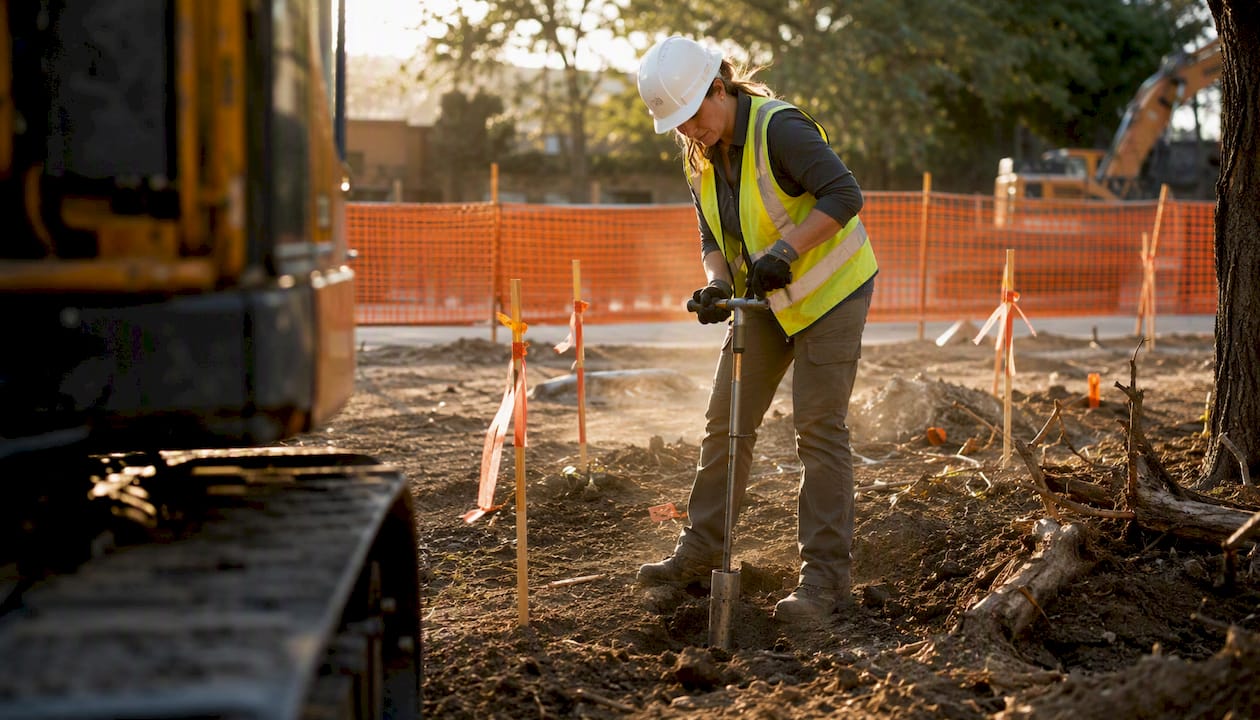
An Environmental Impact Assessment ensures decision-makers account for environmental risks and design effective mitigation before a project proceeds. Defined by the Water Knowledge Hub as a systematic process of identifying, predicting, evaluating, and mitigating environmental, socio-economic, and other impacts of a proposed project prior to decisions being taken, the EIA is the central mechanism through which responsible project development is distinguished from speculative construction.
Two reference points frame the EIA’s authority:
- The Urban Redevelopment Authority (URA) and equivalent competent authorities worldwide require EIA studies to inform planning decisions that balance development needs with nature conservation, making regulatory approval contingent on credible assessment.
- The Environmental Protection Agency (EPA Ireland) formalizes the Environmental Impact Assessment Report (EIAR) as the developer-prepared document a competent authority uses during permitting evaluation, establishing a direct link between assessment quality and approval outcomes.
The article unpacks when an EIA is legally triggered, what a rigorous assessment looks like across its five core stages, and how project teams can translate findings into permit conditions and adaptive management frameworks.
Key Takeaways
An EIA’s value is determined by the rigor of its execution and its integration into project design, not by the existence of a report.
| Point | Details |
|---|---|
| Commission EIA at concept stage | Front-end loading of environmental findings into design reduces redesign costs and permitting delays. |
| Verify regulatory triggers early | Check project type, scale, and site sensitivity against the competent authority’s threshold schedule before scoping. |
| Judge quality by methodology | High-quality EIAs demonstrate defensible baseline sampling, rigorous predictive methods, and a monitored mitigation plan. |
| Treat monitoring as a legal obligation | Permit conditions convert EIAR recommendations into enforceable requirements; adaptive management must be built into site operations. |
| MOSAIC Ecoconstruction Solutions | Provides QES consultancy that integrates EIA findings into safety audits, risk management plans, and compliance documentation for construction projects. |
Table of Contents
- What is an environmental impact assessment?
- Why conduct an EIA? The core purposes and benefits
- When is an EIA required?
- How does the EIA process work? The five core stages
- What separates a high-quality EIA from a superficial one?
- What drives EIA timelines and costs?
- Who participates in an EIA and what does each party do?
- How do EIA findings translate into mitigation and monitoring?
- What does research say about EIA integrity and outcomes?
- Applying EIA thinking to construction project delivery
- MOSAIC Ecoconstruction Solutions: EIA-aligned QES support for construction projects
- Sources
What is an environmental impact assessment?
The Water Knowledge Hub definition is precise: an EIA is a structured, pre-decision process of identifying, predicting, evaluating, and mitigating the environmental, socio-economic, and health effects of a proposed project. It is not a post-construction audit, nor is it limited to ecological surveys.
Scope is broader than many project teams initially expect. The RSPB’s overview confirms that an EIA covers factors well beyond biodiversity, including:
- Air quality and noise
- Surface water and groundwater hydrology
- Socio-economic effects on communities
- Cumulative and indirect impacts across project phases
- Mitigation and monitoring plans tied to specific impact predictions
A critical distinction for professionals: a project-level EIA addresses site-specific effects of a single development, whereas a Strategic Environmental Assessment (SEA) evaluates policies, plans, or programs at a higher tier. Both feed into the approvals process, but at different decision points. Understanding construction environmental hazards relevant to your project type is a practical first step before commissioning either.
The EIA sits at the intersection of planning and permitting. Competent authorities, whether a national environment agency, a planning board, or a statutory body, receive the EIAR and use it to set approval conditions, require additional studies, or reject proposals that cannot demonstrate adequate mitigation.
Why conduct an EIA? The core purposes and benefits
The primary purpose of an environmental impact assessment is to inform decision-making before irreversible commitments are made. That single function generates a cascade of operational and strategic benefits that extend well beyond regulatory compliance.
Core purposes:
- Identify and quantify environmental risks before design is locked in
- Comply with statutory requirements that condition planning approval
- Demonstrate due diligence to financiers, insurers, and institutional investors
- Build social license to operate by documenting community engagement and mitigation commitments
- Establish a monitoring baseline against which post-construction performance can be measured
The operational benefits are where project sponsors often underestimate EIA value; improving commercial building efficiency is one way to save our economic future and achieve significant environmental benefits through better design and construction efficiency. Design optimization achieved through front-end EIA findings can eliminate costly redesign cycles later. A project that discovers a sensitive wetland boundary during baseline surveys can reroute infrastructure at concept stage; discovering the same constraint during construction triggers variation orders, schedule delays, and reputational exposure. Managing risk at the design stage is materially cheaper than managing it under construction pressure.
Credible EIAs are also increasingly required to secure project financing. Multilateral development banks, export credit agencies, and ESG-aligned institutional lenders reference EIA quality as a condition of loan disbursement. The Water Knowledge Hub frames EIA as the mechanism bridging environmental protection and economic development, with credible assessments functioning as a prerequisite for social license to operate.
Pro Tip: Treat the EIA as a design tool, not a documentation exercise. Integrating environmental findings at concept stage, before structural engineering is advanced, captures the greatest value. Front-end loading of environmental constraints into layout decisions reduces both mitigation cost and permitting risk.
When is an EIA required?
Wikipedia’s summary of EIA triggers is consistent with practice across jurisdictions: assessments are typically required for projects likely to have significant environmental effects by type or scale, or when located in sensitive areas. The NEPA framework in the United States, the EU EIA Directive, and national equivalents across Asia-Pacific all operate on this threshold logic.
Common regulatory triggers include:
- Project type falling within a prescribed category (e.g., major roads, airports, power stations, mining operations, large-scale housing or industrial estates)
- Project scale exceeding defined thresholds (area, capacity, output volume)
- Location within or adjacent to designated sensitive areas: protected habitats, water catchments, heritage zones, or flood plains
- Public or investor expectations, particularly for projects with cross-boundary effects or high community visibility
Sectors where EIA requirements are most consistently applied include large infrastructure (highways, rail corridors, ports), hydropower and energy generation, extractive industries, major urban developments, and significant industrial facilities. Statutory bodies such as the URA and agencies equivalent to the EPA publish sector-specific guidance and threshold schedules that define precisely which project categories require formal assessment. Consulting environmental risk classification frameworks helps project teams determine their screening category before approaching the competent authority.
Definitive threshold confirmation always requires direct engagement with the relevant competent authority. Relying on analogous project precedents without checking current regulatory schedules is a common and avoidable error.
How does the EIA process work? The five core stages
The EIA process is iterative, not linear. New baseline data can revise impact predictions; revised predictions can trigger additional mitigation design; and monitoring results feed back into adaptive management. The five stages below represent the standard sequence, with the understanding that loops between stages are expected rather than exceptional.
| EIA Stage | Key Outputs | Lead Roles | Decision Point |
|---|---|---|---|
| Screening | Screening opinion / determination | Proponent, competent authority | Proceed to full EIA or exemption |
| Scoping | Scoping report, terms of reference | Proponent, consultants, authority | Define study boundaries and specialist studies required |
| Baseline studies | Ecological surveys, hydrology, air/noise, socio-economic data | Specialist consultants | Establish pre-project conditions |
| Impact prediction and evaluation | Impact matrices, significance ratings | EIA lead, specialists | Identify significant effects requiring mitigation |
| Mitigation, reporting, and monitoring | EIAR, Environmental Management Plan (EMP), monitoring schedule | Developer, EIA consultant, authority | Approval conditions set; monitoring obligations confirmed |
Stage-by-stage guidance:
- Screening determines whether a full EIA is required. The competent authority issues a screening opinion based on project type, scale, and location.
- Scoping defines what the EIA must cover. A well-executed scoping exercise narrows the study to material issues and prevents scope creep that inflates cost without improving decision quality.
- Baseline studies are the empirical foundation. Ecology surveys, hydrological assessments, air and noise modeling, and social impact assessments must be seasonally appropriate and statistically defensible.
- Impact prediction and evaluation applies quantitative and qualitative methods to forecast the magnitude, duration, and reversibility of identified effects.
- Mitigation, reporting, and monitoring converts predictions into an EIAR, as defined by the EPA Ireland, and into an Environmental Management Plan with measurable indicators. PUB Singapore identifies follow-up and adaptive management as essential elements, confirming that mitigation implementation must be verified, not assumed.
The Old Jurong Road EIA provides a practical example of a completed EIAR structure, including baseline data, impact predictions, mitigation commitments, and a public feedback summary.
What separates a high-quality EIA from a superficial one?
Quality in an EIA is not determined by report length. It is determined by the rigor of baseline sampling, the integrity of predictive methods, the logic of mitigation design, and the credibility of monitoring commitments.
Indicators of a high-quality EIA:
- Transparent methodology with documented sampling protocols and data sources
- Baseline surveys conducted across appropriate seasons and spatial extents
- Predictive methods matched to the nature of the impact (quantitative modeling for air and noise; habitat suitability modeling for biodiversity)
- Clear mitigation hierarchy: avoid first, then minimize, then restore, then compensate
- Monitoring plan with measurable indicators, reporting schedules, and defined triggers for corrective action
- Public participation documented, with responses to material comments recorded and considered
Common pitfalls that undermine EIA value:
- Inadequate baseline sampling that misses seasonal species or hydrological variation
- Narrow scoping that excludes cumulative or indirect impacts
- Conflicts of interest when the EIA consultant is financially dependent on the proponent’s approval
- Treating the EIA as compliance paperwork to be completed after design decisions are fixed
JCU research on EIA failures demonstrates that many assessments fall short precisely when used as a compliance formality, with sampling quality, predictive integrity, and governance identified as the primary failure modes.
Pro Tip: Contract language matters. Specify deliverables, not just outputs: require documented sampling protocols, peer-review of predictive models, and independent review of the draft EIAR before submission. Governance steps that separate the EIA reviewer from the project proponent’s commercial team materially reduce consultant bias.
Superficial EIAs carry compounding consequences: regulatory rejection, redesign costs, reputational damage, and, in the worst cases, project cancellation after significant capital has been committed. Regulatory inspections tied to permit conditions will expose gaps in monitoring implementation that a weak EIA failed to anticipate.
What drives EIA timelines and costs?
EIA duration and cost vary substantially by project scale, environmental sensitivity, and regulatory complexity. A screening determination for a straightforward project may take weeks; a full EIA for a major infrastructure corridor in a sensitive ecological zone can span two to four years from scoping to final approval.
Key schedule drivers:
- Seasonal survey requirements: ecology surveys for breeding birds, migratory species, or seasonal wetland conditions cannot be compressed; they must align with biological cycles
- Specialist study complexity: hydrological modeling, air dispersion modeling, and social impact assessments each carry their own data collection and analysis timelines
- Public consultation rounds: statutory consultation periods add fixed time blocks, and material objections can trigger additional studies
- Regulatory review cycles: competent authority review periods vary by jurisdiction and workload
Cost drivers follow a parallel logic:
- Survey intensity and spatial extent of baseline studies
- Number and depth of specialist technical disciplines required
- Scope breadth, particularly when cumulative or transboundary effects must be assessed
- Stakeholder engagement requirements, including translation, community meetings, and formal comment-response documentation
For procurement, specify deliverables tied to milestones rather than paying for time. Phase fees across screening, scoping, baseline completion, draft EIAR, and final submission. Build contingencies for survey rework, particularly when baseline data reveals unexpected constraints that require additional specialist input. Phased fee structures aligned to regulatory milestones protect both the proponent and the consultant from scope disputes.
Who participates in an EIA and what does each party do?
An EIA is a multi-party process, and clarity about roles prevents governance gaps that delay approvals or weaken assessment quality.
Key parties and their functions:
- Proponent/developer: commissions the EIA, provides project design information, funds specialist studies, and is legally responsible for EIAR accuracy and mitigation implementation
- EIA lead consultant: coordinates specialist inputs, authors the EIAR, manages the scoping and consultation process, and interfaces with the competent authority
- Specialist consultants: ecologists, hydrologists, air quality engineers, noise specialists, and social impact practitioners who conduct baseline surveys and predictive modeling
- Competent authority/regulator: issues screening opinions and scoping guidance, reviews the EIAR, sets approval conditions, and enforces monitoring obligations
- Affected communities: participate through public consultation, submit comments on draft EIARs, and may trigger additional studies when material concerns are raised
- Financiers and insurers: review EIA quality as a condition of loan disbursement or insurance underwriting, particularly under Equator Principles or IFC Performance Standards
- Independent reviewers: provide third-party quality assurance on draft EIARs, reducing the risk of conflicts of interest and improving regulatory confidence
The Old Jurong Road EIA feedback process illustrates how public consultation records and community feedback can directly influence project design decisions, reinforcing that early and transparent engagement is not a procedural formality but a substantive input to the assessment. Water Knowledge Hub confirms that public participation broadens the information base for decision-making and can improve community support when conducted early and transparently.
How do EIA findings translate into mitigation and monitoring?
The EIAR is not the end of the process. Its findings must be converted into enforceable permit conditions, implemented mitigation measures, and a functioning monitoring program.
The mitigation hierarchy in practice:
- Avoid: redesign the project to eliminate the impact entirely (e.g., rerouting a road around a protected habitat)
- Minimize: reduce the magnitude or duration of unavoidable impacts through design modifications or operational controls
- Restore/rehabilitate: return affected areas to pre-project condition after construction
- Compensate/offset: where residual impacts cannot be avoided or restored, provide equivalent environmental benefit elsewhere
Competent authorities convert EIAR recommendations into legally binding permit conditions. A typical condition specifies the mitigation measure, the party responsible for implementation, the monitoring indicator, the reporting frequency, and the threshold that triggers corrective action. Environmental risk mitigation controls at site level must align with these permit conditions to avoid compliance breaches during construction.
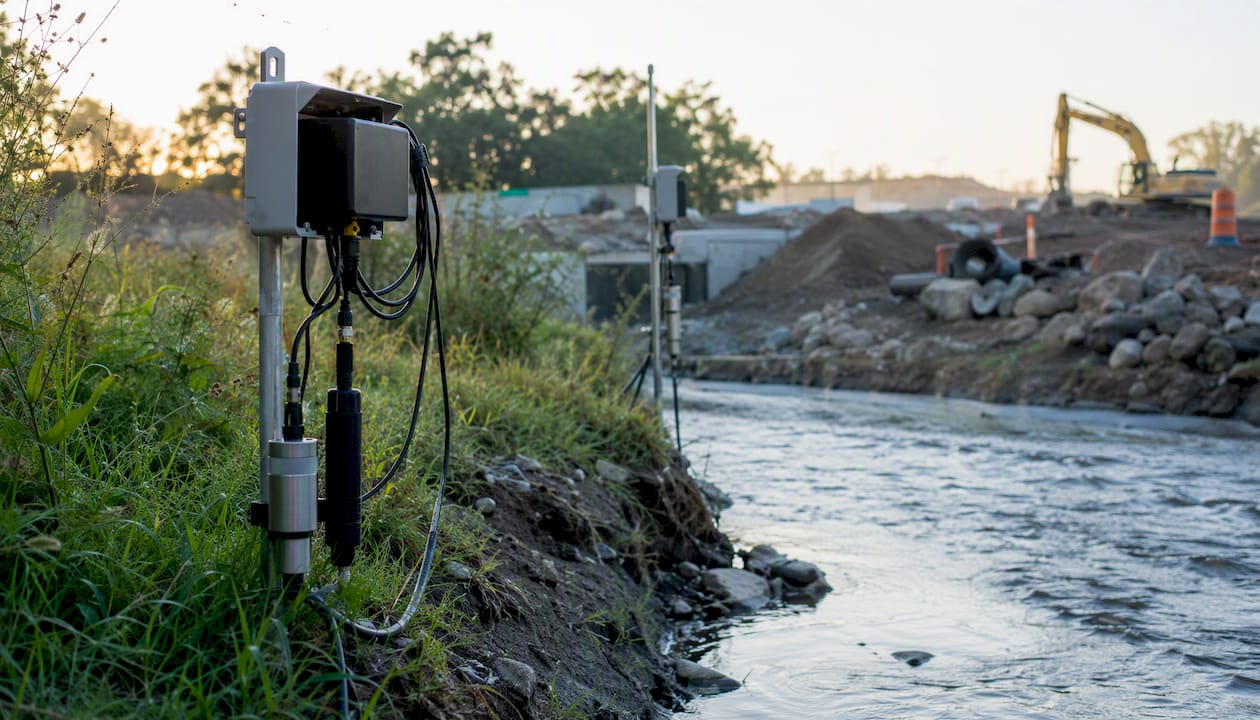
Monitoring and adaptive management close the loop. PUB Singapore’s environmental studies framework identifies follow-up as essential: mitigation must be verified as implemented, and monitoring data must be reviewed against predicted outcomes. Where monitoring reveals that impacts exceed predicted levels, adaptive management protocols define the corrective response, whether that is additional mitigation, revised operational procedures, or, in serious cases, suspension of works. Understanding the distinction between an EIA and a construction environmental audit is useful here: the audit verifies that permit conditions are being met during construction, complementing rather than replacing the EIA’s predictive function.
What does research say about EIA integrity and outcomes?
Academic and practitioner evidence converges on a consistent finding: the value of an environmental impact assessment is determined by the quality of its execution, not by its existence.
JCU research identifies three primary failure modes in EIA practice: inadequate baseline sampling that misses ecologically significant conditions, predictive methods that underestimate indirect and cumulative impacts, and governance structures that allow conflicts of interest to compromise assessment independence. The same research points to transparent public consultation and publicly available EIA reports as structural remedies that improve scrutiny and reduce the risk of biased or incomplete assessments.
Practitioner guidance reinforces the front-end loading principle: integrating EIA findings at concept stage materially lowers redesign costs and reduces permitting delays. Projects that treat environmental constraints as design inputs rather than post-design obstacles consistently demonstrate shorter approval timelines and fewer conditions requiring redesign.
The financing dimension reinforces quality imperatives. ESG-aligned lenders and multilateral institutions increasingly require EIA quality reviews as a condition of project financing. A credible EIA, with defensible baseline data, rigorous predictive analysis, and a monitored mitigation plan, reduces project liability and improves access to capital. A superficial one creates the opposite exposure: regulatory rejection, lender withdrawal, and reputational damage that can outlast the project itself. Sustainable construction compliance frameworks increasingly reference EIA quality as a baseline indicator of project governance.
Applying EIA thinking to construction project delivery
From a QES consultancy perspective, the most consequential shift in construction project governance over the past decade has been the recognition that environmental assessment findings are not a regulatory artifact to be filed and forgotten. They are operational intelligence.
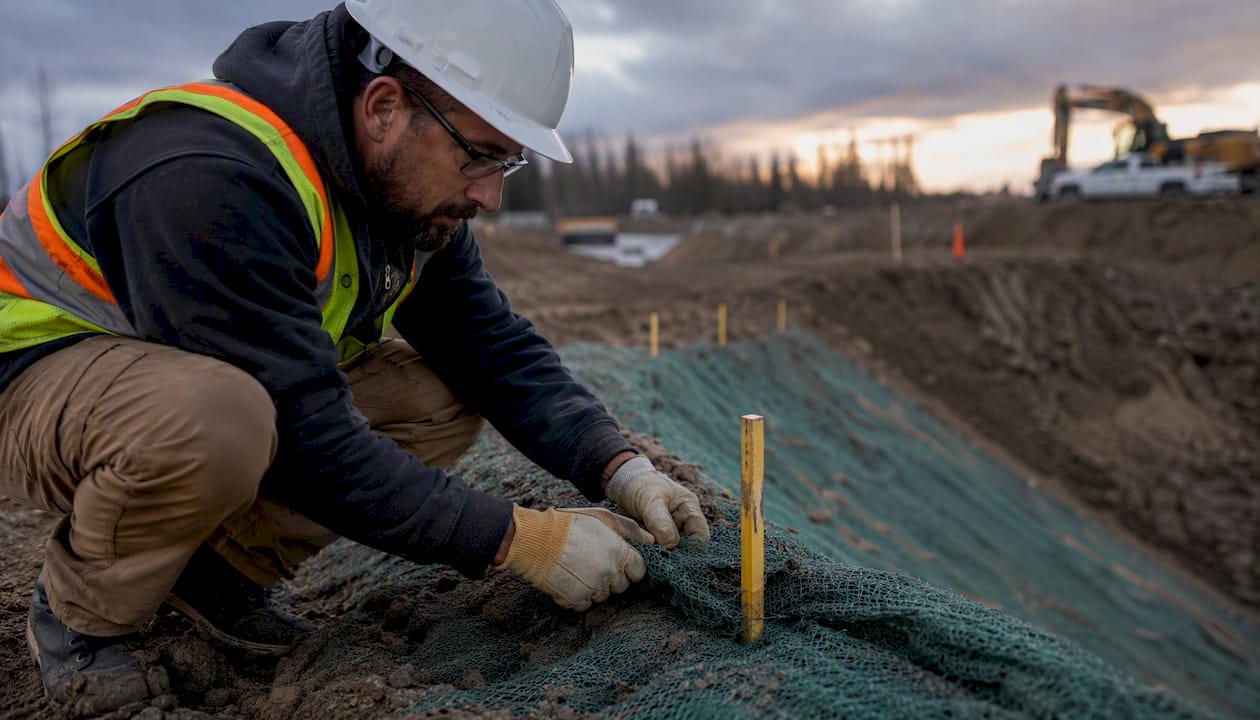
When EIA findings are integrated with Quality, Environment, and Safety systems, the result is a project team that understands its environmental risk profile before ground is broken, has mitigation measures embedded in method statements and work procedures, and has monitoring obligations built into its site management protocols. That integration is what separates projects that clear regulatory review efficiently from those that accumulate permit conditions, variation orders, and enforcement notices.
The QES framework that MOSAIC Ecoconstruction Solutions applies to construction clients treats EIA findings as inputs to safety audits, Design for Safety reviews, and compliance documentation. Environmental risk controls identified in the EIAR become line items in the risk management plan. Monitoring obligations become scheduled audit triggers. The EIA, in this model, is not a standalone document but the environmental foundation of the project’s entire compliance architecture.
MOSAIC Ecoconstruction Solutions: EIA-aligned QES support for construction projects
Construction projects that have completed an EIA face a second, equally demanding challenge: translating assessment findings into compliant site operations. MOSAIC Ecoconstruction Solutions provides the QES consultancy infrastructure to make that translation effective.

MOSAIC’s services directly relevant to EIA outcomes include environmental risk control implementation, EIA coordination support, specialist survey procurement, QES audits aligned to permit conditions, and compliance documentation assistance. For projects pursuing BizSAFE or ISO certification, MOSAIC integrates EIA-derived environmental obligations into the certification framework, ensuring that regulatory compliance and safety certification advance in parallel rather than in sequence.
The practical next step: engage MOSAIC for project-tailored EIA scoping support and compliance planning before your permitting submission. Teams preparing for formal safety audits tied to EIA permit conditions can start with MOSAIC’s safety audit preparation guide to understand what auditors will verify against your environmental management commitments.
Sources
The following sources provide regulatory detail, methodology guidance, and academic critique for professionals requiring deeper reference:
- Why environmental impact assessments often fail (JCU research)
- Environmental Impact Assessment | Urban Redevelopment Authority (URA)