Compliance monitoring is the continuous process of assessing whether an organization adheres to applicable regulations, internal policies, and industry standards, while systematically collecting evidence that controls are operating as intended. A working program delivers three measurable outcomes: real-time visibility into control performance, documented evidence sufficient for regulatory examination, and timely corrective action before violations escalate into fines or operational disruption. The major regulatory frameworks this guide draws on include HIPAA, SOX, PCI DSS, OSHA, and SEC guidance, each of which imposes specific monitoring obligations on U.S. organizations.
A compliant program achieves:
- Real-time visibility: Automated controls surface deviations as they occur, not weeks later during a quarterly review.
- Documented evidence: Every control test, exception, and remediation action is recorded and retrievable for auditors.
- Timely corrective action: Issues are assigned, tracked, and resolved within defined SLAs before they compound into material findings.
Key Takeaways
Compliance monitoring is the continuous, evidence-driven discipline that keeps organizations audit-ready, reduces regulatory risk, and converts control data into operational intelligence.
| Point | Details |
|---|---|
| Define before you deploy | Map all regulatory obligations and internal policies to specific controls before selecting tools or assigning owners. |
| Automate highest-risk controls first | Prioritize continuous automated monitoring for controls where failure carries the greatest regulatory or financial consequence. |
| Assign named owners at control level | Every control needs a single accountable individual, not a team, to drive remediation and maintain evidence. |
| Measure TTD and TTR as primary KPIs | Time-to-detect and time-to-remediate are the most direct indicators of program effectiveness and audit readiness. |
| Com for construction-sector programs | Com provides QES consultancy, audits, and certification support tailored to construction firms’ specific monitoring obligations. |
Table of Contents
- What is compliance monitoring, and why does it matter?
- Core elements and techniques every program must include
- How do you build a compliance monitoring program step by step?
- In-house, third-party, or hybrid: which deployment model fits your organization?
- What do compliance monitoring tools actually do?
- How do you measure whether your compliance program is working?
- Common implementation challenges and how to avoid them
- How U.S. regulations map to specific monitoring activities
- Construction firm compliance checklist and 30–60 day starter plan
- The compliance monitoring priorities that actually move the needle
- How MOSAIC Ecoconstruction Solutions supports your compliance monitoring program
- Sources
What is compliance monitoring, and why does it matter?
Compliance monitoring is a continuous, data-driven discipline rather than a periodic, sample-based exercise. It combines automated surveillance, scheduled control testing, and management reporting to maintain a live picture of an organization’s regulatory posture. According to IBM, it encompasses adherence to regulatory requirements, internal policies, and specific industry standards, with organizations selecting in-house, third-party, or hybrid deployment models depending on their capacity and risk profile.
The business case is direct. Non-compliance exposes organizations to regulatory fines, civil litigation, reputational damage, and operational disruption. Data breaches tied to control failures carry both direct remediation costs and long-term customer attrition. The SEC continues to emphasize robust internal controls and oversight, with recent enforcement actions targeting disclosure failures and control breakdowns, signaling that regulators treat monitoring gaps as material deficiencies, not administrative oversights.
Statistic callout: The SafetyCulture compliance monitoring research notes that continuous monitoring reduces legal and financial risk by surfacing issues early and improving operational efficiency through ongoing evaluation of internal processes, a benefit that periodic audits alone cannot replicate.
Beyond risk avoidance, a mature monitoring program accelerates audit readiness, strengthens security posture, and generates operational insights that inform process improvement. Organizations that treat compliance monitoring as the central nervous system of their governance framework gain a measurable advantage: faster remediation cycles, cleaner audit trails, and fewer surprise findings during external reviews.
Core elements and techniques every program must include
Effective compliance monitoring is built from five functional components that work in concert. Understanding each one is prerequisite to designing a program that satisfies both regulators and internal audit.
Continuous automated controls execute checks against defined thresholds without human intervention. Examples include automated log analysis for unauthorized access attempts under HIPAA, configuration drift detection for PCI DSS cardholder data environments, and real-time equipment status feeds on construction sites.
Periodic control testing supplements automation with scheduled manual or semi-automated procedures. Control testing validates that automated checks are correctly configured and that process controls, which cannot be fully automated, are operating as designed. Quarterly access reviews and annual penetration tests are common examples.
Self-assessments place accountability on control owners to evaluate their own processes against a defined control catalog. When structured with evidence requirements, self-assessments surface gaps that centralized monitoring tools may not reach, particularly in business units with bespoke workflows.
Incident and issue tracking captures exceptions, near-misses, and confirmed violations in a centralized register. Each item carries a severity rating, assigned owner, target remediation date, and status, creating the audit trail regulators expect.

Evidence collection and retention is the connective tissue of the entire program. Proofpoint’s compliance monitoring guidance specifies that a monitoring plan must detail testing procedures, automated programs, responsible owners, evidence collection methods, and reporting processes. Without systematic evidence retention, even a technically sound control environment cannot be demonstrated to auditors.
Supporting infrastructure includes:
- Policy library: A versioned repository of all applicable policies, linked to the controls they govern.
- Control catalog: A structured inventory of controls mapped to regulatory obligations and risk categories.
- Risk register: A prioritized list of compliance risks, updated as the regulatory environment and business operations evolve.
- Roles and responsibilities matrix: Clear ownership for every control, preventing the accountability gaps that generate repeat audit findings.
Effective monitoring mixes automated checks with manual review, such as automated configuration checks paired with scheduled manual audits and self-assessments for process controls. Neither approach alone is sufficient: automation provides scale and speed; manual review provides judgment and context.
How do you build a compliance monitoring program step by step?
Implementation follows a logical sequence. Skipping steps, particularly risk prioritization and ownership assignment, is the most common reason programs produce noise without generating actionable intelligence.
-
Scope and map obligations. Identify every applicable regulation, contractual requirement, and internal policy. Map each obligation to the business processes and systems it governs. A construction risk assessment framework is a useful model for this scoping exercise, translating regulatory language into operational control points.
-
Prioritize controls by risk. Not every control warrants the same monitoring frequency. Assign a risk rating to each control based on the likelihood and impact of failure. High-risk controls, such as privileged access management under SOX or encryption status under PCI DSS, warrant continuous automated monitoring. Lower-risk controls may be tested quarterly or annually.
-
Select measures and assign owners. For each control, define the specific metric or test that will confirm it is operating. Assign a named control owner who is accountable for both the control’s performance and the remediation of exceptions.
-
Instrument monitoring. Deploy automated tools for high-frequency, high-volume checks. Configure manual testing schedules for controls that require human judgment. Document both in the monitoring plan.
-
Test and validate. Before going live, validate that automated checks are firing correctly and that evidence is being captured in the expected format. Run a parallel manual test to confirm alignment.
-
Report and remediate. Establish reporting cadences for operational, tactical, and executive audiences. Route exceptions into a remediation workflow with defined SLAs. Track open items to closure.
-
Iterate. Review the monitoring program quarterly against changes in the regulatory environment, business operations, and audit findings. Update controls, thresholds, and ownership as the organization evolves.
Pro Tip: Assign a compliance lead who owns the monitoring plan as a whole, distinct from individual control owners. Without a single accountable program owner, monitoring programs fragment into disconnected point solutions that satisfy no one.
Roles template for a 30/60/90-day starter plan:
-
Day 1–30 (Foundation): Compliance lead completes obligation mapping and control inventory. IT/security configures automated monitoring for the top five highest-risk controls. Business unit reps confirm control ownership for their domains.
-
Day 31–60 (Instrumentation): First round of control testing executed. Evidence collection workflows validated. Reporting templates drafted and reviewed with internal audit.
-
Day 61–90 (Operationalization): First executive compliance report issued. Remediation SLAs established. Program reviewed against initial risk register; gaps prioritized for the next quarter.
In-house, third-party, or hybrid: which deployment model fits your organization?
Organizations typically choose between three deployment models: in-house, third-party, and hybrid. Each carries distinct trade-offs across control, cost, scalability, and speed to deploy.
| Dimension | In-House | Third-Party | Hybrid |
|---|---|---|---|
| Level of control | Maximum; full customization | Lower; vendor-defined scope | Balanced; internal oversight with external tools |
| Cost and complexity | High upfront; ongoing staffing | Subscription or retainer; lower internal overhead | Moderate; requires integration governance |
| Scalability | Limited by internal headcount | High; vendor scales with demand | High for automated components; limited for manual |
| Time to deploy | Slow; requires internal build-out | Fast; pre-built frameworks | Medium; phased integration |
| Best for | Large enterprises with dedicated compliance teams | Mid-market firms lacking internal expertise | Organizations with strong governance but limited technical capacity |
Decision-flow considerations:
- Choose in-house when regulatory obligations are highly specialized, data sensitivity prohibits third-party access, or the organization has an established compliance function with technical depth.
- Choose third-party when the organization lacks internal compliance expertise, faces an imminent audit, or needs to deploy rapidly across multiple regulatory frameworks.
- Choose hybrid when core monitoring is well-established internally but specific domains, such as cloud security or environmental compliance, require specialist tooling or expertise.
Pro Tip: The most common selection mistake is choosing a deployment model based on initial cost rather than total cost of ownership. An in-house build that requires three FTEs to sustain often costs more over three years than a managed third-party service, even before accounting for the opportunity cost of internal talent.
What do compliance monitoring tools actually do?
Compliance monitoring solutions detect anomalies in processes and employee behavior, enable near-real-time detection of violations, automate response workflows, prioritize remediation, and provide dashboards for transparency and accountability. Translating vendor claims into selection criteria requires evaluating specific capabilities rather than marketing categories.
Core capabilities to evaluate:
- Continuous control monitoring: Automated checks that execute against defined thresholds on a scheduled or event-triggered basis, with exception logging and alerting.
- Evidence capture: Automated collection and indexing of screenshots, log exports, configuration snapshots, and attestation records, eliminating manual evidence assembly before audits.
- Policy and control libraries: Pre-built control frameworks mapped to common regulations (SOX, HIPAA, PCI DSS, NIST) that accelerate initial deployment.
- Remediation workflow: Ticketing integration or native workflow that routes exceptions to owners, tracks status, and escalates overdue items.
- Integrations: Native connectors to identity providers (Active Directory, Okta), cloud platforms (AWS, Azure, GCP), SIEM tools (Splunk, Microsoft Sentinel), and ticketing systems (ServiceNow, Jira).
- Reporting and export: Configurable dashboards for operational and executive audiences, with audit-ready export formats.
Vendor feature checklist for RFPs and internal evaluations:
- Does the tool support your specific regulatory frameworks out of the box?
- Can evidence be automatically collected and linked to individual control tests?
- Does the remediation workflow integrate with your existing ticketing system?
- Are dashboards configurable by role (auditor view vs. executive view)?
- What is the vendor’s SLA for alert delivery and evidence indexing?
- Does the tool support multi-entity or multi-site deployments?
Integration priority matrix: Connect identity and access management systems first, as access control failures are the most frequent audit finding across HIPAA, SOX, and PCI DSS. Cloud storage and configuration management platforms follow. Ticketing systems complete the loop by ensuring exceptions move from detection to remediation without manual handoff.
Dashboards and automated evidence collection convert audit preparation from a reactive scramble into a continuous reporting capability, which is the single largest time-saving benefit for organizations subject to frequent external audits.
How do you measure whether your compliance program is working?
KPIs give program owners the quantitative basis to demonstrate control effectiveness to executives and auditors. The following metrics form a defensible measurement framework:
- Control pass rate: Percentage of controls that passed their most recent test, segmented by regulatory framework and business unit.
- Open remediation items by age and severity: Count of unresolved exceptions, bucketed by days open (0–30, 31–60, 61–90, 90+) and severity (critical, high, medium, low).
- Time-to-detect (TTD): Average elapsed time between a control failure occurring and the monitoring system generating an alert.
- Time-to-remediate (TTR): Average elapsed time between alert generation and confirmed resolution.
- Automated vs. manual check ratio: Percentage of total control tests executed by automated tools versus manual procedures, a proxy for program maturity.
Reporting cadence should match audience needs:
- Daily operational: Exception counts, new alerts, SLA breaches. Audience: compliance operations team and IT/security.
- Weekly tactical: Open remediation aging, control pass rates by domain, escalations. Audience: compliance lead and business unit managers.
- Monthly executive: Program-level pass rate trend, material findings, regulatory change impacts, resource utilization. Audience: CISO, CFO, board audit committee.
Statistic callout: The IIA’s 2024 Pulse Report reinforces the modernization of audit and monitoring practices, supporting the integration of continuous monitoring with internal audit functions as a recognized standard for governance maturity.
Auditors expect a narrative alongside dashboard data: a written summary of material exceptions, root cause analysis for repeat findings, and evidence that remediation actions were completed and verified. Programs that produce only dashboards without narrative context routinely receive audit observations about the adequacy of management review.
Common implementation challenges and how to avoid them
Most compliance monitoring programs encounter predictable obstacles. Recognizing them early prevents the program from degrading into a compliance theater exercise that satisfies no one.
- Noisy alerts and false positives: Poorly tuned rules generate alert volumes that overwhelm operations teams, causing genuine violations to be buried. Mitigation: establish a tuning cycle in the first 60 days, suppressing known-good patterns and tightening thresholds based on observed false positive rates.
- Weak evidence trails: Automated checks that log only pass/fail results without capturing the underlying evidence cannot support an audit. Mitigation: require that every automated check captures a timestamped artifact, such as a log excerpt or configuration snapshot, linked to the control record.
- Unclear control ownership: When no named individual is accountable for a control, exceptions sit unresolved. Mitigation: implement a RACI matrix at the control level, not just the program level, and review ownership quarterly as personnel change.
- Legacy systems and data silos: Older systems may not expose APIs or log data in formats compatible with modern monitoring tools. Mitigation: phase integrations, starting with systems that carry the highest regulatory risk, and use agent-based collection where API access is unavailable.
- Regulatory change churn: U.S. regulatory frameworks evolve continuously. A monitoring program calibrated to last year’s requirements may miss new obligations. Mitigation: subscribe to regulatory update feeds from HHS (HIPAA), the SEC, PCI SSC, and OSHA, and assign a named owner to translate regulatory changes into control updates within 30 days of publication.
Pro Tip: Route compliance alerts directly into your security operations center’s incident response workflow. Treating compliance exceptions as security events, with defined playbooks and escalation paths, reduces TTR by eliminating the handoff delay between compliance and IT teams.
How U.S. regulations map to specific monitoring activities
The following table maps major U.S. regulatory frameworks to the monitoring activities they require and the evidence auditors typically request.
| Regulation | Typical Monitoring Activities | Evidence Auditors Request |
|---|---|---|
| HIPAA | Access log review, privileged access recertification, encryption status checks, breach detection monitoring | Access logs, recertification records, encryption configuration exports, incident reports |
| SOX | IT general controls testing, change management reviews, financial system access reviews, segregation of duties checks | Control test results, change tickets, access provisioning records, management sign-offs |
| PCI DSS | Configuration compliance checks, network segmentation validation, vulnerability scan results, encryption monitoring | Scan reports, firewall rule exports, key management records, penetration test results |
| OSHA | Safety inspection records, incident and near-miss tracking, equipment certification status, training completion rates | Inspection logs, OSHA 300 logs, equipment maintenance records, training attendance records |
| SEC guidance | Internal control assessments, disclosure review workflows, trading surveillance, insider access monitoring | Control assessment reports, disclosure committee minutes, surveillance logs |
Key evidence retention practices for U.S. organizations:
- HIPAA requires covered entities to retain documentation of policies and procedures for six years from creation or last effective date.
- SOX Section 802 mandates retention of audit workpapers and related records for seven years.
- PCI DSS requires audit log retention for at least 12 months, with three months immediately available for analysis.
- OSHA recordkeeping regulations require retention of injury and illness records for five years.
Environmental risk monitoring on construction sites intersects with EPA permit conditions and state environmental regulations, adding a layer of monitoring obligations that project-level compliance plans must address explicitly.
Construction firm compliance checklist and 30–60 day starter plan
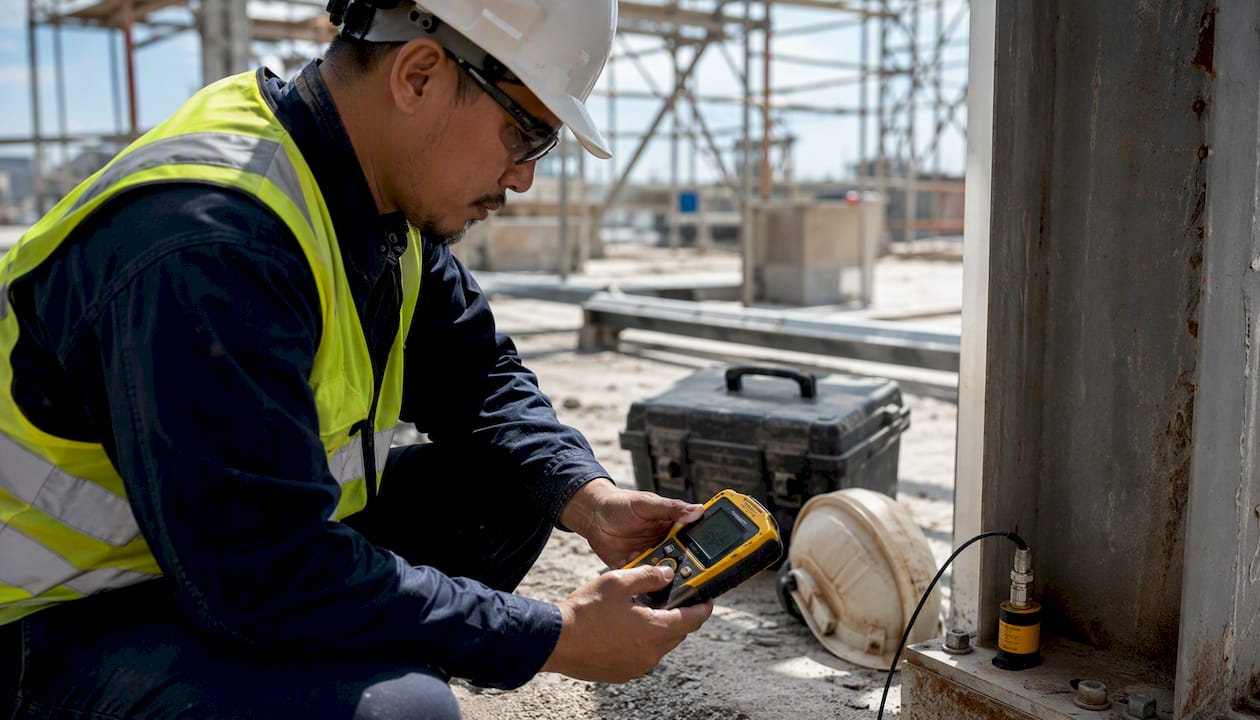
Safety monitoring on construction sites addresses a distinct set of regulatory obligations that differ materially from enterprise IT compliance. OSHA’s construction standards (29 CFR Part 1926), state-level safety regulations, environmental permit conditions, and contractor qualification requirements create a multi-layered monitoring environment that demands both systematic processes and field-level accountability.
Construction-specific compliance checklist:
- Safety inspection records completed and filed per OSHA 300 log requirements.
- Equipment certification and inspection dates tracked with automated expiration alerts.
- Contractor qualification documentation (licenses, insurance certificates, safety records) verified before mobilization and monitored throughout the project.
- Environmental permit conditions (stormwater, air quality, waste disposal) reviewed against site activities on a scheduled basis.
- Training completion rates tracked by role, with records retained and accessible for OSHA inspection.
- Near-miss and incident reports filed within required timeframes and reviewed for corrective action.
Roles matrix for construction projects:
- Safety officer: Owns field inspection execution, incident reporting, and OSHA recordkeeping.
- Project manager: Accountable for contractor qualification verification and schedule-driven compliance milestones.
- Compliance lead: Maintains the monitoring plan, tracks open items, and prepares reports for ownership and regulators.
- Third-party inspectors: Conduct independent verification of high-risk activities and equipment certifications.
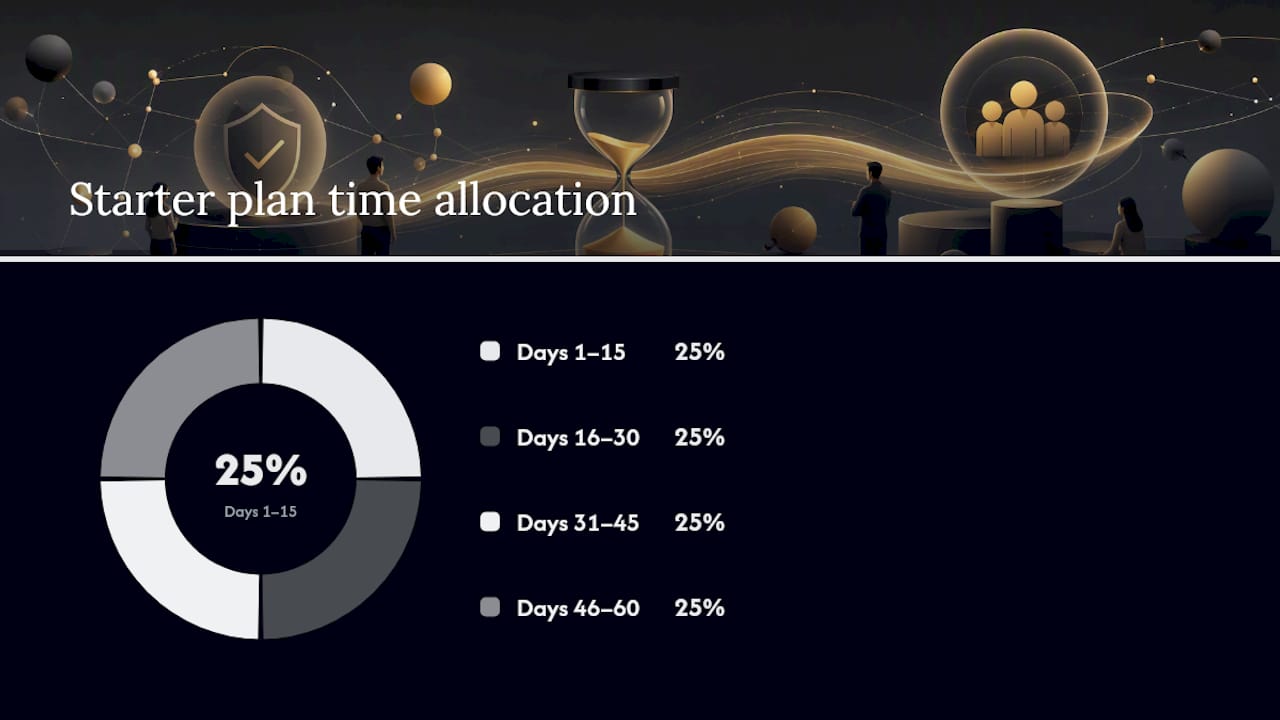
30–60 day starter plan for construction firms:
- Days 1–15: Map all applicable OSHA standards, environmental permits, and contractual compliance requirements to the project scope. Assign control owners using the roles matrix above.
- Days 16–30: Configure automated alerts for certification and permit expiration dates. Establish the inspection schedule and evidence collection workflow. Verify contractor qualification documentation for all active subcontractors.
- Days 31–45: Execute first round of field safety inspections. Review equipment certification status against the automated tracker. Confirm training completion rates for all site personnel.
- Days 46–60: Issue first compliance status report to project leadership. Review open remediation items. Adjust monitoring thresholds and inspection frequency based on initial findings.
Contractor compliance oversight is a frequent audit pain point. Automated reminders for certification expirations and centralized evidence storage reduce violations and eliminate the last-minute document scramble that characterizes under-resourced programs.
The compliance monitoring priorities that actually move the needle
The volume of guidance available on compliance monitoring can obscure a simple truth: most programs fail not because of tool selection or budget, but because of three structural deficiencies that are entirely within an organization’s control to fix.
The first priority is ownership clarity. Every control must have a named owner who is accountable for both performance and remediation. Programs that assign ownership to teams or departments rather than individuals produce diffuse accountability and slow remediation cycles. Fix this before deploying any technology.
The second priority is evidence architecture. Automated monitoring without systematic evidence capture is operationally useful but audit-useless. The investment in evidence collection infrastructure, whether through native tool capabilities or integrated storage, pays for itself the first time an auditor requests documentation on a 90-day timeline.
The third priority is regulatory change management. The organizations that sustain compliance over multi-year periods treat regulatory updates as operational events, not annual policy reviews. Assign a named owner to monitor regulatory feeds and translate changes into control updates within 30 days. The IIA’s 2024 Pulse Report reinforces that continuous monitoring integrated with internal audit functions represents the current standard for governance maturity.
Continuous improvement is not a phase that follows program launch; it is the operating model. Quarterly reviews of KPIs, control pass rates, and audit findings should drive iterative updates to monitoring thresholds, ownership assignments, and evidence requirements. Programs that treat launch as completion degrade within 18 months.
How MOSAIC Ecoconstruction Solutions supports your compliance monitoring program
Construction firms operating under OSHA, EPA, and state-level safety regulations face compliance monitoring demands that generic enterprise tools are not designed to address. Com delivers QES consultancy, safety audits, certification support (including BizSAFE and ISO), training, and manpower outsourcing specifically calibrated to the construction sector’s regulatory environment.

Where internal teams lack the capacity to build and sustain a monitoring program, or where an upcoming audit requires rapid remediation of control gaps, Com provides the specialist expertise to close those gaps without the overhead of a permanent internal hire. The service model covers program design, control testing, evidence collection workflows, and audit preparation, giving project teams a defensible compliance posture from day one.
For construction firms preparing for certification or facing regulatory scrutiny, safety training resources and structured consultancy engagements from Com provide the fastest path from gap identification to audit-ready documentation. Contact Com to discuss your project’s specific compliance monitoring requirements and receive a scoped engagement proposal.
Sources
- IBM – Compliance monitoring
- Gartner – What are Compliance Monitoring Solutions?
- SEC – Press release
- MetricStream – Compliance monitoring guide
- SafetyCulture – Compliance monitoring
- The IIA – 2024 IIA pulse report