
Introduction
Failing a BizSAFE renewal strips your Singapore construction firm of its certification status immediately-no grace period, no buffer, no exceptions. There is no grace period for expired BizSAFE certificates in Singapore. The moment your bizsafe certificate crosses its expiry date, your company loses eligibility for government tenders, faces contract suspensions from main contractors, and becomes exposed to regulatory enforcement action under the WSH Act.
This article covers the full chain of consequences that construction contractors, subcontractors, and project managers face when bizsafe renewal lapses-from the regulatory penalties that activate within hours to the financial hemorrhaging that compounds over weeks and months. Whether you’re an SME subcontractor or a large main contractor, understanding these consequences is critical because failure to renew a bizSAFE certification has significant consequences for construction firms operating in Singapore’s tightly regulated built environment.
The direct answer: Construction firms lose their bizsafe status immediately upon expiry, resulting in automatic disqualification from government tenders and main contractor projects. A lapsed bizSAFE certificate results in disqualification from government tenders in Singapore, and losing bizSAFE status leads to suspension of contracts by main contractors-often within 24 to 48 hours.
After reading this article, you will understand:
-
How rapidly project suspension and revenue loss occur after certification lapse
-
The specific financial penalties, liquidated damages, and performance bond risks triggered by non-compliance
-
Why regulatory scrutiny intensifies and how legal liability escalates under the WSH Act
-
How insurance coverage gaps and banking complications compound the damage
-
The concrete steps and realistic timeline required to restore compliance
Understanding BizSAFE Certification Renewal Failure: The Immediate Regulatory Reality
BizSAFE renewal failure means one of two things: either your bizsafe certification has passed its expiry date without a successful renewal, or your firm has failed the risk management implementation audit required for Level 3 and above, often because of incomplete or deficient bizSAFE applications and supporting records. In both cases, the result is identical-your company’s bizsafe status becomes invalid, and the WSH Council removes your recognition immediately. BizSAFE certifications are valid for three years from issue for Levels 3, 4, and STAR, while bizSAFE Levels 1 and 2 certificates are valid for six months only and cannot be renewed.
Singapore operates a zero-tolerance policy for expired safety certifications in construction. BizSAFE is recognized as a proxy for safety management in Singapore’s construction sector, as part of the bizSAFE programme supported in Singapore, and companies must demonstrate compliance with the Workplace Safety and Health Act regardless of bizsafe status. When your certification lapses, the regulatory machinery treats it as a signal of non-compliance with workplace safety and health obligations and the control of workplace risks.
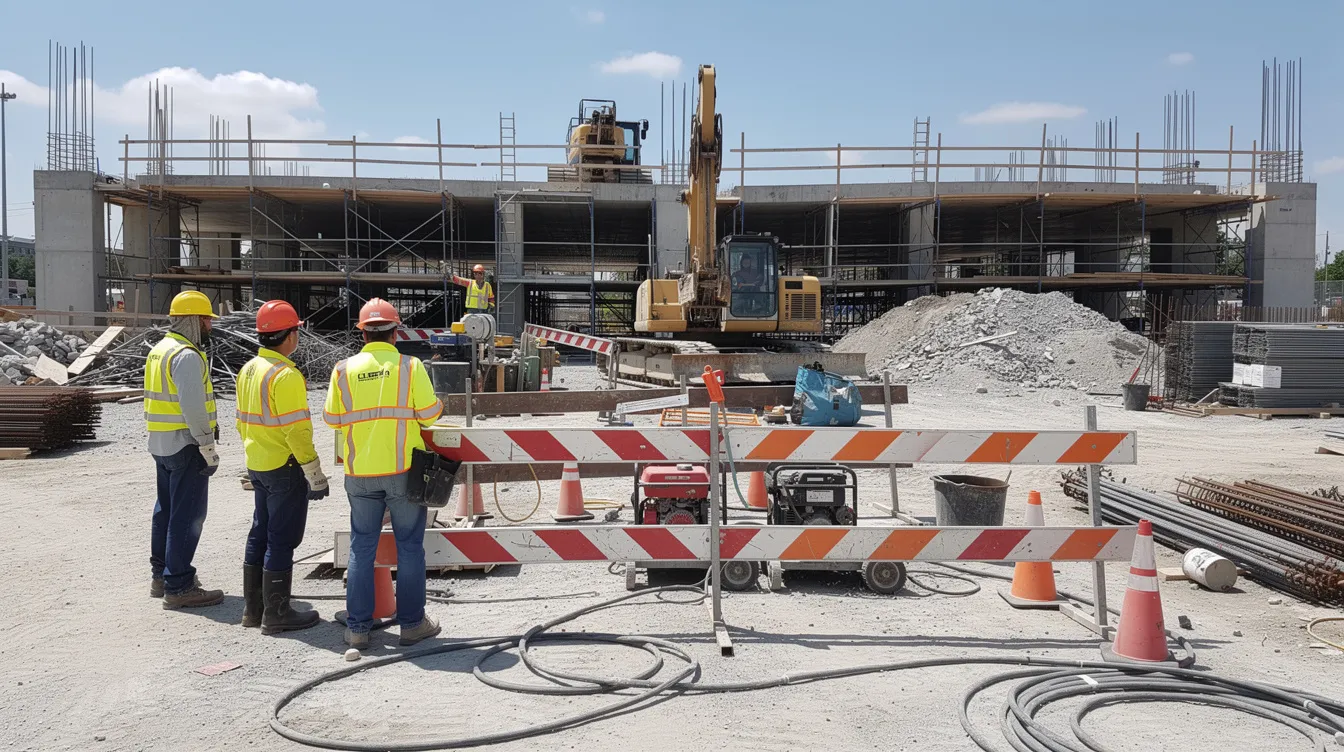
Immediate Consequences (Day 1-7)
The moment your bizsafe expires, automatic system notifications cascade through Singapore’s procurement and regulatory infrastructure. Within 24 hours, your firm is removed from the WSH Council’s BizSAFE marketplace-ending the free advertising that bizsafe companies receive on the BizSAFE Marketplace and eliminating your visibility to potential clients searching for bizsafe certified contractors. Buyers and compliance teams may also verify your certification level and expiry through the health council portal.
Instant disqualification from the GeBIZ portal follows. BizSAFE certification is a prerequisite for many government tenders, and any tender submission that closes after your expiry date will explicitly reject your bid. Companies without valid bizSAFE status may be excluded from tenders under the Safety Disqualification Framework, which applies to public sector construction contracts above SGD $3 million.
Main contractors respond swiftly. Main contractors often require subcontractors to hold valid bizSAFE certifications throughout projects, and their compliance teams issue suspension notices-sometimes within 48 hours of detecting a lapse. Project sites may require immediate cessation of your scope of work, with engineers having authority to order removal of disqualified subcontractors with no compensation or time extensions granted.
Short-Term Business Disruption (Week 1-4)
Contract termination clauses activate rapidly. Most construction contracts contain safety compliance provisions that treat a lapsed bizsafe certificate as a material breach. Performance bond forfeitures may be triggered, and clients begin calculating liquidated damages for project delays caused by your non-compliance. Lapses can also undermine confidence in company safety and trigger a broader commercial review by clients.
Revenue loss compounds daily. Your firm cannot bid for new work, ongoing projects face suspension, and lapsed certification can lead to loss of business opportunities across your entire portfolio. For construction firms dependent on a steady pipeline of government and institutional projects, this creates a financial crisis within days.
Workforce idling costs mount as workers remain on payroll without productive deployment. SMEs often face resource and cost constraints during renewal, making these idle periods particularly devastating. Potential layoffs become necessary as the compliance restoration timeline-typically 4 to 8 weeks-stretches the firm’s financial reserves.
Specific Business Impact Areas When BizSAFE Renewal Fails
The operational disruption from a failed bizsafe renewal radiates across every function of a construction business. Understanding these specific impact areas helps contractors quantify the true cost of a certification lapse and build urgency around maintaining bizsafe certification through proper risk management.
Project Operations and Site Access
When your bizsafe status lapses, site access becomes an immediate problem. Projects with strict security clearance requirements will revoke your firm’s access passes, and your workers may be physically barred from entering active construction sites. This isn’t merely administrative inconvenience-it triggers a chain reaction through the entire subcontractor ecosystem.
Your downstream subcontractors also face disruption. If they rely on your main contractor relationship for site access and project continuity, your certification lapse destabilizes their operations too. Equipment already deployed on-site may be locked down pending compliance restoration, and materials ordered for ongoing works create storage and financing complications. The ripple effect through the subcontractor chain can damage relationships that took years to build.
Financial and Commercial Consequences
The financial consequences extend far beyond lost revenue. Contract penalty clauses triggering liquidated damages can cost construction firms tens or hundreds of thousands of dollars per week of delay. Performance bond forfeiture-typically 5-10% of contract value-represents an immediate capital loss that most SMEs cannot absorb without significant strain.
BizSAFE compliance can affect insurance premiums and liability in critical ways. If your workplace safety certification is expressly required in your insurance policy or risk assessment framework, an expiry could invalidate coverage for incidents during the lapse. Insurers may deny claims, increase premiums for future coverage, or trigger “material non-compliance” clauses in existing bonds, and clients or insurers may also question your health capabilities when the lapse interrupts documented safety controls. Maintaining bizSAFE status reduces workplace incidents and insurance costs, so the inverse-losing status-increases both.
Banking and bonding facilities come under review as well. Some financiers view safety certification as part of non-financial risk assessment, and failure to maintain bizsafe certification can result in increased administrative costs for re-certification while simultaneously affecting creditworthiness, project financing capacity, and the company’s corporate branding in sectors where safety credentials influence award decisions.
Regulatory and Legal Exposure
MOM enforcement actions intensify for firms with lapsed certifications. Under WSH Act Section 12, employers have a general duty to ensure workplace safety, and a lapsed bizsafe certificate may be treated as evidence of negligence in any enforcement proceeding. Corporate bodies face fines of up to SGD $500,000 for general offences, with repeat offences or those involving fatalities carrying penalties up to SGD $1 million.
Director liability is a serious personal risk. The CEO or board director and other officers may face personal prosecution with fines up to SGD $200,000 or imprisonment for up to 2 years, and chief executives are expected to exercise active oversight of safety obligations rather than treat compliance as a delegated task. The WSH Act makes clear that top management cannot delegate away their responsibility for wsh risk management.
Certain regulated industries require bizSAFE certification for licensing purposes. Approved scaffold contractors, crane contractors, and other WSH service providers require active certification; if expired, their registration may be suspended or invalidated. In some higher-tier reviews, continued approval may also depend on the relevant certification body supporting associated standards. Operating without valid registration constitutes a prosecutable offence.
The bizSAFE certification must be renewed to avoid increased regulatory scrutiny, including potential enrollment in MOM’s Business Under Surveillance (BUS) programme, which mandates remedial actions and intensified oversight.
Timeline of Escalating Consequences: What Happens When
Understanding exactly how consequences escalate helps construction firms appreciate why every day of non-compliance compounds the damage. The timeline below maps what actually happens from the moment your bizsafe certificate passes its validity period through to long-term consequences.
The Critical 48-Hour Window
Hour 0: Your bizsafe certificate expires. The system records the lapse, and your company’s bizsafe status transitions to invalid. There is no grace period-your recognition is gone the instant the clock passes midnight on your expiry date.
Hour 24: The WSH Council removes your firm from the BizSAFE marketplace listing. Automated notifications may reach procurement systems. Any government tender evaluation in progress that checks certification validity will flag your firm as non-compliant.
Hour 48: Main contractor compliance teams-who routinely verify subcontractor certifications-detect the lapse and issue formal work suspension orders. Your project managers receive notices requiring cessation of contracted work pending valid certification.
Hour 72: Active project sites must cease operations under your scope. Site supervisors coordinate handover of incomplete works. Your workforce begins standing down. Non-renewal can damage a company’s corporate image as word spreads through the construction community.

Regulatory Response Timeline
Week 1: MOM site inspections increase in frequency. Inspectors are more likely to visit sites associated with firms that have lapsed certifications. Any safety and health incidents discovered during these inspections carry heightened consequences.
Week 2-4: If any workplace incident occurs during the non-compliance period, formal investigation is initiated. The absence of valid risk assessments, a current risk management plan, and a current risk management implementation plan becomes central evidence. Contracts may be formally terminated, and performance bond forfeiture proceedings begin.
Month 1-3: BUS programme enrollment becomes likely. Mandatory remedial actions are imposed. Insurance scrutiny intensifies, with underwriters reassessing all active policies. Higher-tier firms may also need to update their health system management documentation before they can restore compliance. Companies may need to restart from a lower level after expiry, significantly extending the restoration timeline.
Month 6+: Prolonged non-compliance may lead to criminal prosecution. Potential debarment from specific construction sectors becomes real. Loss of bizSAFE status affects a company’s reputation and potential for future contracts in ways that persist long after certification is eventually restored.
Financial Impact Calculation Table
|
Impact Category |
SME Subcontractor |
Medium Contractor |
Large Construction Firm |
|---|---|---|---|
|
Daily Revenue Loss |
$5K–$20K |
$20K–$100K |
$100K+ |
|
Penalty/LD Costs (30 days) |
$15K–$50K |
$50K–$200K |
$200K–$1M+ |
|
Compliance Restoration |
$15K–$30K |
$30K–$50K |
$50K–$100K+ |
|
Insurance Premium Increase |
15–30% |
10–25% |
10–20% |
|
Total Estimated 30-Day Impact |
$50K–$150K |
$200K–$800K |
$500K–$2M+ |
Failure to maintain bizSAFE certification can result in increased administrative costs for re-certification across all company sizes, but SMEs face disproportionate strain because they typically operate on thinner margins and cannot absorb idle workforce costs.
Common Mistakes That Lead to BizSAFE Renewal Failure
Most bizsafe renewal failures are entirely preventable. Complacency can lead to last-minute preparation for audits, and firms routinely underestimate what the risk management implementation audit actually examines. Understanding these common pitfalls-and their solutions-can mean the difference between seamless renewal and operational catastrophe.
Calendar Management and Documentation Oversights
The most frequent cause of lapsed certification is simple failure to track the expiry date. BizSAFE certification is valid for three years only, and firms that don’t build systematic renewal tracking into their operations inevitably face last-minute scrambles. Incomplete documentation is a common reason for audit failures, with firms unable to produce current training records, updated risk assessments, or evidence of management commitment when the auditor arrives.
Renewal applications must be submitted two months before expiry-this is not a suggestion but a practical requirement given the renewal process typically takes 4 to 8 weeks to complete. Companies should begin the renewal process 2 to 6 months before the expiry date.
Solution: Implement a 90-day renewal reminder system tied to your bizsafe certificate’s validity period. Assign dedicated compliance personnel with clear accountability for tracking all certification expiry dates, including external certifications like ISO 45001 or Green Management Assessment Scheme credentials that may be tied to your bizsafe validity.
Audit Preparation Delays and Poor Risk Management Updates
Many construction firms fail their risk management implementation audit not because they’re unsafe, but because they don’t understand what the auditor actually checks. A valid Risk Management Audit Report is required for Levels 3 and above, and auditors from an approved auditing organisation examine actual implementation—not just documentation—while also reviewing the implementation audit report used to support renewal. They conduct worker and supervisor interviews, walk through active project sites, and verify that conducted risk assessments align with current site conditions.
Since November 2021, updates to the Risk Management Code of Practice have introduced requirements covering infectious disease risk, mental wellbeing, and updated control hierarchies. Many firms are caught unaware by these additions. The 2026 renewal cycle has introduced additional checks such as speed limiter requirements for lorries.
Solution: Maintain continuous risk assessment updates throughout your renewal cycle rather than cramming before the audit, and factor in any required WSH auditing services as part of your pre-expiry preparation. Engage your auditing organisation at least 6 weeks before your expiry date to allow time for initial assessment, corrective actions, and the formal audit itself, make sure it is approved to provide WSH auditing services, and check any linked higher-tier certifications early, including whether external credentials such as the certificate Joint Commission International create supporting documentation dependencies for renewal records. Your risk management system should be a living operational tool, not a folder that only opens at audit time.
Personnel Training Gaps and Certification Lapses
Key personnel changes can jeopardize bizSAFE status. BizSAFE Level 1 requires CEO training through the Top Executive WSH Programme (TEWP), and BizSAFE Level 2 requires a trained risk management champion. If your CEO changes and the new chief executive has not completed the executive WSH programme, or if your risk management champion leaves the company without a trained replacement, your firm’s eligibility for renewal is compromised. In higher-risk sectors, the Top Executive WSH Programme is the mandatory training route for the CEO or board director to demonstrate leadership commitment to WSH.
Leadership continuity is essential to maintaining a safer and healthier workplace during renewal transitions.
Solution: Establish mandatory training matrices that identify all personnel whose qualifications underpin your bizsafe level. Maintain backup-certified personnel for all critical safety roles. Ensure workforce skills qualification records are current and that required training including any risk management course completions are documented and accessible for audit review.
Immediate Response Actions and Compliance Restoration
If your bizsafe renewal has already failed or lapsed, time is your most critical resource. Every day without valid certification compounds financial losses and regulatory exposure. Here are the sequential steps your construction firm must take immediately:
-
Conduct an emergency gap analysis to identify exactly why renewal failed-whether it’s documentation gaps, implementation deficiencies, personnel qualification lapses, or expired external certifications. This assessment determines your restoration roadmap.
-
Update all risk assessments immediately to reflect current site conditions, workforce composition, and regulatory requirements including the latest risk management regulations. Ensure your wsh policy and implementation plan are current.
-
Engage an approved auditing organisation on an expedited basis to schedule your risk management implementation audit, and confirm the provider can deliver WSH auditing services for your renewal pathway. Communicate the urgency and provide all updated documentation upfront to minimize audit scheduling delays.
For higher-level renewals, you may also need an updated bizsafe star certificate pathway supported by the relevant certification body.
-
Notify affected clients and regulatory bodies proactively. Transparency about your restoration timeline and corrective actions demonstrates management commitment and can preserve relationships that silence would destroy.
-
Verify all personnel qualifications including risk management champion credentials, top management WSH training completion, and safety officer certifications. Address any gaps through expedited bizsafe training or bizsafe workshop enrollment.
The restoration timeline for most construction firms spans 4 to 8 weeks, with associated costs ranging from $15,000 to $50,000 depending on company size, number of active projects, and the extent of corrective actions required. This includes audit fees, documentation updates, training costs, and consultant engagement.
Related compliance considerations include verifying your wsh management system documentation, updating health control measures, ensuring your sound wsh systems meet current health standards, and addressing any gaps in your health management system that contributed to the renewal failure. BizSAFE Level 4 requires a Workplace Safety and Health Management System, and BizSAFE STAR requires ISO 45001 certification and a Risk Management Audit-so firms at higher levels face more extensive restoration requirements. For those firms, ISO 45001 should be issued by a certification body accredited through the singapore accreditation council or an equivalent mutual recognition arrangement.
Prevention Through Professional Gap Analysis
The consequences outlined in this article are severe-but they are also entirely avoidable. Companies build workplace safety cultures that sustain certification not through last-minute audit preparation, but through systematic, year-round compliance management. Companies with bizSAFE certification enjoy better corporate branding, and clients view bizSAFE certification as evidence of a company’s commitment to workplace safety and risk management. BizSAFE helps create a safer workplace, improving employee retention while providing a genuine business competitive edge.
Singapore companies that treat their bizsafe journey as a continuous improvement cycle rather than a triennial checkbox exercise never face the catastrophic consequences described above. A professional compliance assessment conducted 90 days before your expiry date identifies gaps while there’s still time to address them-before auditors arrive, before certifications lapse, and before the cascade of contract suspensions and regulatory scrutiny begins.
Proactive gap analysis services include systematic review of your risk management plan against current regulatory requirements, verification of all personnel qualifications and training records, assessment of your safety and health management documentation against what auditors actually examine during the bizsafe renewal process, and identification of new regulatory requirements you may have missed during your renewal cycle. This approach ensures your firm maintains a safe and healthy environment that meets both the letter and spirit of Singapore’s workplace safety and health framework.
Maintaining bizsafe certification isn’t just about avoiding penalties-it’s about ensuring your firm can continue to win contracts, protect workers, and operate as a trusted participant in Singapore’s construction sector. Your bizsafe renewal application should never be an emergency. It should be the natural outcome of ongoing excellence in safety compliance.