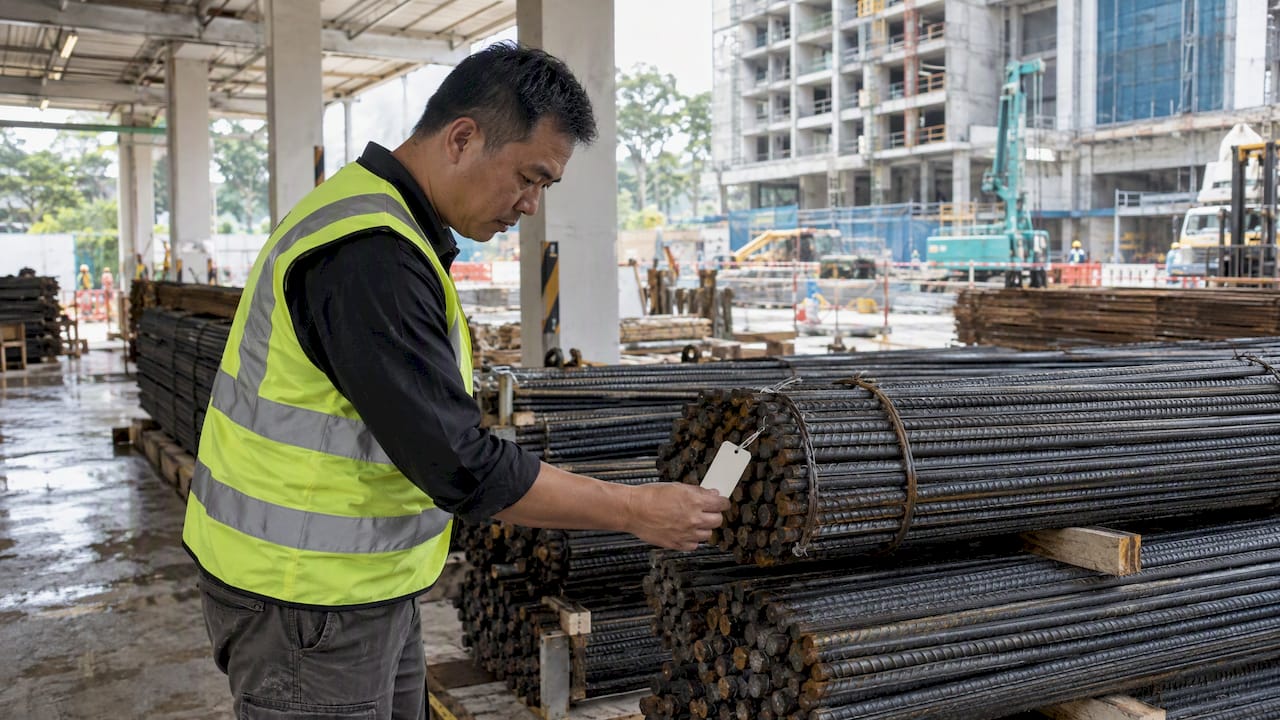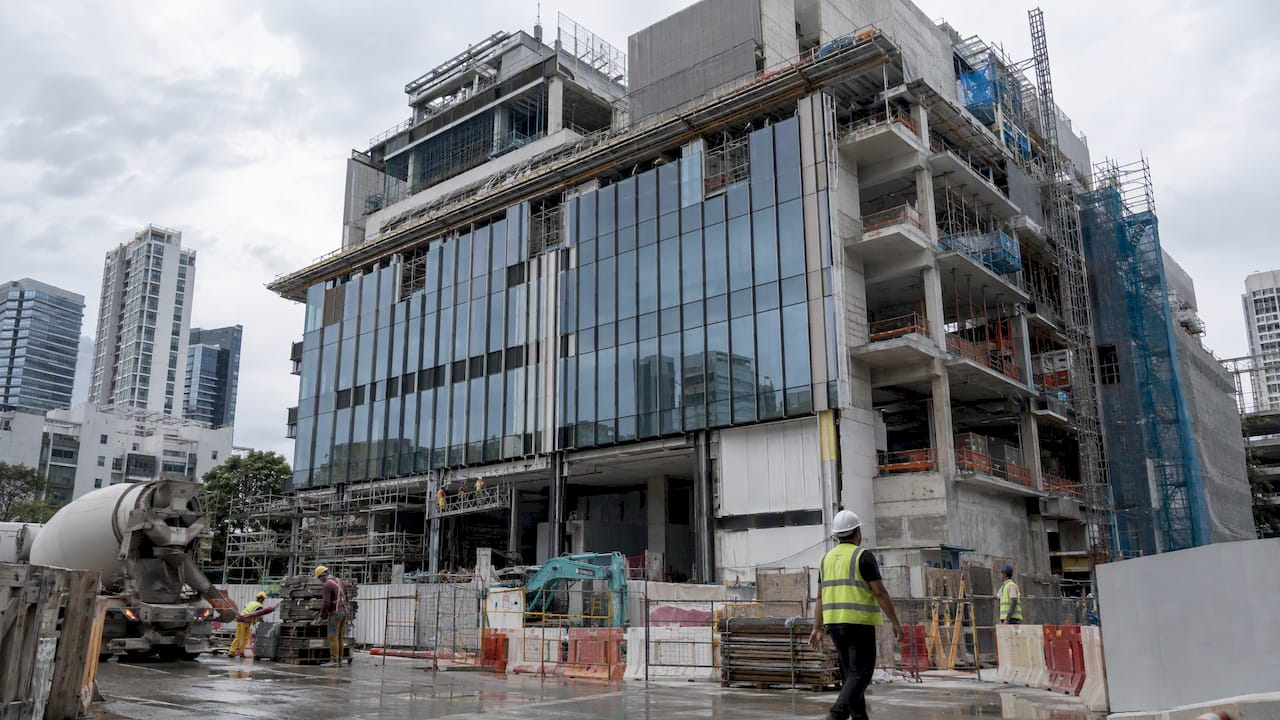
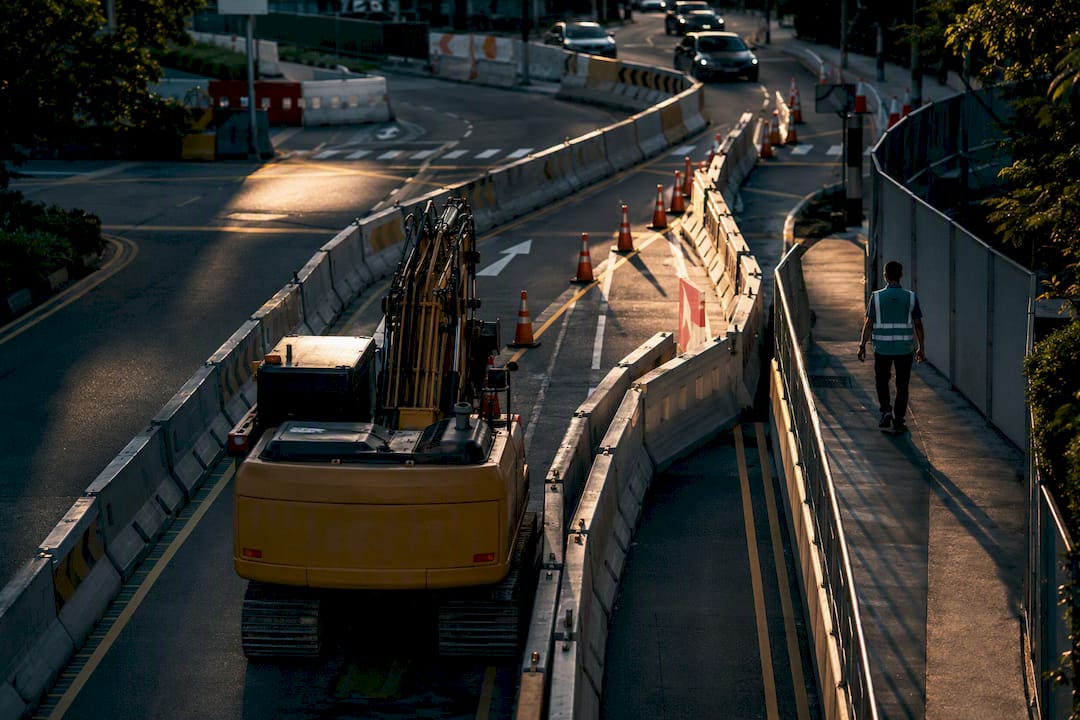
A traffic management plan (TMP) is the site document that proves you have identified and controlled every vehicle-pedestrian interaction on a construction site. It sits within the Workplace Safety and Health (WSH) framework, while public-road works additionally require a Land Transport Authority (LTA) Traffic Control Plan (TCP) with Qualified Person (QP) endorsement. Before drafting anything, walk the site gate to task and mark every point where a person and a vehicle can occupy the same space.
TL;DR:
- A traffic management plan must include detailed data collection on site scope, traffic volumes, road geometry, and emergency access before drafting begins.
- Submission and endorsement by a qualified person are required for any diversion or control plan affecting public roads, with LTA deadlines often exceeding 45 working days.
- Effective implementation involves staged device installation, clear role assignments, crew briefings, and regular inspections, especially for night shift safety.
- Common plan failures include generic templates, unassigned role specifics, lack of crew briefings, and outdated layouts after changes.
- Professional support from experienced consultants can ensure compliance, streamline approval processes, and enhance on-site safety practices.
Table of Contents
- What Must a Traffic Management Plan Singapore Sites Follow?
- Planning and Design: Building a Defensible TMP
- Do You Need an LTA Traffic Control Plan on Top of the TMP?
- Turning the Plan Into a Live System on Site
- Vehicle and Personnel Requirements the Plan Should Set
- Keeping the Plan Current: Monitoring and Review Triggers
- A Compact Checklist to Draft an Audit-Ready Plan
- Where Traffic Management Plans Actually Fail on Singapore Sites
- How MOSAIC Ecoconstruction Solutions Supports Your Traffic Management Plan
- Sources
What Must a Traffic Management Plan Singapore Sites Follow?
Every TMP prepared for a Singapore construction site needs to trace back to a specific regulatory anchor, not a generic template pulled from another country’s guidance. Two frameworks govern the document, and safety managers frequently blur the line between them.
The Workplace Safety and Health (Risk Management) Regulations require employers to identify hazards, assess risk, and implement controls, with traffic recognized as one of the leading causes of serious injury on construction sites. The WSH Council’s workplace traffic safety guidance sets out exactly what the resulting plan must cover:
- Transport activities and the routes vehicles take across the site
- Site traffic conditions, including gradients, blind corners, and surface quality
- Vehicle types present, from tower crane mobile units to delivery trucks
- Traffic rules specific to the site, such as one-way loops and speed limits
- Environmental factors like lighting, weather exposure, and noise
- Safety technologies in use, including reversing alarms and proximity sensors
- Worker training and competency records for drivers and banksmen
- Drivers’ health and fitness documentation
When works touch a public road, footpath, or carriageway, the LTA Code of Practice: Traffic Control at Work Zone becomes binding, not advisory. It governs signage, buffer zones, and device placement for any temporary traffic control near live traffic.
Submission timing matters more than most contractors assume. LTA requires diversion or TCP submissions well in advance of implementation, with longer lead times advised for major or complex diversions involving multiple lane closures or signal changes. A QP or traffic consultant must endorse the drawings before LTA will process them.
Planning and Design: Building a Defensible TMP
A TMP that survives an audit starts with data, not a drawing. Before sketching a single barrier line, collect four categories of information: the scope and duration of works, measured or estimated traffic and pedestrian volumes, road geometry including gradients and sight lines, and emergency vehicle access routes that must remain unobstructed at all times.
The LTA Code of Practice structures every work-zone plan around five phases and four subzones, and understanding both is what separates a compliant plan from a cosmetic one.
The five phases:
- Planning: define scope, risk, and stakeholder impact
- Design: produce layouts, buffer distances, and device schedules
- Implementation: install devices and brief crews before works begin
- Operation and maintenance: monitor, inspect, and adjust daily
- Close-out: remove devices and restore the road to its original condition
The four work-zone subzones, drawn from the same Code of Practice, give drivers a predictable sequence of cues: advance warning, transition, activity, and termination. Skipping the transition zone, or compressing it to save space, is one of the most common design errors on tight urban sites.
For any diversion affecting more than a single lane, a swept-path analysis showing how the largest vehicle using the site can turn without encroaching on the opposing carriageway belongs in the drawing set, alongside cross-sections and a key plan.
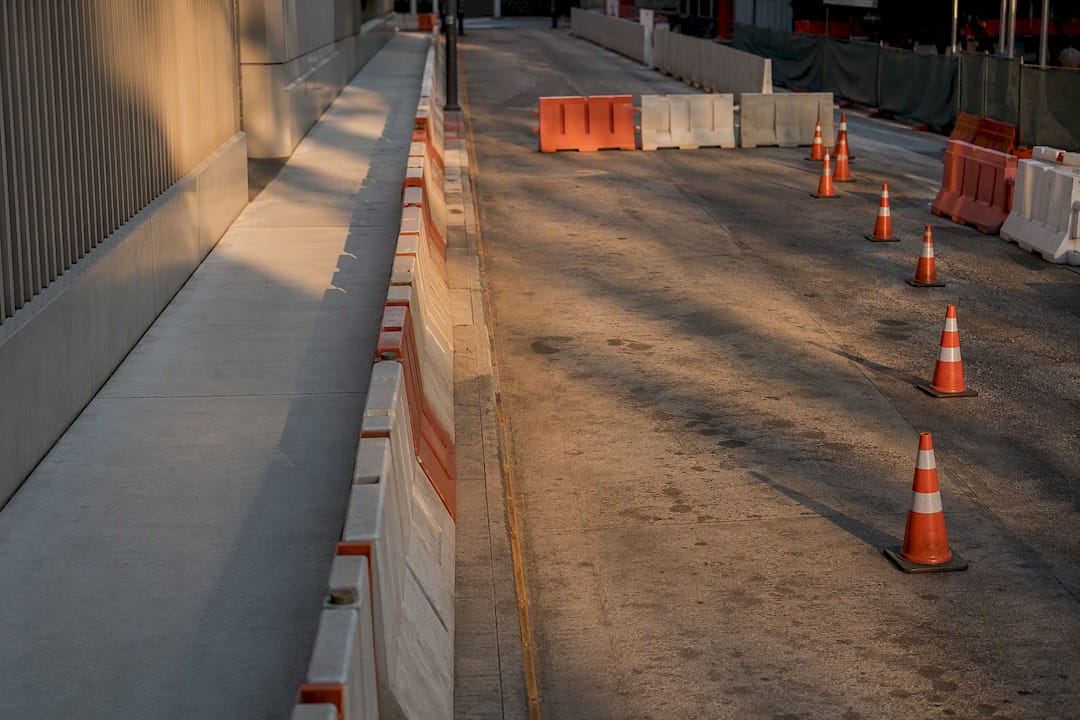
Pro Tip: Design separation before you draw routes. A fixed walkway or barrier that physically removes the pedestrian-vehicle interaction beats any amount of signage trying to manage it after the fact.
Do You Need an LTA Traffic Control Plan on Top of the TMP?
Not every site needs both documents. A TMP covering internal site traffic is often sufficient when all vehicle movement stays within the site boundary. A TCP becomes mandatory the moment works extend onto public infrastructure.
You need an LTA-endorsed TCP when any of the following apply:
- Works occupy or close a lane on a public road, even temporarily
- Traffic signal timing or phasing needs adjustment
- Pedestrian footpaths are diverted or narrowed
- Heavy vehicles must cross a public carriageway to enter or exit the site
Approval runs through LTA, with drawings endorsed by a QP or registered traffic consultant before submission. Once works are live, LTA expects a post-implementation checklist confirming the site matches the approved drawings, not the concept sketch submitted months earlier.
The checklist LTA officers verify most often includes:
- Lane widths matching the approved cross-section
- Pedestrian walkway continuity and width
- Signage type, placement, and retroreflectivity
- Swept-path clearance for the largest vehicle in regular use
A mismatch between the approved drawing and the as-built site is the single most common reason LTA issues a rectification notice, according to the LTA Diversion Checklist.
Turning the Plan Into a Live System on Site
A TMP that lives only on paper protects nobody. Getting it into daily operation follows a sequence that matters as much as the content itself.
- Install advance warning signage first, working backward from the activity zone toward approaching traffic.
- Place barriers and cones along the transition zone, confirming taper lengths match the buffer distances in your drawings.
- Position banksmen and traffic controllers at defined, named locations, never as a floating “assigned as needed” role.
- Brief every crew on the layout before the first vehicle moves, using the role cards issued that morning.
- Inspect devices at shift start and again at dusk, since faded signage and shifted cones are the most common night-shift failure.
A June 2026 WSH Council advisory sharpened expectations around banksman placement specifically: banksmen and traffic controllers must be stationed outside demarcated danger zones, never inside the swing radius of reversing plant or the turning path of a mobile crane. Naming the exact standing position on the drawing, rather than writing “banksman assigned,” is what separates a plan that prevents reversing incidents from one that merely documents intent.
Pro Tip: Assign a shift supervisor to walk the full device layout at the start and end of every shift, not just at handover. Devices shift, cones get kicked, and signage fades faster under Singapore’s rain and heat than most schedules account for.
Daily checks should feed into the broader safety management system governing the site, so traffic control isn’t managed in isolation from the rest of your safety program.
Vehicle and Personnel Requirements the Plan Should Set
The TMP is only as reliable as the vehicles and people executing it. Include a maintenance regime that checks reversing alarms, mirrors, and warning lights before each vehicle enters service, since mechanical failure is a preventable cause of on-site incidents.
Personnel requirements to document include:
- A maintenance log for site vehicles, covering brakes, lights, and audible reversing alarms
- Training certification for banksmen and traffic controllers, with refresher training scheduled before certificates lapse
- Health and fitness declarations for drivers operating heavy plant, kept current and filed with the TMP
- Valid licensing documentation for every operator, cross-checked against the roles assigned that day
Guidance on PPE and broader construction safety regulations reinforces that personal protective equipment for traffic-facing roles, particularly high-visibility clothing, is not optional even on short-duration works.
Keeping the Plan Current: Monitoring and Review Triggers
A TMP is a living document, not a one-time submission. LTA requires the post-implementation checklist returned within a defined window, and where diversions were part of a larger submission, some documentation must go back within 10 working days of works starting, per the LTA Diversion Checklist.
Between submissions, monitoring should run on a set cadence: weekly device inspections, monthly full-layout audits, and dedicated night checks where lighting and visibility change the risk profile entirely. The SCAL Construction Site Traffic Management Guide recommends monthly inspection as a baseline for active sites, with sample risk assessment templates auditors expect to see attached.
Trigger an immediate TMP review when any of these occur:
- The site layout changes, including new access points or relocated storage
- A near-miss or incident involves a vehicle
- New plant or equipment enters service
- A scheduled risk assessment interval lapses
A Compact Checklist to Draft an Audit-Ready Plan
Building a TMP from scratch goes faster when you follow the same sequence auditors use to check one.
- Conduct a gate-to-task traffic risk assessment covering every vehicle route.
- Walk the site physically, marking pedestrian crossing points and blind spots.
- Design separation first: fixed walkways, barriers, then routes.
- Specify the device schedule: signage, barriers, cones, lighting.
- Assign named roles on a role assignment matrix, not generic labels.
- Submit to LTA if public roads are affected, allowing 45 working days minimum.
- Implement per the phased sequence and brief every crew.
- Monitor on a weekly and monthly cadence.
- Review after any layout change or incident.
| Deliverable | Purpose |
|---|---|
| Key plan | Shows overall site layout and traffic routes |
| Cross-sections | Confirms lane widths and buffer distances |
| Device schedule | Lists every sign, barrier, and light with location |
| Role assignment matrix | Names banksmen and controllers by position, not title |
| Emergency response notes | Confirms access stays clear for emergency vehicles |
Before submission, confirm every drawing carries QP or traffic consultant endorsement. Before implementation, confirm the as-built site matches the drawing, not the concept.
Where Traffic Management Plans Actually Fail on Singapore Sites
Auditors tend to find the same four weaknesses repeatedly, regardless of project size. The first is a generic template copied from another project, one that lists “designated walkways” without describing where they actually run on this site. The second is a plan with no named banksman positions, just a line stating a banksman will be assigned. The third is a plan that exists in a folder but was never briefed to the crews executing the work. The fourth is a plan that was accurate at kickoff and never revised after the layout changed.
The fixes are unglamorous but effective: a site-specific walkdown before drafting, printed role cards handed out at toolbox briefings, a scheduled review triggered by any layout change, and competency records kept current for every appointed traffic controller. None of this requires new technology. It requires treating the TMP as an operating document rather than a submission requirement.
— Aman
How MOSAIC Ecoconstruction Solutions Supports Your Traffic Management Plan
Contractors can obtain professional support to move from a blank drawing to an audit-ready TMP, reducing back-and-forth of drafting a plan in-house and improving alignment with authorities’ interpretation of the Code of Practice.

Professional services may include drafting the TMP, coordinating endorsement by QP and traffic consultants where public roads are involved, training banksmen and traffic controllers according to WSH Council advisories, and conducting on-site implementation audits once the plan goes live. A typical process for supporting a TMP covers document drafting, stakeholder briefings with the site team, and on-site audits against the approved layout, usually timed to align with LTA submission windows.
If you want to see how audit findings translate into corrective action before an inspector flags them, review our safety audit examples for Singapore construction compliance. For sites juggling multiple certifications alongside traffic control, our regulatory compliance best practices page outlines how a single engagement can cover both. Reach out to get a scoped proposal for your site’s TMP before your next submission deadline.
Sources
- LTA Code of Practice: Traffic Control at Work Zone (July 2019 edition)
- Construction Site Traffic Management Guide (SCAL, 2021)