
Introduction
Large Language Models now automate the bulk of carbon accounting work that Singapore’s heavy industry facilities previously handled through spreadsheets and manual data entry. Petrochemical plants on Jurong Island, steel mills, semiconductor fabs, and marine shipyards face overlapping obligations under ISO 14064-1 GHG inventory standards and ISO 50001 energy management systems, with Singapore mandating GHG emissions reporting for listed companies by 2025. LLM assisted carbon accounting addresses both standards simultaneously by extracting emissions data from operational records, matching activity data to the correct emission factors, and generating compliance-ready reports.
This article covers how LLM-powered tools handle ISO 14064 and ISO 50001 compliance workflows for Singapore heavy industry, from data collection through verification. It is written for sustainability officers, HSE managers, and supply chain managers adapting to new regulations while meeting NEA reporting deadlines and preparing for external audits. Topics outside scope include voluntary carbon offset programs and building-sector energy codes.
LLM assisted carbon accounting automates data collection, GHG quantification, and automates GHG emissions reporting for ISO 14064-1 inventories and ISO 50001 energy management systems. Tools like Unravel Carbon report 50–60 percent reductions in time and manpower for reporting processes, while platforms such as Terrascope have achieved 50 percent improvement in accuracy for emission data matching.
After reading this article, you will understand:
-
How LLMs extract and validate activity data from fuel logs, utility bills, and equipment records
-
Which ISO 14064-1 and ISO 50001 requirements map to specific LLM automation capabilities
-
What deployment steps apply to Singapore heavy industry facilities with legacy systems
-
How to evaluate custom versus commercial carbon accounting platform options
-
What regulatory deadlines and thresholds trigger mandatory reporting and carbon tax obligations
Understanding LLM Assisted Carbon Accounting
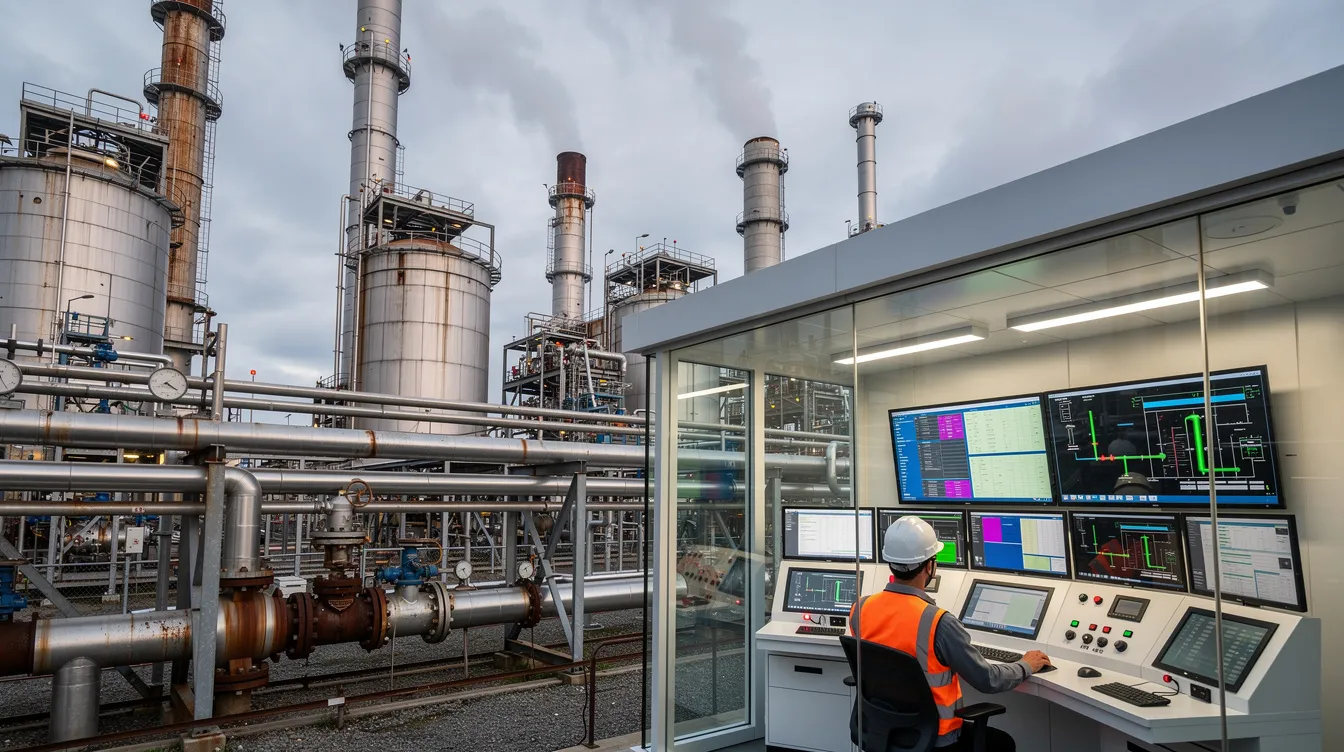
LLM assisted carbon accounting uses natural language processing and machine learning to automate greenhouse gas inventory development, energy baseline tracking, and regulatory reporting. Instead of compliance teams manually transcribing fuel purchase records into spreadsheets, an LLM reads the source documents, extracts quantities and units, matches them to published emission factors, and calculates organisational GHG emissions across Scope 1, 2, and 3 boundaries.
Singapore’s regulatory framework makes this automation urgent. The Carbon Pricing Act applies escalating carbon taxes to facilities emitting over 25,000 tCO₂e of direct emissions per year, and Singapore’s carbon tax will reach SGD 45 per ton by 2026. By 2030, the carbon tax may range from SGD 50–80 per ton. Companies must comply with ISSB climate disclosures from FY2025, and all listed companies must report GHG emissions starting in 2025. Heavy industries in Singapore face stringent local and international pressures to comply with environmental regulations while managing production costs.
Core LLM Capabilities for Carbon Accounting
The first capability is automated data extraction. LLMs paired with optical character recognition read utility bills, fuel delivery receipts, equipment maintenance logs, and process control records. A Singapore-based platform called VerityOS demonstrates this approach: its AI reads bills and fuel records, extracts values with units and dates, links entries to emission factors, and maintains append-only records so every tonne has traceable proof. The system aligns with ISO 14064-1 and GHG Protocol requirements.
The second capability is intelligent emission factor matching. When an LLM processes a natural gas purchase record from a Jurong Island petrochemical facility, it identifies the fuel type, selects the correct Singapore-specific or IPCC emission factor, applies the appropriate global warming potential, and calculates CO₂-equivalent emissions. This eliminates the manual lookup process where compliance staff cross-reference NEA published factors against fuel types, temporal changes in grid emission intensity, and facility-specific measurement conditions.
Integration with ISO Standards Framework
ISO 14064 and ISO 50001 share a Plan-Do-Check-Act (PDCA) framework, which creates natural integration points for LLM automation. ISO 14064-1 outlines principles for GHG emissions reporting and requires reporting Scope 1 and 2 emissions, while ISO 50001 focuses on improving energy performance, efficiency, and consumption. Both standards require systematic data collection, baseline establishment, monitoring, and periodic review.
ISO 14064-1 helps organizations apply the key principles of ISO 14064-1 as they structure how they identify emission sources, set GHG inventory boundaries, and quantify greenhouse gas GHG emissions. ISO 50001 complements this by requiring identification of Significant Energy Uses (SEUs), establishment of Energy Performance Indicators (EnPIs), and continuous improvement targets. An LLM system handles both standards from a single data pipeline: the same fuel combustion records feed into both the GHG inventory and the energy baseline calculation.
For facilities registered under NEA’s Measurement and Reporting regulations, the connection between automated data processing and verification requirements is direct. Singapore’s energy reporting mandates require compliance from facilities above 2,000 tCO₂e, while facilities emitting over 25,000 tCO₂e face escalating carbon taxes under the Carbon Pricing Act. Maintaining an auditable link between reported figures and source data is crucial for compliance, and LLM systems generate this audit trail automatically.
The next section maps specific LLM functions to ISO 14064 and ISO 50001 compliance requirements.
LLM Applications for ISO 14064 and ISO 50001 Compliance
With the foundational architecture in place, the question becomes which specific compliance tasks LLMs handle and where human oversight remains necessary. Singapore’s heavy industry sectors each present distinct emission profiles: petrochemical plants generate process emissions from chemical reactions, steel mills produce CO₂ from blast furnace operations, and semiconductor fabs consume large volumes of electricity for cleanroom cooling. LLMs can improve compliance by automating data collection and ensuring accurate GHG boundaries and energy data across all these facility types.

ISO 14064-1 GHG Emissions Reporting and Inventory Automation
Scope 1 direct emissions calculation for heavy industry involves multiple fuel types and process-specific emission sources. A petrochemical facility on Jurong Island burns natural gas, diesel, and heavy fuel oil across boilers, process heaters, and flare systems. The LLM ingests fuel purchase logs, matches each fuel type to its emission factor (sourced from IPCC 2006 guidelines or NEA published factors), and calculates CO₂, CH₄, and N₂O emissions separately before converting to CO₂-equivalent. For Industrial Process and Product Use (IPPU) emissions, such as those from chemical synthesis or calcination, the system applies process-specific calculation methodologies.
Fugitive emissions present a different data challenge. Refrigerant leaks from cooling systems and methane releases from petrochemical infrastructure require leak detection records rather than purchase invoices. LLMs parse maintenance logs and refrigerant top-up records to estimate fugitive releases, flagging entries that fall outside expected ranges.
Scope 2 emissions tracking for Singapore facilities uses grid emission factors published by the Energy Market Authority. When a company procures Renewable Energy Certificates (RECs), the LLM adjusts calculations to reflect both location-based and market-based accounting methods. ISO 14064-1 requires GHG emissions reporting that distinguishes between these approaches.
Scope 3 upstream and downstream emissions mapping remains the least automated category. Most commercial platforms cover limited Scope 3 categories (business travel, employee commuting, purchased goods) unless detailed supplier data is available. For supply chain managers tracking carbon footprint across raw material transport and product distribution, LLMs can process shipping manifests and supplier emissions declarations, but data gaps are common and the system must flag where proxy data replaces measured values.
ISO 14064-1 compliance supports participation in GHG registries, enabling companies to benchmark their performance against industry peers and demonstrate progress toward Singapore’s goal of net zero emissions by 2050.
ISO 50001 Energy Management Integration
An Energy Management System (EnMS) is required for certain corporations under the National Environment Agency. Under the Energy Conservation Act, Tier 1 industrial facilities consuming 500 TJ/year or more must appoint a certified Energy Manager, conduct Energy Efficiency Opportunities Assessments (EEOA), and implement an EnMS.
LLMs handle EnPI calculations by processing real-time or near-real-time data from power meters, steam flow meters, and chilled water systems. For a semiconductor fab, relevant EnPIs include energy per wafer produced, cooling system power usage effectiveness, and cleanroom air handling energy intensity. The system accounts for external drivers such as ambient temperature and production volume, normalizing energy performance data so that month-to-month comparisons reflect actual efficiency changes rather than demand fluctuations.
Energy baseline establishment, a core ISO 50001 requirement, benefits from machine learning’s ability to model historical consumption patterns against production variables. ExxonMobil’s Jurong Island operations illustrate the value of this approach: since 2002, the company improved energy efficiency by over 25 percent through its Global Energy Management System, corresponding to CO₂ emission avoidance equivalent to removing over 600,000 cars from Singapore roads. Real-time wireless monitoring of refining units identifies equipment requiring maintenance before efficiency degrades.
Keppel Infrastructure Holdings provides another reference point: implementing ISO 50001:2018 across its plants improved visibility of energy use, identified SEUs, established EnPIs, and generated cost savings. HSL Constructor identified nine SEUs and improved monitoring of diesel usage across project sites after integrating EnMS within its existing Integrated Management System.
Multi-Standard Compliance Dashboard
A unified reporting interface combining GHG inventory data with energy management metrics eliminates the duplication that occurs when separate teams manage ISO 14064 and ISO 50001 compliance independently. The dashboard tracks carbon emissions alongside energy consumption, validates data against both standards’ requirements, and generates audit trails for third-party verification.
Audit trail generation is vital for ISO 14064-3 verification and third-party audits. Every data point links back to its source document (scanned bill, meter reading, sensor log), the emission factor applied, the timestamp of calculation, and the identity of the approver. Spectral Intelligence deploys LLM-assisted features including narrative reporting of emissions data, intelligent extraction from documents, and vector search, with ISO 27001 and SOC2 compliance guardrails for enterprise clients.
The carbon tax incentivizes businesses to reduce carbon footprints, and a well-configured dashboard makes the financial impact of carbon pricing visible alongside operational metrics. Organizations must track GHG emissions to comply with regulations, and this tracking becomes the foundation for identifying mitigation actions and setting ambitious targets for carbon neutrality.
Deployment of these systems follows a structured methodology adapted to Singapore’s heavy industry environment.
Implementation Methodology for Singapore Heavy Industry
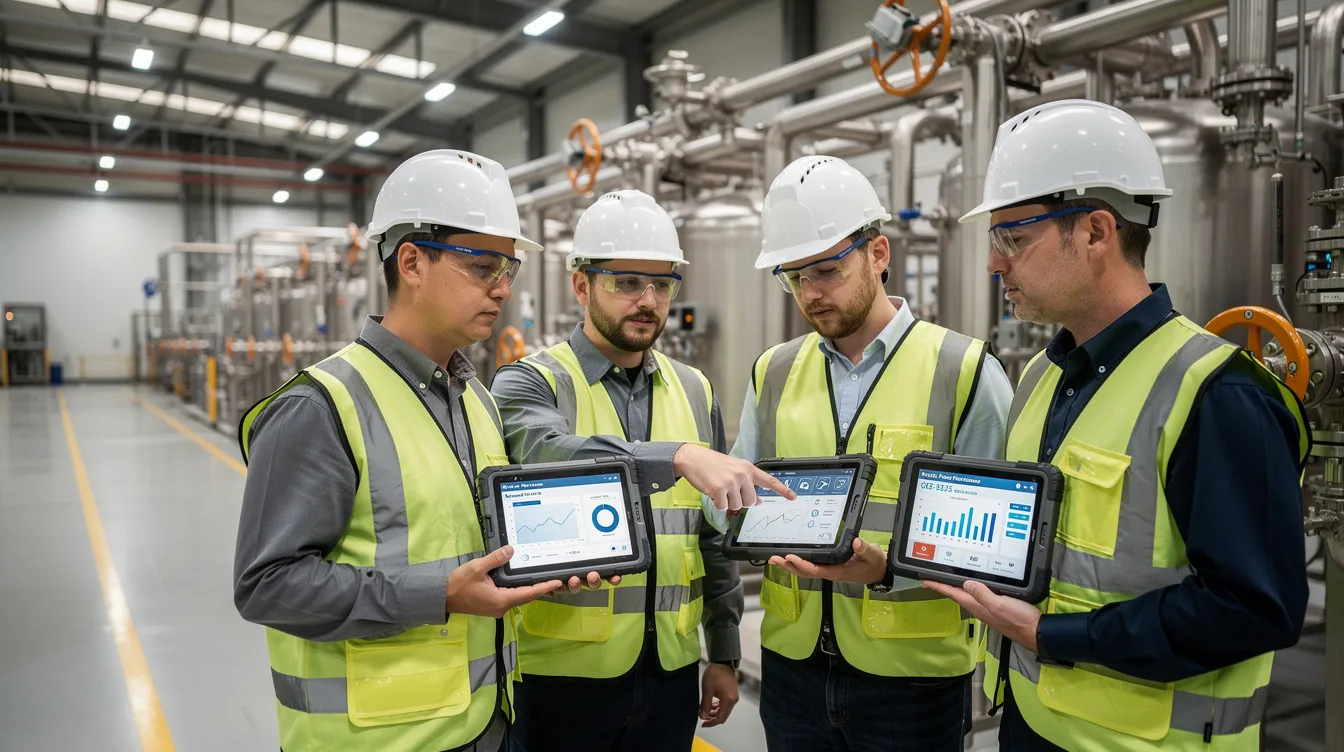
Moving from concept to deployment requires addressing the specific technical constraints of heavy industry facilities, many of which operate legacy control systems installed decades ago. The methodology below applies to facilities with multiple emission sources, complex energy systems, and regulatory obligations under both the Energy Conservation Act and Carbon Pricing Act.
Deployment Process for Heavy Industry Facilities
This phased approach suits facilities that must maintain continuous operations while implementing new digital tools for carbon management and sustainability reporting.
-
Data source mapping and system integration: Inventory all emission sources and energy consuming systems. Catalogue existing data infrastructure: SCADA systems, ERP platforms, billing systems, manual logbooks. For a typical Jurong Island petrochemical plant, this includes fuel flow meters for natural gas and diesel, electricity sub-meters across process units, steam generation records, and refrigerant inventory logs. The output is a data map showing which sources are digitized, which require manual digitization, and which need new metering equipment.
-
LLM configuration with facility-specific parameters: Train or configure the LLM on facility-specific operational data, Singapore regulatory requirements, and applicable emission factors. This includes loading NEA-published factors, IPCC guidelines, grid emission intensity values, and process-specific calculation methodologies. GHG management strategies include developing mitigation actions tied to the facility’s specific emission profile. Participants learn GHG measurement best practices through hands-on configuration rather than abstract training.
-
Automated data pipeline with validation: Establish real-time or scheduled data collection from connected systems, with LLM-powered anomaly detection running on every batch. The system flags missing meter readings, outliers (a cooling system energy spike three standard deviations above baseline, for example), and unit conversion errors. For semiconductor fabs with high electricity demand and chilled water systems, this step catches the equipment malfunctions that would otherwise distort both GHG inventories and energy baselines.
-
Compliance reporting workflow configuration: Set up output templates for NEA enhanced emissions reports, ISO 14064-1 inventory documents, ISO 50001 EnMS reports, and SGX sustainability disclosures. Configure the system to produce comprehensive reporting packages that meet the monitoring plan specifications approved by NEA, including data on uncertainty and completeness.
Platform Comparison for Singapore Market
|
Criterion |
Custom LLM Solution |
Commercial Platform |
|---|---|---|
|
Singapore Regulatory Alignment |
Fully configurable to NEA, ECA, and CPA requirements; updates controlled internally |
Pre-configured templates for common reporting standards; vendor manages regulatory updates |
|
Heavy Industry Specificity |
Handles IPPU emissions, fugitive releases, and process-specific EnPIs through custom models |
Generic industry modules that cover standard fuel combustion and electricity; process emissions may require add-ons |
|
Implementation Timeline |
3–6 months for development, testing, and integration with existing SCADA/ERP |
1–3 months for deployment using existing connectors and templates |
|
Total Cost of Ownership |
Higher initial investment (SGD 200K–500K range for mid-size facility), lower per-facility marginal cost for multi-site operators |
Lower initial cost (subscription-based), higher ongoing fees; customization incurs additional charges |
|
Data Sovereignty |
Data stays within company infrastructure or Singapore-hosted cloud |
Depends on vendor; some platforms host data outside Singapore |
For facilities with straightforward emission profiles (primarily fuel combustion and purchased electricity), commercial platforms like VerityOS or Unravel Carbon offer faster time-to-compliance. Facilities with complex IPPU emissions, multiple fuel types, and proprietary processes benefit from custom solutions that reflect their specific GHG inventory boundaries and energy baselines.
Integrating management systems across ISO standards shares common challenges regardless of whether the system targets environmental, energy, or safety performance.
Common Challenges and Solutions
Singapore heavy industry faces specific obstacles when implementing LLM assisted carbon accounting, ranging from infrastructure gaps to workforce readiness. The carbon pricing trajectory (SGD 45/ton in 2026, potentially SGD 50–80/ton by 2030) makes addressing these challenges a financial priority rather than a compliance formality.
Data Quality and Completeness Issues
Many heavy industry facilities established 20–30 years ago operate with analog instrumentation, paper-based logs, and disconnected metering systems. A steel mill’s blast furnace fuel records might exist as handwritten shift logs, while a marine shipyard tracks diesel consumption through purchase orders rather than flow meters.
The LLM approach handles this in two steps. First, OCR extracts values from scanned documents, with confidence scores assigned to each extracted data point. Second, validation rules check extracted values against historical patterns and physical constraints. A diesel consumption figure that implies a generator running at 150 percent rated capacity gets flagged. Where direct measurement is unavailable, the system applies proxy data or estimation methods from IPCC Tier 1 or Tier 2 methodologies, and labels these values with their uncertainty ranges for the verifier’s review.
Integration with Legacy Systems
Older SCADA systems in petrochemical plants often use proprietary protocols (Modbus, OPC-DA) that do not natively connect to modern cloud-based carbon accounting platforms. Deploying API connectors and data transformation layers bridges this gap. An OPC-UA gateway, for example, translates legacy protocol data into standardized formats that the LLM pipeline can process. This maintains operational continuity because the existing control system remains untouched; only a read-only data tap is added.
For facilities planning broader EHS management system upgrades, carbon accounting integration can share infrastructure with safety monitoring and environmental compliance systems.
Regulatory Interpretation Complexity
Singapore’s climate reporting regulations include NEA’s GHG M&R guidelines, the Carbon Pricing Act, ECA mandatory energy management practices, and SGX sustainability reporting requirements. Each has distinct definitions: the M&R regulations define “reckonable emissions” differently from how the Carbon Pricing Act defines “taxable emissions,” and the GHG Manager qualification requirements specify that candidates must hold Singapore Certified Energy Manager credentials (professional level) or have at least three years’ experience in energy management, energy auditing, GHG accounting, or ISO 14064/ISO 50001 implementation.
LLM tools trained on the full text of these regulations can answer specific queries (“What is NEA’s current emission factor for grid electricity in 2026?”) and flag when a regulatory update changes calculation requirements. However, boundary definition decisions (which emission sources fall within the organisational boundary, how to handle joint ventures) require human judgment. An application consultancy session review with qualified GHG verification professionals remains necessary for initial boundary setting.
Staff Training and Adoption
The skills needed to operate LLM-powered carbon accounting differ from traditional spreadsheet-based GHG accounting. Plant operators need to understand which data the system requires and how to validate flagged anomalies. Environmental coordinators must interpret model outputs and make judgment calls on boundary questions. Management teams need dashboard literacy to connect carbon performance to financial and production metrics.
Role-based training programs work better than generic workshops. A three-tier approach covers: (1) data entry and validation for plant-floor operators, (2) report review and regulatory interpretation for compliance staff, and (3) strategic analysis and target-setting for ESG leaders and senior management. This structure equips professionals at each level with the specific capabilities their role demands.

The future of EHS in Singapore increasingly depends on digital technology integration, and carbon accounting sits at the intersection of environmental sustainability, regulatory compliance, and operational efficiency.
Conclusion and Next Steps
LLM assisted carbon accounting converts manual GHG inventory compilation and energy management tracking into automated, auditable workflows. For Singapore heavy industry, where facilities face concurrent ISO 14064 and ISO 50001 obligations alongside the Carbon Pricing Act’s escalating tax rates, this automation directly reduces compliance costs and improves data accuracy. Singapore aims for net zero emissions by 2050, and the regulatory pathway between now and then will tighten requirements for both listed companies and non listed firms.
Immediate steps for facilities that have not yet implemented LLM-powered carbon accounting:
-
Conduct a facility data audit: catalogue all emission sources, energy consuming systems, existing metering infrastructure, and data formats currently in use
-
Evaluate current compliance gaps against ISO 14064-1 requirements (Scope 1 and 2 completeness, audit trail documentation) and ISO 50001 requirements (SEU identification, EnPI baselines, energy review documentation)
-
Request demonstrations from commercial platforms operating in Singapore (VerityOS, Unravel Carbon, Spectral Intelligence) and compare against custom development costs for facilities with complex IPPU emissions
-
Develop an implementation timeline aligned with FY2025 mandatory disclosure deadlines for listed companies, and FY2029 external assurance requirements
For organizations pursuing broader environmental sustainability goals, GHG management strategies include developing mitigation actions that connect carbon reporting to operational improvements. The latest developments in AI-powered climate action tools continue to expand what automated systems handle, from Scope 3 supply chain emissions mapping to integration with carbon credit trading platforms and green finance instruments.
Additional Resources
-
NEA mandatory energy management practices for existing industrial facilities, including GHG reporting thresholds, Energy Manager appointment requirements, and EEOA guidance
-
ACRA sustainability reporting timeline covering FY2025 through FY2032 requirements for listed companies and Large NLCos, including external assurance milestones
-
NEA GHG M&R Guidelines Part I, specifying monitoring plan requirements, GHG Manager qualifications, and enhanced emissions report formatting for registrable and reportable businesses
-
ISO 14064 and ISO 50001 integration guidance within broader management systems, including practical checklists for Singapore businesses navigating multi-standard compliance