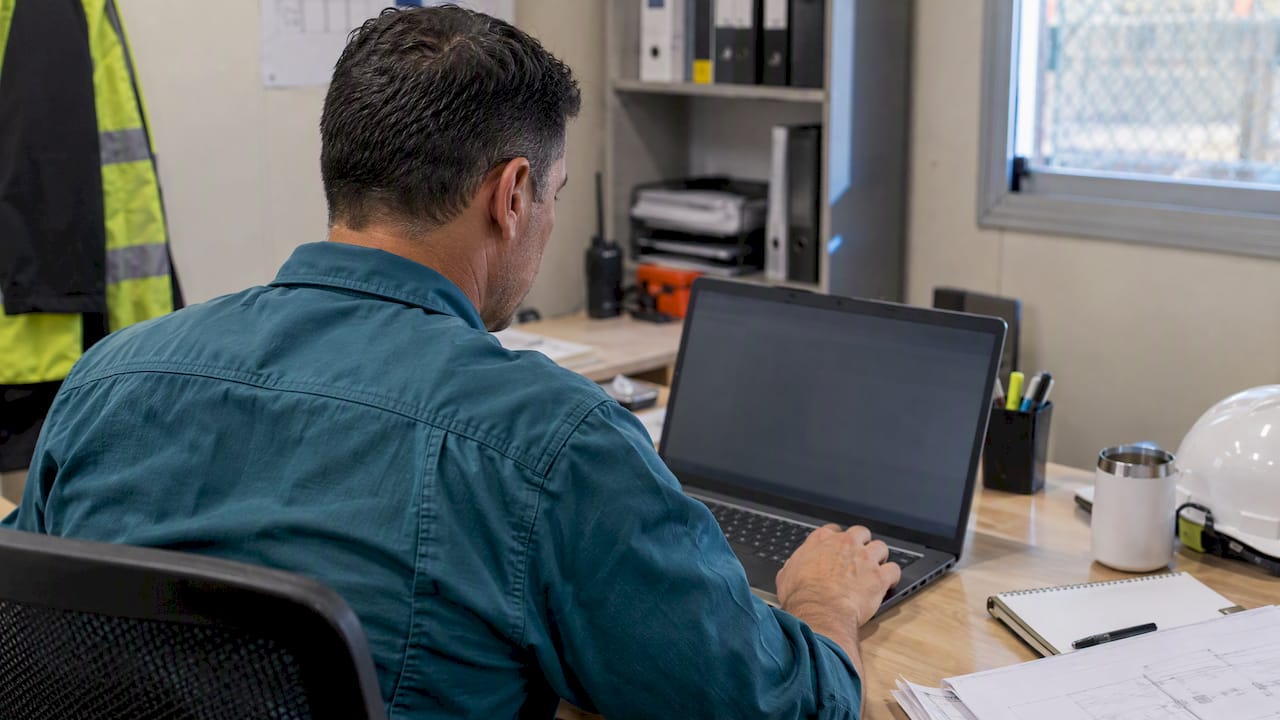
A site supervisor should not have to search through WhatsApp messages, paper forms, and separate spreadsheets to confirm whether a corrective action has been closed. Yet that is still the reality on many construction and industrial projects. The best safety software brings those records into a controlled system, but only when it reflects how work is actually planned, supervised, inspected, and documented in the field.
For contractors, the decision is not primarily about buying the platform with the longest feature list. It is about choosing a system that helps project teams identify risks earlier, act on findings faster, maintain reliable evidence, and demonstrate compliance when a client, auditor, or regulator asks for it.
What Safety Software Should Solve
Safety software is often purchased after a painful trigger: a failed audit, repeated overdue actions, inconsistent site documentation, a client requirement, or a near miss that exposes a gap in reporting. Those are valid reasons to act, but the software should address the underlying control problem rather than simply digitize an existing weak process.
A suitable platform should give managers a current view of site performance. They need to see which inspections are due, where hazards recur, whether risk assessments are current, which incidents require investigation, and who owns each corrective action. Field personnel need a simpler experience: complete a form on a mobile device, attach a photo, raise an issue, and receive clear follow-up.
For regulated contractors, documentation is not administrative overhead. It is evidence that planned controls were communicated, implemented, checked, and improved. If a system cannot produce clear, traceable records during an audit or investigation, its value is limited.
Best Safety Software Features for Construction Teams
Construction work involves changing work fronts, multiple subcontractors, temporary conditions, and high-risk activities. Generic compliance tools can work, but only if they can be configured without forcing crews into impractical workflows.
Mobile inspections that work at the point of work
Supervisors need to complete inspections where the work occurs, including basements, work-at-height areas, laydown yards, and remote locations with unreliable connectivity. Look for mobile forms, photo and video capture, timestamps, location data where appropriate, and offline capability.
The software should support both routine and project-specific inspections. A daily housekeeping check, scaffold inspection, lifting equipment review, excavation checklist, and environmental inspection do not require the same questions or approval route. Templates must be controlled, but teams should be able to adapt them to site conditions under proper authorization.
Risk assessment and permit controls
A strong system supports the lifecycle of a risk assessment, from preparation and approval through briefing, review, and revision after a change in method, equipment, or work environment. It should make expired or unreviewed assessments visible before they become an audit finding.
For high-risk work, consider whether the platform can support permits to work, toolbox talks, method statements, and worker acknowledgments. The right level of integration depends on the operation. A small specialty contractor may need simple document distribution and sign-off. A larger project may require permit status, isolation controls, and approval workflows that connect multiple disciplines.
Incident, near-miss, and hazard reporting
The easiest report is usually the one that gets made. Workers should be able to report hazards and near misses quickly, without navigating a long form or worrying that the report will disappear into a database.
For EHS leaders, the system must then provide a disciplined investigation process. It should capture immediate actions, causal analysis, assigned owners, due dates, verification of completion, and lessons learned. Avoid platforms that count reports but do not make it easy to prove that issues were closed effectively.
Corrective action management
This is often the difference between useful software and an expensive digital filing cabinet. Every inspection finding, audit observation, incident recommendation, and client comment should be traceable to a responsible person and a realistic completion date.
Escalation reminders matter, but they are not enough. Managers need dashboards that identify overdue actions, repeat observations, and actions closed without supporting evidence. The system should allow reviewers to reject weak close-outs and require photos, documents, or verification notes when the risk warrants it.
Training and competency records
Construction organizations must be able to show that personnel are competent for assigned work and that mandatory training remains current. Software can centralize training matrices, license records, induction status, toolbox talk attendance, and refresher alerts.
Be careful not to confuse attendance records with competence assurance. A platform can record that someone attended a session, but supervisors still need a process for assessing whether workers understand critical controls and can perform tasks safely.
How to Compare Safety Software Vendors
Start with the processes that create the most compliance exposure or operational delay. For one contractor, it may be managing subcontractor inductions and daily inspections across several projects. For another, it may be incident investigations, corrective action closure, and reporting to clients. Build your evaluation around those real use cases.
Ask each vendor to demonstrate a complete workflow, not just a dashboard. For example, ask them to show how a supervisor raises a work-at-height observation, assigns an action to a subcontractor, attaches evidence, verifies completion, and produces an audit report. A polished demonstration of individual features does not prove that the workflow will hold together under site pressure.
Data ownership and reporting deserve close attention. Confirm that your organization can export records in usable formats, retain them according to contractual and regulatory requirements, and control access by project, company, and role. If clients require regular reports, test whether the output can be produced without hours of manual cleanup.
Integration may also affect the final choice. Larger organizations may need software that connects with HR systems, project management tools, document control platforms, or business intelligence reporting. Smaller contractors should not pay for complex integrations they will not use. The best fit is the one that reduces duplicate entry while remaining manageable for the people who administer it.
Implementation Matters More Than the Purchase
Many safety software projects lose momentum because the company tries to digitize every process at once. A phased rollout usually delivers better adoption. Begin with a few high-value workflows, such as inspections, hazards, incidents, and corrective actions. Use feedback from supervisors and workers to refine forms before applying the system across all projects.
Governance must be established early. Decide who owns master templates, who can amend forms, how often controls are reviewed, and who verifies corrective action evidence. Without this discipline, teams can create inconsistent forms and reporting categories that weaken company-wide analysis.
Training should be role-based and practical. Project managers need to understand dashboards, escalation, and accountability. Supervisors need confidence using mobile forms under field conditions. Workers need a clear explanation of why reporting matters and what happens after they submit a concern. Adoption improves when people see that reports lead to visible action rather than blame.
Common Selection Mistakes
The first mistake is choosing software solely because it is familiar to a client or competitor. Client acceptance can be valuable, but your internal processes, project size, workforce profile, and regulatory obligations may differ.
The second is over-configuring the system before anyone has used it. Excessive mandatory fields and complex approvals discourage reporting. Start with controls that are necessary for risk management and compliance, then add detail where evidence shows it is needed.
The third is treating the platform as a substitute for safety leadership. Software improves visibility and consistency, but it cannot replace competent supervision, meaningful site engagement, timely risk assessment, or management follow-through.
Make Technology Part of a Stronger Safety System
The best safety software supports a wider management system that includes clear procedures, competent people, routine verification, and responsive leadership. For organizations preparing for audits, certifications, or client prequalification, it should also make compliance evidence easier to retrieve and defend.
MOSAIC Ecoconstruction Solutions helps contractors align practical EHS processes, documentation, training, and audit readiness so that technology supports site control rather than adding another layer of administration. Select the platform that your teams will use consistently, then give it the governance and professional oversight needed to turn field data into safer decisions.