
Introduction
Large Language Models (LLMs) can now cross-reference vendor documentation against ISO 9001 requirements in minutes-a process that traditionally consumed weeks of manual effort in heavy machinery supply chain audits. For manufacturers and contractors managing hundreds of suppliers delivering safety-critical components like hydraulic assemblies, structural steel, and control systems, this shift from manual verification to AI-powered analysis represents a fundamental change in how supplier audits are conducted and how audit readiness is maintained.
This article covers the practical deployment of LLMs for vendor documentation analysis within the framework of ISO 9001:2015 Clause 8.4, with a specific focus on heavy machinery supply chains. It addresses the technical architecture, implementation methodology, governance requirements, and risk mitigation strategies that quality managers need to operationalize such systems. Topics outside this scope-such as general AI strategy or non-quality applications of LLMs-are not covered here. The target audience is heavy machinery manufacturers, construction contractors, and quality management professionals operating in Singapore’s industrial sector who are responsible for supplier management and regulatory compliance.
LLMs can automate the cross-referencing of vendor certifications, technical specifications, material test certificates, and compliance documents against ISO 9001 requirements, purchase order specifications, and engineering drawings-dramatically reducing manual review time while improving the accuracy and completeness of audit evidence.
Key outcomes readers will gain from this article:
-
How to structure automated documentation verification workflows for vendor qualification
-
Methods for creating defensible audit trails using AI-assisted evidence collection
-
Quantifiable reductions in manual review time and improved compliance accuracy
-
Practical frameworks for deploying LLMs within existing quality management systems
-
Strategies for maintaining data integrity and managing AI governance risks
Understanding ISO 9001 Vendor Documentation Requirements in Heavy Machinery
ISO 9001:2015 Clause 8.4 establishes the requirements for controlling externally provided processes, products, and services. In heavy machinery manufacturing, these requirements carry exceptional weight because supplier inputs directly affect product safety, structural integrity, and regulatory compliance. ISO 9001 certification ensures compliance with quality management standards, and the clause mandates that organizations establish documented criteria for selecting, evaluating, and re-evaluating external providers-demanding records that demonstrate these activities comprehensively.
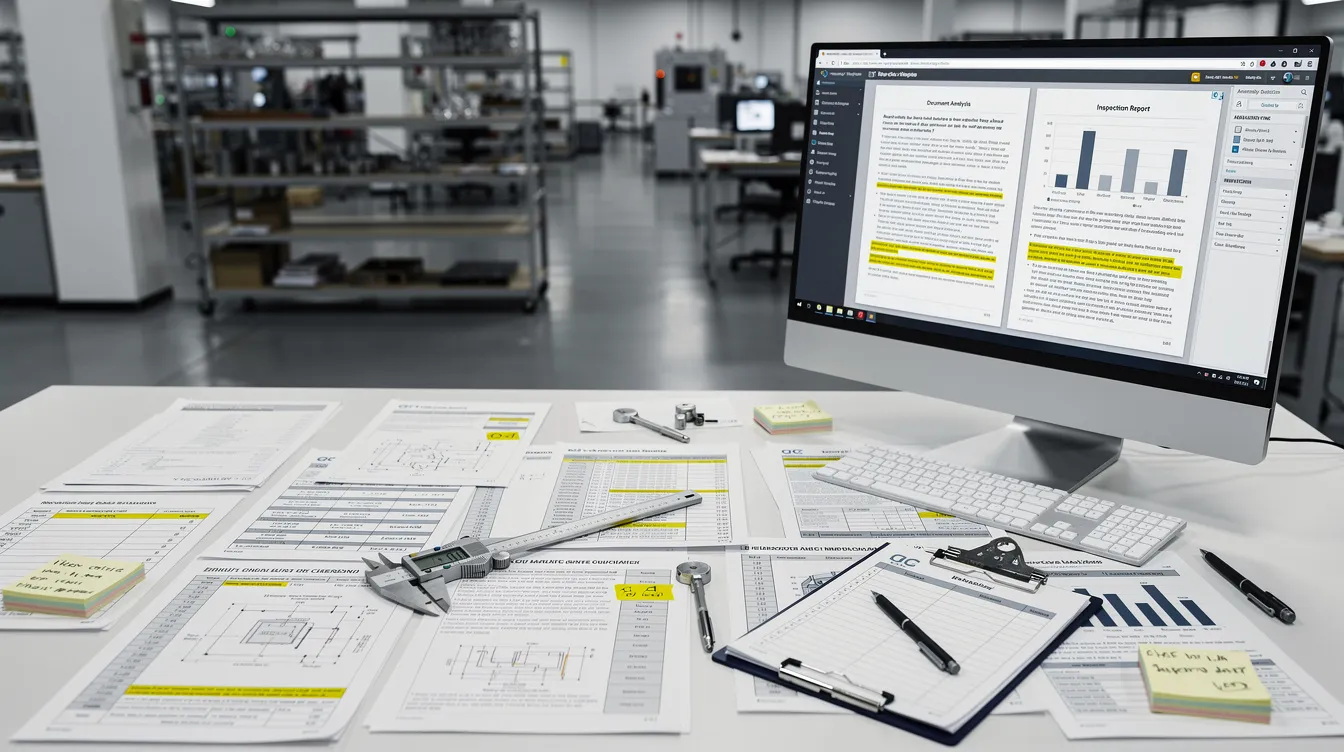
The documentation complexity in heavy machinery supply chains is significantly greater than in light manufacturing. A single piece of equipment may incorporate components from dozens of key suppliers, each requiring verified material certifications, engineering specifications, safety certificates, and proof of quality system conformity. ISO 9001:2015 requires ongoing supplier monitoring, and supplier evaluations must be documented for compliance. This creates a documentation burden that scales multiplicatively across vendors, component categories, and regulatory jurisdictions.
Critical Documentation Categories
Heavy machinery supply chains generate several distinct categories of vendor documentation that must be maintained and cross-referenced during supplier audits:
-
Technical specifications and engineering drawings: CAD files, dimensional tolerances, performance parameters, and assembly instructions for components such as gearboxes, hydraulic cylinders, and structural frames
-
Material certifications and quality control documentation: Heat treatment records, chemical composition analyses, hardness test results, and material test certificates from steel suppliers and component manufacturers-often referencing standards such as ASTM, EN, or JIS
-
Safety compliance certificates: CE marking documentation, certificates demonstrating adherence to Singapore’s Workplace Safety and Health regulations, OSHA standards where applicable, and third-party inspection reports from SAC-accredited laboratories
-
Vendor qualification records: ISO 9001 certification status, approved vendor list (AVL) entries, supplier scorecards, corrective actions history, and defect logs
ISO 9001 mandates maintaining an approved supplier list, and a supplier risk analysis identifies potential risks before selection. These documentation categories connect directly to the supplier evaluation process defined under Clause 8.4.1, where the organization must determine the type and extent of control applied to each external provider based on risk assessment outcomes. Vendor risk assessment must prioritize high-impact vendors for comprehensive auditing-particularly those supplying safety-critical components where failure could lead to catastrophic consequences.
Cross-Referencing Challenges in Traditional Audits
Manual verification of document consistency across multiple vendors and component specifications remains one of the most resource intensive aspects of ISO 9001 compliance. Internal and external auditors must confirm that a material test certificate matches the alloy specified in the engineering drawing, that a vendor’s CE marking covers the actual production method used, and that sub-tier suppliers hold proper certifications flowing down through the supply chain.
This process is inherently time-intensive: matching technical requirements with vendor capabilities and certifications requires engineers to compare terminology across documents that may use different naming conventions, units of measurement, or language translations. A case study of a European industrial group revealed that multilingual SOP translations in Southeast Asian operations had diverged from updated ISO requirements-deviations that went undetected through manual review processes.
The risk of human error in identifying discrepancies between contract requirements and delivered documentation increases with supply chain complexity. Missing evidence of flow-down requirements, obsolete document versions mixed with current ones, and mismatched sub-tier supplier documentation are common sources of audit findings. Heavy machinery supply chains must adhere to strict regulatory compliance, and supply chain risk management addresses complex interdependencies in projects that manual processes struggle to track comprehensively.
These traditional challenges establish a clear case for deploying artificial intelligence tools that can process documentation at scale while maintaining the rigour that ISO 9001 demands.
LLM Deployment Strategies for Documentation Analysis
Building on the challenges of traditional vendor documentation review, AI-powered analysis offers capabilities that directly address the scale, consistency, and speed limitations of manual processes. Integrating large language models can streamline ISO 9001 audits by automating the extraction, comparison, and verification of data across hundreds of documents simultaneously. Generative AI enhances audit readiness across 26 compliance areas, and AI can draft procedures and investigate nonconformances in minutes.
Natural Language Processing for Technical Documentation
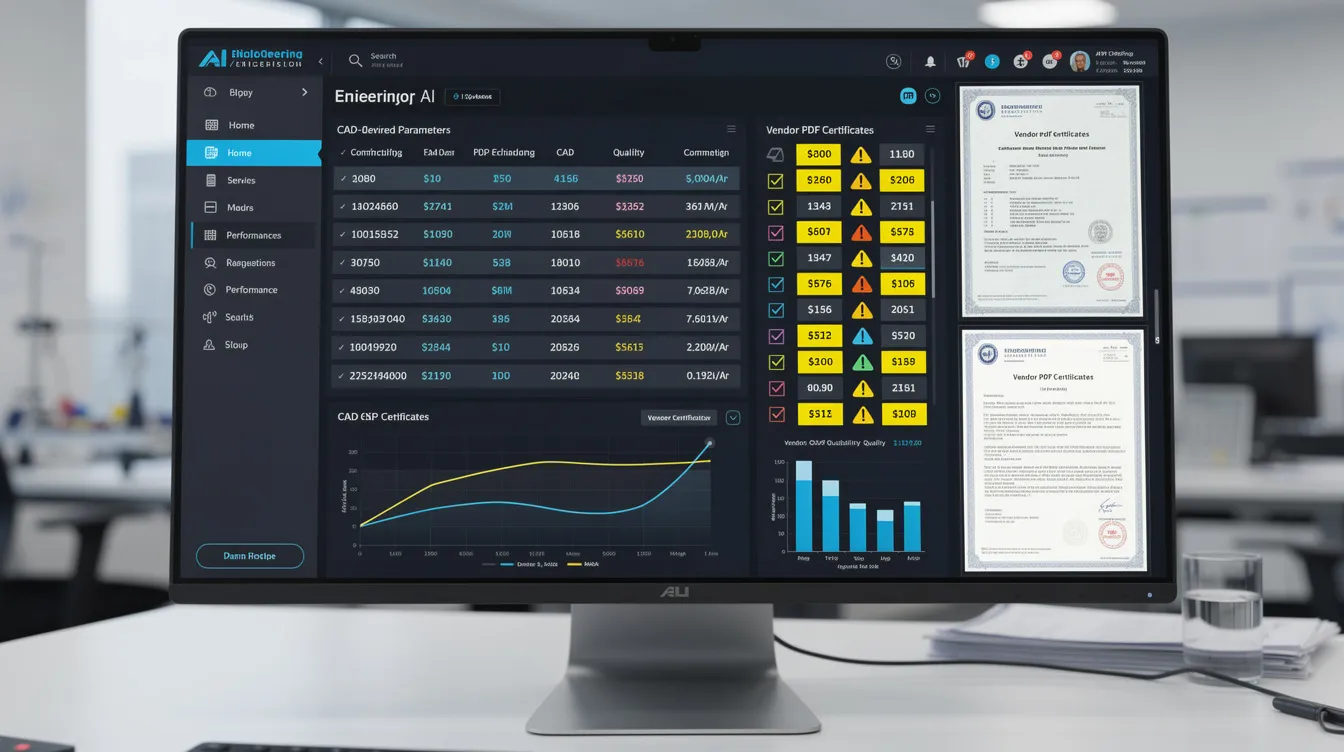
LLMs trained on engineering terminology can extract key specifications from technical drawings, material certificates, and inspection reports with high accuracy. In heavy engineering applications, AI platforms automatically extract parameters from supplier test certificates and compare them against applicable standards such as ASME, ASTM, EN, and ISO-flagging nonconformities while preserving traceability. Generative AI improves documentation completeness and defect detection across the entire vendor documentation lifecycle.
Automated identification of compliance gaps between vendor documentation and ISO 9001 requirements operates through pattern recognition that detects inconsistencies across multiple document versions and suppliers. These ai models can identify when a material certificate references an outdated standard revision, when a vendor’s quality management system certification has expired, or when test results fall outside specified tolerances. AI supports real-time anomaly detection in quality processes, providing early signals of documentation deficiencies before they become audit findings.
Multi-Document Cross-Referencing Capabilities
The core value of LLMs in supply chain audits lies in simultaneous analysis of purchase orders, delivery notes, and quality certificates for accuracy verification. Traditional approaches require an auditor to manually trace a single component through its documentation chain; an LLM can perform automated matching of component specifications across engineering drawings, vendor datasheets, and test reports for entire vendor portfolios in parallel.
Real-time flagging of missing documentation required for ISO 9001 compliance audits ensures that gaps are identified as documents are submitted rather than discovered during audit preparation. This capability transforms audit readiness from a periodic scramble into an ongoing monitoring process. Effective vendor auditing requires ongoing relationships to maintain quality standards, and ongoing monitoring identifies emerging vendor problems early in project lifecycles-making such systems valuable beyond audit events.
RAG frameworks enhance the reliability of document cross-referencing in audits. Retrieval-augmented generation (RAG) pipelines connect LLMs to vector databases containing current standards, regulatory requirements, and internal specifications, ensuring that every comparison references authoritative source data rather than relying solely on the model’s training data. A multi-agent LLMOps pipeline built by GYSP.tech demonstrated this approach by cross-examining internal documentation against vendor regulatory updates, surfacing discrepancies, and generating structured audit outputs.
Integration with Quality Management Systems
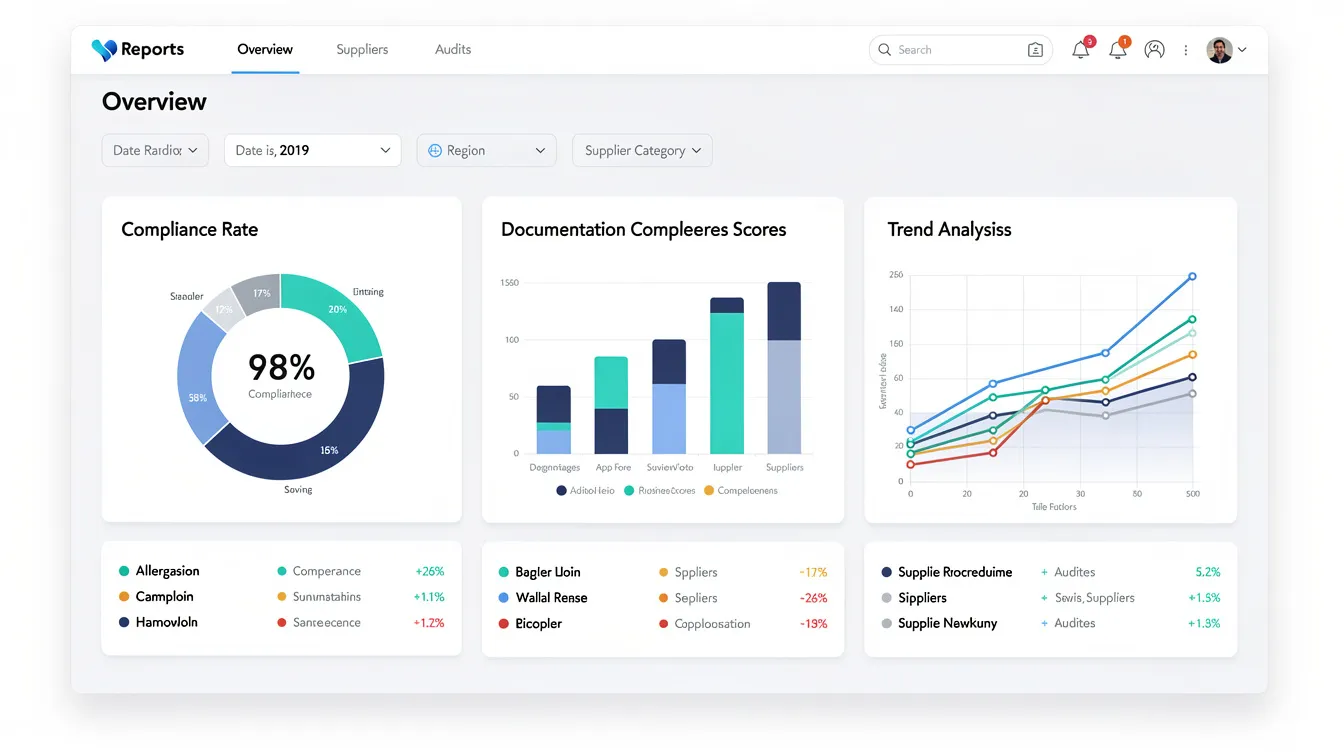
API connections between LLMs and existing QMS platforms enable seamless documentation workflow integration. Automated population of audit trails and evidence collection for ISO 9001 compliance reduces the administrative burden on quality assurance teams while improving output quality. Maintaining an audit trail of AI interactions promotes transparency in quality management systems-every extraction, comparison, and flag generated by the LLM is logged with its source documents and reasoning.
A precision components manufacturer demonstrated this integration approach by deploying Claude AI agents connected to their QMS, reducing audit preparation from three weeks to five days and cutting non-conformance report completion time by approximately 65%. The system pulled records, categorized findings by audit clause, and populated evidence packs automatically. Such systems can also connect with manufacturing execution systems to verify that delivered components match both vendor documentation and production requirements.
These technical capabilities must be translated into structured implementation steps to deliver practical value in heavy machinery audit contexts.
Practical Implementation Framework for Heavy Machinery Audits
Moving from capability understanding to operational deployment requires a structured methodology that accounts for the specific complexities of heavy machinery vendor documentation. Organizations must balance the urgency of improving audit readiness with the need for careful validation of AI systems before trusting them with compliance-critical process steps.
Deployment Methodology
Organizations should begin LLM deployment for vendor documentation when manual cross-referencing consumes disproportionate resources relative to the quality insights it generates, or when the volume of vendor documentation exceeds what human reviewers can consistently verify. ISO 9001 requires continuous audit readiness across 26 compliance areas, and audit readiness is assessed through daily operational evidence-making automation increasingly necessary at scale.
-
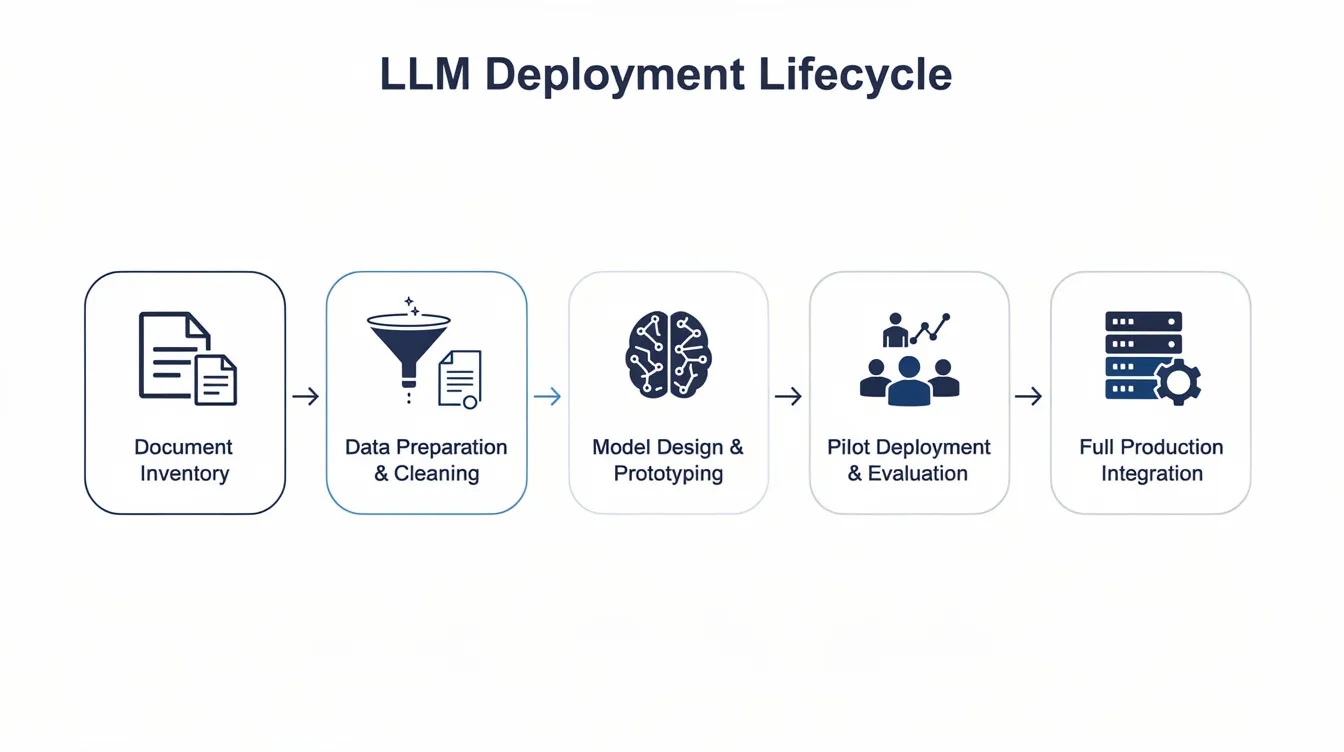
Document inventory and categorization: Catalogue all existing vendor files by component type, risk severity (critical, significant, standard), and compliance requirements. Prioritize safety-critical components-hydraulic systems, welds, structural steel, control systems-for initial processing. Using Optical Character Recognition aids in the ingestion of diverse document types, converting scanned PDFs and non-standard formats into machine-readable text.
-
LLM training and configuration: Configure the system with heavy machinery terminology including metallurgy, hydraulics, CE marking requirements, and Singapore’s WSH regulations. Build a standards repository containing ASME, ASTM, EN, ISO references, and Singapore-specific requirements such as SAC laboratory accreditation. Develop prompt templates that define extraction parameters, comparison criteria, and risk indicators for different document categories.
-
Pilot testing with select vendor documentation: Deploy against a subset of vendors supplying critical components. Run confirmation runs comparing LLM outputs against known-correct human analyses-a “golden set” of previously audited documentation. Measure accuracy, identify failure modes, refine extraction templates, and establish what level of human review is required for each document category. Automated compliance checks can improve audit readiness while requiring thorough documentation of the validation process itself.
-
Integration with existing audit workflows: Connect LLM outputs to the organization’s QMS platform via API middleware. Configure automated generation of supplier performance dashboards, evidence packs, and audit checklists. Establish version control protocols ensuring the standards repository reflects current regulatory requirements. ISO 9001 emphasizes the importance of documented procedures for audits, and this extends to documenting the AI-assisted process itself.
-
Full deployment with continuous improvement protocols: Scale to all vendor categories with ongoing monitoring of system accuracy. Implement change control procedures for standards updates, model version changes, and prompt modifications. Generative AI enables predictive analytics for quality management, allowing organizations to anticipate supplier performance issues based on documentation trends and quantitative metrics.
LLM Platform Comparison for ISO 9001 Applications
|
Platform Feature |
GPT-4 Based Solutions |
Claude-3 Implementations |
Industry-Specific LLMs |
|---|---|---|---|
|
Technical Document Processing |
High accuracy for general engineering docs |
Superior handling of complex technical language |
Optimized for heavy machinery specifications |
|
ISO 9001 Compliance Knowledge |
Good general standards awareness |
Strong regulatory interpretation |
Pre-trained on quality management standards |
|
Integration Complexity |
Moderate API setup required |
Straightforward implementation |
May require custom development |
|
Cost Considerations |
Token-based pricing model |
Competitive usage rates |
Higher initial investment, lower per-unit cost at scale |
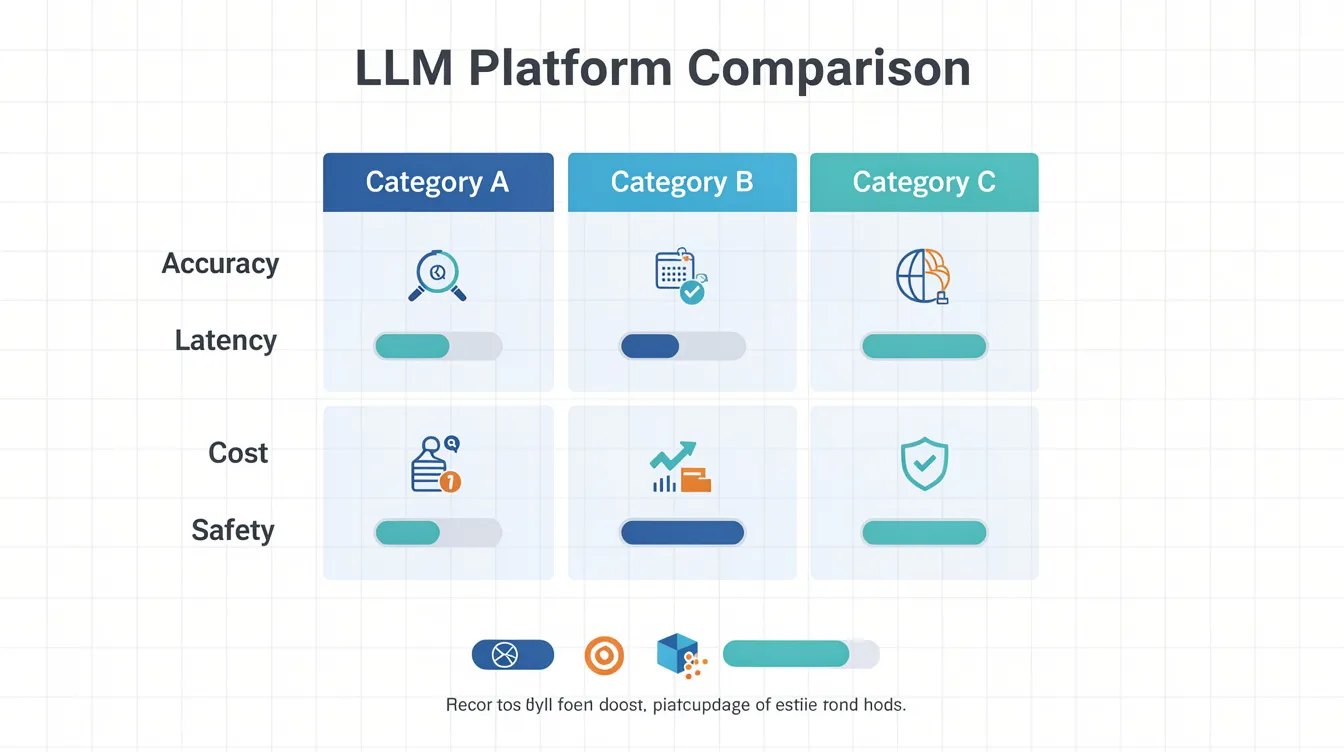
Quality managers should select the right tools based on organization size, documentation volume, and the complexity of their supply chain. Smaller firms may benefit from general-purpose ai tools with carefully engineered prompts, while large manufacturers with extensive vendor relationships may justify the development investment in industry-specific models. ISO 9001 certification provides baseline assurance for vendor quality management systems, but the LLM platform itself must be validated against the specific documentation types and standards relevant to the organization’s supply chain.
Regardless of platform choice, several common challenges arise during implementation that organizations must address proactively.
Common Challenges and Solutions
Deploying generative ai tools for vendor documentation cross-referencing introduces risks that mirror those found in any AI-assisted compliance process. Effective risk management requires anticipating these challenges and establishing mitigation strategies before deployment.
Data Privacy and Confidentiality Concerns
Vendor documents must be sanitized to remove proprietary information before analysis. Implement on-premises or private cloud LLM deployments to maintain control over confidential client data, engineering drawings, and vendor-proprietary specifications. Organizations must establish data governance policies that define what information can be processed, how it is stored, and who has access. Effective data governance is critical to managing third-party risks in audits, and many heavy machinery vendors will require contractual assurances that their technical documentation will not be used as training data for general-purpose ai models.
Technical Document Format Variations
Deploy optical character recognition preprocessing for scanned documents and integrate multiple file format converters before LLM analysis. Heavy machinery vendor documentation arrives in diverse formats-handwritten inspection notes, scanned certificates from sub-tier suppliers, CAD exports, and digital PDFs with varying structures. Document preprocessing pipelines must normalize these inputs while preserving data integrity and data provenance so that every extracted data point traces back to its source document.
Regulatory Compliance Verification Accuracy
LLMs should be treated as support tools and not as definitive sources of evidence. An AI-assisted audit process should avoid hallucinations leading to misinterpretations of standards or regulatory requirements. Establish human oversight protocols with quality engineers performing regular human review of LLM-flagged discrepancies before final audit conclusions. Human-in-the-loop validation is essential in AI-assisted audits-one practitioner built an ISO audit copilot where every finding must link to a source document, with unsourced conclusions automatically flagged as unsupported. Granular rule enforcement ensures accurate compliance checks in audits through deterministic validation layers that complement the LLM’s probabilistic outputs.
Integration with Legacy Quality Management Systems
Develop API middleware solutions to connect LLM outputs with existing ISO 9001 documentation workflows and audit trail requirements. Many heavy machinery manufacturers operate legacy QMS platforms that were not designed for AI integration. Middleware must handle format translation, version control between the LLM’s standards repository and the QMS’s document library, and bidirectional data flow so that corrective actions initiated from LLM findings are tracked through to closure within the established quality system. Supplier performance impacts product quality and compliance, so the integration must preserve the complete chain from vendor document submission through analysis, flagging, review, and resolution.
Addressing these challenges positions organizations to realize the full benefits of LLM-powered documentation analysis while maintaining the rigour that both internal and external auditors expect.
Conclusion and Next Steps
LLM-powered cross-referencing transforms vendor documentation management for ISO 9001 compliance in heavy machinery from a periodic, error-prone manual exercise into a continuous, systematic process. Organizations that deploy such systems report audit preparation time reductions from weeks to days, significant improvements in defect detection rates, and more defensible audit evidence. Generative AI can enhance audit documentation and traceability while enabling quality teams to focus their expertise on engineering decisions rather than administrative verification. ISO 9001 certification covers 100% of ISO 9001:2015 requirements, and AI-assisted processes help ensure that documentation coverage matches this comprehensive scope. ISO 9001 certification enhances operational efficiency and customer satisfaction when supported by robust vendor documentation practices.
Immediate actionable steps for heavy machinery quality managers:
-
Conduct a documentation audit to catalogue all vendor files, identify format variations, and classify suppliers by risk severity
-
Evaluate LLM platforms against your organization’s specific documentation types, security requirements, and budgetary constraints
-
Pilot with high-risk vendor categories where documentation volume is highest and the consequences of missed discrepancies are most severe
-
Integrate with existing QMS to ensure AI outputs feed directly into management review processes, supplier scorecards, and continuous improvement workflows
-
Establish ai governance frameworks including contingency plans for system failures, work instructions for human reviewers, and quantitative metrics for measuring system accuracy over time
Related topics worth exploring include AI governance frameworks for quality management applications, advanced analytics for monitoring supplier performance across different stakeholder groups, and the development of automated compliance reporting systems that serve both operational and strategic stakeholder groups.
Additional Resources
-
ISO 9001:2015 Clause 8.4 implementation guidance: Detailed requirements for control of externally provided processes, products, and services in heavy machinery contexts, including documentation of supplier evaluation criteria and operational resilience measures
-
LLM vendor evaluation checklist: Key criteria for assessing AI platforms for quality management applications, including service delivery capabilities, security architecture, and standards knowledge coverage
-
Singapore regulatory compliance requirements: WSH Act regulations, SAC laboratory accreditation requirements, and MOM guidelines for third-party inspection agencies relevant to heavy machinery import, manufacture, and operation
-
MOSAIC consulting services: Advisory support for AI-enhanced ISO 9001 implementation, vendor management optimization, and quality management system development tailored to Singapore’s heavy machinery and construction sectors