
Introduction
MOM issued over 3,800 composition fines in 2024–2025 and detected close to 7,000 breaches in just the first half of 2025 alone-most of them falling into the same handful of categories. If you are a Facility Manager, Factory Manager, or EHS Coordinator in Singapore, understanding the top 5 most common MOM WSH infringements is the single fastest way to prevent stop work orders, avoid six-figure penalties, and protect your workers’ lives.
This article breaks down the five infringement clusters that appear repeatedly in MOM enforcement actions, safety audit checklist findings, and prosecution records: inadequate risk assessments and safe work procedures, machinery guarding and lockout–tagout lapses, unsafe work at height, electrical safety non-compliance, and poor housekeeping and traffic management. These are not abstract categories. They are the common WSH Act offenses Singapore inspectors flag week after week across factories, warehouses, construction sites, and logistics facilities.
The scope here covers industrial, manufacturing, logistics, and construction-associated facilities-not office-only ergonomics or HR policy matters. By the end of this article, you will:
-
Understand exactly what MOM inspectors look for during workplace safety and health audits
-
See concrete examples from recent enforcement cases and prosecution outcomes
-
Know the penalty ranges for common non-fatal and fatal breaches under the WSH Act
-
Get a practical, printable pre-audit checklist mapped to MOM’s top five infringement areas
-
Recognise when it makes sense to bring in external support, such as MOSAIC Ecoconstruction Solutions Pte Ltd, for baseline audits or mock inspections
Understanding MOM Workplace Safety and Health (WSH) Infringements
A WSH infringement under Singapore’s Workplace Safety and Health Act (WSH Act 2006) and its subsidiary regulations is any unsafe act, unsafe condition, or non-compliance with legal requirements that endangers workers or others at a workplace. This covers everything from an exposed pinch point on a conveyor to a completely missing risk assessment for confined spaces work. The WSH Act mandates employers to identify hazards and assess risks-failure to do so is itself an offence, even if no injury has occurred.
Workplace safety and health violations often involve high-risk activities: operating heavy machinery, working at height, performing electrical installations, entering confined spaces, or managing vehicle operations in warehouses and yards. However, MOM does not only look at individual unsafe acts. Inspectors routinely trace safety incidents back to systemic failures-gaps in risk management, insufficient training and supervision, missing maintenance records, weak workplace health measures, and weak safety ownership at the management level. Management must be accountable for workplace safety practices and regulations; this principle runs through every enforcement action.
Understanding the difference between the types of enforcement actions is essential for any EHS coordinator:
-
Unsafe act or condition: a directly observable hazard, such as a missing guard or loose cables near walkways
-
Non-compliance: failure to meet a specific legal obligation under WSH regulations (e.g. no permit-to-work for height tasks)
-
Composition fine: a monetary penalty issued by MOM for less severe breaches, often without court proceedings
-
Stop Work Order (SWO): MOM orders an immediate halt to operations when life-threatening conditions are found
-
Prosecution: reserved for serious or repeat offences, systemic failures, or incidents causing death or major injuries
The next subsections explain how these infringements are detected and classified, setting the foundation for the five most common categories that follow.
How MOM Inspections and Audits Work
MOM conducts several types of inspections. Planned inspections target high-risk sectors on a scheduled basis. Targeted enforcement operations-such as “Operation Stop the Falls”-focus resources on specific hazard categories where fatality data indicates persistent gaps. Surprise checks are triggered by accident reports, complaints, or near misses flagged through MOM’s reporting channels. Safety audits and regular inspections help maintain compliance with WSH regulations, and firms that rely solely on reactive responses after an incident are already behind.
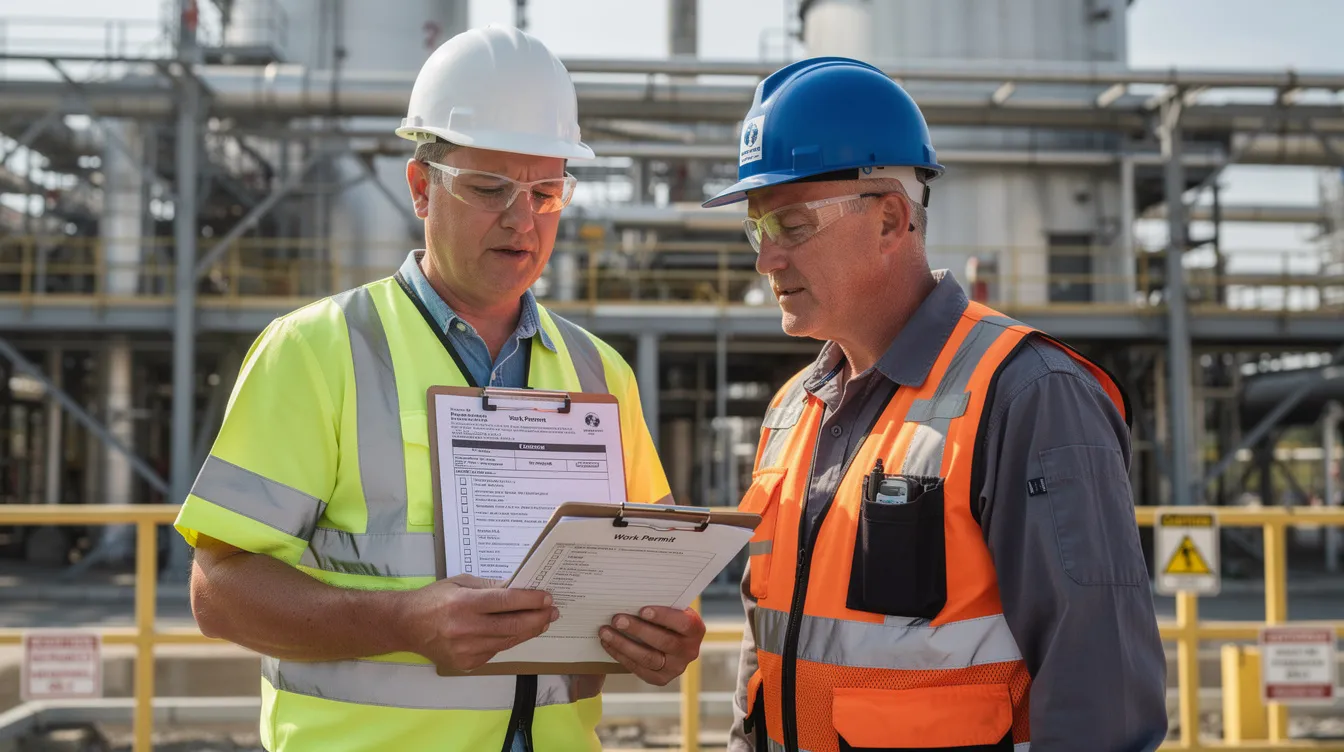
A typical MOM WSH inspection follows a structured process: an opening briefing with site management, a physical site walk-through, a detailed document review covering risk assessments, permits-to-work, training records, and maintenance logs, followed by a closing debrief. During the walk-through, inspectors cross-check what they observe on the ground against what the documentation says. If workers cannot explain the hazards of their tasks or if the risk assessment does not match the actual work processes, that is an immediate red flag.
Inspectors typically work from a structured MOM safety audit checklist aligned with core WSH regulations and subsidiary legislation. They verify physical controls (guards, edge protection, RCDs), check documentation currency and signatures, and interview workers at the point of work. Failing to report workplace accidents promptly is itself a legal offense in Singapore, so inspectors also review incident-reporting records and timelines.
How MOM Classifies and Penalises Infringements under the WSH Act
MOM classifies findings on a severity spectrum. Minor non-conformities-such as a slightly outdated training record-may result in a warning or advisory. Serious life-threatening conditions-an unguarded press running with operators nearby, or workers on an unprotected roof edge-trigger immediate enforcement actions including composition fines or stop work orders.
Maximum fines for serious breaches of workplace safety can reach up to S$50,000 for a first conviction under subsidiary legislation, following the increase that took effect on 1 June 2024. MOM can impose fines up to $500,000 for the most serious corporate violations. For breaches causing death, individuals face penalties up to S$400,000 and companies up to S$1 million for repeat or egregious failures. A construction firm was fined $250,000 for inadequate edge protection in a recent prosecution that underscored how seriously MOM treats preventable falls. Directors can be personally prosecuted for safety violations-this is not a theoretical risk but an active enforcement reality.
Stop-work orders can lead to hundreds of thousands in losses from project delays, idle manpower, equipment rental costs, and reputational damage. In 1H2025 alone, MOM issued 28 SWOs and levied more than S$1.5 million in composition fines across over 3,000 inspections. These patterns in accident investigations and enforcement actions are what drive MOM’s sustained focus on the five categories covered next.
Understanding how MOM classifies penalties helps EHS teams prioritise corrective actions before inspections-addressing life-threatening gaps first, then working through systemic documentation and training deficiencies.
The Top 5 Most Common MOM WSH Infringements
These five infringement categories surface repeatedly in Singapore’s enforcement media releases, SWO summaries, fatal accident investigation reports, and prosecution records. They are not arbitrary groupings-they map directly to the most common workplace hazards that cause the greatest number of deaths, major injuries, and operational disruptions. Top violations include inadequate risk assessments and lack of fall protection at heights, but the full picture extends across machinery, electrical systems, and traffic management.
Each subsection below explains the infringement, describes what inspectors look for, references the relevant regulations, and provides a concrete scenario drawn from recent enforcement actions.
1. Inadequate Risk Assessment and Safe Work Procedures
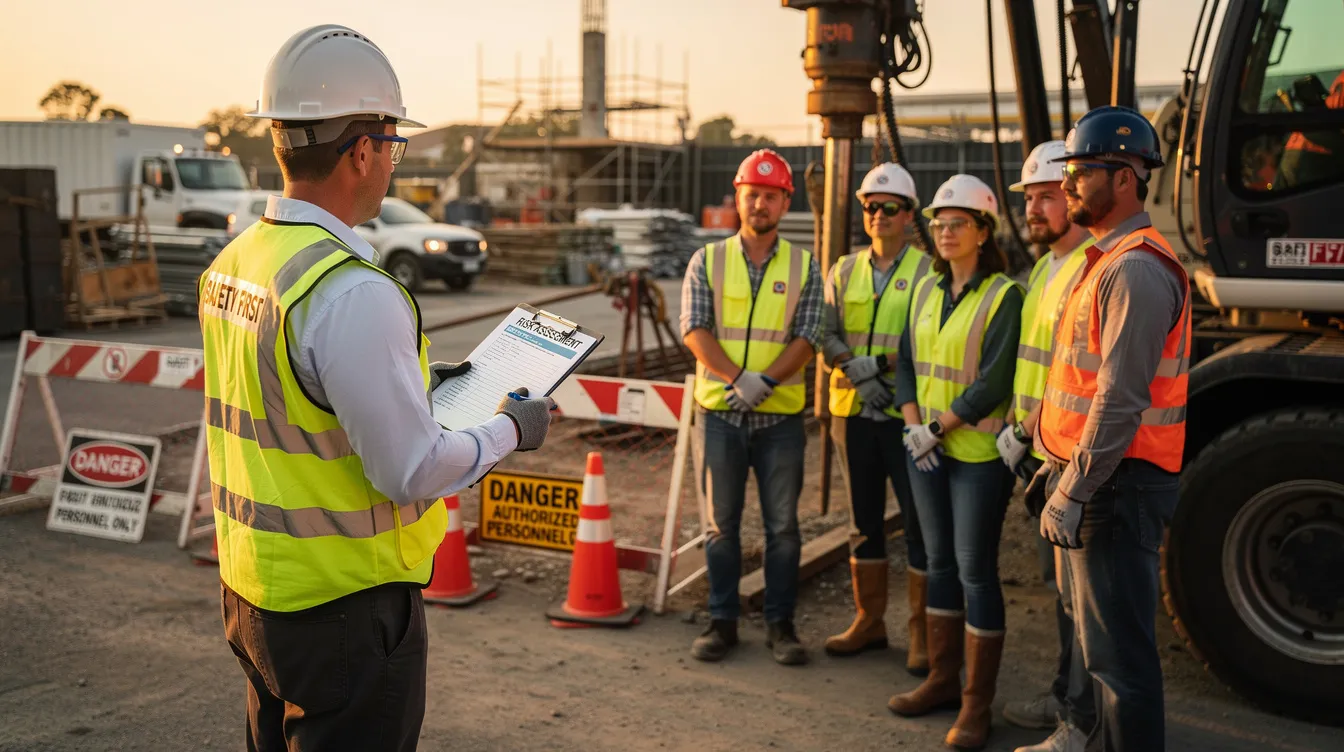
Many MOM findings begin with a single root cause: a poor, outdated, or entirely missing risk assessment. Hazard identification and control implementation are fundamental components of safety compliance, yet inspectors routinely find RAs that are generic templates with no connection to actual site conditions, or RAs older than three years that have never been updated despite significant changes in work processes, equipment, or personnel.
Common RA-related offenses include:
-
No risk assessment conducted for high-risk work such as work at height, hot work, or entry into confined spaces
-
RA not signed by responsible personnel or not communicated to workers
-
Control measures listed in the RA not actually implemented on site
-
No evidence of toolbox talks or pre-task briefings linked to the RA
-
Documenting controls effectively is necessary for risk assessments, yet many firms treat documentation as a filing exercise rather than a living safety tool
MOM typically cites these under “failure to conduct adequate risk assessment under WSH (Risk Management) Regulations.” Maintaining updated risk assessments is crucial for workplace compliance-it is not optional paperwork but a legal duty. During inspections, officers ask frontline workers to describe the hazards of their current tasks and then cross-check those answers against the written RA and safe work procedures. If there is a disconnect, it signals that the RA exists only on paper.
The Stars Engineering explosion in Tuas (2021), which led to prosecution in 2026, illustrates how multiple failures cluster around inadequate risk assessment. Investigators found gaps in RA for combustible dust hazards, missing safe work procedures, poor supervision, and inadequate machine maintenance-all traceable back to a weak risk management system.
Workers must actively participate in identifying and communicating hazards on site. An RA that was written by a consultant three years ago and filed in a cabinet protects no one.
2. Machinery Guarding and Lockout–Tagout Lapses
Across Singapore’s factories and warehouses, machinery-related infringements remain among the most frequently cited during MOM inspections. Physical barriers and safety controls are required to protect workers from machinery hazards-this obligation is explicit under the WSH (General Provisions) Regulations, which mandate guarding of dangerous parts of all machinery including rotating shafts, presses, mixers, conveyors, and packaging lines.
Common infringements include:
-
Missing or removed fixed guards on rotating or reciprocating equipment
-
Bypassed safety interlocks that allow machinery to operate with guards open
-
Exposed pinch points, nip points, or cutting edges accessible to operators
-
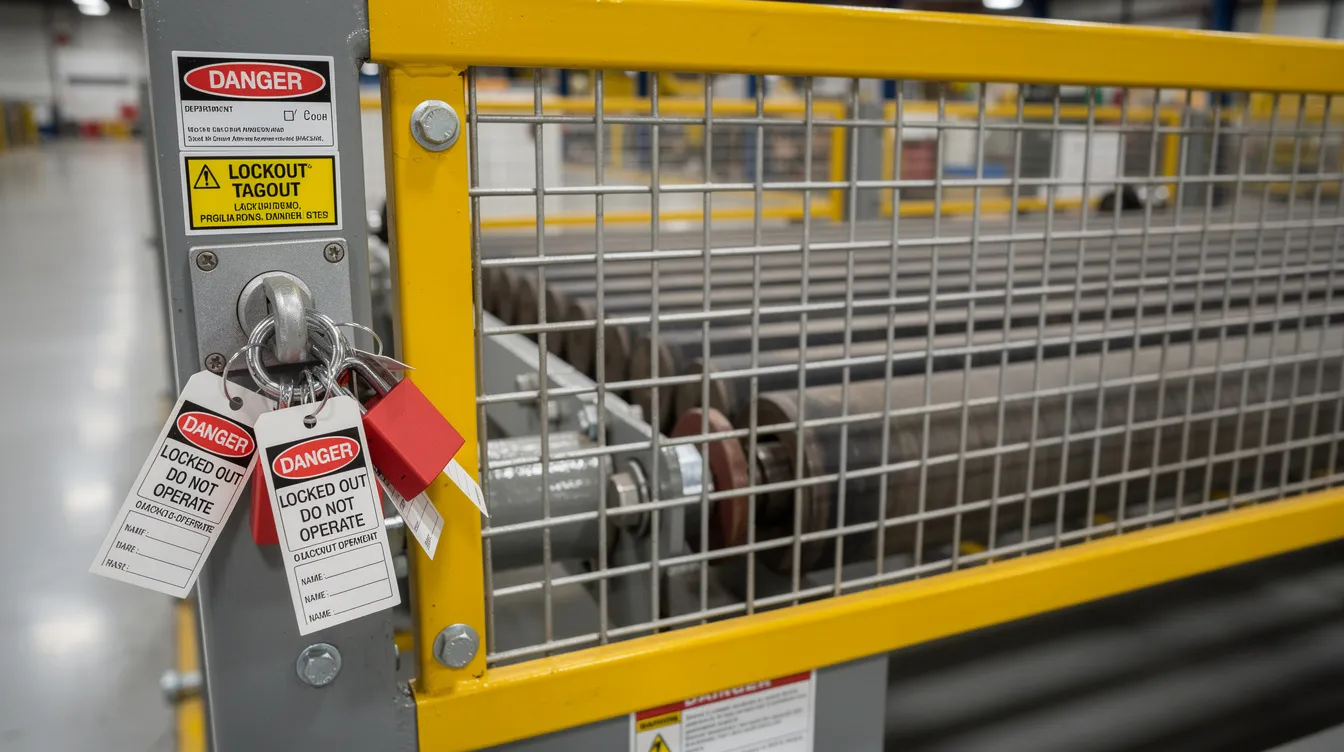
No lockout–tagout (LOTO) procedures during maintenance, cleaning, or jam-clearing
-
Workers clearing blockages while equipment remains energised
Implementing lockout–tagout procedures is essential during machinery maintenance. MOM’s Inspection Programme for Safe Machines references SS 537 (Code of Practice for Safe Use of Machinery) when verifying whether guards meet legal standards. Inspectors physically check that guards are secured, that interlocks function correctly, and that LOTO equipment (locks, hasps, tags) is available and properly used.
In enforcement cases, workers have been crushed or suffered amputations while cleaning mixers or clearing conveyor jams because heavy machinery was not de-energised. Fines for such incidents regularly exceed S$100,000, and in cases involving death, prosecution of company directors follows. Personal protective equipment (PPE) failures are a significant compliance issue in these scenarios as well-but PPE is always the last line of defence, not a substitute for proper guarding.
3. Unsafe Work at Height and Access Platforms
Falls from height are a leading cause of severe workplace injuries in Singapore. Falls from height caused 20 fatalities in construction in 2024, and this category consistently ranks as the top reason for SWOs across both construction sites and facility maintenance operations. The WSH (Work at Heights) Regulations and WSH (Construction) Regulations set clear requirements for edge protection, anchorage, competency training, and documented rescue plans.
Typical infringements inspectors encounter:
-
Missing guardrails or toe-boards on scaffolds, platforms, and open edges
-
Unsecured or improperly set-up ladders used as primary work platforms
-
Workers on rooftops or elevated structures without lifelines or harnesses
-
No work-at-height permit or competency training (WSQ) documented
-
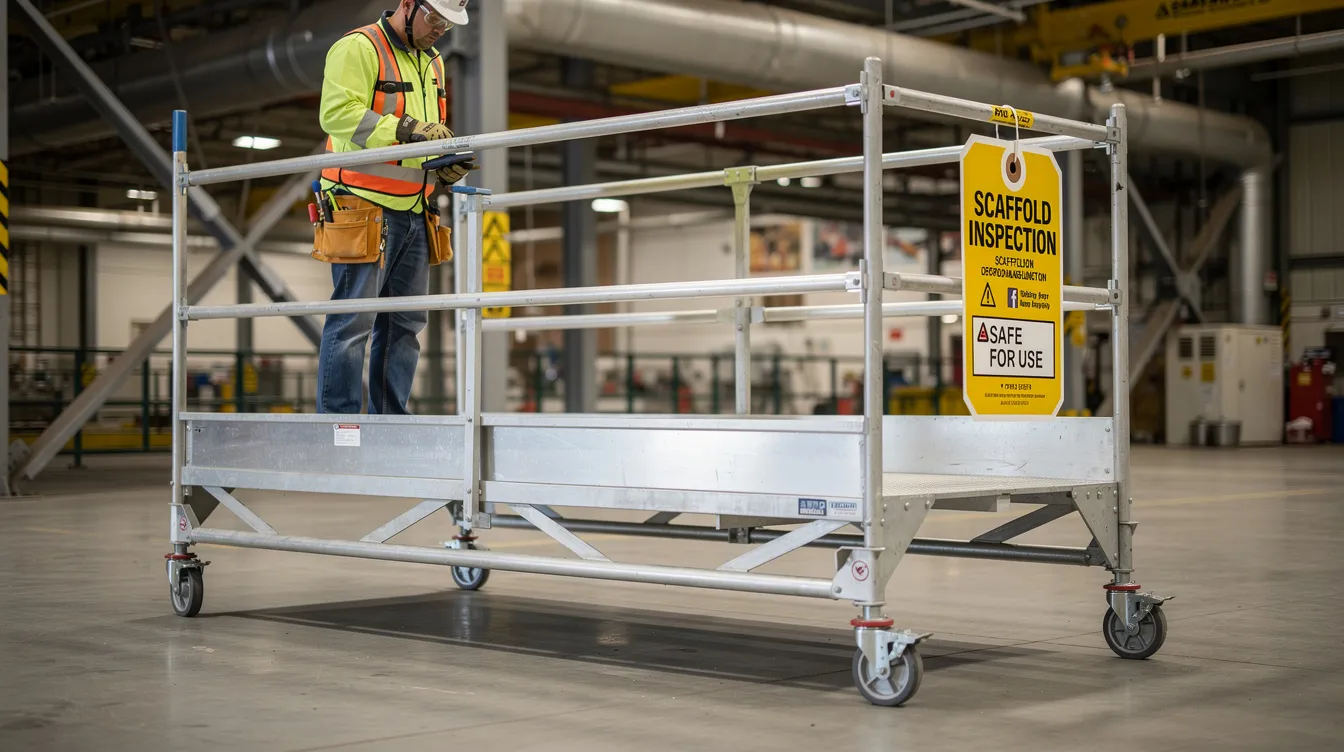
Improper use of mobile elevated work platforms (MEWPs) or scaffolds without current inspection tags
-
Insufficient supervisor oversight during height tasks
MOM’s scrutiny of fragile roofs, skylights, open edges around loading bays, and plant rooms has intensified following fatal incidents during the Jurong Region Line construction, where investigations revealed safety gaps in guardrails, decking, supervision, and permit-to-work systems. Between February and April 2025 alone, 13 SWOs and fines totalling over S$375,000 were issued to firms flouting height safety rules.
Enhanced licensing conditions for Approved Scaffold Contractors, introduced from 1 July 2025, now mandate licence suspension if five or more composition fines accumulate within a rolling 12-month window-a clear signal that MOM treats work-at-height infringements as among the most serious or repeat offences in the regulatory landscape.
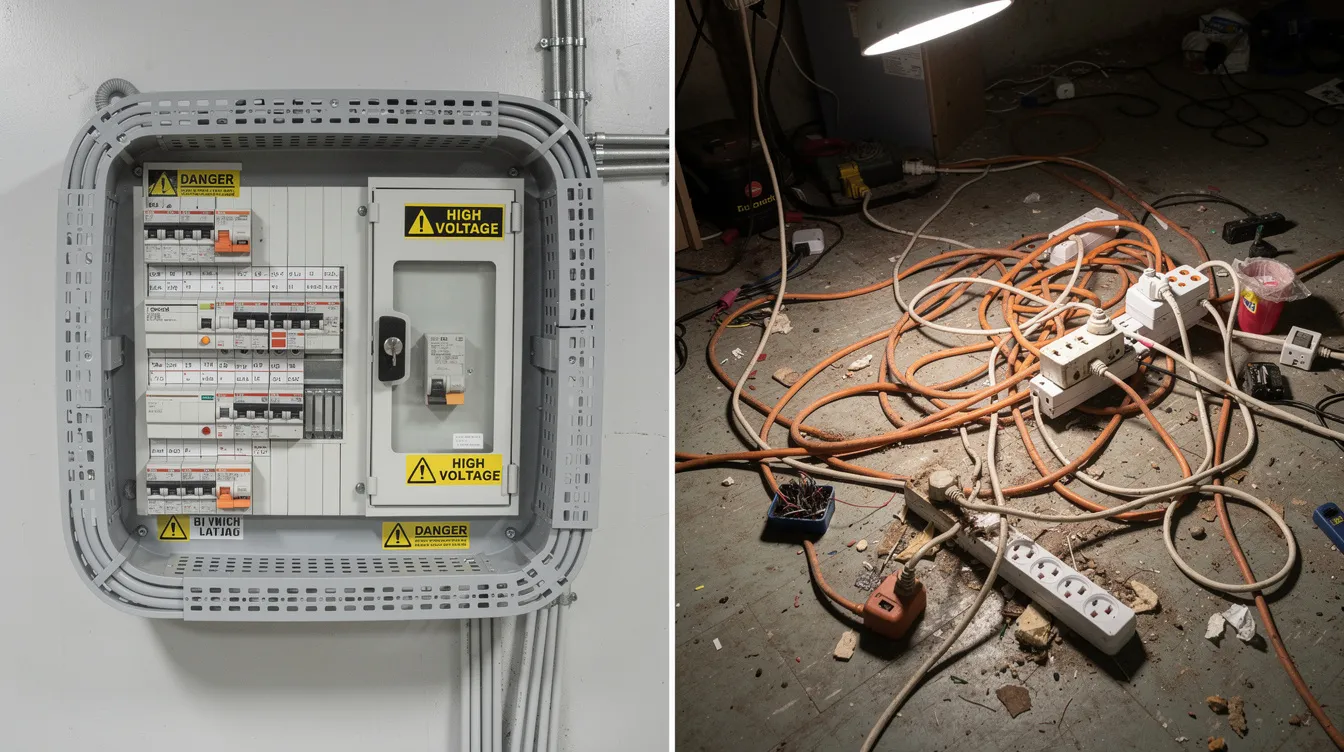
4. Electrical Safety Non-Compliance
Electrical faults cause shocks, burns, and fires in workplaces across every sector-from manufacturing plants and food processing facilities to temporary construction sites and warehouse operations. Electrical safety lapses repeatedly surface during accident investigations and routine inspections, yet they remain among the most common workplace hazards that lead to serious harm.
Recurring electrical infringements include:
-
Exposed live parts on distribution boards, junction boxes, or temporary wiring
-
Use of damaged extension cords, frayed cables, or overloaded socket strips
-
No Residual Current Devices (RCDs) installed on temporary or portable electrical supplies
-
Unlabelled or improperly labelled distribution boards
-
Unauthorised modifications to fixed electrical installations by unlicensed personnel
-
Poor ventilation around electrical panels leading to overheating
The roller shutter electrocution case, in which a company was fined S$100,000 after a worker died during replacement work, exemplifies this cluster. The risk assessment had failed to identify the electrocution hazard despite the job involving live electrical work. There was no safe electrical isolation, no permit system, and no verification that the circuit was de-energised before work commenced.
Inspectors check for visible damage to plugs and cables, confirm that RCDs are tested and functional, verify that only licensed electrical workers have modified fixed installations, and review whether emergency shutdown procedures are posted and understood. Chemical exposure risks can compound electrical hazards in environments where flammable vapours or dust are present, making proper electrical classification of equipment critical.
5. Poor Housekeeping, Traffic Management, and Pedestrian Safety
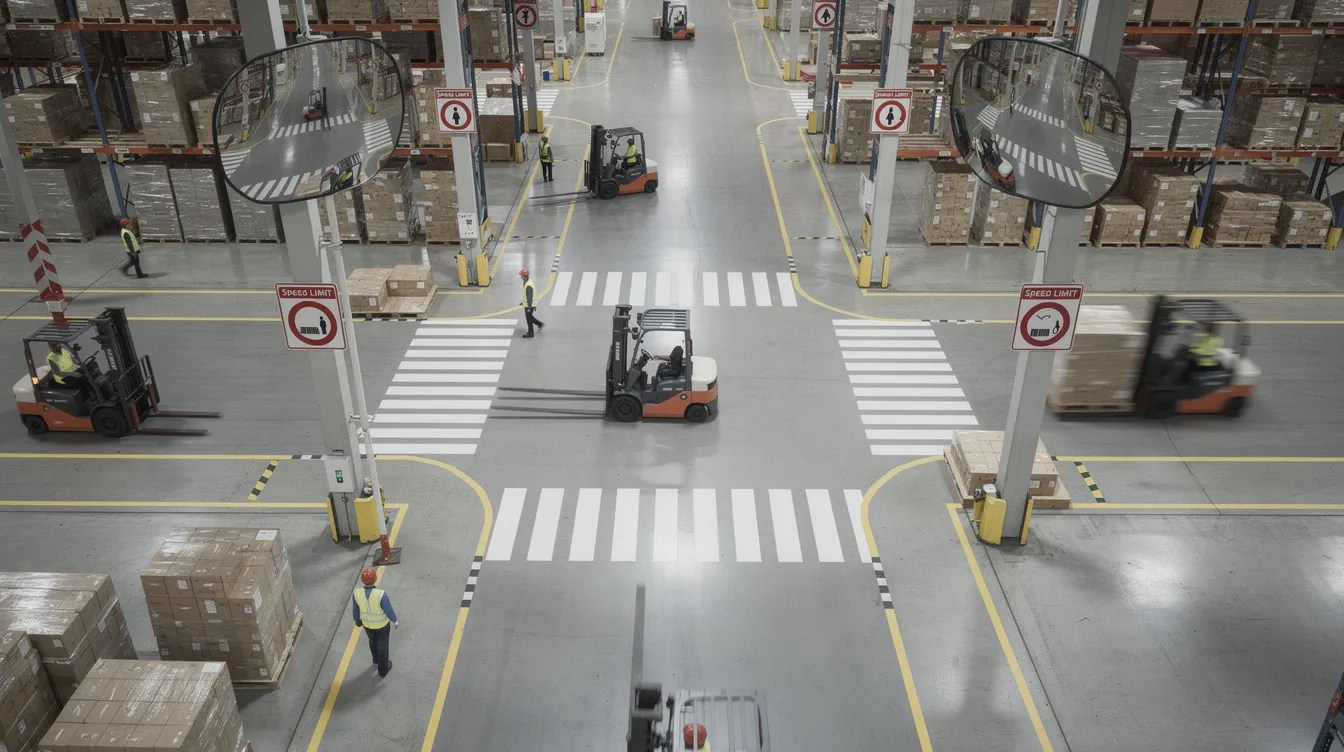
Housekeeping and traffic management issues appear with remarkable frequency in MOM SWOs for factories, logistics hubs, and warehouses. These may seem like “minor” safety issues compared to height or electrical hazards, but the data tells a different story. MOM recorded 587 major injuries from slips, trips, and falls in 2024. Vehicular incidents were Singapore’s #1 cause of workplace fatalities in 2024, contributing 9 of 21 fatalities in 1H2026 alone. Workplace housekeeping issues often contribute to slips, trips, and falls-and the consequences range from broken bones to fatalities.
Common infringements in this category:
-
Blocked emergency exits and fire egress paths obstructed by pallets, boxes, or equipment
-
Cluttered walkways with loose cables, tools, or spilled materials creating trip hazards
-
No segregated pedestrian walkways in areas where forklifts or heavy vehicles operate
-
Missing or faded floor markings, speed-limit signs, and convex mirrors at blind corners
-
Lack of reversing alarms, spotters, or designated loading and unloading zones
-
Poor lighting in storage areas, loading docks, and stairwells
Root-cause analyses in MOM’s Transportation & Storage sector statistics consistently link these incidents to absent or inadequate traffic management plans, unsegregated walkways, and faded demarcation lines. In high-throughput environments like cross-dock facilities and cold-chain warehouses, the pressure of operations often leads to shortcuts that compromise pedestrian safety.
Employers must provide a clear incident-reporting procedure to ensure compliance, because near misses in traffic management-a forklift clipping a pedestrian’s trolley, a near-collision at a blind corner-are early warning signals that the next incident could be fatal.
How to Avoid MOM’s Top 5 WSH Infringements
Knowing what MOM looks for is only half the equation. The other half is translating those expectations into practical, sustainable control measures that your team can implement and maintain. Proactive risk management reduces workplace injuries and illnesses significantly-firms that move from reactive to preventive safety management see measurable reductions in incidents, fines, and operational disruptions.
This section provides an action-oriented roadmap for Facility and Factory Managers, organised by infringement area.
Strengthening Risk Assessment and Procedures
A strong risk assessment programme is the foundation of every other safety control. Employers are required to continuously review and update their safety policies, and RAs are the operational expression of that duty. Here is a practical routine to upgrade your RA process:
-
Establish an annual review cycle for all existing RAs, with mandatory additional reviews after any incident, near miss, or change in work processes, equipment, or layout
-
Conduct field-verified RAs: walk the actual process with operators, photograph real equipment and work steps, and attach those photos directly to the RA document
-
Integrate RA outputs into daily operations: ensure control measures flow into toolbox talks, safe work procedures, Job Safety Analyses (JSAs), and permit-to-work forms
-
Assign ownership: each RA should have a named responsible person who signs off on implementation and communicates updates to affected workers
-
Audit quarterly: spot-check at least one high-risk RA per quarter by asking frontline workers to describe the hazards and controls-if they cannot, the RA is not effective
For guidance on building a dynamic risk assessment framework, particularly in high-paced industries, consider establishing triggers that prompt immediate RA updates when conditions change mid-task.
Implementing Robust Machinery Guarding and LOTO
Start with a machinery safeguarding survey: identify every piece of rotating, reciprocating, or otherwise dangerous equipment in your facility. Check existing guards against manufacturer manuals, WSH (General Provisions) Regulations, and SS 537 requirements. Document gaps with photographs.
A basic LOTO programme should include:
-
Equipment register: a complete list of all machinery requiring energy isolation during maintenance
-
Written LOTO procedures: step-by-step isolation instructions for each machine, including all energy sources (electrical, pneumatic, hydraulic, gravitational)
-
Lock and tag sets: sufficient personal locks and tags for every authorised person, stored in an accessible, managed location
-
Training: all personnel who perform or supervise maintenance must complete LOTO training with documented competency verification
-
Periodic audits: review LOTO records and observe procedures during actual maintenance tasks at least quarterly
Use photos in local SOPs showing “correct guarding” versus “non-compliant” setups on your actual site machines-this makes the standard tangible for operators and supervisors who may not read regulatory text.
Elevating Work-at-Height Controls
A compliant work-at-height system requires multiple layers. Insufficient training and supervision are common workplace safety failures in height work, and the consequences are often fatal. Key components include:
-
Worker competency training (WSQ-certified courses for anyone performing work above 2 metres)
-
Proper anchorage rated for the intended load, inspected before each use
-
Certified equipment inspections for scaffolds, MEWPs, and harness systems, with inspection tags visible and current
-
Documented rescue plans specific to each height task, not a generic template
Prioritise collective protection over personal PPE: fixed platforms and guardrails first, then scaffolds and MEWPs, then fall-arrest harnesses as a last resort. A quick supervisor checklist before authorising any height task should verify: edge protection installed, safe access route confirmed, weather conditions acceptable, competent supervisor present on site, and rescue plan briefed.
For comprehensive guidance on preventing falls, our guide to preventing slips, trips, and falls covers both ground-level and elevated work scenarios.
Closing Electrical Safety Gaps
Electrical hazards can be managed with a structured inspection routine:
-
Monthly: visual checks of all plugs, cables, and portable tools for damage; remove and replace any defective items immediately
-
Quarterly: distribution board housekeeping-clear labelling, secure covers, functional RCDs tested with the built-in test button
-
Annually: thermographic scans for higher-risk plants to detect hot spots indicating loose connections or overloaded circuits
Ensure only licensed electrical workers modify fixed installations and distribution boards. Propose clear labelling standards, lockable DB enclosures, and mandatory RCDs for all portable tools and outdoor or temporary circuits.
Before-and-after photo documentation when rectifying electrical hazards is a powerful way to demonstrate due diligence during MOM inspections. It also serves as a training tool-showing your team what “good” looks like compared to the hazardous condition that existed before.
Improving Housekeeping and Traffic Management
Implement a “15-minute housekeeping walk” at the start of each shift, using a standardised checklist covering aisles, emergency exits, storage heights, spill control, and lighting levels. Poor lighting in work and storage areas contributes directly to accidents and should be addressed as part of broader workplace health measures for accident prevention.
For traffic management, design your facility layout with safety as a primary constraint:
-
Segregated pedestrian routes physically separated from forklift and vehicle lanes by bollards, barriers, or raised kerbs-not just painted lines
-
Colour-coded floor markings refreshed on a scheduled cycle before they fade
-
Speed limits posted and enforced, with convex mirrors at every blind corner
-
Designated loading and unloading zones with spotter requirements for reversing vehicles
-
Driver induction covering site-specific rules, completed before any operator moves a vehicle on your premises
Bilingual signage is essential in Singapore’s multilingual workforce. Consider an example layout diagram for your specific facility showing forklift lanes, parking zones, pedestrian crossings, and safe walking routes-then post it at every entrance.
Practical MOM Safety Audit Checklist for Site Walks
This condensed checklist is mapped to the five most common infringement areas and designed for monthly internal audits. Use it as a pre-inspection tool that can significantly reduce your chances of receiving stop work orders or composition fines. Each item should be physically verified on the shop floor.
Risk Assessment & Documentation
-
Current, signed RAs exist for every high-risk activity (height work, hot work, confined spaces, chemical exposure)
-
Control measures listed in RAs are visibly implemented at the point of work
-
Toolbox talk records from the past 30 days reference specific RA content
-
Incident and near-miss reports are filed within required timelines
-
Workers can describe the key hazards and controls for their current tasks
Machinery & Energy Isolation
-
All dangerous parts of machines are guarded and guards are secured in place
-
Safety interlocks are functional and have not been bypassed
-
LOTO locks, tags, and hasps are available at each machine requiring isolation
-
Written LOTO procedures are posted or readily accessible at each workstation
-
Maintenance logs confirm LOTO was applied during the last servicing
Work at Height
-
Guardrails and toe-boards are installed on all platforms, scaffolds, and open edges above 2 metres
-
Scaffold inspection tags are current and signed by a competent person
-
Workers at height have completed WSQ-certified competency training
-
Fall-arrest equipment (harnesses, lanyards, anchorage) has been inspected and is within certification dates
-
A rescue plan specific to the current height task is documented and briefed
Electrical Installations & Portable Tools
-
No exposed live parts on distribution boards, junction boxes, or temporary wiring
-
All portable tools and extension cords are visually undamaged with intact insulation
-
RCDs are installed and tested on temporary and portable circuits
-
Distribution boards are clearly labelled, covers are locked, and access is restricted
-
Only licensed electrical workers have performed recent modifications
Housekeeping & Traffic
-
Emergency exits and fire egress paths are clear of obstruction
-
Walkways are free of loose cables, spills, clutter, and tripping hazards
-
Pedestrian routes are physically segregated from vehicle and forklift lanes
-
Floor markings, speed-limit signs, and mirrors are visible and not faded
-
Reversing vehicles have functioning alarms and designated spotters where required
Common Challenges and How to Overcome Them
Many Singapore firms understand what compliance requires in theory but struggle with execution. The gap between policy and practice is where most infringements live. Below are three recurring challenges and practical ways to address them.
Challenge 1: Limited In-House Safety Resources
Many SMEs and mid-sized factories operate with a single part-time safety coordinator juggling multiple roles. This leads to reactive rather than proactive risk management-safety work happens only after an incident or when an inspection is announced.
Solutions:
-
Use a prioritisation matrix that focuses limited resources on life-threatening hazards first (unguarded machinery, unprotected height work, exposed electrical) before addressing lower-severity items
-
Outsource periodic WSH audits and mock inspections to qualified external consultants who can identify gaps your team may overlook
-
Consider engaging MOSAIC Ecoconstruction Solutions Pte Ltd for part-time WSH officer or EHS coordinator services, providing consistent expert oversight without the cost of a full-time hire
-
Worker involvement via safety committees boosts effectiveness by 40%, so leverage your existing manpower by empowering frontline employees to conduct peer observations
Challenge 2: Weak Safety Culture and Line Ownership
When workplace safety is perceived as “the Safety Officer’s job,” recurring infringements persist despite procedures and signage. The conduct of line supervisors and managers sets the real standard.
Concrete tactics to shift responsibility:
-
Assign measurable safety KPIs to line supervisors-such as completion of weekly hazard walks, toolbox talk attendance, and near-miss reporting rates
-
Build short “safety start” huddles into every shift handover, focusing on one specific hazard or control measure
-
Include hazard spotting in performance reviews and celebrate near-miss reporting rather than treating it as blame
-
The WSH Council’s bizSAFE programme provides a structured framework for building safety culture from top management down. Companies with bizSAFE Level 3 certification show commitment to safety management and gain a competitive edge in tenders
Challenge 3: Old Facilities and Legacy Equipment
Older plants present distinct challenges: machinery manufactured without built-in guarding, poor access to elevated equipment, outdated electrical distribution boards, and layouts designed before modern traffic segregation standards.
A stepwise approach:
-
Risk-rank all legacy assets by severity and likelihood of harm-focus first on equipment where injuries are most probable
-
Apply temporary controls (barricades, lockable covers, warning signage) while planning permanent upgrades
-
Budget for phased improvements, presenting management with cost-of-non-compliance data-stop-work orders can lead to hundreds of thousands in losses, far exceeding the cost of retrofitting guards or upgrading wiring
-
Engage design-for-safety input when renovating or reconfiguring facilities to prevent building new problems into old spaces
-
Document retrofit projects with before-and-after photos to build internal case studies that persuade management to invest further
Poor ergonomics leads to musculoskeletal disorders (WMSDs), which are among the most common occupational health problems in Singapore. Ergonomic risks contribute to a large proportion of lost workdays, and repetitive tasks can lead to chronic conditions requiring physical therapy. Awkward postures can cause body fatigue and wear over time. When upgrading legacy workstations, treat ergonomic upgrades as workplace health measures alongside guarding and electrical improvements-solutions for repetitive strain and musculoskeletal disorders often integrate naturally into equipment modernisation projects.
Eight confined-space deaths were recorded in 2024 due to poor gas testing-a stark reminder that legacy facilities with tanks, pits, and underground chambers require rigorous gas detection protocols, proper local exhaust ventilation where applicable, and strict permit-to-work systems before any entry.
Conclusion and Next Steps
Most serious MOM WSH infringements fall into a few predictable categories. The five clusters-inadequate risk assessment, machinery guarding and LOTO failures, unsafe work at height, electrical safety lapses, and poor housekeeping and traffic management-account for the vast majority of stop work orders, composition fines, and prosecutions in Singapore. None of these are surprise findings. They are the same gaps that appear in case after case, from the Stars Engineering explosion to the Jurong Region Line fall incidents.
The WSH Council aims to reduce fatalities below 1.0 per 100,000 workers by 2028. Singapore’s fatal injury rate dropped to approximately 0.96 per 100,000 in 2025, showing that systematic prevention works. But vehicular incidents are rising as a proportion of workplace fatalities, and falls from height remain stubbornly deadly. The responsibility to close these gaps sits with employers, managers, and EHS teams-not just safety officers working in isolation.
Your immediate next steps:
-
This week: Schedule a joint management–EHS walk-through using the checklist in this article, focusing on life-threatening hazards first
-
This month: Update one high-risk risk assessment per week, using the field-verified approach described above
-
Within 90 days: Complete a full machinery guarding review across your facility, documenting all gaps with photos and a remediation timeline
-
Ongoing: Establish monthly 15-minute housekeeping walks and quarterly LOTO audits as permanent routines
-
Consider an external baseline audit: A mock MOM inspection by MOSAIC Ecoconstruction Solutions Pte Ltd can benchmark your current WSH performance against actual enforcement standards and identify blind spots before a real inspector does
Final Thoughts
Building a resilient safety culture goes beyond avoiding fines and penalties. It protects people, preserves operational continuity, and demonstrates to your team, your clients, and your regulators that your company takes its responsibility to protect lives seriously. Prevention is always less expensive-in every sense-than the alternative.
Additional Resources for MOM WSH Compliance in Singapore
For those seeking deeper knowledge on specific regulations and programmes, the following resources provide authoritative guidance:
-
MOM WSH Act and subsidiary legislation: the full text of the WSH Act 2006 and subsidiary regulations including WSH (Risk Management), WSH (General Provisions), WSH (Work at Heights), and WSH (Construction) Regulations
-
WSH National Statistics Reports: MOM’s 2025 annual report and 1H2026 update provide current fatality and major injury data by sector and cause
-
MOM WSH Circulars: current circulars on enhanced licensing conditions, video surveillance mandates, and enforcement priorities for 2024–2026
-
bizSAFE programme: particularly Level 3 for risk management implementation and progression toward bizSAFE Star certification
-
WSQ safety training: competency-based courses for supervisors and workers covering work at height, confined space entry, and LOTO procedures
-
MOSAIC Ecoconstruction Solutions resources: case studies from recent MOM WSH alerts, audit templates, checklists, and toolbox talk materials available upon consultation