Introduction
Measuring psychological safety is no longer optional for Singapore organisations serious about health and safety outcomes. The iWorkHealth tool Singapore offers HR leaders, People Experience officers, and WSH Committees a free, structured workplace stress assessment developed by Singapore’s Ministry of Manpower (MOM) and its partners. If you are looking for a practical, no-cost way to quantify how safe your employees feel when speaking up, reporting errors, or raising concerns, iWorkHealth is where to start.
This guide explains how to use iWorkHealth as a lens for measuring psychological safety – not just workplace stress – across your organisation, with organizational behavior as the workplace-level context for interpreting the survey. The focus is practical: planning, running, interpreting, and acting on iWorkHealth survey data in the Singapore regulatory context. We do not cover clinical psychology frameworks, deep organizational psychology theory, or non-Singapore legal standards. Instead, we walk you through how each iWorkHealth dimension connects to the psychological safety of your teams, how to translate results into targeted actions, and how this data supports bizSAFE, ISO 45001, and WSH Council expectations.
In a single sentence: iWorkHealth is a free online assessment tool for workplace psychosocial health that enables Singapore organisations to quantify key stressors – including job demands, job control, recognition, harassment, and management support – and interpret those results as indicators of psychological safety at the organisational, departmental, and team level.
By the end of this article, you will gain:
-
A clear understanding of how iWorkHealth links to psychological safety, not just “stress”
-
Step-by-step knowledge of how to set up and run an iWorkHealth survey
-
The ability to interpret iWorkHealth reports through a psychological-safety lens
-
Concrete intervention strategies designed with HR–WSH collaboration in mind
-
Confidence in using iWorkHealth data to support bizSAFE, ISO, and WSH Council compliance
This article is written from the perspective of MOSAIC Ecoconstruction Solutions Pte Ltd, a Singapore-based QES and WSH consultancy supporting construction and industrial firms through psychosocial risk management, safety system implementation, and workplace culture improvement.

Understanding Psychological Safety and Workplace Stress in Singapore
Psychological safety refers to employees’ comfort in taking interpersonal risks – speaking up, admitting mistakes, asking questions, or challenging the status quo – without fear of negative consequences such as punishment, humiliation, or career damage. In the Singapore context, this concept is tightly connected to managing psychosocial factors recognised by MOM and the WSH Council, including workload, harassment, job control, and management support. These are formally classified as psychosocial risk factors under MOM’s Tripartite Advisory on Mental Well-being at Workplaces.
iWorkHealth is MOM’s core tool for assessing these psychosocial factors at the organisational and team level. iWorkHealth was developed by Singapore’s Ministry of Manpower and partners – including the WSH Institute, WSH Council, Institute of Mental Health, Changi General Hospital, and the Health Promotion Board – to help companies identify common workplace stressors and their impact on employee mental health.
What Psychological Safety Means for Singapore Workplaces
Psychological safety is a shared belief among team members that they can speak up, admit errors, raise concerns – including safety issues – and share ideas without fear of punishment or humiliation. It is not about being comfortable; it is about knowing that risk taking in daily interactions will not lead to blame or reprisal.
Consider a common Singapore scenario: a junior site supervisor on a construction project notices that scaffolding has been erected incorrectly but hesitates to flag it because the last worker who raised a concern was publicly reprimanded by the project manager. In a factory setting, operators afraid to flag unrealistic production targets learn to stay quiet, leading to bottlenecks, quality failures, and hidden safety incidents. These are textbook examples of low psychological safety – and they are measurable through iWorkHealth’s dimensions of management support, job control, and organisational culture.
Psychological safety underpins WSH outcomes in high-risk sectors like construction and manufacturing. When employees feel safe to report near misses, challenge unsafe practices, and ask questions without fear, incident reporting improves, team effectiveness increases, and health outcomes across the workforce strengthen. Google’s Project Aristotle analyzed 180 teams and found psychological safety to be the single most important factor in team performance and better team effectiveness. Research consistently shows that teams with high psychological safety are 50% more productive, and companies with high psychological safety see lower turnover rates by 27%.
The stakes are significant. 12% of employees feeling unsafe plan to leave within a year. But retention drops to 3% when psychological safety is high – a dramatic shift that directly impacts employee success, recruitment costs, and organisational stability. The impact is even more pronounced for underrepresented groups: retention for women and BIPOC employees increases four times in safe environments, retention for people with disabilities increases five times in safe workplaces, and retention for LGBTQ+ employees increases six times in psychologically safe environments.
From “Stress” to “Psychosocial Risk” and Psychological Safety
It is important to distinguish individual stress – how a person feels – from organisational psychosocial factors – how work is structured – which is what iWorkHealth measures. An employee might feel stressed due to personal circumstances, but when entire teams report high job demands and low supervisor support, you are looking at systemic psychosocial hazards that the organisation must address.
iWorkHealth evaluates key psychosocial risk factors such as job demands and supervisor support. The iWorkHealth survey assesses five psychosocial risk domains, and its broader 71-item questionnaire covers job demands, job control, social support, harassment, organisational culture, management support, job recognition, and job satisfaction. Each of these maps directly onto elements of psychological safety:
-
Workplace harassment → fear of speaking up, interpersonal conflict, and erosion of trust
-
Low job control → learned helplessness, disengagement, and reluctance to suggest improvements
-
Poor management support → reluctance to report incidents or errors, diminished constructive feedback loops
-
Weak colleague support → isolation, reduced willingness to collaborate or admit mistakes to co workers
-
Low recognition → feeling invisible, reduced motivation to contribute beyond minimum requirements
-
Toxic organisational culture → blame-driven decision making, cover-ups, and suppressed honest feedback
Because iWorkHealth directly measures these psychosocial factors, it acts as a powerful proxy indicator for psychological safety when interpreted correctly. Psychological safety is influenced by job demands, peer relationships, and supervisor support – precisely the dimensions iWorkHealth captures. The tool provides a structured approach to measuring psychological safety and workplace stressors that moves HR beyond intuition to quantitative metrics.
What is iWorkHealth and How It Relates to Psychological Safety
iWorkHealth is a free online assessment tool for workplace psychosocial health, launched and maintained by the WSH Institute under MOM, designed specifically for Singapore companies of all sizes. Although framed primarily as a “workplace stress” tool, its domains allow human resources professionals to infer psychological safety at the organisation, department, and team level. Employers can use iWorkHealth to assess factors contributing to workplace psychological safety.
The iWorkHealth tool is not a medical diagnostic or treatment resource. It is an organisational assessment that helps employers understand systemic work environment conditions affecting employee mental health, well being, and safety culture.
Key Features of MOM’s iWorkHealth Tool
The core characteristics that make iWorkHealth practical tools for HR leaders include:
-
Free and web-based, accessible via iWorkHealth.gov.sg through MOM / WSH Council
-
Available for both employers and employees, with organisational aggregate reports for companies and private individual reports for workers
-
Anonymous responses with minimum response thresholds (at least 8 respondents per group) to protect confidentiality – iWorkHealth provides aggregated reports that maintain individual confidentiality
-
Standardised question set of approximately 71 items aligned to common workplace stressors in Singapore
-
Assessment duration of roughly 10–15 minutes for the full survey; a shorter iWorkHealth Lite version (approximately 5 minutes) was introduced around 2024 for quick pulse checks
-
Suitable for SMEs and larger organisations, including construction sites, factories, and service-sector businesses
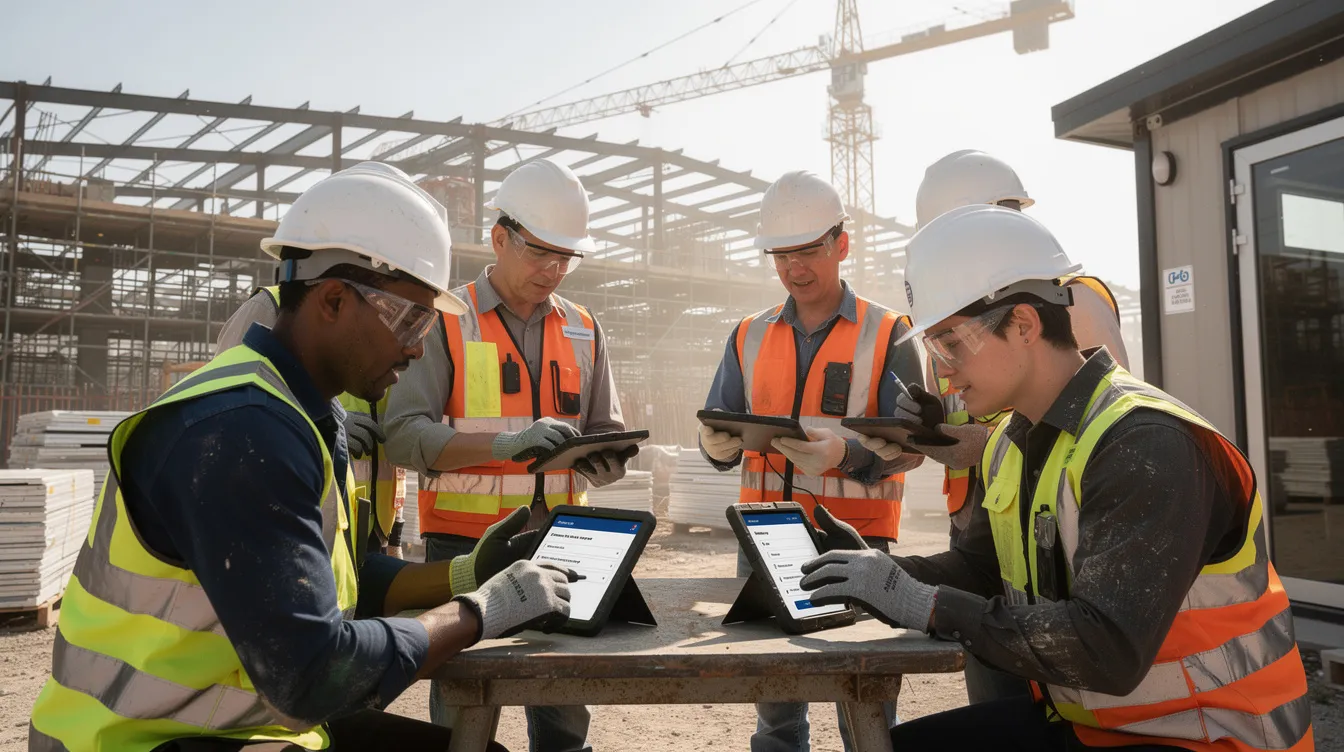
The tool supports both English and other commonly spoken languages. For organisations with non-desk workers – site crews, factory floor operators, logistics staff – completion can be facilitated through shared kiosks, tablets, or QR codes for mobile access.
The 8 iWorkHealth Dimensions Through a Psychological-Safety Lens
For each iWorkHealth stressor dimension, HR leaders should understand what it measures and how low scores can signal specific psychological safety risks:
-
Workplace Harassment
-
Measures experiences of bullying, intimidation, or hostile behaviour from supervisors or co workers
-
Low scores (high harassment) directly destroy psychological safety – employees feel unable to report misconduct, and interpersonal risks escalate
-
-
Job Demands
-
Measures workload intensity, time pressure, conflicting demands, and pace
-
Excessively high demands overwhelm employees, leading them to suppress error reporting and avoid raising concerns to avoid adding more to their plate
-
-
Job Control
-
Measures employees’ ability to influence how, when, and in what order work is done
-
Low job control breeds learned helplessness – team members stop suggesting improvements or questioning unsafe practices because they believe nothing will change
-
-
Social Support
-
Measures quality of relationships with co workers, teamwork, and peer support
-
Poor social support isolates individuals, making them reluctant to confide concerns, share ideas, or admit mistakes – weakening team dynamics
-
-
Organisational Culture
-
Measures shared values, respect, how mistakes are handled, and fairness in the work environment
-
A blame-driven workplace culture where errors are punished rather than treated as a learning opportunity is the single most corrosive force against real psychological safety
-
-
Management Support
-
Measures whether supervisors provide feedback, listen, and create a safe space for concerns
-
Low scores in supervisor support indicate potential psychological safety risks for employees – when managers dismiss concerns, workers stay silent about near misses, safety hazards, and process problems
-
-
Job Recognition
-
Measures whether employees feel their contributions are valued and acknowledged
-
Lack of recognition signals that speaking up, going above expectations, or flagging issues will go unnoticed – reducing motivation and engagement
-
-
Job Satisfaction
-
Measures overall contentment with work, including meaningfulness and alignment with personal values
-
Low satisfaction often correlates with disengagement, reduced commitment to safety behaviours, and higher intent to leave
-
Only 26% of leaders actively work on creating psychological safety. Understanding how each dimension connects to psychological safety helps HR and senior leadership teams move from passive awareness to targeted intervention. 62% of senior leadership teams show varying levels of psychological safety, which means that even leadership itself is not immune to these dynamics.
How iWorkHealth Complements Other HR and WSH Metrics
iWorkHealth results become most powerful when triangulated with other data sources:
-
Turnover, absenteeism, and medical leave data – high turnover in a department with low management support scores confirms a systemic issue, not isolated dissatisfaction
-
WSH incident and near-miss reports – a site with few near-miss reports and low job control scores may indicate underreporting, not safety excellence
-
Employee engagement surveys and performance reviews – comparing engagement scores with iWorkHealth stressor profiles reveals whether low engagement stems from workload, culture, or interpersonal conflict
This integrated view helps HR and WSH committees prioritise interventions in high-risk teams or sites rather than spreading resources needed thinly across the whole organisation. To get these benefits, companies must implement iWorkHealth properly – which is what the next section covers step by step.
Implementing iWorkHealth: Step-by-Step Guide for HR Leaders
This section is the practical “how-to” for HR Directors, People Experience Officers, and WSH Committees in Singapore. Whether you are running iWorkHealth for the first time or refining an existing process, these steps will help you plan, execute, and close the survey effectively.
Planning Your First iWorkHealth Run
The best times to run iWorkHealth include:
-
Annually as a standing assessment measures cycle
-
After major restructuring – mergers, new management, significant organisational change
-
Post-incident – following a critical safety event or mental health crisis
-
Before key audits – bizSAFE Level 3, ISO 45001 certification, or WSH Council reviews
-
Ahead of high-workload periods – to establish a baseline before stress peaks
Key decisions HR needs to make early:
-
Define objectives clearly – e.g. “assess psychological safety across project teams” vs “monitor impact of new flexible work policy on job demands”
-
Choose scope – pilot in one business unit or site vs company-wide roll-out
-
Decide on timing – avoid critical project completion weeks, public holiday periods, or peak operational seasons
-
Secure senior leadership buy-in – senior leaders must visibly endorse the survey and commit to acting on results
-
Involve WSH committee members and union representatives (if applicable) in planning to ensure broad support
Operational Steps to Set Up and Roll Out iWorkHealth
Follow these steps to ensure smooth data collection and high-quality results:
-
Register your organisation with iWorkHealth via the official MOM / WSH Council portal
-
Set up your organisational profile – specify your industry sector, company size, and the departments or sites you want to group for reporting
-
Prepare pre-survey communications – draft messages from HR and executive leaders explaining the survey’s purpose, emphasising anonymity, and clarifying that this is for improvement, not punishment
-
Provide clear instructions to all employees – include non-desk workers like site workers, shift operators, and drivers; specify when and how to complete the survey
-
Ensure access for everyone – set up shared kiosks, tablets on site, or distribute QR codes for mobile completion; provide language or literacy support where needed
-
Monitor response rates – send gentle reminders without exerting pressure or breaching anonymity; aim for participation rates high enough to enable departmental breakdowns (minimum 8 respondents per group)
-
Close the survey and download the organisational report once the survey period ends
MOSAIC Ecoconstruction Solutions supports companies with campaign messaging, logistics, and employee orientation – especially in complex construction or multi-site operations where coordinating participation across shifts and locations requires specialist planning.
Ensuring Anonymity, Trust and High Participation
Psychological safety begins with the survey process itself. If employees feel that completing iWorkHealth might expose them to negative consequences, they will either skip the survey or provide dishonest answers – defeating the purpose entirely.
Concrete tips to build trust:
-
Communicate that iWorkHealth is MOM’s tool and that responses are non-identifiable; results are presented in aggregate without individual identifiers
-
Avoid very small group breakdowns – if a team has fewer than 8 respondents, do not attempt sub-group reporting, as this could inadvertently identify individuals
-
Allow completion during work hours to signal that the organisation genuinely values mental well being and employee mental health
-
Provide alternative language support or brief explanation sessions for workers with lower literacy – particularly relevant in construction and manufacturing
-
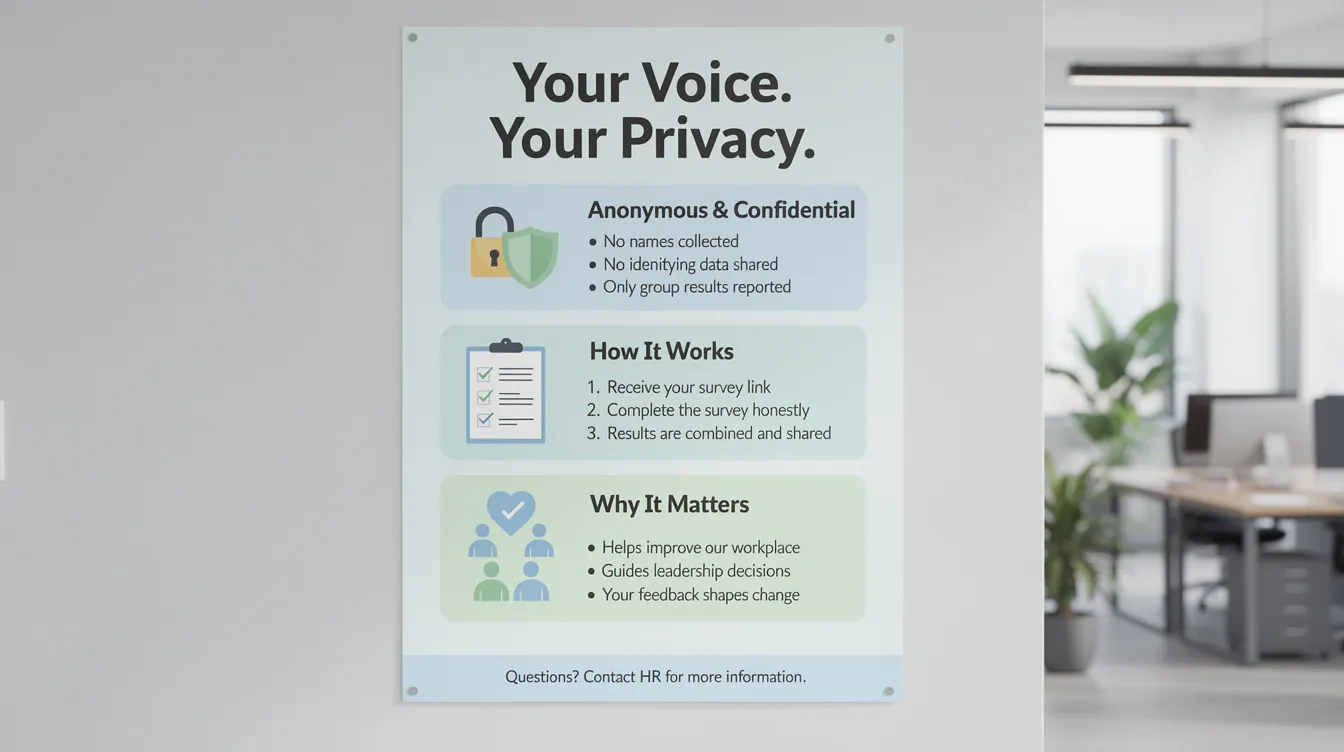
Display simple infographics or posters explaining how data will be used, the anonymity protections in place, and what happened after previous surveys (if applicable)
Effective communication about the purpose of the iWorkHealth survey encourages participation and trust. When employees feel secure about the process, response quality and rates both improve dramatically.
Interpreting iWorkHealth Results as Psychological Safety Data
iWorkHealth reports can feel technical at first glance. HR’s crucial role is to translate stressor scores and dimension profiles into meaningful psychological-safety insights that drive action. Survey data must be analyzed by department to identify specific organizational risks and reveal organizational behavior patterns tied to psychological safety. This section will help you read, interpret, and compare results across dimensions, teams, and time.
Reading the iWorkHealth Organisational Report
The typical iWorkHealth organisational report includes:
-
Overall stressor scores for the organisation across all measured dimensions
-
Breakdowns by department, site, or group – available where the minimum respondent threshold (8 per group) is met
-
Distribution of responses across dimensions like job demands, job control, recognition, harassment, organisational culture, and management support
-
Mental well-being and burnout indicators showing the proportion of employees reporting stress-related symptoms
When reviewing the report, look for:
-
“Red zones” – dimensions with notably poor scores that signal urgent psychological safety risks (e.g. high harassment, low management support, very high job demands)
-
“Green zones” – strengths that represent existing processes and practices worth preserving and scaling (e.g. strong colleague support, healthy job control)
Imagine a bar graph in the report with departments along the horizontal axis and stressor dimensions on the vertical axis. A department showing a tall red bar for “management support” and “harassment” alongside a short green bar for “job control” is a clear hotspot. HR should flag this team for priority intervention and further qualitative investigation.
In 2024, among approximately 15,000 employees participating in iWorkHealth runs, roughly one in three reported work-related stress or burnout – a proportion that has been stable since the tool’s introduction in 2021. This national-level data gives HR teams a benchmark against which to compare their own results.
Linking Each Dimension to Specific Psychological-Safety Risks
For each iWorkHealth dimension, low scores translate into observable workplace behaviours:
-
Low management support → supervisors rarely provide constructive feedback; team members avoid raising concerns; mistakes are met with blame rather than coaching. Example: in a construction SME, low management support scores meant that supervisors routinely dismissed workers’ concerns about tight deadlines. The result was that workers stayed silent about near misses on site – a direct threat to health and safety.
-
High job demands → employees feel overwhelmed; they deprioritise safety reporting to focus on output; stress management becomes impossible without systemic changes
-
Low job control → workers feel powerless to influence decisions about how their work is done; they stop suggesting improvements and default to following orders, even when they see risks
-
Weak social support → interpersonal conflict festers; team members avoid collaboration; new employees hesitate to ask questions
-
Low recognition → contributions go unacknowledged; employees feel invisible; motivation drops; employee orientation to safety behaviours weakens
-
Poor organisational culture scores → blame is the norm; errors are punished; employees feel psychologically unsafe raising any concern that challenges the status quo
These are not abstract risks. Psychological safety allows employees to raise concerns proactively, report hazards, and contribute to continuous improvement. When these dimensions score poorly, that capacity disappears.
Comparing Teams, Sites and Time Periods
HR leaders should compare iWorkHealth results in three ways:
-
Across departments or sites – identify “pockets” of low psychological safety that may not be visible in organisation-wide averages. A head office might score well on management support while a remote project site scores poorly.
-
Over time – companies can track psychological safety improvements by re-administering the iWorkHealth survey periodically. Compare 2025 results to 2024 data to assess whether interventions are producing measurable change.
-
Against national benchmarks – use the one-in-three burnout statistic as a rough benchmark; if your organisation significantly exceeds this, it warrants deeper investigation.
Context is essential. A site undergoing major project delays may show temporarily elevated job demands scores. Look for persistent patterns across multiple survey periods rather than reacting to single-cycle spikes. Treat results as starting points for dialogue – not as verdicts. Avoid blame; instead, engage team members in understanding what the data reveals and what improvements they would prioritise.
iWorkHealth supports a structured approach to continuous monitoring and action planning. The goal is not a perfect score but a clear trajectory of improvement over time.
From Data to Action: Designing Targeted Interventions
Meaningful change comes from using iWorkHealth findings to inform specific, practical interventions that build psychological safety. Psychological safety leads to 76% higher employee engagement levels – making the investment in targeted actions both a moral imperative and a business case. This section addresses the most common high-risk areas revealed in Singapore iWorkHealth reports.
Addressing Workplace Harassment and Bullying
When harassment scores are poor, immediate employer actions include:
-
Implement or refresh a clear anti-harassment policy aligned with TAFEP and MOM guidelines, ensuring all employees understand what constitutes harassment and the consequences for violations
-
Establish confidential reporting channels and whistle-blowing systems – separate from direct supervisory lines – so that employees feel safe to report without fear of retaliation
-
Train supervisors to recognise and intervene in early signs of bullying, particularly in male-dominated, high-pressure environments like worksites. This manager training should cover emotional intelligence, de-escalation, and bystander intervention
-
Enforce accountability – formal policies mean nothing if violations go unpunished; consistent enforcement signals that the organisation takes these issues seriously
Reducing workplace harassment directly improves psychological safety. When employees see that the organisation protects workers who speak up, willingness to report safety issues, interpersonal risks, and process problems increases across the board.
Rebalancing Job Demands and Increasing Job Control for Employee Mental Health
For findings showing high job demands and low job control:
-
Review shift patterns, overtime practices, and unrealistic KPIs with operations leaders – involve workers in the conversation to understand where pressure points actually lie
-
Introduce participative scheduling or task planning, giving employees more say in how work is done; this directly increases job control and supports work life balance
-
Use job redesign approaches recommended by WSH Council or Enterprise Singapore to redistribute workload across teams rather than concentrating demands on specific roles
-
Address job security concerns explicitly – when employees fear layoffs or contract non-renewal, they avoid raising concerns that might mark them as “difficult”
When employees feel consulted on workload and process, psychological safety, trust, and team performance increase. This is not about reducing productivity; companies with high psychological safety see 50% higher productivity precisely because employees contribute more when they feel safe.
Strengthening Management Support, Recognition and Social Support
People-focused interventions that support employees and create psychological safety include:
-
Leadership training and leadership development on active listening, constructive feedback, and non-punitive responses to error reporting – equipping leaders with the skills to respond to concerns as learning opportunities rather than failures
-
Regular structured check-ins – short weekly toolbox meetings that include safety and well being topics, especially on worksites; these create consistent communication channels for honest feedback
-
Simple recognition rituals – “safe behaviour” shout-outs, appreciation boards, or team acknowledgements that validate contributions beyond output volume
-
Peer support programmes that strengthen colleague relationships and reduce interpersonal conflict
When employees see that speaking up leads to respect rather than penalty, psychological safety strengthens organically. These are not expensive programmes; they are shifts in daily interactions that senior leaders must model consistently. Interventions for low supervisor support may include manager training and fostering open communication.
Embedding Changes into Policies, Systems and Culture
Interventions must be codified into lasting systems, not left as one-off initiatives:
-
HR policies – update performance management, grievance handling, and anti-harassment policies to reflect psychological safety commitments; incorporate mental wellbeing into your workplace safety framework
-
WSH management systems – include psychosocial risks in risk assessments and WSH Committee agendas; document identified hazards related to organisational behavior and workplace culture
-
Quality and safety certifications – link actions to ISO 45001 requirements and bizSAFE practices; certifying bodies increasingly expect evidence of psychosocial risk management
Document these actions as evidence for audits and for future comparison with iWorkHealth results. MOSAIC Ecoconstruction Solutions helps organisations integrate psychosocial and psychological-safety measures into existing QES frameworks, ensuring that continuous improvement in safety extends to mental health and workplace culture.
Common Challenges in Using iWorkHealth and How to Overcome Them
HR and WSH leaders frequently encounter resistance, low participation, and confusion about translating results into action. Each challenge below includes actionable solutions grounded in Singapore’s workplace context.
Low Employee Participation or Survey Fatigue
Employees may be sceptical when yet another survey arrives – especially if previous employee surveys led to no visible follow-up. Survey fatigue is real, and it undermines data collection quality.
Solutions:
-
Communicate clearly how previous feedback has led to real changes – even small ones. Visible follow-through is the most powerful participation driver.
-
Limit overlapping surveys and align iWorkHealth timing with other HR assessment measures rather than running them in parallel.
-
Offer on-site assistance, kiosks, or guided sessions for workers who are less tech-savvy – particularly relevant on construction sites and factory floors.
-
Use iWorkHealth Lite for more frequent, shorter pulse checks between full annual psychological safety surveys.
Defensive Leadership Reactions to “Bad” Results
Some managers take low scores personally, dispute findings, or dismiss the data. This defensive reaction can itself be a symptom of low psychological safety at the leadership level.
Solutions:
-
Frame iWorkHealth as a system diagnostic, not a report card on individuals. The tool assesses organisational conditions, not personal competence.
-
Use facilitated debrief sessions – potentially with an external consultant – to help leaders interpret results without blame. Safety leadership development programmes can build the emotional intelligence and resilience needed for this.
-
Encourage leaders to co-create action plans with their teams rather than imposing top-down fixes. This participative approach models the very psychological safety the organisation is trying to create.
Translating Data into Concrete Actions
HR leaders may feel overwhelmed by broad findings and unsure how to move from scores to targeted interventions. HR leaders should conduct qualitative research to understand the causes of identified psychosocial risks – numbers alone rarely tell the full story.
Solutions:
-
Prioritise 2–3 dimensions to focus on for the next 6–12 months instead of trying to fix everything simultaneously. A comprehensive approach does not mean addressing everything at once.
-
Run focus groups or toolbox talks to get qualitative detail behind specific scores – ask team members what daily interactions look like when, for example, “management support” is low.
-
Leverage external consultants like MOSAIC for facilitation, leadership training, sentiment analysis, and change design where internal capacity is limited. Sometimes an outside perspective helps teams discuss difficult findings more openly.
Conclusion and Next Steps
iWorkHealth is a free, practical way for Singapore organisations to measure psychosocial risks at the organisational and team level. When interpreted through a psychological-safety lens – connecting stressor dimensions to employees’ willingness to speak up, report errors, share ideas, and challenge unsafe norms – it becomes a powerful tool to improve workplace culture, safety performance, and organisational resilience. The four stages of psychological safety – Inclusion Safety, Learner Safety, Contributor Safety, and Challenger Safety – provide a framework for understanding what you are building toward. Inclusion Safety is the foundation of psychological safety. Learner Safety allows employees to ask questions and make mistakes. Contributor Safety focuses on meaningful contributions from team members. And challenger safety enables questioning norms and suggesting improvements – the highest level of real psychological safety.
Immediate next steps for HR and WSH leaders:
-
Align senior leadership on the importance of psychological safety and agree to run iWorkHealth in the next quarter
-
Map iWorkHealth dimensions to existing HR and WSH priorities – reducing incidents, lowering turnover, building resilient teams, and strengthening team dynamics
-
Develop a short communication plan to introduce iWorkHealth to employees, emphasising anonymity, purpose, and commitment to action
-
Commit to sharing results transparently along with a simple action plan – employees feel psychologically safe when they see that their feedback leads to visible change
-
Plan a follow-up measurement in 12–18 months to monitor trends and track progress toward high performing teams
Edmondson’s seven-item scale is a popular psychological safety survey tool used globally, but iWorkHealth provides a Singapore-specific, government-endorsed, and free alternative that integrates directly with local regulatory expectations. For organisations seeking to deepen their approach, consider exploring how to integrate psychosocial risks into your WSH risk management processes or prepare for bizSAFE and ISO 45001 certification with a stronger psychological-safety foundation.
Additional Resources for HR and WSH Leaders in Singapore
-
iWorkHealth Official Portal – register your organisation, access the survey, and download user guides directly from MOM/WSH Council
-
Tripartite Advisory on Mental Well-being at Workplaces – MOM’s formal guidance on managing workplace mental health, including recommendations for regular psychosocial risk assessment
-
WSH Council’s iWorkHealth Programme Page – includes background on iWorkHealth and workplace stress, along with resources for employers and employees
-
TAFEP Guidelines – guidance on fair employment practices and workplace harassment prevention, relevant to creating psychological safety and reducing interpersonal conflict
-
MOSAIC Ecoconstruction Solutions – our WSH consultancy services include support for integrating psychosocial risk assessment into existing WSH management systems, facilitating iWorkHealth interpretation, and designing organisational change programmes
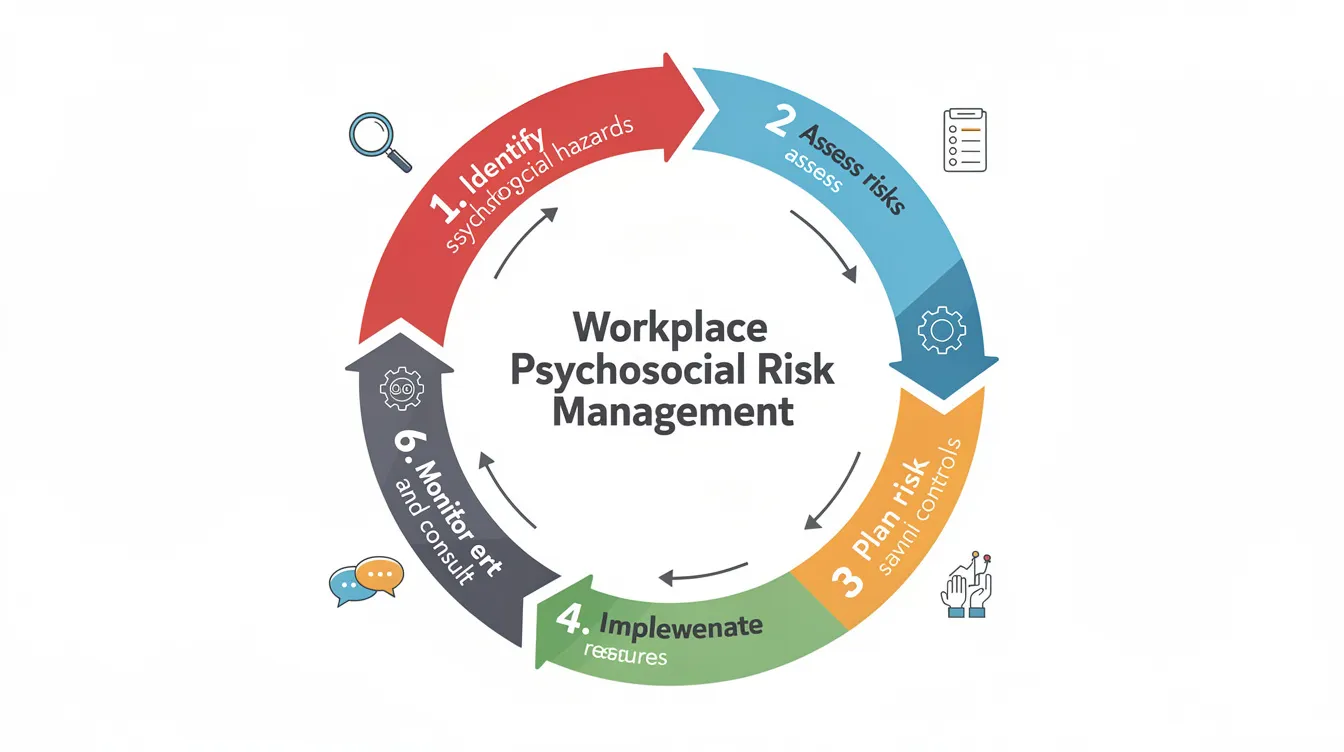
Where to add visuals: A simple flowchart showing the iWorkHealth cycle – Plan → Survey → Analyse → Act → Review – would be effective near the implementation section. Photos of toolbox meetings, HR briefing sessions, or WSH committee discussions can bring the guide to life and make it more engaging for readers.
FAQs About Using iWorkHealth for Measuring Psychological Safety
Is iWorkHealth mandatory for companies in Singapore? No – participation is voluntary for companies. However, MOM and the WSH Council strongly encourage its use through existing policies, the Tripartite Advisory on Mental Well-being, and incentives such as bonus points toward bizSAFE Exemplary Awards and WSH CARE Awards. Given Singapore’s direction toward greater psychosocial risk management, early adoption positions your organisation ahead of the curve.
How often should we run iWorkHealth to monitor psychological safety? At minimum, annually. Additionally, consider running it after major organisational change (restructuring, mergers, leadership transitions), following critical safety or mental health incidents, or before key compliance audits. Use iWorkHealth Lite for quarterly pulse checks to monitor trends between full assessments.
Can small SMEs with fewer than 50 employees use iWorkHealth effectively? Yes. iWorkHealth is designed for organisations of all sizes, including SMEs. The key limitation is that departmental breakdowns require a minimum of 8 respondents per group. Smaller companies may only receive organisation-level aggregate reports, but these still provide valuable insight into overall psychosocial factors and mental well being. All the answers you need for a baseline assessment are available even at small scale.
How anonymous is the iWorkHealth tool, and how do we reassure employees? Responses are non-identifiable. Individual answers are never shared with the employer. Reports are aggregated, and subgroup breakdowns are only generated when at least 8 respondents exist in a group. Reassure employees by explaining that this is a government-developed tool with built-in privacy protections, and by committing to using results for improvement – not discipline.
How does iWorkHealth support bizSAFE and ISO 45001 implementation? iWorkHealth usage contributes bonus points toward bizSAFE Exemplary Awards and WSH CARE Awards. For ISO 45001, the international standard requires organisations to address psychosocial risks as part of occupational health and safety management. iWorkHealth data provides documented evidence that your organisation monitors, assesses, and acts upon psychosocial hazards – precisely what auditors look for.
What should we do if iWorkHealth results show very high stress levels in a specific team? First, avoid blame. Treat the finding as a diagnostic signal, not a judgment. Run focus groups or structured conversations with the affected team to understand root causes. Prioritise 2–3 dimensions for targeted actions – such as adjusting workload, improving management support, or addressing harassment. Implement changes and plan a follow-up iWorkHealth run in 12–18 months to measure impact.
Can external consultants help us interpret iWorkHealth data and design interventions? Absolutely. External consultants bring objectivity, expertise in organizational psychology, and practical tools for translating data into change. MOSAIC Ecoconstruction Solutions supports Singapore companies with iWorkHealth interpretation, intervention design, leadership development, and integration of psychosocial risk management into WSH systems – particularly for construction and industrial firms where reduce stress initiatives must account for high-risk operational conditions and diverse workforce needs.